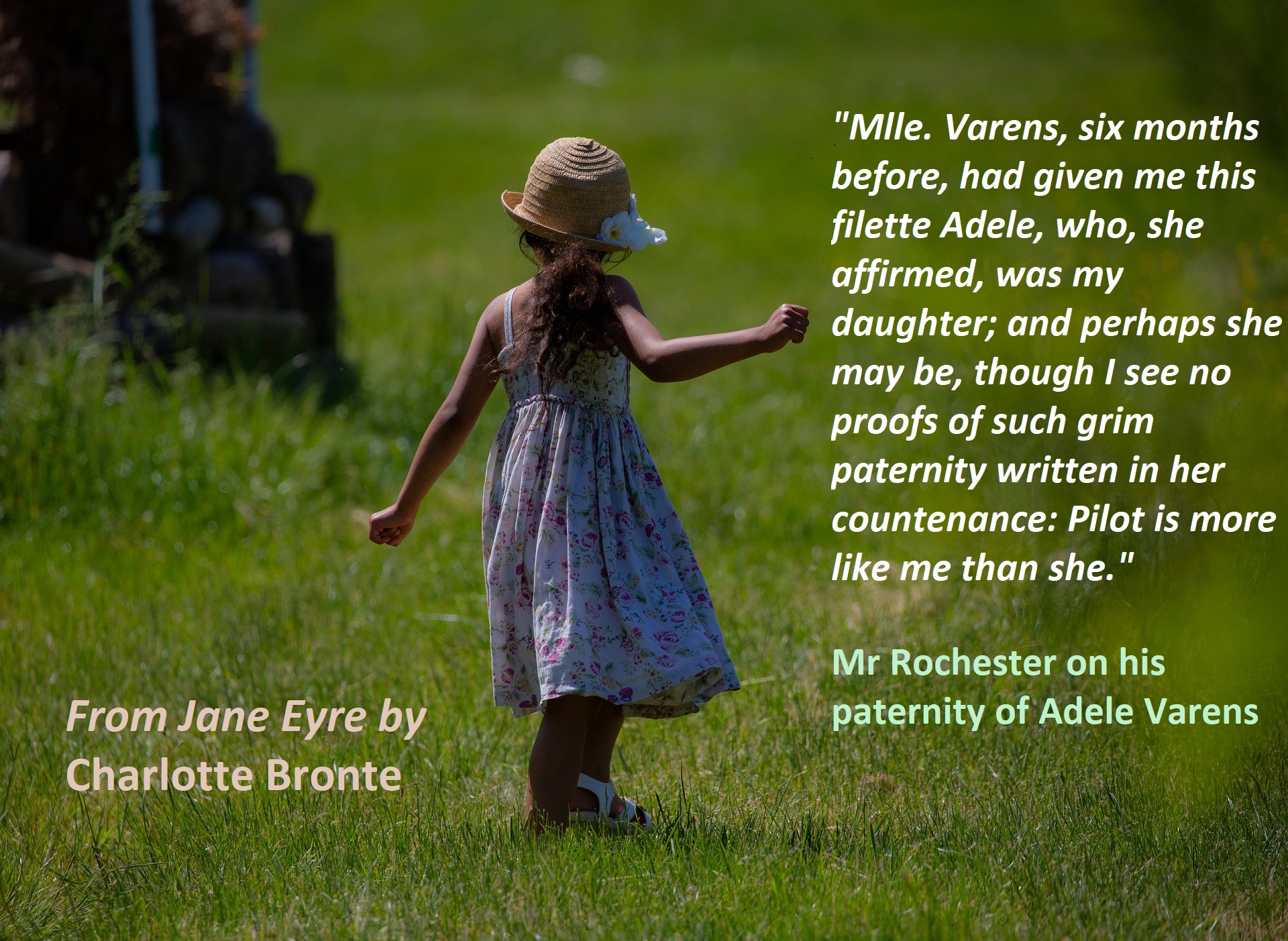
#JaneEyreFF Rereading Jane Eyre in #FlashFiction #Chapter16 #VictorianFiction #CharlotteBronte ‘Enter Blanche Ingram, Jane’s Rival for Mr Rochester’s affections.’

Jane Eyre in Flash Fiction Chapter XVI

How I realised I was no rival for Blanche Ingram, an accomplished lady of rank.

I both wished and feared to see Mr. Rochester on the day which followed this sleepless night. During the early part of the morning, I momentarily expected his coming; he did step into the schoolroom for a few minutes sometimes, but nothing interrupted the quiet course of Adele’s studies.

After breakfast I heard some bustle in Mr. Rochester’s chamber and the servants’ voices, discussing the fire, which they attributed ton a candle. ‘What a mercy master was not burnt in his bed!’

I saw through the open door that all was again restored to complete order. Leah stood was rubbing the panes of glass dimmed with smoke. Grace Poole sat on a chair by the bedside, staid and taciturn-looking, as usual, in her brown stuff gown, check apron, white handkerchief, and cap, intent on sewing rings to new curtains.

She said ‘Good morning, Miss,’ in her usual phlegmatic and brief manner. I did not see any evidence of a woman who had attempted to murder her employer, who had, as I believed, charged her with the crime. She looked up, while I gazed at her: no consciousness of guilt, or fear of detection.

‘Good morning, Grace,’ I said. ‘Has anything happened here?’

‘Master fell asleep with his candle lit, and the curtains got on fire; but, fortunately, he awoke before the bed-clothes or the wood-work caught, and contrived to quench the flames with the water in the ewer.’

‘Did Mr. Rochester wake nobody? Did no one hear him move?’

She seemed to examine me warily and answered. ‘Mrs. Fairfax’s room and yours are the nearest to master’s; but Mrs. Fairfax said she heard nothing. Perhaps you may have heard a noise?’

‘I heard a strange laugh.’

She spoke with perfect composure—‘It is hardly likely master would laugh when he was in such danger. You must have been dreaming.’

‘I was not dreaming,’ I said.

‘Have you told master that you heard a laugh?’ she inquired.

‘I have not had the opportunity of speaking to him this morning.’

‘You did not think of opening your door and looking out into the gallery?’ she further asked.

The idea struck me that if she discovered I knew or suspected her guilt, she would be playing of some of her malignant pranks on me; I thought it advisable to be on my guard.

‘On the contrary,’ said I, ‘I bolted my door.’

‘It will be wise so to do,’ was her answer.

I was dumfoundered at what appeared to me her miraculous self-possession and most inscrutable hypocrisy.

Cook told me Mrs. Fairfax was waiting for me: so I departed, puzzling my brains over the enigmatical character of Grace Poole, and wondering why she had not been given into custody or dismissed from her master’s service.

After classes, when Adele left me to play in the nursery with Sophie, I keenly listened for the bell to ring below with a message from Mr. Rochester which did not arrive. Still it was not late; he often sent for me at seven and eight o’clock, and it was yet but six. Surely I should not be wholly disappointed to- night, when I had so many things to ask him!

Leah made her appearance to intimate that tea was ready in Mrs. Fairfax’s room. Thither I repaired, glad at least to go downstairs; for that brought me, I imagined, nearer to Mr. Rochester’s presence.

‘You must want your tea,’ said the good lady, as I joined her; ‘you ate so little at dinner. Are you not well today? You look flushed and feverish.’

‘Oh, I never felt better.’

‘It is fair tonight, though not starlight. Mr. Rochester has, on the whole, had a favourable day for his journey.’

‘Is Mr. Rochester gone anywhere?’

‘He set of the moment he had breakfasted! He is gone to the Leas, Mr. Eshton’s place, ten miles on the other side Millcote. I believe there is quite a party assembled there; Lord Ingram, Sir George Lynn, Colonel Dent, and others.’

‘Do you expect him back to-night?’

‘No—nor tomorrow either; I should think he is very likely to stay a week or more: when these fine, fashionable people get together, they are so surrounded by elegance and gaiety, so well provided with all that can please and entertain, they are in no hurry to separate. Mr. Rochester is so talented and so lively in society, that I believe he is a general favourite: the ladies are very fond of him; I suppose his acquirements and abilities, perhaps his wealth and good blood, make amends for any little fault of look.’

‘Are there ladies at the Leas?’

‘There are Mrs. Eshton and her three daughters—very elegant young ladies indeed; and there are the Honourable Blanche and Mary Ingram, most beautiful women. Blanche came here to a Christmas ball and party Mr. Rochester gave six years ago. You should have seen the dining-room that day—how richly it was decorated, how brilliantly lit up! I should think there were fifty ladies and gentlemen present—all of the first county families; and Miss Ingram was considered the belle of the evening.’
‘What was she like?’

“Miss Ingram was certainly the queen. Tall, fine bust, sloping shoulders; long, graceful neck: olive complexion, dark and clear; noble features; eyes rather like Mr. Rochester’s: large and black, and as brilliant as her jewels. And then she had such a fine head of hair; raven- black and so becomingly arranged: a crown of thick plaits behind, and in front the longest, the glossiest curls I ever saw. She was dressed in pure white; an amber-coloured scarf was passed over her shoulder and across her breast, tied at the side, and descending in long, fringed ends below her knee.’

‘She was greatly admired, of course?’

‘Yes, indeed: and not only for her beauty, but for her accomplishments. She and Mr. Rochester sang a duet.’

‘Mr. Rochester? I was not aware he could sing.’

‘Oh! he has a fine bass voice, and an excellent taste for music.’

‘And Miss Ingram: what sort of a voice had she?’

‘A very rich and powerful one. Mr. Rochester said her execution was remarkably good.’

‘And this beautiful and accomplished lady, she is not yet married?’

‘It appears not: I fancy neither she nor her sister have very large fortunes. Old Lord Ingram’s estates were chiefly entailed, and the eldest son came in for everything almost.’

‘But I wonder no wealthy nobleman or gentleman has taken a fancy to her: Mr. Rochester, for instance. He is rich, is he not?’

‘Oh! yes. But you see there is a considerable difference in age: Mr. Rochester is nearly forty; she is but twenty-five.’

‘What of that? More unequal matches are made every day.’

‘True: yet I should scarcely fancy Mr. Rochester would entertain an idea of the sort. But you eat nothing: you have scarcely tasted since you began tea.’

‘No: I am too thirsty to eat.’

When once more alone, I reviewed the information I had got; looked into my heart, examined its thoughts and feelings, and endeavoured to bring back with a strict hand into the safe fold of common sense.

That a greater fool than Jane Eyre had never breathed the breath of life; that a more fantastic idiot had never surfeited herself on sweet lies, and swallowed poison as if it were nectar.

‘YOU,’ I said, ‘a favourite with Mr. Rochester? YOU gifted with the power of pleasing him? YOU of importance to him in any way? Go! your folly sickens me. Poor stupid dupe!

Cover your face and be ashamed! He said something in praise of your eyes, did he? Blind puppy! Open their bleared lids! It does good to no woman to be flattered by her superior, who cannot possibly intend to marry her; and it is madness in all women to let a secret love kindle within them, which, if unreturned and unknown, must devour the life that feeds it.

‘Listen, Jane Eyre, you are no match for the beautiful Blanche Ingram, an accomplished lady of rank. You are a governess, disconnected, poor, and plain.’

I had reason to congratulate myself on the course of wholesome discipline to which I had thus forced my feelings to submit. Thanks to it, I was able to meet subsequent occurrences with a decent calm, which, had they found me unprepared.

****

In the first part of this chapter, Jane is astonished that Mr Rochester has informed the staff that he provoked the fire by falling asleep with a lighted candle in the room, and subsequently put it out with his ewer. Grace Poole has not been reprimanded or dismissed, and implicitly denies any hand in the event. There is another allusion to Bertha’s presence in this chapter as she tells Grace Poole that she heard strange laughter. Grace suggests that Jane bolt her room at night.

Jane is looking forward to asking Mr Rochester about this strange turn of events, but Mrs Fairfax informs her that he has left to visit his friends, the Eshton’s, where he will stay for some weeks, at a party for fine, fashionable people. The reader, like Jane wonders what’s going on in the third story. The staff, and especially Grace Poole are hiding something or someone, who could be dangerous.

The second part of the chapter is devastating for Jane. Poor Jane feels that her employer has made a fool of her by pretending to enjoy her company. She learns that he is popular with the ladies, which is something he had already told her, but she naively thought it was in his past. She also learns she has a specific rival for his affections in the beautiful and accomplished Blanche Ingram, who is looking for a rich husband, as her brother will inherit her father’s entailed estate.

We learn that Jane had hoped to marry Mr Rochester. ‘It does good to no woman to be flattered by her superior, who cannot possibly intend to marry her;’, but she realises she is no match for Blanche Ingram. She chastises herself for believing a poor governess could aspire to marry her wealthy employer. The first-time reader will think she is probably right, or perhaps not? But why has Mr Rochester taken French leave? Has he been toying with Jane? When will he come back? Is he looking for a bride?

After a brief period of happiness, our young heroine is dejected once more. Where will Jane go from here? Will she stay and watch him marry another woman, or will she leave? And what about the strange laughter on the third floor?

The plot thickens! See you next week for chapter XVII.

The summary is based on the free ebook by planet books which you can find here.

I’ll be posting a chapter of Jane Eyre in flash fiction every Friday. If you’re wondering why, read all about it here.

If you’d you’d like to Reread Jane Eyre with me, visit my blog every Friday for #JaneEyreFF posts.

See you next week for chapter 16. 

Images from Pixabay
#JaneEyreFF Rereading Jane Eyre in #FlashFiction #Chapter15 Part II #VictorianFiction #CharlotteBronte ‘Who Set Mr Rochester’s room on fire?’

Jane Eyre in Flash Fiction Chapter XV Part II

The Night I Saved Mr Rochester’s Life

When Mr Rochester met me unexpectedly, the encounter seemed welcome. He had always a word and sometimes a smile for me and when summoned by formal invitation to his presence; I was honoured by a cordiality of reception that made me feel I really possessed the power to amuse him, and that these evening conferences were sought as much for his pleasure as for my benefit.

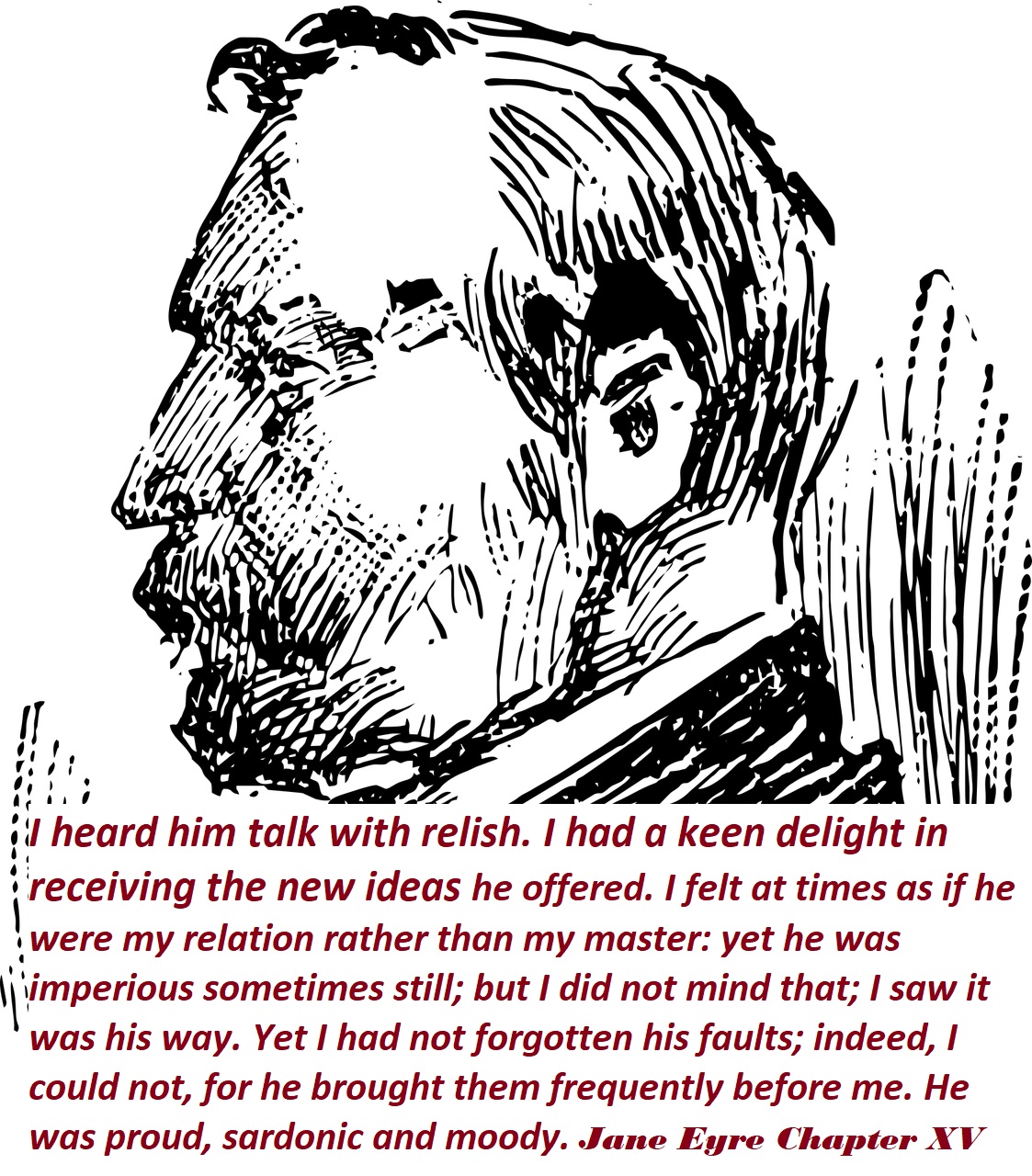
I talked comparatively little, but I heard him talk with relish. I had a keen delight in receiving the new ideas he offered. I felt at times as if he were my relation rather than my master: yet he was imperious sometimes still; but I did not mind that; I saw it was his way. Yet I had not forgotten his faults; indeed, I could not, for he brought them frequently before me. He was proud, sardonic and moody. Sometimes when I read to him, found him sitting in his library alone, with his head bent on his folded arms; and, when he looked up, a morose, almost a malignant, scowl blackened his features. I cannot deny that I grieved for his grief, whatever that was, and would have given much to assuage it.

I asked myself what alienated him from the house and if he would leave again soon. Mrs. Fairfax said he seldom stayed here longer than a fortnight at a time; and he has now been resident eight weeks. If he left how joyless sunshine and fine days will seem!

That night I was startled wide awake on hearing a peculiar and lugubrious murmur, just above me. The night was drearily dark. I rose and sat up in bed, listening. The sound was hushed. My heart beat anxiously: my inward tranquillity was broken. The clock, far down in the hall, struck two. Just then it seemed as if fingers had swept the panels of my chamber door in groping along the dark gallery outside.

I said, ‘Who is there?’ chilled with fear. I wondered if it might be Pilot, who not unfrequently found his way up to Mr. Rochester’s chamber.

I began to feel the return of slumber. But it was not fated that I should sleep that night. A demoniac laugh uttered, as it seemed, at the very keyhole of my chamber door and later at my bedside. I rose, looked round, and could see nothing. Something gurgled and moaned. Steps retreated up the gallery towards the third-storey staircase. A door opened and closed, and all was still.

I thought it might be Grace Poole. Returning to my chamber, I perceived the air quite dim, as if filled with smoke, and became aware of a strong smell of burning. Mr. Rochester’s door was ajar, and the smoke rushed in a cloud from thence. I flew into the chamber. Tongues of flame darted round the bed. The curtains were on fire and Mr. Rochester lay motionless in deep sleep.

‘Wake! wake!’ I cried, but the smoke had stupefied him. I rushed to his basin and ewer filled with water and deluged the bed and its occupant.

‘Is there a flood?’ cried Mr Rochester.

‘There has been a fire: get up, do.”

‘In the name of all the elves in Christendom, is that Jane Eyre?’ he demanded. ‘What have you done with me, witch, sorceress? Who is in the room besides you? Have you plotted to drown me?’

‘In heaven’s name, get up. Somebody has plotted something: you cannot too soon find out who and what it is.’

I brought a candle, and he surveyed the bed, all blackened and scorched, the sheets drenched, the carpet round swimming in water.

‘What is it? And who did it?’ he asked. I briefly related to him the strange laugh I had heard in the step ascending to the third storey.

He listened very gravely; his face, as I went on, expressed more concern than astonishment; he did not immediately speak when I had concluded.

“Shall I call someone?”

‘Not at all: just be still. I will wrap you with my cloak. I am going to leave you a few minutes. Remain where you are till I return. I must pay a visit to the second storey. Remember, don’t call anyone.’

I was left in total darkness and silence until he re-entered, pale and very gloomy.

‘I have found it all out. It is as I thought.’

‘How, sir?’

‘Did you see anything when you opened your chamber door.’

‘No, sir, only the candlestick on the ground.’

‘But you heard an odd laugh? You have heard that laugh before, I should think, or something like it?’

‘Yes, sir. Grace Poole laughs in that way.’

‘Just so. Grace Poole—you have guessed it. You are no talking fool: say nothing about it. and now return to your own room. I shall do very well on the sofa in the library for the rest of the night. It is near four:- in two hours the servants will be up.’

‘Good-night, then, sir,’ said I, departing.

‘What!’ he exclaimed. ‘Are you quitting me already, and in that way?’

‘You said I might go, sir.’

‘But you have saved my life!—snatched me from a horrible and excruciating death! and you walk past me as if we were mutual strangers! At least shake hands.’

He held out his hand; I gave him mine: he took it first in one, them in both his own.

‘I have a pleasure in owing you so immense a debt.”

He paused, gazing at me in silence.

‘Goodnight again, sir. There is no debt, benefit, burden, obligation, in the case.’

‘I knew you would do me good in some way, at some time;—I saw it in your eyes when I first be- held you. My cherished preserver, goodnight!’ He spoke with a strange fire in his look.

‘I am glad I was awake,’ I said, and turned to leave.

“What! you will go?’

‘I am cold, sir.’

‘Cold? Go, then, Jane; go!’ But he still retained my hand, and I could not free it.

‘I think I hear Mrs. Fairfax move, sir,’ said I.

He relaxed his fingers, and I was gone.

I regained my couch, but never thought of sleep. Till morning dawned, I was tossed on a buoyant but unquiet sea. Too feverish to rest, I rose as soon as day dawned.

****

Chapter XV is very long. It includes several important scenes, so I have divided it into two parts. This is part two, in which Jane saves Mr Rochester’s life by putting out a fire in his room the middle of the night.

Jane starts this part of the chapter by telling us how Mr Rochester is now kind and courteous towards her, frequently summoning her company in the evenings. She is obviously impressed by his conversation, which must stroke his ego enormously.

He has been at Thornfield for eight weeks, and as he claims to dislike the building, Jane dreads the moment he will leave. She has obviously developed a crush on her employer and he is also taken by her.

I love the gothic elements in the chapter. Jane experiences the eerie atmosphere in the darkened house at night, the strange laughter and scraping in the corridor, and the spooky third story door closing.

Shortly after the peculiar events, Jane investigates and finds Mr Rochester’s bed is on fire. This event marks a major turning point in their relationship. They share a secret (he is adamant no-one should know what happened, although the servants will undoubtedly see the evidence the following day). He realises he is indebted to Jane and confirms his attraction to her by his physical contact (he won’t let go of her hand) and grateful words and gestures.

Mr Rochester also tells Jane a major lie, which is understandable, but it will have devastating consequences in their future relationship. He can’t bring himself to admit his ‘mad’ wife is locked in his attic, so he lets Jane believe the fire was Grace Poole’s doing.

Where do we they go from here? Will he leave and forget her, or will he seduce her?

On the other hand, will she succumb, will she reject him, or will she find out what is happening in the attic, right above her room?

Surprising events are in store. Find out next week in chapter XVI!

The summary is based on the free ebook by planet books which you can find here.

I’ll be posting a chapter of Jane Eyre in flash fiction every Friday. If you’re wondering why, read all about it here.

If you’d you’d like to Reread Jane Eyre with me, visit my blog every Friday for #JaneEyreFF posts.

See you next week for chapter 16. 

Images from Pixabay

#JaneEyreFF Rereading Jane Eyre in #FlashFiction #Chapter15 Part I #VictorianFiction #CharlotteBronte ‘Who was Adele Varens’s Father?’

Jane Eyre in Flash Fiction Chapter XV Part I

How I Discovered Adele Varens’ Background

One afternoon, when Mr Rochester chanced to meet me and Adele in the grounds: and while she played with Pilot and her shuttlecock, he asked me to walk along the beech avenue and told me she was the daughter of a French opera-dancer.

‘I cherished such a ‘grande passion’ for her mother, Céline Varens that I installed her in an hotel and behaved like a spoony, giving her a complete establishment of servants, a carriage, cashmeres, and diamonds. Until I happened to call one evening when she did not expect me. It was a warm night, so I stepped out on to the balcony, sat down, and took out a cigar,—I will take one now, if you will excuse me.’

Here ensued a pause.

‘I watched the equipages that rolled along the fashionable streets towards the neighbouring opera-house, when I recognised the ‘voiture’ I had given Celine. My flame (that is the very word for an opera inamorata) alighted and a figure jumped from the carriage after her.’

He turned to me and continued.

‘You never felt jealousy, did you, Miss Eyre? Of course not: I need not ask you; because you never felt love. You have both sentiments yet to experience: your soul sleeps; the shock is yet to be given which shall waken it. You will come to a craggy pass in the channel, where the whole of life’s stream will be broken up into whirl and tumult.’

He looked up to the sky.

‘I like that sky of steel; the sternness and stillness of the world under this frost. I like Thornfield, its antiquity, its retirement, its old crow-trees and thorn trees, its grey facade, and lines of dark windows reflecting that metal welkin: and yet how long have I abhorred the very thought of it, shunned it like a great plague-house.’

He lifted his eye to the battlements, ground his teeth and was silent. Pain, shame, ire, impatience, disgust, detestation, seemed momentarily to hold a quivering conflict in the large pupil dilating under his ebon eyebrow.

Adele here ran before him with her shuttlecock. ‘keep at a distance, child,” he cried harshly.

‘Did you leave the balcony, when Mdlle. Varens entered?’ I asked.

‘Oh, I had forgotten Celine! Well, to resume. When I saw my charmer thus come in accompanied by a cavalier, the green snake of jealousy, rising on undulating coils from the moonlit balcony, glided within my waistcoat, and ate its way in two minutes to my heart’s core. Strange that I should choose you for the confidant of all this, young lady; passing strange that you should listen to me quietly, as if it were the most usual thing in the world for a man like me to tell stories of his opera-mistresses to a quaint, inexperienced girl like you! But I know I am confessing to a unique mind. I do not mean to harm it. The more you and I converse, the better; for while I cannot blight you, you may refresh me.’

He proceeded with his tale.

‘I remained in the balcony. ‘I drew the curtain over the open window, leaving an opening through which I could take observations. Celine’s chamber-maid entered, lit a lamp, left it on the table, and withdrew. The couple removed their cloaks and I recognised him as the a brainless and vicious youth whom I had sometimes met in society, the fang of the snake Jealousy was instantly broken; because at the same moment my love for Celine sank under an extinguisher. A woman who could betray me for such a rival was not worth contending for; she deserved only scorn; less, however, than I, who had been her dupe.

‘Their frivolous, mercenary, heartless, and senseless, conversation was wearisome. Then they insulted me as coarsely as they could. Celine pointed out my personal defects and physical deformities.’

Adele here came running up again.

‘Monsieur, John has just been to say that your agent has called and wishes to see you.’

‘Ah! in that case I must abridge. I opened the window, walked in upon them; liberated Celine from my protection; gave her notice to vacate her hotel; offered her a purse for immediate exigencies; disregarded screams, hysterics, prayers, protestations, convulsions; made an appointment with the vicomte for a meeting at the Bois de Boulogne. Next morning, I had the pleasure of leaving a bullet in one of his arms. But unluckily the Varens, six months before, had given me this filette Adele, who, she affirmed, was my daughter; and perhaps she may be, though I see no proofs of such grim paternity written in her countenance: Pilot is more like me than she. Some years after I had broken with the mother, she abandoned her child, and ran away to Italy with a musician or singer. I acknowledged no natural claim on Adele’s part to be supported by me, nor do I now acknowledge any, for I am not her father; but hearing that she was quite destitute, I took the poor thing out of the slime and mud of Paris, and transplanted it here, to grow up clean in the wholesome soil of an English country garden. Mrs. Fairfax found you to train it; but now you know that it is the illegitimate offspring of a French opera- girl, you will perhaps think differently of your post and protegee: you will be coming to me some day with notice that you have found another employment.’

‘No: Adele is not answerable for either her mother’s faults or yours: I have a regard for her; and now that I know she has been forsaken by her mother and disowned by you, sir, I shall cling closer to her than before. How could I possibly prefer the spoilt pet of a wealthy family, who would hate her governess as a nuisance, to a lonely little orphan, who leans towards her as a friend?’

After he left I stayed out a few minutes longer with Adele and Pilot. She had inherited a superficiality of character from her mother, hardly congenial to an English mind. I sought in her features a likeness to Mr. Rochester, but found none. It was a pity: if she could but have been proved to resemble him, he would have thought more of her.

****

Chapter XV is very long, so I have divided it into two parts. This is part one, in which Mr Rochester tells Jane about Adele’s mother and his relationship with her. He is partly honest with Jane, telling her that his mistress, Céline, told him he was the girl’s father, but he also describes Céline as unfaithful and claims to doubt his paternity. He says he accepted her as his ward out of pity. He is not fond of Adele and asks her to keep away, while he’s talking to Jane.. Jane is also wondering about his paternity.

Mr Rochester is very clever in his strategy. He convinces Jane of Celine’s unfaithfulness, although he has little proof, and persuades Jane to doubt his paternity. One cannot help wondering if such a selfish and arrogant man would look after a child he suspected was not his.

The next part of the chapter is very exciting. Bertha Mason, the present Mrs Rochester who is confined in the attic at Thornfield Hall, makes a brief appearance and causes havoc at Thornfield Hall. Find out more next week!

The summary is based on the free ebook by planet books which you can find here.

I’ll be posting a chapter of Jane Eyre in flash fiction every Friday. If you’re wondering why, read all about it here.

If you’d you’d like to Reread Jane Eyre with me, visit my blog every Friday for #JaneEyreFF posts.

See you next week for chapter 15 Part II. 

Images from Pixabay

#SilentSunday Photos through the Windscreen #Cantabria #Spain #Haiku

Vibrant, stormy sky,

Furious outburst clears the air,

Now breathe, smile, move on.

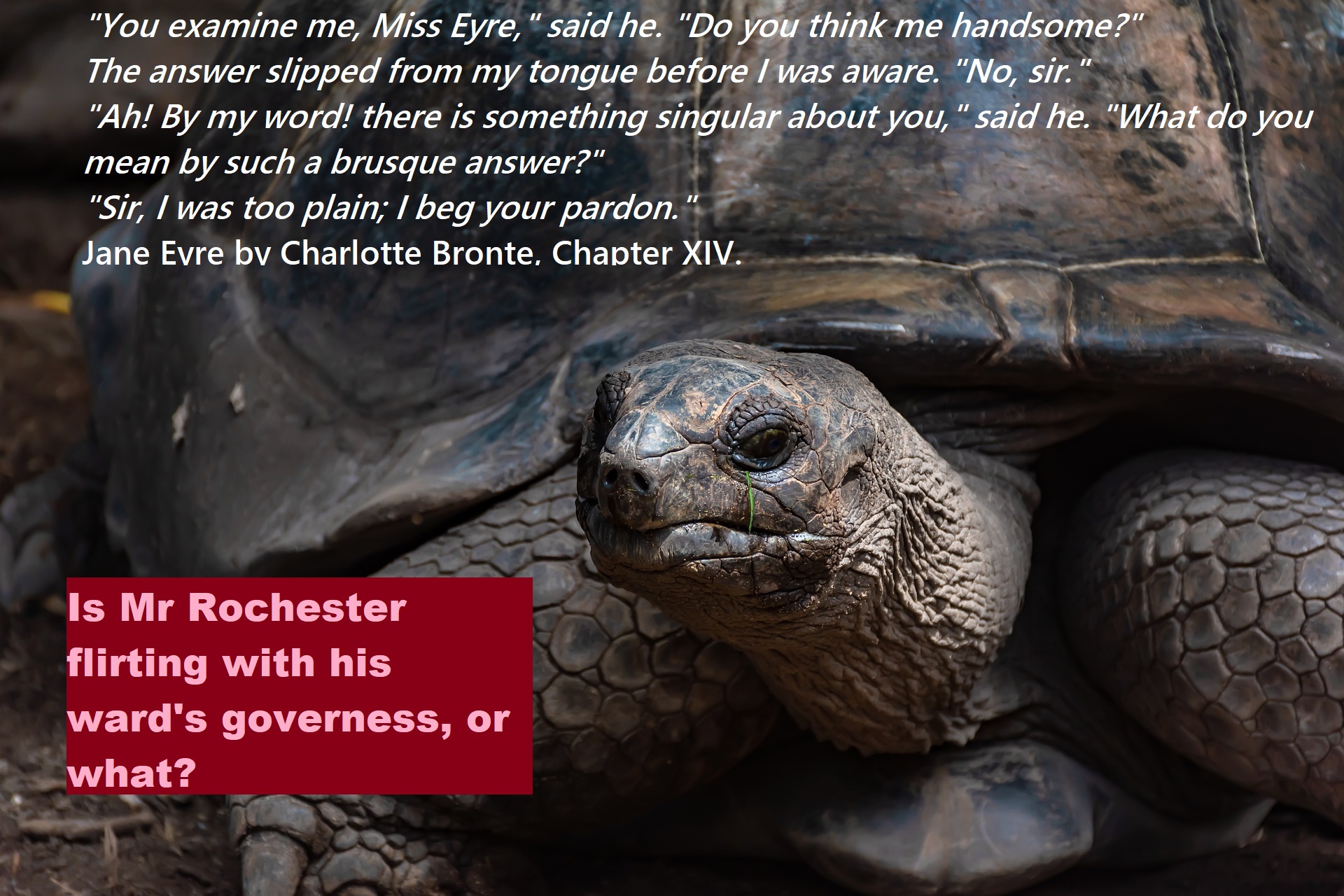
#JaneEyreFF Rereading Jane Eyre in #FlashFiction #Chapter14 #VictorianFiction #CharlotteBronte ‘Mr Rochester Flirts with Miss Eyre, his ward’s Governess!’

Jane Eyre in Flash Fiction Chapter XIV

My Third and Most Peculiar Conversation with Mr Rochester

For several subsequent days I saw little of Mr. Rochester. He would sometimes pass me haughtily and coldly, acknowledging my presence by a distant nod or a cool glance, and sometimes bow and smile with gentlemanlike affability. One day he had company to dinner and sent for my portfolio to exhibit its contents. Soon after his acquaintances left, a message came that Adele and I were summoned to his presence.

Adele was gratified to see a little carton, on the table when we entered the dining-room.

‘Ma boite! ma boite!’ exclaimed she, running towards it.

‘Yes, there is your ‘boite’ at last: take it into a corner, and open it in silence: tiens-toi tranquille, enfant; comprends-tu?’

She untied the cord and exclaimed, ‘Oh ciel! Que c’est beau!’

‘Come forward Miss Eyre; be seated,’ demanded the master, drawing a chair near his own. ‘Don’t draw that chair farther off, Miss Eyre; sit down exactly where I placed it—if you please, that is. Confound these civilities! I continually forget them.”

When Mrs. Fairfax arrived, knitting-basket in hand, he instructed her to entertain Adele and turned to me. “Now, Miss Eyre, draw your chair still a little farther forward: you are yet too far back.”

The dining-room, which had been lit for dinner, filled the room with a festal breadth of light; the large fire was all red and clear. Mr. Rochester sat in his damask-covered chair and looked much less gloomy. He was in his after-dinner mood; more expanded than the frigid and rigid temper of the morning.

‘You examine me, Miss Eyre,’ said he: ‘do you think me handsome?’

The answer slipped from my tongue before I was aware. ‘No, sir.’

‘Ah! By my word! There is something singular about you,’ said he. “What do you mean by such a brusque answer?”

‘Sir, I was too plain; I beg your pardon. I should have said that tastes mostly differ, and beauty is of little consequence, or something of that sort.’

‘You stick a sly penknife under my ear! Go on: what fault do you find with me, pray? I suppose I have all my limbs and all my features like any other man?’

‘Mr. Rochester, allow me to disown my first answer. It was only a blunder.’

‘Criticise me: does my forehead not please you? Am I a fool?’

‘Far from it, sir. You would, perhaps, think me rude if I inquired in return whether you are a philanthropist?’

‘No, young lady, I am not a general philanthropist; but I bear a conscience. I once had a kind of rude tenderness of heart. When I was as old as you, I was a feeling fellow, but Fortune has knocked me about and now I flatter myself I am hard and tough. Does that leave hope for me?’

‘Hope of what, sir?’

‘Of my final re-transformation back to flesh?’

‘Decidedly he has had too much wine,’ I thought; and I did not know what answer to make to his queer question:

‘You looked very much puzzled, Miss Eyre; and though you are not pretty any more than I am handsome, yet a puzzled air becomes you.”

With this announcement he rose from his chair, and stood, leaning his arm on the marble mantelpiece.

‘I am disposed to be gregarious and communicative tonight,’ he repeated, ‘and that is why I sent for you. You puzzled me the first evening I invited you down here. I have almost forgotten you since: other ideas have driven yours from my head; but to-night I am resolved to learn more of you—therefore speak.’

‘What about, sir?’

‘Whatever you like. I leave both the choice of subject and the manner of treating it entirely to yourself.’

I sat and said nothing.

‘You are dumb, Miss Eyre.’

I was dumb still. He bent his head a little towards me, and with a single hasty glance, seemed to dive into my eyes. ‘Stubborn?’ he said, ‘and annoyed. I put my request in an absurd, almost insolent form. Miss Eyre, I beg your pardon. The fact is, once for all, I don’t wish to treat you like an inferior: that is, I claim only such superiority as must result from twenty years’ difference in age and a century’s advance in experience. It is by virtue of this superiority, and this alone, that I desire you to have the goodness to talk to me a little now, and divert my thoughts, which are cankering as a rusty nail.’

I was not insensible to his condescension, which was almost an apology. ‘I am willing to amuse you. Ask me questions, and I will do my best to answer them.’

‘Do you agree with me that I have a right to be masterful, abrupt, and perhaps exacting, on the grounds I have battled through a varied experience with many men of many nations, and roamed over half the globe, while you have lived quietly with one set of people in one house?’

‘Do as you please, sir.’

‘That is no answer. Reply clearly.’

‘I don’t think, sir, you have a right to command me, merely because you are older than I, or because you have seen more of the world than I have; your claim to superiority depends on the use you have made of your time and experience.’

‘Humph! Promptly spoken. Leaving superiority out of the question, then, you must still agree to receive my orders now and then, without being piqued or hurt by the tone of command. Will you?’

I smiled. Mr. Rochester seems to forget that he pays me 30 pounds per annum for receiving his orders.

‘The smile is very well,’ said he, catching instantly the passing expression; ‘but speak too.’

‘I was thinking, sir, that very few masters would trouble themselves to inquire whether or not their paid subordinates were piqued and hurt by their orders.’

‘What! you are my paid subordinate, are you? Oh yes, I had forgotten the salary! Well then, on that mercenary ground, will you agree to let me hector a little?’

‘I am sure, sir, nothing free-born would submit, even for a salary.’

‘Humbug! Most things freeborn will submit to anything for a salary. However, I mentally shake hands with you for your answer, despite its inaccuracy. Not three in three thousand raw school-girl-governesses would have answered me as you have just done. But I don’t mean to flatter you: if you are cast in a different mould to the majority, it is no merit of yours: Nature did it. And yet you may have intolerable defects to counterbalance your few good points.’

‘And so may you,’ I thought. My eye met his as the idea crossed my mind.

‘Yes, yes, you are right,’ said he; ‘I have plenty of faults of my own. I have a past existence. I was thrust on to a wrong tack at the age of one-and-twenty and have never recovered the right course since. I envy you your peace of mind, your clean conscience, your unpolluted memory.”

‘How was your memory when you were eighteen, sir?’

‘I was your equal at eighteen. Nature meant me to be, on the whole, a good man, Miss Eyre, but now I am a commonplace sinner. Remorse is the poison of life.’

‘Repentance is said to be its cure, sir.’

‘Reformation may be its cure; and I could reform, but since happiness is irrevocably denied me, I have a right to get pleasure out of life: and I WILL get it, cost what it may.’

‘Then you will degenerate still more, sir.’

‘Possibly: yet why should I, if I can get sweet, fresh pleasure? And I may get it as sweet and fresh as the wild honey the bee gathers on the moor.’

‘It will sting—it will taste bitter, sir.’

‘How do you know, you have no right to preach to me, you neophyte, that have not passed the porch of life, and are absolutely unacquainted with its mysteries.’

‘I only remind you of your own words, sir: you said error brought remorse, and you pronounced remorse the poison of existence.’

‘Justly thought; rightly said, Miss Eyre. I am laying down good intentions, which I believe durable as flint. Certainly, my associates and pursuits shall be other than they have been.’

He was thoughtful, and I stood to leave.

‘Where are you going?’

‘To put Adele to bed: it is past her bedtime.’

‘You are afraid of me, because I talk like a Sphynx.’

‘Your language is enigmatical, sir: but though I am bewildered, I am certainly not afraid.’

‘You are afraid—your self-love dreads a blunder.’

‘In that sense I do feel apprehensive—I have no wish to talk nonsense.’

‘If you did, it would be in such a grave, quiet manner, I should mistake it for sense. Do you never laugh, Miss Eyre? Don’t trouble yourself to answer—I see you laugh rarely. The Lowood constraint still clings to you somewhat; controlling your features, muffling your voice, and restricting your limbs; and you fear in the presence of a man to smile too gaily, speak too freely, or move too quickly: but, in time, I think you will learn to be natural with me, as I find it impossible to be conventional with you. You are still bent on going?’

‘It has struck nine, sir.’

‘Wait a minute: Adele is not ready to go to bed yet.”

Adele spread out her dress, she chasseed across the room to Mr. Rochester and wheeled lightly round before him on tip-toe, then dropped on one knee at his feet, thanking him for his present and asking, ‘C’est comme cela que maman fai- sait, n’est-ce pas, monsieur?’

‘Precisely!’ was the answer; ‘and, ‘comme cela,’ she charmed my English gold out of my British breeches’ pocket. I have been green, too, Miss Eyre. My Spring is gone, however, but it has left me that French floweret on my hands. I keep it and rear it rather on the Roman Catholic principle of expiating numerous sins, great or small, by one good work. I’ll explain all this some day. Goodnight.’

****

This is Mr Rochester’s third conversation with his ward’s governess, and he is clearly flirting as well as teasing her, in plain sight, while Adele and Mrs Fairfax are in the same room. It is an intense conversation in which he claims to have many regrets about the mistakes of his youth. He says he was thrust onto a wrong tack at twenty-one, and never recovered the right course since.

He claims to ‘lay down good intentions’ as a result of their conversation, and following Jane’s suggestions that repentance is the cure to remorse.

He says Adele’s mother ‘charmed my English gold out of my British breeches’ pocket’, which is a surprisingly vulgar way of describing his ward and Jane’s pupil’s mother.

To a modern reader, he comes across as a typical Byronic hero. That is a pompous, wealthy and privileged, pleasure-seeker. In his own words: “I have a right to get pleasure out of life: and I will get it, cost what it may,” who is trying to impress a naive, eighteen-year-old girl. Jane is obviously attracted to him and interested in ‘saving his soul’, but is he redeemable? And at what cost to Jane?

We shall see in the following chapters.

The summary is based on the free ebook by planet books which you can find here.

I’ll be posting a chapter of Jane Eyre in flash fiction every Friday. If you’re wondering why, read all about it here.

If you’d you’d like to Reread Jane Eyre with me, visit my blog every Friday for #JaneEyreFF posts.

See you next week for chapter 15. 

Images from Pixabay

#SixWordSunday ‘Remember to Smile at the Rain’ #SundayWalks #Haiku

Remember to smile when rain pours.

Clouds sing, earth smiles,

It’s joyous Sunday!

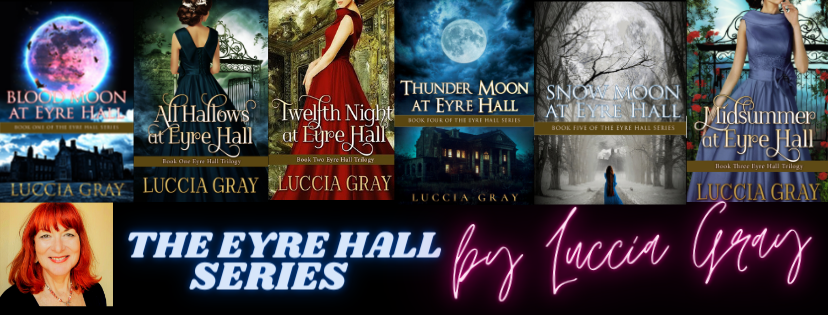
The Eyre Hall Trilogy: Unpublished BUT The Eyre Hall Series will be Published shortly #JaneEyre and #WideSargassoSea Sequel

It was with sadness that I clicked on the ‘unpublish’ button on My KDP Bookshelf yesterday morning. So now, if you go to my Amazon Author page you will not be able to purchase my novels in ebook format any more. But, fear not, remember, ‘All’s well that ends well’!

Banner and Lucy

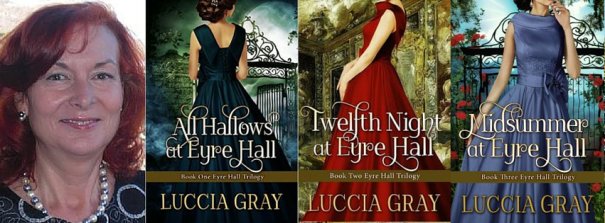
This was the banner I created in 2016, when I published the third and final novel in my series, Midsummer at Eyre Hall. It’s been almost five years since that happened, and seven years since I published my first novel, All Hallows at Eyre Hall. It’s been a wonderful journey as an independent author, improving my writing skills, learning about self-publishing, blogging, networking with other authors, readers and reviewers, and marketing, because an indie author has to do it all, and/or outsource to others.

When I started writing All Hallows at Eyre Hall, my sequel to Jane Eyre, I had four characters, Mrs Rochester (nee Jane Eyre) Mr Edward Rochester, Mr Richard Mason and Miss Annette Mason, in a setting, Eyre Hall, in Yorkshire, rebuilt by Jane, on the site of Thornfield Hall, after it was burnt down and she married Mr Rochester, on a specific date, twenty-two years after their marriage in October 1865, while Mr Rochester is on his deathbed. I had a very vague plot; Richard Mason was to bring Bertha Mason, Edward’s first wife’s daughter, Annette, born in the attic, while she was imprisoned at Thornfield Hall, back to England, from Jamaica, where she had been living, under his supervision, to blackmail Jane Eyre.

Plotter, Pantser or Plantser?

I began my first novel as a ‘pantser’; I sat down and wrote All Hallows at Eyre Hall, with no attention to plot structure or character arc. I had my characters, location and one specific plot line, and I wrote with the naïve confidence that it would all work out in the end. I started writing, during my summer holidays in 2013 (I was working as a teacher at the time), by September, I realised it would be a trilogy, because although there was one main plot, there were plenty of linked sub plots, and over twenty characters had come into play.

I also realised I needed a plan to keep all the plot lines, character arcs, and events in place, so I decided to plot my novels, but I didn’t become a plotter, I became a plantser. This means I prepare an outline of my novel, with scenes and chapters, and then I write, but I’m not a slave to my plot. The plot guides me to a destination, but my characters decide if they want to follow the plan or rewrite it with their own ideas. I literally go with my character’s flow. The end product looks like the original plot, but it’s never the same, and that’s the beauty of plantsing; you get the best of both worlds.

All Hallows was a learning experience. Writing this novel taught me my strengths and weaknesses, and learning from them helped me become a better writer. It’s not my favourite novel (yes, I do have a favourite, and some of you already know which one it is), but it is the most special, because by writing this novel, I discovered the best writing process for me.

I wrote and published a book a year after All Hallows. By trial and error I found two great editors, one in the UK and one in the US, several fabulous cover designers, I learnt something about selling and marketing books, and a lot about the self-publishing business, thanks to many generous people on YouTube, specialised blogs and other social media. I learnt to format and upload my books as ebooks and paperbacks on Amazon, and dabble in a bit of marketing, at a very basic level. It has been an exhausting, but hugely rewarding enterprise, I had never even imagined lay ahead of me when I started writing.

Everything changed in 2020

So, what happened in 2020? Actually, it all started in 2019, when I took early retirement from teaching in September and decided to write full time. I expected to have more time for my literary pursuits, but starting in December 2019, everything went downhill. It was a very complex year for personal and family reasons. There were births, illness, marriage and divorce in the family to cope with, as well as Covid-19, and although ideas were bursting to be written, they were put on hold, as I attended to the urgent matters in my family’s lives.

Everything changed again in the autumn of 2020. Suddenly, I had all the time in the world to write, due to partial lockdown, and the personal and family issues were well on the mend, so I resumed my neglected writing career with full force. This means that The Eyre Hall Trilogy has gradually become The Eyre Hall Series, an idea which had been in my mind, and partly on paper, for some time.

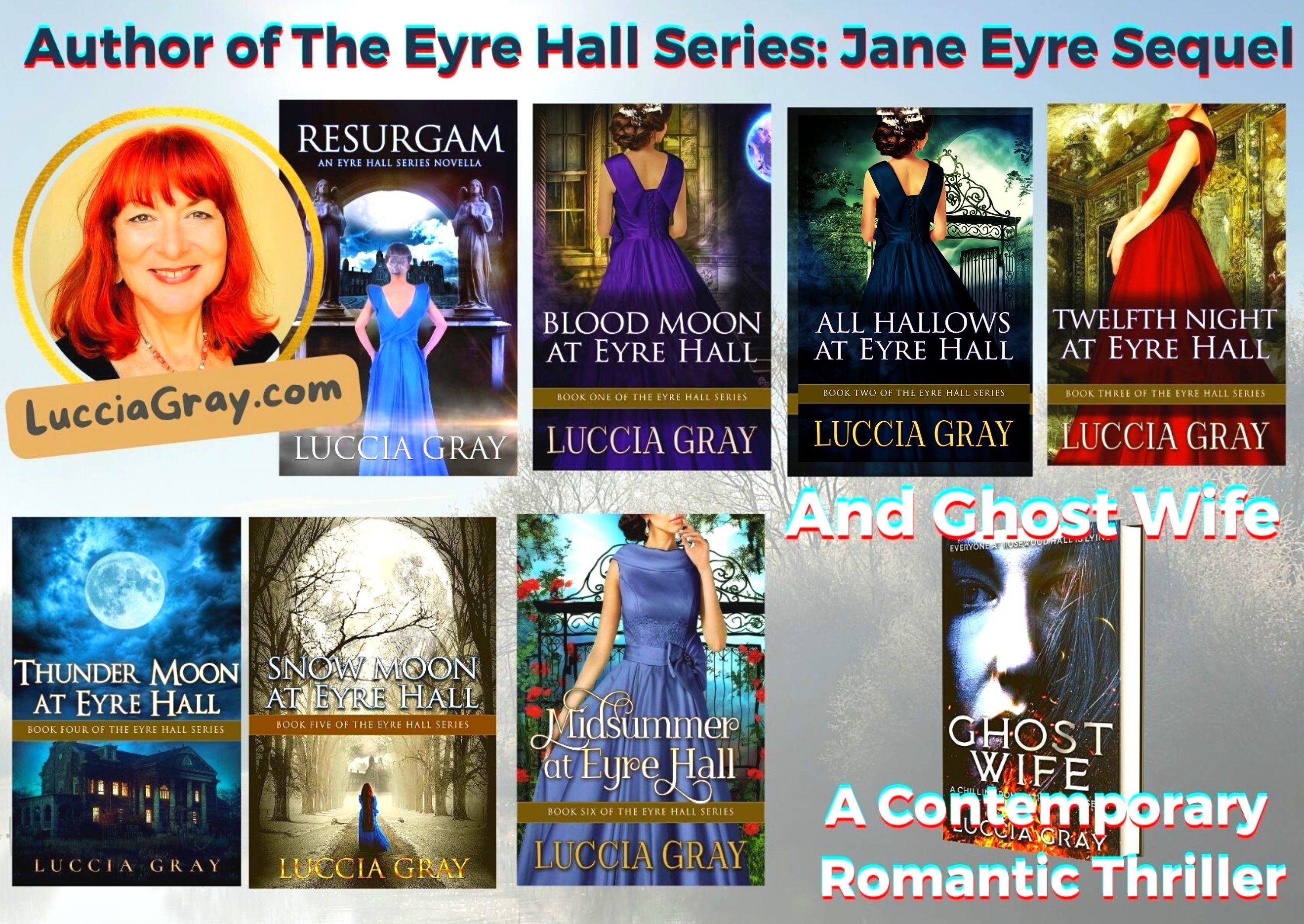
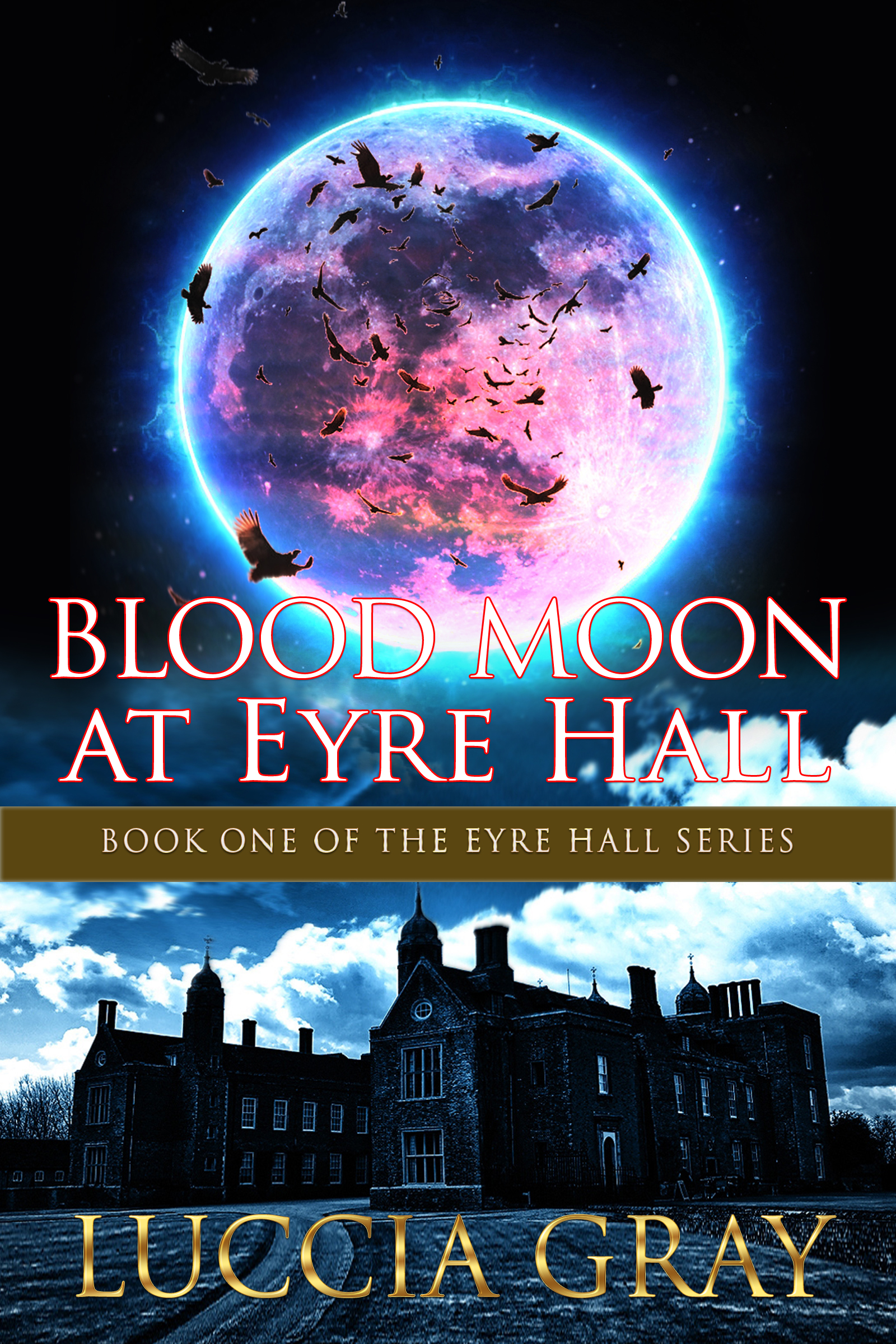
The first new instalment is Blood Moon at Eyre Hall, The new Book One in the series.

This led to a third edition of All Hallows at Eyre Hall, which has become Book Two. The series continues with a second, revised edition of Twelfth Night at Eyre Hall, which has become Book Three of the Eyre Hall Series.

I reached a major hurdle when it came to Midsummer at Eyre Hall, which covered over ten years and has now become three books: Thunder Moon at Eyre Hall, Book Four of The Eyre Hall Series.

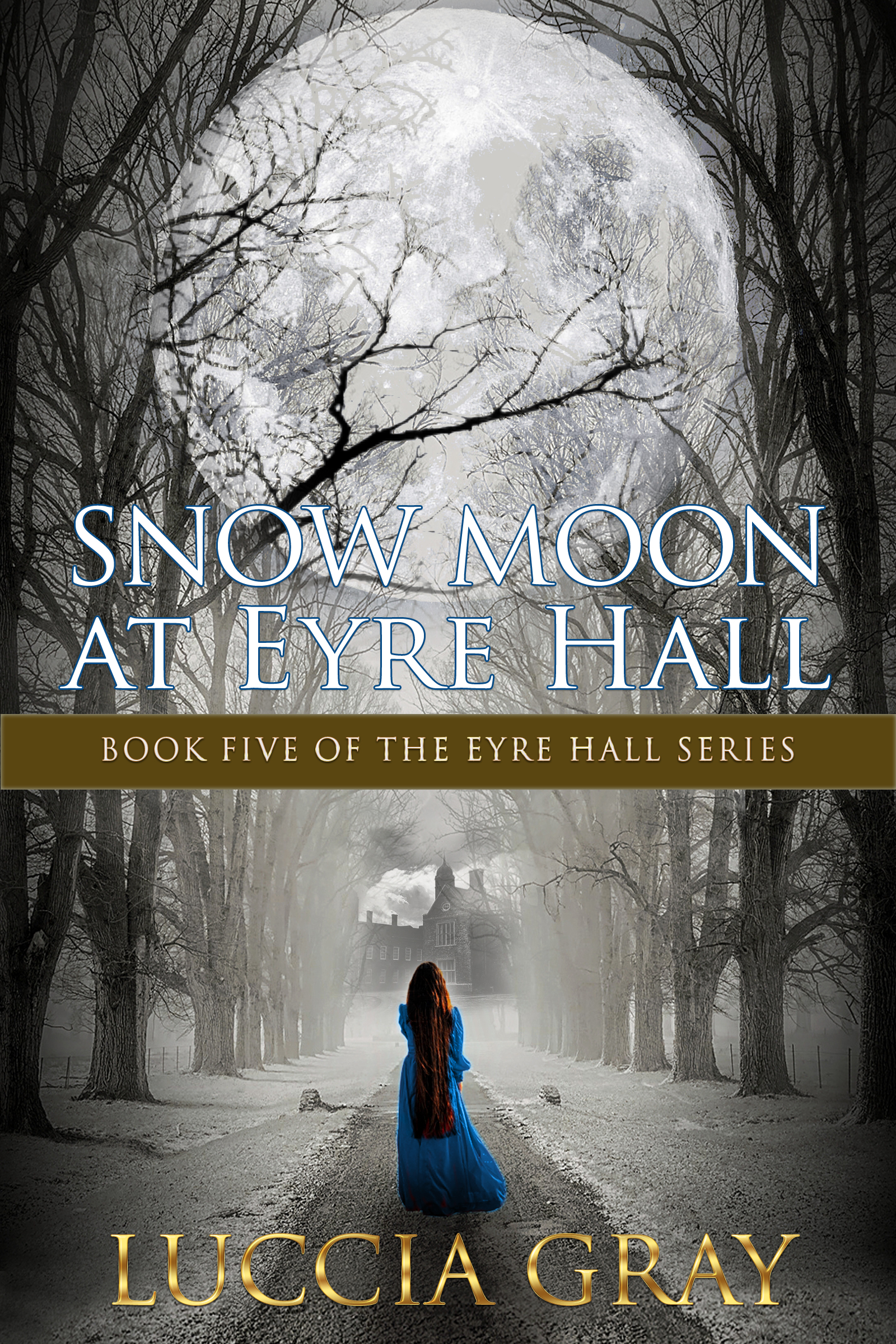
Followed by Book Five of the Eyre Hall Series, Snow Moon At Eyre Hall.

And finally, Midsummer at Eyre Hall is now Book Six in the Eyre Hall Series.

So The Eyre Hall Trilogy has become The has become The Eyre Hall Series with six books.

The first four novels are complete, but in various stages of editing and formatting. The last two are still in early drafts. I hope to publish Book One, Blood Moon at Eyre Hall in July, and the following books will be published one a month until the whole series and Box Set will be complete by December, 2021.

This being the case, I thought it best to unpublish the original trilogy. For those who have read The Eyre Hall Trilogy, I suggest two options; you could reread the whole new series (The box set of six books will have a very special price). Otherwise, if you remember the plot, you can take up the story after Twelfth Night, because there are no major changes up to the end of this novel, and read the last three books, which are new. If you’re still not sure, drop me a line at the email below, or in the comments.

Finally, if any of you would like to be the first to read Blood Moon at Eyre Hall, Book One in The Eyre Hall Series, please let me know, so I can get in touch personally, either in the comments below, or email me at luccia.gray@gmail.com so I can send you an ARC.

#JaneEyreFF Rereading Jane Eyre in #FlashFiction #Chapter13 #VictorianFiction #CharlotteBronte Jane and Mr Rochester’s first conversation at Thornfield Hall. Sparks fly!

Jane Eyre in Flash Fiction Chapter XIII

My First Conversation with Mr Rochester

I did not see Mr. Rochester that night. I discerned in the course of the following morning that Thornfield Hall was a changed place I liked better. The outer world was flowing through it with visitors and fresh voices, as Mr. Rochester attended estate business in the library, which we were asked to vacate. We carried our books to an apartment upstairs.  Adele would not sit still or be quiet, imagining which present Mr Rochester had brought her from his travels. “Il y aura le dedans un cadeau pour moi,”

Mrs. Fairfax informed us that Mr. Rochester would be glad if we had tea with him in the drawing-room that evening at six o’clock.

“You had better change your frock,” she said. “I always dress for the evening when Mr. Rochester is here.”

So, I replaced my black stuff dress with one of black silk and a single little pearl ornament, which Miss Temple gave me as a parting keepsake.

When I entered the drawing room, Adele and Pilot sat by the fire, while Mr Rochester, who appeared not to notice our entrance, was half reclined on a couch with his foot supported by the cushion. I recognised my traveller’s jetty eyebrows, square forehead, and decisive nose, and grim expression. He was broad chested and thin, flanked, though neither tall nor graceful.

‘Here is Miss Eyre, sir,’ said Mrs. Fairfax.

‘Let Miss Eyre be seated,’ said he.

Shortly, he said, ‘Madam, I should like some tea,’ and when the tray came, we sat at the table and Mrs Fairfax poured the tea, but the master did not leave his couch.

‘Will you hand Mr. Rochester’s cup?’ said Mrs. Fairfax, and I did as requested.

Adele asked him in French if he had a present for me. “N’est-ce pas, monsieur, qu’il y a un cadeau pour Mademoiselle Eyre dans votre petit coffre?”

‘Are you fond of presents, Miss Eyre?” and he searched my face with eyes that I saw were dark, irate, and piercing.

‘I hardly know, sir; I have little experience of them: they are generally thought pleasant things.’

“I have examined Adele, and find you have taken great pains with her: she is not bright, she has no talents; yet in a short time she has made much improvement.’

‘Sir, you have now given me my ‘cadeau;’ I am obliged to you: it is the reward teachers most covet—praise of their pupils’ progress.’

‘You have been resident in my house three months?’

‘Yes, sir.’

‘And you came from—?’

‘From Lowood school, in—shire.’

‘Ah! a charitable concern. How long were you there?’

‘Eight years.’

‘Eight years! You must be tenacious of life. No wonder you have rather the look of another world. I marvelled at where you had got that sort of face. When you came on me in Hay Lane last night, I thought unaccountably of fairy tales, and had half a mind to demand whether you had bewitched my horse: I am not sure yet. Who are your parents?’

‘I have none.’

‘Do you remember them?’

‘No.’

‘Do you have any family?”

“None that I know of.”

‘Were you waiting for your people when you sat on that stile?’

‘For whom, sir?’

‘For the men in green: it was a proper moonlight evening for them. Did you spread that damned ice on the causeway?’

I shook my head. ‘The men in green all forsook England a hundred years ago.’

‘Who recommended you to come here?’

‘I advertised, and Mrs. Fairfax answered my advertisement.’

“Miss Eyre has been an invaluable companion to me, and a kind and careful teacher to Adele,” said Mrs Fairfax.

 ‘Don’t trouble yourself to give her a character,’ returned Mr. Rochester: ‘I shall judge for myself. She began by felling my horse. I have to thank her for this sprain.’ The widow looked bewildered.

‘Miss Eyre, have you ever lived in a town?’

‘No, sir.’

‘Have you seen much society?’

‘None but the pupils and teachers of Lowood, and now the inmates of Thornfield.’

‘Have you read much?’

‘Only such books as came in my way; and they have not been numerous or very learned.’

‘You have lived the life of a nun: no doubt you are well drilled in religious forms. Brocklehurst, who I understand directs Lowood, is a parson, is he not?’

‘Yes, sir.’

‘And you girls probably worshipped him.’

‘I disliked Mr. Brocklehurst; and I was not alone in the feeling. He is a harsh man; at once pompous and meddling; he cut off our hair, starved us.”

‘What age were you when you went to Lowood?’ ‘

About ten.’

‘And you stayed there eight years: you are now, then, eighteen?’

I assented.

‘Can you play?’

‘A little.’

‘Go into the library—I mean, if you please.—(Excuse my tone of command; I am used to saying, ‘Do this,’ and it is done: I cannot alter my customary habits for one new inmate.)—take a candle with you and play a tune.’

I departed, obeying his directions.

‘You play like any other English school-girl; perhaps rather better than some, but not well.’

When I returned, Mr. Rochester asked me about my sketches. “Adele showed me some sketches this morning, which she said were yours. Were they entirely of your doing, or did a master aid you?’

‘No, indeed!’ I interjected.

‘Fetch me your portfolio.”

He deliberately scrutinised each sketch and painting. ‘And when did you find time to do them? They have taken much time, and some thought.’

‘I did them in the last two vacations I spent at Lowood, when I had no other occupation.’

‘Where did you get your copies?’

‘Out of my head.’

They were watercolours. The first depicted clouds, rolling over a swollen sea with a half-submerged mast, on which sat a large, dark cormorant, below the bird and mast. A drowned corpse glanced through the green water, wearing a washed or torn bracelet.

The second picture contained the dim peak of a hill, and rising into the dark blue twilight sky was a woman’s shape to the bust, whose forehead was crowned with a star, the eyes shone dark and wild, and on her neck lay a pale reflection like moonlight and a vision of the Evening Star.

The third showed the pinnacle of an iceberg piercing a polar winter sky, with a muster of northern lights along the horizon. In the foreground, a colossal white head inclined towards the iceberg, with a hollow, despairing eye.

‘Were you happy when you painted these pictures?’ asked Mr. Rochester presently.

‘I was absorbed, sir: yes, and I was happy. To paint them was to enjoy one of the keenest pleasures I have ever known.’

‘That is not saying much. Your pleasures, by your own account, have been few. Did you sit at them long each day?’

‘It was the vacation, and I sat at them from morning till night.’

‘The drawings are, for a schoolgirl, peculiar.” He said, wondered on their meaning and told me to put them away and instructed me to take Adele to bed.

He endured Adele’s kiss and said, ‘I wish you all goodnight, now,’ making a movement of the hand towards the door, in token that he was tired of our company, and wished to dismiss us.

‘You said Mr. Rochester was not strikingly peculiar, Mrs. Fairfax,’ I observed.

‘Well, is he?’

‘I think so. He is very changeful and abrupt.’

‘True, but if he has peculiarities of temper, allowance should be made.’

 ‘Why?’

‘Partly because it is his nature and partly because he has painful thoughts.’

‘What about?’

‘Family troubles, for one thing.’

‘But he has no family.’

‘Not now, but he has had—or, at least, relatives. He lost his elder brother a few years since. The present Mr. Rochester has not been long in possession of the property; only about nine years.’

‘Was he so very fond of his brother as to be still inconsolable for his loss?’

‘I believe there were some misunderstandings between them. Mr. Rowland Rochester was not quite just to Mr. Edward; and perhaps he prejudiced his father against him. The old gentleman was fond of money, and anxious to keep the family estate together. He did not like to diminish the property by division, and yet he was anxious that Mr. Edward should have wealth, too, to keep up the consequence of the name; and, soon after he was of age, some steps were taken that were not quite fair, and made a great deal of mischief. He has ever been resident at Thornfield for a fortnight together. Perhaps he thinks it gloomy.’

I should have liked a clearer answer, but Mrs. Fairfax did not wish to elaborate.

****

This chapter, which takes place in the drawing room, is highly anticipated by the reader. Their first meeting was dramatic and unexpected, but this second one is their first regular conversation at Thornfield, and it does not disappoint. Mr Rochester and Jane are clearly attracted to and interested in each other. Jane is a naïve eighteen-year-old governess, but she does not shy away from their conversation, in fact she replies to all his questions with confidence and intelligence. In fact, if it were a contemporary novel, we would say that they engaged in ‘witty banter’.  

Mr Rochester shows a keen interest in his employee, asking her personal questions about her family and experience in life. He praises her qualities as a teacher, and he takes an interest in her skills such as drawing and music.

Jane is also interested in her employer, as well as a detailed physical description. She considers his character is peculiar, unpredictable and moody, but she is more curious than displeased. She is eager to know more about him, but Mrs Fairfax shares little information.

We learn he was the younger brother, the second son, or the ‘spare’ of the older brother and heir to the estate. His father made other financial provisions for him when he was young, because his older brother would inherit the estate. We later learn that this consisted of an arranged marriage with a Jamaican heiress, who is currently locked in his attic.

He never intended to inherit or live at Thornfield Hall, but he had to do so when his father and older brother, Rowland, died. We know nothing of the circumstances of their deaths or his mother.

The plot thickens… Don’t miss out on next weeks’ chapter!

The summary is based on the free ebook by planet books which you can find here.

I’ll be posting a chapter of Jane Eyre in flash fiction every Friday. If you’re wondering why, read all about it here.

If you’d you’d like to Reread Jane Eyre with me, visit my blog every Friday for #JaneEyreFF posts.

See you next week for chapter 14. 

Images from Pixabay
#JaneEyreFF Rereading Jane Eyre in #FlashFiction #Chapter12 #VictorianFiction #CharlotteBronte Jane meets Mr Rochester, at last!

Jane Eyre in Flash Fiction Chapter 12

How I Met Mr Rochester

My pupil was a lively child, who had been spoilt but became obedient, teachable and made reasonable progress. We were both content in each other’s society. Mrs Fairfax, John and his wife, Leah the housemaid, and Sophie the French nurse, were decent people; but in no respect remarkable and I grew restless at Thornfield.

I would climb the three staircases, raised the trap-door of the attic, and looked out afar over sequestered field and hill, and longed to reach the busy world, towns, regions full of life I and acquaintance with variety of character, than was here within my reach.

 Women feel the need to exercise for their faculties, and a field for their efforts, just as men do and it is narrow-minded to say that they ought to confine themselves to making puddings and knitting stockings, to playing on the piano and embroidering bags. It is thoughtless to condemn them, or laugh at them, if they seek to do more or learn more than custom has pronounced necessary for their sex.

Some days I heard Grace Poole’s strange laugh and eccentric murmurs, others she would come out of her room with a tray go down to the kitchen and return bearing a pot of porter. I made some attempts to draw her into conversation, but she replied with monosyllables.

October, November, December passed and one fine, calm afternoon in January, tired of sitting still in the library I put on my bonnet and cloak and volunteered to take Mrs. Fairfax’s letter to be posted in Hay which was two miles away.

I walked in utter solitude and leafless repose, under the low-gliding and pale-beaming sun. If a breath of air stirred, it made no sound for there was not a leaf to rustle. I sat down on a stile in the middle of the causeway, which was covered by a sheet of ice, where a little brooklet, now congealed, had overflowed after a rapid thaw some days since.

A loud metallic clatter on the causeway meant a horse was approaching. I sat still to let it go by. In those days I was young, and all sorts of fancies tenanted my mind. As dusk fell and the horse approached, I remembered Bessie’s tale of a ‘Gytrash,’ which, in the form of horse, mule, or large dog, haunted solitary ways, and sometimes came upon belated travellers.

The horse was very near, but not yet in sight; when, a great black and white dog which looked like Bessie’s Gytrash, passed me, and the horse followed,—a tall steed, and on its back a rider. He passed, I went on and a sliding sound and a clattering tumble, arrested my attention. Man and horse were down; they had slipped on the sheet of ice which glazed the causeway. The dog came bounding back, and seeing his master in a predicament, and hearing the horse groan, barked till the evening hills echoed the sound, and then he ran up to me, as there was no other help at hand.

I walked down to the traveller. ‘Are you injured, sir? Can I do anything?’

‘You must just stand on one side,’ he answered, rose, stooped to feel his foot and leg, apparently something ailed them, for he halted to the stile whence I had just risen, and sat down.

I was in the mood for being useful, for I now drew near him again.

‘If you are hurt, sir, I can fetch someone either from Thornfield Hall or from Hay.’

‘Thank you: I shall do. I have no broken bones, only a sprain;’ but as he tried his foot, he extorted an involuntary ‘Ugh!’

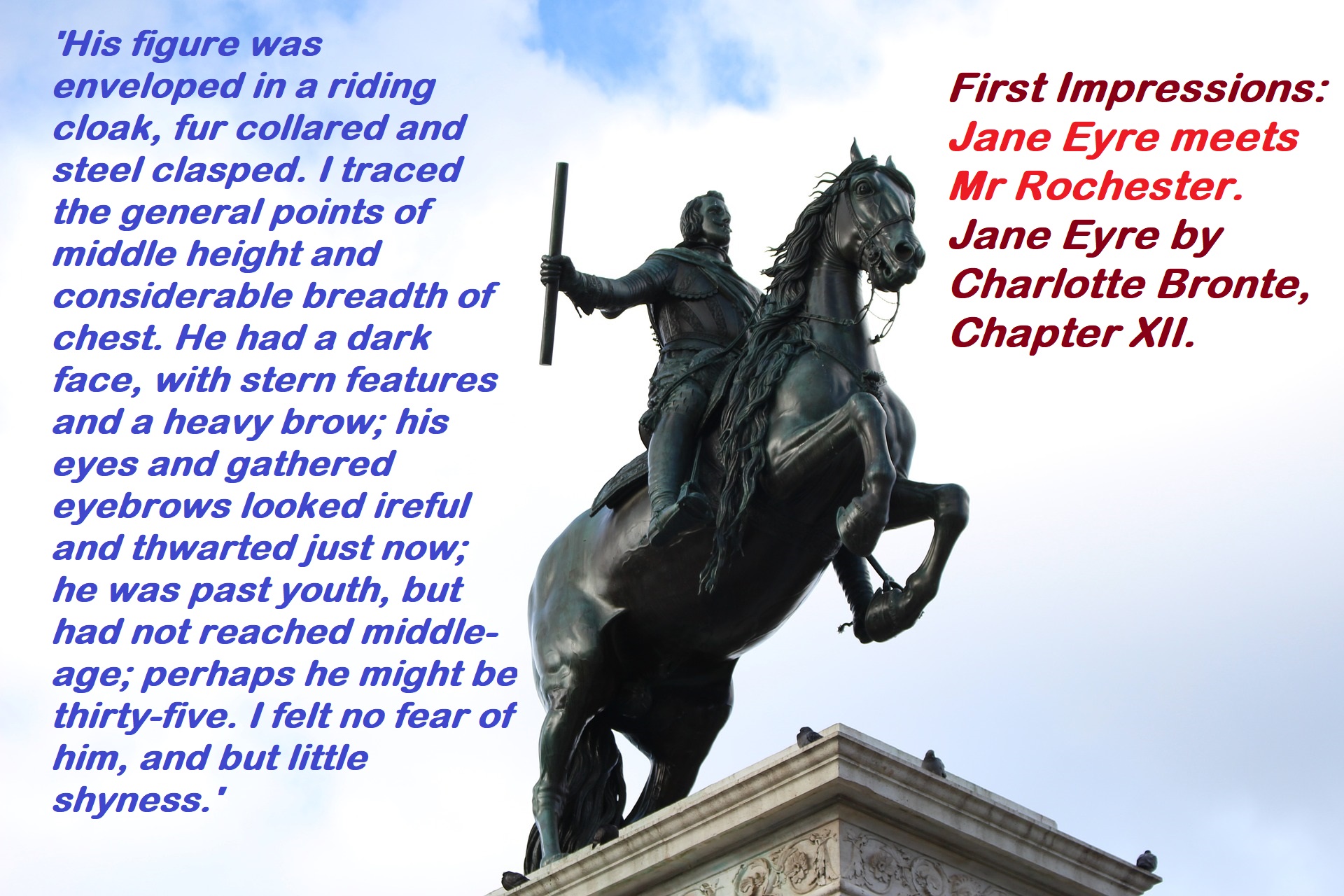
Something of daylight still lingered, and the moon was waxing bright: I could see him plainly. His figure was enveloped in a riding cloak, fur collared and steel clasped. I traced the general points of middle height and considerable breadth of chest. He had a dark face, with stern features and a heavy brow; his eyes and gathered eyebrows looked ireful and thwarted just now; he was past youth, but had not reached middle-age; perhaps he might be thirty-five. I felt no fear of him, and but little shyness. Had he been a handsome, heroic-looking young gentleman, I should not have dared to stand thus questioning him against his will, and offering my services unasked.

I had hardly ever seen a handsome youth; never in my life spoken to one. If even this stranger had smiled and been good-humoured, I should have gone on my way, but the frown and roughness of the traveller, set me at my ease.

‘I cannot think of leaving you, sir, at so late an hour, in this solitary lane, till I see you are fit to mount your horse.’

He looked at me when I said this; he had hardly turned his eyes in my direction before.

‘I should think you ought to be at home yourself,’ said he, ‘Where do you come from?’

‘From just below; and I am not at all afraid of being out late when it is moonlight.”

‘Do you mean at that house with the battlements?’ he said, pointing to Thornfield Hall.

‘Yes, sir.’

‘Whose house is it?’

‘Mr. Rochester’s.’

‘Do you know Mr. Rochester?’

‘No, I have never seen him.’

‘He is not resident, then?’

‘No.’

‘Can you tell me where he is?’

‘I cannot.’

‘You are not a servant at the hall, of course. You are—‘ He stopped, ran his eye over my simple dress, black merino cloak, and black beaver bonnet. He seemed puzzled to decide what I was; I helped him.

‘I am the governess.’

‘Ah, the governess!’ he repeated; ‘deuce take me, if I had not forgotten! The governess!’ and again my raiment underwent scrutiny.

He rose from the stile, his face expressing pain when he tried to move. ‘I cannot commission you to fetch help,’ he said; ‘but you may help me a little yourself, if you will be so kind.’

‘Yes, sir.’

‘You have not an umbrella that I can use as a stick?’

‘No.’

“I must beg of you to come here. Excuse me,’ he continued: ‘necessity compels me to make you useful.’ He laid a heavy hand on my shoulder, and leaning on me with some stress, limped to his horse and sprang to his saddle, grimacing.

‘Thank you; now make haste with the letter to Hay, and return as fast as you can,’ he said and bound away.

I walked on. The incident was of no romance, or interest, yet it marked a change in my monotonous life. I was weary of a passive existence and the new face was dissimilar to all the others because it was masculine, dark, strong, and stern. I had it still before me when I entered Hay, and I saw it as I walked all the way home.

I lingered at the gates of the gloomy house and became aware of a cheerful mingling of voices. I hastened to Mrs. Fairfax’s room but only found a great black dog, just like the Gytrash of the lane.

‘What dog is this?’ I asked Leah.

‘He came with the master, Mr. Rochester. Mrs Fairfax and Miss Adele are in the dining-room, and John is gone for Dr Carter, the surgeon; for master has had an accident; his horse fell and his ankle is sprained.’

I went upstairs to take off my things.

****

The chapter begins with a mundane exposition of the three months which have passed, since her arrival in October. It is January and she is bored and restless at Thornfield. Jane is obviously an ambitious young girl who longs for excitement. There is an interesting feminist reflection on how women were viewed at her time, and how she views herself, as a person with a voice, an opinion and the desire to express it, in spite of identifying the gender roles which oppress women.    

It is also noteworthy that she hears the laugh of the person she believes to be Grace Poole, although she has her doubts (sorry for the spoiler, but I think we all know it’s Mr Rochester’s mad wife, who is confined in the attic). In retrospect, she would have realised she suspected there was someone in the attic, other than Grace, all along, but at the time she believed what she was told. The servants must know, but Jane, Adele and Sophie are unaware of the presence of another woman in the attic. Charlotte Bronte, builds suspense, as neither reader nor protagonist know what’s going on, although they suspect that it’s something ‘spooky’ or strange.

This second part of the chapter is the most exciting so far. Jane tells us how she met Mr Rochester, when his horse slipped on the ice on the causeway on his way to Thornfield Hall. It is not romantic, as she herself says, but it is the most romantic thing that has ever happened to her. She admits that her experience of men is limited, but the traveller obviously left an impression on her, as she couldn’t get him out of her mind, until she returned to Thornfield and discovered he was Mr Rochester.

The chapter ends rather flatly, ‘I went upstairs to take off my things’, after discovering the mysterious stranger was the owner of Thornfield, and therefore her boss, and we know nothing about her surprise or how she felt about his behaviour.

It is Mr Rochester’s first lie, by omission, on this occasion. He refuses to disclose his identity, presumably for his amusement, as there is no other reason to do so. In his first encounter, he is already toying with Jane. There is obviously going to be a romance, but we fear he is going to use his age and position to control the information she receives. I’d call that manipulation from their first meeting. But love is blind. The question is, will she be able to tame the Byronic hero/rake? More next week!

The summary is based on the free ebook by planet books which you can find here.

I’ll be posting a chapter of Jane Eyre in flash fiction every Friday. If you’re wondering why, read all about it here.

If you’d you’d like to Reread Jane Eyre with me, visit my blog every Friday for #JaneEyreFF posts.

See you next week for chapter 13. 

Images from Pixabay
Insecure Writers Support Group #IWSG ‘Readers’ Surprising Responses’ #amwriting #Histfic #JaneEyre #May2021

This post was written in response to the Insecure Writer’s Support Group monthly (first Wednesday of every month) blog hop to where writers express thoughts, doubts, and concerns about our profession. By the way, all writers are invited to join in!

Let’s rock the neurotic writing world! Our Twitter handle is @TheIWSG and hashtag is #IWSG

May 5 question – Has any of your readers ever responded to your writing in a way that you didn’t expect? If so, did it surprise you?

The awesome co-hosts for the May 5 posting of the IWSG are Erika Beebe, PJ Colando, Tonja Drecker, Sadira Stone, and Cathrina Constantine!

Insecure Writers Support Group Badge

Have my readers’ responses surprised me? Definitely!

I have over a hundred written reviews on Amazon, and over two hundred reviews on Goodreads, which may not seem like a lot, but it never ceases to amaze me. The fact that so many readers, people I don’t know and who may never have heard of me, a relatively little known author, in a vast ocean of millions of books and writers, have been motivated to read my books and taken the trouble to write a review, amazes me.  

I feel encouraged by the good reviews, which fortunately account for the majority, and that used to surprise me when I started publishing, seven years ago, in 2014, because I was very insecure!

I used to feel upset when I got a negative review, again, because I was very insecure, but now I’m less insecure and I appreciate them too, because some are useful, and at least they all count as reviews!

At first, I was surprised that so many readers disliked my novel because they thought I had treated Mr Rochester too harshly. In my defense, I’d say I didn’t lock him in a windowless attic, or make him suffer any physical torture! He lived a good life, with his wife and son, even though he went back to some of his old ways. 

I mean, locking your wife in an attic in dire conditions, hidden from everyone (in spite of being a moneyed heiress), and pretending you’re single to the point of intending bigamy (until your wedding was interrupted at the altar) with an innocent nineteen-year-old, is pretty objectionable behaviour, even for 19th century standards.    

On the other hand, I can appreciate the fact that Mr Rochester has been an icon of passionate love, aka the brooding Byronic hero/lover, who is brought to his feet due to the love of a ‘good’ woman, for almost 200 years, but that’s due to an erroneous interpretation of Jane Eyre by Charlotte Bronte.

Jane Eyre is the protagonist the reader should root for, not Rochester. Jane is the independent, resourceful and single-minded nineteen-year-old woman who stood up to a manipulative rake and won him over on her terms, with her money (Spoiler alert: at the end of the novel she becomes an heiress herself), once he was a widower, and once she had made her way in the world working and living on her own, a feat not all women achieve, even nowadays.  

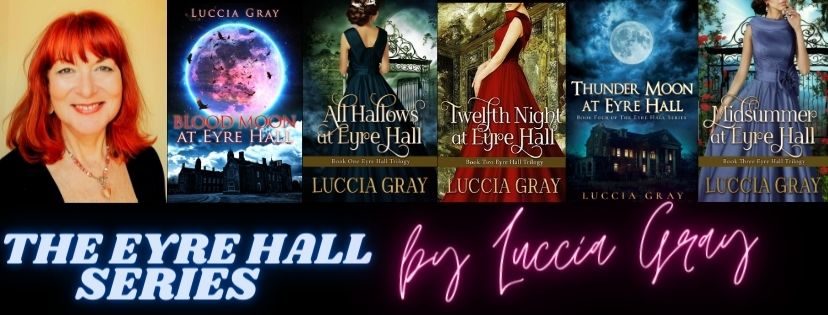
I’d love to continue to be surprised by my readers, and I hope to surprise them too with more novels. I started by writing The Eyre Hall which will become The Eyre Hall Series shortly, as two new novels, Blood Moon at Eyre Hall and Thunder Moon at Eyre Hall are coming soon! 

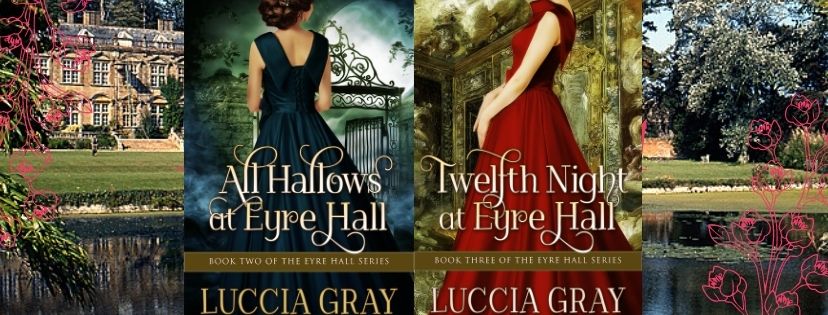
Take a look at my provisional banner, I’m still making changes and adapting the covers. Do you like them? 

If you’d like to read or reread Jane Eyre, I’m posting one chapter a week, every Friday, in flash fiction, directly from the original novel, for readers who prefer to read an abridged version, here, just click on the banner below: