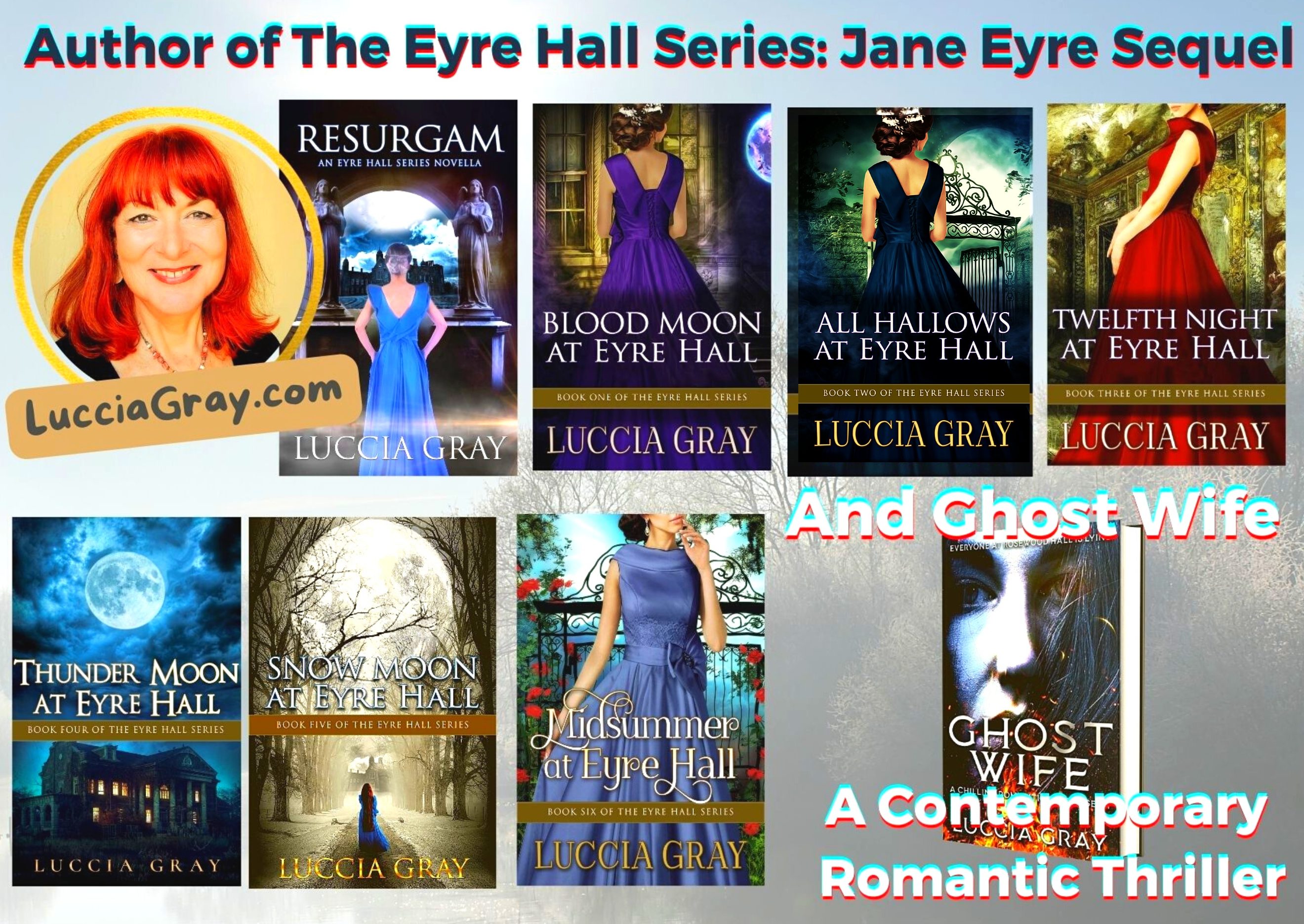
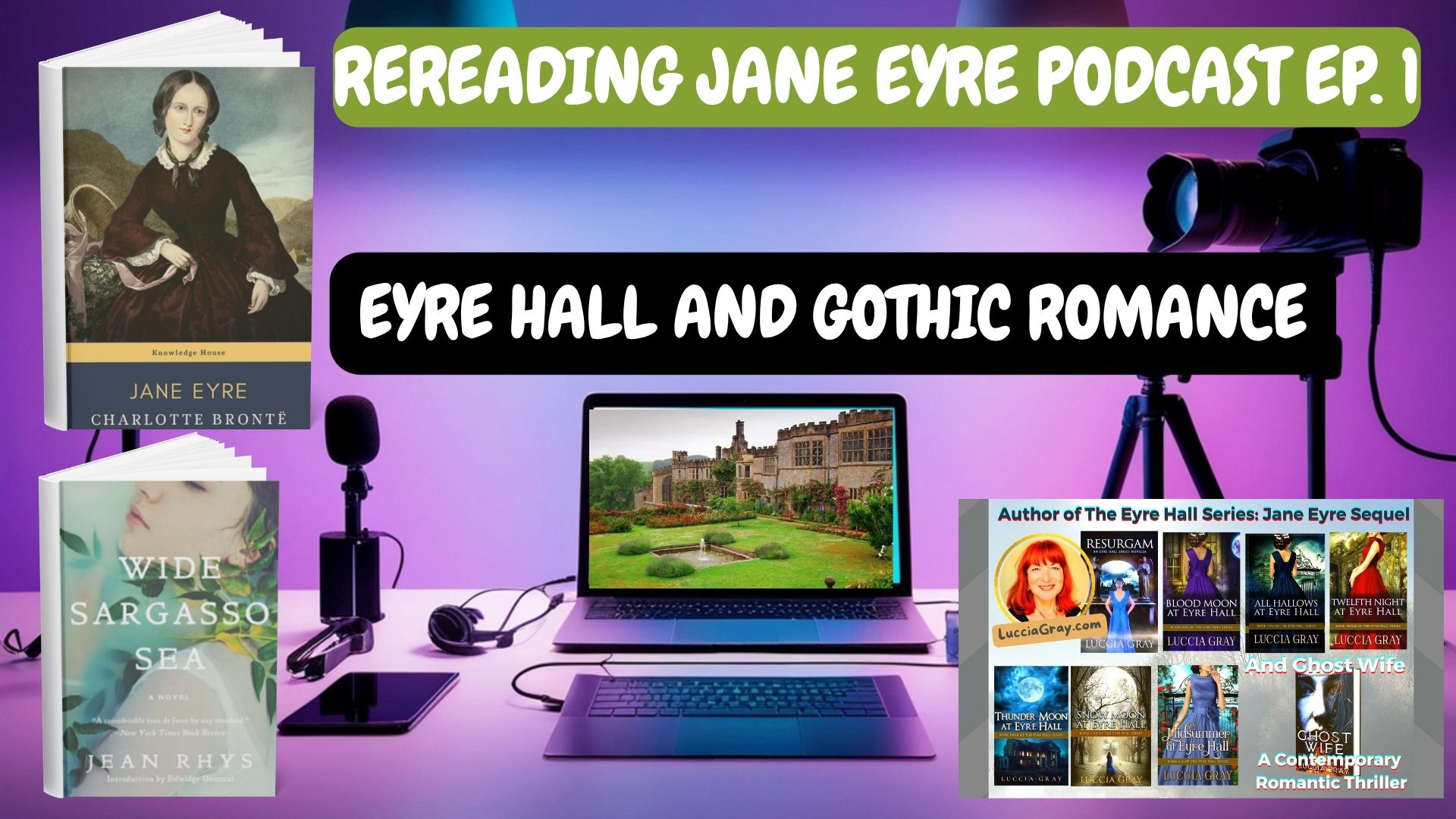
I’m trying out a new feature on this WP blog! A podcast episode which sums up my last six posts, which are a summary of why and how I wrote the Eyre Hall Series, and Ghost Wife, my contemporary retelling, in just over four minutes!
I hope you enjoy Pip and Myra’s exploration of The Eyre Hall Series and the gothic-romance elements that connect it with Jane Eyre and Wide Sargasso Sea. You’ll hear about my creative process in writing the series and how it culminated in Ghost Wife, a contemporary retelling of Jane Eyre, which is free on Amazon KDP for five days from today. Listen by clicking the link below the image below, or read on for more information.
Pip: If you’ve ever thought Jane Eyre needed more pirates, a wrongful asylum commitment, and a Victorian widow with dangerous enemies, Luccia Gray has been listening to your dreams.
Mara: This episode covers the Eyre Hall Series novels — from the writing process behind the books to how they handle Bertha Mason’s story — and a contemporary retelling that brings the whole argument into the present day. Let’s start with the series itself.
The Eyre Hall Series: From Pantser to Plotter
Pip: The question running through these posts is how a writer builds a six-book series from a standing start — and what the creative process actually looks like when you’re making it up as you go.
Mara: The post on All Hallows at Eyre Hall lays out the origin plainly: “I had a protagonist, Jane Eyre, a place, Eyre Hall (rebuilt on the site of Thornfield), a time, twenty-two years after she became Mrs Rochester, and an antagonist, Richard Mason, and I started writing.”
Pip: So the whole series begins with four fixed points and then just — runs. No outline, no roadmap, which is either terrifying or liberating depending on your disposition.
Mara: Both, it turns out. The All Hallows post describes the experience as wonderful but frustrating, leading to significant rewriting. By Twelfth Night at Eyre Hall, the third book, something had shifted — the story, as the post puts it, “took over my mind, literally.” Characters appeared in dreams. The first draft felt like transcription rather than invention.
Pip: That’s the writing process becoming its own supernatural event, which feels appropriate for a Gothic series.
Mara: Twelfth Night is described as having “romance, heartbreak, pirates, transatlantic journeys, criminal activities in Victorian London, supernatural elements, stolen identities and dark secrets revealed, a murder investigation.” It was sitting at number nine in Amazon’s Historical Thrillers ranking at the time of posting.
Pip: Thunder Moon at Eyre Hall, Book 4, is where the drama gets pushed furthest — the post calls it “the darkest in the series,” and the opening chapter has Jane imprisoned in a Victorian asylum, writing: “Please, Lord, do not let me lose my mind in this dreadful place.”
Mara: That scene is based on real events, according to the post, which promises a future discussion of the historical record. The stakes for a wealthy Victorian widow with powerful enemies were not fictional abstractions.
Pip: And then Snow Moon at Eyre Hall arrives as the pivot the whole series was secretly building toward.
Mara: The Snow Moon post is explicit about this: it contains “the climax and resolution of the Blood Moon Prophecy” and is described as the most important novel in the series — the moment that explains why the series exists at all. Bertha Antoinetta Mason, largely silent across the earlier books, finally gets heard.
Pip: Which is the thread that pulls everything together — and pulls us straight into the retelling.
Ghost Wife and the Contemporary Reckoning
Pip: Ghost Wife takes the same argument — that Bertha Mason deserves a full account, not a footnote — and drops it into the present day, where Rochester’s behavior has a name and legal consequences.
Mara: The post frames it directly: “If Mr Rochester had lived in the present century, he would be in prison.” The novel grew out of years of rereading Jane Eyre with an increasingly critical eye, first as a reader, then as a lecturer teaching postcolonial literature alongside Wide Sargasso Sea.
Pip: The contemporary setting doesn’t soften anything — it sharpens it.
Mara: That’s the point. Ghost Wife is described as a contemporary retelling where the characters who had been “growing in my mind for some time needed to come to life and be given the chance to speak up.” Same impulse as the Eyre Hall Series, different century.
Pip: Six books, one contemporary retelling, and Bertha Mason finally getting her due — that’s a substantial literary project built from four starting points and a lot of listening to characters.
Mara: The next episode will have more to say about where the series goes from here. Book six is on its way.
This is the first podcast on my blog. What you think of the idea? Did you listen and read? Would you like to see more of these podcasts on my blog?
Let me know in the comments!
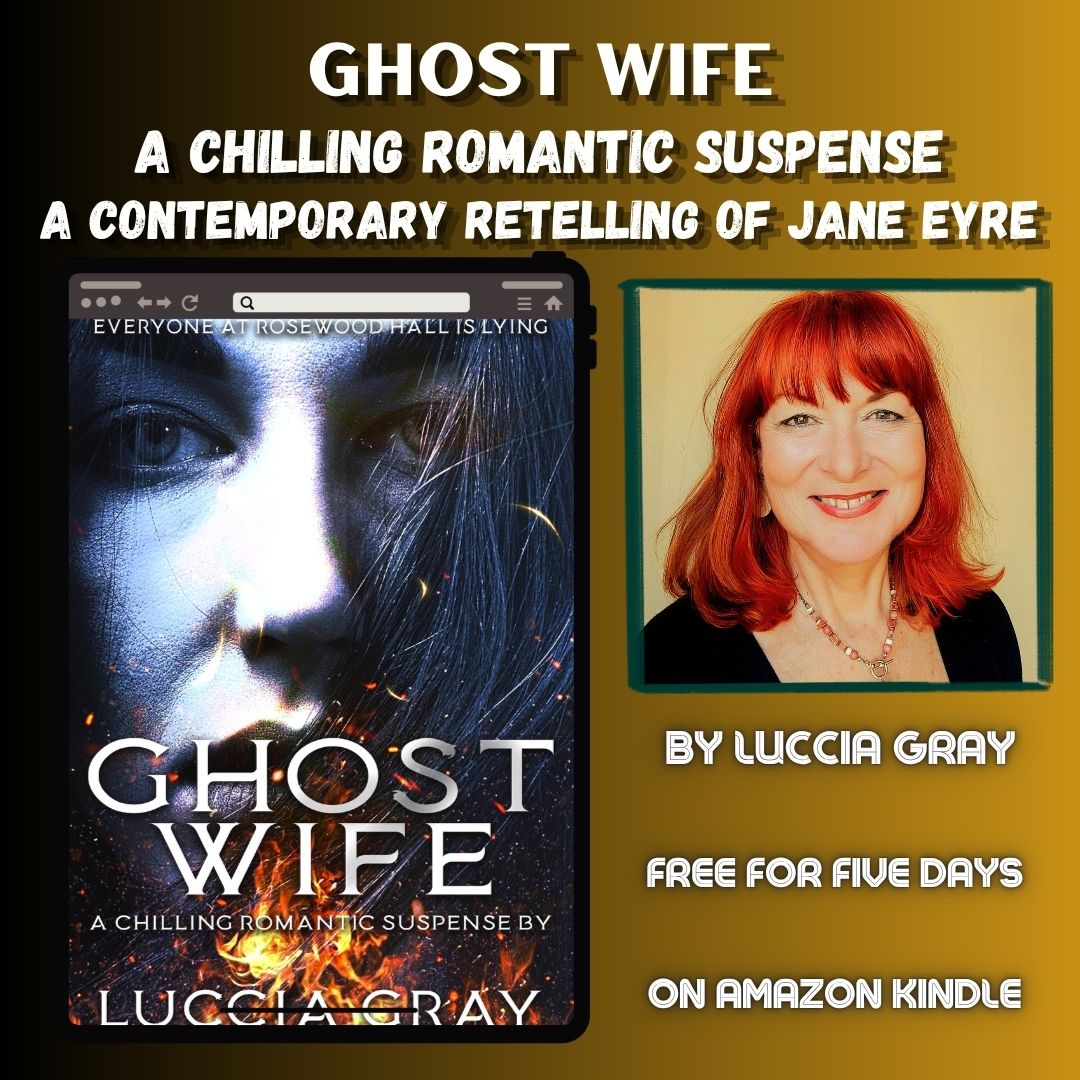
And don’t forget to pick up your copy of Ghost Wife today, it’s absolutely free and a great read!
Happy reading!
Lucy xx
Discover more from Rereading Jane Eyre
Subscribe to get the latest posts sent to your email.


What a fascinating exploration of Gothic romance and the enduring appeal of stories filled with mystery, passion, and complex emotions. I especially appreciate how literature can connect the past with the present, allowing timeless characters and themes to resonate with new generations of readers. Eyre Hall sounds like a wonderful journey into a world where history, imagination, and storytelling come together. Thank you for sharing your creative inspiration and literary passion!
LikeLike
How did I miss Ghost Wife? Getting it onto my Kindle now!
LikeLike