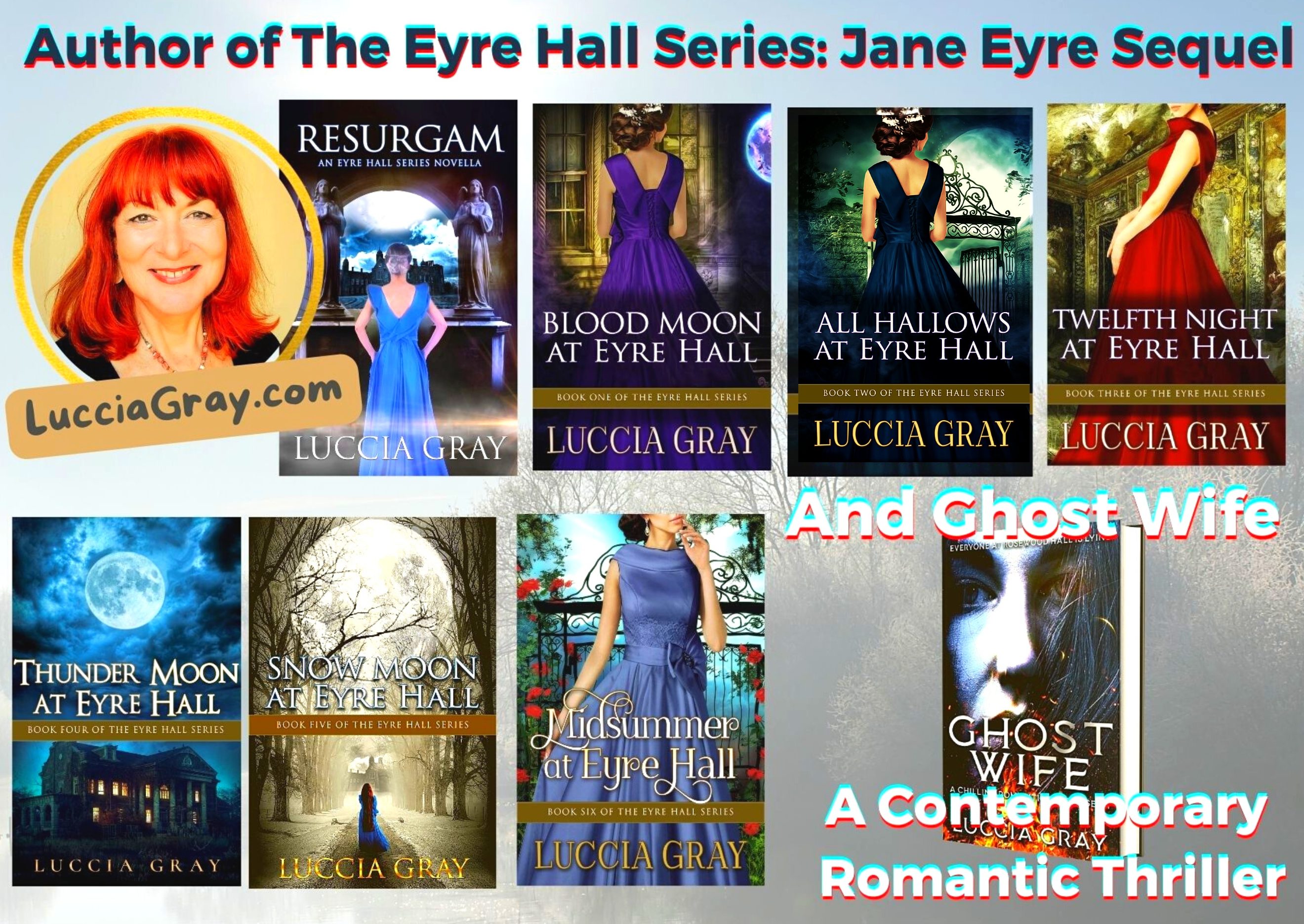
A few years ago, I used to be a member of the Insecure Writer’s Support Group, a community of authors who share their replies to a monthly question about their creative life. I haven’t participated in a few years, as I’ve been working on other projects, non-literary projects.
But I missed my literary writing life, and I still have to finish Book 6, the last book in The Eyre Hall Series, which I’ve been putting it off for a long time. Now it’s time to give my characters the Grand Finale they deserve.
I’ve also recently re-started blogging, here on Rereading Jane Eyre, and I reminded myself of our monthly virtual get togethers at The Insecure Writer’s Support Group, which were, and I hope will be again, a motivating virtual reunion. Writing is a lonely task, as writers spend most of our time with fictional beings or our own, and other, wonderful writers’ creations. I look forward to re-joining the group.
This month’s question is: As a writer, do you have favourite themes that you like to explore in your stories? If so, what are they?
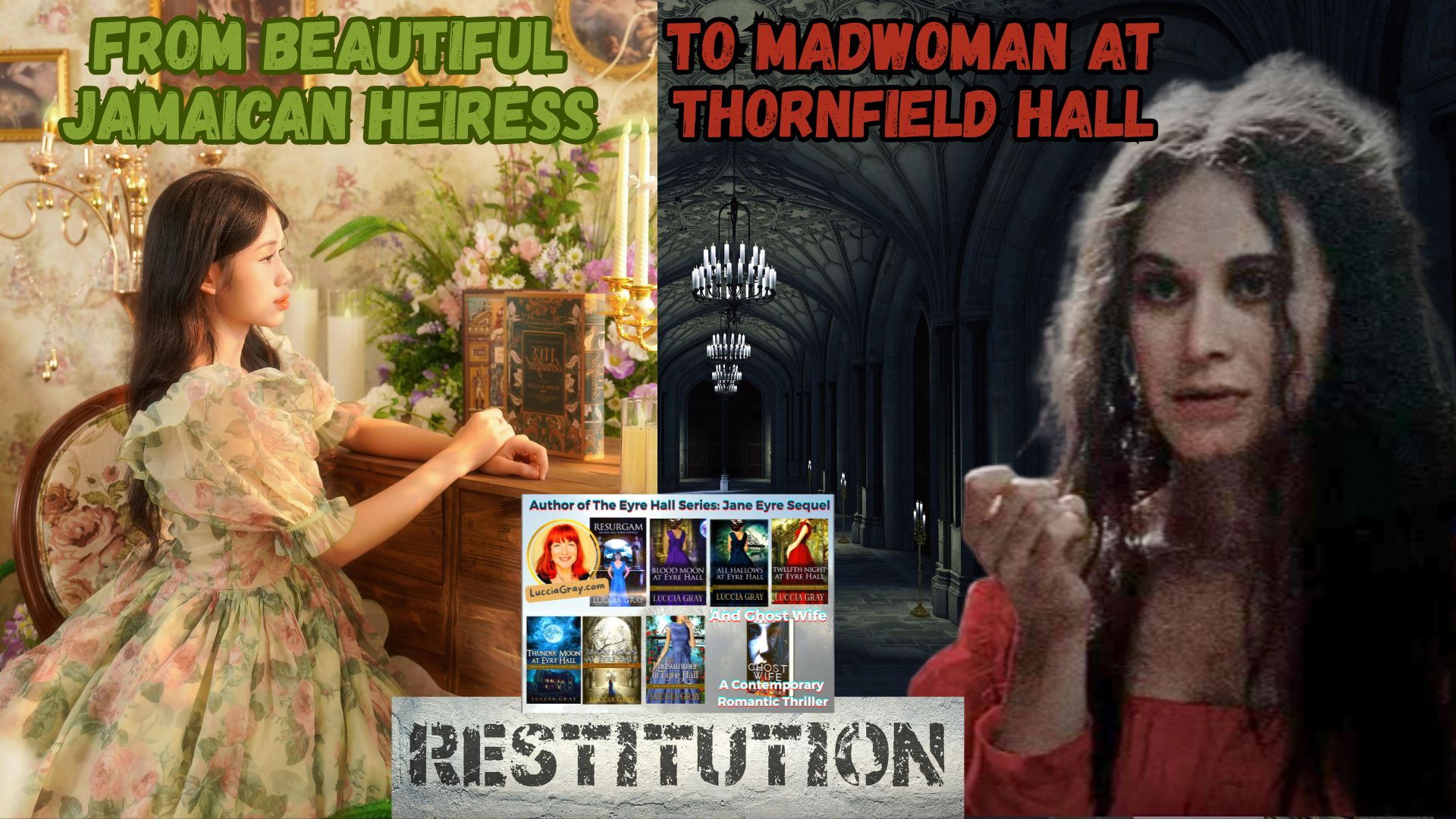
My Eyre Hall Series has many secondary themes, but the main theme, and the reason I started writing the series is restitution.
Bertha Antoinette Mason was a wealthy Jamaican heiress who was forced into an arranged marriage to Mr Rochester, who claimed she was mad and locked her in a windowless attic for ten years, claiming she was a madwoman. Who wouldn’t be after ten years in that dark, damp room? And if she really did have any psychological issues, with all the money she had, and he had, too, after all, he had inherited Thornfield Hall and the Rochester Estate, he could have at least had her sent to a more comfortable, albeit secluded residence, couldn’t he?
Antoinetta’s money, identity, and freedom, was cruelly taken from her, because she was an inconvenient wife for Edward Rochester, until she supposedly jumped to her death from the roof at Thornfield Hall.
Her burial is not mentioned in Jane Eyre, but according to Anglican doctrine and English law in the early-to-mid 19th century, taking one’s own life was considered a mortal sin, and because Bertha deliberately jumped from the roof to her death, church authorities would have denied her a Christian burial inside consecrated churchyard ground. She would have been buried outside the holy grounds of the cemetery. The final blow to silenced, oppressed, and abused, Antoinetta.
Antoinetta’s restitution begins in Book One, Blood Moon at Eyre Hall, with the Blood Moon Profecy, which culminates in Snow Moon at Eyre Hall. Bertha Antoinetta is given a voice and a champion, and at least part of the injustice is repaired and Berth’s spritual and sacred restitution is enabled.
Now, as I’ve almost finished The Eyre Hall Series, I realise that climax in Snow Moon at Eyre Hall, is where the series was heading from the start. Antoinetta was wronged in the 19th, 20th and still today, in the 21st century, she is still silenced, ignored, and accused of madness, while her abusive husband is still the beloved Byronic hero.
Check out Insecure Writer’s Support Group and Blog, and join in the discussion! Or tell us in the comments, what are your recurring themes?

Happy reading!
Lucy xx
Discover more from Rereading Jane Eyre
Subscribe to get the latest posts sent to your email.
