Cee’s Fun Photo Challenge: Circles and Curves

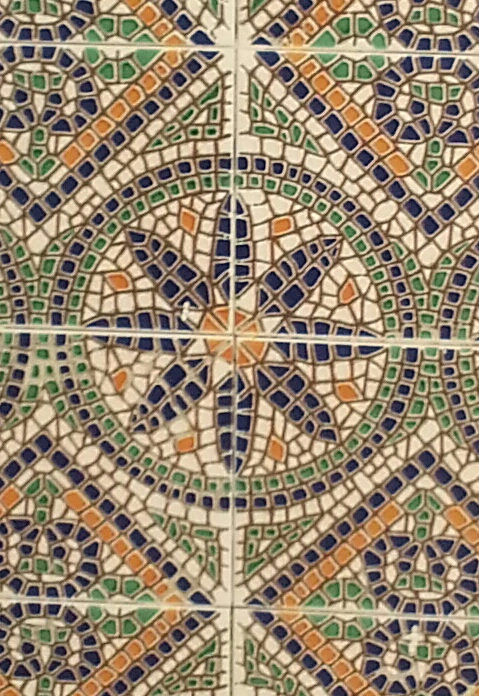
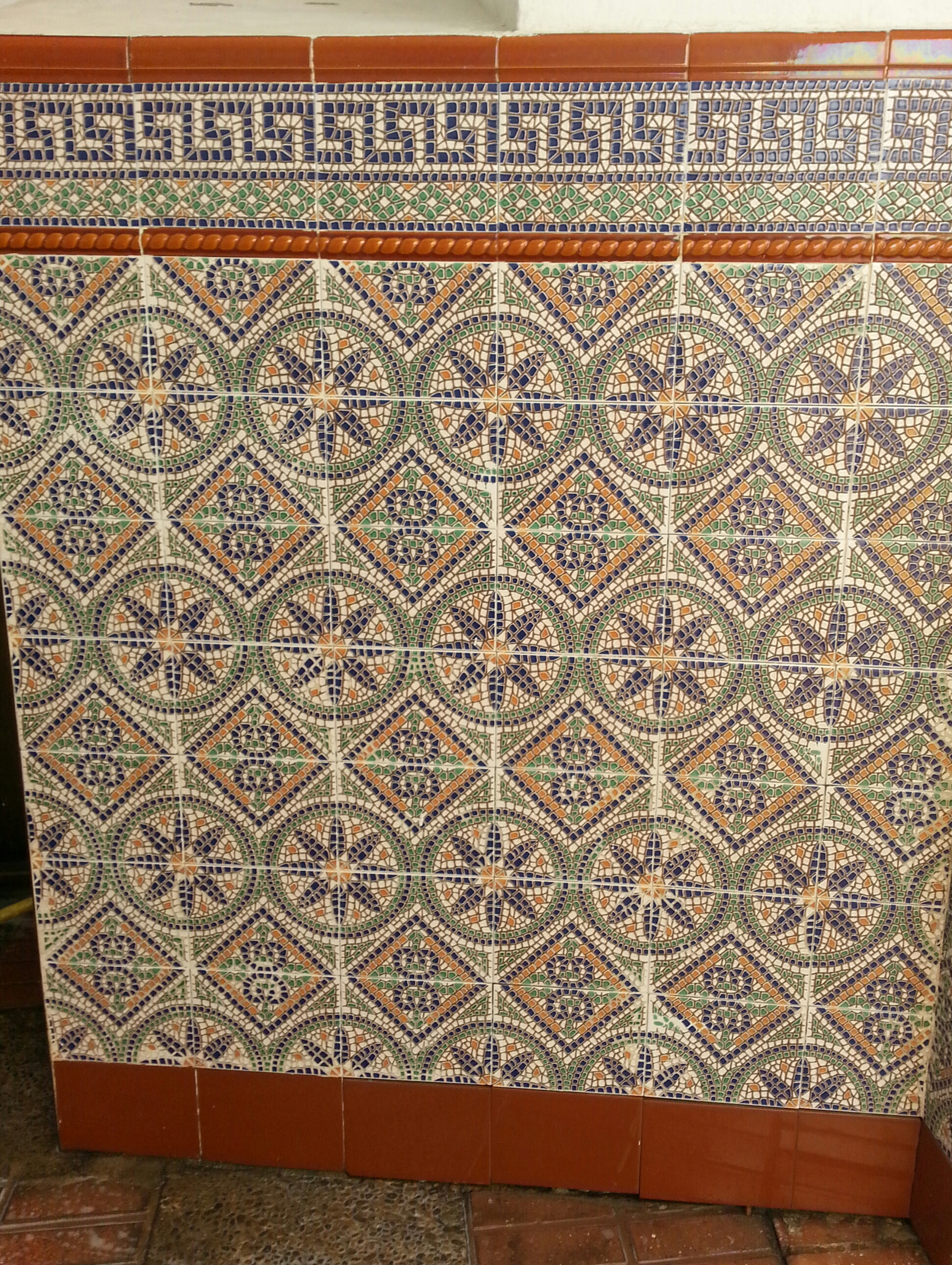
Spanish (Andalusian) Tiles following the Arabic and Moorish traditions

wpid-20140704_094213-1-2.jpg

wpid-20140704_094213-2.jpg

The Spanish word for tile, ‘azulejo’, is derived from the Arabic word, الزليج (az-zulayj) meaning “polished stone”. This origin explains the unmistakable Arab influences in many modern Spanish tiles, which interlock curvilinear, geometric or floral motifs.

In the 15th century, cities in the south of Spain, a region called, Andalusia, became the major centre of the tile industry, employing the ancient craft passed on through generations. The original tiles were glazed in a single colour and decorated with geometric patterns. They were applied on walls and used for paving floors.

Islamic artists and craftsmen who worked in cities such as Cordoba, Granada, and Seville, from the 8th to the 15th centuries, crafted these tiles Based on eight geometric patterns. The mosaics were handmade with many different-shaped pieces which all fit together. It is believed that the origin of the designs came out of artistic limitations for Muslims, who by strict Islamic law were not allowed to depict living beings and therefore expressed their art through shapes, colours, or the words of the Coran.

The traditional colours used were, brown, green, white, saffron, blue and black, which had symbolic meaning in Islam. White, black and brown symbolized the spirit under Sufi imagery. The 4 elements were represented by Red for fire, dry and hot, yellow for air, moist and hot, blue for earth, dry and cold, green for water, moist and cold. Contemplating the tiles inspired the viewer into a meditation which often had religious implications.

Master craftsmen would be apprenticed from a young age and learn how to design and create grand mosaics with the tiles. The use of these tiles became a symbol of sophistication and wealth in many homes. During the Marinid dynasty in 13th-15th century Morocco, it was also used in ornamenting walls, fountains, tables, floors, countertops, ceilings, and sometimes even entire mosques.

The overlaps between Moorish and Spanish, Islamic and Christian are evident to anyone who visits many ancient buildings, gardens and palaces of southern Spain. This mixed art form of Moorish art combined with the Christian culture, is called the Mudejar style. The Alcazar of Sevilla, the Alhambra Palace, and the Mosque in Cordoba, include some magnificent examples. There are also similar examples of Moorish style tiles in Portugal, and Italy.
wpid-20140707_115313.jpg wpid-20140618_092048.jpg


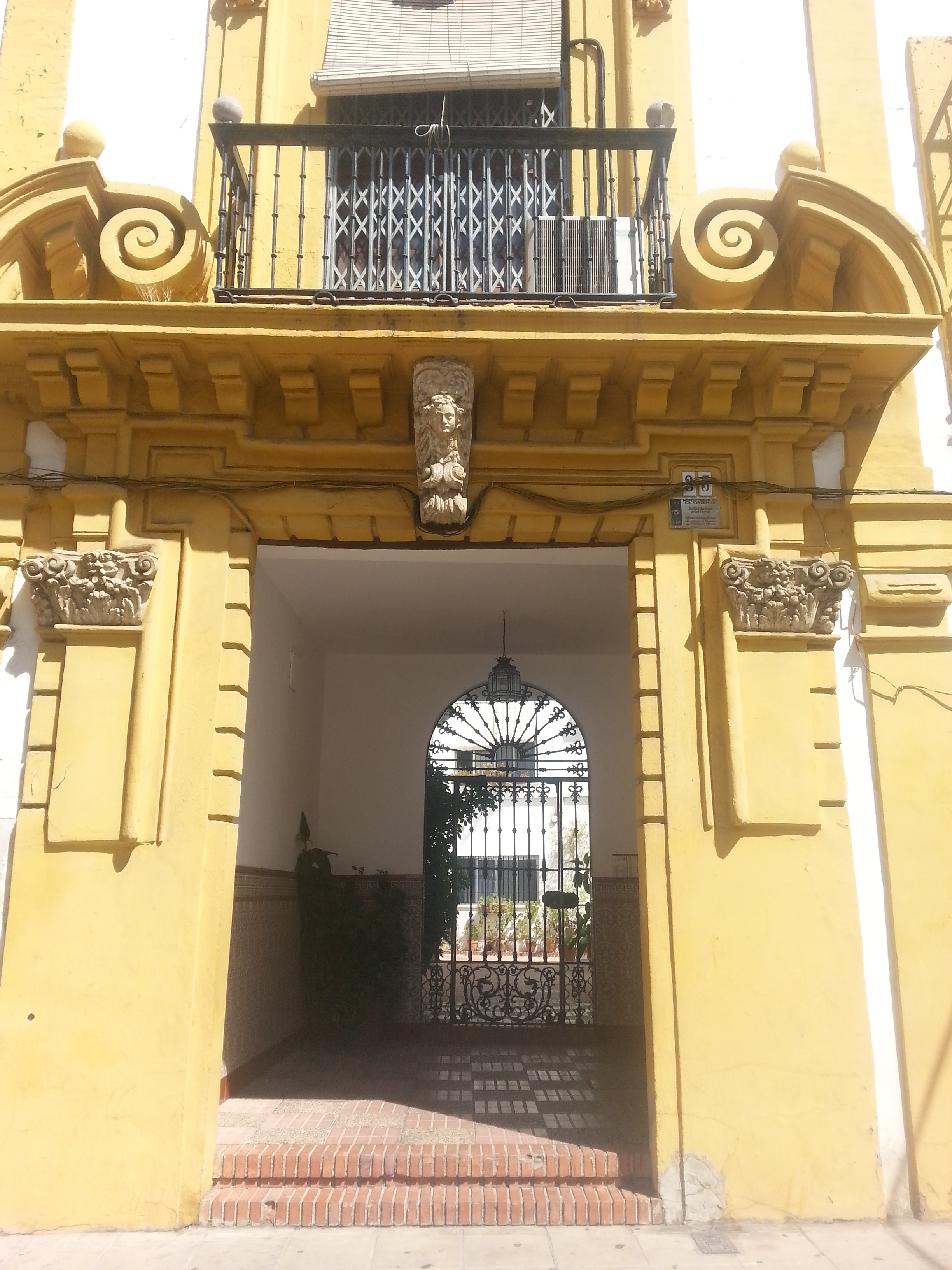
The tiles I have chosen in the picture decorate the lower part of the wall of the entrance to this beautiful 18th century building, which was a palace, and is now divided into many small apartments, for sale or rent.

These tiles have a clearly Christian influence because they include floral motifs, which are not found in Islamic art.

Have a look at some of the other entries for this week

Photo Friday Challenge: Sunlight

When the Sunlight is Too Bright

Sometimes the Sky’s Too Bright

Sometimes the sky’s too bright,
Or has too many clouds or birds,
And far away’s too sharp a sun
To nourish thinking of him.

By Dylan Thomas


wpid-20140620_091829-1-1.jpg wpid-20140620_091829-1-1-3.jpg

wpid-img-20140709-wa0001.jpg


This year is the centenary of the birth of the Welsh poet Dylan Thomas (Swansea, October 27th 1914)

His poignant poem ‘Sometimes the Sky’s Too Bright’, was part of the so-called notebook poems, written between 1930-1932, because he wrote them in ‘penny notebooks’.

The poet is telling us is that sometimes life is too intense, or our feelings are overwhelming, and in spite of the light, we can’t see things clearly.

Other times, there are dull, or sad moments, when we long for the brightness of the sharp sun which seems so far away…

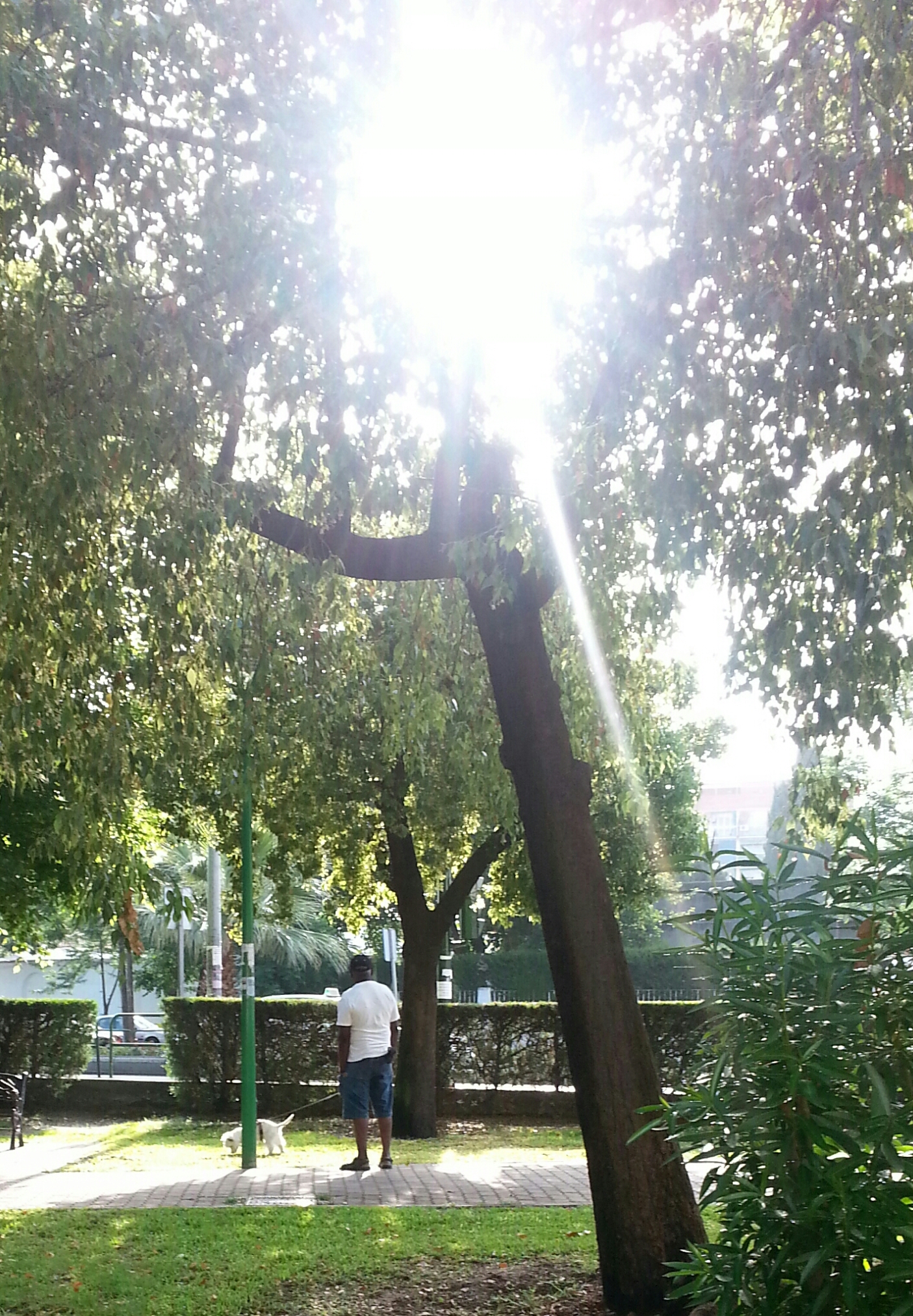
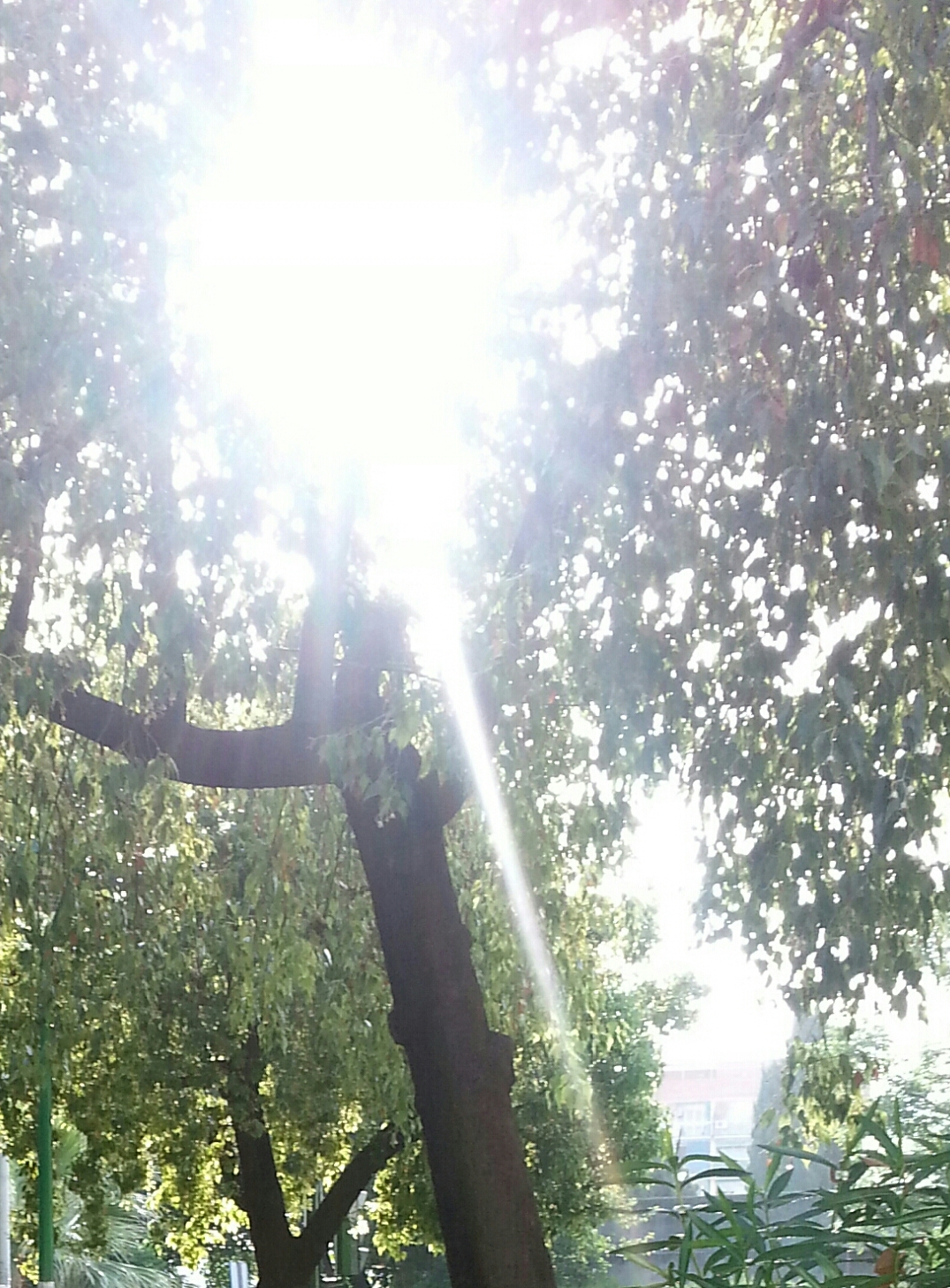
These photographs capture the moment of the domineering and insistent sun is overpowering our field of vision, so we can’t look at the sky, nor see anything, because its powerful and greedy rays absorb everything in its path.

I prefer a smooth and soothing evening sky myself, tinged with pinks and corals if possible… Don’t you?

Would you like to see some more of this week’s entries to Photo Friday?


Gifts: I offer you a blade of grass


There is a beautiful poem by Brian Patten about how difficult it can become to give and receive simple, inexpensive gifts.

I love receiving and giving gifts, and I spend a lot of time choosing the right one for each person, but this post is for all the wonderful people who have gifted me, and I’d like to thank publicly.

Why do people give gifts?

There are a number of reasons why people give gifts, perhaps the following three are the most frequent:

  • An expression of love and/or appreciation and/or affection.
  • An expression of gratitude for a gift received.
  • As a custom, on certain occasions such as, birthdays, etc.

 We all give and receive gifts many times throughout our lives, but too often it’s an exceptional event.

Yet giving and receiving presents should be an effortless and routine custom, because a gift is a wonderful token which we willingly give another person.

Last week, I received seven precious gifts: four from my students, one from a colleague, one from my daughter, and one from each of you.

None of them were expensive, and none of them were bribes, I hasten to add!

I’d like to share them with you.

Gifts needn’t be expensive, but they should always be time-consuming. Our time, our good intentions, and positive vibrations, are the most precious gift we can give anyone.

These are the precious gifts I have received:

Two letters

A plant

A doll

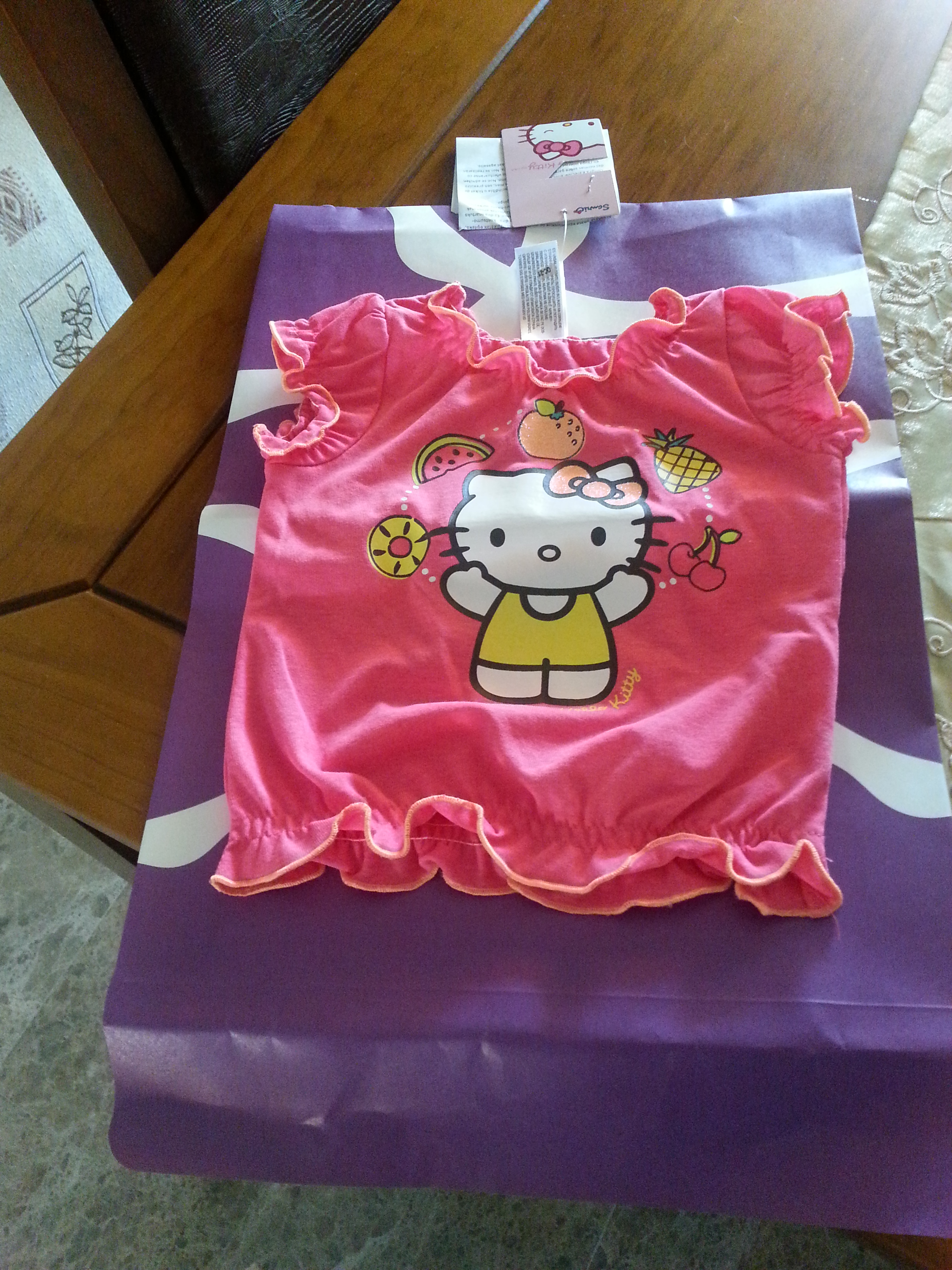
A dress for my granddaughter

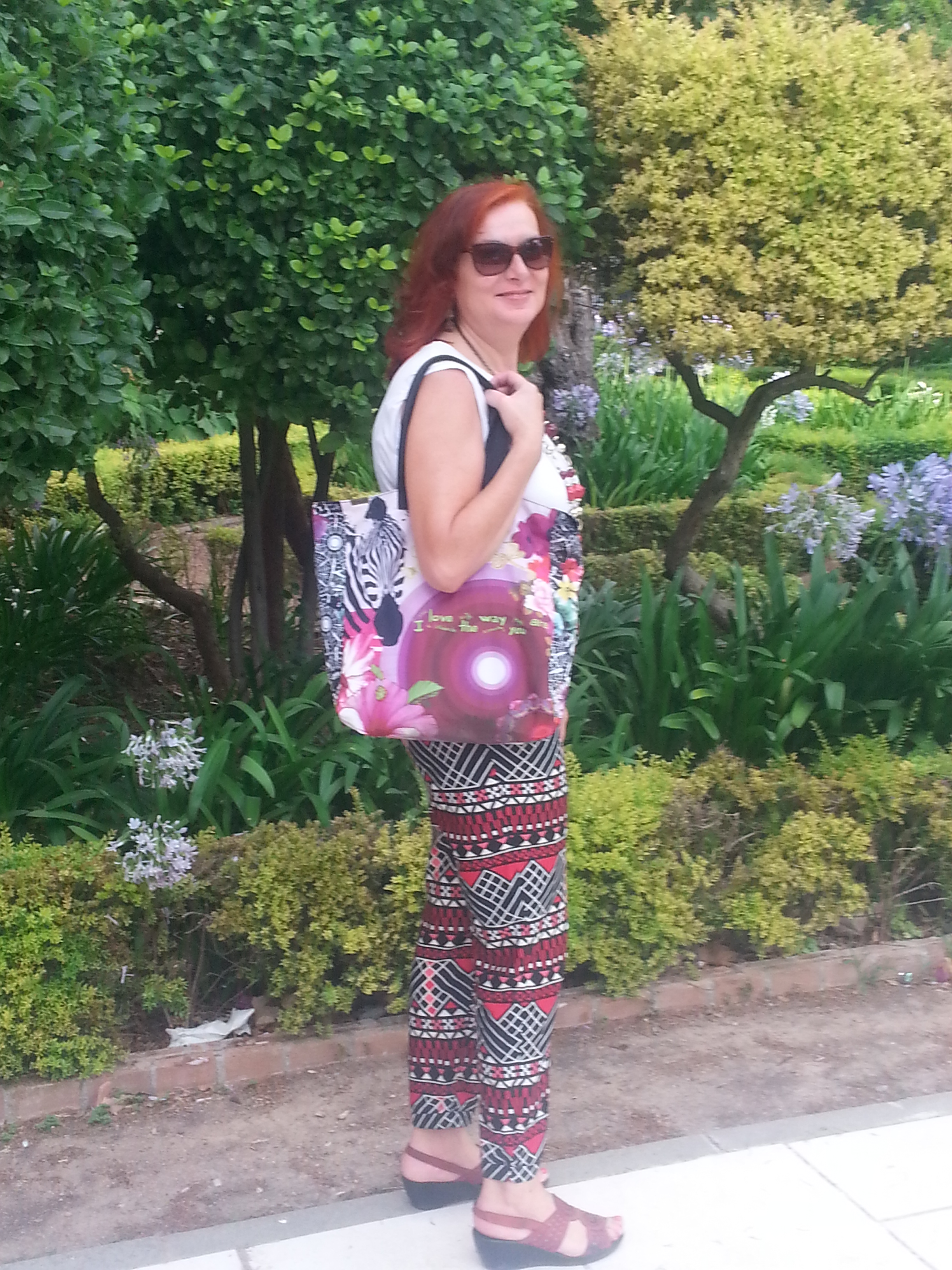
A bag

110 follows

None was expensive, all were time-consuming, all were beautifully wrapped, and all were emotionally received.

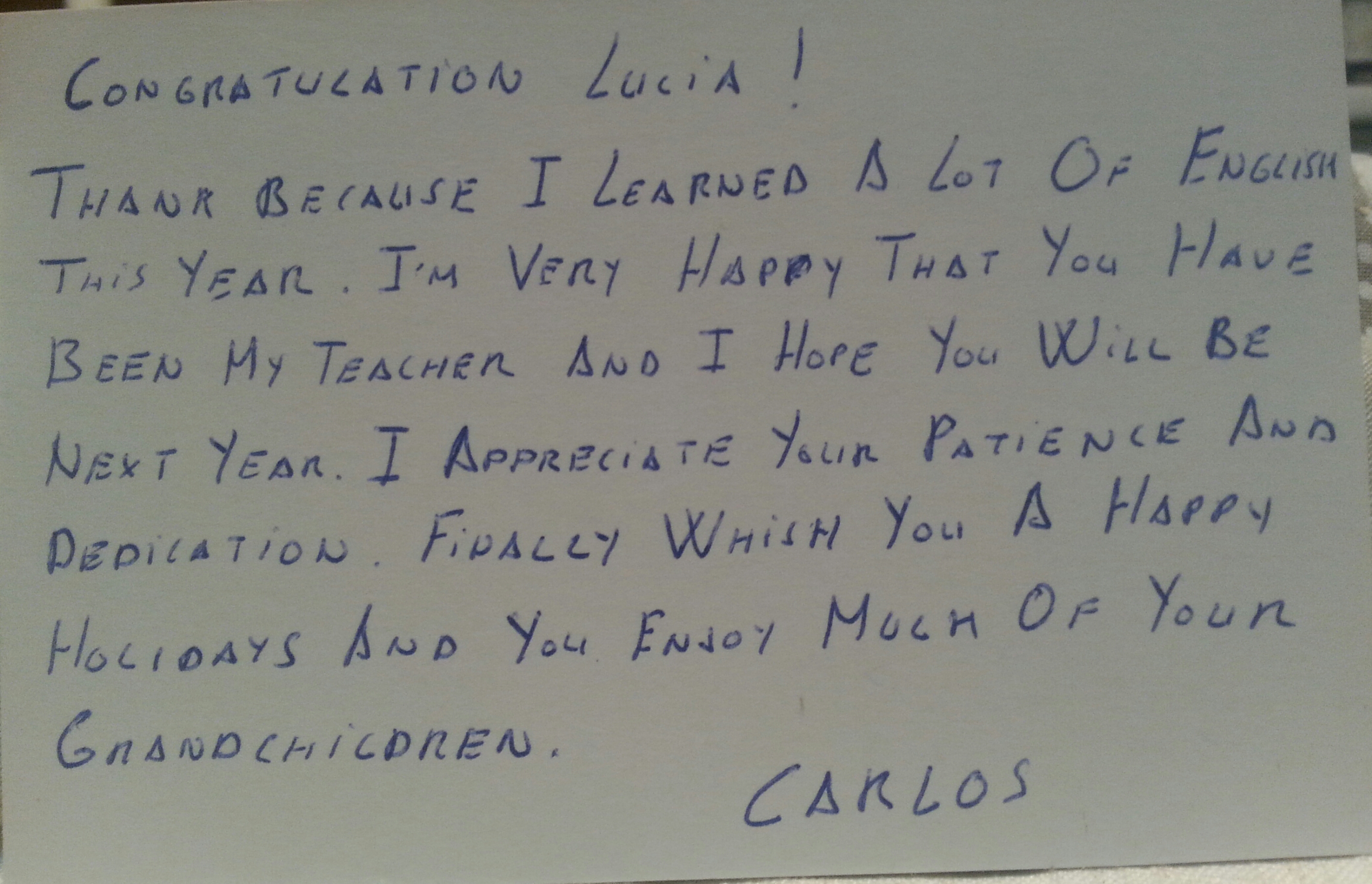
The letters were of gratitude from my students for helping and guiding them on their paths in life.

The first is short. Here it is.

wpid-20140706_233118-1.jpg

The second is too long to reproduce, but suffice it to say that it brought a tear to my teacher’s eye, it was from a final year college student.

I will keep them forever in my heart. A letter is a unique gift, in our digital age, and it is unsurpassed by the most expensive jewel, because it is a jewel in itself.

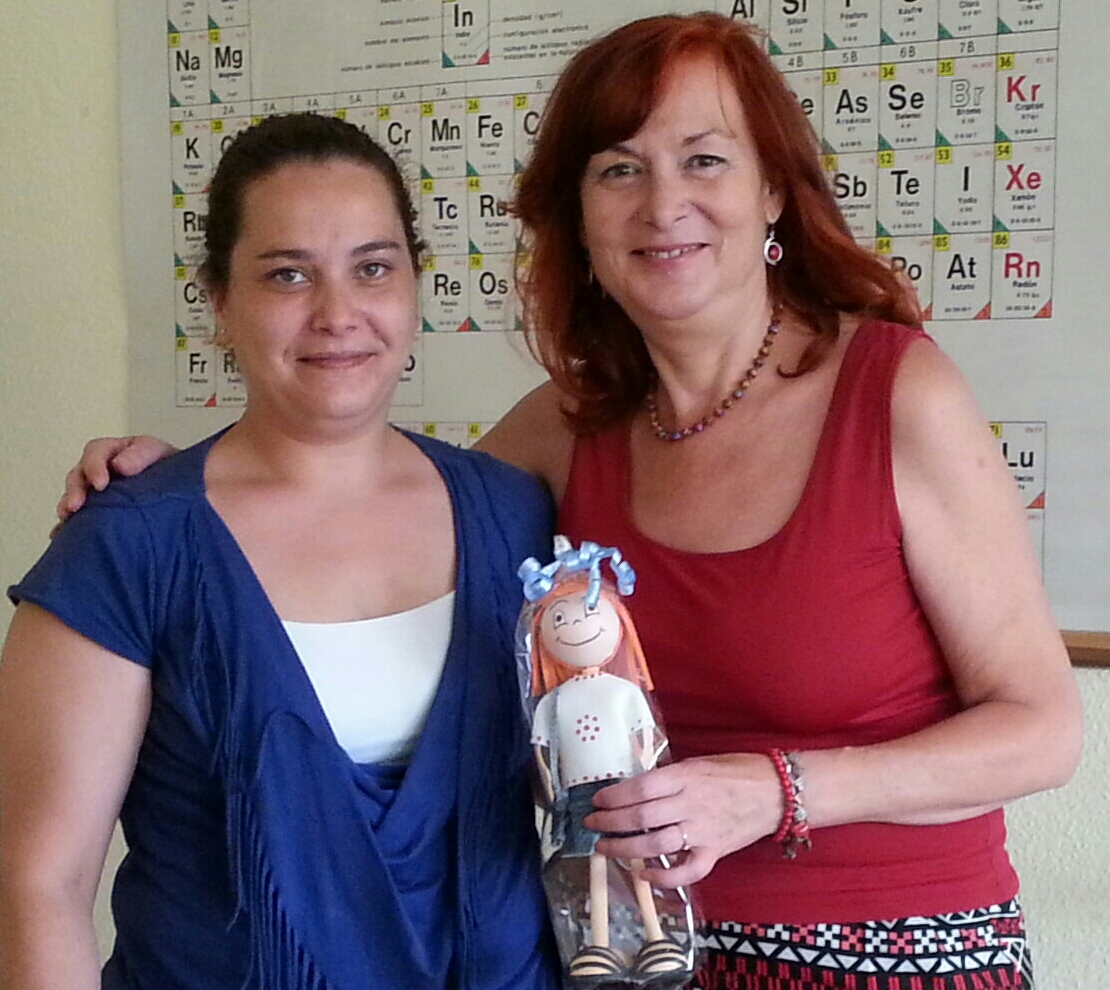
This doll was handmade by my pupil, Maria Angeles, who has just returned to school after twenty years of being a housewife and bringing up her children. She’s a real superwoman. She spent hours on this hand-made doll, which she says, represents me!

 wpid-20140605_190235-1-1.jpg

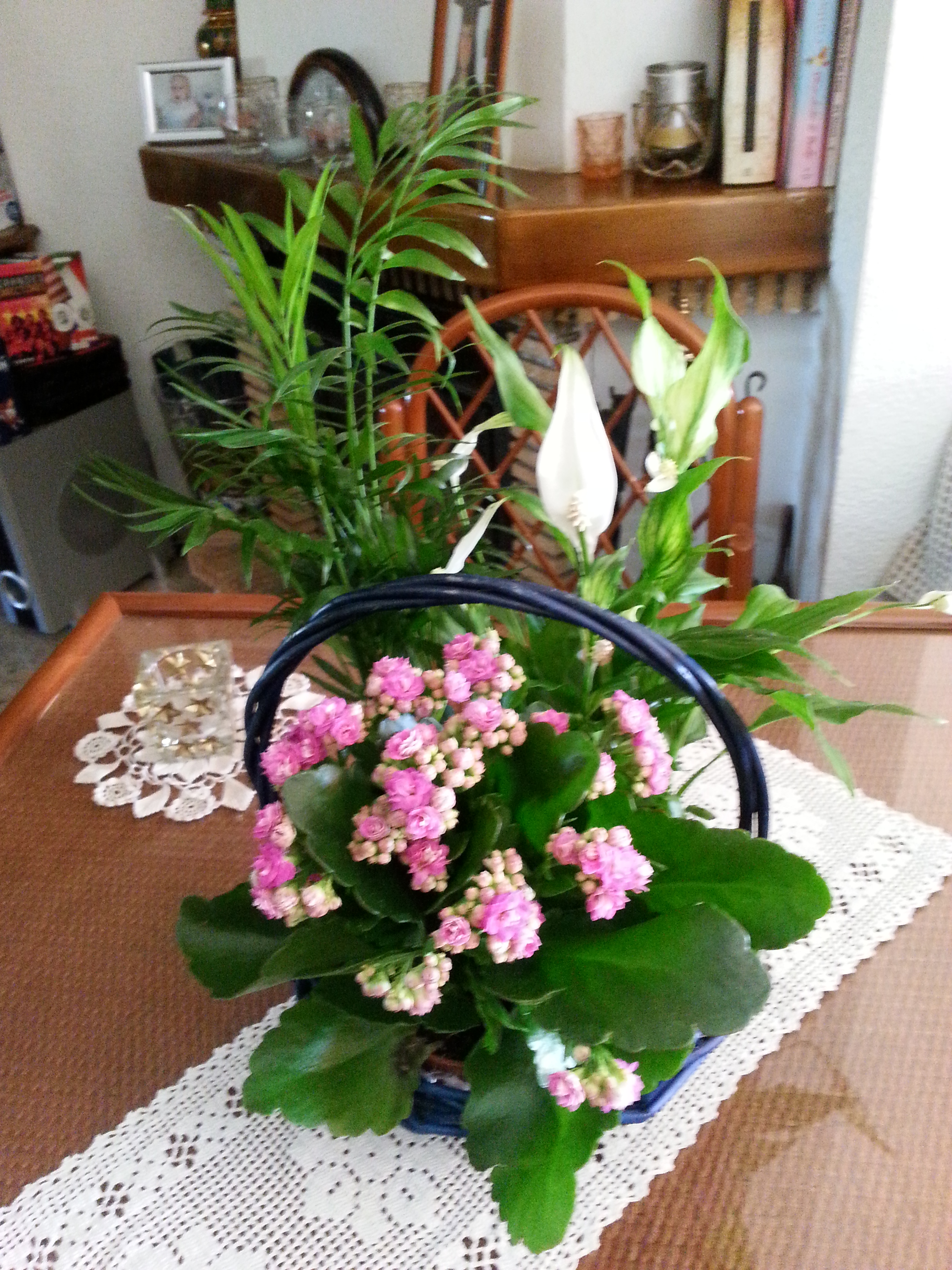
This was a plant given by some of my students, too. I’m very worried about it, because, although I love plants, I wouldn’t say I have ‘green fingers’, and I would be very upset if they ‘withered’, so I’ll have to keep my fingers crossed.

wpid-20140704_200247.jpg

My fifth present was from one of my colleagues, Gabriela, who has given me a cute dress for my granddaughter, too.

wpid-20140621_101333.jpg

My daughter, my granddaughter’s mother, who knows how much I love brightly coloured beach bags, has offered me this wonderful bag which has room for ‘everything’ I need to carry!

wpid-20140707_091456.jpg

I feel valued, and appreciated, and loved, and joyful, and it makes me want to be an even better teacher/colleague/mother/person next year.

Please show your appreciation to your teachers, friends, colleagues, mothers, fathers, and other relatives, especially if they deserve it. Remember it doesn’t have to be expensive, a letter, a postcard, a photo, will be very well received. If you’re too busy, a ‘Thank You’ card is enough.

Presents needn’t be reciprocal, on the contrary, I’m a great believer in playing it forward, as those of you who follow my blog, already know.

Reciprocity should be highly valued in any relationship, but I also find it restrictive. It can become endogamic. Goodness, positive vibrations, should move forward to others, not only those around us, we need to open our circles altruistically and make them spiral forward.

Write a positive, encouraging, or thank you letter to someone who deserves it!

My final present is from all of you. I now have over 100 followers, 110. to be precise, which is incredible! I’d never have imagined in May, when I had eight followers, that I’d have over a hundred more in just over two months. And the greatest gift of all is that you are all creative, supportive, and interesting bloggers!

It’s not easy to keep track of all of you, because, I follow all my followers, too. But I make an effort to invest at least an hour or two a day at checking you all out, because you are all worth reading, following, liking, and commenting on your posts.

Thank you all for taking the time to follow, to read, to like, and to comment. It doesn’t cost a penny, but it’s a precious gift to me. 

According to Oscar Wilde:

‘Nowadays, people know the Price of everything and the value of nothing.’

Let’s make sure we value the gifts we receive, from the people we appreciate.


Cee’s Fun Photo Challenge: Squares, Triangles and Angles

This week Cee suggests we look at squares, triangles and angles, so I’ve opened my eyes wide along my daily walk to work, once more, and I’ve scrutinised everything around me, until I discovered the right shapes.

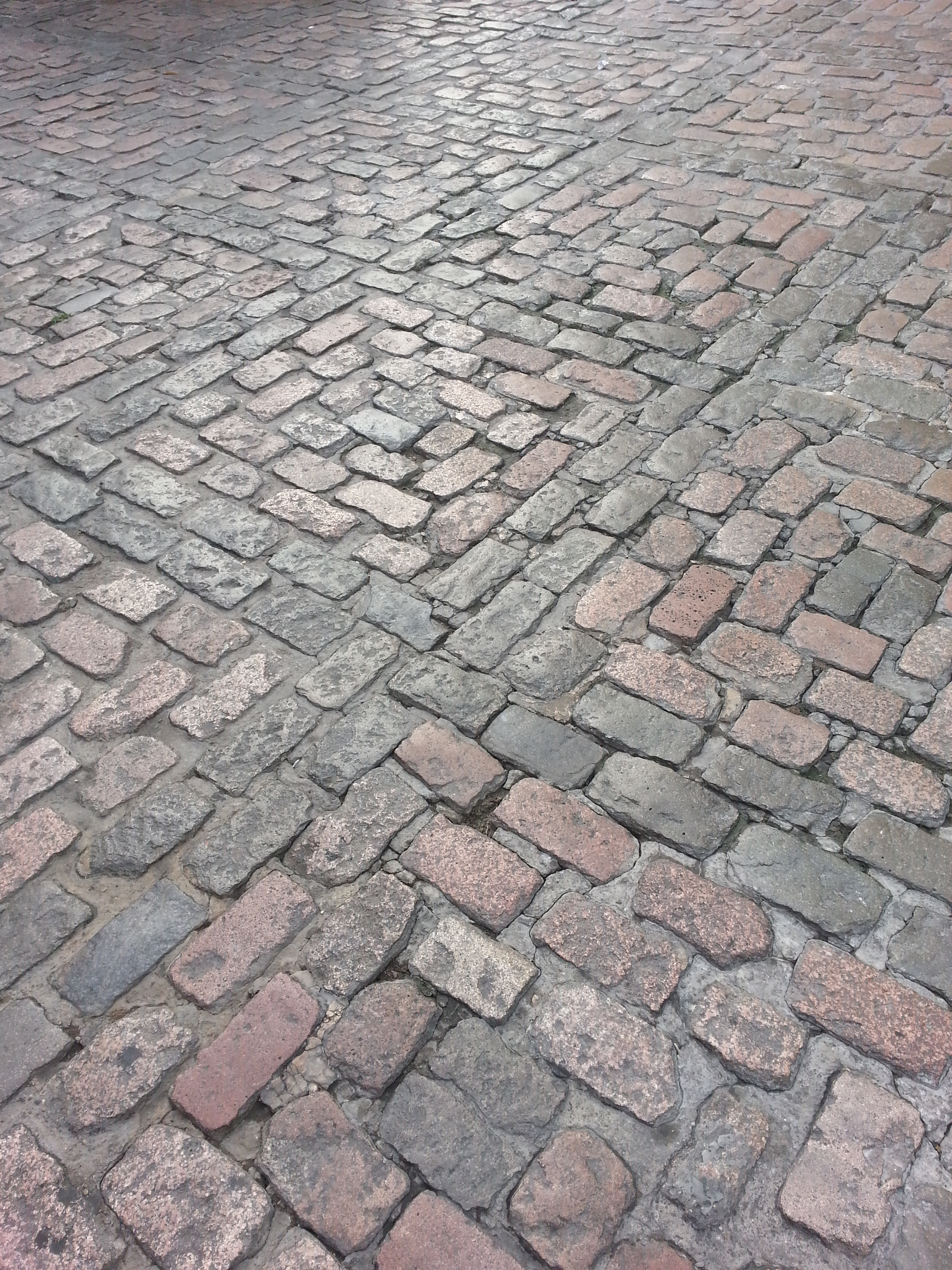
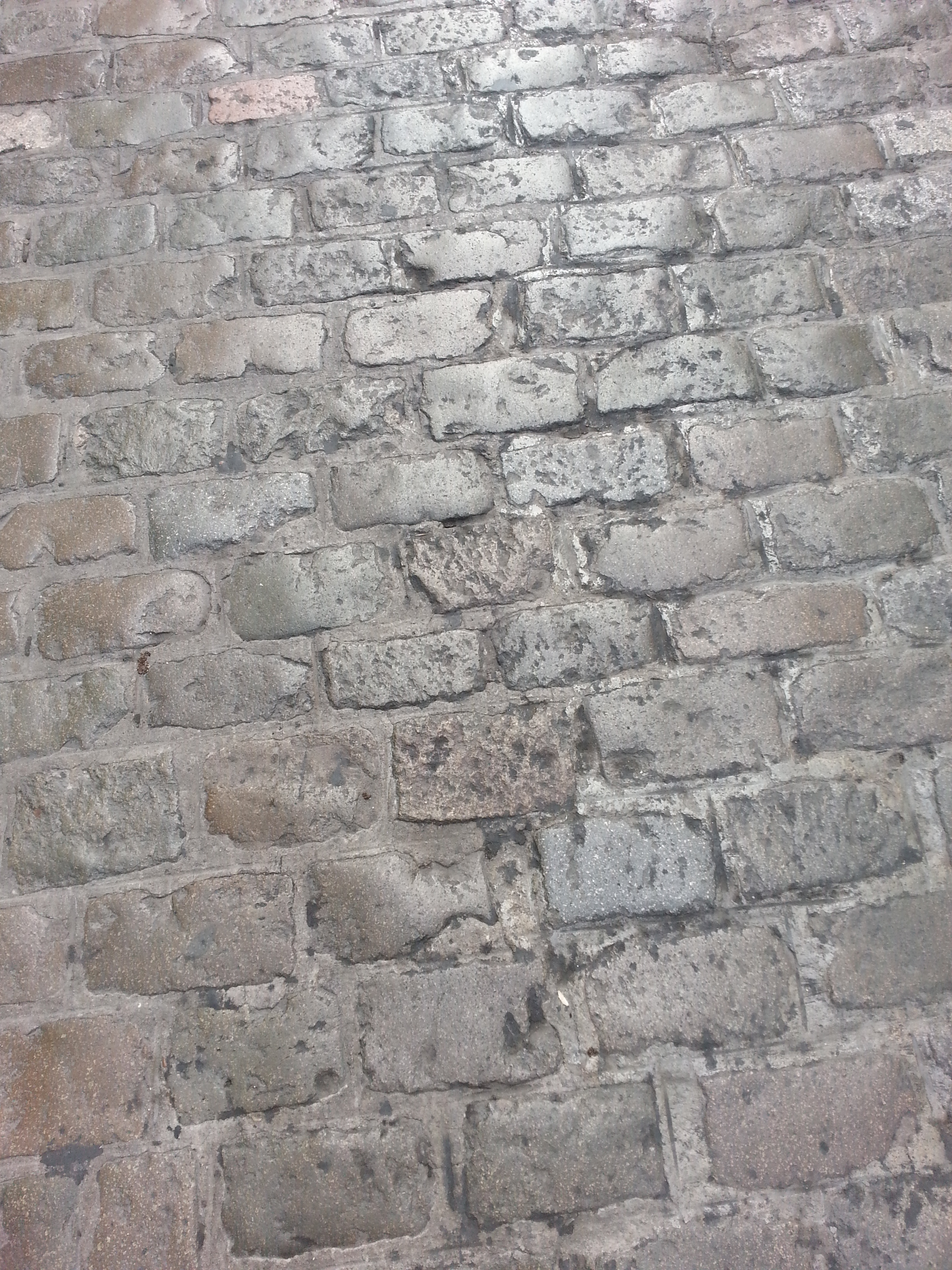
I finally found the squares and angles on the floor, under my very feet.

I walk along beautiful, and sometimes wobbly, cobbled streets like these every day.

wpid-20140704_092254.jpg
These are the square cobbles around the Mosque in Cordoba.

wpid-20140704_092219.jpg

These are the squares on the floor entering the mosque.

wpid-20140704_092416.jpg

The most famous road builders were the Romans, who built an impressive network of over 50,000 miles of road, which as the saying goes, led to Rome.

The Romans were the first to build cobbled streets, and this tradition was continued up to the end of the 19th and beginning of the 20th century, when asphalt became the favourite type of paving, because it was smoother, drier, cleaner, more quiet, and more modern.

With the advent of the automobile, the joints between the stones became an annoyance.

I can’t argue with that, but in spite of the wobbling and the noise, there is something magical about cobbled streets, don’t you agree?

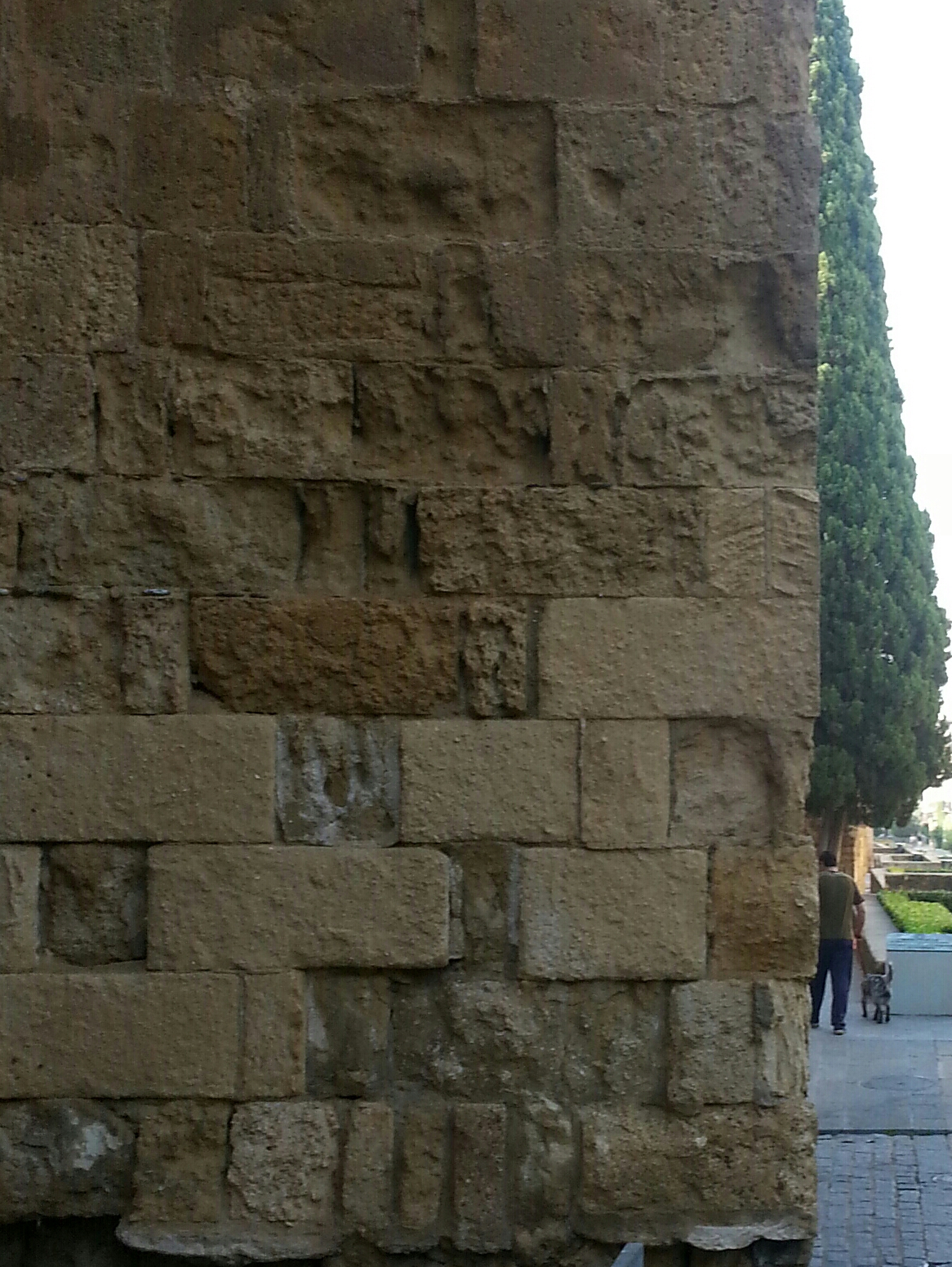
Finally I couldn’t resist including (perhaps once more) a fragment of the Roman-Arab-Christian Ancient City Wall. Here we have squares and edges. The square bricks, and the edge of the city…

wpid-20140617_090143-1-2.jpg


Have a look at some of the other entries

The Gift of a Nation


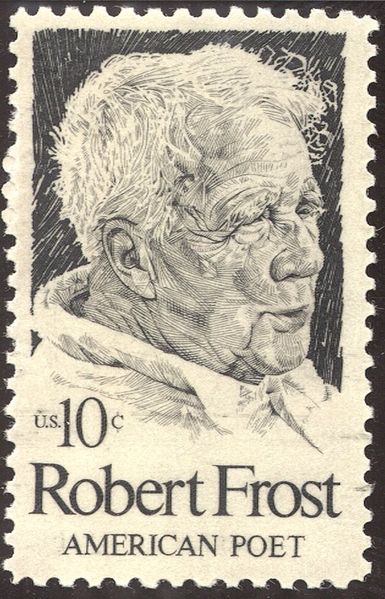
Robert Frost’s (1874-1963)  poem The Gift Outright  which was first published in 1941 begins with the following lines:


The land was ours before we were the land’s.

She was our land more than a hundred years

Before we were her people…


RobertFrost

The poem narrates America’s history as a nation from the time of the early European colonists, who still considered themselves English. The early settlers understandably lacked a national identity.

The ‘gift’ of their identity was eventually gained as a result of struggle and war, leading to their freedom and embracing their new land and American identity:

‘(The deed of gift was many deeds of war)’  (line 13)

The Gift Outright” became famous after eighty-seven-year-old Frost recited it at the inauguration of President John F. Kennedy, on January 20, 1961.

It is considered a triumphantly patriotic work, which Frost himself compared to “The Star-Spangled Banner.”

In this poem Frost identifies ‘we’ and ‘ours’ as the white settlers from Europe, rather than the original “owners” of the land, the Native Americans.

In any case, this poem coincides with the spirit of the 4th of July which ignores the conflict between the colonists and the Native Americans, and instead focuses on the clash between the British (Old World) and the colonists (New World).

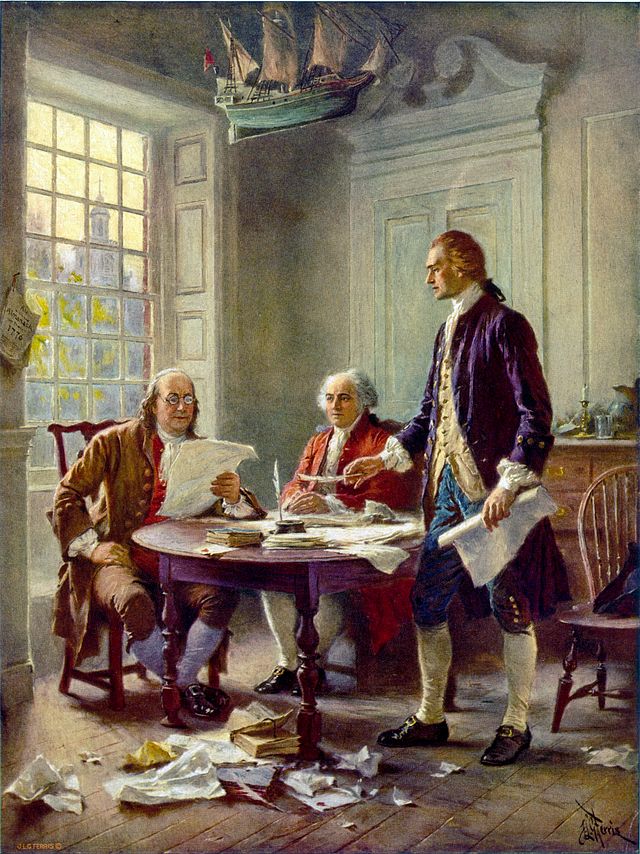
Writing_the_Declaration_of_Independence_1776_cph_3g09904
This is an artistic representation (left to right) of Franklin, Adams, and Jefferson working on the Declaration (Jean Leon Gerome Ferris, 1900)

The Declaration of Independence (July 4, 1776), proclaimed that the thirteen American colonies, then at war with Great Britain, as thirteen independent states forming a nation called, the United States of America, which as we all know, gradually yet unrelentingly expanded towards the west, and south-west, to become the most powerful nation in the 21st century.

Many things have happened since July 4th, 1776, but one thing is certain, this day is still celebrated as the birth of a collective sense of ‘American (USA) Nation’.

Happy 4th of July to all my American friends, followers, and readers!


I’ve been nominated for the Liebster Award!

Fellow writer, Fran Clark has been kind enough to nominate me for this lovely award!

‘Liebster’ is a German word which means ‘beloved’ or ‘dearest’.  It is awarded to bloggers whose blogs we love.

Thank you, Fran for thinking of me to receive this award.

liebsteraward

It is always a pleasure to introduce a fellow writer, and on this occasion, I am pleased to focus the spotlight on a talented author, Fran Clark who is also a musician.

Fran has a wonderful blog which includes ‘Thursday Shorts’. Poignant short stories full of twists and turns, which will keep you on the edge of your seat, emotionally, to the unexpected end.

HP2 72

Fran has also written a powerful debut novel, Holding Paradise, about two women, Josephine, who brought up her family in London in the 1960s, and has returned to her native Caribbean island, and her daughter, Angelica, who flies out there from London, in 2008, because she is convinced that her mother’s wisdom can help her turn her life around.

As with other awards, once you have been nominated, you should post the badge on your blog, thank the blogger who presented this award and link back to their blog. In this case you should answer the questions proposed and write 10 questions for those you nominate to answer in turn. 

These are my answers to Fran’s questions:

1. What subject do you most like to blog about?

I started blogging about Jane Eyre and Victorian Literature, but right now, I blog about anything and everything. I know that sounds arbitrary, and even, chaotic, so I’ve learnt to use ‘menus’ in my header which neatly package my entries into: Jane Eyre and Victorian Literature; About me and my novel, Author Teamwork, which includes Blog Hops, Awards, and posts I’ve ‘reblogged’, Challenges which I take part in regularly, and Book Reviews, and I’ve added an ‘Etc’ page for everything that doesn’t fit in anywhere else!

2. Other than writing do you have any other artistic talents?

Well, I learnt to play the piano, and reached Grade V, when I was 17, but unfortunately, I no longer play regularly, so it’s ‘almost’ lost. I ‘recover’ my rusty talent in summer sometimes and play short classical pieces, but I’m not musically creative, I’m afraid.

3. Is there a part of the world you would like to write about?

Actually, I’d love to visit and write about Jamaica. It’s a key place in both Jane Eyre and Wide Sargasso Sea. Rochester’s first wife, Bertha Antoinette Mason, was Jamaican, and her daughter, Annette Mason, one of my main characters, has lived there all her life, until she arrives at Eyre Hall, at the beginning of my novel. I am thinking of setting some scenes of the final part of the trilogy in Jamaica.
Jane Eyre in Jamaica with Bertha Mason’s daughter!  Not an easy scene to write, but I’m giving it a go!

4. How would you describe The Eyre Hall Trilogy to someone you met at a party?

People at parties don’t want to hear about ‘writing back’ or ‘patriarchy’, or ‘reading between the lines’, or ‘multiple narrators and points of view’, so I’d say:

The first novel in the series, All Hallows at Eyre Hall, is a great read. It’s an intriguing and exciting neo Victorian, gothic novel, set in an imposing mansion, frequented by villains, heroes, lovers, and ghosts. Read chapter one, and you won’t be able to put it down!’

All Hallows 1

6. Have you ever taken any courses in writing and how helpful do you think they are to writers?

I’m an English teacher, so I’ve taken and taught on language and literature courses, in general, or from an educational perspective, but I’ve never taken part in courses specifically or exclusively for writers. It’s something I look forward to taking part in.

7. At what stage in your life did you start to call yourself a writer?

Two months ago when I published my first novel. I didn’t dare call myself a writer before, but I’m sure I’ve always been a writer 🙂

8. What do you do for relaxation?

I take long walks by the beach as often as I can (I live an hour and a half inland). I read romantic, no stress, HEA novels, and scribble nostalgic poems. I love preparing meals for friends and family, and playing with my grandchildren. If I’m very stressed, shopping may be on the list, too!

9. What are you working on at the moment (Doesn’t have to be book related)?

I’m looking forward to my summer holidays, which start next Tuesday, and I’m planning to finish Twelfth Night at Eyre Hall, the second book in the trilogy, which will be published before the end of 2014. It’s my absolute priority right now.

10. What would you best like to be known for?

I’d like to be remembered with love and affection by my family, friends, colleagues, and students.

11. I wish that my life was like a black and white musical, a la Fred Astaire and Ginger Rogers – any secret or strange desires of your own?

I wish I found a time machine which would enable me to walk through the streets of Victorian London for a day, say, the inauguration of the Great Exhibition, in 1851, where I’d have tea with Charlotte Bronte and Christina Rossetti, at Crystal Palace. In the evening, I’d walk across London Bridge, and along the south bank of the Thames to Borough Market and Southwark Cathedral, with Charles Dickens and Wilkie Collins.

These are the blogs I’m nominating because I love reading their inspiring posts, so they are dear to me, and they deserve to have this beautiful badge on their wall. Check them out!

http://obscureddreamer.wordpress.com/about/
http://emptyhands2openarms.wordpress.com/
http://waysofli5.wordpress.com/about/
http://urbandementria.wordpress.com/about/
http://saylingaway.wordpress.com/2014/06/27/how-was-your-morning/
http://geofflepard.wordpress.com/
Congratulations on your award. Here are your questions. The answers can be as long or short as you like.

1. What motivates you to blog?
2. Choose a post you’d like us to (re)read.
3. What do you feel strongly enough about to discuss for hours?
4. Write the first line of a novel.
5. Write the last line of a poem.
6. Where would you live if you could live anywhere?
7. Which book(s) would you take with you to a desert island?
8. Which historical person would you like to have lunch with?
9. Which book would you have liked to write?
10. Which is the next book you’re planning to read?

I’m looking forward to reading your answers and checking out your nominees!
 

Bite Size Memoir No.8 “Dressing Up”

Princess for One Day

wpid-20140701_163752.jpg

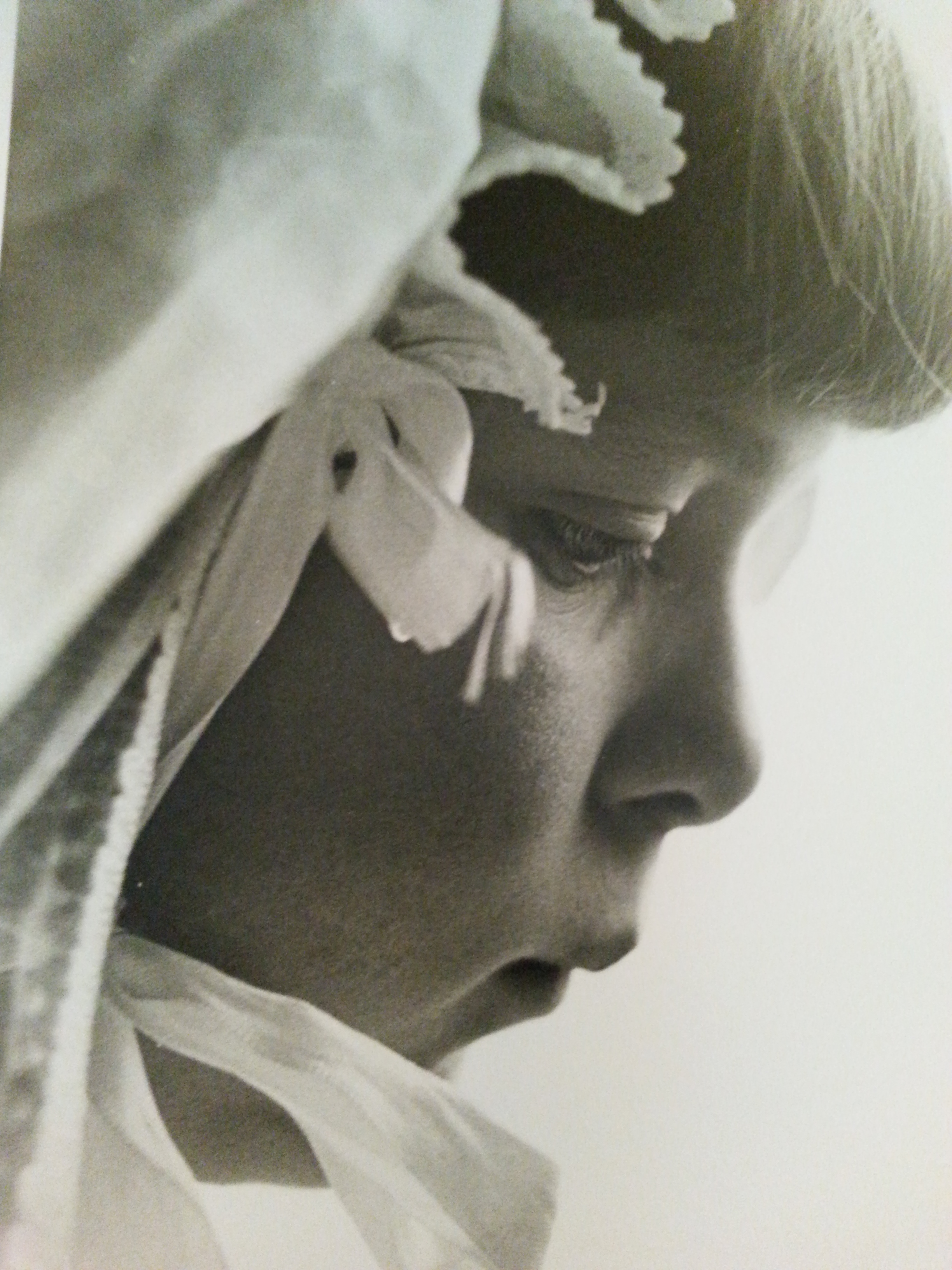
I will never forget the white shoes. They were too tight, but they didn’t have a larger size, so I pretended they fit, of course I had painful blisters the next day, but I didn’t mind. It was a small price to pay for feeling like a princess. I wore a long white wedding-style dress with veil that my mother made. I had so many photos taken at home and at church that I felt like a star. I was a very excited seven-year-old princess, for one day. After the ceremony we had a party in the Church Hall, at St. Joseph’s, Harrow Weald. I was at Primary School then, and I’ve lost touch with all the other girls in the picture, which saddens me. I have met many people along the way, but few have remained as part of my life. Perhaps if we had had Facebook, and Blogs, and smart phones, we’d still be in touch…?


wpid-20140701_163900.jpg
First Holy Communion. St. Joseph’s, Harrow, 1966?


Can you guess who I am?

Would you like to have a look at some of the other entries?


Writing 101, Day Twenty: The Things We Treasure

Today’s Prompt: For our final assignment, tell the tale of your most-prized possession. Today’s twist: If you’re up for a twist, go long — experiment with longform and push yourself to write more than usual.


Prized Possessions and Gifts received

I have a problem with the word ‘things’ in our last assignment, you see, I’ve never been very fond of ‘things’, so I don’t have a favourite thing that’s been with me long enough to value.

I don’t like jewellery, and I have no heirlooms. I don’t keep clothes, or objects, once I’ve used them, either. Of course, there are things which are very useful, and that I’d miss, like my smartphone, or my laptop, but I wouldn’t say I’m emotionally attached to these objects.

The only ‘things’ I value are my books, but I hasten to add, I don’t care much for the books themselves, especially now that of many of them are ebooks. It’s what the book has given me that I carry around with me all the time, as a gift.

I’m not sure I’d be the same person if I hadn’t read the books I’ve read. In fact, I have no doubts that they conditioned the way I think and, of course, the way I write, and live.

I’ve read too many books to even try to mention, so I’ll write about the three books I read as a teenager, and continue to reread to this very day. I reread them so often, that I’m sure they are my most-prized possessions.

large-bookshelf.jpgSmall Bookshelf

The first book is Rebecca, the second is Persuasion, and the third is Jane Eyre. The three are ‘Happy Ever After’ novels, in which the lovers have to overcome serious obstacles in order to finally achieve happiness, but what is the lesson I have carried with me as a precious gift since I first read them as a teenager?

The nameless protagonist in Rebecca, Jane Eyre, and Anne Elliot, fall in love with an ‘ideal’ hero, but they must overcome significant obstacles, including first wives, and parental opposition, in order to achieve their goals. They all improve their station in life, by marrying men (Max de Winter, Edward Rochester, and Frederick Wentworth, respectively) who are able to offer emotional and financial stability, as well as unreserved love and devotion.

I was born several generations after these women, so naturally, my goals are not theirs. I didn’t have to find an ideal husband to live the life I wanted, so what did they teach me? You may suppose these novels are about marrying the ‘right’ man and living happily ever after. Well, that’s not the gift I received.

I learnt two things from these wonderful women. Firstly, perseverance. Never give up on our dreams, and pursue them with honestly and determination. Secondly, second chances will come our way. There is always an opportunity to start again, or to do what we always wanted to do. It’s never too late, and our dreams can come true if you continue to believe in them, and in ourselves.

These novels are not about finding an ideal husband. They are about not being resigned to follow the ‘easy’ or ‘predesigned’ route we can all drift into, and later complain of what could have been, but never happened, because we gave up. They are about believing in ourselves and working towards our goals.

I’m determined and persevering, and a bit of a dreamer, too, and I’m sure that’s due to this wonderful gift I received forty years ago, as I turned the pages of these inspiring books, and I still carry it with me today.

book-gifts

Would you like to read some of the other entries?

Cee’s Fun Photo Challenge: Straight Lines

Modern Bridge Facing Roman Bridge

For this weeks challenge, I’ve chosen two parallel bridges in the city where I live.

Bridges are essential constructions, which are often taken for granted, although most of us need to cross them on a daily basis.

A bridge is a very useful building, because it helps us overcome obstacles in our journeys, such as water or valleys.

Symbolically, bridges convey positive mental images, such as assistance, understanding, advancement, progress, safety, etc.

wpid-20140626_214059-1.jpg
Roman Bridge in Córdoba, Spain.

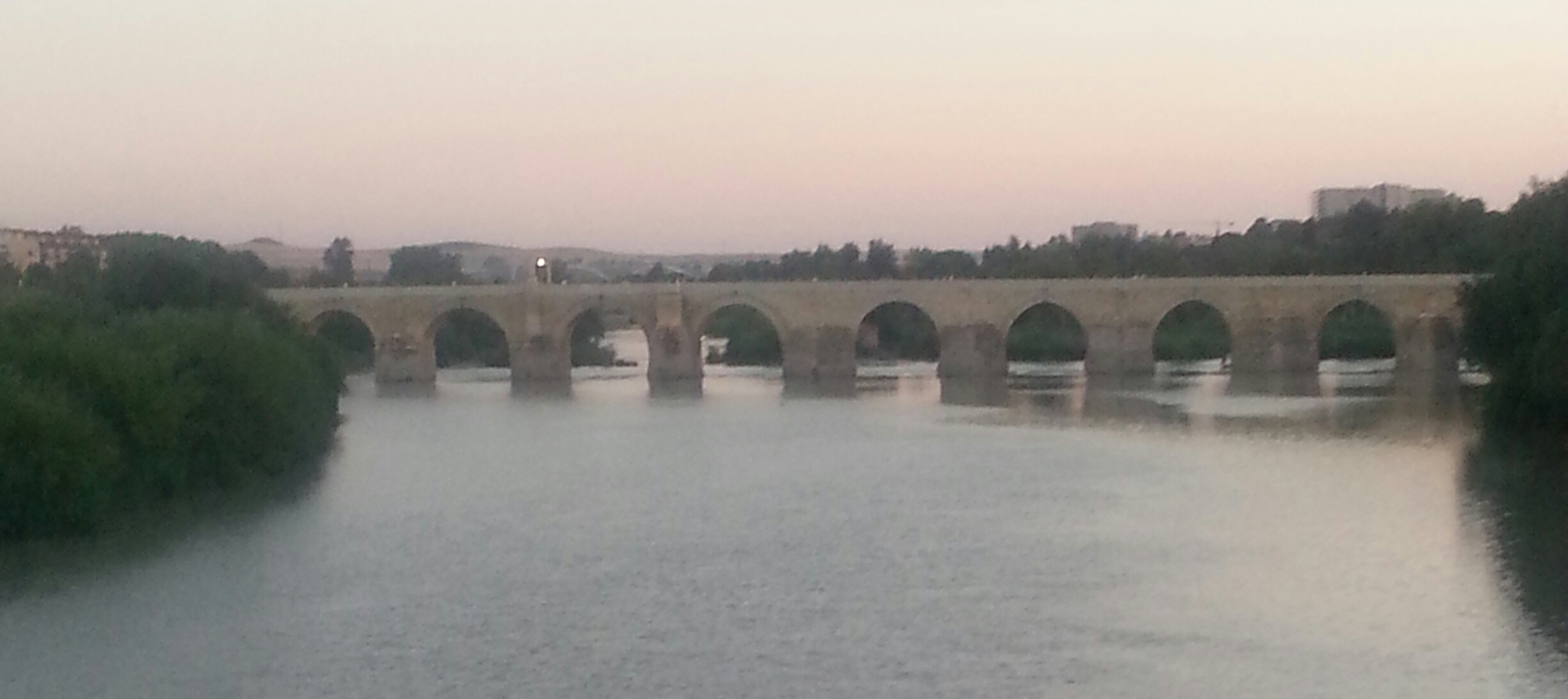
The greatest bridge builders of antiquity were the ancient Romans, who built arch bridges which are still standing, such as the one in this photograph I took on Friday. It is the Roman bridge in Cordoba, Spain, which is still used and admired, by both tourists and local dwellers.

wpid-20140626_214506.jpg
Miraflores Bridge in Córdoba, Spain.

The photograph of the Roman Bridge was taken from this other new bridge, built in 2003, called ‘Miraflores’ Bridge. It literally means ‘the bridge overlooking the flowers’

Their parallel lines face each along the ‘Gualdalquivir’ river. A striking contrast of straight lines from different centuries bringing together two sides of a busy town.

Have a look at some of the other entries

Photo Challenge. Contrasts: Young(er) and Old(er)

The prompt: Contrasts. Light and dark, tall and short, happy and sad — this week, share a shot that captures a contrast.

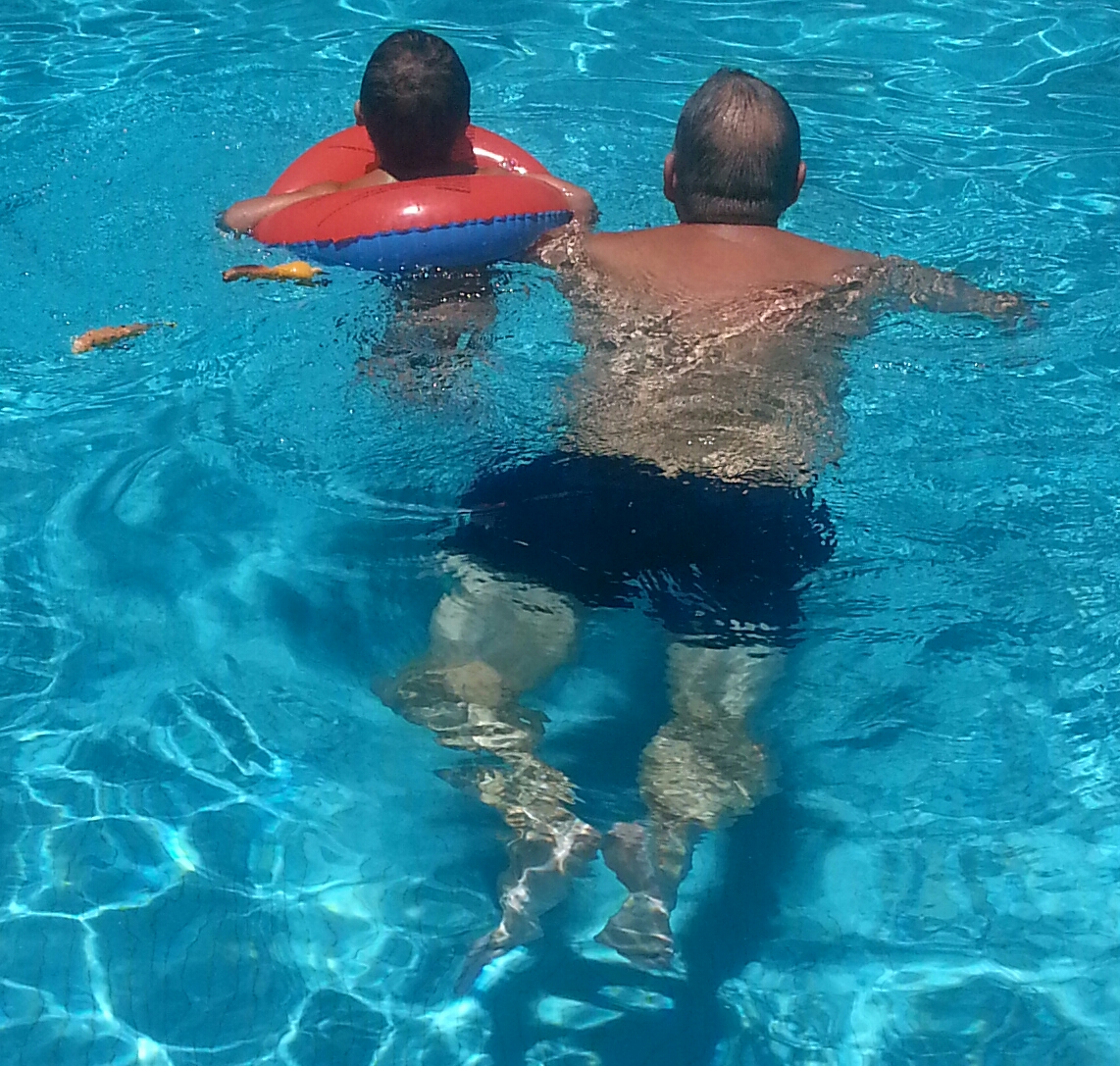
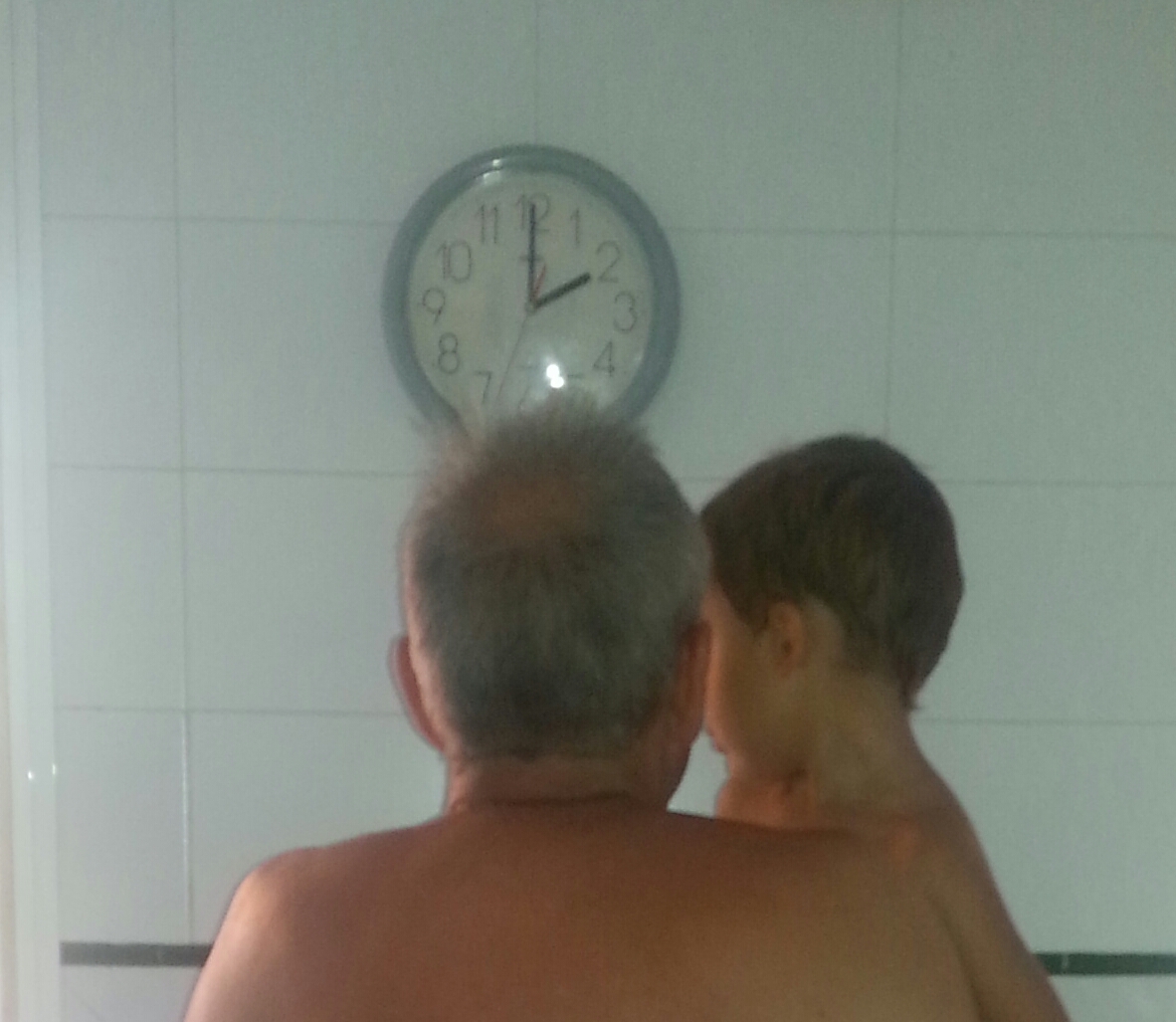
I have three pictures for this challenge. The first and second are personal, grandfather and grandson, leading me to consider the passing of time, and the contrast between young(er) and old(er) and how we all reflect both continuity, and progress. The young will inherit and learn important things from their elders, who did the same before… The unending spiral of life, because the circle revolves around the same point, and the spiral never goes back to its origin. See this interesting post about circles and spirals
wpid-20140628_132403-1.jpg

wpid-20140628_140010-1.jpg


The third is about cultural contrast and overlapping of older and more recent artistic representations. This is a picture of the Mosque in Cordoba, Spain. In this picture, which I took a few mornings ago, we can see two Roman or Visigothic (even the experts can’t agree!) pillars; medieval, Arabic arches; and Renaissance Christian paintings. I can’t be sure, but I’d say the bench and the lamp are 20th century. That adds up to over twenty-one centuries, all in a few square meters. It’s an example of cultural contrast and overlapping. I’d call it the symbiosis of art, history and culture.

wpid-20140624_090558.jpg


Would you like to see some of the other entries on this week’s Photo Challenge