“If you want a happy ending, that depends, of course, on where you stop your story.”
Jane Eyre ended with a wedding and HEA, but what would have happened some years after the wedding?
Jane mentioned that they had one child in Jane Eyre. Would they have had more? Would Jane have become the lady of the grand lady of Rochester Estate? Would she have worn the silk dresses and jewels Mr Rochester offered? Would she have championed women’s independence in any way, as she did in her autobiography, Jane Eyre? What about the poor, workhouses and institutions for orphans, would she have cared? What would she have done with the fortune she inherited from her uncle John Eyre? What about Mr Rochester? Would he have been the faithful husband he promised? Would he have shared Jane’s concerns for the underprivileged? After their honeymoon, what kind of a husband would he have been? Were their backgrounds too different to lead to a happy marriage, or can love conquer all?
Nobody can know for sure what happened after Jane Eyre married Mr Rochester, but there are plenty of clues in Jane Eyre and Wide Sargasso Sea, the prequel written by Jean Rhys in 1966, to give us plenty of options. The Eyre Hall Series explores what could have happened, but what do you think happened 22 years after their marriage?
Book One of the Eyre Hall Series, Blood Moon at Eyre Hall, explores someof the avenues theirmarriage might have taken. It will be published on Sunday 22nd August.
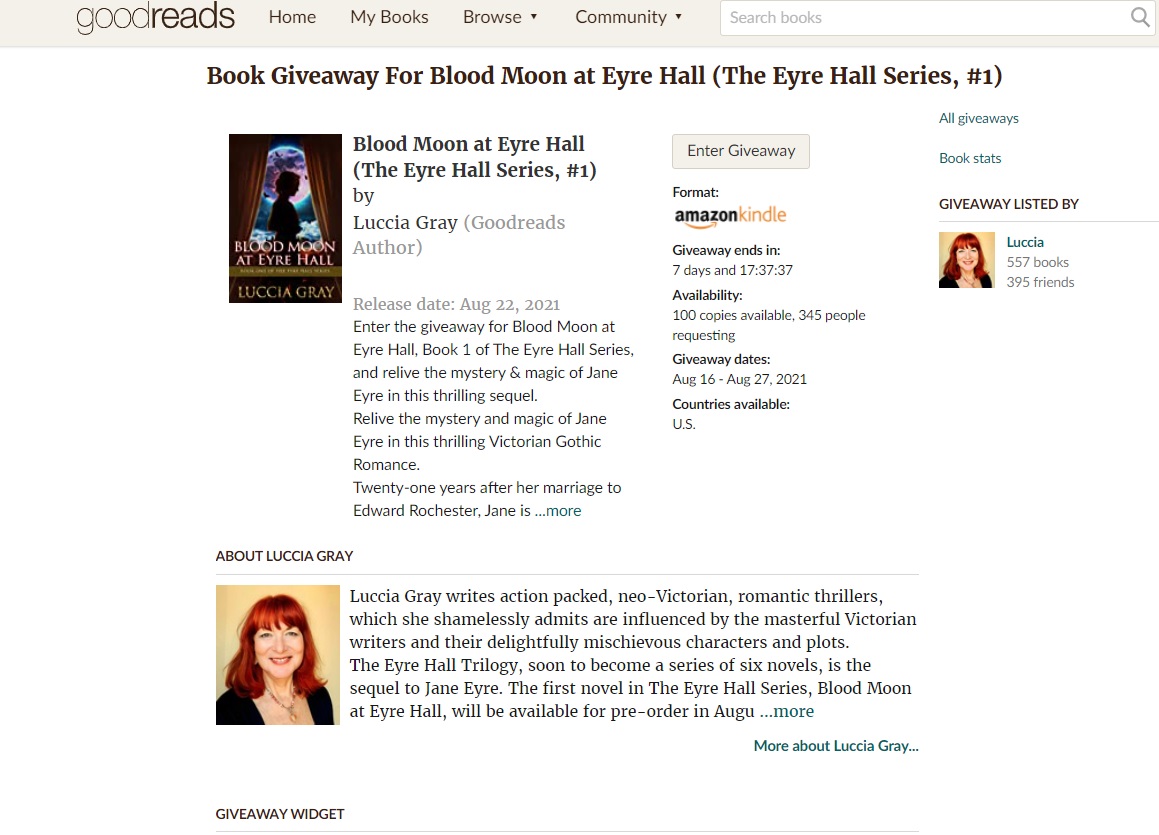
If you live in the US, you can apply for a goodreads giveaway here
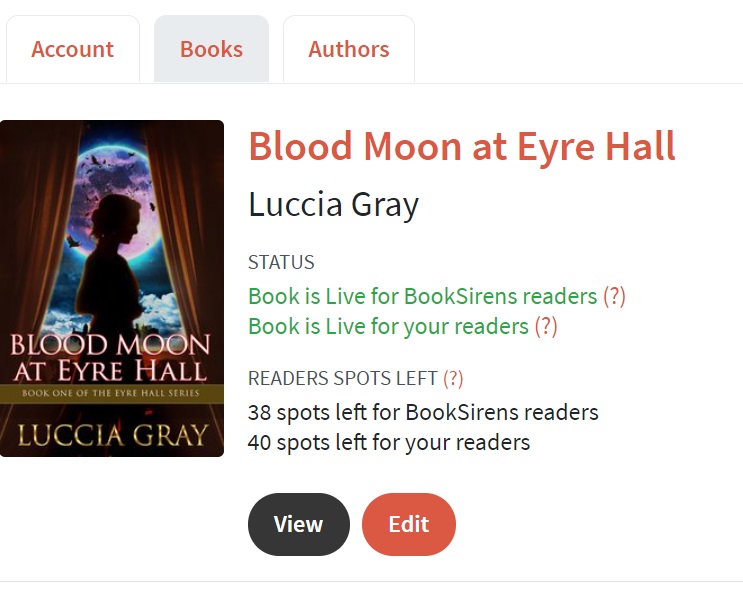
You can also apply for an ARC copy at Book Sirens in exchange for an honest review here
And you can also apply for an ARC at Book Sprout in exchange for an honest review here
Important Message: If you have already read the original Eyre Hall Trilogy, you should read Thunder Moon at Eyre Hall, Book 4 in the Eyre Hall Series, which will be published in October and will soon be available for pre-order.Any questions, just let me know in the comments.
And remember if you enjoy reading action-packed, historical fiction, set in the Victorian era, including romance, heartache, evil villains, engaging heroes and heroines, gothic and supernatural elements, pick up your copy of Blood Moon at Eyre Hall! Hours of enjoyment, for the price of a coffee!
Book One of The Eyre Hall Series will be live in two day’s time! On Sunday 22 of August!
Relive the Mystery and Magic of Jane Eyre in Blood Moon at Eyre Hall, the first novel in The Eyre Hall Series, the Sequel to Jane Eyre.
While Jane is coping with Mr Rochester’s illness…
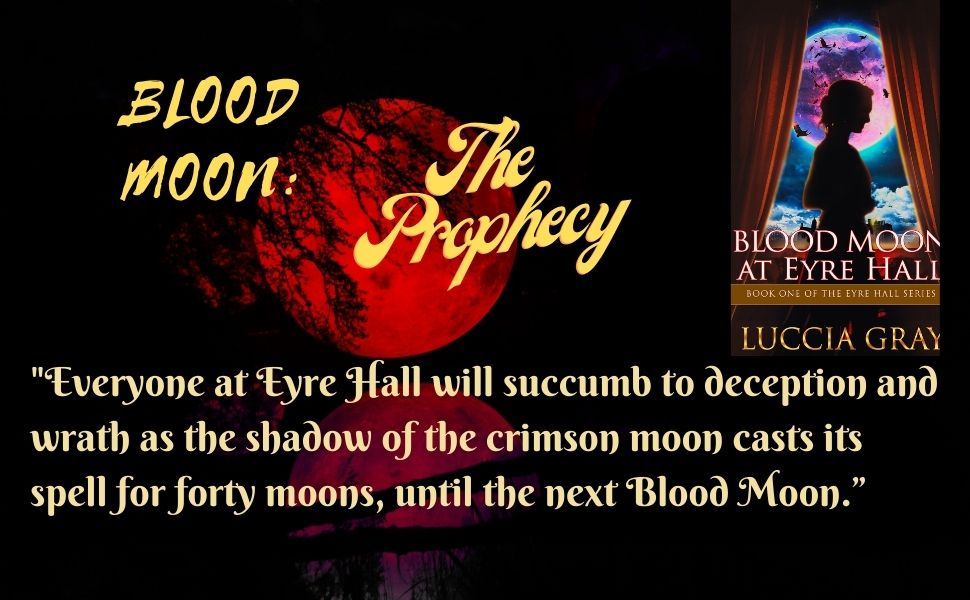
And a Malevolent prophecy hangs over Eyre Hall, built on the site of Thornfield Hall…
The unexpected Romance…
Richard Mason, the first Mrs Rochester’s brother, returns from Jamaica to reveal more secrets from the attic at Thornfield Hall.
Why Has Mr Mason returned to Eyre Hall? What new and devastating secrets will he disclose? And how will Jane cope?
Find out what could have happened twenty-two years after Jane Eyre married Edward Rochester in Blood Moon at Eyre Hall, Book One of The Eyre Hall Series.
Readers who have already readThe Eyre Hall Trilogy can skip directly to Thunder Moon at Eyre Hall, available in October 2021. If you have any questions about the reading order of the series, just let me know in the comments.
HappyWeekend and Happy Reading!
By the way, if you haven’t signed up for my newsletter you can do so by clicking on the following image! Find out about upcoming releases, updates and special offers of The Eyre Hall Series.
This post was written in response to the Insecure Writer’s Support Group monthly (first Wednesday of every month) blog hop to where writers express thoughts, doubts, and concerns about our profession. By the way, all writers are invited to join in!
August 4 question – What is your favorite writing craft book?
Let’s rock the neurotic writing world! Our Twitter handle is @TheIWSG and hashtag is #IWSG
My Favourite Writing Craft Book
When I started writing my first novel in 2013, I had read hundreds of novels and even taught literature to undergraduates, so I thought I knew all about writing. I had an idea, four main characters, a location in space and time, and I started writing ‘by the seat of my pants’.
Although I enjoyed the experience, I wasn’t able to finish the novel as I had started it, because I didn’t have a plan. I had no idea what a story beat was, or a character arc, etc. I had taught literature concentrating on style, themes, and context, not from the point of view of creative writing, so I didn’t have a clue.
I realised my handicap and started reading all manner of books on the art of writing, which you are all no doubt familiar with, and fortunately, one of them was Save the Cat.
I was literally awestruck by the simplicity and clarity of the proposal which was definitely life-changing for my writing career. That said, I confess I have never followed it to the letter, but it opened my eyes to the elements of a dramatic story and showed me a way to structure my novel, which had become a rambling mess, which I couldn’t finish.
In 2018, Jessica Brody wrote a fabulous follow-up called Save the Cat Writes a Novel, which is a far better manual for novel writers, because the original Save the Cat is aimed at screenplays. Jessica Brody, adapts Blake Snider’s proposal to the novel with invaluable examples, checklists, ideas and inspiration to help writers with their first novels.
I soon developed my own writing strategy which still incorporates some of Save The Cat’s structure as well as plenty of other great books I’ve read and podcasts and YouTube videos I’ve listened to.
I visualise the main points of my novel before I start writing. Then I jot down my ideas in a summary and continue visualising it for weeks, until the whole story takes shape in my mind, as if it were a film. That’s when I write the scenes on cards. The structure tends to fall into three acts. I order the scenes chronologically and check that no scenes are missing in the story flow. Finally, I rewrite the summary and when I’m satisfied that I have a complete story, I write the scenes which are most important and clearest in my mind first.
Although I would never call myself a pantser, the final version is rarely exactly the same as the initial summary. New characters and scenes often appear and others are deleted or changed. I have a plan, which I use to guide and help me. I do not allow it to constrain my creativity.
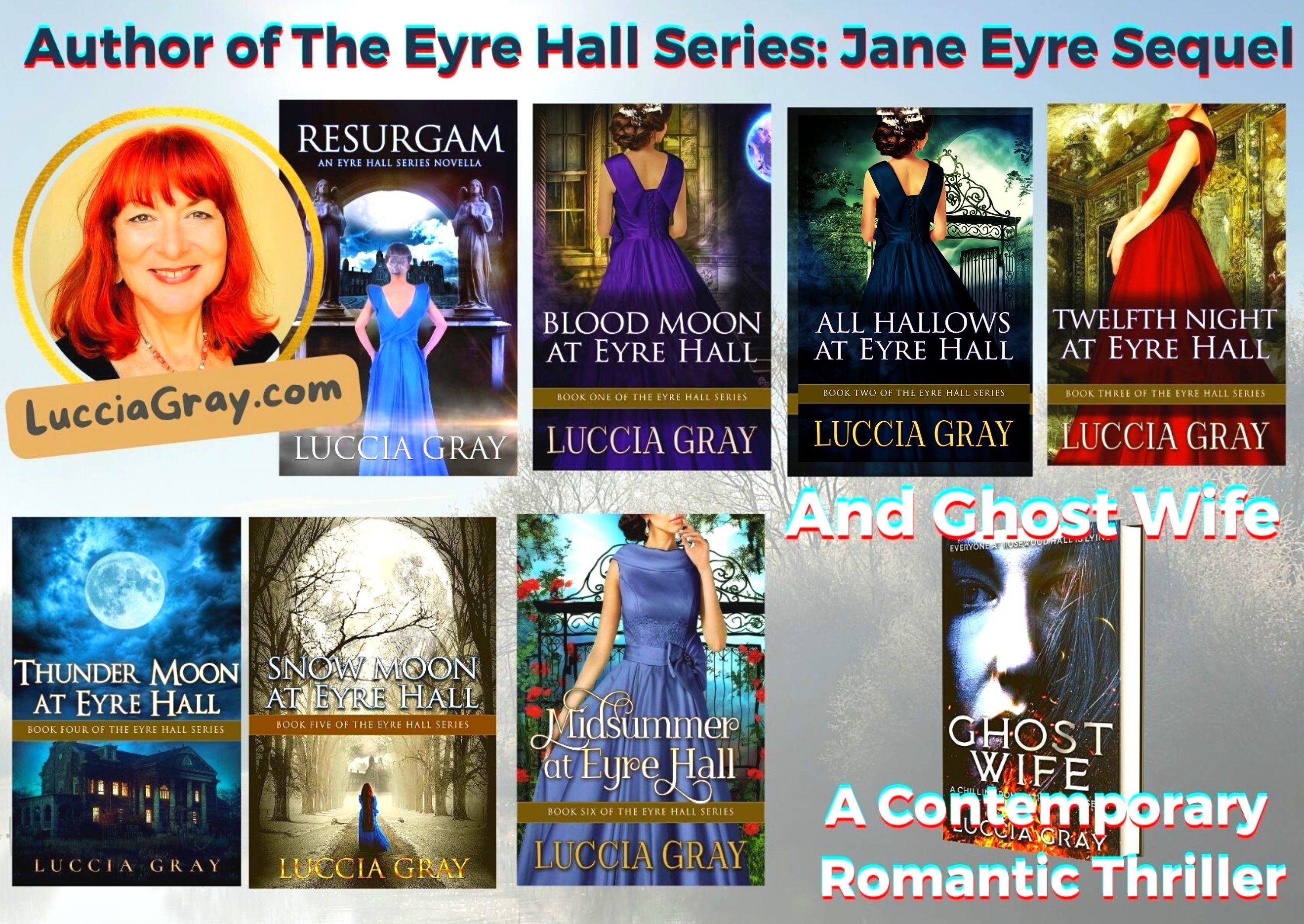
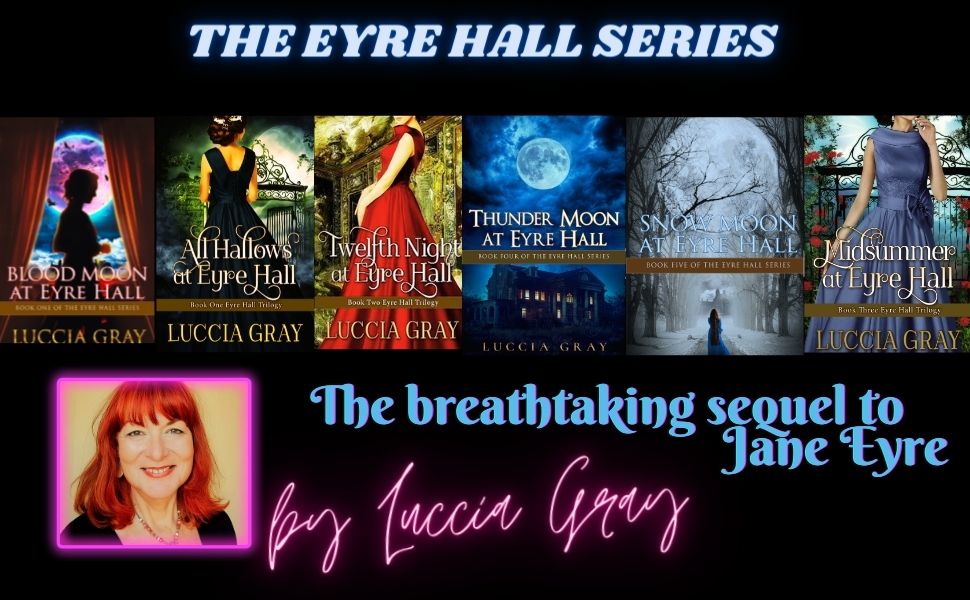
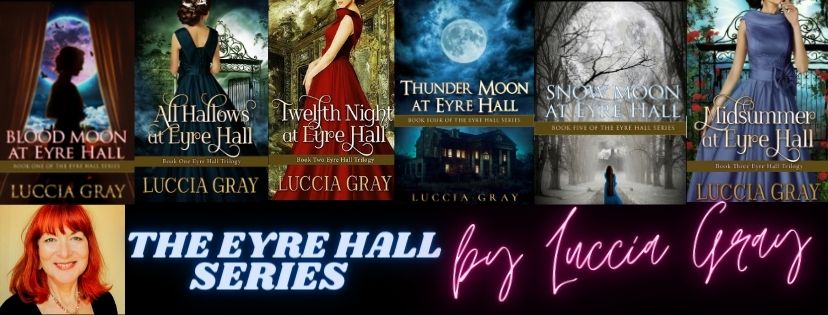
I made this banner for The Eyre Hall Series myself on Canva. It used to be a trilogy, but it has now become a series of six books. Book One, Blood Moon at Eyre Hall, is available for preorder and it will be published on 22nd August. And books two and three, All Hallows at Eyre Hall and Twelfth Night at Eyre Hall will be published the same week. Book four, Thunder Moon at Eyre Hall will be published in the autumn and Snow Moon and Midsummer in 2022.
If you click on the image, you will be taken to my newsletter sign up page. Go ahead, make my day and sign up if you want to get news of special offers, new releases and updates on The Eyre Hall Series and all things related to Jane Eyre.
The Eyre Hall Series is the sequel to Jane Eyre. Especially for readers who love action packed, neo-Victorian romantic thrillers, with gothic mansions, evil villains, unforgettable main characters, lots of drama, and unexpected twists and turns, reminiscent of Victorian novels.
You can preorder Blood Moon at Eyre Hall here, or you can ask me for an ARC in the comments, or sign up for my email list by clicking on the image above.
If you’d like to read or reread Jane Eyre, I’m posting one chapter a week, every Friday, in flash fiction, directly from the original novel, for readers who prefer to read an abridged version, here, just click on the banner below:
Thanks for reading! And I hope you’re having a fabulous Wednesday!
Relive the mystery and magic of Jane Eyre in Blood Moon at Eyre Hall, Book One of The Eyre Hall Series.
Twenty-two years after Jane Eyre and Edward Rochester married, Richard Mason returns from Jamaica with disturbing demands and the revelation of more dark secrets from the attic at Thornfield Hall.
What must Jane do to protect her son’s legacy and safeguard her own integrity?
Blood Moon at Eyre Hall will be published on 22nd of August and is now available for preorder on Amazon.
I have some ARCs. Let me know in the comments if you’d like to read Blood Moon at Eyre Hall right now.
During a walk with Adele on the grounds of Thornfield Hall, we understand why the full moon is a negative omen of betrayal. Mr Rochester tells Jane about the moonlit night he surprised Adele’s mother, the French opera singer, Celine Varens, with her lover.
“It was moonlight and gaslight besides, and very still and serene. The balcony was furnished with a chair or two.”
Mr Rochester tells Jane he realised she was using him for his money, as he was paying for all her expenses, but she was unfaithful, so he left her that very night, withdrew her allowance, and challenged the young officer to a duel.
The first time Jane saw the door to the hidden room where Bertha was kept prisoner, in chapter XX, was a full moon.
I had forgotten to draw my curtain, which I usually did, and also to let down my window-blind. The consequence was, that when the moon, which was full and bright (for the night was fine), came in her course to that space in the sky opposite my casement, and looked in at me through the unveiled panes, her glorious gaze roused me. Awaking in the dead of night, I opened my eyes on her disk—silver- white and crystal clear. It was beautiful, but too solemn; I half rose, and stretched my arm to draw the curtain.
And then she heard cries asking for help coming from the third storey. All the guests who were staying at Thornfield rushed out. Mr Rochester came down from the direction of the cries and sent them all to bed. Then he knocked on Jane’s door and took her upstairs to nurse Mason while he fetched the doctor.
Her visit to the tapestried room was terrifying. Behind the tapestry, which had been looped to one side she saw a hidden door and heard a snarling sound from within and Grace Poole’s voice.
Here the moon, which wakes her up and is ‘too solemn’ is warning Jane of danger ahead.
Jane enjoys drawing and the moon figures frequently in her illustrations. While she is at Thornfield Jane returns to Gateshead to her aunt’s, she draws some pictures including a rising moon.
Provided with a case of pencils, and some sheets of paper, I used to take a seat apart from them, near the window, and busy myself in sketching fancy vignettes, representing any scene that happened momentarily to shape itself in the ever-shifting kaleidoscope of imagination: a glimpse of sea between two rocks; the rising moon, and a ship crossing its disk; a group of reeds and water-flags, and a naiad’s head, crowned with lotus-flowers, rising out of them; an elf sitting in a hedge-sparrow’s nest, under a wreath of hawthorn- bloom.
The rising moon, and a ship crossing its disk, would suggest that Jane foresees a journey, or at least a change in her life. At this point, Jane has acknowledged that he is in love with Mr Rochester, but she believes he will marry Blanche, so she has resolved to leave Thornfield. She trusts the moon to guide her along to her new destination.
Shortly after her return to Thornfield Hall, Mr Rochester proposes to Jane on a full moon evening.
Jane went out to the garden as night fell. On seeing Mr Rochester, she tried to slip away, but he asked her to stay and watch the moonrise.
‘Turn back: on so lovely a night it is a shame to sit in the house; and surely no one can wish to go to bed while sunset is thus at meeting with moonrise.’
At first, he teases her by telling her she must go to Ireland, because he will marry Blanche. When Jane rises to leave, he proposes. She thinks he is lying and insists on looking at his face in the moonlight.
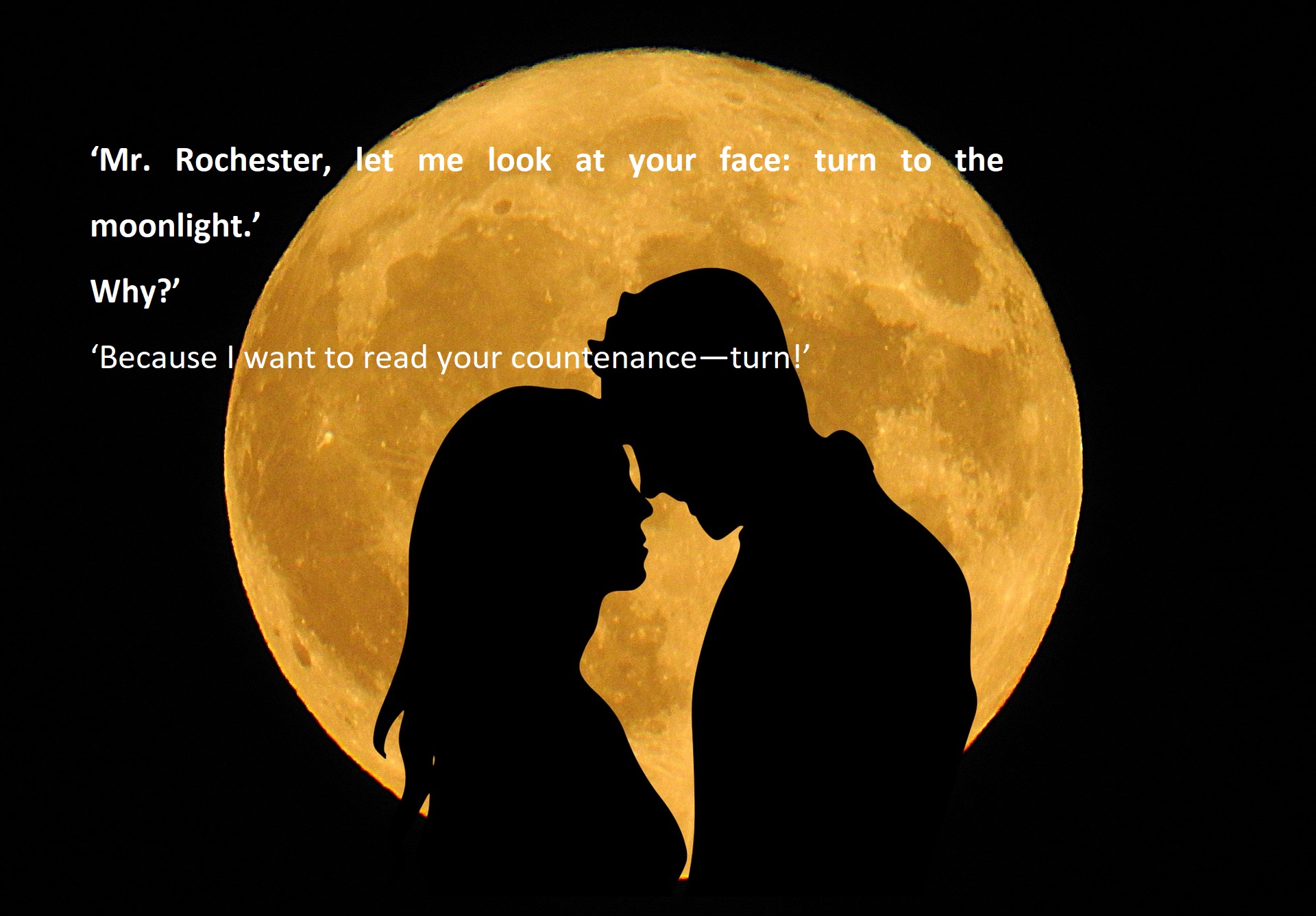
‘Mr. Rochester, let me look at your face: turn to the moonlight.’
Why?’
‘Because I want to read your countenance—turn!’
The light of the moon allows Jane to see that his offer is sincere, si she accepts. They stay in the garden, talking all night until the moon was almost set, and she could no longer see his face.
The day after she has accepted his proposal, Adele, Jane, and Rochester go shopping to Millcote. In the carriage Rochester tells Adele he will take Jane to the moon where they will live in a cave and eat manna, which grows there plentifully.
I am to take mademoiselle to the moon, and there I shall seek a cave in one of the white valleys among the volcano-tops, and mademoiselle shall live with me there, and only me.’
‘She will have nothing to eat: you will starve her,’ observed Adele.
‘I shall gather manna for her morning and night: the plains and hillsides in the moon are bleached with manna, Adele.’
‘She will want to warm herself: what will she do for a fire?’
‘Fire rises out of the lunar mountains: when she is cold, I’ll carry her up to a peak, and lay her down on the edge of a crater.’
I suggest Mr Rochester is using moon symbolism and metaphor to describe the sexual relationship he hopes to have with Jane, but his dream-like description of their honeymoon is open to diverse interpretations.
One full moon night, a month after the proposal while Mr. Rochester was absent from home on business, Jane experienced a disturbing event.
She woke thinking it was daylight, but when she opened her eyes, there was candlelight on the dressing-table. Jane supposed Sophie had come in, but the closet door, where her wedding dress and veil were hanging, was open, and she heard a rustling noise. She thought it was Sophie, but and a form she had never seen before emerged from the closet. She describes a monster; a tall, corpulent woman with thick, dark hair hanging long down her back, wearing a white dress. She had bloodshot eyes with black eyebrows, purple skin and swollen dark lips. She took Jane’s veil tore it in two, threw it on the floor and trampled on it.
Then she stood by her bedside, glared at her, thrust up her candle close to her face, and extinguished it under her eyes. Jane was terrified and lost consciousness.
Mr Rochester was gone and she was terrified of staying inside the house that night without him, so she went out in the moonlit night in search of him. As before, Jane looks to the moon to guide her to a better place.
The following day, after their interrupted wedding, Mr Rochester has asked her to stay with him despite being married and suggested they live as husband and wife in his house in France. Jane of course refuses, she is too clever to become another woman abandoned by Rochester when he tires of her. Jane is in a desperate quandary. She doesn’t want to leave Mr Rochester, but neither can she stay and be his mistress.
That night, while she’s in her room sleeping, she dreams of a moon in the sky which becomes a white human form, her mother who gazes at her and says, ‘My daughter, flee temptation.’
Jane replies, ‘Mother, I will,’ and leaves Thornfield Hall that very night.
The moon, personified advises her on what she should do. In this instance, the moon takes the human form of her mother and tells Jane to leave in order to avoid temptation.
We cannot be sure if Jane is referring to her biological mother or Mary, the mother of God, her spiritual mother, or perhaps both. As the symbolism of the Virgin Mary is a major part of catholic doctrine and Jane is an Anglican, I would be inclined to assume that she is referring to her own mother. This is the only time Jane actively thinks about or refers to her mother in the novel.
At Moor House in Morton, the night before her cousin St John left for India, Jane, who had already turned down his proposal, has an auditory extrasensory experience.
In the evening while St John, Mary, Diana, and Jane are reading before prayers, the May moon is shining brightly through the uncurtained window, rendering almost unnecessary the light of the candle on the table.
It was later that full moon night when one of the most dramatic scenes in the novel takes place.
‘The room was full of moonlight. My heart beat fast and thick: I heard its throb. Suddenly it stood still to an inexpressible feeling that thrilled it through, and passed at once to my head and extremities. The feeling was not like an electric shock, but it was quite as sharp, as strange, as startling: it acted on my senses as if their utmost activity hitherto had been but torpor, from which they were now summoned and forced to wake. They rose expectant: eye and ear waited while the flesh quivered on my bones.
Jane heard Mr Rochester’s voice cry out her name three times.
‘I am coming!’ she cried. ‘Wait for me! Oh, I will come!’ and the following day she returned to Thornfield Hall.
Days later, when she finds him in Ferndean Mr Rochester tells her that a few nights earlier, while he was watching the full moon, he called her name three times in desperation.
‘Did you speak these words aloud?’
‘I did, Jane. If any listener had heard me, he would have thought me mad: I pronounced them with such frantic energy.’
He also tells her he heard her reply.
‘As I exclaimed ‘Jane! Jane! Jane!’ a voice—I cannot tell whence the voice came, but I know whose voice it was—replied, ‘I am coming: wait for me.’
Rochester states that, ‘In spirit, I believe we must have met…perhaps your soul wandered from its cell to comfort mine.’
So here at the end of the novel, the moon becomes a positive omen for both, carrying their voices and feelings across space, simultaneously. From then on, they will both remember the night of the full moon they contacted each other supernaturally, and as a result they were reunited. The moon’s final appearance in the novel is the central element to the grand finale. Jane and Rochester’s love is like the tide, controlled by the moon, who pulls them together in the novel’s final happy ever after.
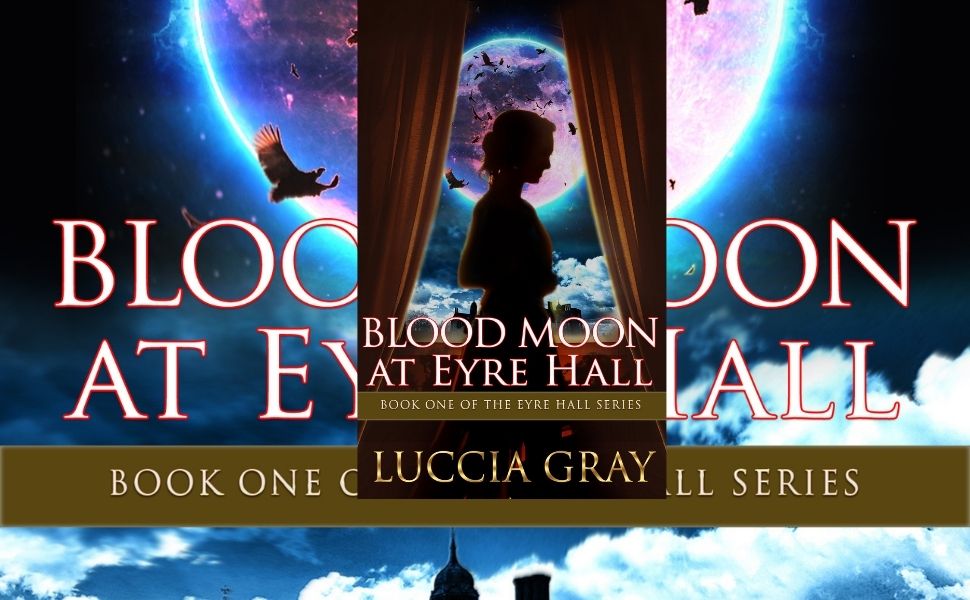
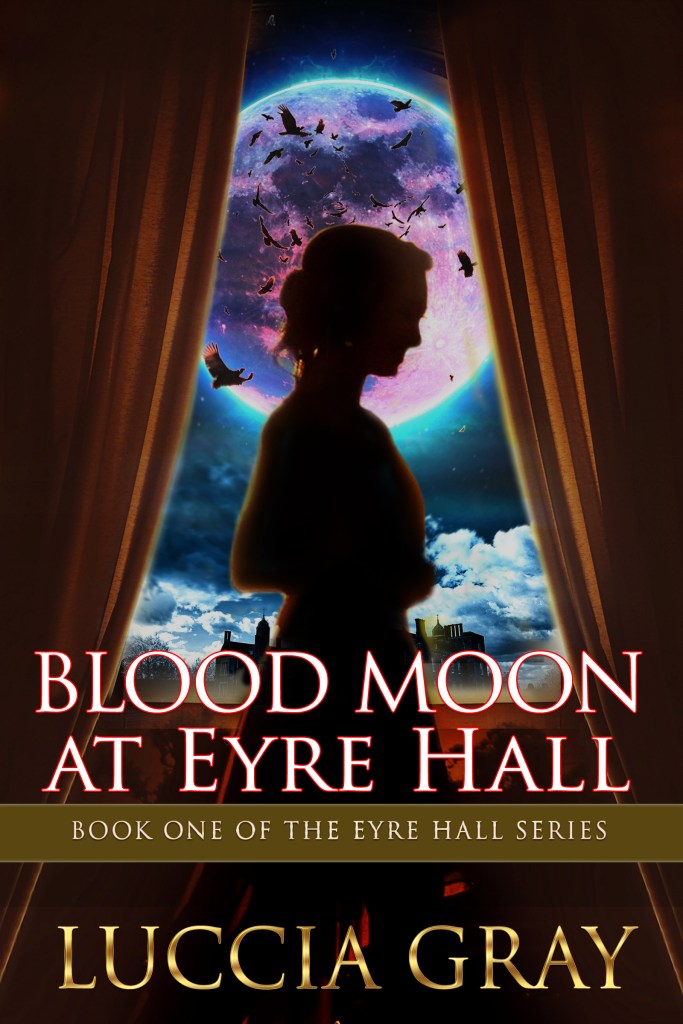
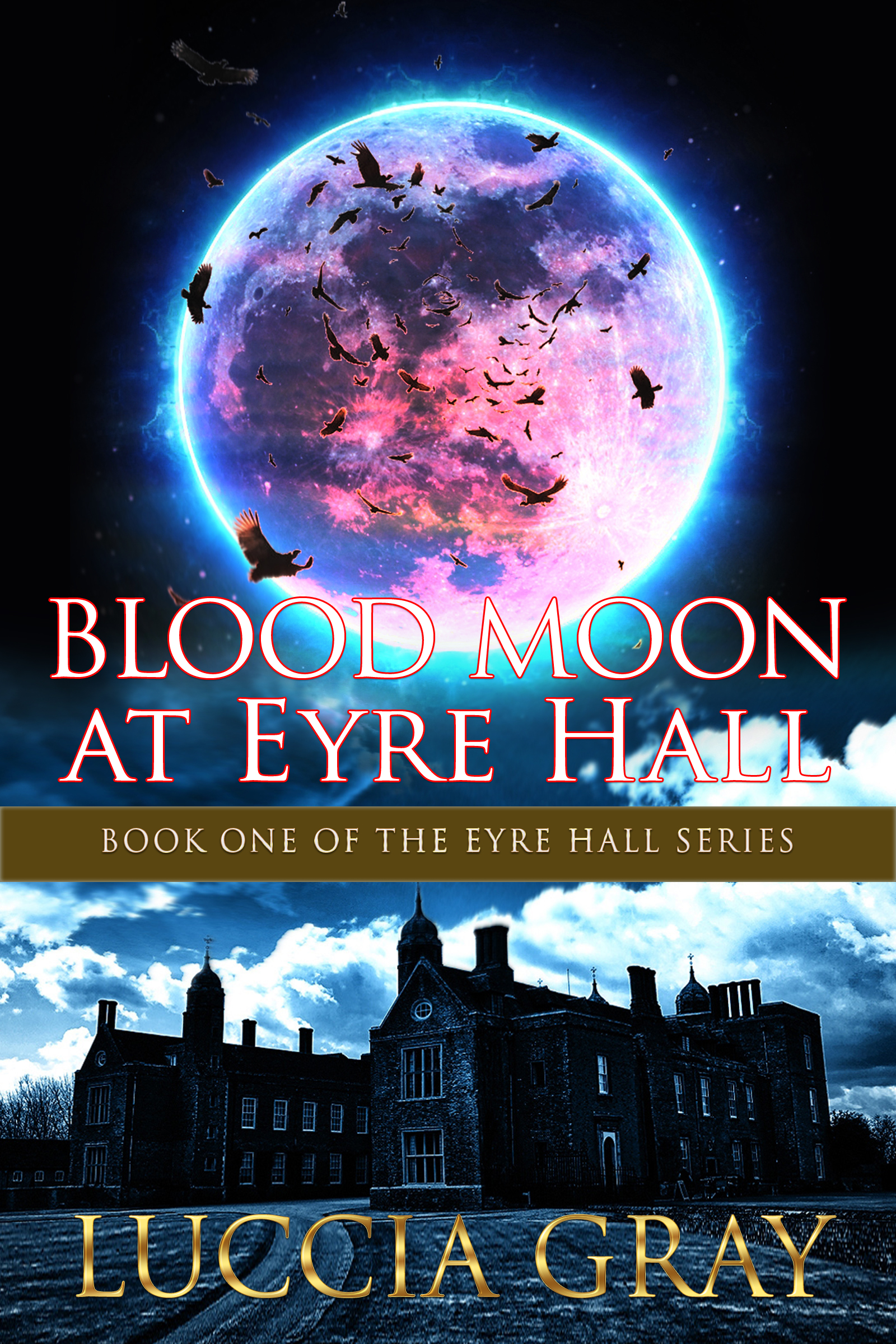
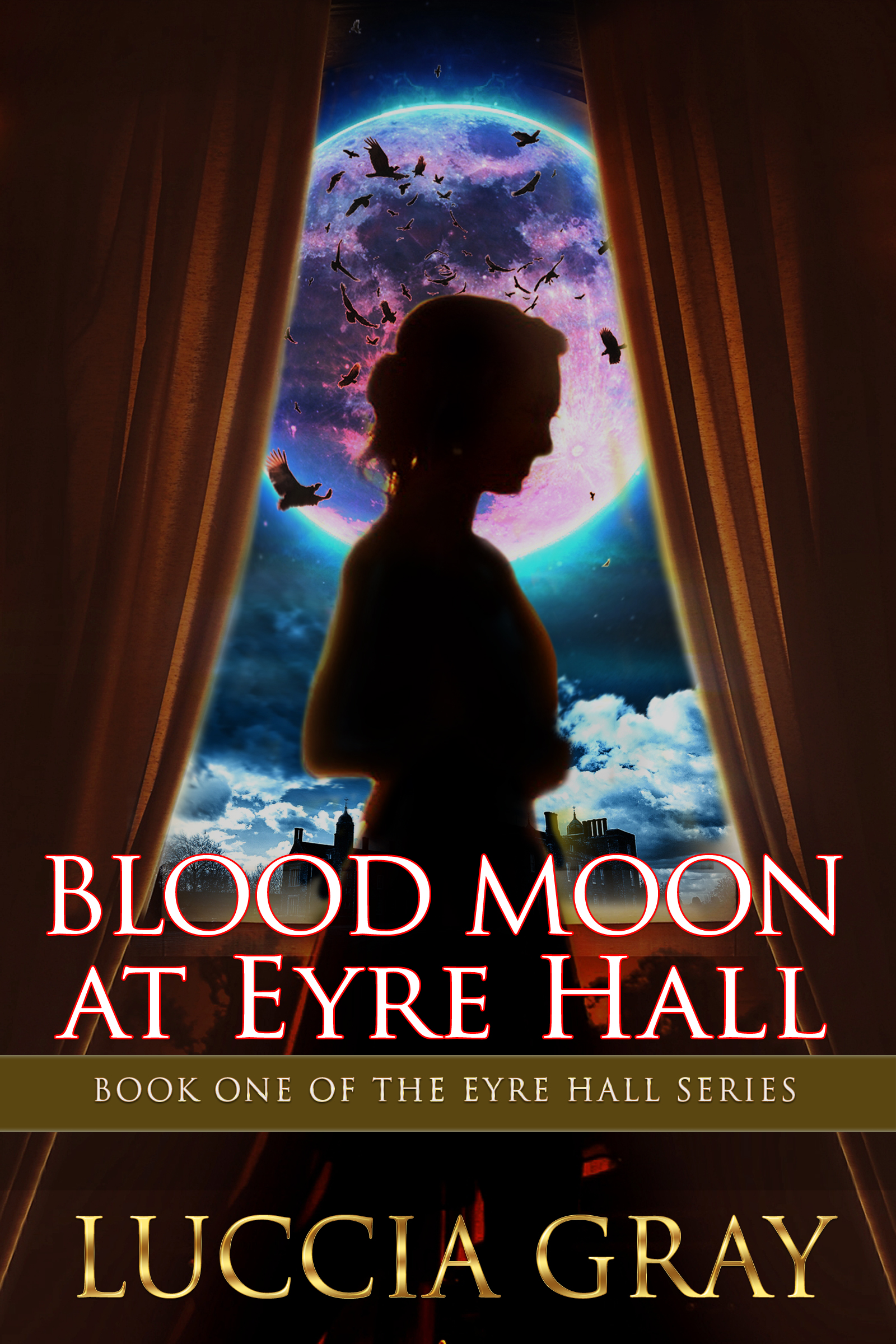
Many of you know I already have a cover, which I loved, until I suddenly thought there was something missing, so I asked the designer to add a silhouette by a window, and at first I preferred it to the first cover, but I’m not sure anymore.
This post was written in response to the Insecure Writer’s Support Group monthly (first Wednesday of every month) blog hop to where writers express thoughts, doubts, and concerns about our profession. By the way, all writers are invited to join in!
July 7 question – What would make you quit writing?
Let’s rock the neurotic writing world! Our Twitter handle is @TheIWSG and hashtag is #IWSG
What would make you quit writing?
I would never, ever quit writing.
I started writing poems, stories, and novels when I was a teenager. I can’t imagine my life without writing, every single day.
The only thing that would stop me would be a serious illness, which would make writing cognitively or physically impossible.
If I stopped writing novels, which I’m (almost) sure I wouldn’t, I’d still write poems, diary entries, blog posts and perhaps even my memoir.
On the other hand, I might quit publishing one day (although I can’t see this happening any time soon), because, especially when you’re an indie author, there is too much to do in this wonderful but exhausting profession.
As well as learning about and improving our writing craft, blogging and using social media, we have to learn about the business of publishing and marketing. We have to outsource experts such as proofreaders, editors and cover designers, and hundreds more things.
I’ve learned where to find experts, on goodreads, you tube, reedsy, fiverr, and following the advice of some generous bloggers, podcasters and youtubers who share their knowledge and advice, such as The Creative Penn.
I’ve learnt how to use Canva, Facebook author page, Goodreads, Amazon Author Central, how to format and upload my books on amazon, and use wordpress.
I made this banner for The Eyre Hall Series myself on Canva. It used to be a trilogy, but it has now become a series of six books. Book One, Blood Moon at Eyre Hall, is available for preorder and it will be published on 22nd August. And books two and three, All Hallows at Eyre Hall and Twelfth Night at Eyre Hall will be published the same week. Book four, Thunder Moon at Eyre Hall will be published in the autumn.
This may not seem like a lot, but hey, the first computer I ever saw was on Star Trek when I was ten. I wasn’t near enough to touch a real one until I was nearly thirty and it was called Amstrad (does anyone else remember it in the 80s?). So I feel quite proud of my digital competence!
Right now I’m learning how to set up a mailing list with mailerlite. After watching a handful of videos hundreds of times, and trial and error, I’ve done it, but I haven’t managed to link it to WordPress. That will be my next milestone.
Here’s the image for the landing page. If you click on it, you will be taken to the sign up page. Go ahead, make my day and sign up if you want to get news of special offers, new releases and updates on The Eyre Hall Series and all things related to Jane Eyre.
The Eyre Hall Series is the sequel to Jane Eyre. Especially for readers who love action packed, neo-Victorian romantic thrillers, with gothic mansions, evil villains, unforgettable main characters, lots of drama, and unexpected twists and turns, reminiscent of Victorian novels.
You can preorder Blood Moon at Eyre Hall here, or you can ask me for an ARC in the comments, or sign up for my email list by clicking on the image above.
If you’d like to read or reread Jane Eyre, I’m posting one chapter a week, every Friday, in flash fiction, directly from the original novel, for readers who prefer to read an abridged version, here, just click on the banner below:
Thanks for reading! Have a fabulous Wednesday and keep writing, no matter what!
Relive the mystery and magic of Jane Eyre in this thrilling Victorian Gothic Romance.
Twenty-one years after her marriage to Edward Rochester, Jane is coping with the imminent death of her bedridden husband, and the revelation of more secrets. A disheartened Jane believes matters cannot get worse until an unexpected visitor brings news of Bertha Mason, the first Mrs Rochester, which add to Jane’s devastation, as the ghosts of Thornfield Hall return to torment her.
From the Blurb
News of Rochester’s ill health reaches Richard Mason in Jamaica. He has unfinished business with Edward Rochester, his deceased sister, Bertha Mason’shusband. Richard returns to the Rochester estate to torment an already distraught Jane with disturbing demands and the revelation of more dark secrets from the attic at Thornfield Hall.
Blood Moon at Eyre Hall is Book One of The Eyre Hall Series. Its multiple narrators explore the evolution of the original characters, and bring to life new and intriguing ones, spinning a unique and absorbing narrative.
The Eyre Hall Trilogy has Become a Series
Blood Moon at Eyre Hall takes place a few months before the original trilogy, between July and October 1865, and leads up to the first chapter of All Hallows at Eyre Hall.
The original first novel, which is now Book Two, All Hallows at Eyre Hall, takes place in October and November 1865 and remains essentially the same as the first edition, with some minor improvements and adjustments.
The original second novel Twelfth Night at Eyre Hall, which is now Book Three in the series is also essentially the same as the first edition with some minor improvements.
Both novels, All Hallows and Twelfth Night have been re-edited and will be republished on 22nd of August, Blood Moon at Eyre Hall’s Publication Day. So the first three novels in the series will be available on 22nd of August.
What if you’ve already read the original trilogy?
Readers who have already read the original trilogy have asked me about the new reading order of the series. This is what I suggest:
1- Read Blood Moon at Eyre Hall to get some more back story to All Hallows at Eyre Hall. (Of course you could go straight to Book Four, Thunder Moon at Eyre Hall, to be published in November, but it’s a pity to miss out on Blood Moon, it’s a fabulous book with some revealing insights to the characters and what happens next in the series, and you can get an ARC copy, just ask!)
After reading Blood Moon at Eyre Hall you can either re-read All Hallows and Twelfth Night if you read them a long time ago and feel you need to refresh your memory, or jump straight into Book Four, Thunder Moon at Eyre Hall which will be published in November (ARC copies will be available a month earlier).
Would you like to read an Advanced Reader Copy in exchange for an honest review?
If you would like to read an ARC of Blood Moon at Eyre Hall in digital format, let me know in the comments and I’ll get in touch, or send me a message on Twitter or Facebook, or follow the link below to sign up for my mailing list.
Click on the image to sign up for my newsletter! You’ll get news of blog posts, special offers and new releases.
The evening I was upset and belittled by Mr Rochester and his distinguished guests
It was with some trepidation that I perceived the hour approach when I was to join the party in the drawing-room enter repair with Adele, who had been in a state of ecstasy all day. Sophie dressed her in a pink satin frock with a sash and arranged her curls in drooping clusters.
I wore my best dress (the silver-grey one, purchased for Miss Temple’s wedding, and never worn since), smoothed my hair and attached the pearl brooch, my sole ornament.
When we descended to the drawing-room, it was vacant; they were still seated at dinner. Adele sat on the footstool while I retired to a window-seat, and taking a book from a table near endeavoured to read.
The curtain was swept back from the arch and eight tall ladies, many dressed in white, flocked in. I rose and curtseyed; one or two bent their heads in return, the others only stared at me.
They dispersed about the room, moving like a flock of white plumy birds. Mrs. Eshton, a handsome woman and two of her daughters, Amy and Louisa. Lady Lynn was a large, haughty-looking, stout woman of about forty, richly dressed in a satin robe and a band of gems. Mrs. Dent was less showy; but, I thought, more lady-like. She had a slight figure, a pale, gentle face, and fair hair. But the three most distinguished and the loftiest of stature were the Dowager Lady Ingram, a splendid woman for her age, and her daughters, Blanche and Mary, both attired in spotless white.
Lady Ingram had a fierce and a hard eye: it reminded me of Mrs. Reed’s. Her voice was deep, its inflections very pompous, very dogmatical,—very intolerable, in short. I regarded Blanche with special interest to see whether her appearance was such as I should fancy, likely to suit Mr. Rochester’s taste.
Her face was like her mother’s; the same low brow, high features, and same pride. She laughed continually; her laugh was satirical, and so was the habitual expression of her arched and haughty lip. She played on Mrs Dent’s ignorance of botany in a manner that was decidedly not good-natured. She played the piano and sang with a fine voice and she talked French apart to her mamma, with fluency and a good accent. Most gentlemen would admire her.
Adele rose, advanced to meet them, made a stately reverence, and said, ‘Bon jour, mesdames.’
Miss Ingram had looked down at her with a mocking air, and exclaimed, ‘Oh, what a little puppet!’
Lady Lynn had remarked, ‘It is Mr. Rochester’s ward, I suppose—the little French girl he was speaking of.’
Mrs. Dent had kindly taken her hand and given her a kiss.
Amy and Louisa Eshton had cried out simultaneously— ‘What a love of a child!’
And then they had called her to a sofa, where she now sat, ensconced between them, chattering alternately in French and broken English; absorbing the ladies’ attention and getting spoilt to her heart’s content.
The collective appearance of the gentlemen, all costumed in black, was impressive. Henry and Frederick Lynn were very dashing sparks indeed; and Colonel Dent was a fine soldierly man. Mr. Eshton, the magistrate of the district, was gentleman-like with white hair and dark eyebrows and whiskers. Lord Ingram, like his sisters, was very tall and handsome; but he shared Mary’s apathetic and listless look.
Mr Rochester came in last. I tried to concentrate my attention on my netting-needles, but distinctly beheld his figure, and inevitably recalled the moment when I last saw him, holding my hand, and surveying me with eyes that revealed a heart full and eager to overflow. Yet now, we were so far estranged, that I did not expect him to come and speak to me. He took a seat at the other side of the room and began conversing with some of the ladies.
I had an acute pleasure at gazing at him without being observed, like what the thirst-perishing man might feel who knows the well to which he has crept is poisoned, yet stoops and drinks divine draughts nevertheless.
Most true is it that ‘beauty is in the eye of the gazer.’ My master’s colourless, olive face, square, massive brow, broad and jetty eyebrows, deep eyes, strong features, firm, grim mouth,—all energy, decision, will,—were not beautiful, according to rule; but they were more than beautiful to me. I had not intended to love him; the reader knows I had wrought hard to extirpate from my soul the germs of love there detected; and now, at the first renewed view of him, they spontaneously arrived, green and strong! He made me love him without looking at me.
I saw Mr. Rochester smile:- his stern features softened; his eye grew both brilliant and gentle, its ray both searching and sweet. He was talking to Louisa and Amy Eshton. ‘He is not to them what he is to me,’ I thought: ‘he is not of their kind. I believe he is of mine;—I am sure he is—I feel akin to him; I understand the language of his countenance and movements: though rank and wealth sever us widely, I have something in my brain and heart, in my blood and nerves, that assimilates me mentally to him.
I knew I should conceal my sentiments. I must remember that he cannot care much for me:- and yet, while I breathe and think, I must love him.
Blanche Ingram is standing alone at the table, waiting to be sought; but she will not wait too long. Mr. Rochester stands on the hearth as solitary as she stands by the table: she confronts him, taking her station on the opposite side of the mantel- piece.
‘Mr. Rochester, I thought you were not fond of children?’
‘Nor am I.’
‘Then, what induced you to take charge of such a little doll as that?’ (pointing to Adele). ‘Where did you pick her up?’
‘I did not pick her up; she was left in my hands.’
‘You should have sent her to school.’
‘I could not afford it: schools are so dear.’
‘Why, I suppose you have a governess for her: I saw a person with her just now—is she gone? Oh, no! there she is still, behind the window-curtain. You pay her, of course, and you have them both to keep in addition.’
‘I have not considered the subject,’ said he indifferently, looking straight before him.
‘No, you men never do consider economy and common sense. Mary and I have had, I should think, a dozen at least in our day; half of them detestable and the rest ridiculous, were they not, mama?’
‘My dearest, don’t mention governesses. I have suffered a martyrdom from their incompetency and caprice. I thank Heaven I have now done with them!’
Mrs. Dent whispered something in her ear; I supposed, from the answer elicited, it was a reminder that one of the anathematised race was present.
‘I noticed her; I am a judge of physiognomy, and in hers I see all the faults of her class.’
‘What are they, madam?’ inquired Mr. Rochester aloud.
‘Ask Blanche; she is nearer you than I.’
‘Oh, don’t refer him to me, mama! I have just one word to say of the whole tribe; they are a nuisance. Not that I ever suffered much from them; I took care to turn the tables. We played tricks on ours. Theodore, do you remember those merry days?’
‘Yes, to be sure I do,’ drawled Lord Ingram.
‘No more need be said: I move the introduction of a new topic. Mr. Rochester, do you second my motion?’
‘Madam, I support you on this point, as on every other.’
‘Eduardo, are you in voice to-night?’
‘Donna Bianca, if you command it, I will be.’
She tossed her head with all its curls, as she moved to the piano, where she had now seated herself with proud grace.
‘Mr. Rochester, now sing, and I will play for you.’
‘I am all obedience,’ was the response.
‘Take care, then: if you don’t please me, I will shame you by showing how such things SHOULD be done.’
‘Now is my time to slip away,’ thought I: but the tones that then severed the air arrested me. Mr. Rochester possessed a fine voice: a mellow, powerful bass, into which he threw his own feeling, his own force; finding a way through the ear to the heart, and there waking sensation strangely. I waited till the last deep and full vibration had expired and then I quitted my sheltered corner and made my exit by the side-door.
Thence a narrow passage led into the hall: in crossing it, I stopped to tie my sandal on the mat at the foot of the staircase. I heard the dining-room door unclose; a gentleman came out; rising hastily, I stood face to face with him: it was Mr. Rochester.
‘How do you do?’ he asked.
‘I am very well, sir.’
‘Why did you not come and speak to me in the room?’
‘I did not wish to disturb you, as you seemed engaged, sir.’
‘What have you been doing during my absence?’
‘Nothing particular; teaching Adele as usual.’
‘And getting a good deal paler than you were—as I saw at first sight. What is the matter?’
‘Nothing at all, sir.’
‘Did you take any cold that night you half drowned me?’
‘Not she least.’
‘Return to the drawing-room: you are deserting too early.’
‘I am tired, sir.’
He looked at me for a minute.
‘And a little depressed,’ he said. ‘What about? Tell me.’
‘I am not depressed.’
‘But I affirm that you are so much depressed that a few more words would bring tears to your eyes—indeed, they are there now, shining and swimming. Well, to-night I excuse you; but understand that so long as my visitors stay, I expect you to appear in the drawing-room every evening; it is my wish; don’t neglect it. Now go. Send Sophie for Adele. Goodnight, my—‘ He stopped, bit his lip, and abruptly left me.
*****
Jane feels anxious about spending time with Mr Rochester’s distinguished guests in the drawing room. She knows her position in the household is barely above a servant’s. She feels inadequate next to the elegantly dressed and gemmed guests.
She admits to the reader that she is hopelessly in love with her employer, although she’s convinced that he has no feelings for her.
She has a dreadful evening, hiding by the window, being ignored and ridiculed and watching Blanche Ingram flirt with Mr Rochester, who appears to follow her lead.
There is a great deal of angst in this part of the chapter. The reader feels sympathy for Jane and understands her unease and emotional distress. We are also wondering how she could ever fit into Rochester’s world, even if he ever asked her to be part of it. The rigidness, hypocrisy and cruelty of Victorian society seems to point to a dead end for our protagonist. She will always be a poor governess in their eyes.
Mr Rochester’s behaviour is cruel. He ignores her while she’s in the room, teases her when he follows her out into the corridor, and finally insists that she should return to the drawing room every evening while his friends are at Thornfield.
Jane is upset and we can imagine that she’s going to cry her heart out in her room.
All the happiness and independence she had gained at Thornfield has dissolved and turned into misery. Poor Jane feels as excluded and destitute as she did when she was an unloved and bullied child at Gateshead.
Where will Jane go from here? Will she leave Thornfield at once, or will she stand up for herself? Is Mr Rochester interested in Blanche? Why is he adamant to make Jane suffer the criticism of his tactless and haughty guests?
Find out next week in chapter XVIII.
The summary is based on the free ebook by planet books which you can find here.
I’ll be posting a chapter of Jane Eyre in flash fiction every Friday. If you’re wondering why, read all about it here.
If you’d you’d like to Reread Jane Eyre with me, visit my blog every Friday for #JaneEyreFF posts.
My First glimpse of Blanche Ingram and Mr Rochester’s Elegant Guests
Ten days passed, and Mr Rochester had still not returned. When Mrs. Fairfax said he had frequently quitted in an abrupt and unexpected manner to travel to London and thence to the continent, I felt a sickening sense of disappointment. But rallying my wits, and recollecting my principles, I at once called my sensations to order, saying to myself, ‘You have nothing to do with the master of Thornfield., further than to receive the salary he gives you for teaching his protégé. Don’t make him the object of your fine feelings. He is not of your order; be too self-respecting to lavish your love where such a gift is not wanted.’
I went on with my day’s business tranquilly. Vague suggestions wandered across my brain of reasons why I should quit Thornfield.
Mr. Rochester had been absent upwards of a fortnight when Mrs Fairfax received a letter from the master.
‘Mr. Rochester is not likely to return soon, I suppose?’ I asked nonchalantly.
‘Indeed, he is—in three days, next Thursday, on time for dinner at six. He sends directions for all the best bedrooms to be prepared; and the library and drawing-rooms are to be cleaned out; I am to get more kitchen hands from the George Inn, at Millcote, and from wherever else I can; and the ladies will bring their maids and the gentlemen their valets: so we shall have a full house of it.’
The three days were, as she had foretold, busy enough. Three women were got to help; and such scrubbing, such brushing, such washing of paint and beating of carpets, such taking down and putting up of pictures, such polishing of mirrors and lustres, such lighting of fires in bedrooms, such airing of sheets and featherbeds on hearths, I never beheld, either before or since.
Adele ran quite wild in the midst of it: the preparations for company and the prospect of their arrival seemed to throw her into ecstasies. From school duties she was exonerated: Mrs. Fairfax had pressed me into her service, and I was all day in the storeroom, helping her and the cook; learning to make custards and cheesecakes and French pastry, to truss game and garnish desert-dishes.
During the intervening period I had no time to nurse chimeras; and I believe I was as active and gay as anybody.
Still, now and then, I received a damping check to my cheerfulness; and was, in spite of myself, thrown back on the region of doubts and portents and dark conjectures.
This was when I chanced to see the third-storey staircase door (which of late had always been kept locked) open slowly and give passage to the form of Grace Poole. She would descend to the kitchen once a day, only for an hour, eat her dinner, smoke a moderate pipe on the hearth, and go back, carrying her pot of porter with her, for her private solace, in her own gloomy, upper haunt, as companionless as a prisoner in his dungeon. The strangest thing of all was that not a soul in the house discussed her employment or pitied her isolation. I once overheard part of a dialogue between Leah and one of the charwomen.
‘She gets good wages, I guess?’
‘Yes,’ said Leah; ‘I wish I had as good; not that mine are to complain of,—there’s no stinginess at Thornfield; but they’re not one fifth of the sum Mrs. Poole receives. I should not wonder but she has saved enough to keep her independent if she liked to leave; but I suppose she’s got used to the place; and then she’s not forty yet, and strong and able for anything. It is too soon for her to give up business.’
‘She is a good hand, I daresay,’ said the charwoman. ‘Ah!—she understands what she has to do,—nobody better,’ replied Leah significantly; ‘and it is not everyone could fill her shoes—not for all the money she gets.’
‘That it is not!’ was the reply. ‘I wonder whether the master—’
Here Leah turned and perceived me, and she instantly gave her companion a nudge.
‘Doesn’t she know?’ I heard the woman whisper.
Leah shook her head, and the conversation was, of course, dropped. I gathered from their conversation that there was a mystery at Thornfield; and that from participation in that mystery, I was purposely excluded.
Thursday afternoon arrived; it was drawing to an end now; but the evening was even warm, and I sat at work in the schoolroom with the window open. It had been one of those spring days which, towards the end of March or the beginning of April, rise shining over the earth as heralds of summer.
‘It gets late,’ said Mrs. Fairfax, who had assumed her best black satin gown, her gloves, and her gold watch; for it was her part to receive the company. I had allowed Sophie to apparel Adele in one of her short, full muslin frocks. For myself, I had no need to make any change; I should not be called upon to quit my schoolroom, which had become a pleasant refuge in time of trouble.’
‘They’ll be here in ten minutes,’ said John.
Adele flew to the window. I followed, taking care to stand on one side, so that, screened by the curtain, I could see without being seen.
At last wheels were heard; four equestrians galloped up the drive, and after them came two open carriages. Fluttering veils and waving plumes filled the vehicles; two of the cavaliers were young, dashing-looking gentlemen; the third was Mr. Rochester, on his black horse, Mesrour, Pilot bounding before him; at his side rode a lady, and he and she were the first of the party. Her purple riding-habit almost swept the ground, her veil streamed long on the breeze; mingling with its transparent folds, and gleaming through them, shone rich raven ringlets.
‘Miss Ingram!’ exclaimed Mrs. Fairfax, and away she hurried to her post below.
Adele petitioned to go down; but I must not on any account think of venturing in sight of the ladies, either now or at any other time, unless expressly sent for.
A joyous stir was now audible in the hall: gentlemen’s deep tones and ladies’ silvery accents blent harmoniously together, and distinguishable above all, though not loud, was the sonorous voice of the master of Thornfield Hall, welcoming his fair and gallant guests under its roof. Then light steps ascended the stairs; and there was a tripping through the gallery, and soft cheerful laughs, and opening and closing doors, and, for a time, a hush.
‘Don’t you feel hungry, Adele?’
‘Mais oui, mademoiselle: voile cinq ou six heures que nous n’avons pas mange.’
‘Well now, while the ladies are in their rooms, I will venture down and get you something to eat.’
And issuing from my asylum with precaution, I sought a backstair which conducted directly to the kitchen. All in that region was fire and commotion, with servants bustling about everywhere. Threading this chaos, I at last reached the larder; there I took possession of a cold chicken, a roll of bread, some tarts, a plate or two and a knife and fork: with this booty I made a hasty retreat.
I had regained the gallery, which, being windowless, was dark: quite dark now, for the sun was set and twilight gathering. The guests stood grouped together at the other extremity of the gallery, conversing in a key of sweet, subdued vivacity before descending the staircase. Their collective appearance had left on me an impression of high-born elegance, such as I had never received.
Adele peeped through the schoolroom door, which she held ajar. ‘What beautiful ladies!’ cried she in English. ‘Oh, I wish I might go to them! Do you think Mr. Rochester will send for us by- and-bye, after dinner?’
‘No, indeed, I don’t; Mr. Rochester has something else to think about. Never mind the ladies to-night; perhaps you will see them to-morrow: here is your dinner.’
I allowed Adele to sit up much later than usual; for she declared she could not possibly go to sleep while the doors kept opening and shutting below, and people bustling about.
When the evening was far advanced, a sound of music issued from the drawing-room. A lady who sang to the piano, a duet followed, and then a glee and joyous conversational murmur filled up the intervals. At eleven I carried Adele off to bed. It was near one before the gentlemen and ladies sought their chambers.
The next day was as fine as its predecessor and the party set off to an excursion early in the forenoon, some on horseback, the rest in carriages; I witnessed both the departure and the return. Miss Ingram, as before, was the only lady equestrian; and, as before, Mr. Rochester galloped at her side; the two rode a little apart from the rest. I pointed out this circumstance to Mrs. Fairfax.
‘You said it was not likely they should think of being married,’ said I, ‘but you see Mr. Rochester evidently prefers her to any of the other ladies.’
‘Yes, I daresay: no doubt he admires her.’
‘And she him,’ I added; ‘look how she leans her head towards him as if she were conversing confidentially; I wish I could see her face; I have never had a glimpse of it yet.’
‘You will see her this evening,’ answered Mrs. Fairfax. ‘I remarked to Mr. Rochester how much Adele wished to be introduced to the ladies, and he said: ‘Oh! let her come into the drawing-room after dinner; and request Miss Eyre to accompany her.’’
‘Yes; he said that from mere politeness: I need not go, I am sure,’ I answered.
‘Well, I observed to him that as you were unused to company, I did not think you would like appearing before so gay a party—all strangers; and he replied, in his quick way—‘Nonsense! If she objects, tell her it is my wish; and if she resists, say I shall come and fetch her in case of contumacy.’’
‘I will not give him that trouble,’ I answered. ‘I will go, if no better may be; but I don’t like it. Shall you be there, Mrs. Fairfax?’
‘No; I pleaded off, and he admitted my plea. I’ll tell you how to avoid the embarrassment of making a formal entrance, which is the most disagreeable part of the business. You must go into the drawing-room while it is empty, before the ladies leave the dinner-table; choose your seat in any quiet nook you like; you need not stay long after the gentlemen come in, unless you please: just let Mr. Rochester see you are there and then slip away—nobody will notice you.’
‘Will these people remain long, do you think?’
‘Perhaps two or three weeks, certainly not more.”
It was with some trepidation that I perceived the hour approach when I was to repair with my charge to the drawing-room.
****
This chapter starts with Jane’s angst because Mr Rochester left without a word, and according to Mrs Fairfax, he may not return for another year, as has happened on other occasions.
Jane is still curious about Mrs Poole, who Jane observes spends one hour a day downstairs and 23 in her room on the third storey. She also finds out there is a secret related to Mrs Poole and Thornfield by overhearing the end of a conversation between Leah and one of the new maids brought in for the guests.
‘Leah shook her head, and the conversation was, of course, dropped. I gathered from their conversation that there was a mystery at Thornfield; and that from participation in that mystery, I was purposely excluded.’
However, Jane investigates no further and soon receives news of Mr Rochester’s imminent return with a host of wealthy and distinguished guests. Jane observes them in awe from the schoolroom and a hidden corder in the corridor. She hides in the staircase with Adele to listen to their merry-making in the drawing-room in the evening. Once again Jane is as excluded from any type of enjoyment as she was at Gateshead with her aunt and cousins.
Jane also observes that Mr Rochester is spending is spending a lot of time with Blanche Ingram, whom he obviously favours over the other eligible young ladies.
Jane is unpleasantly surprised when Mrs Fairfax tells her that Mr Rochester insists Jane and Adele should be present in the drawing-room that evening.
Jane will come face to face with Blanche and all the other affluent visitors. How will she feel and react? Why does Mr Rochester want her to interact with his guests? Is it a test? Does he wish to humiliate her?
The plot thickens! See you next week for chapter XVII Part 2.
The summary is based on the free ebook by planet books which you can find here.
I’ll be posting a chapter of Jane Eyre in flash fiction every Friday. If you’re wondering why, read all about it here.
If you’d you’d like to Reread Jane Eyre with me, visit my blog every Friday for #JaneEyreFF posts.


![Save the Cat: The Last Book on Screenwriting You'll Ever Need by [Blake Snyder]](https://m.media-amazon.com/images/I/41ZA7OUXCQL.jpg)
![Save the Cat! Writes a Novel: The Last Book On Novel Writing You'll Ever Need by [Jessica Brody]](https://m.media-amazon.com/images/I/41Sc1mtNTjL._SY346_.jpg)












 Rereading Jane Eyre