Charlotte Bronte’s last love letter

‘To forbid me to write to you, to refuse to answer me, would be to tear from me from my only joy on earth, to deprive me of my last privilege _ a privilege I shall never consent willingly to surrender. Believe me, my master, in writing to me it is a good deed that you will do. So long as I believe you are pleased with me, so long as I have hope of receiving news from you, I can be at rest and not too sad.’

The last known love letter Charlotte Bronte wrote to her ‘master’, the man she fell madly in love with in her early twenties, her Belgian professor, Constantin Héger, was written on 18th November 1845, exactly 169 years ago, tomorrow.
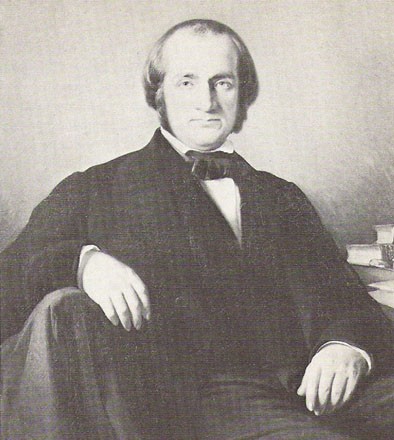
M Héger
M Héger

What do we know of the love life of the woman who penned one of the greatest love stories ever written? In spite of her numerous letters, and the biographies written by her contemporaries, there is still a great deal of controversy.

Was she a nun-like, prudish bore, or was she a passionate, romantic lover?

Tanya Gold, reminds us in an article in the Guardian  that her contemporary biographer, prim Mrs. Gaskell, wanted us to believe Charlotte was a dull and saintly, so she intentionally left out certain significant aspects of her love life, even suggesting that her well-known infatuation with Heger was imagined.

Who was Heger, and how did they meet?

In February, 1842 Charlotte and Emily, accompanied by their father, travelled to the Pensionnat Heger, in Brussels to complete their studies. Their aim was to improve their skills in languages. In return for board and tuition, Charlotte taught English and Emily taught music.

Their stay was interrupted in 1843, due to the death of her aunt, Elizabeth Branwell. After a short trip to Haworth, Charlotte returned alone to Brussels, where she remained until January, 1844.

On her return to Haworth, and for almost two years, she exchanged passionate letters with her professor and mentor, M. Héger. Four of these letters have been recovered and are kept in the British Library.

Charmotte Bronte's Letters to Héger in the British Library
Charmotte Bronte’s Letters to Héger in the British Library

Although Mrs. Gaskell had personally visited M. Heger while she was writing Charlotte’s biography, and was shown the letters, she decided not to include them, or their relationship, in her biography. This was probably due to various reasons. Firstly because Charlotte’s father and husband were still alive. Secondly, because the Victorians, and Mrs. Gaskell herself, did not want the memory of their admired novelist to be tainted, by revealing that she had been shamelessly in love with a married man.

In 1912, M. Heger’s son, Paul Heger (1846-1925), who had never met Charlotte Bronte, because he was born two years after she left Brussels, presented the British Library with four letters sent by Charlotte Brontë to his father between 1843 and 1845, and they were shortly after printed in The Times newspaper, causing a literary scandal.

We do not know Héger’s reaction to her letters, because although she refers to his replies in her letters, the former have been lost, and the only remaining accounts are those put forward by Mrs. Heger, M Heger’s wife, the mother of his six children, and his employer, for she was the owner of the Pensionnat where he worked.

According to his wife’s reports, she herself kept the letters, which her husband had torn, sewed them and preserved them for posterity. In spite of being the accepted version, it sounds at the very least improbable that she would bother to recover and keep the ardent letters a young English student fervently (and probably annoyingly, for her) sent her husband.

Bronte scholar, Brian Bracken’s article published in Janaury 2013, challenges traditional assumptions, based on Marion Spielmann’s article (1919), ‘The Inner History of the Brontë-Heger Letters’, which suggested that it was M. Heger who tore the letters, while his wife repaired and preserved them. Spielmann had no doubt also found it difficult to accept that Charlotte Brontë had fallen in love with a married man and had written passionate letters to him.

There is no proof either way, but I am not the only person to suspect that it was Heger who repaired the letters his wife had found and torn, kept them, and aware of their literary value, gave them to his sons on his deathbed to be made known in England.

I am in no doubt that Edward Rochester is modeled partly on M. Heger. Charlotte says of him in a letter to Ellen Nussey, when she first arrived in Brussels:

He is professor of Rhetoric a man of power as to mind but very choleric and irritable in temperament—a little, black, ugly being with a face that varies in expression, sometimes he borrows the lineaments of an insane Tom-cat—sometimes those of a delirious Hyena—occasionally—but very seldom he discards these perilous attractions and assumes an air not above a hundred degrees removed from what you would call mild & gentleman-like he is very angry with me just at present because I have written a translation which he chose to stigmatize as peu correct.

Charlotte would later fall in love with his ‘Byronic’ character and refer to him as ‘master’, in her letters. How far their relationship went, or to what extent it was reciprocal, is also unknown.

In Jane Eyre, a frail, petite, pale, and plain governess, much like Charlotte herself, fell in love with the unattractive, temperamental, and choleric Rochester, except in this case it was reciprocal, and Rochester was rich enough to do as he pleased. Rochester was also married, but he had no legitimate children, and his mad wife conveniently committed suicide, so her fantasy was complete, including a happy fictional ending.

The last letter she wrote to Héger, at least the last one which has survived, ends thus:

Farewell, my dear Master __ may God protect you with special care and crown you with peculiar blessings.

Brontë's publisher, George Smith, commissioned this portrait of the novelist from George Richmond (1809-1896),  as a gift for her father.
Brontë’s publisher, George Smith, commissioned this portrait of the novelist from George Richmond (1809-1896), as a gift for her father.

In any case, although Charlotte Bronte, was reportedly tiny, frail, and shy, she was no ugly, unwanted spinster; she received and rejected four marriage proposals between 1839 and 1853. She finally married a man she did not love, but who offered her the financial, and perhaps emotional security, she lacked. Their home was only theirs as long as her father, Patrick Bronte was the pastor at Hawthorne, on his death Charlotte would have been homeless. Mr. Bronte’s original opposition to Mr. Nicholls gradually weakened, and Charlotte and Nicholls became engaged. He became curate at Haworth, and they were married. She died eight months later. Charlotte was pregnant, and it is presumed that she died of severe dehydration and malnutrition due to hyperemesis gravidarum (sever morning sickness).

There is still a great deal to read, reread, and discover about the author of Jane Eyre. Margaret Smith has edited an invaluable selection of letters written by Charlotte Brontë from her schooldays to her death in 1855, with many useful notes, giving us some insight into her priveleged and passionate mind.
The Value of Negative Reviews

Please take the poll at the end of this post!

I was prepared for the inevitable. You can’t please everyone, and if your novel challenges traditional ideas on love, marriage, and literary archetypes, some readers are bound to disagree.

Yes, it’s happened to me. I’ve received a one-star review 😦

My debut novel is my baby, and I really do mean my baby. I have three children and three grandchildren I adore, and they know my novel is my baby, too. It was born out of years, months, and hours of toil, strife, hard work, and immense joy. I love it. Every word, paragraph, page, and chapter, has been filled with love and care. Of course, that doesn’t mean it’s perfect. It just means that I love every single letter of it.

I had told myself many times, “it will happen, you can’t please everyone, and everyone is entitled to their opinion, which needn’t be the same as yours”.

It’s a ‘small’ consolation to remind myself that all writers have had negative reviews and criticism. The following article gives famous examples of writers knocking other writers.

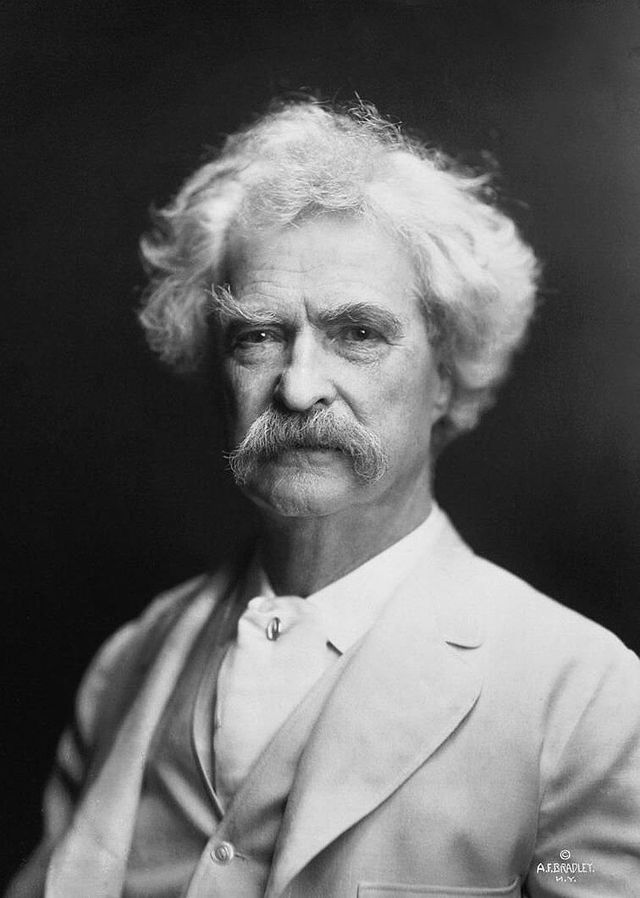
My favourite is Mark Twain’s, although I don’t agree, at least not entirely! He wrote the following statement in a letter to Joseph Twichel (13th September, 1898):

Everytime I read ‘Pride and Prejudice’ I want to dig her (Jane Austen) up and beat her over the skull with her own shin-bone.’

I can imagine, petite and demure Jane, shivering in her grave replying, “Vanity working on a weak head, produces every sort of mischief.

Mark_Twain_by_AF_Bradley
I want to dig her up and beat her over the skull with her own shin-bone.
640px-Jane_Austen_coloured_version
“Vanity working on a weak head, produces every sort of mischief.”

So, what did I do?

After reminding myself how all writers will experience it, I consoled myself with my positive reviews. I looked up the topic on the Internet, moaned and groaned, and then spent the evening making biscuits with my grandson, my best friend and colleague, Gabriela, and her son, who is my grandson’s age. Then we ate them all!

wpid-img-20141107-wa0020.jpgwpid-img-20141107-wa0016.jpgwpid-img-20141107-wa0008.jpg

Now, after a delicious break, back to my predicament, and the main topic of this post.

So, once you get a negative, one-star review, what do you do?

(I’m talking about ‘normal’ one-stars, real readers who just don’t like your novel, not trolls or catfish, they’re another matter).

First, face up to the fact that home is lovely and cozy, and your friends and family are supportive, but, well, once you publish your novel, it’s the real world out there, and there are lots of people with diverse opinions, and backgrounds, and agendas, and you can’t please everyone.… and finally, so what? It’s happens to all of us!

There are some interesting opinions in various articles in the Huffington Post  and according to Beth Bacon, there are 5 Ways For Authors to Handle Bad Reviews, See more opinions here. 

My conclusion, after reading and pondering, is that all is not bad. There are positive aspects to bad reviews.

There actually is life after a bad review! 

(Yes, I know, some people find consolation anywhere…It’s nice to be one of those, you know, you’ve got to laugh to keep from crying….look on the bright side of life… Monty Python and all that, illustrating us about the meaning of life… )

Monty Python
Look on the bright side of life!

Seriously, there are some positive aspects to getting bad reviews, and I’ve discovered a few, after much reading, and ranting…

  • In the first place, be thankful. People who bother to write reviews feel strongly about your book. They have read it (we presume, unless they state otherwise), and taken the time to write an opinion. That in itself merits our attention as writers, although you needn’t write a thank you letter…
  • Secondly, a book with lots of reviews has real legitimacy, even if some are negative. In fact, if some are negative, it balances the positive. When potential buyers see only five-star reviews, they could be suspicious. But let’s not overdo it, a couple of one or two-star reviews are enough to reassure the buyer that the feedback is honest and authentic, because, no-one can be 100% perfect author!
  • Thirdly, it gives browsing shoppers a range of perspectives, making them more likely to buy it, if they don’t agree with the one-star, and less likely to buy it if they do agree with the one-star. That’s great! In the long-term, you’ll get less one-stars, because readers who might have not liked it, won’t buy it in the first place! And, let’s face it, no-one wants readers to read their book if it’s not their type of novel, because reading should be a pleasure, and I’d hate to give someone a hard time reading.
  • Fourthly, when you run out of ideas for a blog post (which I hadn’t, but I might have), you let off steam, and you get to write a blog post all about it!

To wrap up, as Stephen King famously wrote (loosely paraphrasing someone else, I believe…)

Stephen_King,_Comicon
“You can’t please all of the readers all of the time; you can’t please even some of the readers all of the time, but you really ought to try to please at least some of the readers some of the time.”

So, writers should be prepared, open, and unfussed by a few complaints.

Finding ‘some of the readers‘, you will be pleasing ‘some of the time‘, may be the key, but that’s the subject of another post.

The final question I’d like to address is:

Should authors respond to negative reviews, or indeed any reviews? Most people say no, some say yes, have a look here, so I’ll take the question a step further:

Should authors take the initiative and interact with readers?

I have mixed feelings about this.

Firstly, although I’m aware that reviews are written for readers, not authors, we all know authors read them, and I love the idea of being in touch with my readers.

Secondly we always complain that we don’t get enough reviews, so why not respond to the people who actually take the time to write a review? Wouldn’t it be polite? and encouraging for other possible reviewers?

Finally, Id like to share my one-star review with you (as it appears on Amazon.com):

Just could not get into this. Jane’s character is stilted and wooden and I’m VERY disappointed at how Rochester is depicted. Such a pity. I expected more from it. The use of multiple voices to tell the story is distracting and actually a trifle boring. Just not well written or in keeping with the spirit of the original. jejune.

This is the reply I was thinking of writing:

Thank you for taking the time to read my novel and write a review. I really appreciate both. I’m sorry that you were disappointed in Jane and Rochester’s portrayal, and that it didn’t work for you. Although I can’t say it’s agreeable for me to read disappointed comments like yours, I prefer a negative review than no review, and I’m sure your review will help readers to decide whether or not this book is right for them, so thank you again.

Should I reply? Why or why not?

Please comment or take the polls and help me decide.

The first one refers to my specific reply, and the second poll is more general. Thank you!

*****************************

Later on in the evening: I’ve read some wonderfully enlightening comments from experts on this topic (see below), because they’re both writers and reviewers, and I’ve decided I’m not replying on a sales platform. You have convinced me it’s just not the best place to interact with a reader. However, please feel free to continue commenting and voting, either way. I’ll have a look at the results and write up a summary of your votes and opinions in a few days’ time. Thank you for helping me with this one!

Sequels, Prequels, Reinterpretations, Rewritings, and Writing Back…

When I am asked what my novel’s about, I reply briefly, “It’s a Victorian Gothic Romance, which takes place around All Hallows, at Eyre Hall, twenty-two years after Jane Eyre married Edward Rochester.” A typical reaction, before reading the novel, is:

“Oh, so it’s a sequel / follow-up / spin-off of the original?”

The answer is easy, “Yes, it is”, but also complex, “it’s much more than that.

Sequel, follow-up, or spin-off, are synonyms, that is they all refer to a work of literature, film, theatre, television, music, or game that continues the story of, or expands upon, an earlier work. Sequels usually portray the same fictional universe; setting, characters, and events, at a later date.

Although All Hallows at Eyre Hall is presented as the ‘Breathtaking Sequel to Jane Eyre’, it is also the sequel of Wide Sargasso Sea, because it is based on both novels. That is to say, I have taken the characters and events in both Jane Eyre and Wide Sargasso Sea, as my fictional reality, and the basis of my novel. The characters and events portrayed in both novels, come to life, once again, in a fictional blend, in my novel.

Just to remind you, although Wide Sargasso Sea was published in 1966, it is the fictional prequel to Jane Eyre, which tells the story of Bertha, Rochester’s first wife, and infamous ‘madwoman in the attic’.

In this sense, All Hallows at Eyre Hall is a sequel because it does portray a continuation of the original universe. Some of the characters are still present, some have died, and there are some new characters. The pre-existing characters are not exactly the same, because twenty-two years have passed, and fictional characters, as all people, evolve over time. The location is the same, although the specific setting has changed from Thornfield Hall, which was burnt down, to Eyre Hall, the mansion Mrs. Rochester rebuilt with the inheritance she received from her uncle, John Eyre.

Once readers have actually read it, they realize it’s not a typical sequel, and they say:

“Oh, you’ve reinterpreted / rewritten the original story.”
“Oh, you’ve written back to Charlotte Bronte.”

Well, that’s true, too. I’ve (irreverently, according to some), done all three. I am aware that my novel may disappoint some readers who had fallen in love with Edward Rochester, as Jane did. Unfortunately, I simply point out that Jane is in love with Rochester, and she is therefore an unreliable, or at least biased, narrator. On the other hand,  she gives me all the background information I use in my novel to expose Rochester as the villain he always was. This does not mean Jane and Rochester’s love story was a fake. It is one of the greatest literary love stories of all time, but that doesn’t mean they were perfect, or flawless characters.

I have reinterpreted Jane Eyre, based on reading between and closely into the lines Charlotte Bronte wrote. Jean Rhys, a Creole herself, was the first to ‘write back’ to Charlotte Bronte from a postcolonial perspective. Rhys gave voiceless, mad, imprisoned Bertha, the freedom, voice, and life, which Jane Eyre had denied her.

By incorporating Rhys’s thesis into my novel, I am indulging in the same rebellious literary trend. Moreover, I have also added to Rhys’s theories, by incorporating more subplots, which I picked up from spaces I found in the original. I can’t go into greater detail without including spoilers, but I have based my recreation on facts I found in Jane Eyre.

Jane Eyre is is the origin of this magnificent literary creation. It is the reason why Jean Rhys wrote Wide Sargasso Sea, and both Jane Eyre and Wide Sargasso Sea, are the reason why I wrote All Hallows at Eyre Hall. Looking at the three novels, which form a trilogy in my literary imagination, they are complimentary, although they can stand on their own. Each novel can be read independently, however, as they are all part of the same story, of Jane Eyre’s story, if the three have been read (not necessarily consecutively), the reader will enjoy the experience even more.

So, have I written a sequel to Jane Eyre?

Yes, I have. I’ve written a sequel to both Jane Eyre and Wide Sargasso Sea, based on a close reading and subsequent reinterpretation of the characters and events portrayed in both novels. I’ve then used my own creative license, to imagine events twenty-two years after Jane’s marriage. My aim has been to reconcile both works of art. Jane and Bertha, both Mrs. Rochesters will come face to face, and over time, as my trilogy progresses, Bertha will be reinstated and the wrongs she suffered will be repaired. How? It’s all in the Eyre Hall Trilogy

Dressing Up for an Eventful Week

I don’t usually write diary-like entries to my blog, but today is going to be an exception, because I’ve had a strange and eventful week, which I’d like to share with all of you. A lot of work, fun, excitement, and dressing up has been going on…

wpid-img-20141023-wa0012.jpg
My daughter and granddaughter, getting ready for Halloween!

Sunday 26th was great! I spent the day with my daughter, her husband, and children at the beach, watching the new generation gradually take over. She used to be my little girl, but now she has two children of her own, a job, a car, a mortgage, just like most adults do…

In the evening, I wrote my blog post on The Truth about Halloween.

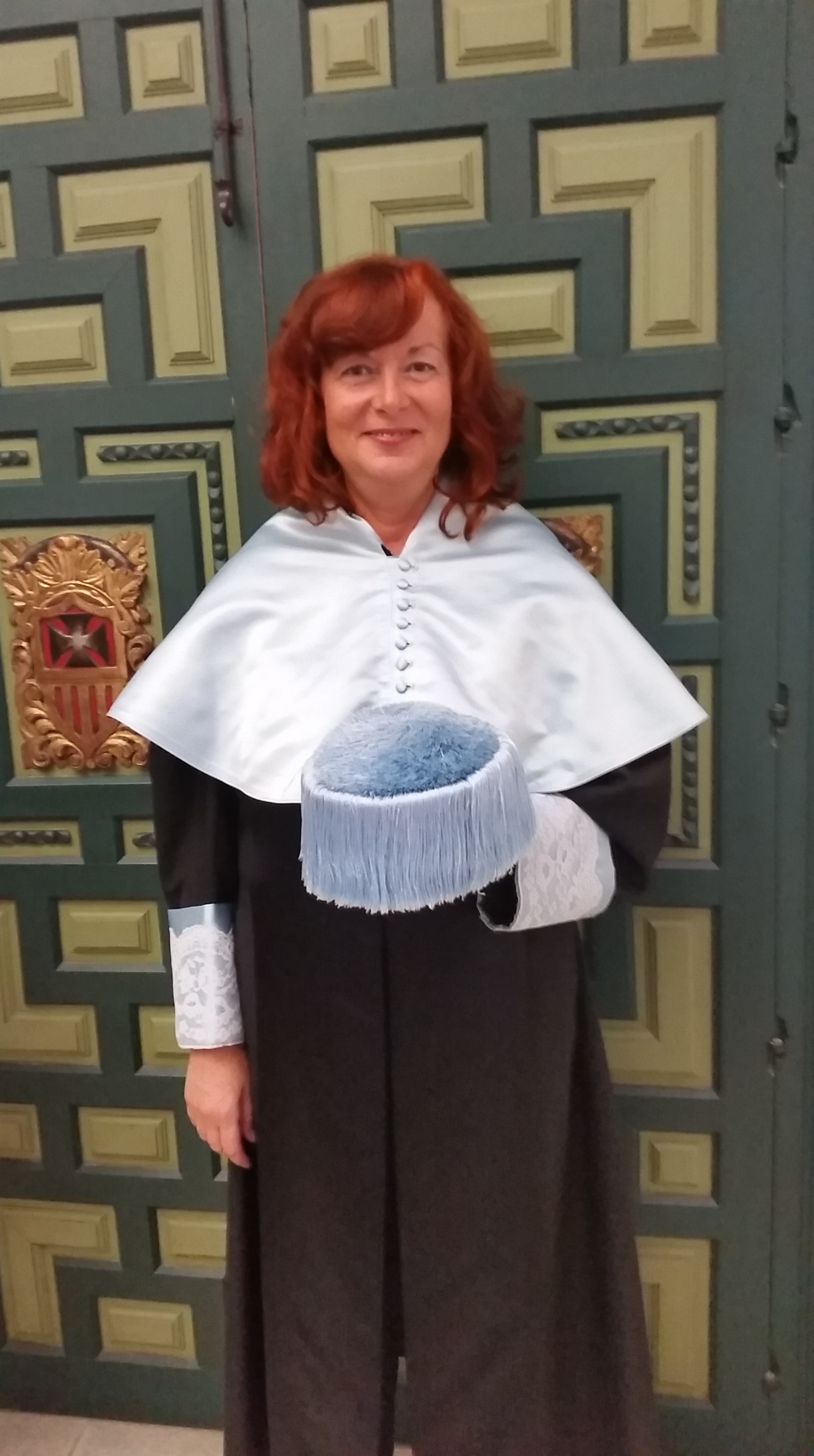
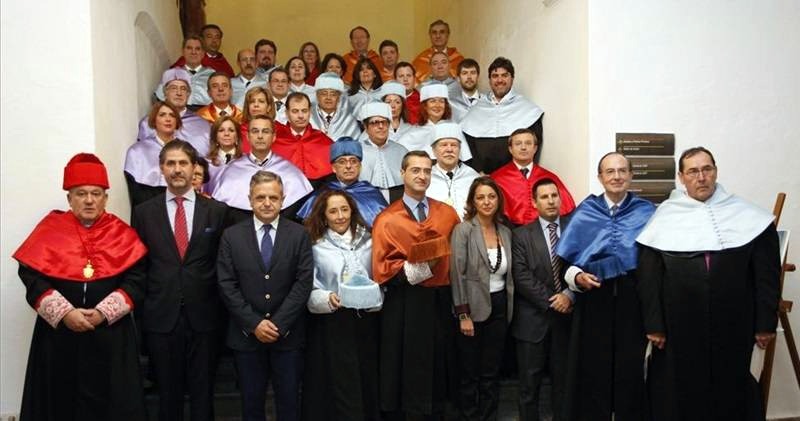
Monday was amazing. It was the official opening of the Academic Year at the University where I teach English Language part-time, so I dressed up with the Faculty of Arts (called Philology in Spain) Academic Dress, namely a black robe with a short light blue cape or hood, and tasselled cap (the cap is worn by those with a PhD). I had never worn this gown before, but I thought I’d do so at least once, so that I could show my grandchildren in the future… I did feel rather grand!

Waiting for the ceremony, tassled cap in hand!
Waiting for the ceremony, tasselled cap in hand!
UNED Opening Ceremony in Academic Dress

On Tuesday, on my way to work, I literally waked through an exhibition, in the Orange Tree Patio in the Cathedral-Mosque in Cordoba, where I admired the sculptures, by a recently deceased, international, Cordoban artist, Aurelio Teno, He’s the one who designed and made the Don Quixote sculpture near the Kennedy Centre in Washington.

Quijote Teno
Don Quijote by Aurelio Teno. Kennedy Center, Washington.
Aurelio Teno Exhibition in Patio de los Naranjos, Cordoba.
Foto taken at Aurelio Teno Exhibition in Patio de los Naranjos, Cordoba, Spain.

I also wrote my blog post on Halloween Festivities in All Hallows at Eyre Hall.

On Wednesday I was busy working all morning and all afternoon, at school and college. We rehearsed Stop all the clocks by W. H. Auden, for a poetry recitation at the Halloween Festivities we’re organising at school.

In the evening, I went shopping for Halloween goodies such as hats, stickers, sweets, and ingredients for Halloween biscuits/cookies, with my grandson.

My grandson, the Wizard!
My grandson, the budding Wizard!

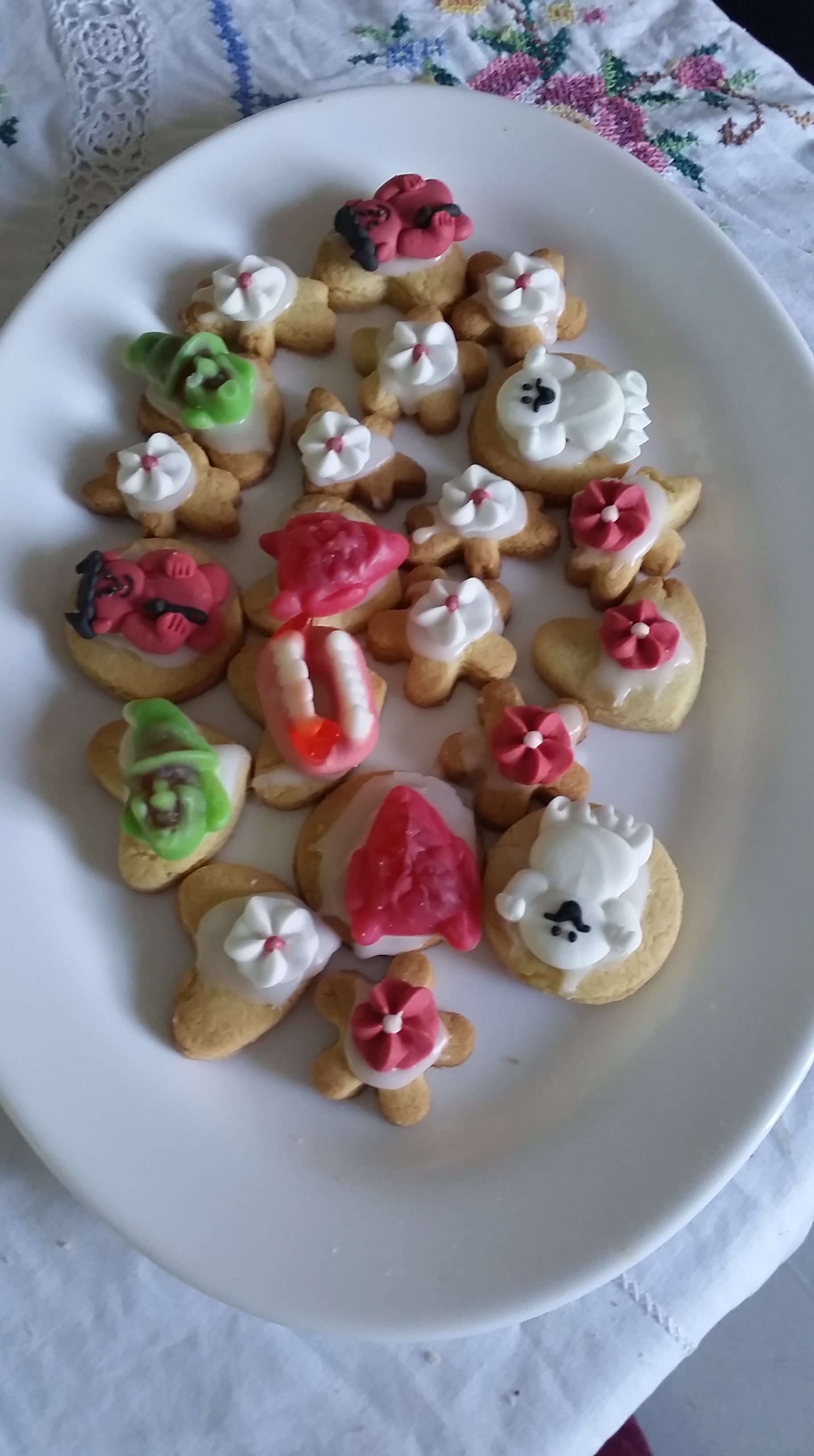
On Thursday morning, I made tons of cookies, for my grandson, my students, and colleagues, before going to work. I work afternoons-evenings evenings on Thursdays.

Scary Cookies made by me!

On Friday, we had our big event at school. I teach at an Adult Education Centre, although we have mostly young adults, under thirty. The three English teachers dressed up as witches, and performed the opening scene of Shakespeare’s Macbeth, in English and Spanish. The students also read poems in Spanish and English, and a beautiful short story by Jorge Bucay.

English Teachers with a cauldron, preparing for their act!
My colleagues and I preparing the cauldron for our act!
Performance of the opening cene of Macbeth with the three witches.
Performance of the opening scene of Macbeth.

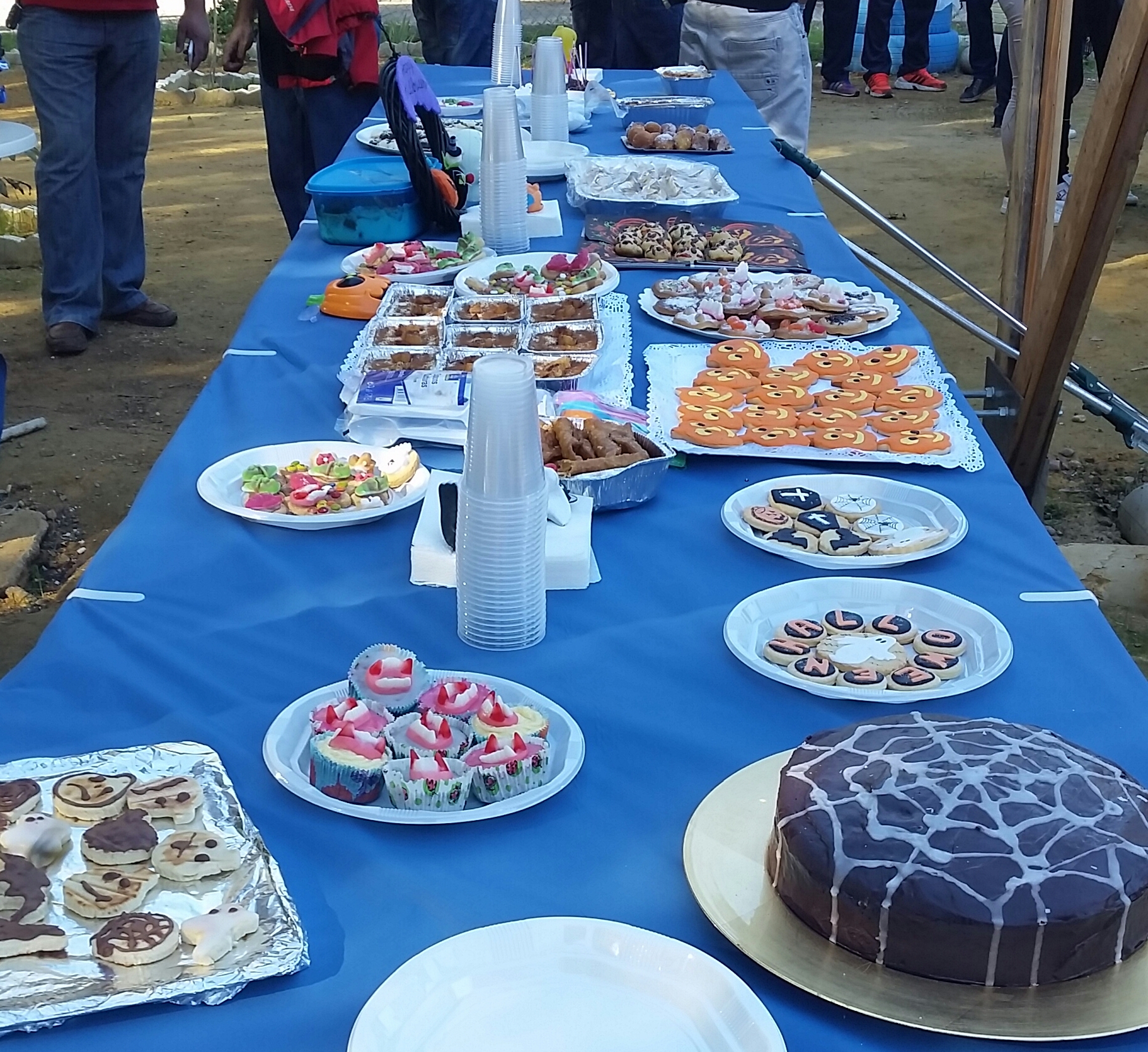
Afterwards, we ate all the cakes and biscuits we (students and teachers) had made for the occasion.

Halloween biscuits/cookies and cakes!

In the evening, I wrote my Flash Fiction Story for Flash! Friday, as I do almost every Friday.

This morning, Saturday, 1st November, I woke up to a wonderful surprise. This week, I had scheduled a special reduced price book promotion for All Hallows at Eyre Hall, and as a result of my diverse efforts by using Twitter, Facebook, Blog, word of mouth, some paid promotion on Masquerade Crew, and Ereader news today, I discovered had sold 183 books! More than I’ve sold since my book was published in May. I’m overwhelmed, and very excited.

All Hallows at Eyre Hall: The Breathtaking Sequel to Jane Eyre, has also managed to get into the Top 100 Paid in Kindle Store ranking today in three categories!  Best Sellers Rank #26 on Sagas, #29 in Family Sagas, #41 in Historical Fiction. Overall ranking #727 out of over a million Ebooks! Not bad for a debut novel, which was self-published in May, 2014!

wpid-20141101_132324.jpg

I’m feeling really proud! Did someone cast a good spell last night? Am I dreaming?

Wow, what a week! Fortunately, they’re not all this exciting or busy, or are they?

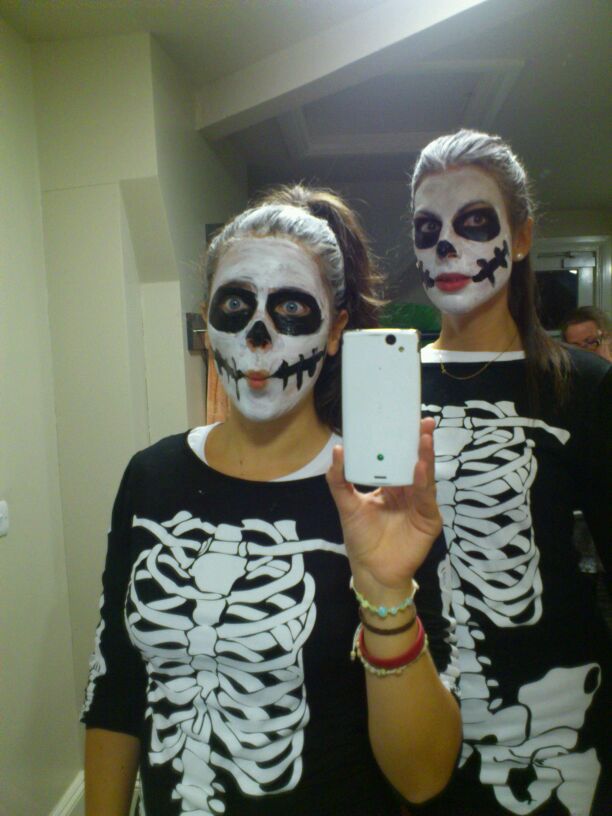
My daughter and a friend.
My youngest daughter (at the back) and a friend celebrating Halloween in London, last night.
wpid-20141031_102050-1.jpg
What can I say? Dressing up runs in the family! We just love it!


By the way, All Hallows at Eyre Hall (international link) is on special offer all over the world for the next few days, £0.77 /$0.99 / €0.89. Please help spread the word. I still have a long way to go, but I couldn’t have got this far without your support. A big thank you!


A Witchcraft Tour of England

A well – researched and informative overview of witchcraft in England. Entertaining reading for All Hallows Eve…

Unknown's avatarAlison Williams Writing

pendle witches

England has a long and varied history of witchcraft. As a tradition stretching back centuries, it is hardly surprising that there are a great variety of places that abound with legends, stories and histories about witchcraft, witches, persecution and execution. When researching the topic for my novel  ‘The Black Hours’, I came across lots of interesting stories and made a long list of places that I’d love to visit. Some of them I have been lucky enough to visit although I would like to visit again one day. In fact, what I’d really like to do is go on a witchcraft tour of England – spending time in all these places. All offer something interesting and informative; some are fun and have more to do with legend, myth and fairy tale than the brutal truth of the horror of the witch hunts; other places I have found to…

View original post 898 more words

Halloween Festivities in All Hallows at Eyre Hall

All Hallows at Eyre Hall, the sequel to Jane Eyre, takes up Jane’s story as Mrs. Rochester, twenty-two years after her marriage to Edward. The novel, which begins on the 30th of October, 1865, is set on and around the AllHallowtide, or the Hallowmas season, a three day period during which Western Christians honour the dead saints, martyrs, as well as all deceased and faithful Christians. The three days of mourning and remembrance are All Hallows’ Eve (Hallowe’en), All Saints’ Day (All Hallows’) and All Souls’ Day, from October 31st to November 2nd. The action in the novel continues into the first half of November, but the most significant events occur during those magical and mystical three days. For more information about the origins of Halloween celebrations see my previous post, The Truth About Halloween.

In All Hallows at Eyre Hall, the reader will glimpse at how both the servants and the masters celebrated the festivity of All Hallows Eve, in Victorian times. Jane is the only person who does not participate actively in the festivity, because she is preoccupied with her husband’s health and other added worries. However, the servants indulge in telling stories, making soul cakes, and searching for ghosts, while the younger members of the household attend a Halloween party in the nearby inn and ale house, The Rochester Arms, where they watch divination games, such as bobbing for apples, peeling apples in front of a mirror, and eat Halloween cake.

The slightly adapted excerpt below is part of Chapter XIV, and occurs downstairs, in the servant’s quarters, as they prepare for the ghostly night. Beth, one of the maids, narrates. The other servants taking part are Christy, the younger, undermaid; Simon, Mr. Rochester’s valet; Michael, Jane and Adele’s valet; and Mrs. Leah, the housekeeper, who also appears as a young maid in Jane Eyre. Towards the end of the extract, John Rochester, Jane and Edward’s son returns from the inn with Adele, Mr. Rochester’s ward, and Jane’s pupil when she first arrived at Thornfield Hall to be her governess. Dr. Carter, who is mentioned in this excerpt, also appeared in Jane Eyre, as Mr. Rochester’s surgeon.

***** 

Simon suggested we should tell stories of ghosts in preparation for their coming in the evening, and we all agreed. He started by telling us about the ghost he had already seen this very morning in Mr. Rochester’s bedroom. His was the simplest and shortest story, but he was such a good storyteller, we were all mesmerized by his tale.

“I was closing the master’s curtains and collecting the dinner tray, when the strange events happened. The master’s eyes were bloodshot and wide open. He was possessed by a spirit…”

Simon’s eyes bulged, and his fingers drew shapes in the air, as he put on the slow, theatrical voice he used when he told us his stories.

“He pushed the bedclothes away, stood up, and started speaking. His voice became low and powerful, and strange words in another tongue, like a chant or a prayer, started coming out of his mouth. When I spoke to him he ignored me, as if he didn’t hear me or see me. He walked straight to the mirror. I was quite surprised, because he hasn’t walked in months. He stood in front of it and continued speaking, as if he were conversing with someone. Then it happened, I looked into the mirror and I saw something, which was not his reflection…”

We gasped. He stopped speaking and looked into our eyes, one by one, making sure we were horrified, before continuing.

“I saw something monstrous shining from the mirror, and the whole room lit up, as if lightning had struck.”   

When he finished he turned to Michael, “You went into the room next with the mistress. Tell us what you saw, Michael. Did you see the ghost?”

“I saw a man who is sick and dying. He was standing in front of the mirror with a candle in his hand, saying he had to burn himself to purge his sins before he died.”

We all gasped again at the image of the master in such a guise.

“Go on! What did you see in the mirror?” screeched Christy.

“Mirrors are where spirits hide during the daytime to come out at night with the stars.” Sentenced Simon with authority.

“There was nothing in the mirror, save his own reflection, the reflection of a withered, sick, and remorseful shadow of a man.” Added Michael, coldly.

We gasped again, this time with horror at the idea of our solemn and respected master in such a pitiful situation.

“I don’t think it is your place to speak of your master in such undignified terms.” Sentenced Mrs. Leah most gravely.

“It is what I saw, what we both saw, Mrs. Rochester and I.”

Mrs. Leah shot a daggered look at Michael, “I am the only person here who knew the master when he was a younger man in good health, and I can assure you that he was a great man. It pains me greatly to see him in his current condition.”

Next it was Christy’s turn. She told the story of the Gytrash, an ancient legend her grandmother once told her about a huge wild dog, half spirit and half animal that roams the moors at night in search of human prey. He is especially keen on stalking solitary travellers on lonely roads on stormy nights.

“So this tale is about one such traveller, an uncle of mine, who was on his way home on foot after a visit to my father, his brother. He heard footsteps, as if an animal were creeping up behind him and started running, the animal ran too, and my uncle tripped over a stone and fell. Nobody knows what happened, but the next morning they found him lying on the ground. They thought he was dead, but he was breathing, so they carried him home, and he never spoke again. His spirit had gone. He never ate, drank, or said a word until he died ten days later, without even blinking an eye in all that time. My father said the terror had killed him, and my mother said the Gytrash had taken his soul.”

After telling the stories, the sun had set completely. We lit all the candles, and I helped cook prepare the cakes for the soulers. We put them on trays to be taken out to the back door. Cook said we should also leave some around the house for the souls who might come during the night. Leah frightened us all by saying that all the candles and fires should remain lit all night, so the souls could find their way around the house.

Simon went up to accompany Dr. Carter on his daily visit to Mr. Rochester, and Michael went up to kindle all the hearths and replace the waning candles. Leah said she was tired and retired to her parlour. The rest of us stayed up late eating soul cakes, drinking cook’s brandy, and telling more ghost stories in the hope of seeing something bloodcurdling to talk about the next day.

Strange things happened at Eyre Hall that evening. Later that night, Simon said Mrs. Rochester had seen a ghost in the library, because Dr. Carter, who was with her, had rushed out of the house, pale as death, mumbling something about devils in the hearth. After that, Leah spent the night walking around the downstairs rooms, saying something sinful was going to happen that night.

Then Miss Adele and Master John arrived, making so much noise they would have frightened the souls away. Leah came down quite distraught and bolted her parlour door, the rest fell asleep, but I had drunk so much brandy, I was feeling too excited to sleep, so I went upstairs with the last wick of a candle and saw plenty of weird things.

*****

If you would like to read the rest of All Hallows at Eyre Hall, it will be on offer for a special reduced Price of 0.99 cents or 0.99 pence, for a limited time, over the Halloween weekend.


The Truth about Halloween: Origin, Symbolism, and Evolution of a Timeless Festival

Although many people think Halloween is a modern, commercial invention, it is in fact one of the most ancient, mysterious, and persistent traditions in the British Isles, which has naturally undergone many changes through the ages, and spread to other parts of the world.


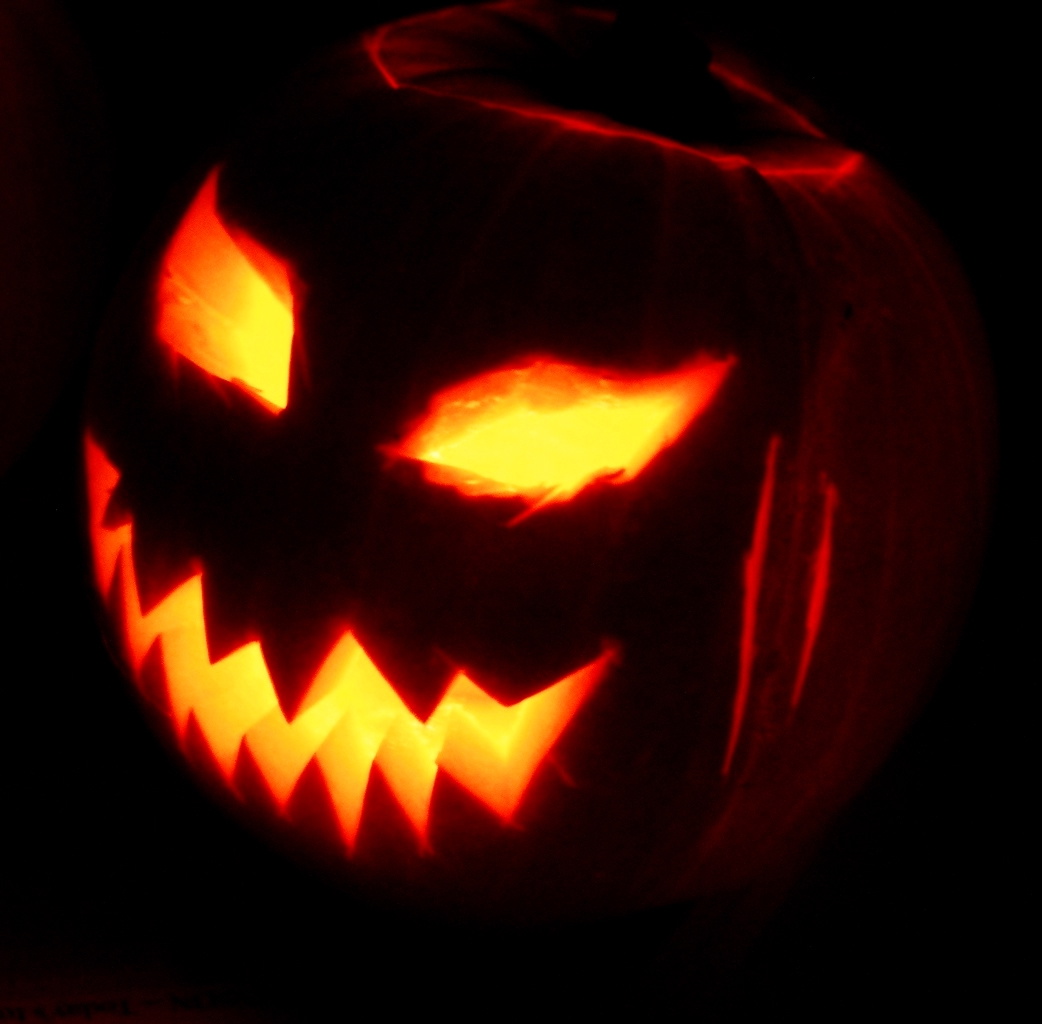
Jack-o'-Lantern_2003-10-31


Originally called Samhain, later All Hallows Eve, and finally Halloween, the festivity originated in pre-Christian, Celtic Britain.

The Celts, who are believed to have originated in central Europe, probably around present-day Austria, eventually inhabited most of central and Western Europe, including the British Isles.


Orirgin (yellow) and distribution of Celtic peoples. Areas where Celtic languages remain spoken today (darker green).


The Celts observed only two seasons of the year: summer and winter. Samhain was an important day, because the 31st of October was the last day of summer, and 1st of November marked the first day of winter. Therefore midnight of 31st the Celts celebrated the transition between these seasons.

According to Alexander MacBain’s Etymological Dictionary of the Gaelic Language (1982), ‘samhuinn‘ (the Scots Gaelic spelling) means ‘summer’s end’.

The Celtic people gathered on the 31st of October to sacrifice animals, fruits, and vegetables to their gods, in return for a prosperous winter.

Samhein was considered the most magical night of the year, for the purposes of divination, concerning marriage, health, and luck. The souls of the dead were also allowed to revisit their homes. Some of these deceased visitors could have more sinister objectives, so tales of ghosts, witches, and evil spirits roaming the streets, were common. Consequently, they lit bonfires in honor of the dead, to aid them on their journey, and wore disguises and masks to fool the spirits into passing them by, and keep them away from the living.

The Celts retained their festivities throughout the expansion of the Roman Empire in the first century. In fact, the Romans also had a similar festivity called ‘Feralia’, in late October, when they also commemorated the passing of the dead.


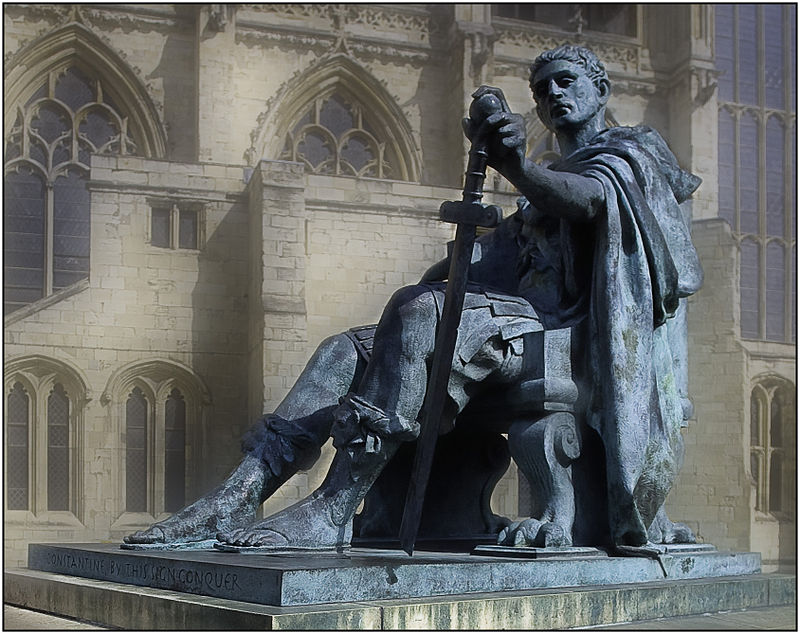
800px-2009-04-13_ConstantineTheGreat_York
Bronze Statue of Constantine the Great in York


When Christianity reached Britain, by the third century of the Christian era, the Roman Emperor Constantine, who had embraced Christianity, albeit probably for political purposes, in order to consolidate his rule, incorporated the Pagan holidays and festivals into the church rituals thus attracting the Pagans, but he gave the holidays and festivals new Christian names and identities, thereby appeasing the Christians.

This is how Samhain, the most important pagan festival, became the day of the most sacred: the hallowed. This word is found in the second line of the Christian Lord’s Prayer or Our Father: ‘Our father who art in heaven, hallowed be they name’.

All Hallows, which came to be known as All Saints’ Day, was celebrated on 1st of November, and was preceded by All Hallows Eve, on 31st of October.

Eves, or the nights before important religious celebrations, were important for the Christian church, because they were the day of preparation for the great Holy day which was to come. The preparation was sometimes fasting, or praying, or making other preparations for the day of worship.


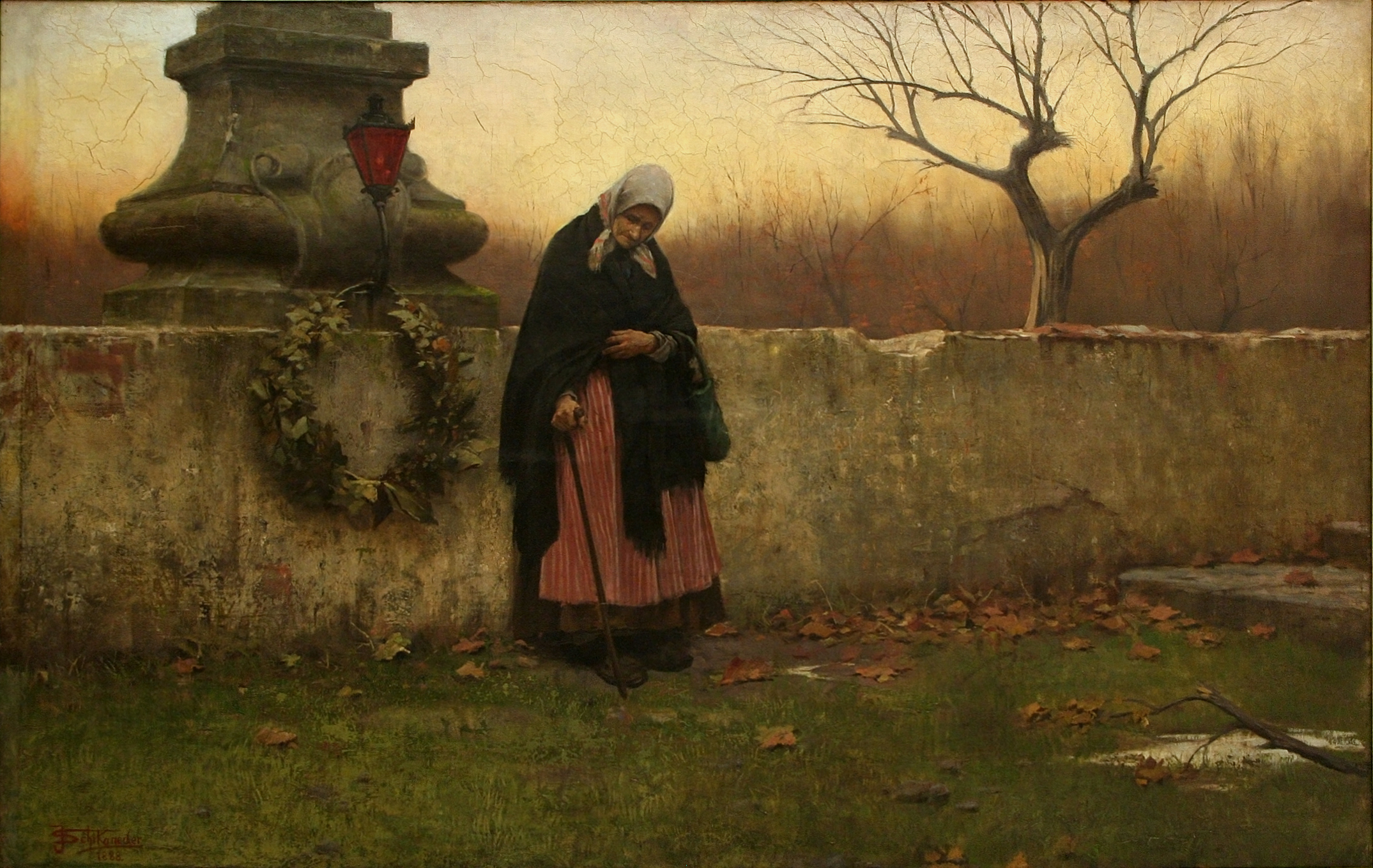
Jakub_Schikaneder_-_All_Souls'_Day
All Souls’ Day, J Schikaneder 1888. This oil painting shows an elderly woman after placing a wreath upon the tombstone of her loved one.


By the 10th century, November 2nd had officially become All Souls Day, in commemoration for the rest of the dead. So, Samhain became a three-day festival in Christian renderings called Allhallowtide, or the Hallowmas season, which refers to the three days of the Western Christian observances of All Hallows’ Eve (Hallowe’en), All Saints’ Day (All Hallows’) and All Souls’ Day, between October 31 and November 2nd. As from 1605, the 4th of November was added to the festivities, as Bonfire Night, prolonging the festivities over a five-day period, but that will be the subject of another post.


All-Saints
The Forerunners of Christ with Saints and Martyrs (about 1423-24) Tempera on wood, 31,9 x 63,5 cm National Gallery, London Author: en:Fra Angelico Created: en:15th Century


The Christian Church replaced sacrifices by honoring the dead with prayers and religious rituals. Food and wine offerings were replaced with soul cakes, little square buns decorated with currants. The cakes were given away to the village poor, who in turn would pray for the dead. These ‘Soulers’, generally poor people, would walk about begging for cakes. Those who feared dead spirits were encouraged to give generously.

The Christian Church also allowed masquerading but emphasized that it was to honor dead saints and not to frighten off spirits. Over time, young men and boys, who went from home to home singing “souling songs” in exchange for ale and food, which evolved into contemporary trick-or-treating by youngsters. Hearth fires replaced the Celtic bonfires, and parlor divination games replaced oracular rites. The customs of wearing masked costumes and begging for food also continued.


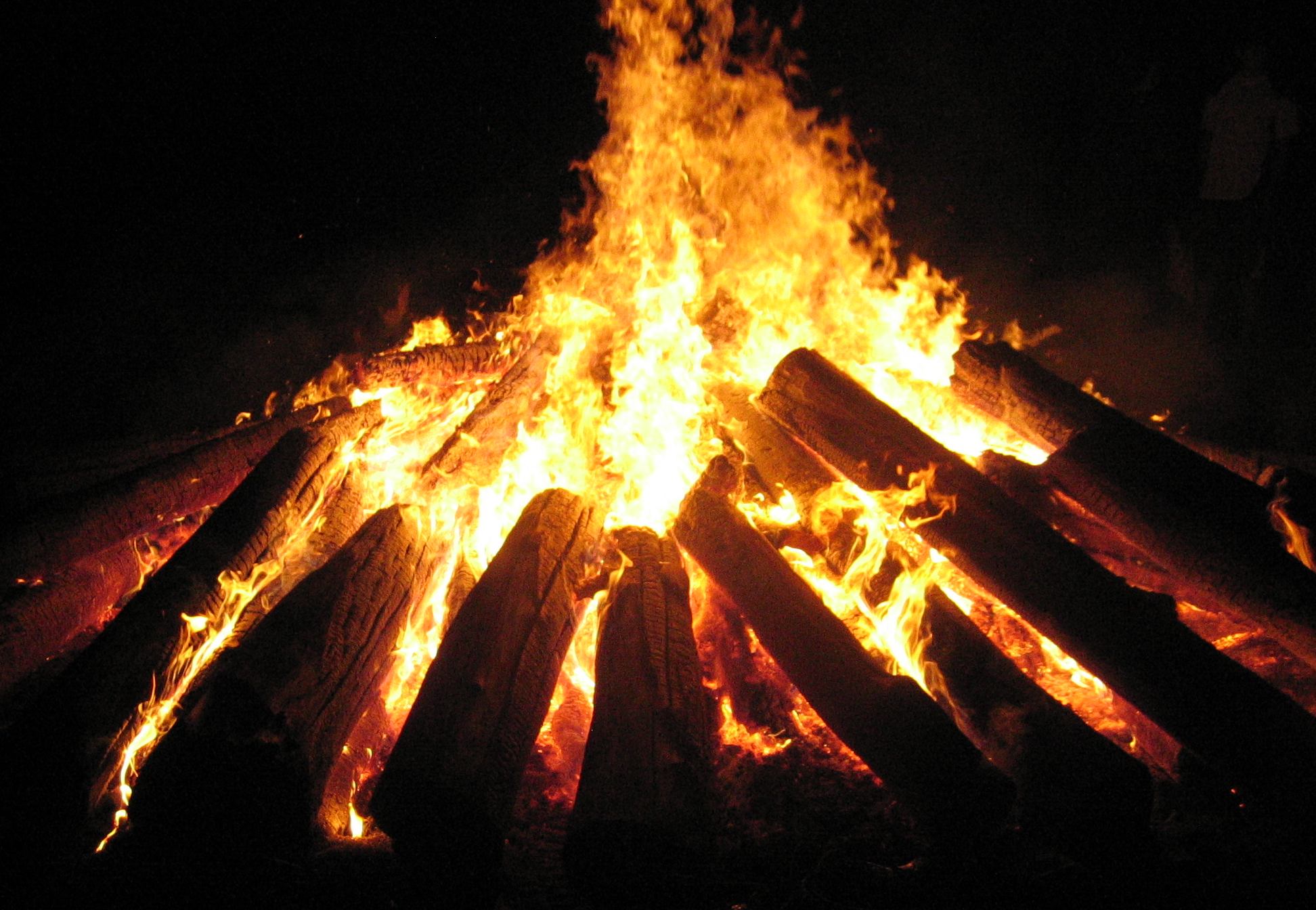
Bonfire


All Hallows was a time of contradictions. On the one hand, it marked the end of the farmer’s year, and the imminent arrival of cold, gloomy, winter days, but on the other hand, larders were full, flocks sheltered, so there was enough food to share, and there was less work to be done in the fields, so there was time for more pleasure. The long, dark, winter days, associated with death and sadness, would last until the spring, so this holiday was considered the last days of merrymaking and plenty.


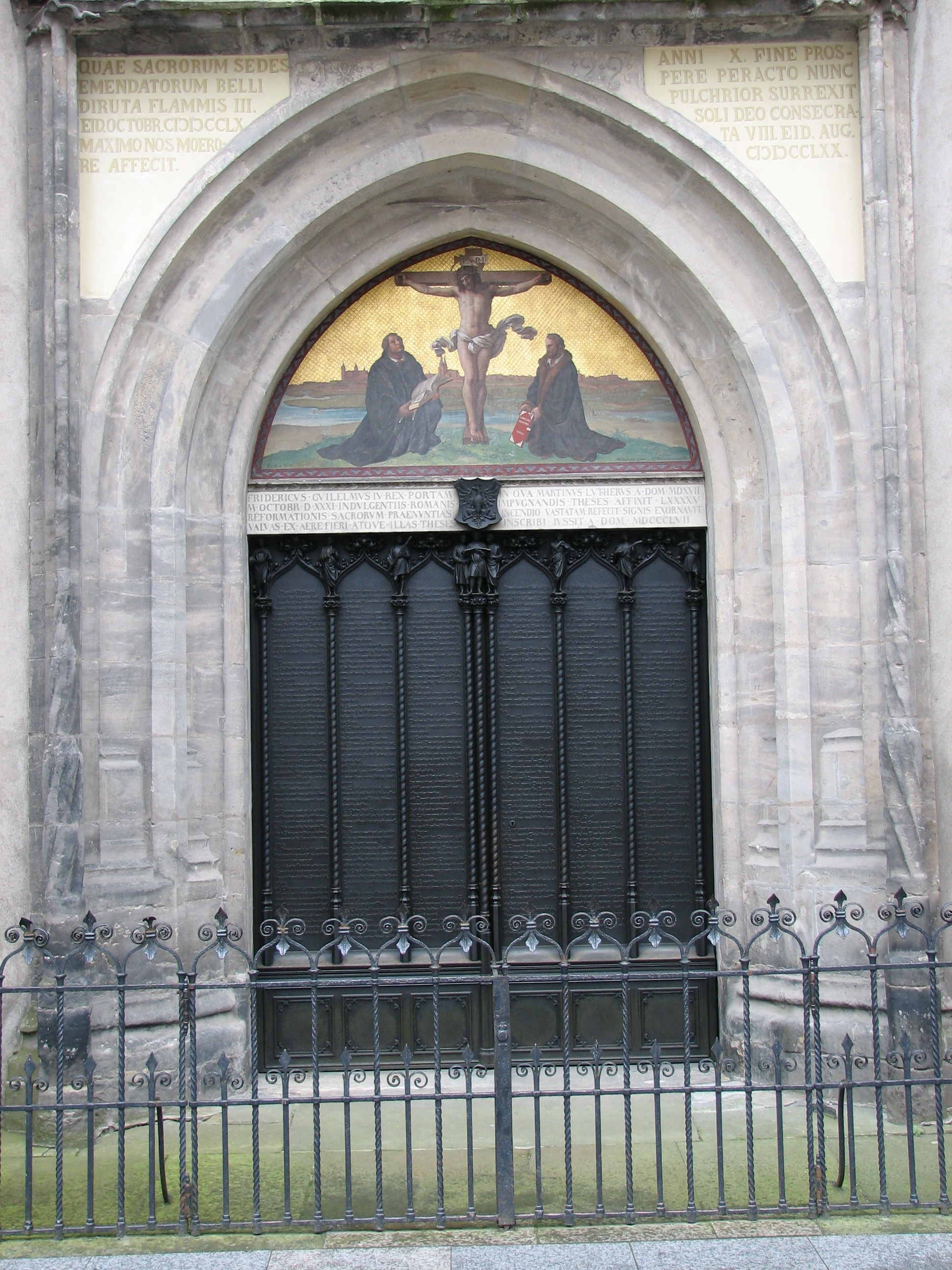
Wittenberg_Thesentuer_Schlosskirche
Wittenberg All Saints’ Church

Although Martin Luther nailed his reformation proclamation to the door of the church of All Saints at Wittenberg on October 31st, because he knew that the townspeople would be attending services that night, and despite the fact that the Protestant movement dropped the observances of All Saints’ Day, All Hallow’s Eve practices continued.

In the United States, it was not until the Irish arrived, as a result of the potato famines of the 1820s and 1840s, that Halloween became more established in American folklore.


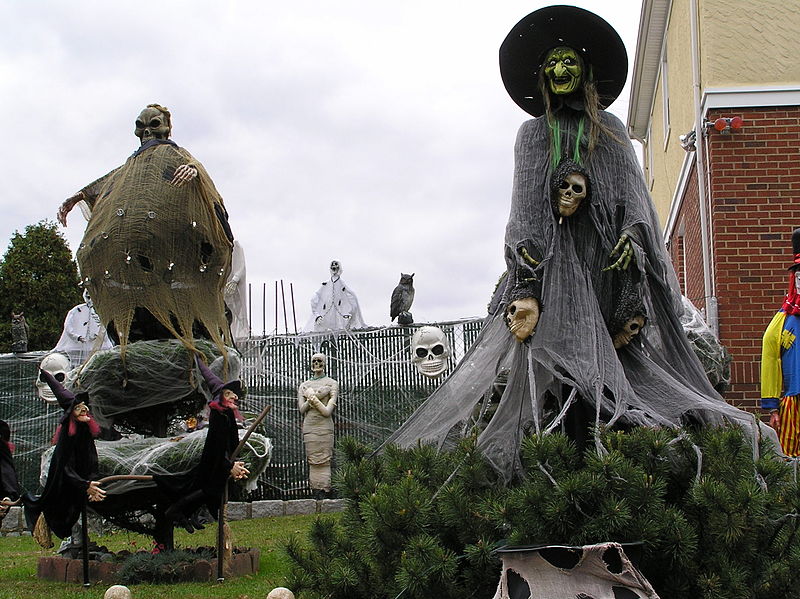
800px-Halloween_Witch_2011


In the 19th century, on both sides of the Atlantic, Halloween was an enjoyable festivity for the whole family, with parties in celebration of the annual harvest rites, including games, dancing, and telling of ghost stories. It was also an important day for matchmaking, and many of the divinations were aimed at discovering ‘true love’. The Halloween custom of carrying lanterns made out of hollowed-out turnips or beets, called Jack o’ Lanterns, which were used to scare away spirits in the night, were substituted in America by pumpkins. In the 20th century, after World War II, it became a big social event for children and young people.


Snap-Apple Night, painted by Daniel Maclise in 1833, shows people feasting and playing divination games on Halloween in Ireland.

All Hallows is not mentioned in Jane Eyre, although there are allusions to Guy Fawkes, and Bonfire Night, which I will be discussing shortly, in another post.

However, the sequel to Jane Eyre which I have written, All Hallows at Eyre Hall, takes place between 29th October and the second week of November, 1865. Halloween celebrations take place at Eyre Hall itself, and at the nearby inn and ale house, The Rochester Arms. I purposefully chose this misty, damp, and chilly time of year for the novel, because the supernatural and mysterious atmosphere of Halloween enhances the magical, gothic atmosphere of Eyre Hall. 

Tomorrow’s post will discuss the Halloween celebrations and customs portrayed in All Hallows at Eyre Hall, and it will also include a short extract from the novel.

Spine-chilling Characters: The Sin-Eater

One of the most enjoyable aspects of writing historical novels is the investigation process. Searching for those hidden bits of information that make research feel like a treasure hunt!

 All Hallows at Eyre Hall, is a Victorian Gothic Romance, and sequel to Jane Eyre.

It is set on and around Halloween, 1865, in a mysterious gothic mansion in Yorkshire, so naturally it contains some cryptic and ghostly characters.

As we’re coming up to the dakest period of the year, I thought I’d introduce you to one of the most eerie characters I included in the novel, namely, Isac das Junot, the Sin-eater who visits Eyre Hall, on account of Mr. Rochester’s death.

Funeral Customs
Funeral Rites

Origins of Sin-Eaters

The Sin-eater, who was summoned to the bedside of a dead person, is of pre-Christian origin. The dead person’s family placed a tankard of ale containing a coin and a piece of bread on the corpse’s body, which the Sin-eater ate and drank, symbolically taking with him the sins of the deceased, who was thus enabled to continue his journey to afterlife in a sinless manner. He may have made the following short speech at the graveside: “I give easement and rest now to thee, dear man. Come not down the lanes or in our meadows. And for thy peace I pawn my own soul. Amen.”

Most sin-eaters were poor people or homeless beggars, and although they were officially frowned upon by the Church, this macabre tradition was carried out in different parts of the British Isles, including Yorkshire and Wales, until mid-19th century. The last Sin-eater supposedly died in Shropshire, in 1906, said to be the last sin-eater, at least in that county.

The following is an extract of the Sin-eater’s arrival at Eyre Hall in Chapter XXVI of All Hallows at Eyre Hall. Susan, one of the house staff, is narrating.

As I returned into the hall, the heavy front door screeched eerily and a gush of chilled fog came flowing into the hallway. A pounding thump resounded and suddenly out of the dense cloud emerged a faint, dark shadow, which gradually solidified into a human shape, while a breath of frosty wind poured in and enwrapped those of us who were standing in the hallway.
“Mr. Rochester has sent for me.”
His grating voice echoed the words ominously. I heard frightful cries around me. Some of the guests ran into the adjacent rooms, swearing they had heard him say the words three times. Others said he was death, who had come to visit the just dead, and if anyone looked at his eyes they would be taken, too. Within seconds everyone disappeared. I stood alone with him. His glazed eyes stared at the only person who had remained. Nailed to the ground, my back stiffened. His eyes had impaled me. I felt my jaw drop, as he added in a low frosty voice, “I have a message for Mrs. Rochester.”
Someone shouted from inside a room, “No! He has come to take her with him.”
I plucked up the courage to approach him and speak, “I’m afraid Mrs. Rochester cannot see you, sir, but I will take your name, if you please, to inform her of your visit.”
His frozen features set on my face, and I noticed his eyes were red, all red, and his lips mauve. The rest of his face was a cemented gravestone carved with long creases down his flat cheeks, which looked as sharp as flint. His towering black figure was like an unearthly leviathan. My legs were shaking, and I would have run away had I not decided I had to protect Mrs. Rochester from the omen of death.
Disquieting words rang out of his lips, “I am the Sin-eater. I have come to bestow the wisdom of my ancestors upon the cadaver that is laid in this house, so that he may not become an undead.”
I was speechless, motionless, and breathless, as he continued with his foreboding address, “Time is short. His evil deeds have chained him to this world to roam and torment the living until the Last Judgment. I must see him today, or he will never rest, and his soul will wander in anguish around this house and his loved ones.”
Who was this unearthly monster? What did he want? What could I alone do to fend him off? His threats persisted, “I must see Mr. Rochester immediately, or leave his soul to roam in this house until the Day of Judgment.”
I forced myself to breathe in and managed to raise my right hand up to my neck and clutch the tiny cross hanging from a gold chain, the only possession I owned, and mustered all my strength to reply feebly, “Please leave, sir.”
Miraculously, he walked backwards towards the door, gradually devoured by the persistent fog that had accompanied him like an entourage.
“Stop, sir!” I turned to see Simon’s distraught face run up from behind me. I had not seen him during the episode. Someone must have run downstairs and informed him of what was happening.
“Please, wait. I will inform Mrs. Rochester of your presence. Your name, please, sir?”
“Mr. Isac das Junot, from the Netherlands.”
The figure became larger again, as it walked forward, appearing even taller than before. I noticed he wore no hat and his slimy jet black hair was pressed down with a wide middle parting and tied back into a short greasy pigtail.
“Please wait here in the entrance.” The intruder nodded, as Simon continued, “You will be eating and drinking later, I expect.” The unearthly visitor smiled, showing a fistful of teeth, which were as black as his hair.

Mrs. Rochester finally agrees to Junot’s macabre ritual, in spite of the opposition of her friends and family. Why would rational and Christian Jane, acquiesce to such a disgusting ceremony?

There is a simple answer. The Sin-eater not only saves the dying from hell, but also from wandering the earth as a ghost, thereby performing a service for the living as well. Jane knows her husband has died without confessing his sins or repenting to a religious authority, and she is not willing to take the risk of having him haunt her beloved Eyre Hall.

However, Junot is much more than a sinister or pitiable Sin-eater, he is not at Eyre Hall to receive charity, and during his brief visit, he does a great deal more than absorb Rochester’s sins, but I can’t include any spoilers to my own novel!

I can let you know that he will be returning to visit Jane, at Eyre Hall, in the sequel, Twelfth Night at Eyre Hall.

Read the rest of All Hallows at Eyre Hall at Amazon.com or Amazon.co.uk or Amazon worldwide Only 0.99c / £0.77 / €0.89 for a short time!

Marriage and Fiction: Reader, I married him…

The Last chapter of Jane Eyre begins with these four words, “Reader, I married him.” As if with marriage the narrator wished to close the story, which started when Jane was a ten-year old orphan living unhappily with her cruel aunt, Mrs. Reed, and spiteful cousins; Georgina, Eliza, and John. She later went through the deprivations and severity of Lowood boarding school for poor girls, run by the dreadful Mr. Brocklehurst, where she trained, and later worked as a teacher. When she was eighteen, she applied for a job as a governess at Thornfield Hall, where she met and fell in love with Mr. Rochester, who almost dishonoured her by preparing a bigamous marriage. He was already legally married to Bertha Mason, whom he had imprisoned in his attic. Bertha committed suicide, and Jane and Rochester were finally able to celebrate a lawful wedding, in the final chapter of the novel.

It was a Victorian convention to end novels in this way, indicating that virtue led to the stability and happiness which marriage represented. The problem here is that Mr. Rochester was neither virtuous nor stable, and every reader is aware of that. Whether you believe that this was the end of the story of Jane Eyre is, of course, up to the reader. This is what the narrator, Jane Eyre, a romantic and innocent twenty-year-old, thought would happen. But how reliable a narrator is Jane, the young, naïve woman who is blindly in love with Edward Rochester?

Readers have seen Edward Rochester through Jane Eyre’s eyes. She loved him in spite of his lies, and there were many of them. Rochester always denied being Adele’s father, and he insisted that he was unmarried, even in a church, as Richard Mason accused him of being betrothed to his sister. He blames everyone else for his problems; his father, his brother, Richard Mason, his first wife, and he even accuses Jane of bewitching him into loving her. Rochester is innocent in his own eyes, and he convinces Jane of his guiltlessness; this does not necessarily mean he convinces the reader. Readers make their own decisions.

Rochester is bad-tempered, conceited, and aggressive. He tries to humiliate Jane when she first arrives at Thornfield, and teases her mercilessly with Blanche Ingram, and his other guests. He reminds her constantly that she is not attractive, “You—poor and obscure, and small and plain as you are.” (Chapter XXIII) He even threatens Jane with these words, “Jane, I am not a gentle-tempered man—you forget that: I am not long-enduring; I am not cool and dispassionate. Out of pity to me and yourself, put your finger on my pulse, feel how it throbs, and—beware!” As a result of his violence she is forced to ask for God’s help, “I did what human beings do instinctively when they are driven to utter extremity—looked for aid to one higher than man: the words “God help me!” burst involuntarily from my lips.” (Chapter XXVII)

Jane does not finally tame him. He is rendered physically passive, after the accident due to partial blindness and a stumped arm, and emotionally sunk, because he has lost the two women who were sustaining his vanity and ego. When Jane finally returns, he recovers his physical and emotional strength, because he is now someone’s unconditional “master” once more. The question is: how long will Jane be able to continue with the idyllic life she imagines she will lead for the rest of her days? Is marriage the end of a story, or the beginning of another, greater adventure?

We can ask ourselves some questions in order to foresee how their relationship may well develop: Will Jane be content to spend the rest of her life as a recluse at Ferdean? Will Rochester be content to do the same after he recovers his sight and his health? What will happen once they have a family? Will Rochester relinquish his central role in her life in favour of a child or children? Are they really well suited? Do they have the same outlook on life? Does he have any consideration for his servants? Orphans? People in difficulty? Has he any religious beliefs, as she does? Does she like hunting and inconsequential social gatherings? Their conversation was lively while they were flirting, but now the conquest has been made and mundane daily matters will take over, how will “sir” react? How will the gentry of the area take to Jane? There is a large age-difference between them, what will happen when Rochester ages or dies and she is still relatively young?

Jane is the narrator and protagonist of Jane Eyre, but the novel ends when she is still a very young woman who has a whole life ahead of her. Jane Eyre is one of the greatest characters in literary history; her life cannot end with marriage to an egotistical, dishonest, and idle member of the Victorian gentry. I wanted more. Jane Eyre, the impressionable young bride, deserves a life of her own, so I imagined Jane Eyre Rochester, the woman, and wrote her story, twenty-two years after her marriage to Edward Rochester, in All Hallows at Eyre Hall,  because marriage is not the end of a fictional life; it is the beginning of another novel.

Can you think of any other ‘unfinished’ novels ending in marriages, which need to be continued?

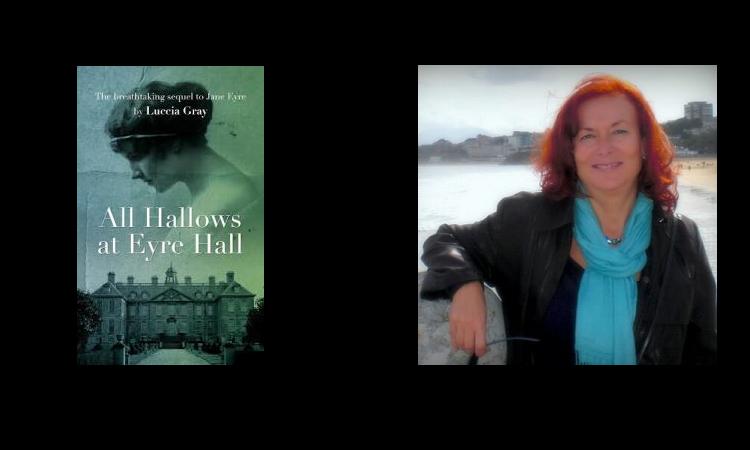
Q&A Luccia Gray All Hallows at Eyre Hall @LucciaGray

I was honoured and fortunate enough to have my interview with Ronovan published yesterday in his amazing and supportive Blog, Lit World Interviews. Thank you so much for a great interview Ron! Hope you all enjoy it!
Drop by his blog! You’ll find plenty more interviews and advice for authors…

Ronovan's avatarLit World Interviews

all_hallows_at_eyre_hall_cover.jpgAll Hallows at Eyre Hall

Luccia Gray

“All Hallows is believable and well-written, true to the “voice” of Brontë, and well-researched. In fact, at times I thought Charlotte Brontë was writing this; that is how fabulous a writer Luccia Gray is. This is not to say that she is a copy-cat writer. No, the author understands and “gets” the flavor, feel, and construction of Brontë’s work – an honor to a classic author, and thus, that is how sequels should be written. Bravo!

Luccia Gray is a beautifully descriptive writer. I sensed a need to don my wool cape when she wrote: “ . . . the horizon is grey, the air smells of damp weeds, and the wind is cold and furious . . .” I felt the almost imperceptible warmth on my face when “ . . . the sun . . . was suddenly visible, pale and…

View original post 2,489 more words