Flash Friday! –Vol 2 – 33

Last Friday’s 140-160 word story prompt for Flash Friday included the following picture prompt:


Miranda — The Tempest. Painting by John William Waterhouse, 1916. Public domain photo.

And the following word prompt:

This was my story:

Miranda


I sat on the stool looking away from the artist.

‘Don’t move!’ He barked. ‘I need to paint your profile.’

I wanted to tell him my neck and shoulders were stiff and aching, but I needed the shillings he was paying, and he was bad tempered if I complained.

‘Speak to me about your country and about your journey across the sea.’

So I told him while he painted.

‘Now tell me about the shipwreck.’

‘There was no shipwreck.’ I lied.

‘Imagine you saw one and tell me.’

So I told him.

Days and hours later, when my neck was so stiff I thought it might break, he gave me my freedom and cried, ‘Come and look, Miranda. It’s perfect!’

I thought it was a portrait, but he would never let me see until it was finished.

I was shocked.

‘You’ve never seen the sea!’ I blurted out.

‘I saw you and heard you, my love, and that was enough.’

 ****


Have a look at some of the other stories here. 


Shakespeare’s The Tempest

I love this picture, and I really enjoyed writing the ‘Flash Fiction’ it inspired. The Tempest is also one of my favourite plays, especially as a result of the classes I taught on Postcolonial English Literature to undergraduates.

The Tempest is considered by most scholars as Shakespeare’s last play (1610-11?), which was written as a farewell to London and the stage he so loved. Due to his failing health, he retired to Stratford (although he returned to London occasionally), where he lived with his wife, Anne Hathaway, until his death in 1616.

The Tempest contains one of his most magnificent soliloquies, by Prospero, which is the epilogue to the play, and perhaps to Shakespeare’s artistic life:

Now my charms are all o’erthrown,
And what strength I have’s mine own,
Which is most faint. Now, ’tis true,
I must be here confined by you,

Prospero tells us he no longer has the necessary charms to continue, and must retire and he finally asks for forgiveness before he bids his audience goodbye:

Mercy itself and frees all faults.
As you from crimes would pardoned be,
Let your indulgence set me free.

Watch Sir John Gielgud’s rendering here  (just over a minute on YouTube)

It was not until the 20th century, and the advent of postcolonial and feminist literary criticism that The Tempest came to be considered as one of Shakespeare’s most powerful plays.

Prospero, who should have been Duke of Milan, was exiled on a remote island, where he enslaves, Caliban, a deformed monster and the only human inhabitant, teaching him his religion and his language (a theme taken up by Jonathan Swift in Robinson Crusoe, a century later). Caliban repays him with the following lines which have given Postcolonial scholars much food for thought:

You taught me language, and my profit on it is I know how to curse.

The red plague rid you for learning me your language!

These words have been used to illustrate Shakespeare’s discontent with the way colonisation was occurring, enslaving, taking advantage of indigenous populations, and undermining their culture.

This play has also attracted Feminist criticism because there is only one female character physically ‘present’ in the play, Miranda, who finally succumbs to her father’s wishes and marries the son of the King of Naples, thereby restoring his honour, although she marries for love.

A play well worth reading and rereading…


Bite Size Memoir “Holiday Reads”

This week Lisa at her blog, Sharing the Story, has prompted us to write about holiday reads.

Far too difficult to condense into 150 words! So I’ve just mentioned what I would have considered ‘lighter’ reading at the time, because it was not mandatory for school, college, or work.

Here’s my memoir:

When I was at school, we had a very good school library, and during the summer holidays, I was an assiduous visitor to my local library. I remember Victoria Holt’s historical fiction and biographies enwrapped me for a few summers, together with Daphne du Maurier.

At University I read mostly French and Spanish literature, and a great deal of English theatre, which was my passion, at the time. During the summer, I was probably having fun, and as far as I can remember, not reading too much.

When my three children were little, I was a working mum. I remember buying books throughout the year and storing them on a bookshelf (I do the same now, except I store them mostly on my kindle instead!), in no particular order, to read during the summer holidays. I loved detective and crime fiction, Ruth Rendell and Minnette Walters were my favourites for years.

Now, my summers are no longer holidays, I write!

*****

The fictionalised autobiography of Marie Antoinette was one of my favourites, as a teenager.

Antoinette

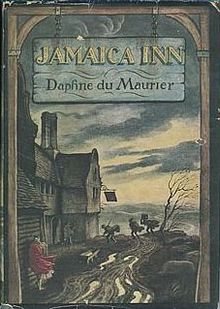
The mysterious Jamaica Inn, was a favourite, too.

Jamaica_Inn_novel

I moved on to crime fiction as a young mother, don’t ask me why! The Keys to the Street was one of my favourite.

Keys

Acid Row was the last of her novels which I’ve read (I read all her previous novels), and another favourite.

acid


Would you like to read some of the other entries?

Mirror Interview # 5 Luccia Gray

Mirror Interview # 5 Luccia Gray.

I tried unsuccessfully to reblog my mirror interview on Iona’s Blog, so here it is:

Mirror Interview # 5 Luccia Gray

*Today our guest is the lovely and talented Luccia Gray. Please welcome her and take a moment to say hello and check out her work! If you would like to do your own mirror interview–it’s a lot of fun talking to yourself–go to the contact me page and send me an email 🙂 CIMG4315

Why do you use a pen name?

There is a long literary tradition of writers using pen names. 19th century authors were keen users; Currer, Acton and Ellis Bell (the Brontes), George Elliot, (Mary Anne Evans), George Sand, Lewis Carroll, Mark Twain. There are many contemporary examples, too: Anne Perry, Anne Rice, and Toni Morrison, among others. No doubt their reasons are/were varied. There is no one reason why a writer decides to write with a pen name.

I started using a pen name because I wanted my ‘writing persona’ to be distinct to my ‘ordinary persona’. I don’t consider it a pseudonym because I don’t keep it a secret. I consider it my ‘artistic name’. I’m trying to keep both ‘personas’ apart professionally, although they sometimes overlap.

Why Luccia Gray?

My pen name is part of me, so it’s an anagram of my birth name: Lucy Garcia. I changed the letters around to produce Luccia Gray. I feel comfortable using it. I consider it a tribute to myself, because I’m finally accomplishing my life-long dream to publish my work and become an author.

How does Lucy feel about Luccia?

Luccia is very special and fragile. She’s insecure, sensitive, and very creative. Lucy is assertive, strong-minded, and very practical. Lucy is very proud of Luccia, and Luccia is glad Lucy found the time, and peace of mind, to give birth to her. I know it sounds weird, but we both feel very pleased with this arrangement!

Why should I read your novel?

All Hallows at Eyre Hall, is a great read. It’s an intriguing and exciting neo Victorian, gothic novel, set in an imposing mansion, frequented by villains, heroes, lovers, and ghosts. I challenge you to read chapter one, and you won’t be able to put it down!

Which are your favourite lines in the novel?

All Hallows is a powerful novel. The characters who breathe life into the narrative are all unique and impressive, that is why so many have been given a voice and a point of view.

There are some beautiful and intriguing letters in the novel. The following extract is from a letter written by one of my favourite characters:

‘My hand trembles as I write this letter. I humbly entreat you to consider it a token of my eternal loyalty and adoration. I can no longer wait in silence while I watch you suffer unjustly. You are not alone. The place I most cherish is by your side, or better still, in your shadow. I offer myself to you in humble and loyal service for the rest of my days. For you alone, I live, I hope, and pray. I will do anything to alleviate your distress and contribute to your contentment. You alone shall be my mistress. My only wish is to remain as close to you as I should be allowed.’

What are you working on now?

I published All Hallows at Eyre Hall as an ebook in May, and it will also be available in print, soon. It is book one of The Eyre Hall Trilogy. I’m currently writing book two, Twelfth Night at Eyre Hall, which should be out at Christmas 2014. Book three, Midsummer at Eyre Hall, is due next summer, 2015.

Why did you decide to self-publish?

It seemed to be a daunting task to find an agent and/or a publisher, and I didn’t want to wait around for replies to query letters, so I just got on with it! I wrote my first novel, found wonderful beta readers, to test my novel and get quality feedback, a proof-reader, and a cover artist. I finally formatted for Amazon and CreateSpace on my own. Now I’m busy writing and promoting my book, myself.

Quite honestly, it has been a fascinating journey, and I’ve met so many wonderful people along the way, in the last eight months, that I’m really glad I decided to do it by myself. On the other hand, I would be delighted to find an agent and a publisher, to help me with practical matters, so that I could get on with my writing…

Than you once again Iona for featuring me on your Mirror Interviews. I really enjoyed it and appreciate the support!

A Tiny Rose For You!

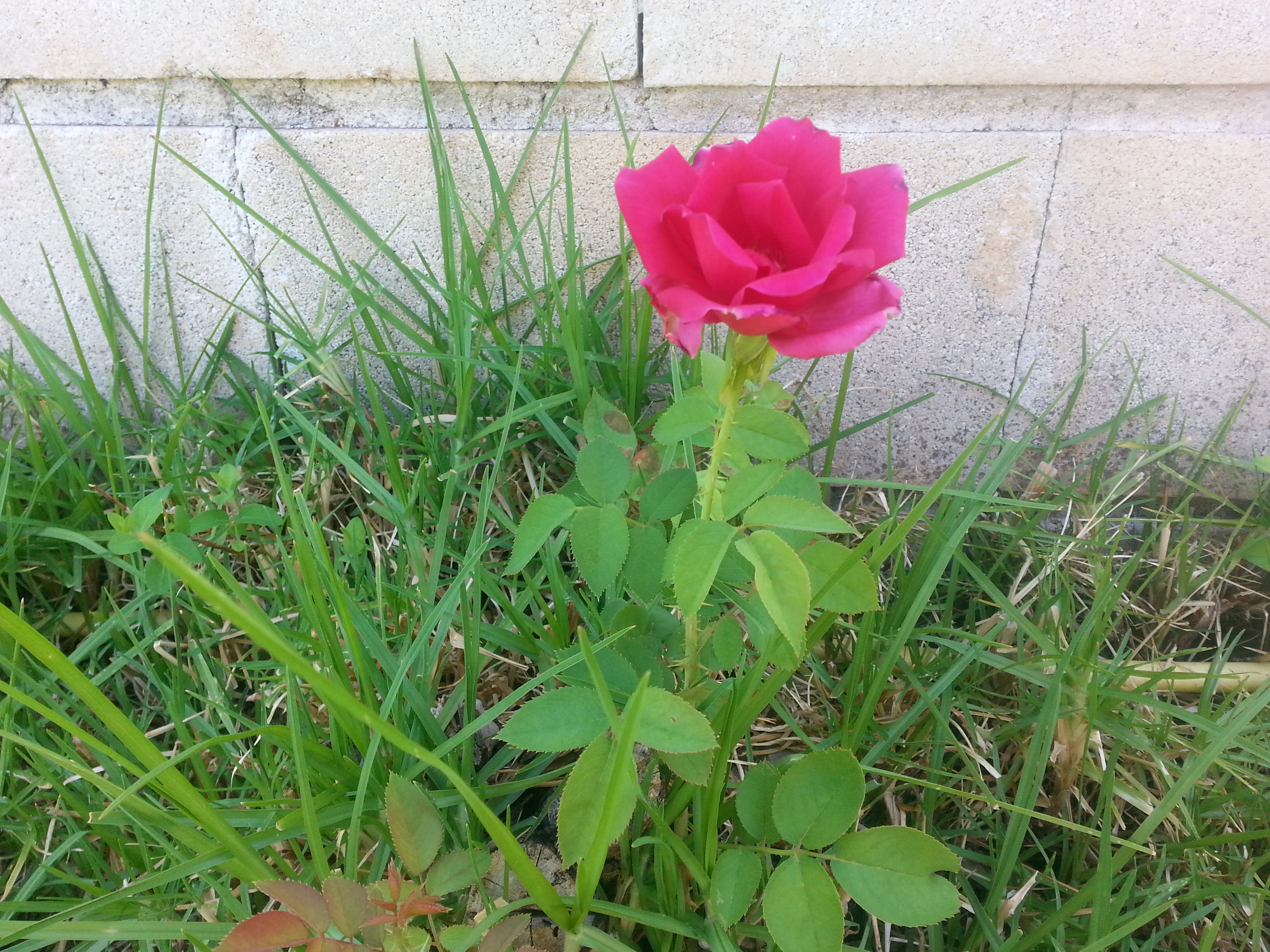
This morning I photographed this lone little rose in my garden. I can’t imagine how she survives, because it’s almost 40ºC in the shade! But she struggles on, and grows, alone in her singular beauty…

wpid-20140723_112728.jpg

Some days I feel like that! Small, alone, tired, and struggling against the natural elements…

As you know I’m formatting my ebook to be published as a paperback with CreateSpace, and the process is driving me close to a nervous breakdown!

That said, I’m feeling more positive this afternoon, for several reasons.

Firstly, the formatting process is looking better, I’ve managed to get the page numbers, and headers right with mirror format (or whatever it’s called), and I’ve found a lovely scene break symbol, instead of ***, but it’s not the right dpi!

There are so many new words, and acronyms, and Microsoft Word, and Adobe PDF are so stubborn, that sometimes I want to cry, or maybe shout…

If I sound incoherent, it’s because I’m feeling confused… But let me go back to my optimism.

Secondly, I’m feeling fortunate because I have so many virtual Friends who ‘are really there’.

I’d like to thank you all for voting, and commenting on my book cover. I’ll let you know what I finally decide. Thank you also for your encouraging comments and support. Nobody else (in my ‘real’ life) understands what I’m going through…

Thirdly, I’ve had a ‘mirror interview’ published today in Iona’s fabulous blog readfulthings, please check out her blog, if you don’t already know it.

Fourthly, I have another 5***** review on Amazon. I met Amanda quite by chance, through Goodreads, and she kindly offered to read and review my book. I’m grateful and fortunate that readers are enjoying my novel.

So really, what am I complaining about? A few little letters and symbols? some silly computer progammes?

Come on! Pull yourself together, Luccia, you’re a *!


wpid-20140723_112701-1.jpg


Please help me choose my cover colours!

I can’t sleep, or eat, or even think about anything else!

I’m terribly confused, and I need your help.

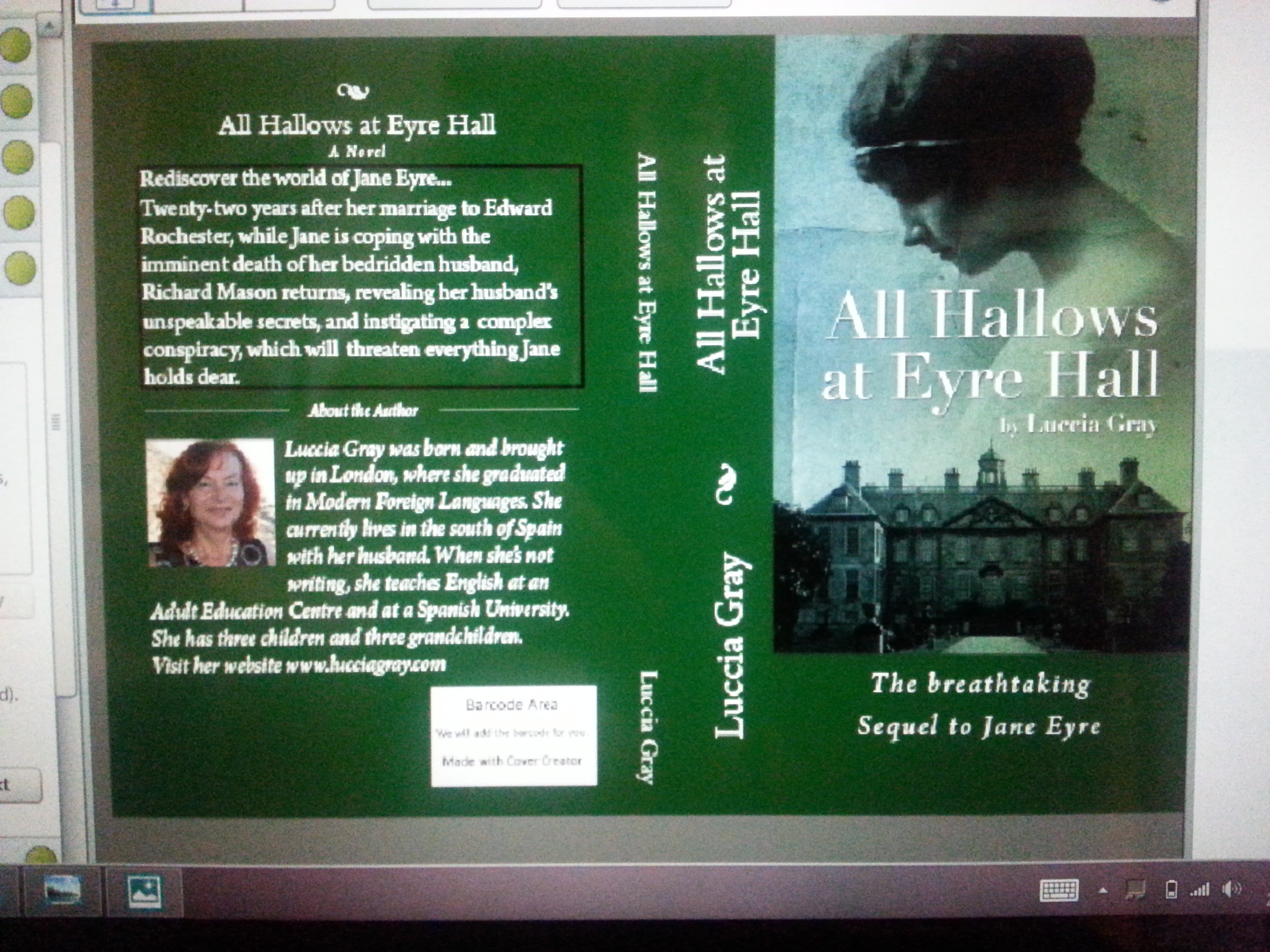
I’m formatting my ebook into a paperback using the cover creator in CreateSpace, and I can’t decide on the colours.

The covers are in the same order as the questions.

wpid-20140721_175208.jpg

wpid-20140721_175807.jpg

wpid-20140721_164303.jpg

wpid-20140721_175508.jpg

Any other comments, suggestions, and advice will be very well received.

Thanks. Hope to hear from you soon!

The Poll will be open for 24 hours, then I’ll have to make a decisión, with your help.


Desdemona’s Rebirth: A Poem.

On my way back from my niece’s wedding in Madrid, this morning, I was so mesmerised by the beautiful summer sky, dotted with suggestive clouds, that I wrote a poem.

Don’t ask me why I heard Desdemona’s name in the clouds, but Desdemona Reborn is a tribute to all the wonderful women who have inspired poets and other humans, to do both wonderful and evil things.


wpid-20140720_121457.jpg

Desdemona Reborn

Desdemona,

listen to the clouds
reciting your play.
Morphing
memories.

Chocolate licked
marshmallows.
Dragon’s wings.
His handkerchief.

Listen to the clouds
singing their music.
Humming
souvenirs.

White cotton
bodice dress.
First kiss.
Innocent bliss.

wpid-20140720_121517.jpg


Listen to the clouds
asking for answers.
Smothering
questions.

 What happened
to dreams?
How dost thou
look now?

REBORN.

Seeking more clouds
with plays, music,
and questions, too.
Listen to your heart.
Sing on,
my love.

***


P. S.

wpid-20140720_121639.jpg


After suffocating Desdemona in their bed, Othello asks her, regretfully,  ‘Now, How dost thou look now?’

Othello both killed and immortalised Desdemona, while he condemned himself to become one of the most pathetic villains in English literature.

Bite Size Memoir “10 out of 10″

Il y en a dix!

I was an insecure and awkward child. Too tall, too shy, too quiet, and too many spots (I did so sympathise with Adrian Mole). The ensuing lack of self-esteem slowly decreased as I started to excel in small things. The first of these memorable moments was my French class, in the final year at Primary school.

My classmates were nervous, as a new teacher started using strange, incomprehensible sounds. We were taught the numbers and some words, and asked: ‘Combien de stylos y a-t-il sur la table?’, and we had to reply: ‘Il y en a dix.’ Everyone was amazed that Lucy, of all people, was the only pupil to understand and reply to all the questions with correct pronunciation. 

My family used to visit relatives in Paris every summer, on the overland journey, on our way to Spain. I had picked up some French over the years, which I had never imagined would come in so useful!

***


wpid-wp-1405455560510.jpeg
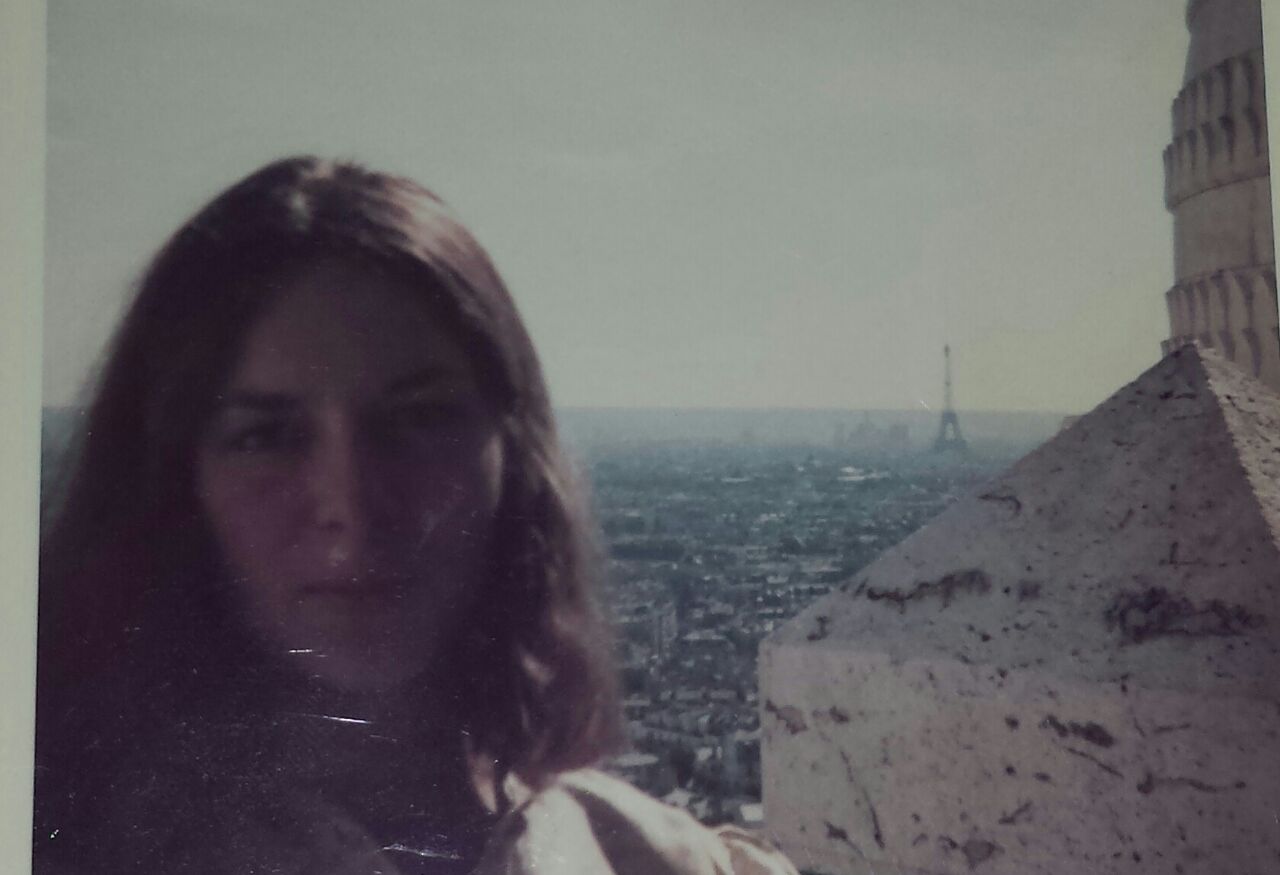
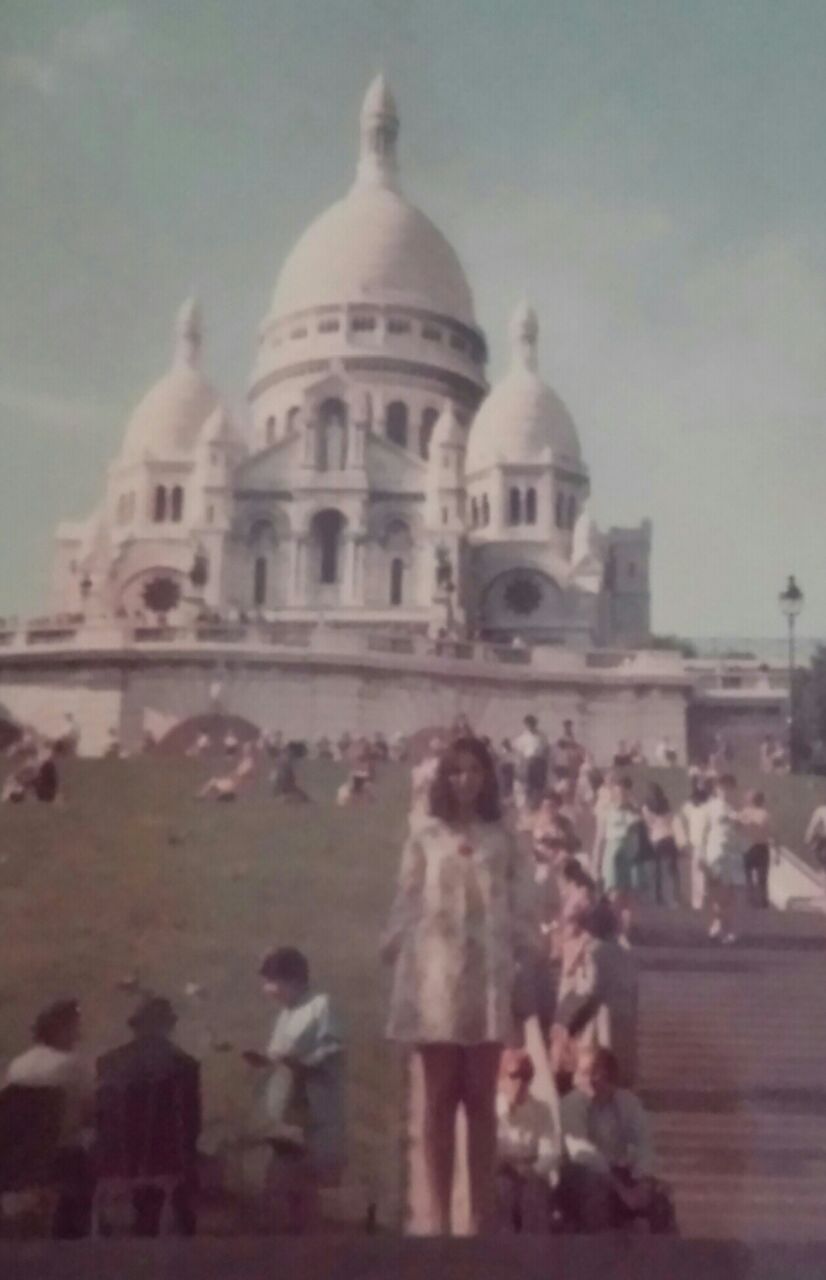
Lucy in Paris in 1973(?)


This is a (very) old photo. I can’t remember where I am, but it’s obviously Paris, because you can see the Eiffel Tower in the background, on the right. I’m about fourteen.


wpid-wp-1405455774699.jpeg
Me again, by the Sacre Coeur, same year, 1973(?)


I have fond memories of these long journeys, which started on the Golden Arrow, from Victoria Station to Dover, then a boat across to Calais, and a train again to Paris, where we’d stay for a few days, with my mother’s cousins, who had fled from Spain, after the Spanish Civil War. Then we’d continue on to Bilbao, by train, and from Bilbao to Santander, by coach. It took forever, but that’s how people travelled in the 1970s.

Being already bilingual, and a lover of languages, it was easy for me to pick up a third one. I was always ten out of ten at French. I went on to study Spanish and French (subsid.) at London University. Well, it was on the cards, wasn’t it? Pity that it’s quite rusty now, through lack of use…

Parlez vous francais?

Have a look at some of the other entries for this week’s Bite Size Memoir


Would you like to read All Hallows at Eyre Hall?

Dear followers and readers,

I’d like to let you know that if you’d like to read my novel, All Hallows at Eyre Hall, you only have to fill in the form below, and ask me. I’ll gladly gift it to you.

Why should I gift it?

Firstly, because you are my ‘virtual friends’, and I don’t want to take advantage of your friendship.

Secondly, because I hope you will like it, and help me get it noticed, by writing reviews and/or  just telling friends and followers that it’s worth reading.

You may be asking yourselves: Will I like it?

Reading a book which is not your ‘type’ is a torture, and I wouldn’t want to torture anyone, especially not my friends! The answer is quick and simple. Pop into Amazon.com and read the first chapter, it’s free in ‘look inside’. If you are drawn in, I assure you it gets better and better.

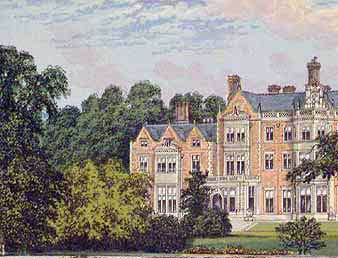
It’s a neo-Victorian novel which takes place in a gothic mansion (Eyre Hall) in a large country Estate in the north of England, with heroes, villains, lovers, plots, ghosts of the past and present, secrets, suspense, etc.


Sandringhammorris_edited


In the future, whenever that may be __  I’m in no rush __ I’d like to write full-time, but in order to do so, I need to sell novels.

The selling part is not only to cover costs, I’m a one-woman show, and there are many expenses: cover design, formatting, proof-reading, editing, advertising, reading and writing materials, etc.

It’s also to affirm that I can write. I know I’m not unique in my insecurities, many writers feel the same way, especially when they have been repeatedly turned down by agents and publishers (I’ve only been turned down by three, because I stopped submitting my work).

The fact that great authors like Garcia Marquez, whose first novella, Leaf Storm, was initially rejected by a publisher and buried in a drawer, doesn’t console me, neither does the fact that there are many more successful authors who suffered similar rejections:

Steven King received many rejections for his first novel, Carrie, J. K. Rowling’s Harry Potter and the Philosopher’s Stone was rejected by a dozen publishers, too, and the list goes on…

It’s great being an independent/self-published author, because you are in complete control of the whole process, but it’s also exhausting, because there is so much to do that is not actually writing.

I don’t want to be a best-seller (at least that’s not number one on my to-do list!). I just want to do what I love, which is to continue writing the stories I need to tell __ and, of course, I’d like people to read them, too!

Whether you’d like to read my novel or not, I hope you’ll still enjoy my blog. I have lots of thoughts to share with you!


Go back

Your message has been sent

Warning
Warning
Warning
Warning

Warning.


Flash Friday Challenge 11th July

Hamilton-Burr Duel, 11th July, 1804

Contest rules:

150 word story (10-word leeway) based on the photo prompt and required element (Dragon’s Bidding). Post story here  with Twitter handle. Include word count (140 – 160 words, exclusive of title). Check the contest guidelines.  Deadline 11.59 ET. Winners will be posted on Sunday.

This week’s photo prompt:

“Hamilton-Burr Duel, After the Painting by J. Mund.” Illustration from Beacon Lights of History, by John Lord, 1902. Public domain image.

Dragon’s bidding, to include in the story:

My Entry for Flash Friday:  Burr’s Defeat

I begged him not to go.

‘I’m defending my honour,’ he claimed. ‘I demand satisfaction. I will not be insulted publicly, by that pompous idiot.’

I insisted that it was illegal, that it would end both their political careers.

‘No-one will see us. We will go to the cliffs below Weehawken on the Hudson River.’

I reminded him of his family, and his political future.

‘He deserves to be taught a lesson. He won’t get in my way again.’

I finally implored him to decline as a tribute to our friendship. I couldn’t watch him die.

‘Neither of us wants to die. We’ll both intentionally miss, although I’ll try and shoot the rascal’s foot off!’

I knew Hamilton wouldn’t shoot to kill, but I also knew that my brother-in-law was hungry for vengeance.

The first shot flew above Burr’s head, he smiled at me.

The second shot pierced Hamilton’s heart.

I watched Burr die that same moment.

*****

Historical Background.

I wonder if one of the six Fathers of the Nation imagined he would be shot down in a duel by one of his political adversaries?

Hamilton was a self-made man, who was born out-of-wedlock, raised in the West Indies, and orphaned at 11. He was sponsored by people from his community to go to the North American mainland for his education, where he attended King’s College (now Columbia University) in New York City.

Hamilton-Alexander
Hamilton shortly after the American Revolution.


Hamilton was an able and brave military officer, who served in the American Revolutionary War as artillery captain. He later became the senior officer and confidant to General George Washington, the American commander-in-chief.

Hamilton’s abilities were not only military, he was also a competent politician and economist. When President Washington appointed Hamilton as Secretary of the Treasury, he created the government-owned Bank of the United States.

The First Bank building, which was built in 1795, is now a National Historic Landmark located in Philadelphia.

FirstBankofUSA


He resigned from office in 1795 after a extra-marital scandal, and practiced law in NY. When Burr ran for President, Hamilton supported Thomas Jefferson, because he accused Burr of being unprincipled. When Burr later ran for governor in New York State, Hamilton’s influence was strong enough to prevent Burr’s victory once more.

Burr challenged Hamilton to a duel, after taking offense at some of his comments.

Hamilton was mortally wounded and died the next day, 11th of July, 1804.

A modern reader is amazed at how two fifty-year-old men, of their intelligence and social prominence, should take part in a duel, in an attempt to kill each other, in such an absurd, and illegal manner.

Although Burr was never tried for the illegal duel, because all charges against him were eventually dropped, Hamilton’s death put an end to Burr’s political career.


July Nights in Jane Eyre

‘July nights are short: soon after midnight, dawn comes’. Chapter XXV.

In a previous post, I discussed the positive symbolism of the month of June, however, July nights are mentioned twice in Jane Eyre, and both foresee negative events for Jane.

She begins Chapter XXV by reminding us that June, ‘The month of courtship had wasted: its very last hours were being numbered.‘ It is now the beginning of July, at nine o’clock in the evening, and Jane is alone at Thornfield Hall, because Mr. Rochester has travelled to London, on business.

Haddon_Hall.1
Photograph of Haddon Hall taken by Bob Bendall. Charlotte Bronte may have based Thornfield Hall on this building.


It was a windy, grey evening, and Jane was feeling troubled and restless. She went out in the grounds, and descending the laurel walk, where Mr Rochester had proposed, she faced, ‘the wreck of the chestnut-tree; it stood up black and riven: the trunk, split down the centre, gasped ghastly.’ An omen of what was to happen the following day, her wedding day, when it would be disclosed that Mrs. Rochester already existed, in the attic, at Thornfield Hall.

Bertha and Veil
Jane Eyre in her bed, while Bertha Mason takes her wedding veil. An illustration by F. H. Townsend for the second edition of Jane Eyre, published in 1847


When Mr. Rochester returned, she told him she had seen a strange being, like a ‘foul German spectre—the Vampyre‘ in her room. She describes a monster who put on her veil, and even approached her bedside with a candle, before leaving her room. The reader and Jane will soon learn it is Mrs. Rochester (Bertha Mason). Her future groom convinces her it was Grace Poole, a servant, and promises to tell Jane why he employs her, a year and a day after their wedding. Jane is satisfied with his proposal.

In Chapter XXVII, on the evening after the wedding farce, Jane decides she must leave Mr. Rochester and Thornfield Hall. He is already married, and although he offers her a place by his side, as his mistress, Jane naturally refuses his ‘dishonest’ proposal, and escapes from Thornfield Hall, in the middle of a July night. She will return a year later to find a ruin, instead of a grand house.

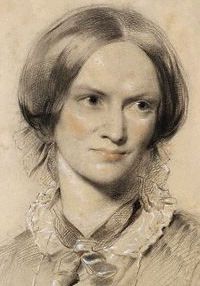
Charlotte Bronte
A portrait of Charlotte Bronte by George Richmond at the National Portrait Gallery, London. In the Public Domain.


I have no doubt Edward Rochester was in love with Jane Eyre, nevertheless, I find it impossible to accept his behaviour towards Bertha and Jane. Bertha is incarcerated and treated like an animal, while he consistently lies to and manipulates Jane.

Jane Eyre was nineteen when she met Edward Rochester, who was over forty. She was almost a ‘child’ by today’s standards.

In my novel,  All Hallows at Eyre Hall, Jane is forty-two, and she is about to discover the man she really married, the man we all suspected Rochester really was, and Jean Rhys had already described in Wide Sargasso Sea.