Writing Dialogue in Fiction #writingtips #amwriting #writerslife

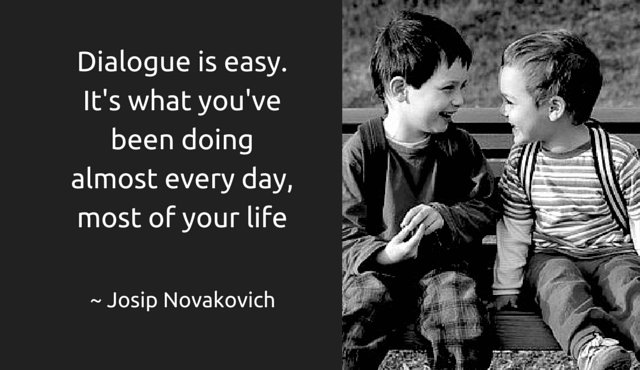
I love writing dialogue and I include plenty of dialogue in my novels, but I also find it’s one of the hardest parts to get just right.
dialogue-is-easy

Writing the dialogue itself isn’t so demanding, it’s padding it with all the necessary contextual information within a novel that causes the problems.

Here are some notes I’ve made for myself to remind me of what I need to think about and do to make my dialogues relevant, vivid, authentic and natural.

****

Dialogue is a great way to show (not tell) the reader about character and plot.

Think about the purpose of the exchange, and remember that every scene in the novel should:

1) Show character Or  2) Reveal plot

 1- Show character

This can be done subtly or specifically, depending on the importance of the character or the aspect you want to disclose.

What does the character say? And how does this show how he thinks or feels about what he’s done or is going to do, or about other characters… Are the characters lying? Purposefully? Inadvertently?

2- Develop plot:

It’s also a great way to reveal plot or add a plot twist (or red herring!).

  • Is there something new you want the reader to know? Is it part of the plot? A plot twist? A lie to confuse the characters and/or reader?
  • Is it a past event you to remind the reader about (in a series) or something the reader has not been told before?
  • Is it foreshadowing or giving clues to an event which may soon be taking place?

What to add/think about when writing your dialogue.

If you were writing a play, you wouldn’t have to think much about this. You could add some stage directions, but mainly the director and/or the actors would add the speaker’s actions, clothes, setting, props etc. to the dialogue. In a novel, the writer has to think of ways of transmitting this information.

Characters aren’t still or in a vacuum when they talk. They’re doing things and thinking about things. Their senses are aware, so they can hear, see, smell, taste and feel. They’re in a specific place which can bring memories or give them specific vibrations. They’re with people who can make them feel differently, too.

Although the actual conversation is our aim, and it’s probably what we write first, at least I usually do, later on we need to make it real. Create the context for the reader to understand and feel what the characters feel, which is not necessarily the information they give when they’re actually speaking.

dialogue-is-not-just-quotation

Some specific questions to ask yourself:  

  • Where are the characters? In general (e.g. a hotel) and specifically (e.g. on the terrace in their room)
  • Why that place in particular and not another?
  • What are they seeing? Near (e.g. on the floor) and far (e.g. on the horizon).
  • What are they thinking about? Present conversation? Past events? The place?  The person they’re talking to?
  • What are they hearing? What does it remind them of? How does it make them feel?
  • What can they smell? What reaction does this have on them?
  • Are they sitting, standing, moving? Are they doing something while they talk?
  • What kind of atmosphere do you want to create? Tense? Romantic? Mysterious? Relaxed?
  • What are their facial expressions, movements and gestures like?
  • Are they interested or pleased to be having the conversation? If not, where would they like to be? Or what would they like to be doing?
  • What are they wearing? What does it tell us about them? The place? The situation? The time of year?
  • What’s their relationship? Does the reader already know? Does he need to know anything else? What do they think of each other?
  • What’s their motivation for the conversation? Was it prepared, unexpected, on one side or both?
  • What day is it? Time of year? What’s the weather like?
  • What have they been doing before?
  • What are they going to do next?
  • What’s on their mind?
  • What’s happening around them?
  • Who’s entering and leaving the place or the conversation?
  • Are the speakers alone? If not think about other people there, what are they doing? listening, watching, oblivious…

Remember:

Identify the aim of the conversation regarding character and plot.

Don’t ramble or tell the reader things they already know.

Reduce tags and tags with adverbs to a minimum.

You can make characters unique by the things they say, expressions, or gestures they often make, the clothes they wear, etc.

Read it out loud: think about length, repetition, authenticity, flow, does your main point (plot/character) come across? You’ll probably need to tweak it a few times, at least I certainly do!

****
wp-1484159332141.jpg

I have these questions pinned to my notice board. I refer to them once I’ve written the first draft of the conversation. It helps me give more depth to my dialogues.

I’d love to hear from you:

How do you approach your dialogues?

Do you write them straight off or do they go through various stages?

Any more tips / ideas for writing dialogue?


Carrot Ranch #FlashFiction Challenge: ‘What if?’

This post was written in response to Charli Mills weekly flash fiction challenge.

January 5, 2017 prompt: In 99 words (no more, no less) write a story about a rattling sound. It can be an intimidating sound of protest, a disorienting loud sound, a musical expression or a gentle baby’s toy. Go where the prompt leads you. To take part, join in here!

january-5

Today’s flash was inspired by the Christmas season, which has just passed.


The Good Nephew

‘Go away,’ he shouted, covering his head with the woollen blanket, but the rattling grew louder.

‘Leave me alone!’ He was trembling.

More rattling.

‘I don’t want to go there again!’

‘I warned you last Christmas,’ came the ghostly echo with more thunderous rattling.    

Minutes later, the ghost discarded the heavy chains and stood by the skeletal corpse in the icy bedroom.

‘I was only reminding you to keep your promises,’ he said closing Ebenezer’s blank eyes.

Then he opened the safe where the miser kept the gold coins and dropped them into his purse.

‘Rest in peace, uncle.’

***

One of the strategies I use in my retellings of Victorian fiction are ‘what if questions.

In the case of A Christmas Carol I asked myself:

What  if Scrooge didn’t change after all?

What if there were never ghosts, just a trick to scare the old miser?

What if the nephew wasn’t such a good person?

What if his nephew, became more greedy and tired of waiting to inherit?

The same story with a ‘what if’ becomes another story, which is complimentary to the original story.  The more feasible the ‘What if’, the more credible your new version becomes.

christmas-carol-cover

There are many possible ‘what ifs’ to any story. Here are some more for A Christmas Carol:

What if Scrooge was an opium addict instead of a miser?

What if Scrooge wasn’t as rich as people thought?

What if the ghosts were time travellers?

What if his nephew was really his son?

What if Scrooge had killed Marley to take over the business?

The options are endless and exciting if the questions are reasonable. It can also work with ‘unreasonable’ what ifs.

For example, if I asked, ‘What if Scrooge was really Prince Albert who was bored at home with Queen Victoria?’ It might work as a nonsense story, but not as an alternative version.

In the Eyre Hall Trilogy, my sequel to Jane Eyre, some of my ‘what ifs’ were the following:

What if Bertha had a child in the attic?

What if Rochester had the child removed?

What if Bertha’s daughter returned to Eyre Hall as an adult to claim her birth right?

What if Rochester went back to his old ways shortly after marrying Jane?

What if Jane stopped loving Rochester?

What if Jane fell in love with another man?

And many, many, many more!

bertha-and-jane

Creating alternate, complimentary, versions of well known novels or stories is fun and creative, because it opens up a whole new world of possibilities.

I love reimagining fiction and reinventing stories.

Some people criticise me for doing so. I answer that writers have been borrowing stories and retelling them since pen was first put to paper (Chaucer, Shakespeare and Scott, did it all the time! Even Dickens did it occasionally).

My retellings are a tribute to the original authors and works, and I consider it an honour to be able to share my reimaginings with my readers.

Do you ever venture into the world of ‘what ifs’ in your writing?

WRITESPIRATION #97 52 WEEKS IN 52 WORDS – WEEK 1 #Resolutions

This post was written in response to Sacha Black’s first weekly prompt for 2017.  52 weeks in 52 words.


wp-1483909729256.jpg

Sacha will post one prompt a week for 52 weeks, and the challenge is to write a story in just 52  words exactly. Sounds like a fabulous idea. The value of conciseness for a writer is invaluable, as Sacha herself reminds us: ‘The art of being concise is nothing if not a muscle flexing ‘write’ bicep curling device’.

Today’s prompt is to include ‘The timer started’ somewhere in the text.

Here’s my take, a very seasonal and very personal one.

I’m getting rid of all the surplus stuff, no more whining.

This is my one and only resolution for 2017.

****

The timer started.

New year.

New resolutions.

New hopes.

New challenges.

Ready, steady, go!

How many?

 Just one.  

Keep writing.

Novels, blog posts, tweets, flash fiction, fiction challenges, poetry,

Emails, messages, postcards, letters, short stories, notes,

Words and more words.

Because when I stop writing,

My timer will have stopped.

The end.

*****

i-write

Thank you for the prompt and for the challenge, Sacha.!

If you want to take part, here’s more information about the challenge.


My Favourite Novel: Twelfth Night at Eyre Hall on #kindle Countdown Deal

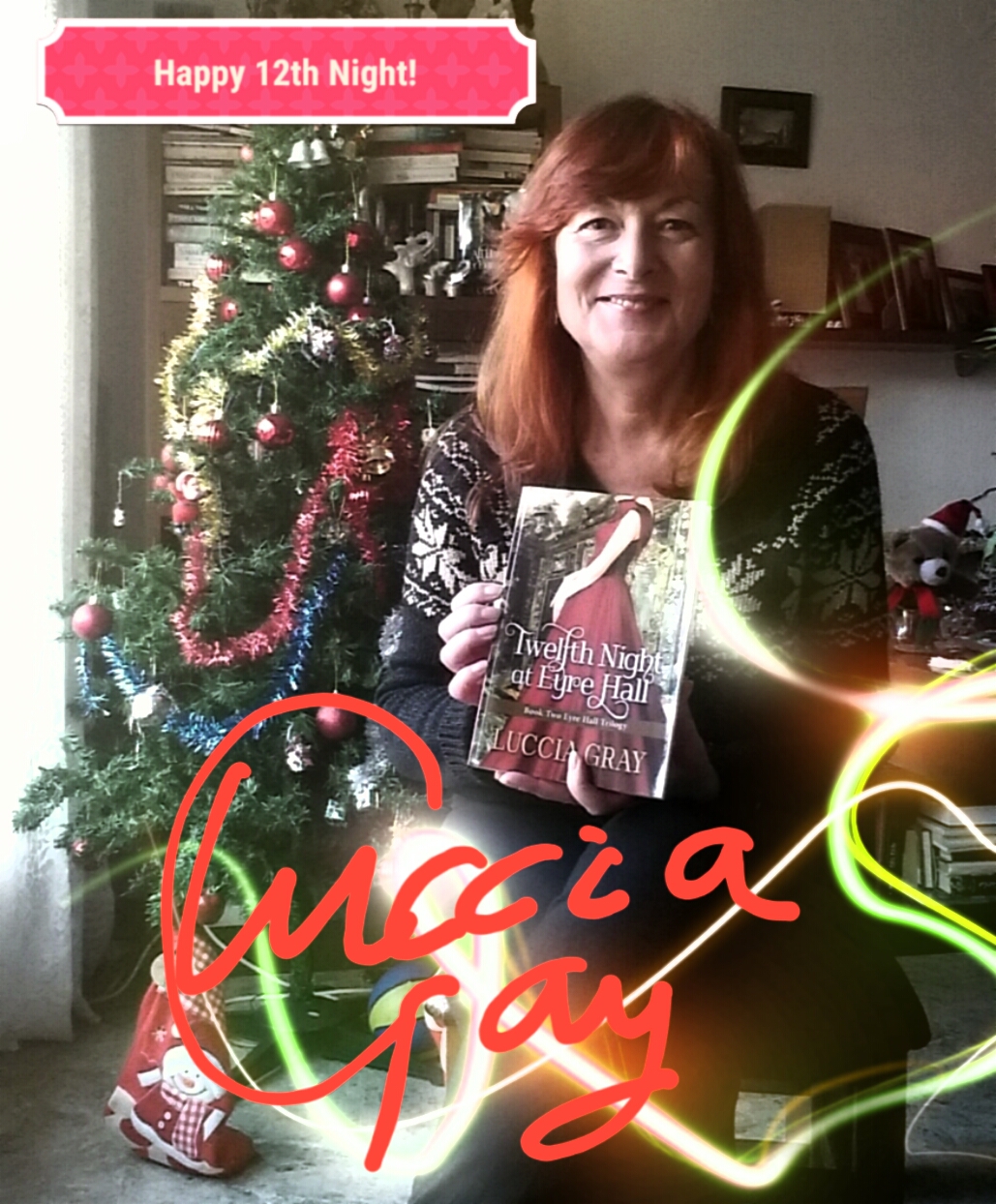
Today is a very special day for my novel Twelfth Night at Eyre Hall, because Twelfth Night is the night before the twelfth and final day of the Christmas season, which started on Christmas Day, and that day, the 5th of January, is today. Although it’s no longer celebrated in the UK, it used to be a merry festivity in Victorian England.

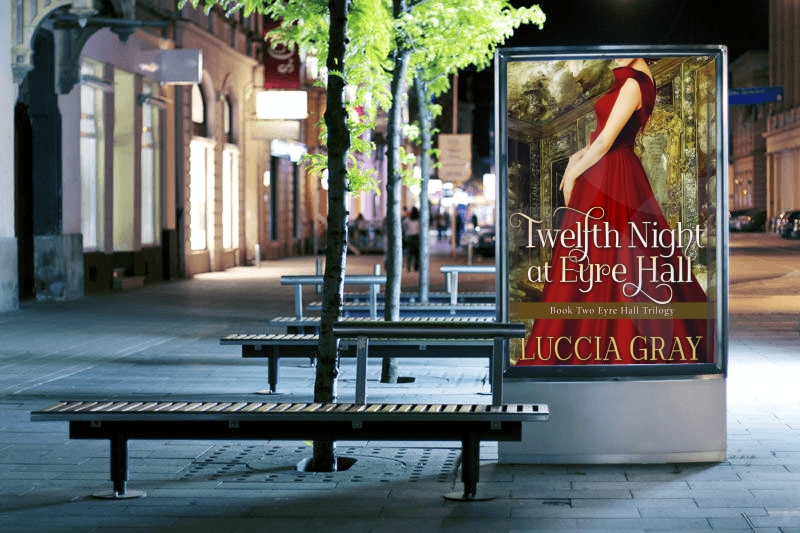
Twelfth Night Billboard


Asking a writer to choose a favourite novel is like asking a parent to choose their favourite child. I’m going to own up to the truth here, Twelfth Night at Eyre Hall is my favourite novel. It’s a quick and easy answer, because I enjoyed writing it so much more than the others.


Amazon Banner


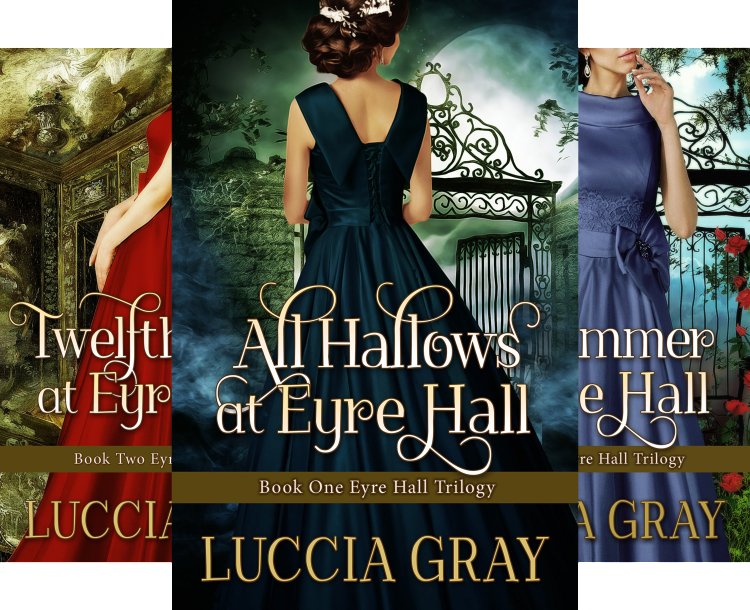
Let me explain, book one, All Hallows was hard to write because it was the first and I had to prove to myself, and my readers that I could do it. I could write a novel. It was a cathartic experience and although I’m thrilled with the result, it was also stressful process.

Second came Twelfth Night, and I felt liberated and capable, so I let my imagination run wild and wrote the most exciting, adventurous and optimistic novel in the trilogy. Twelfth Night has everything that can entertain a reader: wonderful and varied characters, servants, villains, murderers, heroes, supernatural beings, pirates, children as well as adults. There’s romance, a murder investigation, child theft, blackmail, unveiling of family secrets, and a sea voyage. The settings are varied, we move away from Eyre Hall and travel to Dickens’ Victorian London, there’s also a sea voyage across to colonial Jamaica.

Although it’s part of a trilogy, it can be read as a standalone. There is no cliff-hanger ending, the ending is satisfactory, although not happy ever after. I hope readers will read the final instalment, Midsummer at Eyre Hall, but Twelfth Night is a self-contained novel.

The titles of the three books represent the day one of the major event in the novel takes place. In the case of twelfth Night, a significant event takes place. It’s the death, or rather the murder of one of the characters. I can’t say any more without including a spoiler, but I can read the first two paragraphs of the chapter, which is narrated by Jane.

Chapter XVI

Twelfth Night at Eyre Hall

The morning after Twelfth Night, Eyre Hall woke up to an alarming blizzard. I had risen and was looking out to the vast whiteness where no shape, human, animal or natural, could be discerned due to the snowy curtain pouring down. I pitied anyone who would have to leave the house in such weather.

I turned my thoughts to Michael, in London. No doubt, the weather as always, was kinder there. I wondered if he had found Helen, and how soon he would return. He had said by Twelfth Night, so I was looking forward to his arrival shortly. The snow might slow down his journey, but it was a small impediment for such a tenacious person. I wondered wistfully as Nell helped me dress, if we could ever be together as any couple who are in love, but we were not any couple. There were so many obstacles in our way, although now, more than ever, I was sure our future was entwined, and we would find a way to overcome all the complications.

I was shaken by cries coming from Mr. Mason’s room…

****

So, if you’d like to read a Victorian Gothic romance, including some of the characters in Jane Eyre and many other engaging characters, in a novel which is full of mystery, suspense, romance and adventure, now is the time to give Twelfth Night at Eyre Hall a try because it’s on Kindle Countdown Deal at less than a dollar or a pound until the 11th of January.

Amazon USA

Amazon UK 

And when you read it, don’t forget to write a review, just a line or two is enough, and let me know what you think.

wp-1483639731627.jpg

Happy Reading and Happy New Year 2017!


#IWSG Plotting & Pantsing #amwriting

This post is written in response to the insecure writers support group’s monthly prompt.

Insecure Writers Support Group Badge


January 4 Question: What writing rule do you wish you’d never heard?

I’ve been thinking hard about this question all day, and I can’t think of an answer. I don’t think I’ve ever heard a writing rule which has influenced me so strongly and negatively that I wish I’d never heard it.

I’m not aware of following rules when I write. I do listen to other author’s advice and opinions, and I’ve read many books on writing, but I’m aware I have to adapt this information to my own way of writing, my story and my characters. I’ve always trusted myself to write on my own gut feeling. I write because I have great fun recreating imaginary worlds, characters and stories. I’m mainly concerned with pleasing myself, although I also worry about not boring or annoying potential readers. What’s the point of that?

The single most useless piece of advice was probably don’t plot, just write and go with the flow. I’m not sure exactly who said it first, but I’ve heard it a lot. It might work for some people, although I doubt it, but if I did that I’d end up with a disjointed mess, not a publishable novel. Writing, plotting, planning, editing, re-writing, re-editing, re-plotting are a constant cycle in my writing process.

Some people attribute this idea of not plotting to Stephen King, but he never actually said he didn’t plot, he said he didn’t use ‘written outlines’. He said he starts writing and lets the ‘patterns’ develop later.

“I start a book knowing just two things: the basic situation and that the story will create its own patterns naturally and organically if I follow it fairly…and by fairly I mean never forcing characters to do things they wouldn’t do in real life…For me, the first draft is all about story. I trust that some other part of me—an undermind—will create certain patterns.”

On the other hand, other authors, such as J. K. Rowling or Ken Follett , don’t start writing their novels until they’ve worked out a detailed plot outline.

It seems that both approaches work, as they’re used by successful authors who write excellent novels.

This is how I’ve done it in my first five novels (three published and two in process).

My first phase approaches King’s advice (pantsing).

964693

1- I start with some characters, usually one or two at first, and an idea or situation, which I explore.

In order to explore, I start writing my story, not knowing where it will go yet.

I don’t start serious planning until the idea itself has developed into a complete story with more characters, scenes, places, etc and I’ve convinced myself I’m interested in pursuing the idea and telling the whole story.

This is a crazily creative period which usually takes about one month to write 20,000-30,000 words.

2- At this point, I start outlining my plot. I divide it into the basic three-part dramatic arc; exposition, climax and denouement, which are subdivided into about 30 chapters and 40-50 scenes.

af8ce4b49e241b3d49f75f11db3a03b5

Perhaps Follett’s approach relies too heavily on outline, but I can see that it helps, especially if your novel is a complex web of characters and events spanning various decades.

More about my writing process here.

Although plotting versus pantsing is an interesting debate, I wouldn’t say it’s very helpful for authors, except that it helps us reflect upon our writing process. We each have to find out what works best for us and our type of novel.

However, if you’re very intersted in this debate, this article is enlightening and Ken Follett’s Mastercalss on his blog is priceless advice on outlining.

More about Insecure Writers Group Here

Happy New Year to all fellow Insecure Writers!


Carrot Ranch #Flash Fiction Challenge: Cozy, At Last

This flash was written in response to Charli Mills weekly prompt.

december-29

December 29, 2016 Flash Fiction Challenge prompt: In 99 words (no more, no less) write a cozy story. What is it to be cozy, to experience Danish hygge? It doesn’t need to be culture-specific, but it can be an interesting point of comparison or contrast. A character might long to feel cozy, or you might describe the perfect cozy scene. It may or may not include Prosecco. Respond by January 3, 2017 to be included in the compilation (published January 4). Rules are here. All writers are welcome!

****

I’m in a romantic mood this Christmas, so my flash is a romance. It includes love, betrayal, heartbreak, reconciliation, and a happy ever after ending, all in 99 words! The flash is set during the present New Year and has allusions to Victorian author,  Thomas Hardy’s novel, Far From the Madding Crowd.


by William Strang,painting,1893

Portrait of Thomas Hardy by William Strang,1893

Gabriel Oak is one of my favorite fictional heroes. He’s reliable, loyal and forgiving. He’s also hardworking and honest. I’d say that comes pretty close to perfect. Bathsheba is the fickle heroine, and Troy is the dazzling soldier who seduces her, but Bathsheba is luckier than Tess of the d’Urbervilles. Her story has a happy ending, because Hardy gave her a second chance and a worthy hero.

****

Cozy, At Last

‘We’re waiting for you, Sheba.’

‘I’ve got a terrible cold.’ I coughed loudly.

‘Troy’s here. Says he’s sorry.’

‘Battery’s dead,’ I said before switching off my phone.


I returned to my comfy sofa, blazing fireplace, glass of wine, Casablanca on TV, tissues. Misery.


My best friend walked in using the spare key.

‘Any more wine?’

‘Help yourself.’

‘Bought you a Christmas present.’

‘It’s 2nd January.’

‘Better late than never.’

I unwrapped a copy of Far From the Madding Crowd.

‘This is cozy. Can I join you?’

I cuddled up. ‘I missed you, Gabriel.’

‘Glad to hear that, at last.’

****

gabriel-oak
Gabriel and Bathsheba From the 2015 film

#SOCS First and Last


This post is written in response to Linda G. Hill’s weekly stream of consciousness prompt. Here’s the link if you’d like to join in.

Socs Badge

Too much fuss is made over firsts and too much drama over lasts.

In my experience, first times are usually pretty disastrous. First day at school, first crush, first kiss, first job, first attempt at a novel… Need I go on?

First attempts at anything need more practice, don’t they?

On the other hand, Last attempts are full of acquired knowledge. We’ve done it before and we’ve improved. In fact we’ll have to settle for it being our best effort. If it’s our last there won’t be any more room for improvement.

The last attempt may not be the best in the world, but it’s our best mark and in any case it’s probably much better than our first attempt.

Today’s the last day if the year and it’s much better than the first. I’ve learnt from trial and error and experience.

It’s been a good year and a fabulous last day, which is coming to an end. I’ve spent the day by the beach, which is my favourite place, with my grandchildren, husband and children, who are my favourite people, so I really can’t complain.

A few of last year’s landmarks:

My fourth grandchild was born.

I completed my trilogy. The last novel, Midsummer at Eyre Hall, was published in June.

I’ve started some new literary projects, which I will be telling you about in 2017.

I visited Bratislava and Budapest, two European cities I had never visited before.

I went to my favourite city, London, and stayed with my best friend, Anna.

I visited my cousins, who are scattered around Spain and the UK.

I’ve read tons of great books and discovered my new favourite writer, Ken Follett, whose Fall of Giants and Winter of the World are a fabulous mixture of history and fiction.

It’s been a fabulous year and a wonderful last day.

Thank you for being there and reading about all about it.

Last is always better than first because the best is yet to come.

wp-1483219234322.jpg


Favourite #Books 2016 #amreviewing

I agree with J. L. Borges who imagined Paradise would be a kind of library. Fortunately, heaven is close at hand, since I carry part of my library wherever I go.

I’ve often told you that although writing is my passion, reading is the greater need. It’s where the real pleasure lies. On the other hand, writing is so devastatingly hard that it’s like T. S. Eliot said, ‘the purpose of literature is turning blood into ink.’

No wonder even writers prefer reading. Stephen King reminds us that books are  a uniquely portable magic, and that’s true especially nowadays with kindles and kindle apps on my mobile, tablet and PC. Time flies. I don’t even mind traffic jams or delays any more. I even look forward to them…

I’ve lost count, but I’m sure I’ve read well over fifty books this year. I’ve enjoyed most of them immensely and learned from all of them. As it’s the last day of 2016, I’ve decided to share with you my favourite books of 2016.

Talking about favourite books is a very personal and absolutely subjective opinion, as Lloyd Alexander reminds us,  ‘Our favorite book is always the book that speaks most directly to us at a particular stage in our lives. And our lives change.‘ Some books can be reread for the rest of our lives. We all have special books we constantly reread, some of mine are; Jane Eyre, Great Expectations, The Woman in White, Persuasion, The Forsyte Saga, and Rebecca.

This post is all about my favourite books, which I’ve read for the first time this year. Most, but not all, have actually been published this year.

As I’ve reviewed them all, I’m not going to say much more about them in this post, but I’m including a link to my review on amazon, which will also take you to the book itself.

Here they are in no particular order, except that my absolute favourite is last!

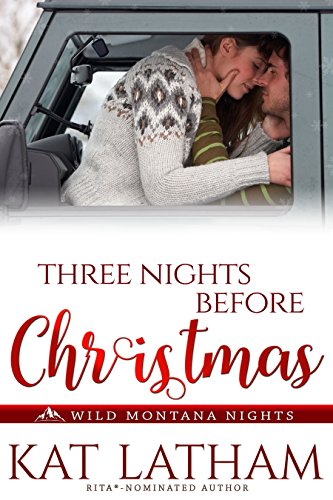
1- Favourite Christmas themed novel:

Three Days Before Christmas, a heartwarming novel, which I read on Christmas Eve.

three-nights-before-christmas

Link to my review of Three Days before Christmas


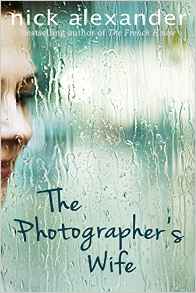
2- Favourite historical family drama:

photographers-wife


Link to my review of The Photographer’s Wife.

3- Favourite police procedural:

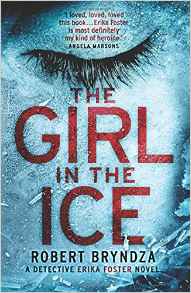
ice

Link to my review of The Girl in the Ice: 


4- Favourite suspense novel:

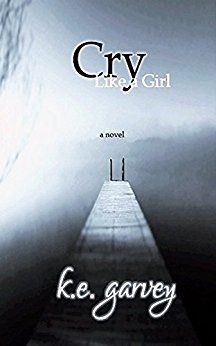
cry

Link to my review of  Cry Like a Girl


5- Favourite contemporary family drama:

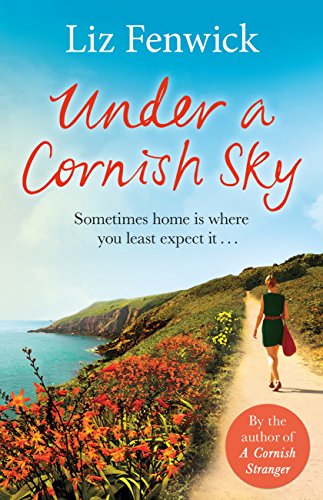
51CWIRvG9bL

Link to my review of Under a Cornish Sky


6- Favourite thriller:

20160724_121804.jpg

Link to my review of I Let You Go 


7- Favourite murder mystery:

killer

Link to my review of Killer Pursuit 


8- Favourite contemporary drama:

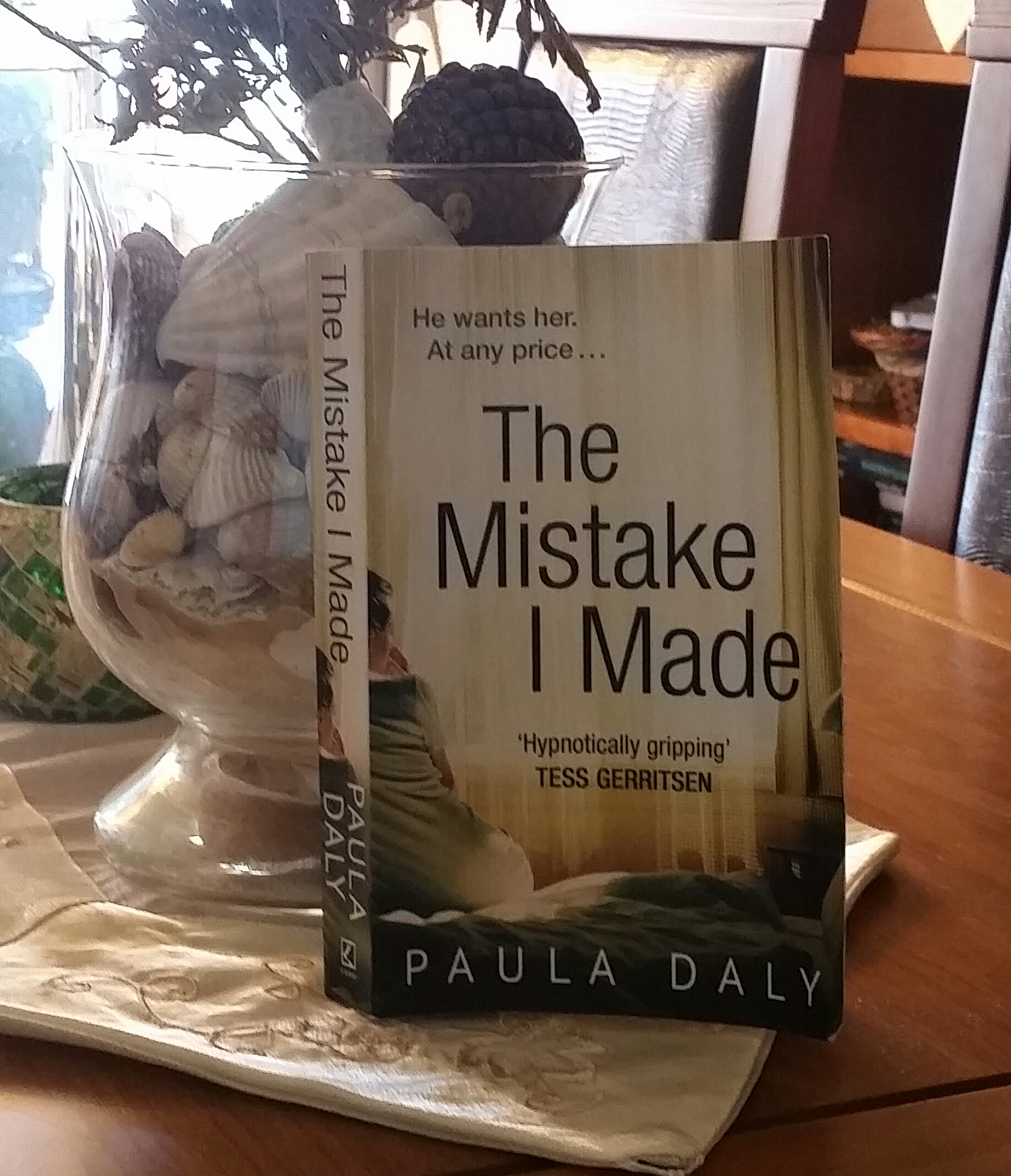
20160717_153757-1.jpg

Link to my review of The Mistake I Made


9- Favourite erotic romance:

true

Link to my review of True Colours


10- Favourite romance:

Sustained cover

Link to my review of Sustained


11- Overall Favourite Novel:

It was published in 2011, but I read it last summer. A magnificent Victorian novel.

a-dangerous-fortune

Link to my review of A Dangerous Fortune


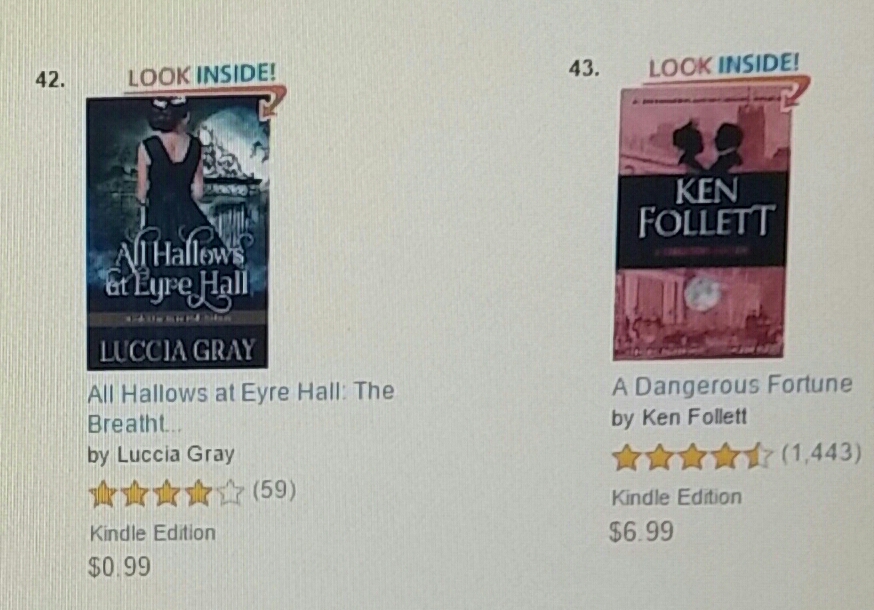
One of the highlights of last year for me as a writer was that my novel was next to Ken Follett’s, just for a week (but I’m not complaining), in bestsellers for historical fiction. Here’s the proof!

wp-1477750734724.jpg


Finally, just a reminder to read lots of books, give books as presents, review the books you read, and spread the word. It’s an easy way to make the world a happier place!


books


Gibran, Happiness, Christmas and #Amreading


Sorrow and happiness are two sides of the same coin. One cannot exist without the other.  In fact, when our life is all one or all the other we’re not being realistic or honest with ourselves. We’re either depressed or euphoric. In any case, we are living in an imaginary world.

gibran-quote-coin

There’s not much we can do about it, except try to look at and accept the bigger picture. It doesn’t mean we can’t enjoy a beautiful moment or feel sad when a tragedy occurs. It means we need to accept that both are inseparable and complimentary.

For example watching my grandchildren open their Christmas presents is a joyous moment and watching them cry when they’re ill or upset is sorrowful, but both experiences are part of the same reality: love for my grandchildren. If I didn’t love them, I wouldn’t feel happy or sad for them. It’s a package; to enjoy one we need to accept the other.

The former was a simple example, unfortunately, sometimes it’s not so easy to see, understand, or make the connection and we imagine the bad or good feelings are singular, so they will last forever, well, they won’t. We really need to come to terms with this idea, or we can get stuck in an absurd mirage.

Last night I read a book that made me think a lot about how this can happen in unexpected ways. How we need to look for the intimate relationship between happiness and sorrow in order to understand, accept and move on.

But first things first, you are probably wondering what I was doing reading a novel on Christmas Eve. We had an early dinner after a very busy day. We, were my son, my husband and my mother. The rest of the family, including my beloved grandchildren couldn’t be with us this year, but ‘worry not’ as Jane Eyre would say, I’ll be seeing them all tomorrow 💗 Last night I couldn’t sleep, so I opened my kindle, sat in bed, started a novel and finished it, and I’m so glad I did.

three-nights-before-christmas

I decided to look for a sweet romance with a Christmas theme. I picked up Three Nights Before Christmas  (Wild Montana Nights Book 3) by Kat Latham. Information about this romantic novel popped into my inbox through JustRead.It and Book Bub. Continue reading “Gibran, Happiness, Christmas and #Amreading”