Drama in #AllHallowsAtEyreHall #Giveaway Winners!

Last week, I asked readers to check out chapter one of All Hallows at Eyre Hall and tell me which they thought were the most dramatic lines. I offered two paperback copies in exchange for their insights.

wpid-20150928_120622-1.jpg

This is what they came up with:

According to Dorothy Parker, who blogs at yadadarcyyada Vague Meanderings of the Broke and Obscure,  the first chapter certainly was titillating and tense. The sentence that stood out was the thinly veiled insult of:

“….I merely point out that by her death she opened many doors…for both of you.”

I always wondered what Rochester was doing on the roof with his ‘mad’ wife, Mrs. Rochester, otherwise known as Bertha Mason. Would he really risk his own life to save Bertha and put her back inside a windowless attic, where she would continue to ‘ruin’ his life?

In Jane Eyre, the host at the George Inn, who claims to have seen it himself, informed Jane Eyre that someone had told him what had happened the night Thornfield Hall was burnt down:

“He (Mr. Rochester) went up to the attics when all was burning above and below, and got the servants out of their beds and helped them down himself, and went back to get his mad wife out of her cell. And then they called out to him that she was on the roof, where she was standing, waving her arms, above the battlements, and shouting out till they could hear her a mile off: I saw her and heard her with my own eyes. She was a big woman, and had long black hair: we could see it streaming against the flames as she stood. I witnessed, and several more witnessed, Mr. Rochester ascend through the sky-light on to the roof; we heard him call ‘Bertha!’ We saw him approach her; and then, ma’am, she yelled and gave a spring, and the next minute she lay smashed on the pavement.”

The host is an unreliable narrator. He worked at the inn, miles away, and was there even before the engines arrived, as he himself says. How is that possible? He may have seen the fire, but he must have heard about the events after they occurred.

I wonder why Charlotte Bronte didn’t tie Bertha’s death up more clearly? Why does a unrelaible narrator, tell us Rochester was on the battlements with Bertha? If so, what was Rochester doing up there with her? If he was so worried about her being locked in her cell, why did he save all the servants first? Why was he the first person to notice the fire? Why did the author leave those spaces in the narrative? Your guess is as good as mine!

****

The next sentence was chosen by Annette Rochelle Aben:

“It’s not difficult to become a lunatic, if one is confined and tortured for ten years.”

I love that line, too. I always thought Bertha Mason, Rochester’s first wife was too easily dismissed as a lunatic. One of the reasons I wrote this novel was to build awareness and somehow revindicate Bertha and expose Rochester. Some readers are upset with the way Rochester is portrayed. I still think he loved Jane, madly, even obsessively, but that doesn’t mean we should ignore the fact that he cruelly locked up his first wife in the attic! Love cannot magically redeem all his misdeeds.

****

This is my choice of most dramatic line from the chapter, because it sums up what Richard Mason’s message to Jane is all about (although it’s like the pot calling the kettle black!):

“You have been wronged, as my sister was before you. Mr. Rochester is not, has never been, an honest man.”

The whole point of chapter one is summarised in these three excerpts.Namely that Mr. Rochester is not the man Jane, or readers, believed him to be.

Even judging him by 19th century morals, Bertha Mason, or rather Mrs. Rochester, which is who she was in Jane Eyre, was obviously mistreated by her husband, which is why he didn’t want anyone to know about his crime.

If he were such a good, kind man, doing the best for his sick wife, why doesn’t he want anyone to know about it? Bertha Rochester was a rich heiress, married to the penniless ‘spare’, until his older brother died, so he inherited the Rochester estate, and decided he no longer needed his rich, Jamaican wife.

She may have been locked away first and gone mad next, or it may have happened the other way round, as Mr. Rochester tells us. In any case, If Bertha was ill, she should have been looked after properly by a nurse and a doctor. Certainly not locked in a windowless attic with a drunken servant as her jailer.

In All Hallows at Eyre Hall, Mr. Rochester is on his death-bed, and once Jane deals with all the secrets and problems Mr. Rochester has left behind, she’ll be forced to make some serious mistakes, before she is able to get her life back on track. In book two, Twelfth Night at Eyre Hall, Jane will start her journey and new life, as matriarch of the Estate, revealing the lies and wrongdoings, which will cause havoc in the lives of all the Rochester family. Book three, Midsummer at Eyre Hall, will witness drastic changes in all their lives as the injustice is repaired and order and stability are finally restored, at great personal cost.

Two paperbacks will be going out to the two lucky winners. Congratulations and happy reading!

#SoCS Oct 3/15 Expect the Unexpected

This post was written in response to Linda Hill’s prompt for Stream of Consciousness Saturday 

socs-badge-2015

Great Expectations

On this occasion, Linda’s asked us to let our minds flow on the words expect and unexpected.

I believe these two words describe exactly what readers are looking for, and what authors try their best to incorporate into their writing.

Readers expect to be told a story. Sounds like a simple requirement, and it is, but that doesn’t mean it’s easy for authors to comply! These stories transmit cultural values, and collective or singular experiences, which will ultimately entertain readers.

Readers have many diverse expectations when they read a novel, but there are three elements all readers expect to find in any type of novel, namely, setting, characters and plot.

The story must take place somewhere and sometime, there must be some people involved, and something must happen as the story unfolds.

Authors must make sure they fulfil their readers expectations, but, in order to make the reading experience worthwhile, they must also add unexpected aspects. Twists and turns in the plot, changes in location or time, unexpected reactions in the characters, or new characters to shake the story line.

Readers expect to find settings, characters, and plots in their novels, but they also crave for the unexpected. The unexpected will keep them reading and will make the experience more pleasurable.

If they are reading a romance, for example, they will expect a happy ending, but they want some unexpected events and turns along the way to keep them interested in the final outcome.

If they are reading crime fiction, they will expect the solution at the end, and the more unexpected it is, the more satisfied they will be.

If it is literary fiction they are reading, they may expect a partially unhappy ending, but they will want to discover and be surprised about how or why things do not work out.

The challenge writers face is combining the expected features in a novel with unexpected factors to make the reading experience worthwhile.

When you write a trilogy, as I am writing, readers expect the ending to books one and two to be inconclusive, but they also expect a happy, or at least more satisfactory ending to book three. It is challenging to strike a balance between the expected and the unexpected continuously for over 1,200 pages! It is a bumpy ride for both writers and readers. I am having fun, and I hope my readers are too!

If you are a reader, which unexpected aspects of the novels you read do you look forward to in a novel?

If you are a writer as well as a reader, how to you include the unexpected in your novels?  

If you’d like to read other reflections on these words or take part, follow this link!

#BookReview ‘Those Children Are Ours’ by David Burnett

This Book Review and Author Spotlight is part of a Blog Tour of Those Children Are Ours by David Burnett, organised by Brook Cottage Books.

Those Children are Ours Tour Banner

Blurb: Those Children Are Ours

Jennie Bateman screamed at her daughters, cursed at her husband, packed a bag, and walked away. Twelve years later, she petitions the family court for visitation with her daughters, Alexis and Christa.

Her attorney tells Jennie that, ordinarily, she could not imagine that some type of visitation would not be granted. But, she warns, the situation is hardly ordinary.

True, Jennie suffered from a bipolar disorder when she began to drink heavily, abandoned her family, and moved in with another man. True, she has turned her life around: leaving her boyfriend, returning to school, entering therapy, taking medication, finding a job, and joining a church.

But she pressed no claim for her children when her husband divorced her, and she has made no attempt to contact them in any way. Her daughters are now sixteen and fourteen. They live four hundred miles away, and they have busy lives that do not include her, lives that will be totally disrupted by the visitation that Jennie requests.

Their father is engaged to be married to a woman who has taken the role of their mother for a decade, and neither child wants anything to do with Jennie. Alexis remembers nothing good about her. Christa recalls nothing at all.
Conflict ensues as soon as Jennie’s petition is served: her former husband does not want to share his children with the woman who deserted him; her children have no interest in knowing the mother who abandoned them, and her father believes that she is being timid and ought to demand full custody, not visitation.

As court convenes, Jennie’s past is dredged up− the desertion, the men, her drinking, her mental health − and hauled before the judge. Her claim to be a different person, now, is attacked. When the judge appears to be reluctant to grant Jennie’s request, but seems to feel that she must, her husband’s attorney suggests three trial visits, hoping that they will go so badly that Jennie will come to her senses and drop her petition.

Jennie wants to be a part of her children’s lives, but can she convince them to allow her to try?

BUY LINKS
AMAZON UK
AMAZON.COM

Those Children Are Ours

My Review (4 Stars)

Those Children are Ours is the story of Jennie, a dysfunctional young woman, who made a mess of her life due to unwise choices, mental illness, and alcoholism. Twelve years after walking out on her husband and two daughters, her life is back on track. Thanks to the passing of time, religion, and her psychologist, she no longer drinks or sleeps around. Her mental condition is under control and she is working as a teacher.

However, Jennie is still immature and insecure. She is also coping with personal problems, such as a drunk ex-boyfriend and a violent and unsupportive father. Surprisingly, she decides, or rather is convinced, that she wants to see her daughters again.

It takes her time to realize she can’t take up where she left off and expect everyone to forget and forgive how she destroyed the family she once had. Her ex-husband and his daughters’ lives have moved on, they have busy and well-organized schedules, and a step-mother and step-sisters they are very fond of. Jennie discovers she is an unwelcome and unloved intruder.

Although the events narrated are heart-wrenching, and the time period covered is long, from Jennie’s College Days to her mid thirties, it’s so fast paced and well written that it’s a pleasure to turn the pages and follow the evolution of Jennie’s dramatic and traumatic life. Once I started reading, I couldn’t stop. I read it in two sittings. I especially enjoyed the court hearings and the realistic dialogues throughout.

It’s a disturbing, contemporary family drama, which makes the reader become involved and take sides. There are various generations and relatives involved; parents, step-parents and siblings, children, grandparents, grandchildren, uncles and aunts. It was hard for me to feel much sympathy for Jennie, especially at the beginning of the novel, but I gradually came to understand and feel compassion for her.

The author cleverly moves the narrative from, ‘Those children are mine’, a selfish cry from all of the adults involved, to a more balanced, ‘Those children are ours’, which appears on the final page. The way the characters and plot evolves to reach an unexpected, yet realistic and hopeful ending, makes the reading experience meaningful and thought-provoking.

****

I’ve asked David to tell us more about his novel and his writing process.

IMG_0519_edited-1

1- What inspired you to write Those Children Are Ours?

I generally say that I do not know the origins of my stories. I certainly cannot explain all of the twists and turns of the plots. I’ve actually posted on my blog on this very question At the conclusion of that post, I write this about the inspiration for my stories:
It is sort of like magic!

In the Second Chance Café, the author writes of a young woman who weaves beautiful scarves. They sell in upscale stores around the country and are often seen wrapped around the bodies of movie stars and celebrities. Each scarf is unique. How does she decide on the colors, the pattern, for a new scarf? She describes the process in this manner:

“I don’t know how you do that,” her father said, looking at the collection (of yarn) she held and shaking his head.

Honestly, neither did she. To this day, she could not explain how the colors came together in her mind. How one flowed into another as she sat at her loom. How the different strands of story became a whole. “I just see it. I don’t know where it comes from. Any of it. It’s just there.”
For me, that’s how it is with writing.

2- What would you say to a reader to convince him/her to read Those Children Are Ours?

As the story opens, Jennie Bateman is certainly not a very nice person.
We typically do not expect people to change. It’s a principle of perception.
If you imagine your best friend, you expect his behavior today to be the same as it was yesterday. You look for it not to be any different next week, next month, next year, or at the end of the next decade. I will tell students in my psychology classes that in a few years, they will be invited tom their high school reunions, and they will expect their former classmates to look and to behave exactly as they did on the night of graduation. And many of them will. And some of them won’t.
People can change, and Jennie Bateman is one who does. She overcomes a debilitating mental illness and she changes her life. All of my books focus in some way on the need for forgiveness. It is important to give people second chances, and third ones, too!
A second focus of the book is her illness. In the Unites States, at any rate, bipolar disorder is a frequently diagnosed condition, too frequently, some believe. Many believe that the disorder simply consists of sudden mood changes and that manic behavior seems like fun. In many cases, though, the popular view is inaccurate. Jennie’s case is one of these. Particularly in the first half of the story, the reader sees the effects of the disorder and comes appreciate just how serious it can be. Her disorder is not presented as an excuse for her behavior. It is an explanation, at least a partial one. She needs forgiveness, she wants forgiveness, and in the story, she is seeking it.

3. What are you working on now?

Currently, I am at work on two stories. One is a stand-alone sequel to Those Children Are Ours. It picks up Jennie’s life four years later, and while it has a romantic theme running through it, it deals with events that unfold when Jennie is shamed into no longer taking her medication, and the classic symptoms of bipolar disorder re-emerge.
The second is a bit different from my other books. It is a paranormal romance (if the characters are angels that makes it paranormal, doesn’t it?) that is set during the war in heaven, when Lucifer rebelled against God. It focuses on a young angel who follows Lucifer, while the one she loves stands with Saint Michael. Readers will, perhaps, recognize it as a re-telling of the parable of the prodigal son.

****

Thank you so much for visiting Rereading Jane Eyre, David. It was a pleasure to read and review your novel, and take part in Those Children Are Ours, Blog Tour. I look forward to reading about Jennie four years on!

#3LineThursday: Memory and Desire

This post was written in response to the picture prompt at Three Line Thursday.

It’s a simple and creative writing challenge: One picture. Your response. Three lines. Maximum thirty words. More information here

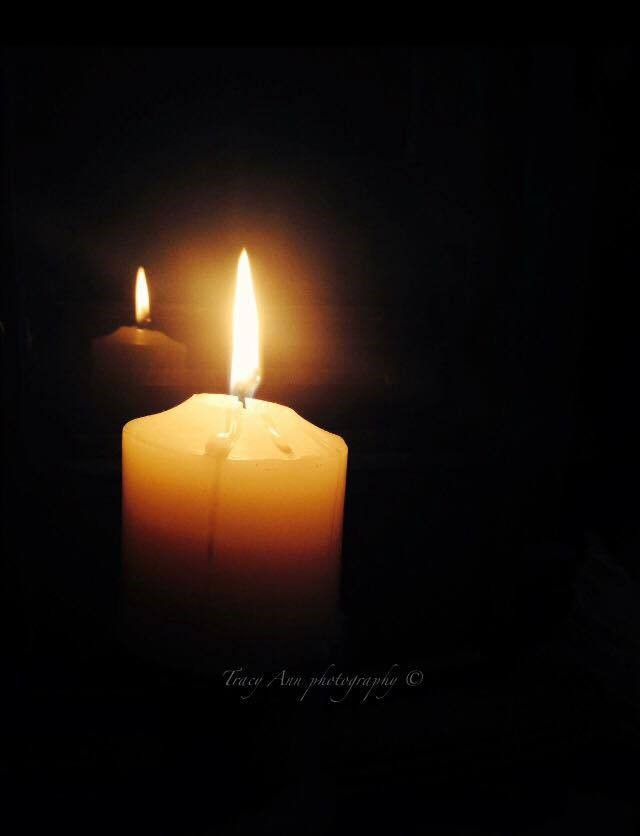
Candle 3linethursday
Picture by Tracy Ann. Find her on Twitter and Facebook.

My response: Nefertiti’s Eyes

****

Hope is the cruelest dream, drawing

Tears from Nefertiti’s eyes, mixing

Her memory with my desire.

****

I watched the flame, started writing, and Nefertiti’s image came to my mind. Here it is. I’ll never forget seeing this inspirational work of art at the Egyptian Museum in Berlin.

Nefertiti

By the way, no title is allowed in the challenge, but I’ve included one in my post. I find it hard to follow rules, so I bend them on my blog!

Take part and check out some of the other entries here

#Giveaway Two Signed Copies of All Hallows at Eyre Hall!

Paperback copies of All Hallows at Eyre Hall, have just arrived for my first book signing event, later this month (more news soon!). I’m so excited! Aren’t they beautiful?

wpid-20150928_121102-1.jpg
I published the kindle version in May 2014. I wasn’t sure, at the time, if I’d ever publish it in paperback, but I was persuaded by some close family and friends who don’t read ebooks. Namely, my mother, Anna, Pam, Kumi, and Vivian, are partly responsible for this singular event! Thank you for pushing me into publishing it in print!

I know some people have already had it in their hands since it was published in paperback in July, 2015, just two months ago! More people will be holding my books and literally turning the pages very soon! What an overwhelming and motivating thought!

To celebrate this unique event, this week I’m giving away two signed copies of All Hallows at Eyre Hall, Book I of The Eyre Hall Trilogy, to two lucky blog followers.

This is what you have to do:

1- Click on ‘Read the First Chapter of ‘All Hallows at Eyre Hall’, top right on my blog. It will take you to chapter one on Amazon. As you probably know, Amazon has a ‘look inside’ feature, which enables you to read the first 10% of any book before deciding whether to buy.

Most of this first chapter, Mr. Mason’s Visit, is a tense conversation between Mr. Richard Mason and Mrs. Rochester.

2- To enter the draw, answer this question by commenting below:

Which do you think is the most dramatic sentence in the chapter?

There are plenty to choose from!

You have until Friday, 2nd October, to post your comments!

The winner will be chosen by my grandchild’s innocent hand! I’ll give each comment a number, and put the bingo balls in a jar. Elsa Luna, to whom the book is dedicated, will take out two.

wpid-20150531_113815-1.jpg
Make sure you comment on my granny’s book!

Good luck!

I’m looking forward to reading your comments!

#Author Spotlight: Georgia Rose

This week’s Author Spotlight features Georgia Rose, author of The Grayson Trilogy.

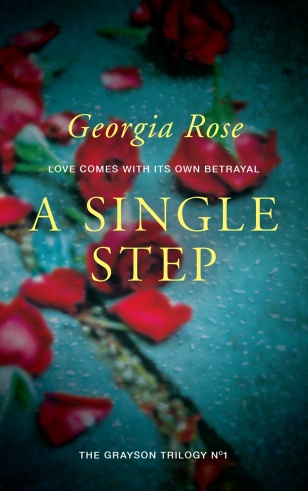
A Single Step-FinalCover_Kindle

I met author Georgia Rose in the blogging universe last year when I read A Single Step, Book One of the Grayson Trilogy. I was drawn into this entertaining, contemporary, romantic suspense. It is so well written that you will sail through it smoothly, avidly turning the pages! Tension is gradually built up, as the exciting plot and incipient romance between two complex characters materializes. This well-devised, progressive build up becomes part of the enjoyment.

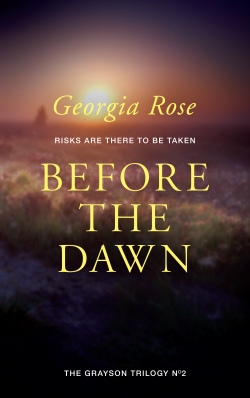
Before The Dawn - Final cover - Kindle

I went on to read Book Two, Before The Dawn. The suspense elements keep readers gripped to the story, avidly turning page after page as the characters’ motivations and backgrounds are revealed. Nobody is who they seem, even the idyllic location where the story develops, holds surprises. I strongly recommend reading books one and two first.

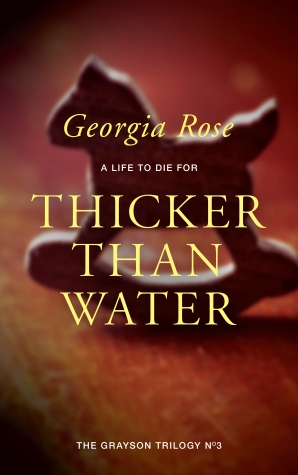
Thicker Than Water - Final cover - Kindle
The final part of The Grayson Trilogy, Thicker Than Water, which has just been released, is a great ending to the series. The Emma Grayson we have grown to love and worry about is an enigma. The reader guesses that right from the beginning. There is more to Emma than would appear, even more than she knows herself. Although Emma is an honest character, I have been wondering if she has been truthful, and this is one of the delight of first person narrators, they are so deliciously unreliable! This means that readers are forced to read between the lines, look for clues, and reinterpret their version of the story. There are many surprises right at the beginning of this novel, which make you wonder which direction the story will be taking, but Georgia Rose manages to build up suspense and twist the plot to unexpected territory. I can say no more without spoiling the reader’s enjoyment.

You will not be disappointed with the ending to this entertaining trilogy, on the contrary, the ending makes having read the series worthwhile. Lucky those of you who have not read it yet! Do so now as autumn is setting in!

I’ve asked Georgia to join me today and tell us more about herself and the Grayson Trilogy.

Georgia Rose

What would you say to a potential reader to convince him or her to read the Grayson Trilogy?

I would say that I started writing because I wanted to write books that I would like to read and I strongly believe these books appeal to a wide range of tastes. They are mysterious and romantic adventure stories written from the heart and have the ability to provoke an emotional response in the reader. They have also been described as romance that men can read and one of my biggest surprises has been just how many have read them!

Written in the first person my protagonist is Emma Grayson, a strong woman, who has had more than her fair share of tragedy and is looking to start afresh when she takes on a job looking after the horses on the Melton Estate. Though seeking solitude, she instead starts to meet others who work on the estate including the antagonistic Trent, who has his own issues to deal with.

Emma comes to realise that there is more to the estate and the lives of those on it than she originally thought but not until she has had to deal with a threat to her life. There are revelations about Trent’s past in the first book, dangers that threaten all those on the estate in the second and in the final book more intrigue that challenges everything Emma ever thought about herself.

I would end by saying that the first book, A Single Step, is currently on offer for 99p/99c as an ebook so if you fancy dipping your toe in the murky waters of the Grayson Trilogy there couldn’t be a better time.

Where did the idea or inspiration for the Grayson Trilogy come from?

I made the decision in 2012 that I thought I’d try my hand at writing something. I’ve had various ideas over the years but never anything that had both a beginning and an end…or in many cases a middle! But I’d seen a disused cottage on a large estate a few years before when I was waiting in a queue for an event and I started to imagine what it would be like to live there. Before too long I’d built up a whole world around this cottage and then while on holiday began to thread in a few more storylines and by the end of my week on a sun bed I had the whole thing planned out.
All I then had to do was come home and write it!

How do you feel now you’ve published the complete trilogy?

Thrilled and very relieved! It has been non-stop, particularly with the relentless schedule I set myself this summer and I can’t believe it’s finally done. However, for the first time I had a moment to stop and think yesterday and I suddenly realised that I’ve now left these characters and as they’ve occupied many of my thoughts for the last 3 years that feels strange and a little bit sad. I think that might hit me more over the next couple of weeks.

Can you tell us something about your next project?

Well, following on from the last question I was asked this week about doing a spin off from the Grayson Trilogy. As one who has very kindly read all the books Luccia you will know that the estate is still there and is populated with a large cast of characters all of whom have their own story to tell, else why would they be on the estate? I hadn’t thought about this before but there are certainly opportunities there.

However in the meantime I have already got a couple of stories in mind to take on next, one feels like a novella and the other a novel and I don’t think I shall be tackling another trilogy for a while – you know exactly what a challenge that is!!

Firstly though I’m looking forward to doing a huge amount of catching up with everything in my life including reading and reviewing, because I have a backlog of great reads that I’m looking forward to getting to.

****

Thank you so much for being with us today, Georgia, and telling us more about the Grayson Trilogy and your future projects. I personally look forward to reading more about the other characters on the Melton Estate.

You can find Georgia on Twitter:- @GeorgiaRoseBook and Facebook
This is her Amazon Author Page

Links for A SINGLE STEP
Universal link for A Single Step at Amazon:
Smashwords:
Kobo:

Links for BEFORE THE DAWN
Universal link for Before the Dawn at Amazon

Links for THICKER THAN WATER
Universal link for Thicker than Water at Amazon

****

I’ll be doing Author Spotlights regularly from now on. I’m aiming for once a week. I have quite a few lined up for the following weeks, but if you are an author and you would like to be featured, please let me know. I’m especially keen on featuring debut and independent authors. I enjoy all sorts of novels with engaging characters and compelling plots, especially romance, historical, and suspense.

#Author #Interview with @LucciaGray on the release of Twelfth Night at Eyre Hall

On the release day of Twelfth Night at Eyre Hall Georgia Rose posts an interview with author Luccia Gray

Source: #Author #Interview with @LucciaGray on the release of Twelfth Night at Eyre Hall

One-Star Reviews, Again… #IWSG

InsecureWritersSupportGroup2
This post was written as part of the IWSG monthly, first Wednesday of the month, posts.

All authors need reviews, preferably positive ones, but independent authors, like me, need them more than traditionally published authors.

I need reviews for reassurance and recognition.

I’m insecure, because no ‘big name’ agent or publisher has accepted my work, and I need ‘other’ readers and writers to believe in me, because I don’t write for myself, I write for others, so what others say means a lot to me.

I’ve already written a post about getting negative reviews here, so I won’t repeat myself, but what I will say is that readers are entitled to dislike my book. Some may not enjoy the plot, others may hate my characters, and some more may cringe at my writing style. I have to live with that. I can live with that.

I have 2 one-star reviews for book 1, All Hallows at Eyre Hall. I’m not happy with either of them, but I understand that once an artist’s work is released to the world, it belongs to the audience, readers, or viewers, etc., and they can say what they like.

I do find consolation in my 34 4 and 5 star reviews, and the knowledge that bad reviews happen to everyone, including classic authors such as Henry Miller, Margaret Atwood, Ernest Hemingway, Vonnegut, Margaret Mitchel, and a few more, read on… http://www.huffingtonpost.com/2015/01/23/bad-reviews-classics_n_6527638.html

But what happens when you get a one star review because the reader wanted a paperback and discovers she’s bought an ebook? And instead of returning it to amazon, she asks you, the author to return it?

I know authors aren’t supposed to reply, but I did. I told her how to get a refund from Amazon. If she does get the refund, which I’ll never know, what happens to the review? Will anyone (the reader /amazon) bother to remove it? Can you ask Amazon to remove it? Will they remove it?

wpid-20150830_125717.jpg

Probably not. The chances are a bad review will stick with you forever.

The only way to counteract one-star reviews is by getting honest positive reviews.

Sometimes people read your novel, enjoy it, they even tell you they liked it, but there’s no review. Readers are reading hundreds of my pages on KDP (I know because Amazon informs authors every day of the pages readers are reading, and we get paid accordingly), and I’m selling a few copies almost every day. So, why don’t readers write reviews?

I often ask ‘readers’ about this, and they’re usually either unused to writing reviews, or worried about writing an ‘unprofessional’ review. If they knew how much it meant to the author, just to write a few words of praise, I’m sure they’d all write reviews.

I tell everyone I know to write reviews of everything they read, but many of them, who are avid readers, have never written a public review.

I’m sure everyone who reads this post writes reviews, but how can we convince everyone who reads to write a review? Any ideas?

Check out what other insecure writers are saying here.

Back to School: A Tribute to Sister Catherine on #September1st

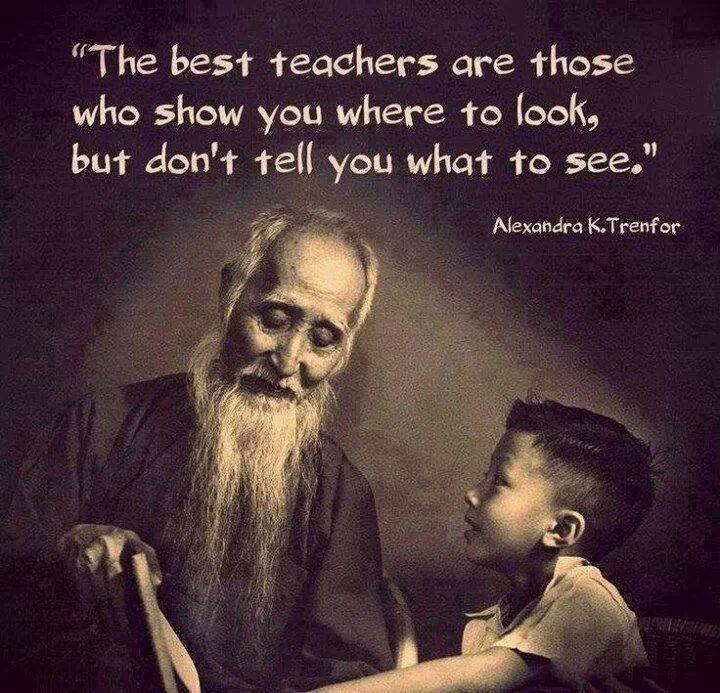
Back to school today for teachers. September resits, staff meetings, new schedules, new students. Too much paperwork for all of us, but let’s not forget this essential piece of advice.

best-teacher1

I write because I’ve been an avid reader all my life. My wonderful teacher, Sister Catherine, at St Thomas’s RC High School, pointed the way. She showed me where to look. She taught me to love reading.

The last time I saw Sister Catherine, I was thirteen years old. That was 43 years ago. I don’t have a picture and I haven’t seen her since, but I have never forgotten her face, her voice, her smell, or what she taught me.

Her voice was soft, sibilant, and smooth, like the water seeping along a stream. I vividly remember her reading Blake’s poem ‘Slowly silently now the moon,  walks the night in her silver shoon’, and thinking that she might have written it herself.

Her shape was hidden under a heavy white habit, but she was short and I guessed plump. Her eyebrows were grey, so I imagined her hair had turned grey too, although it was well covered by her long black and white cap. A stiff coif held her chin and face firmly in place, making the movement of her head appear awkward at times. Her cheeks were round, rosy and kissable, like a grandmother’s. She was also very huggable, although of course, we never, ever hugged her.

She used to leave a waft of soap and talc in the air as she walked past, always slowly, not because she wasn’t young, but because she kept herself firmly in check. I don’t know how I know that, but I’m sure of it.

Now I know that Catherine wasn’t her name. She was probably given the name Catherine, after her order’s patron saint, Saint Catherine of Siena, when she was ordained. I often wondered if she was living the life she wanted to live, because her eyes, swollen behind thick round spectacles, were sad.

I suppose she was Irish, like the other nuns, but she didn’t have a hint of Irish accent like the rest did. I’m sure teaching and especially literature filled her life and compensated for her lack of children of her own.

She rarely smiled, and her eyes were always expressionless, but her voice would light up when she read, and she read to us every day, usually the last period, and all afternoon on Fridays.

sisters_in_the_news

I dedicated my first book partly to her:

For Sister Catherine, whose sweet and patient voice introduced me to the mysterious, delectable, and delightfully mischievous, Victorians.

She was a great fan of Wilkie Collins, she read The Moonstone and The Lady in White. We also read Treasure Island, Great Expectations, Oliver Twist, and many wonderful poems by Blake, Keats, Wordsworth, and Hilaire Belloc, among others. I also remember enjoying Huckleberry Finn and Tom Sawyer, too!

I had never read an adult novel before then, and I didn’t really read them. She would usually do so, although sometimes we read in turns. I was caught in her enthusiasm in reading about adventures in faraway lands and eras, and the yearning grew over the following years. I moved to another school, the following year, but my love for the Victorians grew.

I wish I could tell her she sowed the seed of the reader I am and therefore the writer I have become.

The first day of the school year is a fitting time to pay a tribute to the very special teacher who I will never forget, sweet Sister Catherine.

Do you remember a special teacher who showed you where to look?

TWELFTH NIGHT AT EYRE HALL b Luccia Gray…a review

My First Review for Twelfth Night at Eyre Hall by AprilR at My Book Addiction and More. Thank you, April.