#SoCS Oct 10/23 Beef and Rhubarb

This nonsense post was written in response to Linda G. Hill’s Stream of consciousness Saturday prompt

Your Friday prompt for Stream of Consciousness Saturday is: “beef.”  Use it any way you’d like. Enjoy!

socs-badge-2015

Beef and Rhubarb

I’m afraid I’m not at all at comfortable with this weeks’ prompt. I’m a vegetarian, most of the time, which means I don’t eat much meat, and the word ‘beef’ conjures no positive images at all in my mind!

Cow’s meat, steaks, slaughterhouses, death and blood come to my mind. This isn’t going to work. I’ll be a wreck in a few minutes if I don’t think of non-meaty things related to beef. Suddenly an idea crosses my mind; I can feel this is going to be a bit of a nonsense stream of consciousness…

I’ll try for non-meaty things. The first one that springs to mind are Beefeaters at the Tower of London, such lucky soldiers to have had the privilege of eating meat more often than most. They looked after all the royal prisoners. I wonder if they ate beef, too? The Tower of London has taken me to Saint Thomas More, and hapless Lady Jane Grey and Anne Boleyn. They say Queen Anne walks around at nights with her head tucked under her arm. I know this isn’t going to work when I vividly see Henry VIII’s bog toe bursting with gout due to too much meat and constantly feeding his body instead of his soul.

Oh dear, I’m back to meat, corned beef, roast beef, minced meat, and the poor cows grazing in the prairies, if they’re lucky enough, giving us their best milk to make yoghurt, butter and cheese… This isn’t going to work. I need to think about something else. Got it.There’s only one thing I dislike more than beef.

Rhubarb. Rhubarb. Rhubarb.

P.S. I apologise to those of you who don’t like nonsense, but that’s what beef does to me :) :)

Read some of the other posts here

#BookBlitz & #Giveaway Phobic by #Author Cortney Pearson for Loving The Book

This post is part of the Loving the Book Book Blitz. Here’s the Blog Schedule to follow the tour on their Official Event Page: https://www.facebook.com/events/479010522258923/


Monster Mash Poster


About the book

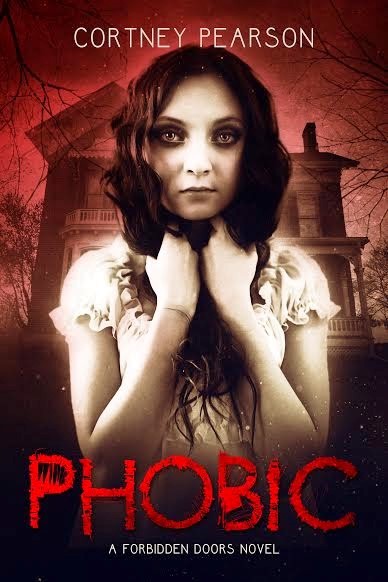
Phobic by Cortney Pearson

Fifteen-year-old Piper Crenshaw knows her house is strange. As if never needing repairs since 1875, or lights flickering in response to things she says, aren’t creepy enough, it’s also the place where her mother committed murder.

To prove she’s not afraid of where she lives, Piper opens a forbidden door and soon after begins to witness a string of flashbacks—including a love affair between two young servants. Not only did these servants used to live in a set of rooms just down the hall from her bedroom, but they happen to be hiding a deadly secret.

This secret is pulling Piper deeper into not only their story, but also her house. To sever her link to it, she must unravel the clues in the flashbacks and uncover the truth about her mother’s crime before becoming a part of her house for good.

Open the door to this striking, unstoppable mystery, but remember: sometimes a house…isn’t just a house.

Book Cover Phobic

My Review. 4 Stars.

Phobic is an enjoyable, paranormal novel for young adults. It is narrated in the first person and in the present tense, which makes for a very dynamic reading experience. First person narrators are unreliable, because they just can’t be everywhere and know everything, yet they are more authentic, because the reader knows and accepts their limited yet honest version of the story. On the other hand, the combination of their unique voice and the use of present tense, if it’s pulled off well, can be two powerful tools which the author uses to drag the reader into and along the story. Fortunately, both are combined to great effect in the case of Phobic. The story is well written and keeps you turning the pages avidly.

I felt I was rushing through events with 15-year-old Piper, her brother, Joel, her friends, especially, Todd, Jordan, and Sierra. Her mysterious 19th century house is literally alive, and she bumps into the ghosts of former inhabitants, while coping with her mother’s imprisonment, supposed lunacy and cryptic messages, as well as school and some spiteful classmates. As you read, you’ll discover how this capable and resourceful heroine must face a vicious house full of ghosts, her brother’s disappearance, her father’s death, and unravel a mystery before she can find any peace. There’s tension, sometimes chaos, and lots of suspense right to the end.

A fun and spooky read for young adults.


Picture Cortney

Cortney Pearson is the author of Phobic, about doors that shouldn’t be opened, and the Stolen Tears series, about a vial of enchanted tears and the only girl who can wield them. She is a mother, a musician, and a lover of pink and sparkles, and she lives with her husband and three sons in a small Idaho farm town.

As Cortney is visiting my blog I’m asking her a few questions to get to know her better:

(i) What would you say to potential readers to convince them to read your book?
Phobic is meant to be for people like me who want something a little creepy but can’t handle/don’t like hard-core horror. I call it “creepy-clean,” meaning you can still go to the bathroom by yourself when you’re done reading it, lol. :)

(ii) Where did the idea for writing Phobic spring from?
Growing up we would visit my great aunt’s house in Utah, and she had the creepiest basement! I always wanted to write a creepy story, and for some reason the concept of forbidden doors leading to creepy basements meshed perfectly. I also got inspiration from the Winchester Mansion in California, which I’d love to tour someday!

(iii) What are you working on now?
I’m working on sequels right now! Phobic’s sequel is called INTRINSIC, and is about a haunted bookstore (and there’s also the possibility of a haunted movie theater…). And I’m working on the sequel for my Stolen Tears series.

(iv) What would you like readers to know about you?
I love books, I love pink and sparkles, I love being a mom; cold weather makes me happy because I can bundle up in sweaters and beanies; I’m not outdoorsy at all–my idea of a fun time is curling up under a blanket with a good read–although I do enjoy camping and other things like that once in a great while.

extras banner

Top Ten Places I’d Love to Travel To

1. Mount Rushmore
2. Disney World (and Harry Potter World, both in Florida)
3. New Orleans (I’ve never been to the southern US!)
4. Hawaii
5. Giza, to see the Great Pyramids
6. Venice, Italy
7. Stratford-upon-Avon, England, Shakespeare’s birthplace
8. London, England
9. Haworth, England — more specifically, the Bronte Parsonage to see the museum there
10. Paris, France!!! Ultimate destination!

Connect with the Author:

Facebook: https://www.facebook.com/cor2ney
Twitter: https://twitter.com/cor2ney
Instagram: https://instagram.com/cor2ney/
Goodreads: https://www.goodreads.com/author/show/8304331.Cortney_Pearson
Newsletter (Sign Up and Get a FREE Copy of My YA Romance, HER MOON, a Retelling of Shakespeare’s “The Winter’s Tale”: http://eepurl.com/W4pxj

Thank you for visiting my blog today, Cortney. It was a pleasure to have you, and I’m looking forward to reading your next novel about a haunted bookstore!


giveaway banner


Enter the Rafflecopter giveaway

I came into contact recently with Loving the Book when I launched my second novel, Twelfth Night at Eyre Hall, and I was looking for marketing that combined popular Social Media like Facebook and the more ‘bookish’ Blogging Universe to get our books noticed! I think it’s a great idea which they are doing very effectively.

Loving The Book Banner

#BookReview A Kiss From France and #Author Spotlight Susan Hughes for #BrookCottageBooks

This Book Review and Author Spotlight is part of a Blog Tour of A Kiss from France by Susan Hughes, organised by Brook Cottage Books.

A Kiss from France Tour Banner

Genre: Historical Fiction/Romance
Release Date: 19 July 2015 p/back; 29 July 2015 e-book
Publisher: Silverwood Books

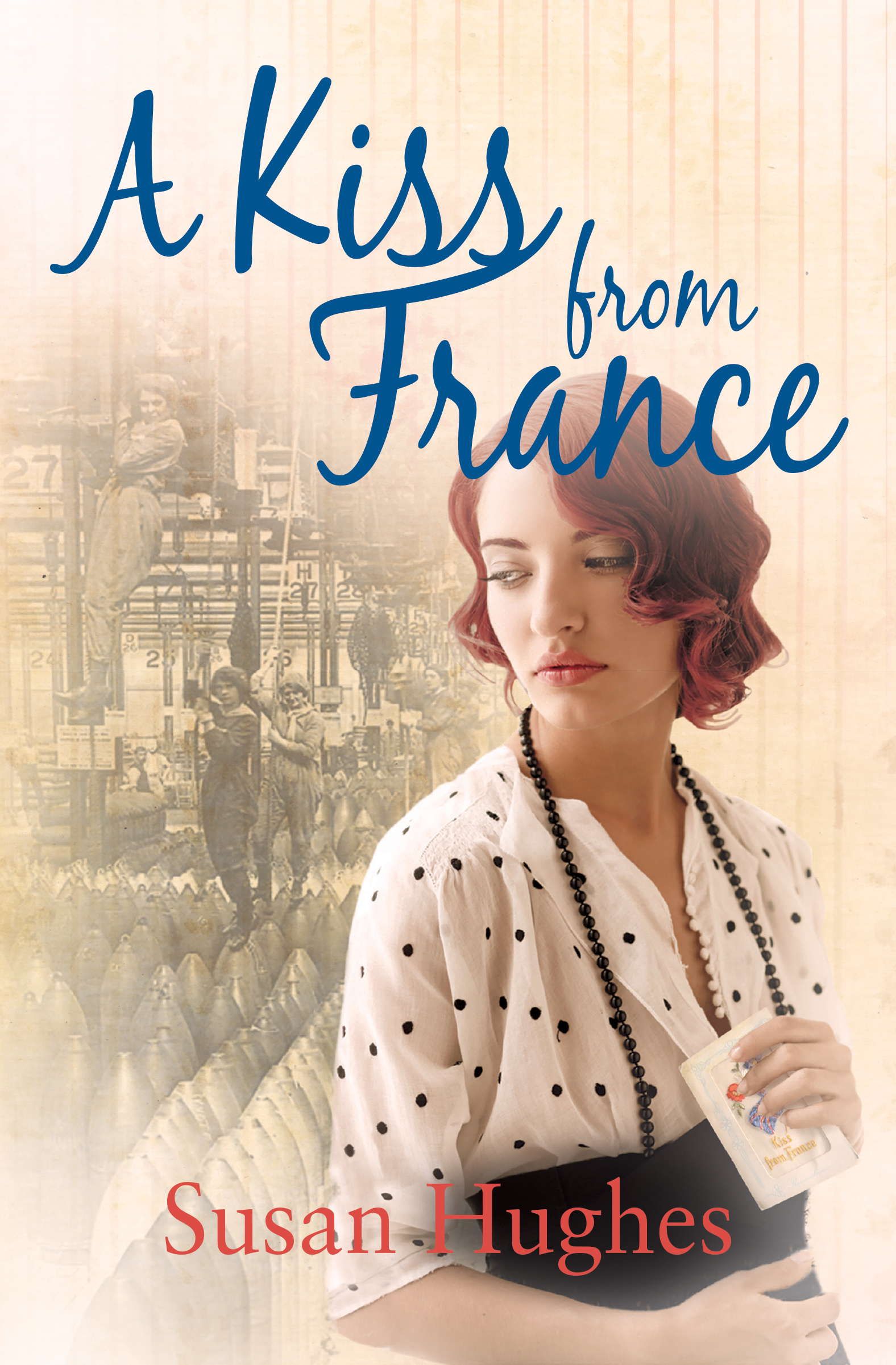
London, 1917. Lizzie Fenwick is young, ambitious, and in love. At least, she thinks she’s in love with the soldier who answered the note she concealed in a box of ammunition shells. She spends her days filling shells with TNT, and her nights dreaming of the mysterious Harry Slater.

Eunice Wilson knows the exact moment her marriage to Jack began to fracture. He refused to enlist, and their patriotic neighbours never let her live it down. Now he’s been conscripted and she can’t help but feel regret for shunning Jack before his departure.

As separate tragedies cause Lizzie to make hard choices and Eunice to cope with loss, the two women are unsure how to adjust when peace finally returns. Little do they know that an earlier war-time betrayal will force Lizzie and Eunice to confront everything they knew about friendship, loyalty, and love.

A Kiss From France is a historical fiction romance novel set in London’s East End during World War I. If you like compelling human stories, believable female protagonists, and the suspense and intrigue of war-time London, then you’ll love this heartfelt tale of two women who yearn to feel alive in a broken world.

Amazon UK
Amazon US

A Kiss from France Cover Image2 1

My review: 4 Stars

A Kiss from France is a historical drama set in wartime London. It’s about two women, Eunice and Lizzie, who work at an ammunitions factory during the war. The degree to which both women’s lives will be heartbreakingly intertwined is gradually revealed through a tight and twisting plot.

Although the binding element in the novel is a love story between Lizzie and a soldier with whom she corresponds during the war, I wouldn’t consider this novel strictly speaking a romance. There are other major themes which surpass the love story, such as, loss, betrayal, post-traumatic stress disorder, prejudice, marriage and motherhood, all against a backdrop of the final months of WWI and the beginning of the post war economically deprived and emotionally battered England.

I was impressed by the way it deals with the trauma and desperation of those who return home from war, and the emptiness and pain of those who stayed behind and witnessed the return of men whose minds and lives were irrevocably broken. It’s about how exceptional and extreme situations, like wars, affect the lives of ordinary people in their daily lives, and influence their perception of life and love.

The author describes the toils and peculiarities of wartime England, pulling us into this powerful and moving story of unprecedented sacrifices and passion. The characters are authentically portrayed, in their despair, as well as their goodness, and struggle for survival in an unfair and cruel world. The outcome is surprising, yet unexpectedly realistic, rather than romantic.

A must read for lovers of intense novels set in wartime London.

***********

Sue Hughes image 1 1


Susan Hughes grew up near a small mining village in Northumberland, England. When she didn’t have her nose in a book and, careless of the class and gender expectations of her upbringing, she was climbing trees, catching water boatmen in a jar from a nearby burn or go-karting round country lanes with the kids next door before taking herself off to University.

A career in the City of London during the frenetic ‘Big Bang’ boom of financial de-regulation was followed my marriage, children and a desire for a change of gear. A move to the rural West Country enabled her to raise her sons near the coast and indulge her penchant for visiting stately piles while finding time to keep up her reading habit.

After she found a handful of WWI silk postcards among her grandmother’s possessions, the romantic greeting on one of them inspired her to weave a story around its imagined sender and recipient. It became her first novel, A Kiss from France. She is now working on her second book send in inter-war London.

Contact or find out more about the author:

Twitter: http://twitter.com/su_sanhughes
Goodreads: https://www.goodreads.com/author/show/14204035.Susan_Hughes
Website: www.susanhughes.net
Pinterest: http://pinterest.com/hughes7584

#3linethursday: Still There

This post was written in response to this weeks’ Three Line Thursday prompt. Three lines, 30 words maximum.

Week-4-David 3 line thursday
             Picture by David

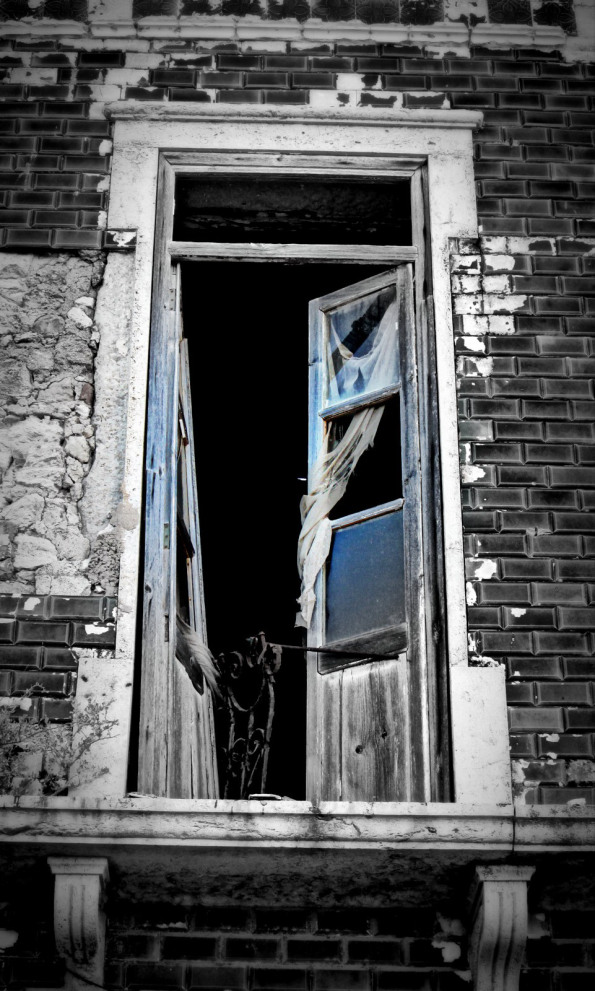
Waiting

You told me once, ‘move on, never return.’ I obeyed
Til last night, when I dreamt I slipped back
Inside and you were still there, weathered yet waiting.

@LucciaGray

Carrot Ranch #FlashFiction Challenge October 14: Serendipity

 This post was written in response to Charli Mills Flash Fiction Challenge over at Carrot Ranch

october-14

October 14, 2015 prompt: In 99 words (no more, no less) write a story that reveals or explores a moment of serendipity. How did it come about? What did it lead to? You can express a character’s view of the moment or on serendipity in general. Use the element of surprise or show how it is unexpected or accidentally good.

For those of you who recognize, serendipity has been a prompt before. What can I say, but I like its magic! And it is never the same gift.

Respond by October 20, 2015 to be included in the weekly compilation. Rules are here. All writers are welcome!

****

Everyone hopes for a lucky break, and many believe it will happen quite by chance. Others think they can nudge luck, just a bit, and force a lucky break.

Many successful people will tell us they were in the right place at the right time. Charlie suggests ‘serendipity is the gift we find accidentally when we make a choice or life chooses a course of action for us.’ But suppose there is no chance event, because one of the parts has planned for the event to take place, would it still be serendipity?

For example, imagine an author waiting for a lucky break, can he or she force a chance happening that will change his/her career forever?  In other words, can the happy accident be provoked or do we have to sit and wait for it to happen?

Marketing for self-published authors can be exasperating. The desperate author in this tongue-in-cheek flash fiction thinks he can fish for his lucky break. Do you agree?

****

Planning My Lucky Break

‘You’ve bought five hundred copies of your novel and left them lying around London?’

‘Strategically placed.’

‘Where would that be?’

‘On the underground, buses, theatres, museums, coffee shops, wine bars…’

‘That’s your marketing campaign?’

‘It is.’

‘But will anyone read them?’

‘Everyone likes books, especially commuters, art lovers, and people who drink wine and coffee.’

‘The question is, will you ever sell your books?’

‘It just takes one influential person to read it, love it, and spread the word. Just one.’ 

‘And if that one influential person doesn’t find it?’

‘Then I’ll buy another 500 and do it again.’

****


Read some of the other responses to this week’s prompt here.


#SoCS Oct 10/17 Still Standing

This post was written in response to Linda G. Hill’s Stream of Consciousness prompt

socs-badge-2015

Today’s prompt for Stream of Consciousness Saturday is: “still.”  Use any definition of the word in your post. Have fun! Here’s mine.

I’m ‘Still’ Standing

As soon as I saw today’s prompt Elton John’s song came to my mind. It’s one of my favourites and of course, ‘still’ is the most important word in the chorus and the most important concept in the song. I’ve been humming it all day, while I was with my daughter and grandchildren, trying to remember the lyrics, but I’m afraid I only got as far as some of the lines of the chorus.

The first line I remember is ‘I’m still standing better than I ever did’. And that’s how I feel. It’s not easy to ‘stand’ after so many years of coping with life’s ups and downs. I have three grandchildren, which implies I’ve had my own children, brought them up, kept up a full-time job in a demanding profession, and I’m now watching them do the same.

It is ‘better’ now because I’m back to square one, almost on my own again, and able to look after myself and cater for my own needs, most of the time. Which is nice because I do actually feel ‘better than I ever did’. I’m not competing with life or with anyone any more. This is who I am and this is what you get. Like it or leave it. And believe me, that takes a load off my mind!

The next line says something about, ‘Looking like a true survivor, feeling like a little kid’, and that’s true too. I’m well into my fifth decade, with no major physical or emotional scars, and I still feel young enough to have a go at plenty of new and exciting projects.

I am indeed ‘still standing after all this time’, and proud of it.

The next line says, ‘Picking up the pieces of my life without you on my mind’, which I interpret as leaving behind hang ups and people who no longer have a place in my life. I’ve done that too, although it’s an ongoing process. I have no time for negative people who rock my boat, pull me down, or behave like emotional vampires. I recognise them a mile off. I make sure I keep well away. On the other hand, wonderful people keep popping into my life, literally every day. I feel very fortunate in my ‘physical world’ friends as well as my ‘virtual’ friends.

In short, I’m glad I’ve come this far and still have projects and positive expectations for the future. I’d say that’s an achievement!

I’m still standing yeah yeah yeah

Thanks for reminding me Elton John!

Would you like to watch him singing?

Elton-John-Tribute-Show-I-m-Still-Standing_95669_image
Check out some of the other posts here.

#AuthorSpotlight: Frances Evesham, #Author of ‘Danger at Thatcham Hall’

Victorian Crime Mystery 

Frances Evesham writes Victorian crime mystery. Danger at Thatcham Hall is her second novel. It takes us back to Thatcham Hall, the location of her first novel, An Independent Woman. Thatcham Hall ia a large country estate in Victorian England, where the reader will encounter more mysteries and romance.

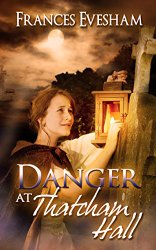
Danger at Thatcham Hall pic

My Review

Danger at Thatcham Hall is easy to love if you enjoy well-written, entertaining, moving, exciting, and romantic, crime novels, set in Victorian England. It was easy for me to love. Victorian England is my favourite place, so it was a joy to spend several hours wandering around the English countryside, solving crimes.

On this occasion, there are two guests at the Hall, and a murder mystery to be unraveled, which endangers the lives of the residents at the Hall. Nelson is Lord Thatcham’s ambitious lawyer, who is a physically and spiritually scarred man, having experienced trauma at war and the betrayal of his fiancée. He meets Olivia, a strong willed pianist, who fears she may have to become a governess due to the constraints women faced when pursuing musical careers.

They stumble across a dead body, and Lord Thatcham asks Nelson to investigate the accusations against one of his staff. Nelson accepts the job and with Olivia’s help finally disentangles the mystery.

There are plenty of richly drawn characters including a villain, a spoilt child, the imposing Dowager, the lovers, a mysterious healer, villagers, farmhands, and servants at the Hall. The reader is submerged with the characters into daily life in Victorian England, including a visit to London.

Once again, the author shows expert knowledge of Victorian England, which she transmits wrapped up in an enjoyable parcel of mystery, action, and romance.

Danger at Thatcham Hall can be read as a stand-alone. The action in the first book in the series, An Independent Woman, revolved around Lord Thatcham and how he met his wife-to-be, Philomena. My only complaint is that I would have liked to see more involvement of these two impressive characters in this second novel. Of course, it is no longer their story, but I came to like them enough to want to know more. If you have not read an Independent Woman yet, I also highly recommend it, too!

****


Frances writes historical fiction, as I do. It’s great to be able to chat with another author with similar interests as a writer. This is part of our virtual conversation.

Frances cropped


  1. What would you say to a reader who doesn’t usually read historical fiction to give it a try?

Imagine living in a world where everything is different: clothes, culture, food, manners and customs, but where people’s deep feelings are the same as yours.

Picture yourself as a servant, up at dawn to clean fireplaces, or a labourer working every daylight hour on someone else’s farm, or toiling in a dirty, noisy factory. Perhaps you’d rather be a member of the aristocracy, rich and envied, moving in a small social circle, but closely watched, terrified your slightest mistake will see you ostracised forever from society. How would you feel if you had to marry for money, were forbidden to own property or travel alone?

Falling in love, longing for happiness, struggling against the difficulties and barriers of a past time stopping you reaching your goals: would you sink or swim?

When you buy historical fiction, you travel back in time to that different world, letting modern day stresses and strains fall away from your shoulders as, for a few, precious hours, you belong in another vivid time and place.

I think this is a wonderful answer, Frances! I absolutely agree. One of the most exciting things a reader can do is travel in time. It’s somewhere you’ll never be able to visit unless a writer takes you there!
wpid-fb_img_1442908109900.jpg


  1.    Where did the idea or inspiration for Danger at Thatcham Hall come from?

It’s such a delight to pick up a story and lose all track of time, reading murders, mystery, history and crime. I devour Philippa Gregory, Agatha Christie and Robert Galbraith as well as the 19th century novelists, Wilkie Collins, Mrs Gaskell and the Brontes, Charles Dickens, and my all-time writing hero, Jane Austen.

Danger at Thatcham Hall lets me introduce Olivia, a women with a talent repressed by the social order of the day, to Nelson, a wounded, bitter soldier searching for his own place in society. They spar together, trying to solve a series of thefts and murder, each wondering whether the other can be trusted.

It’s a joy to indulge a love of spooky old buildings, deep, dark woods and gothic crypts, and meet old friends from An Independent Woman; Philomena, Hugh and his irrepressible son John.

We share the same favourite writers, Frances. Jane Austen, The Bronte’s, Wilkie Collins, and Charles Dickens, are so much part of my literary mind, that I’m sure I’d be another person if I hadn’t read their novels! I certainly wouldn’t write what I write or the way I write. I feel so much respect for them that I constantly turn to them for inspiration.


3- Can you tell us something about your next project?
I have a third Thatcham Hall Mystery in progress, and I’ve also begun a new series of short, contemporary murder mysteries set at the seaside in Somerset, called Exham on Sea. I’m planning to bring out new Exham on Sea stories every 3 or 4 months, because they’re such fun.

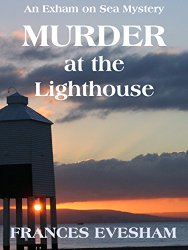
Somerset makes a terrific setting, full of misty levels, miles of sandy beaches, and the ancient, atmospheric sites of Glastonbury Tor and Brent Knoll. My own town, Burnham on Sea, boasts the shortest pier in the UK and possibly the oddest lighthouse, with nine wooden legs rooting it in the sand.

That lighthouse features on the cover of the first story in the series, Murder at the Lighthouse. Libby Forest picks her way through the intricacies of small town relationships to uncover the killer of the town’s famous folk-rock star, Susie Bennett, helped by Bear, an enormous Carpathian Sheepdog, Fuzzy, the aloof marmalade cat and the unsettling, secretive Max.
Lighthouse.1


Somerset is a lovely part of England. I haven’t been there for a long time. I’m sure it’s inspirational. I’m looking forward to reading your short mystery, Murder at the Lighthouse, and your next instalment of the Thatchan Hall Mysteries.

The sea and coastal areas are no doubt an added stimulus for artists. The first two volumes of the Eyre Hall Trilogy are set almost entirely in Yorkshire and London, although the final chapter of Twelfth Night  at Eyre Hall, also includes a sea voyage to Jamaica and back. However, my third novel takes place in Yorkshire and Cornwall. I bet that surprised you! I can say no more…


  1. What’s your writing routine like?

I’ve just started writing in a standing position, with a raised desk, to counteract the effects of sitting in a chair all day. Of course, there’s new research out now, suggesting it does no good at all.

When I’m in the middle of a story, I hardly notice the time passing, because I’m lost in my fictional world. I’ve taken to setting alarms to remind me to get up and walk about from time to time. When I get to a knotty problem, or can’t see how my characters can possibly get themselves out of their latest mess, I go for a walk on the beach and eat ice cream. That usually does the trick.

I’ve never tried standing up while writing! I also forget to walk around while I’m writing, so my legs feel heavy and swollen sometimes. When that happens, I usually go for a walk, too, but I think I’ll take some ice cream next time. Sounds like a plan!

I’ve had a great time answering your questions, Luccia, thanks so much for inviting me.

Thank you so much for coming, Frances. It’s been great having you.

That was fun!

****

Find out more about Frances:

Frances Evesham: Author of The Thatcham Hall and Exham on Sea Mysteries for readers who love Agatha Christie, Jane Austen, Midsomer Murders and cosy crime

Her Website

Her Twitter 

Her Facebook

****

I’ll be doing Author Spotlights every Friday. I have quite a few lined up for the following months, but if you are an author and you would like to be featured, please let me know. I’m especially keen on featuring debut and independent authors. I enjoy all sorts of novels with engaging characters and compelling plots, especially romance, historical, mystery and suspense.

****

See you all next Friday for next weeks’ Author Spotlight.

Have a great weekend! Read a book!


#3linethursday: Mary’s Monster

This post was written in response to this weeks’ Three Line Thursday prompt.

Week-3-Bruce
Picture by Bruce


Mary’s Monster 


A spark gave life to the monster in her mind,

The twisted ink from her quill ignited the blaze,

Her fingers drew the blood which spilled onto the parchment.


On 31 October 1831, the first revised edition of Mary Shelley’s Frankenstein or, The Modern Prometheus, was published. This version, which was revised by the author, is the one mostly published and read version of this classic horror story, which also has gothic, romantic, fantasy and even science fiction elements.

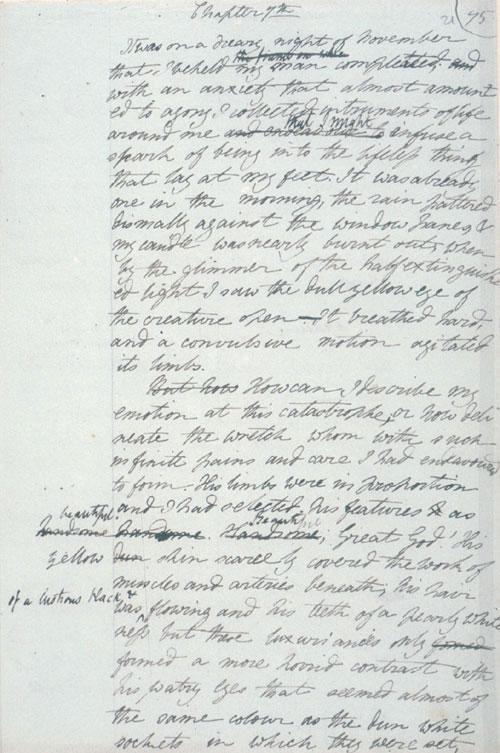
FrankensteinDraft
Draft of “Frankenstein by Mary Shelley (1797-1851)


We have all heard versions of the story of Frankenstien’s birth. It goes something like this:

During the rainy summer of 1816, there was a long, cold, volcanic winter caused by the eruption of Mount Tambora. Mary Shelley, aged 18 at the time, and her lover, and later husband, Percy Bysshe Shelley, were visiting Lord Byron at his villa by Lake Geneva in Switzerland. Sitting around a log fire during the unusually cold and rainy summer, they amused themselves by reading ghost stories. Byron then suggested they each write a ghost story.

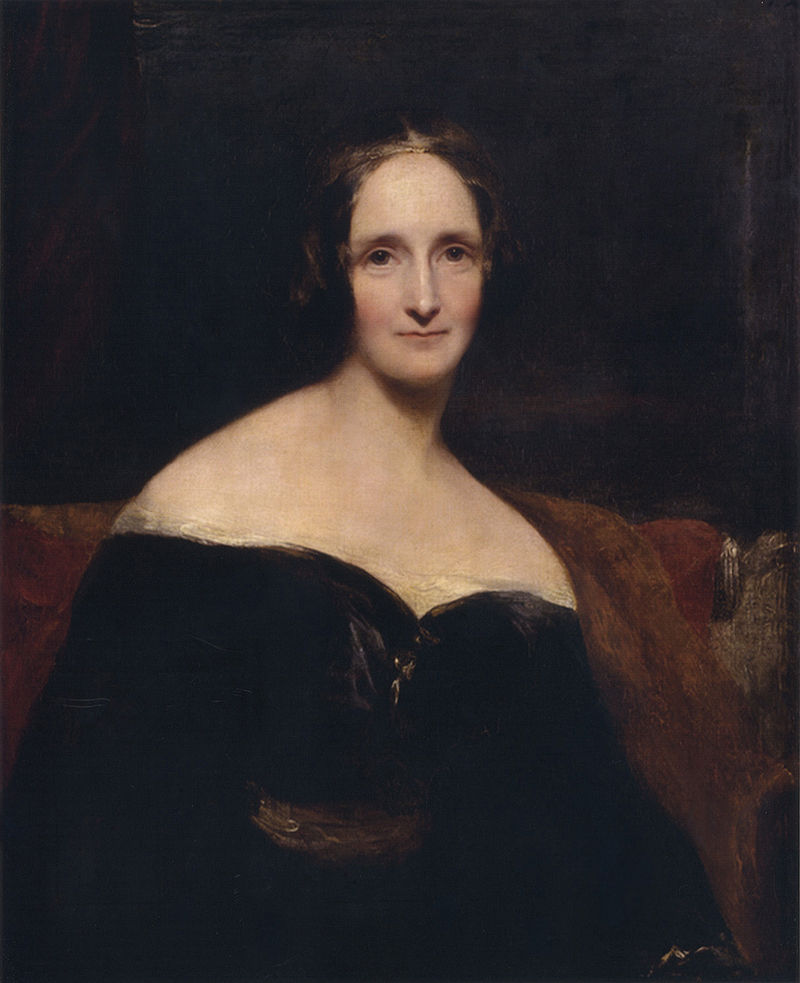
800px-RothwellMaryShelley
Mary Shelley by Richard Rothwell – Scan of a print. Original housed at the National Portrait Gallery.


The short story Mary Shelley started that chilly summer evening became Frankenstein; or, The Modern Prometheus, which was first published in three volumes, anonymously, on 11 March 1818 by a small London publishing house.

It has become one of my favourite novels, and one of the most well-known 19th century literary creations. Frankenstein’s influence on modern culture and psyche is easily recognisable and understandable.

800px-Frankenstein's_monster_(Boris_Karloff)
Frankenstein’s monster by actor Boris Karloff (Universal Studios)

Our rebellion against the inevitability of death and loss, and the need, albeit the futility, of rebellion, is a recurrent theme in life and literature.

Shakespeare knew literature was our only hope of influencing, and perhaps even living, beyond our short mortal lives:

So long as men can breathe or eyes can see,
So long lives this, and this gives life to thee.

(From Sonnet 18)

I’m currently reading, and enjoying,  as part of Rosie’s Book Review Team, Almost Invincible a biographical novel about the life of of Mary Shelley, which I’ll be reviewing shortly.

Almost Invincible.1

Carrot Ranch #FlashFiction Challenge October 7

This post was written in response to Charli Mills Flash Fiction Challenge over at Carrot Ranch

october-7

October 7, 2015 prompt: In 99 words (no more, no less) write a story about a thief or a theft. Consider motives and repercussions. Is the act a matter of perception? Is it a daring maneuver or a desperate bid for survival? Think about different instances of stealing. Respond by October 13, 2015 to be included in the weekly compilation. Rules are here. All writers are welcome!

****

The Dress Thief

Cristina held her father’s wasted hand as he limped along, head bent and soul shattered.

He glimpsed at a woman across the street, squeezed his eyelids to hold back the tears, and pulled his daughter’s hand firmly.

‘Don’t look,’ he pleaded, but the child hurled his hand, jumped on the woman, scratched her face and spit, ‘Thief!’

Cristina tore the buttons of her dress like a wild cat. ‘It was my mother’s!’

‘She doesn’t need it in the graveyard!’

‘Take it off!’

‘Your family left when the soldiers came!’

‘We’re back now and it’s mine!’

‘Nothing is yours anymore!’

****


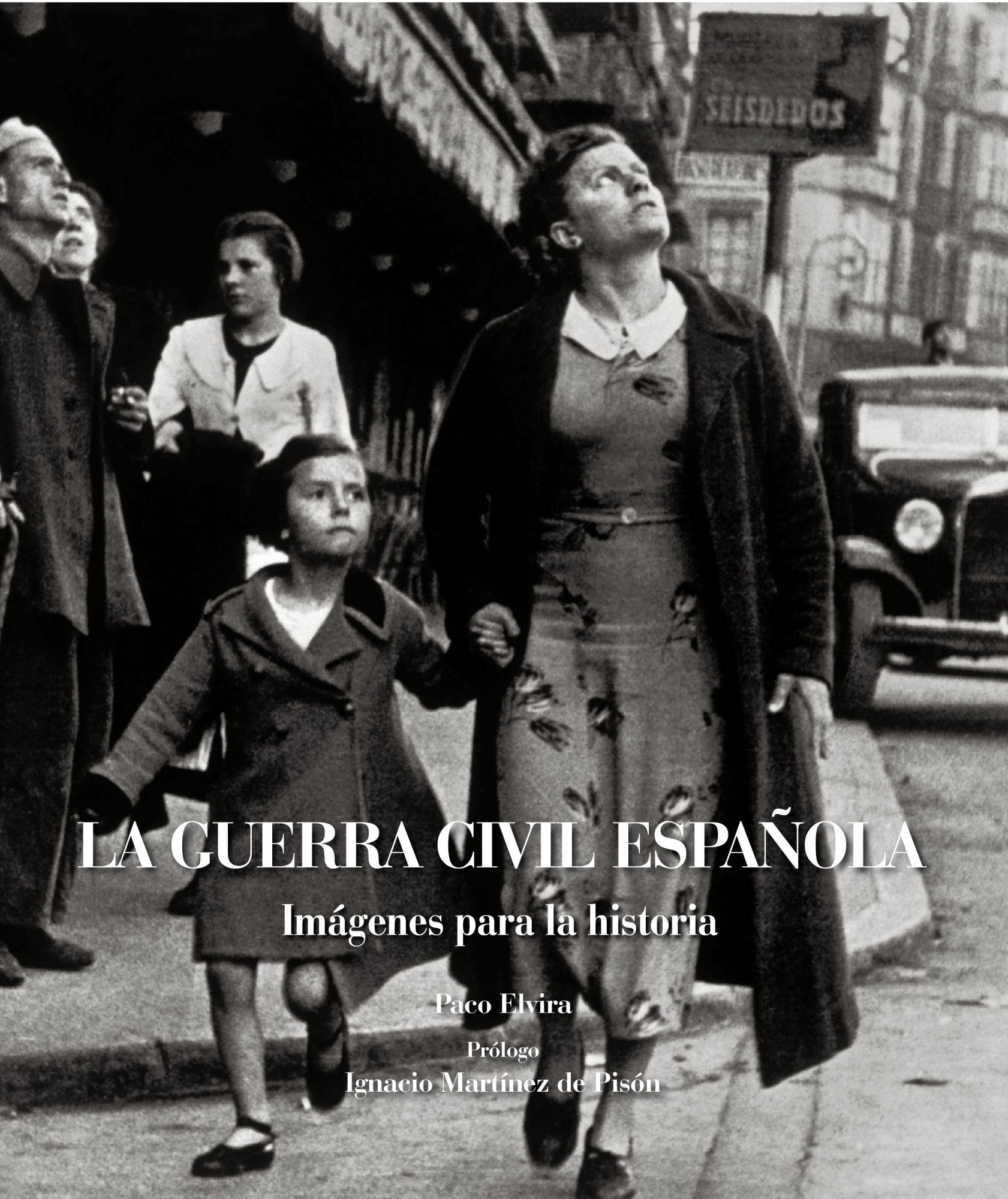
guerra-civil-imagenes-que-escribieron-historia_9788497857802

My mother once told me about a similar event happening when she was a child in post civil-war Spain. The dress symbolizes the loss of her mother, her family and the life she led. The members of Cristina’s family who survived were robbed of their possessions, family, childhood, dreams, and self-respect.

Sometimes theft is considered acceptable, or even sanctioned, and thieves can steal a lot more than objects.

****

Would you like to read some of the other responses to this weeks’ prompt? Here they are.


#SoCS Oct 10/15 Procrastinating, Choosing, and Listing.

This post was written in response to Linda G. Hill’s Stream of Consciousness prompt:

Your Friday prompt for Stream of Consciousness Saturday is: “ing.”  The first word of your post must end in the letters “ing.” Extra points if the final word of the post does too. Enjoy!

socs-badge-2015

On this occasion, I was also prompted by Keith’s post, which gave me the idea of writing about my NaNoWriMo participation. Check out his post  

****

PROCRASTINATING. I do it all the time. Excuses, excuses, excuses. I have so much to do, and my time is limited. Although I know I’m not the only one facing this dilemma, it doesn’t lessen the anxiety I often feel when I have to choose what to do and what to postpone.

CHOOSING. Sometimes I wish I had someone to decide for me and tell me what to do next. Someone who’s so wise and supportive that he/she knows the way to go. Is that what religious people feel when they ask their God what to do? Is that what subs feel with their doms? Children with their parents? People who have a personal coach or mentor?

LISTING. I’m afraid I don’t have any of the former, but I do have lists. I’m forever writing to-do lists. I find them very helpful. I write them every day before leaving work, and then put it all out of my mind. The next day, I stare at my list, get on with it, and gleefully strike off everything I manage to do. Before I leave, I repeat the ritual. It usually works out, so I get everything done, more or less…

Then when I get home I look at my other to-do list, my most precious one: My writer to-do list. This one is more complex than my work one, because whereas my work schedule and responsibilities are set by someone else, as an independent writer, I have to make all the decisions myself. What and when to write, what and when to promote, what and when to include in my blog, etc. Often the list includes conflicting things to do, such as: ‘Finish outlining book three’ and ‘Start something new for NoNaWriMo’.

PROCRASTINATING. Back to my first point. Do I want to start another novel because I don’t want to sit down and write book 3? Am I afraid of the daunting task of completing my trilogy? Do I really want to start something new before I finish my current project? Will it help me to completely forget about book three for a month? Will I even have the self-discipline and time to write 50,000 words in one month? So many questions to answer before I write my next writer to-do list!

Should I…

Take part in NaNoWriMo with a new project?

Or

Finish my current project?

I’m confused but tilting the scales towards finishing my current project. What do you suggest?

Thanks for helping and SUGGESTING!

****

Did it! Started and finished with an ‘ing’ word!

Read some of the others, or take part yourself, more information here!