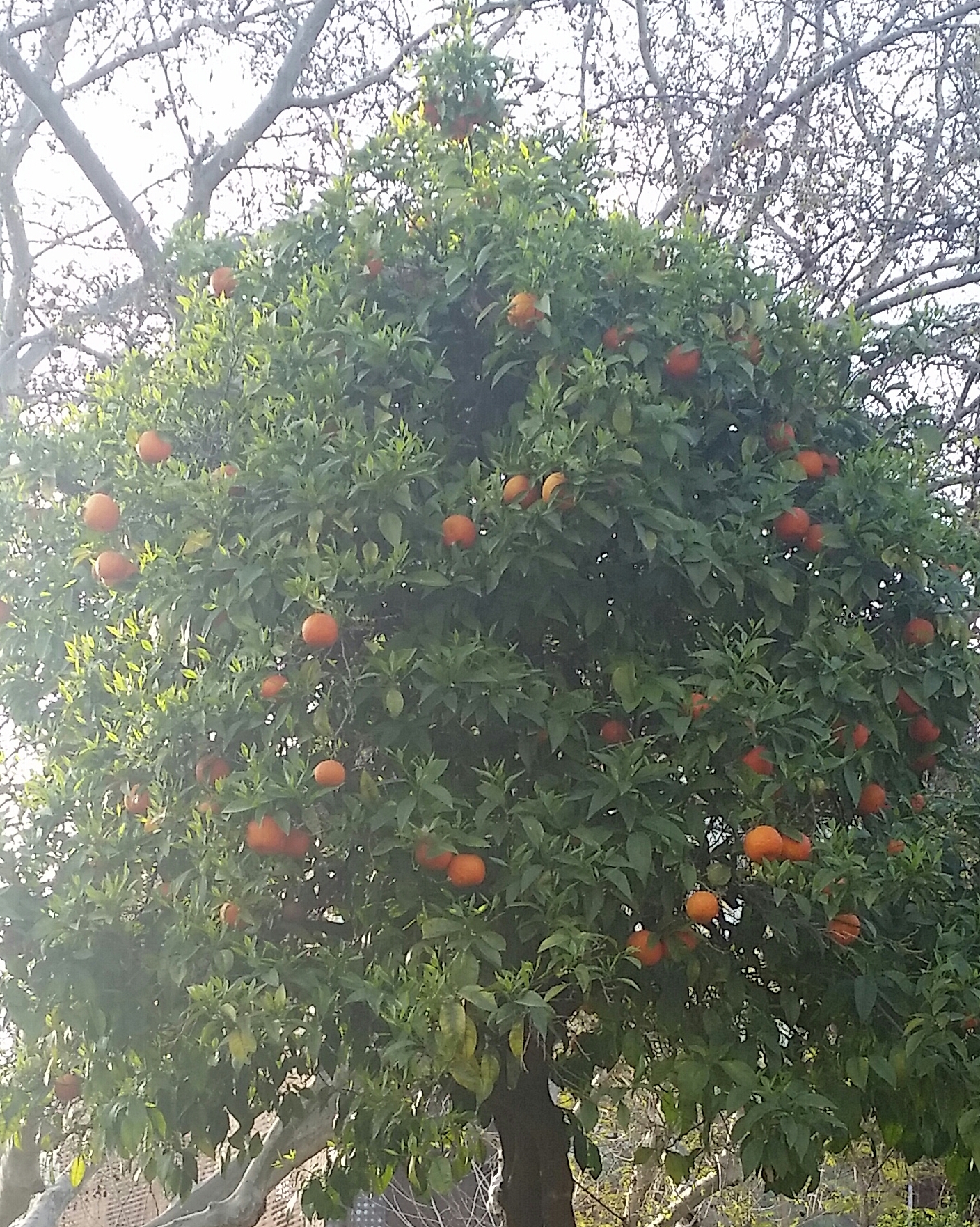
Sometimes life deals us sour lemons, and others we’re lucky enough to get sweet oranges, so let’s enjoy those wonderful moments and allow ourselves to recharge our batteries and embrace happiness. Perhaps next weeks’ lemons will be sweet, too!
I hope you’re having a wonderful Sunday.
Thank you for being there 🙂
My camera picked up these beautiful early spring flowers yesterday, just for you…
Use the image below to create a post on your own blog… poetry, prose, humour… light or dark, whatever you choose, by noon (GMT) Wednesday 15th Marchand link back to Sue’s post with a pingback.
I’m having such fun looking forward to Fridays and responding to Friday Fictioneers with stories of adorable and creative Alice, and her incredulous and conventional parents, Marsha and Kevin.
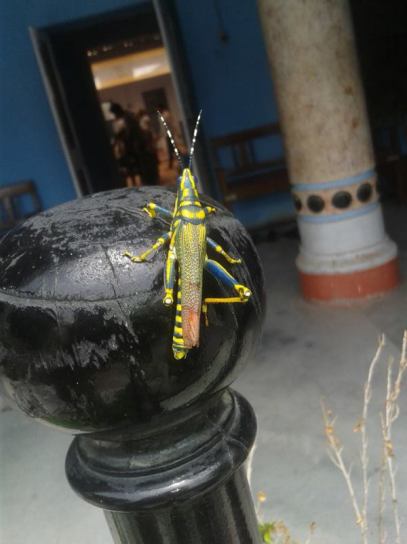
Thanks to Rochelle Wisoff-Fields for hosting the challenge and Shaktiki Sharma for today’s photo prompt, which led me directly to this weeks’ 100-word story.
Marsha smiled. ‘Look, Alice, what a beautiful grasshopper!’
Kevin shook his head. ‘No dear, it’s a cricket.’
‘Are you sure?’
He slid on his glasses. ‘Observe the antennae, they’re short, and it’s chirping by rubbing its wings together, not rubbing its hind legs with its wings.’
#FridayBookShare was created by Shelley Wilson for book lovers to share what they’re reading. The idea is to answer a few simple questions about the novel you recommend and post on Fridays.
Today, I’d like to share Silent Scream, by Angela Marsons. It’s book 1 of Detective Kim Stone Crime Thriller Series, set in the UK.
First line of the book.
Teresa Wyatt had the inexplicable feeling that this night would be her last.
Recruit fans by adding the book blurb.
Five figures gather round a shallow grave. They had all taken turns to dig. An adult sized hole would have taken longer. An innocent life had been taken but the pact had been made. Their secrets would be buried, bound in blood …
Years later, a headmistress is found brutally strangled, the first in a spate of gruesome murders which shock the Black Country.
But when human remains are discovered at a former children’s home, disturbing secrets are also unearthed. D.I. Kim Stone fast realises she’s on the hunt for a twisted individual whose killing spree spans decades.
As the body count rises, Kim needs to stop the murderer before they strike again. But to catch the killer, can Kim confront the demons of her own past before it’s too late?
Introduce the main character using only three words.
Detective Kim Stone is unconventional, moody, and unlikeable, but on the plus side, she’s efficient, hard-working and conscientious. I wouldn’t like to have her as a colleague, but on the other hand, if I needed a murder solved, I’d call her first!
Delightful design (add the cover image of the book).
Audience appeal (who would enjoy reading this book?)
Anyone who enjoys reading thrilling, police procedural novels about a serial killer. It’s only fair to advise readers that there are some unpleasant murders and cruelty to underprivileged children is portrayed. It’s a little disturbing at times, especially as the fictional events, which are so realistically portrayed, occurred only a decade ago.
Your favourite line/scene.
This scene is one of many which take place at a crime scene, between the pathologist, the detective and her long-suffering and supportive colleague, Bryant.
****
She (Detective Kim Stone) immediately located Keats, the pathologist. He was a diminutive figure with a completely bald head, set off by a moustache and a beard that fell into a point below his chin. He’d had the honour of guiding her through her first post mortem eight years earlier.
‘Hey, Detective,’ he said, looking around her. ‘Where’s Bryant?’‘
Jesus, we’re not joined at the hip.’
‘Yeah but you’re like a Chinese dish. Sweet and sour pork … but without Bryant you’re just sour … ’
‘Keats, how amused do you think I am at this time of night?’‘Your sense of humour isn’t really evident any time to be fair.’ Oh, how she wanted to retaliate. If she wished to , she could comment on the fact that the creases in his black trousers were not quite straight. Or she could point out that the collar of his shirt was slightly frayed. She could even mention the small bloodstain on the back of his coat.
But right now a naked body lay between them, demanding her full attention.
Thursday Doors is a weekly feature, hosted by Norm 2.0 allowing door lovers to come together to admire and share their favorite door photos from around the world. Everyone is invited to join in on the fun by creating their own Thursday Doors post each week and then sharing it, between Thursday morning and Saturday noon (North American eastern time), by using the blue link-up button on Norm’s blog.
Today I’m going to show you another door or two which I walked through several times a week for five years, The Faculty Of Philosophy and Arts in Cordoba, Spain.
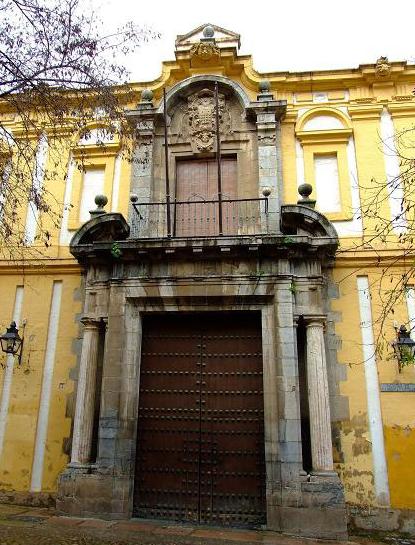
This is the main door of the Faculty of Philosophy and Arts, in Cordoba, where I read my doctoral thesis on language learning strategies, over ten years ago. It’s also the place where I worked as Associate Professor of English for five years.
I taught English language and linguistics as well as Medieval, Renaissance, and Postcolonial English Literature to undergraduate students, and Teaching Methodology and Didactics on Postgraduate students preparing their Master’s dissertation.
I loved teaching here, because my students were enthusiastic and motivated, and because it’s a very special building, with a great deal of history embedded within its mysterious stone walls. It’s not surprising that many of the students and people who work here have sensed that they sometimes were not alone in empty classrooms or shadowy corridors.
Here’s the open main door and the patio straight ahead.
The building has two floors. The lower floor has two patios, the main one, which can be seen in the photograph I took a few days ago, is an enclosed patio, which is very typical of the stately homes of the old town.
There is another, smaller patio to the left, which leads to the chapel, and the old mortuary, which were curiously side by side. Did I say mortuary? A little bit of history before we continue our look at the doors in the building.
It became part of the University of Córdoba in 1970, but let’s have a quick look at what happened between 1701 and 1970, which may explain why some think it’s haunted.
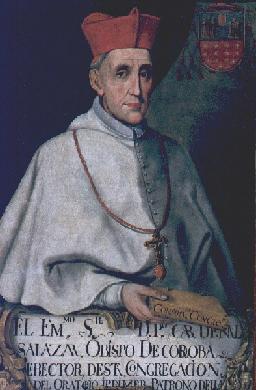
En 1701 Cardinal Pedro de Salazar, bought some land near the Cathedral in Cordoba, which was built inside a Mosque, but more about that next week.
His first intention was to build a school, probably a boarding school, for the cathedral choir boys, so the plans were made and construction was soon started.
In 1704, when the building had not yet been finished, there was a devastating epidemic in Cordoba and the Cardenal was convinced that it would be more beneficial for the town if a hospital was built instead of a school. That’s why this stately, baroque building looks more like a palace than a hospital. It became a hospital well afer the building plans had been made.
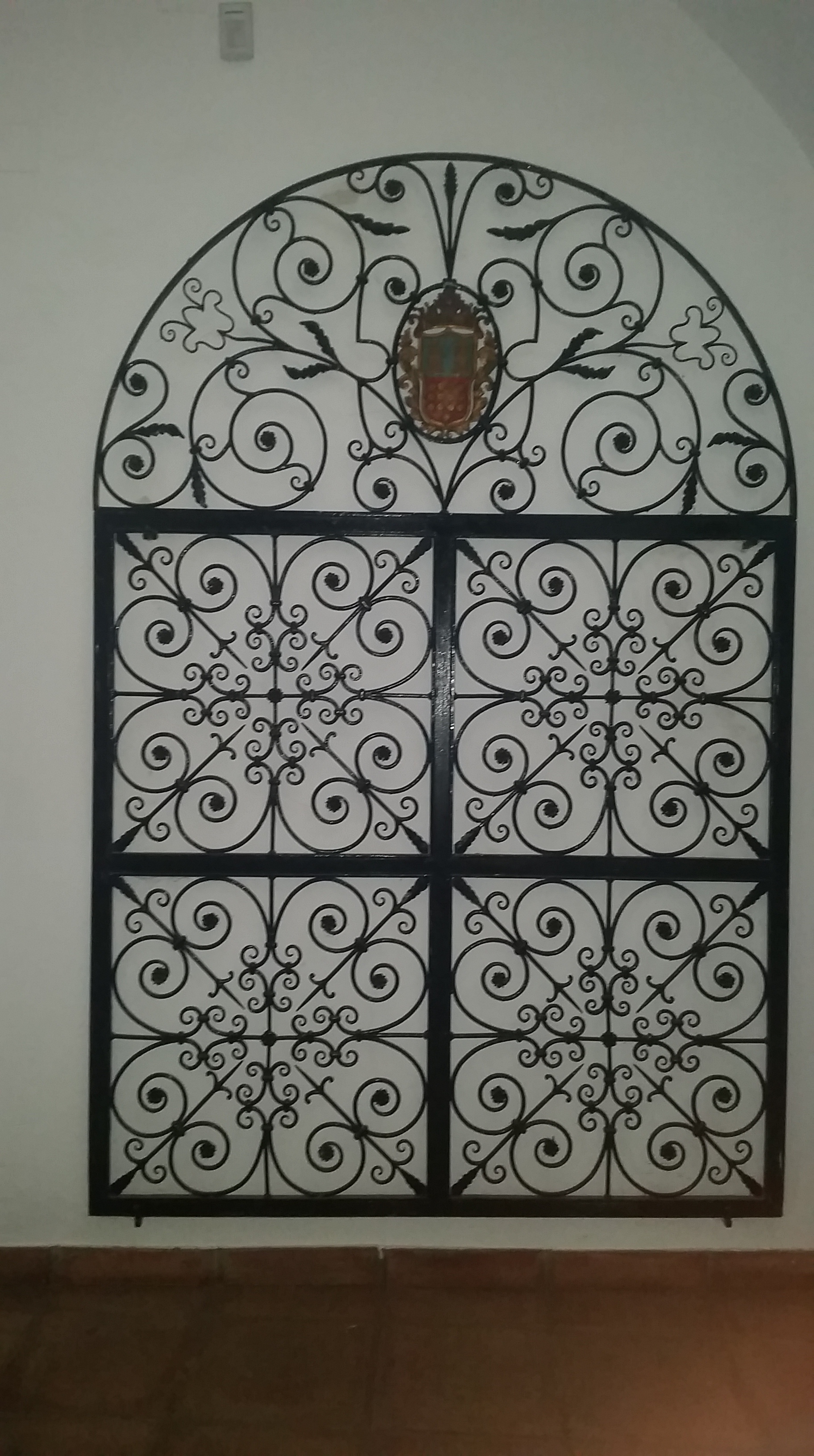
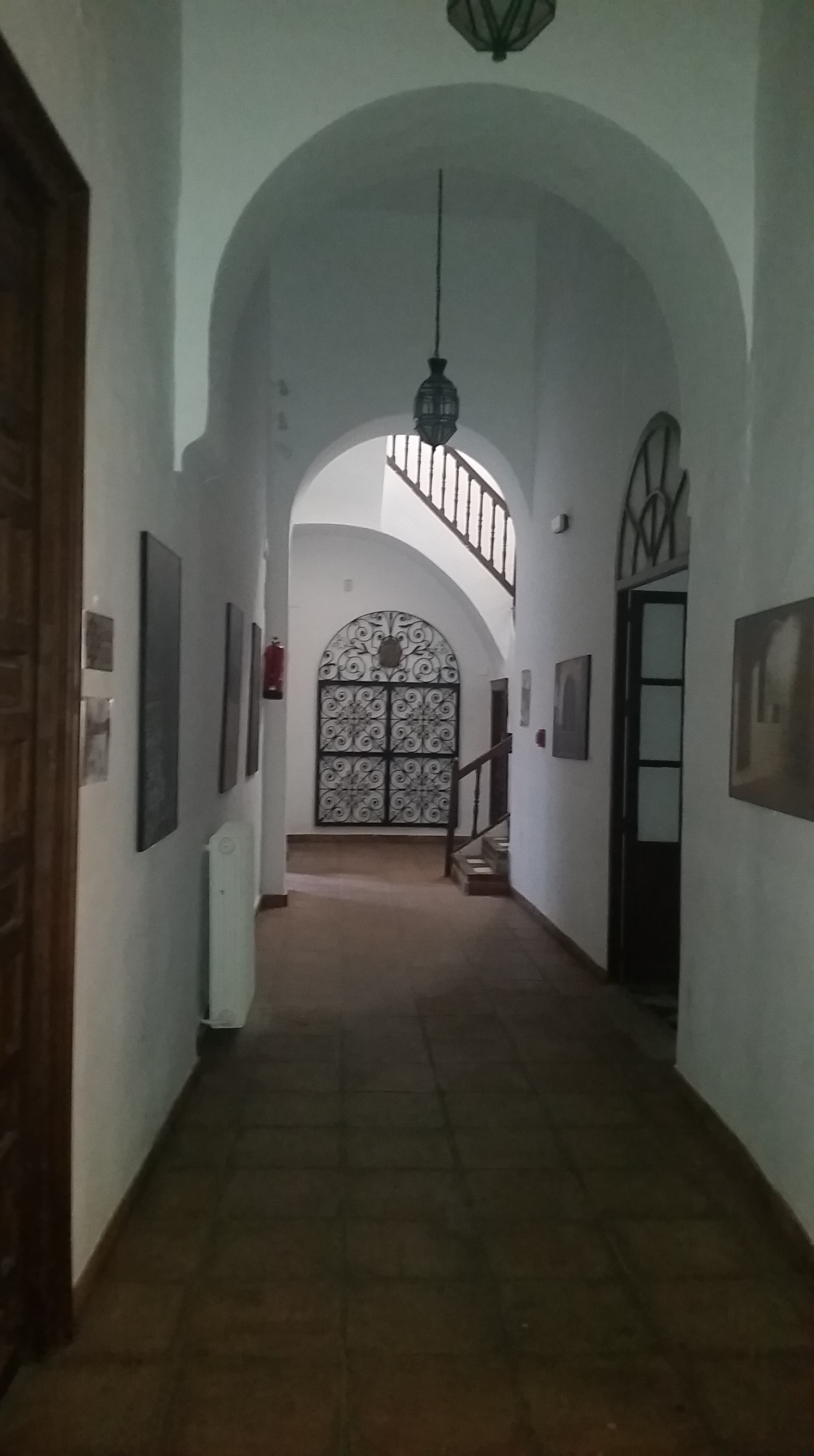
Above is the original iron gate which was part of the chapel. Below we can see it at the end of the corridor, and on the right is classroom 1, the spookiest because it used to be the mortuary, and to the right of the gate, just past a small winding staircase, is the chapel.
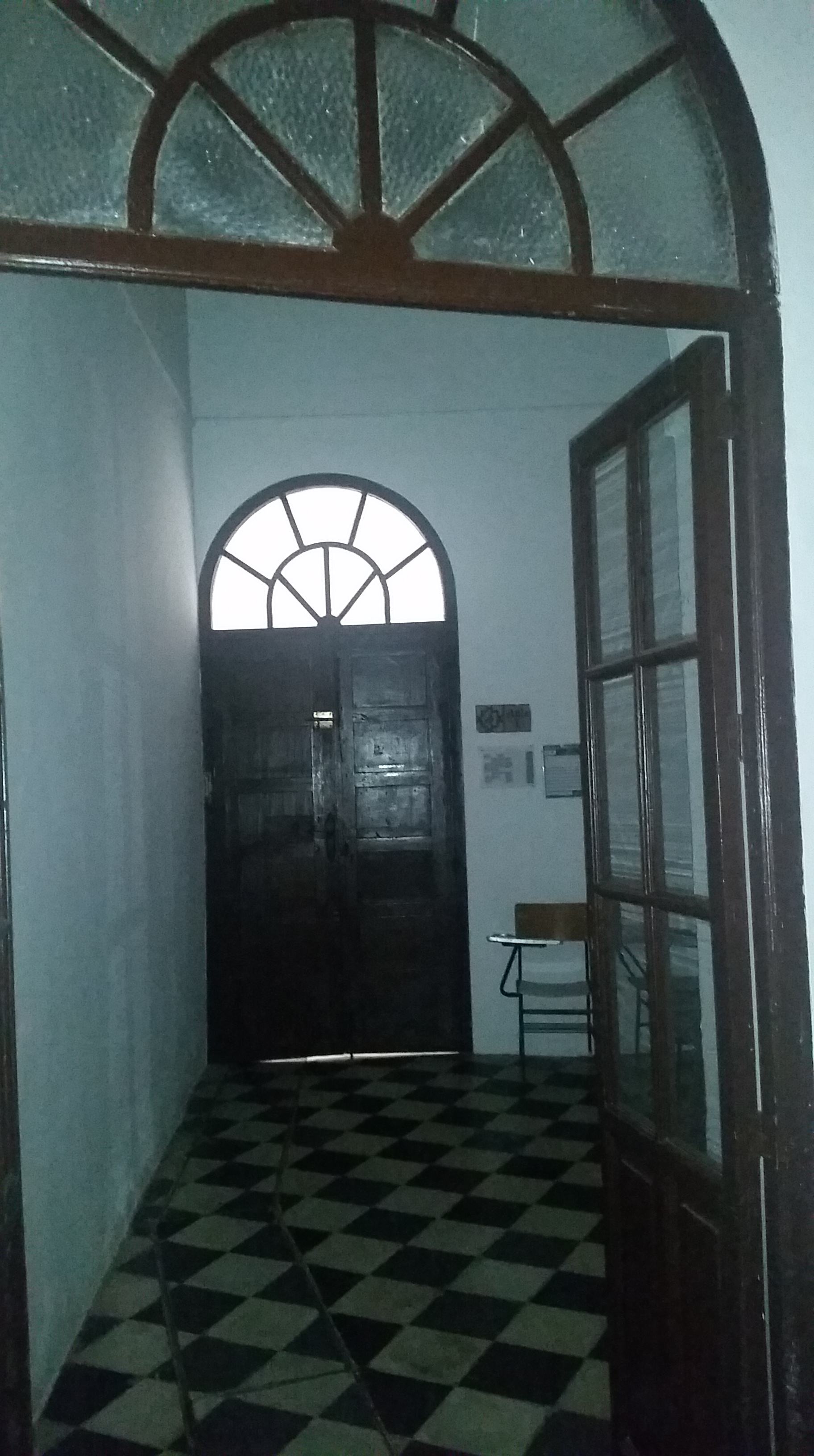
Below is the door to classroom number 1 (the open door to the right in the picture above), the old mortuary. The rails on the floor were to wheel in the trolleys with the dead bodies.
Many say it’s haunted. I never saw or heard anything specific, but I smelt sickening odours and saw unexplainable shadows on occasions, not to mention some spine chilling moments when I left the solitary building after nine in the evening.
There is a wide staircase between the two patios leading to the to floor, where most of the patients’ wards and rooms were situated.
There’s a giant painting of Cardenal Salazar at the top of the first flight of stairs, on the first landing, which you can see in the picture below.
Nineteenth-century Britain was a time of great progress and reform, in British society due to industrialization and social upheaval. One of the most controversial debates were about the position of women in society. Aspects such as a wife’s right to own property, a mother’s right to custody of her children and ownership of her body, or right to vote, saw the birth of the movement for women’s rights, and the first suffragettes at the end of the 19th and early 20th centuries. This was also the era of the professional woman writer, a time in which more women were writing professionally and demanded a place alongside men in the literary world.
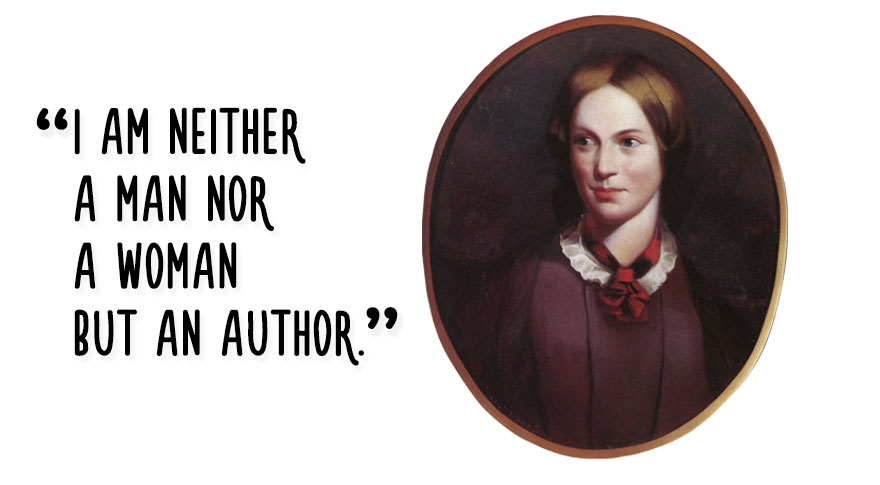
The Bronte Sisters
One of the strategies these early women writers turned to was the use of male pseudonyms.
These have been referred to by 20th century feminist literary scholars such as Sandra Gilbert and Susan Gubar as ‘metaphorical trousers’ or male pseudonyms in the 19th century, in order to be taken seriously as authors.
I wrote a post called Madwoman in the Attic in two parts with more information on the topic.
Here are a few of the most famous women who used male pseudonyms. The most well-known are probably the three Bronte sisters.
Charlotte Bronte, author of Jane Eyre, is one of the most celebrated female novelists in all literary history. Charlotte Bronte originally published Jane Eyre and all her works under the name Currer Bell. This name represented the male identity necessary to succeed during the time in which Bronte was actively writing. Jane Eyre is regarded as one of the most influential works of literature in history and is now published under Charlotte Bronte’s true name.
Anne Bronte (1820 – 1849) wrote Agnes Grey, in 1847. Her second novel was The Tenant of Wildfell Hall, the story of a woman leaving her abusive spouse, was published the following year. She published her novels with the pseudonym Acton Bell.
Charlotte’s sister, Emily Bronte, published her only known novel, Wuthering Heights, under the male pen name Ellis Bell. The three sisters chose to write under masculine pseudonyms to deter any bias on the basis of their gender. Emily Bronte’s health was poor throughout most of her life, and she died at 30 in the year 1848. In 1950, Charlotte Bronte edited Emily’s novel and re-published it under Emily’s true name. Today, Wuthering Heights and Jane Eyre are considered two of the most important English novels in history.
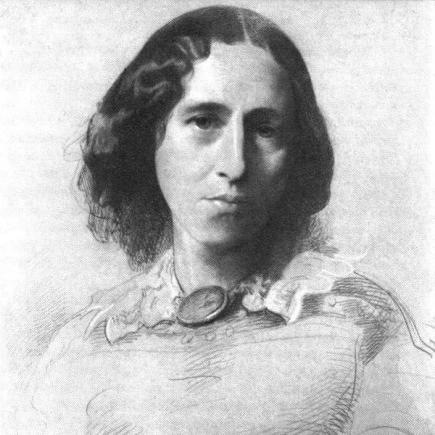
Mary Anne Evans, pen name George Eliot
Mary Ann Evans: More widely known by her male pen name George Eliot, Evans was a prominent author and journalist during the Victorian Era. Evans is said to have published under a male pseudonym in order to distance herself from the female romance novelists of the time and to ensure that her works were taken seriously. After her first novel, Adam Bede, was published in 1859 and reviewed positively by critics, Evans revealed her female identity to the world.
On other occasions, women wrote under their married names, to endow them with greater respectability. Here are some examples.
Margaret Oliphant Wilson Oliphant (née Margaret Oliphant Wilson) (4 April 1828 – 25 June 1897), was a Scottish novelist and historical writer, who usually wrote as Mrs. Oliphant. Her fictional works encompass “domestic realism, the historical novel and tales of the supernatural
Elizabeth Cleghorn Gaskell, née Stevenson (29 September 1810 — 12 November 1865), often referred to simply as Mrs Gaskell, was an English novelist and short story writer during the Victorian era. Her novels offer a detailed portrait of the lives of many strata of society, including the very poor, and are of interest to social historians as well as lovers of literature. Gaskell’s The Life of Charlotte Bronte, published in 1857, was the first biography of that author.
Mrs. Henry Wood
Ellen Wood (17 January 1814 – 10 February 1887), was an English novelist, better known as Mrs. Henry Wood. She is perhaps remembered most for her 1861 novel East Lynne, but many of her books became international best-sellers, being widely received in the United States and surpassing Charles Dickens’ fame in Australia.
Mary Augusta Ward née Arnold; (11 June 1851 – 24 March 1920), was a British novelist who wrote under her married name as Mrs Humphry Ward.
There is plenty of proof as to why women had to use male pseudonyms or their husbands or brother’s names. I suggest those who are interested in the topic read my post Madwoman in the Attic Part II, for a more detailed account and bibliography.
I’m just going to include one eloquent example in this post. A letter the Poet Laureate, Robert Southey (1774-1843) wrote to Charlotte Bronte in 1836 in reply to her petition for advice on being a writer.
“Literature cannot be the business of a woman’s life and it ought not to be. The more she is engaged in her proper duties, the less leisure she will have for it, even as an accomplishment and a recreation. To those duties you have not yet been called, and when you are you will be less eager for celebrity”.
Robert Southey was an English poet of the Romantic school, and one of the so-called “Lake Poets”. He was Poet Laureate for 30 years from 1813 to his death in 1843. Although his fame has long been eclipsed by that of his contemporaries and friends William Wordsworth and Samuel Taylor Coleridge.
Nevertheless, women authors achieved remarkable literary success in a profession clearly dominated by men. Many of them were able to successfully pursue their literary ambitions in spite of the patriarchal oppression they were subject to, and they passed the test of time with flying colours!
Fortunately, society, including men and women have come a long way since the 19th century, and nowadays, at least in the English-speaking/writing/reading literary market, as I perceive the situation, women and men write and publish with equal opportunities.
Nevertheless, as all social progress, it’s an ongoing struggle and unfortunately, there are many places in the world where women are still struggling to be heard.
Do men and women writer have equal opportunities as readers and writers where you live?
I’m afraid it’s a dark flash this week. Hidden rooms in attics where troublesome wives were imprisoned were not infrequent in Victorian England.
I’ll tell you all about the fascinating world of Victorian amber slag lamps after my 99-word flash.
****
Victorian King Midas
Their skeletal remains were found in the hidden attic room of their Victorian home. She was wearing glass slag amber earrings, necklace, and an evening gown with amber slag gems sewn on.
A note on the bed-side-table, held in place by a priceless Victorian amber slag glass lamp, read:
My husband fancied he was like King Midas and everything he touched turned to gold and became his property, like me. I thought his blood might be amber, but it was bright crimson.
He would have been pleased it was his favourite slag amber lamp which had cracked his skull.
****
Well, in this case the wife didn’t escape, but she was able to give her husband a taste of his own medicine!
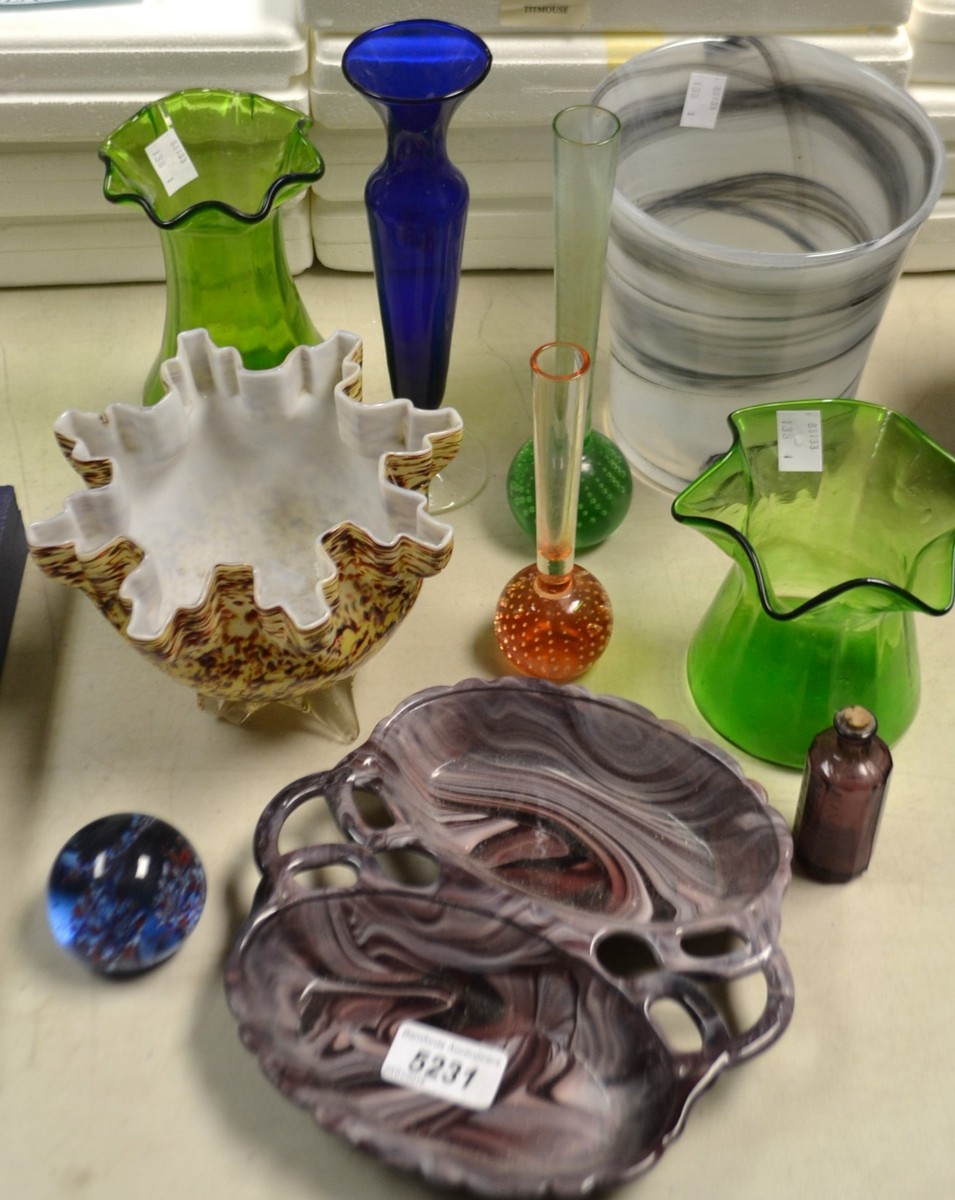
I didn’t know anything about slag, but I looked it up on Saint Google, and found out it was also commonly known as Malachite glass, which is pressed glass with coloured streaks to create a marble effect.
The production of slag glass originated in late-19th-century England, where glass manufacturers are thought to have added slag from iron-smelting works to molten glass to create a range of effects—from tortoiseshell to marbling. Among other uses, slag glass was a popular material for lampshades and other household ornaments.
Slag glass was made by British companies such as Sowerby, Davidson and Greener during the Victorian era, around the 1880’s/90’s. Sowerby marketed their slag glass under the name ‘Malachite’, and this name was used for all the colours they produced. The most common colour for slag glass was purple, but it was also made in blue, turquoise, green, and brown glass. Modern slag glass is still being made today in USA, and comes in a variety of colours.
Examples of Victorian slag glass
Since the process of making slag glass was shrouded in a certain amount of mystery, stories sprang up to try and account for the process behind the effects. For example, it was a rumoured that Sowerby’s Gold Nugget, which was an amber colour, was ‘invented’ by John George Sowerby, the artistic son of the company’s founder, by tossing gold sovereigns into batches of amber glass to create this dramatic hue. Mr. Sowerby was an artist who left the day to day running of his business to a trusted administrator.
Such a man, might have been a greedy and materialistic miser. He might have thought he was King Midas, making his slag products into gold by adding the gold coins to the mixture. He might have filled his house with amber slag ornaments, such as lamps, candlesticks and vases etc. And he might have covered his wife in amber slag and locked her in his attic, so no-one else could see his golden lover.
Although, who knows, that might never have happened.
I’d like to thank Charli for this weeks’ prompt, which has (indirectly) introduced me to the fascinating Sowerby family of entrepreneurs, artists, writers, painters, and naturalists of the 19th and 20th centuries. Who knows if another Victorian novel may come of this…
I read Her Dear and Loving Husband, a few months ago and realised I hadn’t yet posted my review on my blog, so here it is.
Sweet, well – written Vampire novel
I didn’t realise it was part of a vampire trilogy when I started reading, so it was a surprise, and I don’t usually read this type of novel, but I’m sharing it today because enjoyed it very much.
I wrote ‘sweet’ in the headline because there’s nothing gory or shocking in the novel, which often puts me off vampires. It’s not a typical vampire novel for teenagers either, as it includes well-written, situations and a mature love story intended for adults.
It was easy to feel sympathy towards Sarah, who has moved from California to Salem after her traumatic divorce, as she starts having disquieting dreams and feeling a strange connection to places and people in the small town.
The plot gradually weaves between present and past, until the mystery is finally revealed. There’s a lot of historical information about the Salem witch trials, and the novel leans heavily on 19th century literary accounts of vampires such as Bram Stoker’s Dracula. The title is taken from Anne Bradshaw’s poem, My Dear and Loving Husband, which ties in with the touching love story spanning hundreds of years.
If you’re in the mood to suspend belief, you’ll easily be immersed into a world of loving vampires and friendly witches (although there is also a villainous vampire trying to sabotage their love story), because it’s very well written; the prose style draws you smoothly into another world.
It’s the first book in the trilogy, which is free at the moment, and although there’s no cliff hanger ending, you’ll need to read the next two novels to complete James and Sarah’s story.
I listened to the audible narration, which was beautifully read.
****
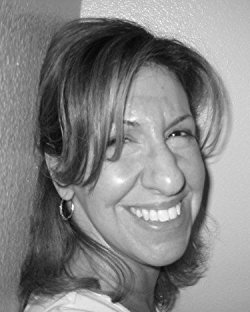
Meredith Allard is the author of the bestselling novels The Loving Husband Trilogy, That You Are Here, Victory Garden, Woman of Stones, and My Brother’s Battle (Copperfield Press). Her newest release is the historical novel When It Rained at Hembry Castle, a great read for fans of Downton Abbey. She lives in Las Vegas, Nevada.
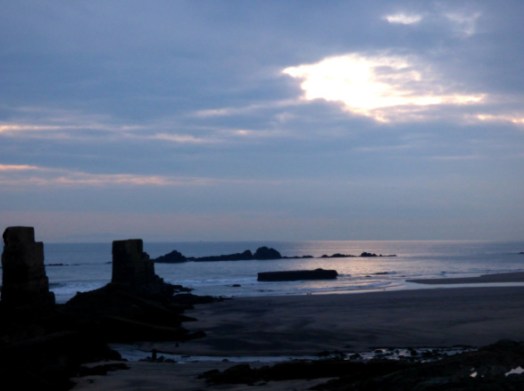
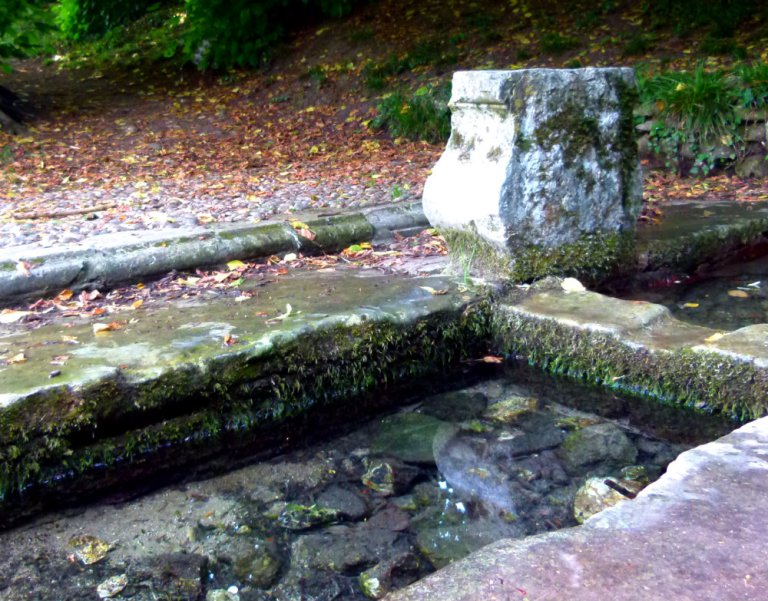
Use the image below to create a post on your own blog… poetry, prose, humour… light or dark, whatever you choose, by noon (GMT) Wednesday 8th Marchand link back to Sue’s post with a pingback.
If I were a rock…
If I were a rock in a stream, the water would slide over, smoothing my hard edges.
If you were a rock in my stream, you’d roll to my side and we’d weather together.
If we were two rocks in our stream, swaying together, nothing would keep us apart.
If we were pushed over the falls, into the mighty river, we’d be torn apart.
If we were two rocks in the river, we might meet again and swim towards the ocean.
If we were two rocks in the ocean, would you find me again?
























 Rereading Jane Eyre