#TuesdayBookBlog The Haunting of Highdown Hall by @Shani_Struthers for #RBRT

I recently read and reviewed The Haunting of Highdown Hall by Shani Struthers for Rosie’s Book Review Team. k 1 The Haunting of Highdown Hall is Psychic Surveys Book 1.

highdown-hall

Here’s my 5-Star review.

An Engaging Paranormal mystery

Thirty-one year old, successful actress, Cynthia Hart, died of a heart attack during a dazzling birthday party at her residence, Highdown Hall, on Christmas Eve, 1958. Fifty-six years later, the present resident, Mr. Kierney, will discover her spirit hasn’t left and is causing havoc in the first floor bedrooms. He calls in the Psychic Surveys team, who will have to investigate the events leading up to her death in order to discover what’s keeping her in the land of the living.

Highdown Hall is not the only case they work on, however. They also visit a notorious mental asylum and various houses in the area, in search of lost spirits who need help moving on to the other side.

The four members of the team have varying degrees of psychic abilities. Ruby inherited the gift from her mother and her grandmother. Theo, who is retired, specialises in long distance healing. Quiet Ness, in her fifties sometimes worked with the Sussex police, and Corinna, a 21-year-old who dresses in gothic attire and also works at a pub.

Ruby, the heart and soul of Psychic Surveys, who is trying to set up a webpage for their flourishing business, meets Cash Wilkins, a website designer, and just the man she needs. Ruby thought he wouldn’t be interested in pursuing any kind of friendship with her, once she told him she was ‘a psychic surveyor’, but on the contrary, he was fascinated, genuinely interested, and perhaps a little psychic himself.

The highlight for me was when the spirit of a dead Labrador, Jed, became attached to Ruby after visiting a couple who complained of dog barking at night.

By the end of the novel, Cynthia’s case is finally solved, as a result of Ruby and Cash’s thorough investigations, and the four ‘ghost hunters’ have become six.

It was easy to be carried away by the interesting and varied stories of unhappy and tormented spirits being helped on their journeys towards the light and peace, at last. It’s an enjoyable novel for readers who have at least an open mind to the possibility of paranormal happenings.

Highdown Hall is well written, well plotted, and has engaging characters, so I’m looking forward to more of the Psychic Surveys’ extraordinary investigations.

****

shani

Shani Struthers was born and bred in the sunny seaside town of Brighton, one of the first literary conundrums Shani had to deal with was her own name – Shani can be pronounced in a variety of ways but in this instance it’s Shay-nee not Shar-ney or Shan-ni – although she does indeed know a Shanni – just to confuse matters further! Hobbies include reading and writing – so no surprises there. After graduating from Sussex University with a degree in English and American Literature, Shani became a freelance copywriter. Twenty years later, the day job includes crafting novels too. Writing both contemporary fiction and paranormal mystery, she is the author of The Runaway Year and The Runaway Ex, both published by Omnific Publishing.

Her paranormal work is published by Crooked Cat Publishing and includes Jessamine and the bestselling Psychic Surveys Book One: The Haunting of Highdown Hall and Psychic Surveys Book Two: Rise to Me, and Book Three: 44 Gilmore Street .
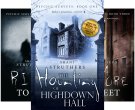
psychic-surveys

Shani is currently writing Book 4 of the Psychic Surveys, Old Cross Cottage (due out in April 2017)

Find out more about Shani on her blog. 

****

wp-1488284919449.jpg

Follow Luccia Gray on Social Media:

Twitter

Facebook

Goodreads

Check out Luccia Gray’s Books on Amazon 

#SilentSunday #SundayWalks Fontibre, Cantabria

wp-1488111479306.jpg

wp-1488110383667.jpg
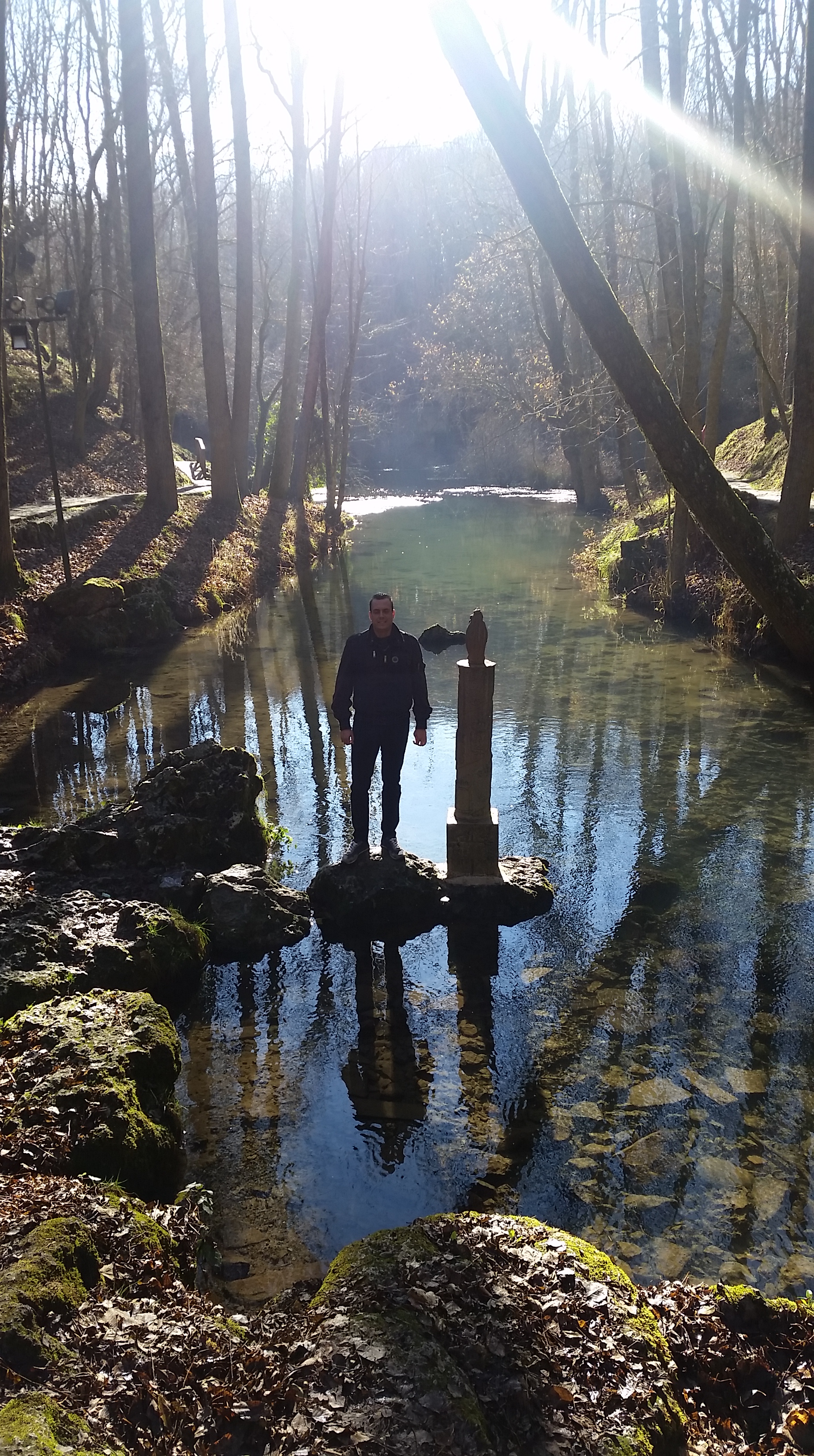
My son by a statue of the La Virgen del Pilar, at the very source of the river.

wp-1488110730361.jpg

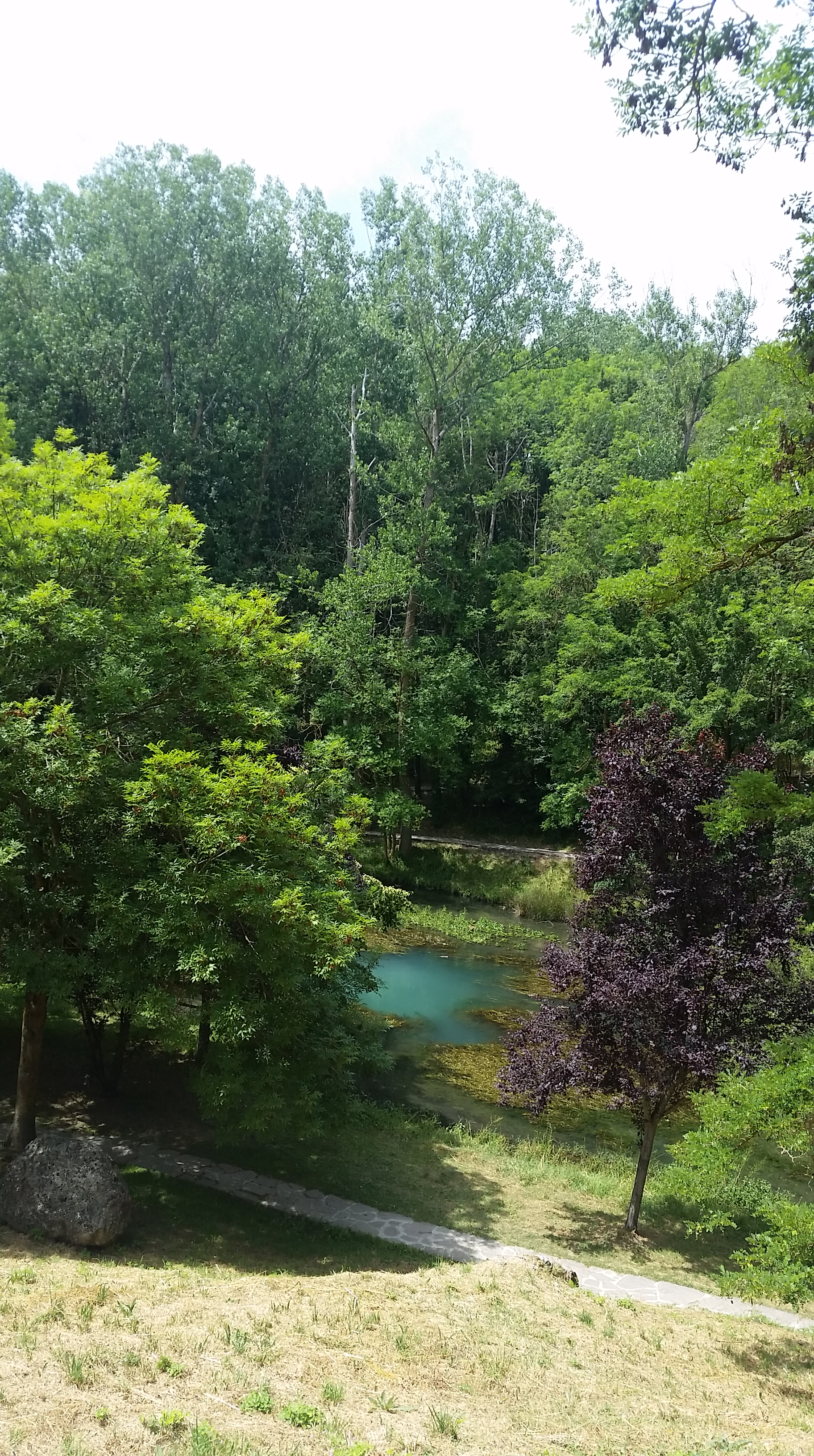
Fontibre is a small neighbourhood, 3 kilometers from the town of Reinosa, in the province of Cantabria in the north of Spain. My mother lives a few kilometers away, and although its far away from where I live, I visit regularly.

I was there recently and took these photos.

It is famous because the source of the river Ebro, the second longest river in the Iberian Peninsula, has its source, right here, in Fontibre.

In fact, this name derives from the Latin words ‘Fontes’ and ‘Iberis’, meaning source of the Ebro.

The Ancient Cantabri, who were considered to be savage and untamable mountaineers, were one of the largest independent tribes of Hispania, to succumb to Roman rule. They were finally conquered by the Romans during the Cantabrian Wars (29-19 BC), under the reign of Augustus.  More information with maps here 

fuentebroexteriores04

It’s a stunning place for a quiet walk, and there’s a cozy rural hotel called La Posada de Fontibre and a lovely restaurant for a delicious meal called Restaurante Fuentebro, where we love to stop for lunch after a long country walk.

wp-1488110755680.jpg

#SOCS How do I Love my dreams?

This post was written in response to Linda G. Hill’s Stream of Consciousness Saturday weekly prompt.

This week’s  prompt “how.” Start your post with the word “How.” Bonus points if you end with it too. Join in here! Enjoy!

Socs Badge


How do I love thee? Let me count the ways.

I love thee to the depth and breadth and height

My soul can reach, when feeling out of sight

For the ends of being and ideal grace.

Victorian authors are my literary masters and mentors. Their stories and poems are part of my imagination.

When I read today’s prompt: How, the first sentence that came to my mind was the famous sonnet by Elizabeth Barret Browning.

The author is telling us about an all consuming passion which will lead her to a state of ideal grace.

At the end of the sonnet, she concludes:

I shall but love thee better afer death.

elizabeth_barrett_browning_2
                  Elizabeth Barret Browning


Nothing will separate her from her lover. because their love will grow after death, when they both presumably enter the realms of eternity, making their love everlasting.

The sonnet is one of the most romantic and passionate in English literature, which is why it’s one of the most famous sonnets, which is still quoted almost 200 years after it was written.

Those of you who read my blog also know how much I like to paraphrase, rewrite or rework Victorian stories into my own writing, so that’s what I’m doing today, with this sonnet.

Instead of directing the words to a lover, it’s about a dream I have.

How do I love thee? 

Let me tell you how.

To the depth and breadth and height of my soul.

Even out of sight,

You´re always on my mind.

To the end of my days.

Reaching you, my dream,

Is my ideal grace.

The aim of an all-consuming passion is to achieve a state of ‘ideal grace’.

‘Ideal Grace’ is a divine term which refers to being in a perfect mental state, which is at peace with yourself, your world and your God, Universe, or the superior being or force you may believe in.

For Elizabeth Barrett Browning, this can only be achieved through the culmination of romantic love.

I suggest there are other ways to reach this perfect state, for example by striving for and fulfilling your dreams.

How do you try to reach your ideal grace, tell me how? 


#FridayFictioneers ‘Before The Snow’ #FlashFiction

I came across this photo by © Sarah Potter and couldn’t resist the temptation to write a Flash!

january-snowfall-nighttime-friday-fictioneers-24th-feb
© Sarah Potter

It’s my first time on Friday Fictioneers, which is a weekly challenge hosted by Rochelle Wisoff-Fields. The task is to write a story in 100 words based on a photo prompt. Read the rules, and follow the Froggy on Rochelle’s post to read the other posts and link your own here.

Here’s my take.

Before The Snow

“Mummy, what if it never stops snowing?”

“It’ll stop, Alice.”

“But if the snow covers all the houses and we can’t go out ever again, so we have to dig a tunnel down to the centre of the earth and build a new world called Deepland?”

My father shook his head. “Where did that idea come from?”

“Nowhere. I made it all up.”

He sighed. “She needs to go back to the psychologist.”

“She’s just creative. Maybe one day she’ll be a fantasy author,” said my mother.

“Yes, I will. I’ll write about what it was like before the snow.”

****  

wp-1488220383481.jpg

Follow Luccia Gray on Social Media:

Twitter

Facebook

Goodreads

Check out Luccia Gray’s Books on Amazon 

wp-1488574762426.jpg

#FridayBookShare ‘Baron’ by @JoannaShupe #amreading #amreviewing

#FridayBookShare was created by Shelley Wilson for book lovers to share what they’re reading. The idea is to answer a few simple questions about the novel and post on Fridays.

friday-book-share

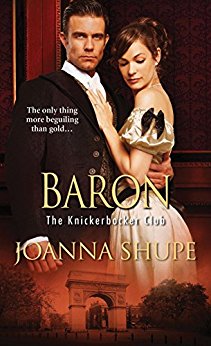
Today, I’d like to share Baron, by Joanna Shupe. It’s a fabulous historical romance set in New York City’s Gilded Age.

First line of the book.

William Sloane did not believe in the ability to commute with the spirit world.

Recruit fans by adding the book blurb.

New York City’s Gilded Age shines as bright as the power-wielding men of the Knickerbocker Club. And one pragmatic industrialist is about to learn that a man may make his own destiny, but love is a matter of fortune . . .

Born into one of New York’s most respected families, William Sloane is a railroad baron who has all the right friends in all the right places. But no matter how much success he achieves, he always wants more. Having secured his place atop the city’s highest echelons of society, he’s now setting his sights on a political run. Nothing can distract him from his next pursuit–except, perhaps, the enchanting con artist he never saw coming . . .

Ava Jones has eked out a living the only way she knows how. As “Madam Zolikoff,” she hoodwinks gullible audiences into believing she can communicate with the spirit world. But her carefully crafted persona is nearly destroyed when Will Sloane walks into her life–and lays bare her latest scheme. The charlatan is certain she can seduce the handsome millionaire into keeping her secret and using her skills for his campaign–unless he’s the one who’s already put a spell on her . . .

Introduce the main character using only three words.

Ava is resourceful, intuitive and generous.

Delightful design (add the cover image of the book).

baron


Audience appeal (who would enjoy reading this book?)

Anyone who likes historical novels, with a gripping plot, plenty of suspense, compelling characters and a steamy romance.

Your favourite line/scene.

Ava works as a psychic in 19th century New York in order to look after her three orphaned siblings. Sloane is a politically ambitious  millionaire, who wants Ava as far away from his political partner as possible. He’s a man who believes that everyone has a price, which he is prepared to pay to get his own way. This is the scene in which he tries to buy Ava’s cooperation.

****

The tip of her tongue burned with an offer to take him to the match factory to show him cases of phossy jaw. Had he seen the young girls with their rotting faces, jawbones glowing in the dark, all because they’d needed to put food on their table? Those were hardships. Not the fact that his friend and political partner paid her five dollars a week to read tea leaves and pass on bits of “news” from the great beyond.

“How much will it take?” Sloane asked her. “How much do you need to walk away?”

Oh, so tempting. Ava could throw out a high number and see if railroad man would bite. If he did, her siblings could quit their factory jobs. She would have enough to buy that piece of property and they could all be together. Finally.

****

Buy link US 

Buy link UK 

See my full review here on amazon.  

wp-1487334859922.jpg

Daily Post Weekly Photo Challenge: A Good Match #friendship

This post was written in response to Ben Huberman’s Daily Post Weekly Photo Challenge. This week’s theme is A Good Match   Join in!

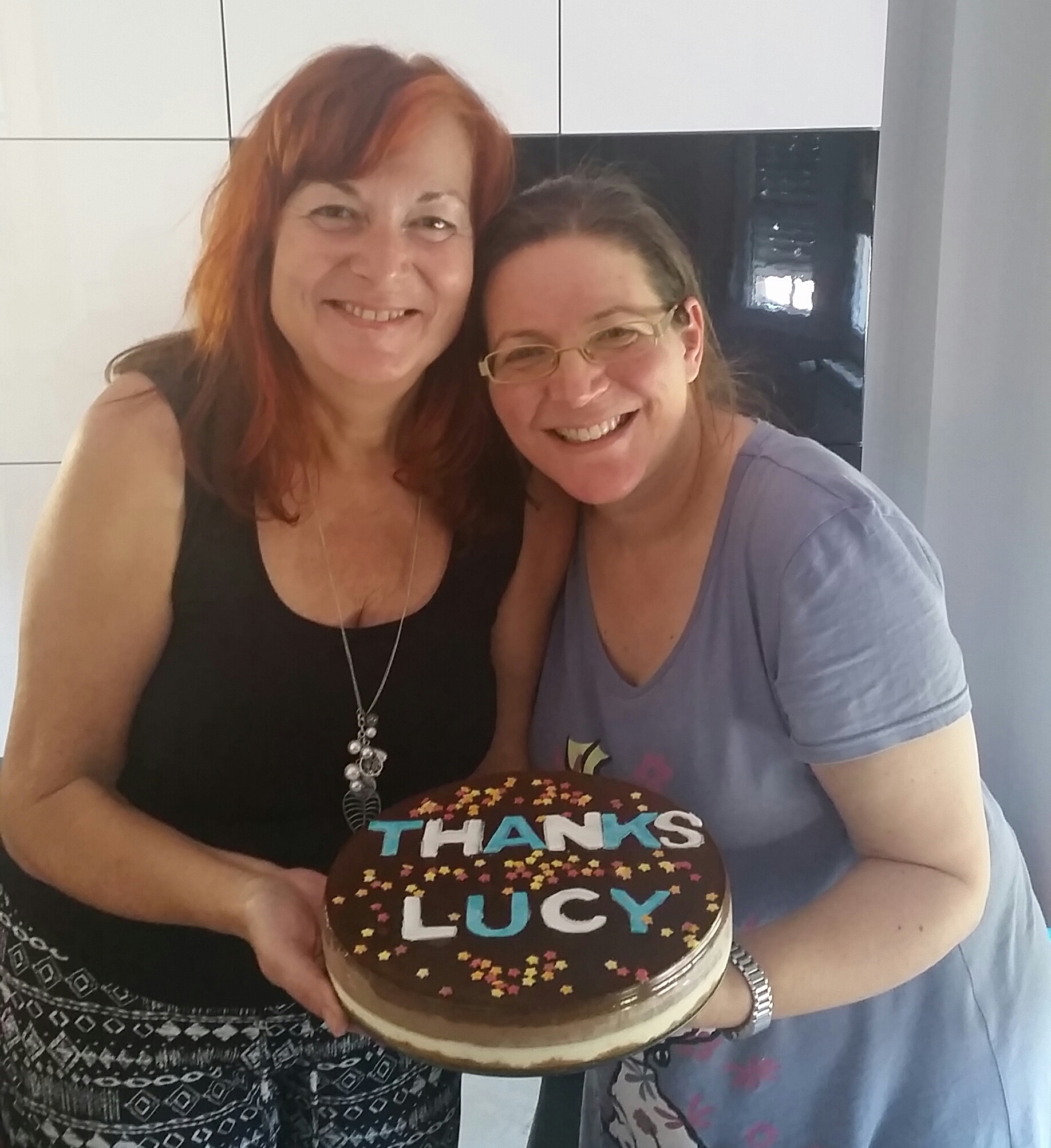
I’m fortunate enough to have quite a few best friends, who have become special to me over the years. The negative aspect is that many of them live far away, and by far I mean a plane trip away, so I don’t see them as often as I’d like to.

wp-1487798164003.jpg
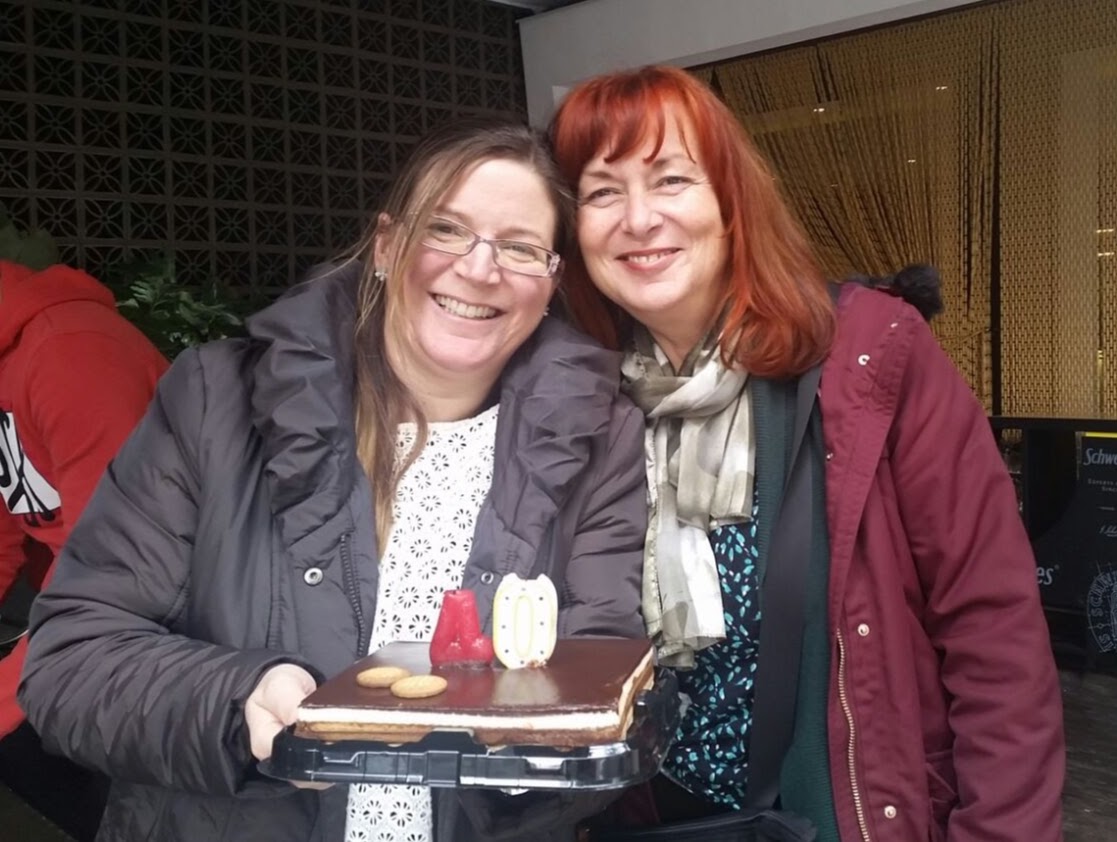
Gabriela and Lucy at a staff meeting last June.

Gabriela is one of the best friends I miss. We’ve been friends and colleagues for about ten years. When I met Gabriela,  she was single and footloose and fancy free! Now she has a wonderful husband and two lovely children. Since then we go put even more because her children and my grandchildren are the same age and they get on famously, so we go on plenty of outings together and have fun with the children.

wp-1487187948185.jpg
Gabriela and Lucy making a cake!

But this year she’s working in Iowa and I live in the south of Spain, so although we skype and chat on whatsapp frequently, we’re living on different continents, and I miss her a lot.

wp-1487798660454.jpg

I miss her laughter, the shared coffees at school breaks, writing up reports together and preparing activities with our students.

wp-1487798510252.jpg
Gabriela and Lucy having a coffee and cake during school mid-morning break

I also miss baking biscuits with her, taking the children to the fun fair, and going to the cinema together.

We’re definitely a good match, probably even a great match. I know she’s also missing her family and friends in Spain, so she’s going to love reading this post.💗

wp-1487798774202.jpg
Gabriela and Lucy having fun at the Fair last May.

Fortunately she’s coming to Spain for  short break next month, so I can stop missing her for a short time!

wp-1487798585232.jpg
Gabriela and Lucy winding down after a busy week with a glass of wine!

She cheers me up when I’m fed up, she listens and consoles me when I’m feeling annoyed, and she encourages me when I want to give up, and I do the same for her. 

I don’t know what I’d do without my best friends, and you?

#1lineWed **FAME** @jackiefilm #filmreview

Pearls are always appropriate, but nothing tells the story of fame and loneliness like an Oscar. 

pearls-jackie

I’ve just been to see the film, Jackie, and I’d like to tell you how I feel about it.

Jackie is a very intense and dramatic fim. Natalie Portman is on the screen non-stop the whole film. She does a great job, but so much of Jackie becomes almost claustrophobic. 

In spite of her constant presence, I’m not sure if we really get to know Jackie very well, which is a bit frustrating. The film deals with the days leading up to J, F. Kennedy’s funeral after his assassination.

There’s a lot about the Whitehouse decoration, but hardly any aspects of their marriage, family life, or Jackie’s personal life, are mentioned. 

We observe a woman who is in a state of shock, and who wouldn’t be when her husband’s brain is splattered all over her skirt? Understandably, she doesn’t show her real self, or the best of herself, and I missed seeing more of the ‘normal’ Jackie.

We know nothing of Jackie the mother, the wife, the daughter, the friend, or the person at all.

She is a woman who is grieving and obsessed with making sure her husband’s funeral is as grand and stately as she believes he deserves.

What struck me most, was her loneliness. She handles everything on her own, except for some help from her brother-in-law, Bobby, and Nancy, her personal assistant at the Whitehouse. She can’t sleep, and is seen to be on medication, chain-smoking, and always on her own.

Of course, there are people around her, but there seems to be no one she can talk to. Where are her friends? family? her husband’s family?

It amazed me that no women were there to hold her hand through the ordeal. Didn’t she have any sisters, or sisters in law, or best friend to hold her hand?

Peter Saarsgard plays the role of Bobby Kennedy. He’s a great actor, and I enjoyed his performance, but although Bobby comes across as supportive regarding Jackie, we know very little about how he feels for the loss of his brother and the dramatic events taking place in the US at the time. 

The late John Hurt, played the role of priest, who listened kindly and tried to console her, but although he was helpful, what she needed, was something else, namely, a friendly and loving shoulder to cry on. 

wp-1487784988980.jpg

Finally, Jackie only tells us what she wants us to know, She insistently tells the reporter, on whose interview this film is based, that certain things disclosed cannot be printed. For example, she tells him that he can’t say she was a smoker. If she’s prepared to lie about smoking, presumably because she thought it would harm her image, what other things might she lie about for the same reason?

To sum up, the film introduces us to an unstable and unreliable woman. whose husband has just been killed. A woman who is mainly concerned with keeping up a brave and stately front for the world to see and history books to record. Jackie is playing the part of America’s widow, because she knows that’s how she will be remembered, and she wants to win an Oscar.

As far as I’m concerned, both Jackie Kennedy and Natalie Portman deserve the Oscar for their outstanding performances. I’d give them 5 out of 5 stars.

By the way, the music score was fabulous. It conveyed sadness, distress, and distortion. Here is a short clip.

More information about the film here

Follow the film on twitter here

Have you seen the film? What did you think?

Thursday photo prompt: Winter Tryst #writephoto #amwriting #poetry

This poem was written in response to Sue Vincent’s Thursday photo prompt

writephoto

Use the image below to create a post on your own blog… poetry, prose, humour… light or dark, whatever you choose, by noon (GMT)  Wednesday 22nd February and link back to this post with a pingback.

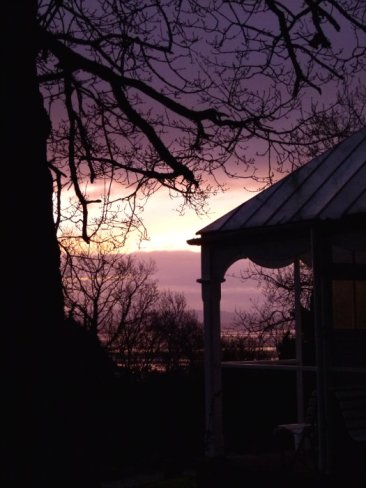
summerhouse


Winter Tryst.

The longest season beckons

The coldest winds.

The barest trees shiver across

The barren land.

And yet the sun is kind.

Its golden rays

Tinge chilly skies in shades of pink

And lilac hues,

While a rocking chair waits patiently

On the lonely porch,

For March to bring the warmth of

Spring.


#TuesdayBookBlog #amreviewing Eclipse Lake by @MaeClair1 for #RBRT

I recently read and reviewed Eclipse Lake by Mae Clair for Rosie’s Book Review Team.

eclipse-lake

Here’s my review (5 Stars)

A dramatic and heart warming tale of forgiveness, love and redemption.

Dane is the successful and millionaire CEO of a security company in San Diego. He’s been a widower for three years, and lives with Jesse, the teenage child he adopted when he was six years old and married his mother.

He’s never told Jesse about his past, until the day he takes him for a visit to Onyx, the small town in Pennsylvania he left fifteen years ago, when he was seventeen.

‘You told me your parents were dead.’ (says his son)

‘Sometimes people say things because it’s easier than explaining the truth.’

Dane has been telling plenty of lies to his son, especially by omitting details about his past, but the time has come for Jesse to own up and make peace with his dark teenage years.

His parents are dead, but his only sibling, Jonah, a Park warden at the beautiful Eclipse Lake resort, the local tourist attraction, is very much alive and not pleased to see his rebellious and criminal brother at all.

Once there, the reader will meet all the other locals, the teenagers such as Page and Zach, who will befriend Jesse, the unfriendly sheriff, April, the deputy, and Ellie, a photojournalist who will become a significant person in Dane and Jesse’s lives.

Coinciding with their arrival, a skeleton is found at Eclipse Lake, initiating a murder investigation, which directly affects Jesse and his family.

This beautiful novel is a family drama, a crime story, a romance, and a young adult novel, all rolled into one.

It deals with themes such as redemption, honesty, friendship, mature love and relationships, adolescent relationships, and complex family dynamics.

At the centre of the story is the relationship between Jesse, Jonah, and Dane. It’s about the relationships between brothers, between father and son, and uncle and nephew.

It’s a dramatic, but also heart warming story about second chances, forgiveness, redemption and the power of romantic, filial and brotherly love.

Eclipse Lake is so well written that by the time I finished reading, I felt I knew the characters and had even visited Onyx and Eclipse Lake, myself.

It was a pleasure to read and review for Rosie’s Book Review Team (#RBRT).

Buy links: Amazon US  and Amazon UK

mae-clair


Other books by Mae Clair

Author bio

Mae Clair opened a Pandora’s Box of characters when she was a child and never looked back. Her father, an artist who tinkered with writing, encouraged her to create make-believe worlds by spinning tales of far-off places on summer nights beneath the stars.

Mae loves creating character-driven fiction in settings that vary from contemporary to mythical. Wherever her pen takes her, she flavors her stories with conflict, mystery and a dash of romance. Married to her high school sweetheart, she lives in Pennsylvania and is passionate about folklore, old photographs, a good Maine lobster tail and cats.

Discover more about Mae on her website and blog,

****

See all Luccia Gray’s reviews on Amazon

wp-1487683692942.jpg

Follow Luccia Gray on Social Media:
Twitter

Facebook

Goodreads

Check out Luccia Gray’s Books on Amazon 

#CarrotRanch #FlashFiction Challenge: Watching the Hanging @Charli_Mills

This post was written in response to Charli Mills at Carrot Ranch’s weekly Flash Fiction Challenge

february-16

February 16, 2017 prompt: In 99 words (no more, no less) write a story that includes a watcher. Respond by February 21, 2017 to be included in the compilation (published February 22). Rules are here. All writers are welcome!

Here’s my take:

Watching the Hanging

‘We’re going to Horsemonger Lane, Boys,’ said Fagin.

Dodger pulled away. ‘Ain’t nothing there except Southwark prison.’

‘A public hanging!’ said Fagin.

When they arrived, the street was teaming with watchers, howling, screeching and yelling like animals.

Oliver gasped. The place was crawling with thieves and prostitutes fighting and shouting obscenities.

‘Might as well get some work done. Look, there’s a fancy looking toff over there,’ said Fagin, pointing to Charles Dickens.

‘Bet I can half inch his bread and honey,’ bragged Dodger.

‘Watch the hanging carefully, boys,’ warned Fagin. ‘Remember, if you get caught you’ll be brown bread.’

****

Some words explained:

Toff (Victorian slang) = rich man

Half inch (cockney slang) = pinch (London/UK slang) = steal

Brown bread (cockney slang) = dead

fagin__oliver_and_dodger_six__by_thebarefootedsasha oliver

The former flash fiction was inspired by a real event, which took place in London in 1849.

Dickens attended the execution of Mr. And Mrs. Manning, convicted of murdering a friend and stealing his money, on November 13, 1849 at the Horsemonger Lane Gaol in Southwark.

It was called the “Hanging of the Century” at the time because it was the first husband and wife execution in 150 years. Dickens and a huge crowd of rowdy, blood-thirsty Londoners (between 30 and 50 thousand) watched the public execution, performed outside the prison.

maria-and-frederick-manning
                         Maria and Frederick Manning.

Dickens wrote a scathing letter to The Times condemning the crowd, which can be read at the end of this post.

There were thousands of public hangings in the UK in the 19th century (more figures here). It was indeed a harrowing practice, meant to deter possible criminals, although it actually had the opposite effect. Pickpockets, prostitutes, and all types of petty criminals gathered around the event to carry out their illicit jobs. The police were enormously relieved when public hangings were abolished in England and Scotland, in 1868, because they drew huge crowds and greatly altered public order.

Public executions, and other types of punishment, have been part of most world cultures over the centuries. Looking back always makes me think what a long way we’ve come in Europe, from being the bloodthirsty barbarian spectators at the Roman coliseum, through public punishments such as whippings, the stocks, the pillory, to abolishing capital punishment altogether from our legal system in the 20th century. 

More about public hangings in the UK here.

Conclusion: violence does not deter violence, it breeds violence.

I’ve learnt over time, that all problems have simple solutions, or none at all:

If there’s a solution, Education is almost always the answer.

It’s a simple solution, but it’s not cheap to organise and offer or easy to train teachers and reach students, nevertheless it’s always worthwhile and rewarding.

Children without an education, like Oliver and Dodger in Victorian England, stood a 50% chance of being hanged or imprisoned, as Dodger will no doubt be in the future, as Bill Sykes and Fagin were, or ‘saved’ by a kinder, more socially conscious society, who will educate them and enable them to lead criminal free lives, like Oliver.  

I’ve also included Dickens’ letter condemning the event, below.

English novelist Charles Dickens (1812 - 1870), circa 1860. (Photo by John & Charles Watkins/Hulton Archive/Getty Images)
English novelist Charles Dickens (1812 – 1870), circa 1860. (Photo by John & Charles Watkins/Hulton Archive/Getty Images)

Some people at the time, and even today, unbelievably accuse him of being bloodthirsty himself, for watching the hanging. Well, that’s like accusing a war correspondent of enjoying a war; a bit of twisted logic, I’d say.

Dickens’ letter to The Times Nov. 13, 1849

I was a witness of the execution at Horsemonger Lane this morning. I went there with the intention of observing the crowd gathered to behold it, and I had excellent opportunities of doing so, at intervals all through the night, and continuously from day-break until after the spectacle was over… I believe that a sight so inconceivably awful as the wickedness and levity of the immense crowd collected at that execution this morning could be imagined by no man, and could be presented in no heathen land under the sun. The horrors of the gibbet and of the crime which brought the wretched murderers to it faded in my mind before the atrocious bearing, looks, and language of the assembled spectators. When I came upon the scene at midnight, the shrillness of the cries and howls that were raised from time to time, denoting that they came from a concourse of boys and girls already assembled in the best places, made my blood run cold. As the night went on, screeching, and laughing, and yelling in strong chorus of parodies on negro melodies, with substitutions of ‘Mrs. Manning’ for ‘Susannah’, and the like, were added to these. When the day dawned, thieves, low prostitutes, ruffians, and vagabonds of every kind, flocked on to the ground, with every variety of offensive and foul behaviour. Fightings, faintings, whistlings, imitations of Punch, brutal jokes, tumultuous demonstrations of indecent delight when swooning women were dragged out of the crowd by the police, with their dresses disordered, gave a new zest to the general entertainment. When the sun rose brightly-as it did-it gilded thousands upon thousands of upturned faces, so inexpressibly odious in their brutal mirth or callousness, that a man had cause to feel ashamed of the shape he wore, and to shrink from himself, as fashioned in the image of the Devil. When the two miserable creatures who attracted all this ghastly sight about them were turned quivering into the air, there was no more emotion, no more pity, no more thought that two immortal souls had gone to judgement, no more restraint in any of the previous obscenities, than if the name of Christ had never been heard in this world, and there were no belief among men but that they perished like the beasts.

****

I love that Dickens wrote to make the world a better place, and campaigned for civil rights and a more socially conscious society in his private life, too. How can anyone not admire him?