Carrot Ranch #FlashFiction Challenge: Victorian Orphans Cracking Rocks

This post was written in response to Charli Mills’ weekly fiction challenge at Carrot Ranch.
february-2

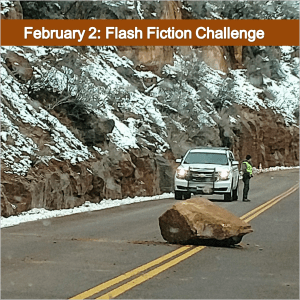
This week’s prompt: In 99 words (no more, no less) write a story about a rock in the road. It can be physical, adding to a plot twist, or it can be metaphorical for a barrier or hardship. Go where you find the rock.  All writers are welcome!

As usual, the prompt has taken me back in time, to Victorian England, once again.

****

Cracking rocks and other chores

‘You’ll get up at 5, carry hot water and light the hearths in all the bedrooms.’

‘Yes, sir.’

‘After breakfast, you’ll empty the latrines and make the beds.’

‘Yes, sir.’

‘Then you’ll prepare lunch and do the laundry.’

‘Yes, sir.’

‘Such a pretty girl, but so frail.’ He smiled maliciously. ‘The master may use you for other chores.’ 

Let him try, I thought.

He wasn’t to know I had worked cracking rocks with a heavy hammer all day, until I splintered the forman’s skull when he put his hand down my breeches and discovered I wasn’t frail at all.

****

Children from the age of eight were exploited sexually and in the workplace in Victorian England. It wasn’t unusual for young girls to disguise themselves as men in order to do male chores, or escape male attention. On other occasions, it was the men who were disguised as women to do women’s chores. In any case, children, often abandoned orphans, trying to survive in large cities, had to learn to fend for themselves from an early age, or perish. This is another post, including flash fiction, I wrote about Oliver Twist and the subject of child labour and orphaned children in Victorian England.

In this flash, the narrator is a girl, who had been disguised as a boy while she had worked cracking rocks. She reverted to her female role and clothes to escape being caught as a murderer. Her new master would do well not to believe she’s unable to defend herself!

****

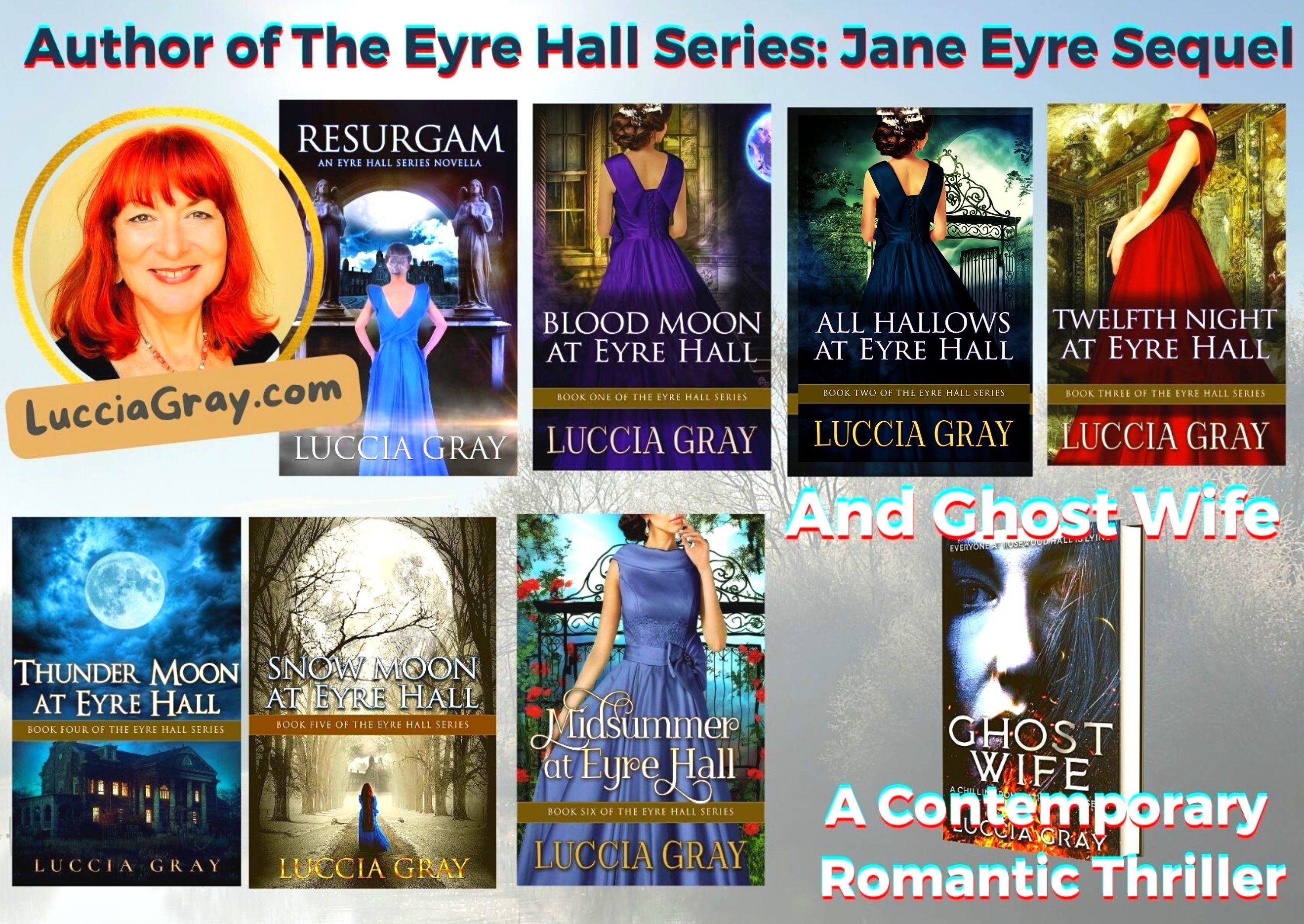
In The Eyre Hall Trilogy, my sequel to Jane Eyre, Susan and Michael Kirkpatrick were orphans, who Jane Eyre employed at Eyre Hall, when they were 14 and 16, respectively. They had been living in a workhouse in London, as many orphaned children at the time. The following paragraphs are taken from All Hallows at Eyre Hall. Michael narrates this passage some years later, as an adult, recalling how Jane, like many other wealthy people living in rural areas, was unaware of life in a London workhouse.

It’s a moving and important extract, because Michael also describes the moment he fell in love with Jane, when he was a young boy. Although Michael had been obsessed with Jane from the first time he saw her at the age of fourteen, Jane didn’t fall in love with Michael until he was an adult and her husband lay on his death bed. Their love affair brings great heartache and trauma to both of them, but they manage to overcome all the emotional and physical demons they face.

****

“Have you ever worked?” she asked us, and Susan told her we had done the workhouse chores, such as oakam breaking, which made our fingers bleed. She had not heard of it before, so Susan told her how we had to tease out fibres from old ropes to produce lots of thin loose fibres. “Whatever for?” she asked, quite aghast, and Susan told her the strings were later sold to shipbuilders, where they were mixed with tar and used to seal the lining of wooden vessels.

Susan told her I was a strong boy and used to hard work, because I often cracked granite rocks with a heavy hammer ten hours a day. Again she asked, horror-struck, for the reasons, Susan told her the chippings were carted away by older men, who were not strong enough to crack them, and were then probably used in construction works. Susan proudly explained that with the pennies earned, usually not a shilling a day between us, we were able to buy food, some clothes, and borrow books and magazines to read by candlelight.

When she asked how long we had been there, Mrs. Rochester was again appalled to hear we had been there for two years, since our mother had died. She asked her about our life prior to our mother’s death, and Susan explained we had lived in a rented room in Morton.

She looked at me sadly and asked if I did not speak, and I could only gaze at her face and think how very kind and beautiful she was. Susan told her I was shy, but that I spoke, read, and wrote very well, because our mother had taught both of us to do so. My mistress put her hand up to my face, lightly touching my cheek, and sighed, looking straight into my eyes, as if she were searching for something. It was the moment I fell under her spell. No one had ever touched me like that before, with such concern and affection, not even my mother, who had been too sad and overworked to bestow such warmth. Then Mrs. Rochester spoke to Susan and said someone would teach us our new jobs at her house.

Today is Charles Dickens birthday (February 7th, 1812). I’m not going to praise him yet again, because you all know how important his work is for World Literature and my own literary mind. He also makes a personal appearance in Twelfth Night at Eyre Hall, and is a vital part of Jane’s recovery in Midsummer at Eyre Hall, although he is no longer physically present.

Here I am beside Charles Dickens’ portrait at the National Portrait Gallery in London, a few months ago.

with-charles-dickens

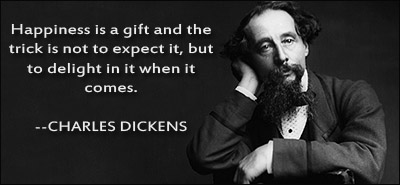
There are so many things I could say and so many words I could quote to honour Charles Dickens’ memory today,  but I’ve decided to include the following quote, which is not my favourite, but it’s appropriate for a happy day like today!
charles_dickens_quote_2

Hope you’re all having a wonderful 7th of February!
WRITESPIRATION @sacha_black #101 52 WEEKS IN 52 WORDS WEEK 5 Heaven

This post was written in response to Sacha Black’s weekly prompt for 2017 (52 weeks in 52 words).  Join in here!

Sacha will post one prompt a week for 52 weeks, and the challenge is to write a story in just 52  words exactly. Sounds like a fabulous idea. The value of conciseness for a writer is invaluable, as Sacha herself reminds us: ‘The art of being concise is nothing if not a muscle flexing ‘write’ bicep curling device’.

wp-1483909729256.jpg

This week’s prompt: Somewhere in your 52 words you need to include ALL the following words: Time, Stack, Juice, Pigeon.

This week’s prompt took me straight to heaven…

Heaven


Some people think they can conquer time.

They’re wrong.

The odds are stacked against them.

However hard they struggle, their juice will run out,

Because time’s like a homing pigeon.

It can fly long distances, but there’s no escape.

In the end we always come back home, to our safe place.

Heaven.  

****

Heaven’s such a geat place to be, but such a terrible place to be locked out of…

Here’s one of my favourite songs, Locked out of heaven 


It’s also the title of Chapter XI in Midsummer at Eyre Hall. The chapter is narrated by Michael.

The first line of the chapter: ‘The journey from Kilpeck to St. Ives was longer and more dangerous than I had imagined.’

The last line: ‘I was losing her, and I felt as if I were locked out of heaven.’


#FridayBookShare ‘And Then She Was Gone’ by Christopher Greyson @Chris_Greyson

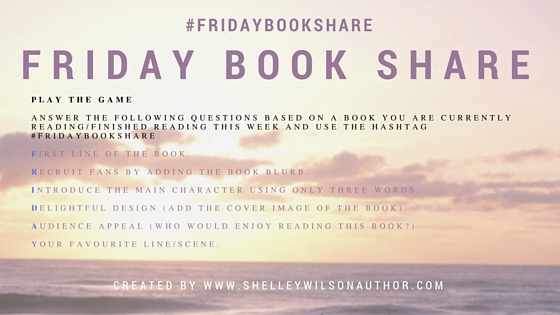
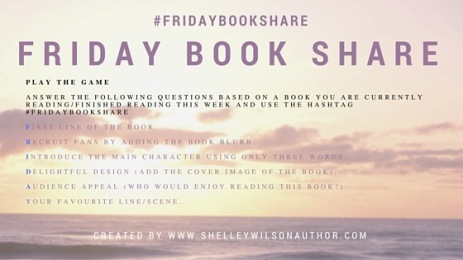
#FridayBookShare was created by Shelley Wilson for book lovers to share what they’re reading. The idea is to answer a few simple questions about the novel and post on Fridays.

friday-book-share

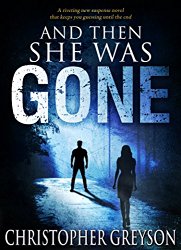
Today, I’d like to share And Then She Was Gone by Christopher Greyson

First line of the book.

“Help me!” The old woman’s desperate plea rose above the din of the afternoon traffic.

Recruit fans by adding the book blurb.

Stacy Shaw has her whole life ahead of her. New job, new house and now a baby on the way—everything she’s ever hoped for is finally coming true. But on a warm summer night on the way home from work, she vanishes. The police race to find her, but the clues don’t add up. Conflicting facts emerge as her story twists and turns, sending the trail spiraling in all directions.

A hometown hero with a heart of gold, Jack Stratton was raised in a whorehouse by his prostitute mother. Jack seemed destined to become another statistic, but now his life has taken a turn for the better. Determined to escape his past, he’s headed for a career in law enforcement. When his foster mother asks him to look into the girl’s disappearance, Jack quickly gets drawn into a baffling mystery. As Jack digs deeper, everyone becomes a suspect—including himself. Caught between the criminals and the cops, can Jack discover the truth in time to save the girl? Or will he become the next victim?

And Then She Was Gone is part of the Detective Jack Stratton Mystery Series, which has more than 2,000+ five-star reviews and over half-a-million readers and counting. If you love a page-turning thriller with mystery, humor, and romance, pick up And Then She Was Gone today.

Introduce the main character using only three words.

Jack is impulsive, big-hearted, perceptive.

Delightful design (add the cover image of the book).

gone

Audience appeal (who would enjoy reading this book?)

Especially for readers who like contemporary crime fiction, with lots of action and engaging and controversial characters.

Your favourite line/scene.

Jack and Chandler are two best friends who have met through the foster care system they’ve both been part of. Chandler is more sensible and helps Jack control his headstrong character. Their friendship and witty banter is one of the best parts of the novel.  

****

 The pull of hate and anger inside Jack was strong, and he found himself frequently drawn to the darkness. But Chandler always had a way of coaxing Jack back from the edge. The thought of what Jack would have become without all those years of his friend’s help made Jack’s stomach churn.

He shoved Chandler’s shoulder, and his big friend laughed. Jack had never understood how Chandler and Michelle had turned out so normal. They’d lost their parents when they were both little, yet they didn’t seem to bear the scars Jack did. He felt like a jigsaw puzzle with a bunch of pieces missing. But them? They seemed happy all the time.

As they neared the end of the street, Chandler asked, “Are we cutting through?”

****

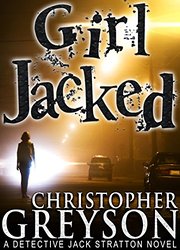
And Then She Was Gone is the first book in the Detective Jack Stratton crime thrillers. Jack is an underprivileged youth, living in foster care, who is eager to join the army before his life long dream to being a detective. Book two, Girl Jacked, jumps ahead nine years, and we meet Jack Stratton, the man who has finally become a police officer.

girl-jacked

Link to my complete review on amazon

#IWSG Writers as Readers @TheIWSG #amreading #amwriting

This post was written in response to the Insecure Writer’s Support Group monthly (first Wednesday of every month) blog hop to where writers express thoughts, doubts and concerns about our profession.

Let’s rock the neurotic writing world! Our Twitter handle is @TheIWSG and hashtag is #IWSG

insecure-writers-support-group-badge

Every month there’s an optional question to discuss.

February 1 Question: How has being a writer changed your experience as a reader?

I prefer reading to writing. I’ve said this before. I spend more hours reading than writing most of the time, except when I’m in the final stages of drafting, rereading and editing my latest novel, and I become almost exclusively obsessed with finishing it and doing nothing else.

I was/am a reader first.

I loved being just a reader, but that didn’t last very long. I soon started writing poems, short stories, anything to let my imagination fly and invent people, places and plots.

20160724_121804.jpg

However, at first, I didn’t take my writer’s life very seriously. It was just an enjoyable, almost secret, hobby, until I owned up to it and decided I was going to pursue my life long dream.

That was four years ago, in June 2013, when I decided I was going to write the sequel to Jane Eyre, by July, I realised I needed to write more than one novel, because the characters had so much to say and do, and the plot kept growing in several directions, so The Eyre Hall Trilogy was born and written over the next four years.

I didn’t feel like a ‘real’ writer immediately, but four years and three novels later, I shamelessly admit I’m an author. Not everybody likes what I write, and that’s fine, I don’t like everything I read either, but I’m an author. I can write, I enjoy writing, and many readers are reading my books, so I feel part of this wonderful profession. I also have many insecurities, which is why I’m part of this blog hop!

Going back to the original question, I still read a lot. I read and reviewed 19 novels in January, but I definitely do not read in the same way I read before.

I read more critically for two reasons, firstly to improve as a writer, and secondly to help other readers find books they might like.

reading

I never used to review books on social media before I started writing. I had the idea that reviews were written by experts only. Since I started writing, I review almost all of the books I read, because I’ve realised that anyone who reads a book can and should give an opinion to help other readers decide if it’s a book for them, and of course as an act of solidarity and support to other authors like myself.

I don’t review books I dislike. I don’t like to think I’m discouraging writers or pointing out negative aspects of their work publicly, which may be partial and subjective in any case. I carry this philosophy to the rest of my life. I’m a parent, a grandparent and a teacher, and I make an effort to point out people’s strong points, while I also encourage them to improve. I’ve never seen the point in being negative, and it generally builds an even more negative response.

Every single book I read teaches me something about writing, and it’s not always a positive lesson. It often shows me what I shouldn’t be doing and it helps me understand why.

For example, I’ve learned how important secondary characters are for the reader. I feel dissatisfied as a reader with books where the main characters are engaging and the rest of the characters are wooden. It’s like watching a film with only two good actors, the rest are extras reading their lines.

I’ve also learned that less is more. Trusting readers and enticing them to reach their own conclusions is more effective than spelling it all out constantly.

When I read a book I wish I’d written, that’s the greatest moment of all. I have a role model, someone to aspire to follow, and I don’t mean copy. Great books are an inspiration for readers and writers.

The books I wish I’d written are well-crafted, with tight and twisting plots, believable, engaging and varied characters, a moving story, and a pleasure to read, because the language flows easily, and it all comes together perfectly.

This is what happens in Ken Follett’s Century Trilogy, which I started reading last year, I’m in the middle of the final book in the trilogy, The Edge of Eternity right now, and loving every minute.

century-trilogy


I’m learning so much by reading these books and reading Ken Follett’s Masterclass on his webpage.

These are some other great books I read last year. Some extraordinary books I read in 2016 are reviewed here. 

So, do I read in the same way now as I did before I started writing professionally?

The answer is no, I don’t read in the same way since I’ve become a writer. I read more critically, and I enjoy it much more, because I try to squeeze out, every ounce of knowledge and craft the author I’m reading has learned.

What about you?


Carrot Ranch #FlashFiction Challenge: Creating Jane Eyre

This post was written in response to Charli Mills Weekly Flash Fiction Challenge, at Carrot Ranch.

January 26, 2017 prompt: In 99 words (no more, no less) write a story using the theme, “women create.” It can be art, sewing, ideas, babies. What is at the heart of women as creators? Go where the prompt takes you.

january-26


Creating Jane Eyre

“Who’s the author of this abhorrent attempt at a novel?” asked Lady Eastlake.

“Currer Bell,” replied Mrs. Mozley.

“Who on earth is he?” asked Mrs. Rigby.

“Some say he’s a woman,” said Mrs. Mozley

“Women don’t describe such coarse and shameful relationships between men and women,” snapped Lady Eastlake.

“Unless it is such a woman who has long forfeited the society of her own sex,” said Mrs. Rigby.

“It’s unchristian. We should make sure it’s banned,” suggested Mrs. Mozley. “Just in case it’s a woman’s creation. Imagine how degrading it would be for the rest of us.”

They nodded.

****

When Jane Eyre (1847) was first published by Charlotte Bronte under the masculine pseudonym Currer Bell, it was received with mixed reviews. Some were highly praising and others harshly critical.

Some of her staunchest critics were female and criticized Jane Eyre for being vulgar, improper, anti-christian, as well as politically incorrect. Her three main female critics were Lady Eastlake, Elizabeth Rigby and Ann Mozley, the three women I’ve brought together in today’s flash.

Among the most outspoken critics was the conservative Lady Eastlake, who accused Charlotte Bronte of lack of femininity, and of agreeing with the working class uprisings of the Chartists, who were demanding votes for the working classes.

In addition to Lady Eastlake, Elizabeth Rigby, an author and art critic, and the first woman to write for the Quarterly review, stated that if the book was by a woman, “she had long forfeited the society of her own sex.” Rigby also considered Jane Eyre  showed “coarseness of language and laxity of tone.” Rigby was especially irate about her unflattering depictions of the aristocracy, accusing Charlotte Bronte of a “total ignorance of the habits of society.”

Ann Mozley, writing for the Christian Remembrancer in 1848, writes “Never was there a better hater. Every page burns with moral Jacobinism.” The Jacobins were French revolutionaries who aimed to abolish the monarchy and do away with class distinctions, as well as instituting a universal vote, an idea abhorrent to upper class, Anglican Britons.

According to these and other critics, Jane Eyre challenged traditional views about how women should act and behave, and therefore threatening the established social order.

Jane is indeed rebellious and demands respect and equality, although she knows her place, she also believes that her fate isn’t written in stone. Here are her unforgettable words to overbearing Mr. Rochester:

jane-quote-1

Fortunately, we’ve come a long way since the 19th century. Censorship, accepting injustice and exploitation, and gender, racial or religious discrimination is something we aim to overcome.

Well done Jane Eyre for shocking them all out of their complacency!

You’d be happy to know that my sequel takes up her fiercely independent, outspoken and resilient, free spirit.

In Twelfth Night at Eyre Hall, Charles Dickens visits Jane Eyre (at that time, Mrs. Mason) at Eyre Hall for a few days over Christmas. Dickens confesses that he has left his wife and has a young mistress, although it is a well kept secret, because he is not prepared to affront the establishment. When Jane tells him she is having an affair with Lieutenant Kirkpatrick, her former valet, and she is no longer hiding her feelings, he replies:

“How invigorating! Are you going to shock us all and defy the laws of propriety? How brave of you!”    

That’s my Jane!

January Reviews: 19 Fabulous Novels #amreading #amreviewing

  • What Have I been reading and reviewing in January?

19 Books! I’ve had a wonderful January. I’m sure I have broken some kind of record; I’ve never read so many books in one month in my life, and I’ve enjoyed them all thoroughly. This may have been due to the fact that I’ve been in bed a good few days with the flu, and enjoyed many cosy evenings reading by the fireplace, whatever the reason, I feel very inspired!

I’ve experienced passion, adventure, crime, love, fear, terror, madness, heartbreak, loss, forgiveness, distress, happiness, and laughter. I’ve travelled to the Scottish Highlands, an idyllic Irish island, The English countryside and London, Maine, New York, Boston, US small towns, an enigmatic lake in US, the wilds of Alaska.

So, I’ve had plenty of fun!

93578-book-review

  • The books I didn’t review.

I’ve read and reviewed 19 books. I’ve also started many others, but didn’t get past the ‘look inside’ pages, because I didn’t enjoy reading, so I didn’t finish, and therefore didn’t review.

I don’t review the books I dislike, for two reasons:

1) I didn’t finish them, so it seems unfair, who knows if the book improved?  Perhaps I wasn’t in the mood for that type of book on that particular day?

2) I don’t like sending negative messages into the world. What’s the point?

You may say ‘to warn readers’. Readers can read blurbs and 10% of the book for free, so in less than five or ten minutes, they’ll know if they want to buy it or not.

I’m not on a crusade to save readers, they are perfectly capable of saving themselves!

My aim is to point out the positive aspects of the books I enjoy, hoping that others will enjoy them, too, and I’m also supporting other authors.

magic

  • Why do I read?

1- To Unwind. A cup of tea or glass of wine depending on the day, and a book I enjoy is a wonderful end to a busy or boring day.

2- To Learn. I read to observe how other writers write. I check out everything! From formal aspects such as the blurb, the acknowledgements, whether the chapters have names or numbers, or both, to linguistic and literary aspects such as the use of dialogue tags, adverbs, prologue or epilogue, characterisation, plot development. I usually highlight along the way, so I go back and have a look later. It’s easy to do with the kindle app.

3- To Research. I read to try to understand why I (and other readers) enjoy reading the books I/they read. What makes a book compelling? It’s like an assignment. The best way to learn to write is not necessarily to read books on writing, it’s to read books critically and with an observant and open mind. I’m not only reading, I’m also learning to write, which is an ongoing process. And believe me, every single page I read teaches me something about my own writing process.

reading

Going back to my reviews. There are far too many reviews to include in one post, so I’m going to be posting them over various days and weeks.

This is a peek of the reviews I’ll be posting:

The retelling of Beauty and the Beast set in the Scottish Highlands, two erotic romances, a disturbing tale of horror and madness, two romantic comedies, a sweet Christmas themed love story, a courtroom thriller, an Intense romantic trilogy set in Manhattan, an action packed romance set in Alaska, A disturbing psychological drama set in the UK, a contemporary family drama set in an American small town, A heartwarming love story of two families who have suffered loss through cancer, a romantic family drama set in Ireland, Crime fiction set in Maine, A historical romance set in Edwardian England, a sweet and humorous office romance, two thriller suspense novels.

Here are two of my favourite this month:

gonegirl-jacked

I’m penning mostly shorter, more concise and quicker reviews, because I need more time for reading and my own writing, and I believe they’re more helpful to readers and authors.

In some cases, I’ll be including short author spotlights or interviews, with my review.

If you’re very impatient and want to read my reviews straight away, my reviews are all here on amazon 

They’re also posted to my Facebook page Lucy Shares Lovely Books, where I let readers know what I’m reading, what I’m reviewing, and news about book promotions.

What have you been reading in January?

#SilentSunday and #sixwordstories Flowers 

Love. So beautiful yet so dangerous.


Then she smiled, lighting my life.

WRITESPIRATION #100 52 WEEKS IN 52 WORDS WEEK4 #FlashFiction 

This post was written in response to Sacha Black’s third weekly prompt for 2017 (52 weeks in 52 words).  Join in here!

52-words

Sacha will post one prompt a week for 52 weeks, and the challenge is to write a story in just 52  words exactly. Sounds like a fabulous idea. The value of conciseness for a writer is invaluable, as Sacha herself reminds us: ‘The art of being concise is nothing if not a muscle flexing ‘write’ bicep curling device’.

Today’s topic is 100, because it’s the 100 anniversary of Sacha’s writespiration weekly prompts.

100 is a bit of a daunting number, most of us will never reach that number of years, and let’s face it, tiny, limited, insignificant human beings that we are, if we can’t see it, hear it, feel it, understand it, or aspire to get there, we don’t believe in it, do we?

100 makes me feel tiny and huge at the same time.


Tiny because there are so many things I’ll never see, do, feel, hear, or understand, and huge because I’m part of that amazing, ever-expanding, wonderous universe I’ll never understand…

****

100 numbers

‘100 isn’t a lot, is it?

Seconds: 1.4 minutes

Minutes: 1.4 hours

Days: 3.4 months

Weeks: 1.9 years

Years: A century

1/10 of a millennium

1/5 of the Christian era

45/billionth of the age of the earth.

Not much, really.’

‘I’d like to live to 100.’

‘I’m quite sure I already have.’

****

100 Mysteries

When I think of big numbers, I think of grains of sand, flowers, stars, the ancient Egyptians, dead sea scrolls, star trek, the universe, eternity, life after death, the meaning of life before death, and things I don’t understand and perhaps never will, but that doesn’t mean they aren’t real, does it?


This reminds me of a poem by Brian Patten, A Blade of Grass 

As I often do, I’ve credited and reworked an orginal work of art, to express what I’m feeling at this moment.

100 Flowers

You ask for a star
I offer  you 100 flowers.
You say it’s not good enough.
I say these flowers will do.
You say it is too easy to offer 100 flowers.
So I write you a tragedy about
How 100 flowers
Are so easy to give and so hard to accept.

#FridayBookShare Death by Pumpkin by N. A. Granger @rhebrewster

#FridayBookShare was created by Shelley Wilson for book lovers to share what they’re reading. The idea is to answer a few simple questions about the novel and post on Fridays. Anyone can join in!

friday-book-share

Today, I’d like to share Death by Pumpkin by N. A. Granger

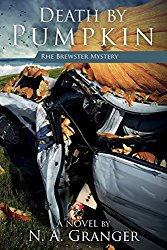
Death by Pumpkin is the third novel in the Rhe Brewster Mysteries, set in Pequod, a fictional town located in the coast of Maine. It can be read as a standalone, but the main characters are so engaging you’ll enjoy the series more if you start reading from book one, Death on a Red Canvas Chair reviewed here. And book two, Death on a Dacron Sail, review here.

death-by-pumpkin

First line of the book.

“Come on, mom! We’re going to be late and miss everything!”

Recruit fans by adding the book blurb.

At the annual Pumpkin Festival in the coastal town of Pequod, Maine, Rhe Brewster, an ER nurse and Police Department consultant, responds to screams at the site of the Pumpkin Drop. Racing to the scene, where a one-ton pumpkin was dropped from a crane to crush an old car, Rhe and her brother-in-law, Sam, Pequod’s Chief of Police, discover the car contains the smashed remains of a man’s body. After the police confirm the death as a homicide, Rhe embarks on a statewide search to identify the victim and find the killer. During the course of the emotional investigation, she survives an attempt on her life at 10,000 feet, endures the trauma of witnessing the murder of an old flame, and escapes an arson attack on her family’s home. There is clearly a sociopath on the loose who is gunning for Rhe and leaving bodies behind. With Sam unable to offer his usual support due to an election recall and a needy new girlfriend, Rhe realizes that the only way to stop the insanity is to risk it all and play the killer’s game. Maine’s most tenacious sleuth is back, this time to confront a menace that threatens to destroy her life and those closest to her. The latest installment of the Rhe Brewster Mystery Series, Death by Pumpkin, is a murder mystery and thriller that tests the limits of Rhe’s strength and resolve like never before.

Introduce the main character using only three words.

Rhe is intelligent, resourceful, and loving

(if I could add more than three, I’d also say brave, adventurous, and generous, determined, and resilient. Her only negative quality is that she’s a terrible cook, although she’s learning!)

Delightful design (add the cover image of the book).

death-by-pumpkin

Audience appeal (who would enjoy reading this book?)

Anyone who likes crime fiction set in an American small town with engaging characters and a great plot.

Your favourite line/scene.

Rhe is very brave and adventurous as a police department consultant, but sometimes dangerous events come her way, such as this near accident on a plane, as a result of being stalked by a deranged killer who has born a grudge against her since childhood.

wp-1485523428252.jpg

She finally manages to land the plane with instructions from the control tower. Of course, she would!

Anybody for a cosy mystery this weekend?

See my complete review on amazon.