#Author Spotlight Karen Long & #BookReview The Safe Word for @BrookCottageBks

TheSafeWordTourBanner

Published January 14th 2014

Genre: Mystery / thriller / crime

Eleanor Raven Series: Book 1

 There are rules that every player of every game must abide by, no matter how dangerous the sport.

Toronto has become the backdrop to a macabre set of artistic installations: women kidnapped, tortured and horrifically displayed by a killer with a vision.

Only someone capable of understanding the killer’s creative desire will be able to stop the murders and D I Eleanor Raven is uniquely qualified. Driven by a complex personality she pursues only the facts, only the things she can see, but never casts a judgement.

But she also has a dark and dangerous secret – one that will threaten her very survival.

The Safe Word

BUY LINKS

AMAZON UK

AMAZON US

B & N

**** PRAISE FOR THE SAFE WORD ****

Just read The Safe Word by Karen Long – an unputdownable serial killer tale. James Purefoy

For DS Eleanor Raven It’s not so much who, what or when but ‘why’ that leads this powerful read to its conclusion and Karen Long reminds us that a brutal, vicious and destructive act is not something inherently ‘Evil’ or derived from Satan but is a rational choice made by a human being. The quirky, offbeat and endearing relationship between Eleanor and her partner Laurence Whitefoot shines a light on this dark compelling world of sexual intrigue and mystery. My imagination was certainly held captive! Robson Green

Most fictional detectives these days have to have a ‘thing’ to set them apart from the others, and Raven’s is one of the most original for a long time. The plot moves in some unexpected directions, and builds to a genuinely exciting climax. The Safe Word is an impressive, confident debut. Convincing characters and some nice twists make for a compelling, satisfying thriller, and I look forward to seeing what’s next for Eleanor Raven. Killing Time

**** My Review ****

You’ll enjoy The Safe Word if you like reading gritty crime fiction with plenty of action and suspense. It will keep you turning the pages to find out who the criminal (in this case the serial killer) is, and more importantly how he’s caught. Eleanor Raven is a brilliant detective, but a difficult person to work with. She has a dark side and a cold and analytical approach, which may help with her detective work, but doesn’t make her very popular with her colleagues, especially not with her new partner detective Laurence Whitefoot. The end is truly gripping, I can say no more without including a spoiler, but I can say I’m interested in seeing how their relationship between the two detectives develops as a result. Both characters are complex, and although Laurence is more likeable, they’re both intriguing. I’d definitely like to find out more about both of them, and watch them unravel more crimes.   

 Karen Long

ABOUT KAREN LONG

Karen Long was born and raised in the English midlands, educated at Bangor University and taught English and Drama for fifteen years. During her teaching years she studied biology and neurology with the Open University and this interest in medicine, forensics and forensic psychology is reflected in her writing. She is an enthusiastic traveller and has spent time in Toronto, which became the backdrop and inspiration for The Safe Word.

She is a keen amateur naturalist with a deep and abiding love for the crow family. She has dedicated time, love and several fingers in an effort to rehabilitate crows, magpies, rooks and ravens.

Karen is happy to correspond with readers and can be contacted through her website KarenLongWriter.com, where she posts regular blogs.

The Safe Word is Karen’s first novel and was an Amazon bestseller, soon to be joined by the second in the Eleanor Raven series, The Vault. Karen is working on the third novel in the series.

AUTHOR LINKS

FACEBOOK

WEBSITE

BLOG

TWITTER

GOODREADS

All author or review enquires please contact Karen Long’s Personal Assistant J.B. Johnston – brookbooks@hotmail.co.uk

Check out Book 2 – The Vault – http://amzn.to/1WSnlDn

book

Did you know that Eleanor Raven is also online?

http://twitter.com/RavenEleanor

https://www.facebook.com/TheEleanorRaven/


GIVEAWAY

1ST PRIZE – SIGNED PAPERBACK OF THE SAFE WORD – OPEN INTERNATIONALLY

2ND PRIZE – ECOPY OF THE SAFE WORD – OPEN INTERNATIONALLY
Enter here


#IWSG Writing Book Three in a Trilogy

This post was written in response to The Insecure Writers Support Group, which posts every first Wednesday of every month.

Insecure Writers Support Group Badge

Today I’m feeling especially insecure and apologetic, as a blogger and as a writer.

I can’t believe it’s been almost two months since I last blogged. I definitely need to explain myself.

Apart from work and a few personal matters, which cropped up unexpectedly and inconveniently, and I’m not going to bore you with, the rest of my time was taken with re-re-re-editing the third and final novel in The Eyre Hall Trilogy. Everything else had to stop, including my blog (and the A-Z Challenge) and most of my social media interaction, because I just couldn’t cope with everything that was going on, and I’d put my book up for pre-order, thinking I had plenty of time… and I didn’t, as always.

I struggled with book one, All Hallows at Eyre Hall, because I was proving to myself (and the unsuspecting world) that I could actually write and publish a novel. In the end I felt and still feel proud of my efforts.

On the other hand, I really enjoyed book two, Twelfth Night at Eyre Hall. I had proved I could do it, so I was just enjoying the ride. Lots of romance, action, adventure and suspense. It’s definitely my favourite.

Unfortunately with book three, Midsummer at Eyre Hall, the insecurity, struggle and strife has returned… in a big way. Can I do it? Can I finish this trilogy the way it deserves? Can I close all the threads? Do I even need to tie it all up neatly? Where do I stop?

I completed my first draft at the beginning of April, and since then I’ve been listening to beta readers’ and editors’ comments and tweaking bits here and there, and adding a chapter, which they convinced me was needed. The whole process has been driving me crazy.

Don’t get me wrong, most of the comments were positive and my ‘test’ readers have enjoyed it, but, there are always comments and suggestions for change or improvement, so over the previous months, I’ve been  focussed on what needed to be improved, which was a stressful focus.

I’m now waiting for the last proofread to be returned to me. Then I have to re-read it once more and make the final decisions before I upload it on kindle next Thursday, the 9th of June. I should be looking forward to it, shouldn’t I? So why aren’t I?

I’m more than insecure this time, because I’m downright terrified of not getting it right and spoiling the end and the whole trilogy.

I can’t wait for next month, when the launch will be over and I’ll be feeling more optimistic perhaps…

How do you feel just before your book launch?

Have you written the third part of a trilogy? What was your experience like?

If you’d like to read some of the other posts by insecure writers, they’re here

10 Differences Between #JaneEyre and Charlotte Bronte #AtoZChallenge #Bronte200

This post is part of this year’s April Challenge to write a post a day. I’ve chosen to write about my greatest literary passion: Jane Eyre. Today, Jane Eyre is going to point out the Ten differences between herself and Charlotte Bronte.

T

I’m very grateful to Charlotte Bronte for making me such a famous person, as Mr. Rochester might say, ‘You—poor and obscure, and small and plain as you are, have become the most famous female literary character in English Literature.’ 

Some readers mistake me, Jane Eyre, the author of my autobiography, for my pen name, Charlotte Bronte. That’s understandable, but there are plenty of differences between us.

If you check out Charlotte Bronte’s biography here and my biography here, you’ll see for yourselves how different our lives were.

But just to clarify matters, there follow Ten Differences between me, Jane Eyre, and Charlotte Bronte, my alter ego:

  1. I was an orphan and Charlotte wasn’t.
  2. I was educated at a boarding school, while Charlotte was educated at home by her father and her aunt.
  3. I had no brothers or sisters and Charlotte had one brother and four sisters (although two died in infancy).
  4. I never left England, and Charlotte travelled to Belgium.
  5. I married at an early age 19-20, and Charlotte married later in life, at 38.
  6. Charlotte wrote fantasy stories from an early age, while I preferred drawing as my creative expression, until after my marriage.
  7. I wrote my autobiography, while Charlotte wrote poems and fictional novels.
  8. I was fiercely independent, yet Charlotte always lived with and obeyed her father.
  9. I was described as beautiful by some and plain by others, read this post, while Charlotte was reportedly very ugly, no question about it. According to her biographer, Mrs. Gaskell, Charlotte had, “a reddish face, large mouth and many teeth gone; altogether plain”.
  10. I inherited a fortune from my uncle and married a rich man, while Charlotte was not rich and married a humble parson.

In spite of all these differences, there are also Ten Similarities  in our lives:

  1. We were both very short and thin.
  2. We were both born and bred in Yorkshire.
  3. We both lived in the 19th century.
  4. We both fell in love with married men.
  5. We both worked as teachers and governesses.
  6. We both spoke French fluently.
  7. We were both masterful writers.
  8. We both wrote with pen names, she used Currer Bell, and I wrote my autobiography as Charlotte Bronte.
  9. We were both concerned with women’s unjust place in the world and fought for gender equality. I must add that I did so more actively than she did.
  10. We were both religious, but not hypocrites. We truly believed in our faith and the teachings of the Bible.

I’d say, my life may have been a little harder than Charlotte’s for the first ten years, but after that, I was much more fortunate than poor Charlotte was, thanks to my stronger character and single-mindedness. It could also have been because I was an orphan and had no oppressive family to tie me down or repress me, and because the man I fell in love with became a widower, so unlike Charlotte I was able to marry him and be happy, at least for a time.

I hope I’ve made my point. Jane is not Charlotte.

We did not have the same childhood or upbringing, nor the exact same physical appearance, nor did we lead the same kind of life, or marry the same type of man.

I’m resilient, strong-willed and wealthy. I’m in charge of my life.

I am independent, I married the man I loved and had a son.

Charlotte hasn’t been completely forgotten, of course, yet. However, people are still writing about me, talking about me, and making films about me. Me.

I’m also an enigma. Nobody really knows what happened to me after I wrote my autobiography, ten years after I married (I may have exaggerated a little there, it may have been less than ten).

Someone imagined I built a house called Eyre Hall with the money my uncle left me, on the grounds where Thornfield Hall once stood, and wrote a sequel called The Eyre Hall Trilogy. It sounds like a good idea to me. What do you think?

#AtoZChallenge #JaneEyre’s Resilience and Romance #Bronte200

Today’s a special day. It’s Charlotte Bronte’s 200 birthday, so I’ve decided to post letter ‘R’ with some more words to describe Jane Eyre. Playing around with words beginning with ‘R’ related to Jane Eyre, I came up with this fun summary of the most important aspects of the novel.

R

Jane’s a survivor. She has no use for regret, because she’s resilient and makes use of her resolve to overcome her problems. She takes refuge in another town and starts a new life with a new identity, because she refuses to be ruined by circumstances. Jane is a rationalist and a reasonable young girl, she never lets her feelings take over completely. She’s always in charge of her life.

I’d consider Mr. Rochester a bit of a rake, a rascal, and a rogue, by leading Jane into believing he was a bachelor. He also did a lot of roleplaying, including playing a fortune-teller to laugh at his friends and inventing a rival for Jane in Blanche Ingram, although he had no intention of marrying her. I mean, what would have happened when her influential family found out about his wife?

There is never any rancor on Jane’s part. She forgives everyone including her aunt and cousins. She doesn’t seek revenge, which she knows is the Lord’s. She is not vengeful and does not recriminate Mr. Rochester after the marriage farce, she simply moves on with her life.

Rapport and rapture is what Jane and Rochester felt when they met. Jane Eyre is overall a romance. It is one of the most romantic novels ever written. There’s a beautiful quote from Mr. Rochester regarding Jane and Rochester’s ribs.

Mr. Rochester loves rattling Jane. Their conversations are full of verbal duels, and Jane is as good at arguing and provoking her as she is at provoking him.

There is a raving lunatic in the attic called Mrs Rochester. The question is when did she start raving and why?

Jane constantly speaks to her Dear Reader and she loves reading, and obviously writing as she wrote her autobiography at such a young age. Jane’s world is portrayed realistically and honestly. She makes sure her Dear Reader knows exactly how she feels. The autobiography is written from the mature Jane’s perspective according to her recollection, ten years after she married. It’s a retrospective story.

Jane and Edward

Jane was a bit of a rebel as a child, and even as an adult, she’s not prepared to live according to other people’s conventions. Jane was concerned with moral or religious respectability. She wanted to follow God’s law, not man’s version of it, based on hypocrisy.

Thornfield Hall, one of Jane’s residences, will definitely need rebuilding if they are going to stay on the Rochester Estate, which presumably they will be doing. In my sequel, I took care of that by building Eyre Hall.

Charlotte Bronte was considered a bit of a recluse. She reportedly didn’t like London or leaving the parsonage, especially after her sisters died.

Jane is recompensed for all her suffering. Her struggles are rewarded, and she is finally reconciled to Mr. Rochester, whom we are told recovered the sight of one of his eyes, and most of his mobility after the fire. Jane Eyre is about the renaissance, of a poor orphan girl and how her struggle for survival is finally rewarded, therefore all the wrongs she endured are repaired.

Finally, I have boldly decided to recreate Jane’s world, by retelling and rewriting part of her story; the part she wasn’t completely honest about, due to her naivety. My aim has been to reinvent Jane’s future twenty-two years after Jane Eyre married Mr. Rochester.

Would you like to join me in this new and exciting journey to Eyre Hall?

Banner and Lucy


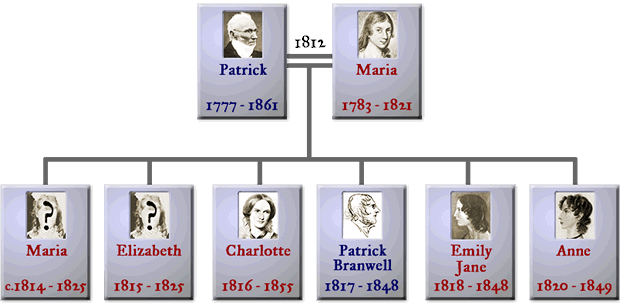
#Onthisday 1816 Charlotte Bronte Was Born! Happy #Bronte200 Birthday!

Her name was Charlotte Bronte and she was born on 21st April, 1816, in Thornton, Yorkshire.

Charlotte Bronte

Her father was Rev. Patrick Bronte, originally from County Down, Ireland, where his father was a labourer. His name was spelled Brunty at the time. Ii is not known exactly when it was changed to Bronte, but it was probably when he came to England in 1802, after working as a blacksmith, weaver and teacher, in Ireland. He saved enough money to study theology at St. John’s College, Cambridge and was ordained in 1806.

Charlotte probably had vague memories of her mother, Maria Branwell, who died when she was five. Maria was born in Penzance, Cornwall, where her father was a successful merchant. She met my father while visiting her aunt in Yorkshire.

brontetree

Charlotte had two elder sisters Maria and Elizabeth who died when she was 9, and they were 10 and 11 yeas old. They had been attending a Clergy Daughters’ School at Cowan Bridge in Lancashire, which had notoriously poor conditions. Much like Lowood, the school Charlotte described in my most successful novel, Jane Eyre.

Charlotte was the oldest of my surviving siblings, and the last to die. Her unfortunate and talented brother, Patrick Branwell was a year younger than her, and would have been a great painter and poet if he had not succumbed to the ecstasy and torture of laudanum, alcohol, and the unrequited love of a married woman.

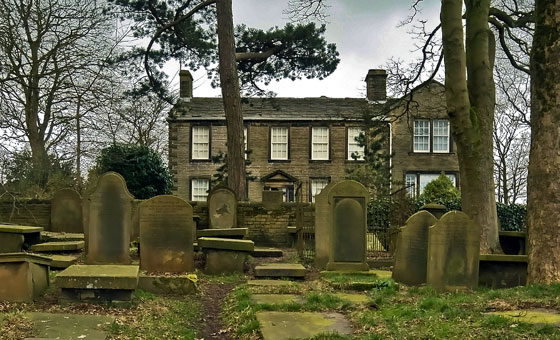
In 1820, the year Charlotte’s youngest sister Anne was born, the family moved to Haworth, where her father had been appointed perpetual curate of St Michael and All Angels Church, and sadly, her mother died of cancer the following year.

The children were fortunate enough to have been looked after by their maternal aunt, Elizabeth Branwell. While their father taught them to read the wisdom and moralizing stories of the Bible, their aunt showed them the pleasure of reading fiction in literary magazines. My aunt, who was so devoted to us that she never married, was able to use her generous annual income to fund many of the ventures in which our father had little interest, such as a girls boarding school, which unfortunately was unsuccessful, as well as their trips to Brussels to study French.

bronte-parsonage

While they were in Brussels, in return for board and tuition, Charlotte taught English and Emily taught music. Her aunt died while she was in Brussels and she was devastated, as all her siblings. Her brother, Branwell, who had been her favourite, died six years later. Although his death certificate says he died of chronic bronchitis, he had been suffering greatly due to his addictions, brought on by his sensitive character and acute sense of failure. 

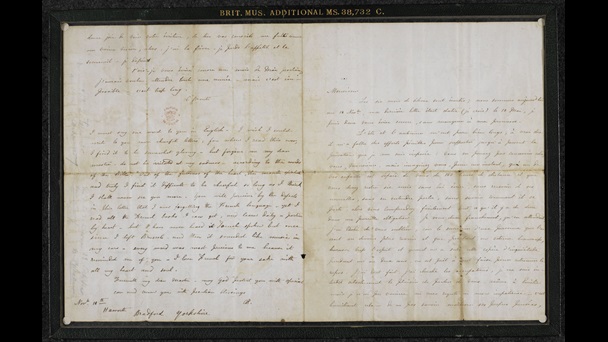
Charlotte fell in love with her professor of Rhetoric, while she was in Brussels. When she first met him, she described him as short, dark, and moody, and she was terrified of him at first and anxious to gain his approval as his pupil. Later, her fear and admiration turned to love. When she returned to Haworth, they remained in touch for a time. She wrote him many letters, but unfortunately, M. Heger was married and had six children, so he remained in her literary imagination and became my inspiration for Mr. Rochester.

There is more information about her letter in this post

bronte-charlotte-letters-K90081-43

When they were children, they used Branwell’s wooden toy soldiers to play with and invent an imaginary world, which they called Angria. They had intended to develop those stories into a series of fantasy novels. Branwell once said he would do so, but sadly, it never happened.

They were educated at home and the Bronte sisters also worked as teachers and governesses in several local schools and households, but none of them considered it a fulfilling job, so they turned to writing, which had always been our passion.

Painting_of_Brontë_sisters

The three of them had written many poems, and in 1846, encouraged and impressed by Anne’s poems Charlotte decided to publish a selection of all their poems, which were written under the pseudonyms of Currer, Ellis and Acton Bell. They thought best not to disclose their real names and gender because they wanted to preserve their privacy and because they thought their condition as women writers would be looked upon with prejudice.

She had already written The Professor, which had been rejected for publication, but their luck changed the following year, my Jane Eyre, Emily’s Wuthering Heights, and Ann’s Agnes Grey were all published, still under the Bell pseudonyms. It was not until 1848, that they told our London publishers who we really were.

Jane

Although Jane Eyre soon became a best seller, some literary critics thought it was provocative, antichristian and coarse. Some critics even thought it had been written by a man! But how could a man have written three volumes uncovering the complexity of a woman’s heart and soul? 

Two of the saddest moments of Charlotte’s life were the deaths of my sisters Emily and Anne in 1848 and 1849. They were both taken in their prime. She heard their failing breaths and watched the colour fade from their faces, as the eternal stillness took over.  This is part of a poem she wrote when Anne died: ‘There ‘s little joy in life for me, And little terror in the grave; I ‘ve lived the parting hour to see, Of one I would have died to save.

Charlotte did not think much of London life, but she visited on a few occasions and made the acquaintance of other notable writers, such as Mr. Thackeray and Mrs. Gaskell. She was especially impressed by the Great Exhibition at Crystal Palace in London, which she visited in 1851.

She had known Rev. Nicholls, curate of Haworth, since 1845. The first time he proposed to her was in 1852, however her father objected and Charlotte was indifferent. Mr. Nicholls was insistent, and he was indeed a kind man, so the second time he proposed, two years later, her father did not oppose the marriage and she accepted. Charlotte did not marry for love. She had loved once and she was resigned to live without the hope of such passion again, but she would have liked to have children. She was her father’s only child still living, so she was his last chance of seeing any type of continuation in his line, but sadly, it was not to be. Charlotte died during a difficult pregnancy in 1855.

220px-Patrickbronte

Her father survived his wife and six children. He must have sat in his favourite armchair by the window rereading his worn Bible, trying to understand why he had not yet been called. Perhaps Charlotte wrote these lines thinking of him:

He that lives must mourn.

God help us through our misery

And give us rest and joy with thee

When we reach our bourne!

Charlotte would be pleased and surprised at how much impact her novels have had over the last two centuries.

When authors write best, or at least, when they write most fluently, an influence seems to waken in them which becomes their master, which will have its own way, putting out of view all behests but its own, dictating certain words, and insisting on their being used, whether vehement or measured in their nature; new moulding characters, giving unthought-of turns to incidents, rejecting carefully elaborated old ideas, and suddenly creating and adopting new ones. Is it not so? And should we try to counteract this influence? Can we indeed counteract it?

from a letter to G.H. Lewes, 12 January 1848.

― Charlotte Bronte, The Letters of Charlotte Bronte: With a Selection of Letters by Family and Friends Volume III: 1852-1855

Have you read her books?

Have they inspired you to write?

Note: This is a rewriting in third person of the same post I wrote in first person on 1st April, 2016.

Letter R & S #AtoZChallenge #JaneEyre Rebirth and Sequel

This post is part of this year’s April Challenge to write a post a day. I’ve chosen to write about my greatest literary passion: Jane Eyre. I’m going to discuss Jane Eyre’s Rebirth and Sequel in the Eyre Hall Trilogy.

R

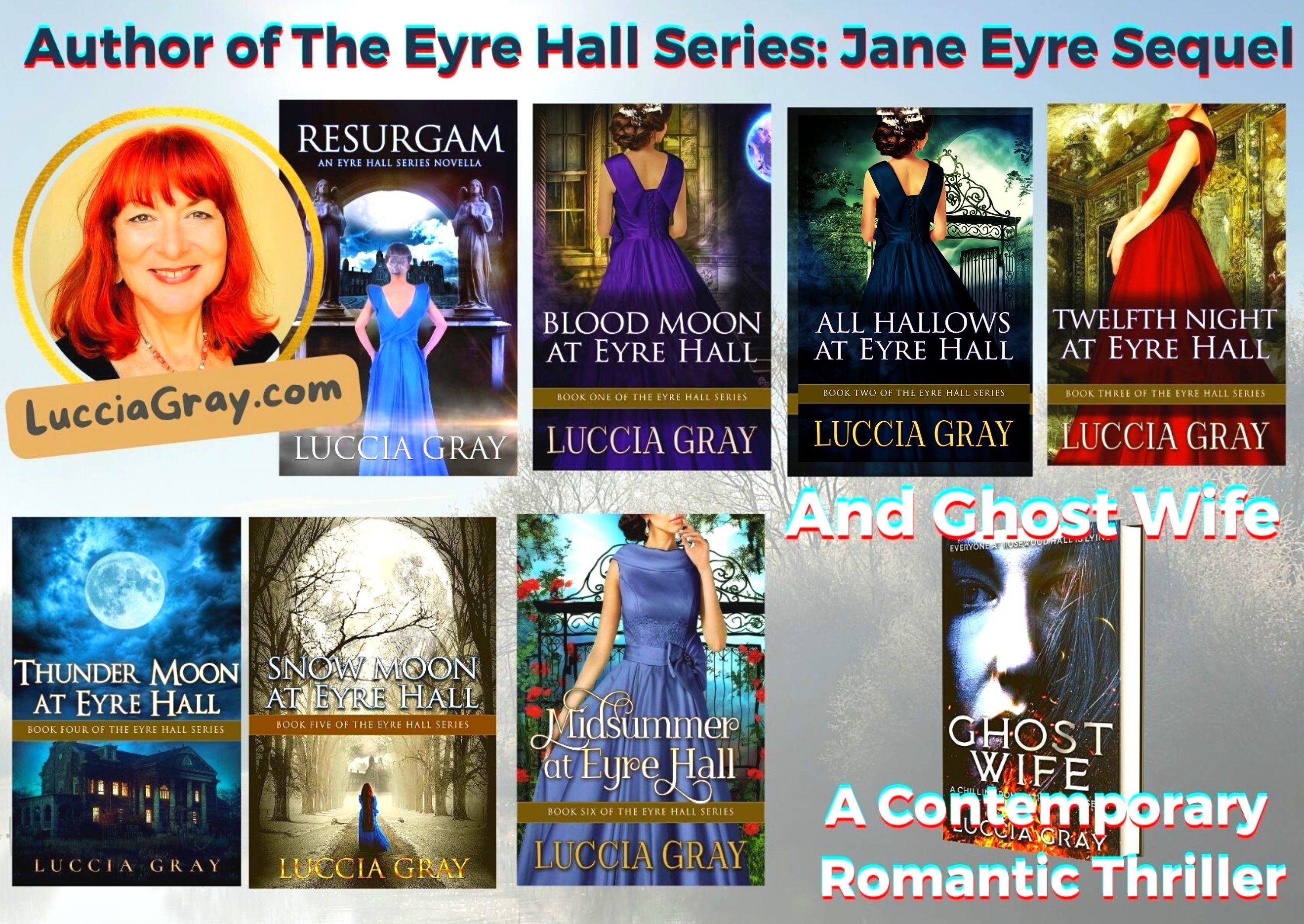
The Eyre Hall Trilogy is a three-part sequel to Jane Eyre.

My aim was to pay tribute to Charlotte Bronte and so many other Victorian authors, whom I consider my literary Masters.

The Eyre Hall Trilogy owes its existence to the following 19th century literary geniuses in no particular order:

The Brontes, Dickens, Wilkie Collins, R.L. Stevenson, Conan Doyle, Elizabeth and Robert Browning, Mary Wollstonecraft, Mary Shelley, George Elliott, Dante Gabriel Rossetti, Lord Tennyson, Hardy, Wilde, de Quincy, and Jane Austen.

I have aimed to write an enjoyable Gothic Romance, which makes suspenseful and exciting reading for contemporary audiences.

Readers will encounter many of the original characters in Jane Eyre once again, but this series will also bring to life many new and intriguing ones, spinning a unique and absorbing narrative.

The Eyre Hall Trilogy is now complete:

Banner and Lucy

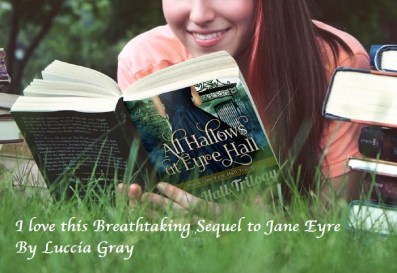
Book 1, All Hallows at Eyre Hall, takes place twenty-two years after Jane’s marriage to Edward Rochester. Jane is coping with the imminent death of her bedridden husband, and Richard Mason has returned from Jamaica to disclose more secrets and ruin her happiness once again, instigating a sequence of events which will expose Rochester’s disloyalty to Jane, his murderous plots, and innumerable other sins. Mason’s revelations, and the arrival Bertha’s daughter, Miss Annette Mason, will turn Jane’s world turned upside down.

Reading All Hallows

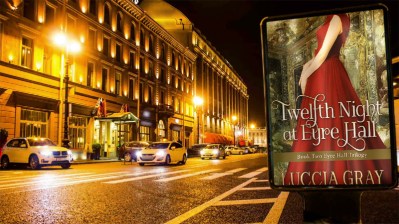
Book 2, Twelfth Night at Eyre Hall, moves the action on after Edward Rochester’s death. Jane Eyre, who has been blackmailed into marrying a man she despises, will have to cope with the return of the man she loved and lost. The secrets she has tried so hard to conceal must be disclosed, giving rise to unexpected events and more shocking revelations. This time, the  action will move from the Yorkshire countryside, to Victorian London, and across the Atlantic Ocean to Colonial Jamaica.

Telfth Night Bilboard Night

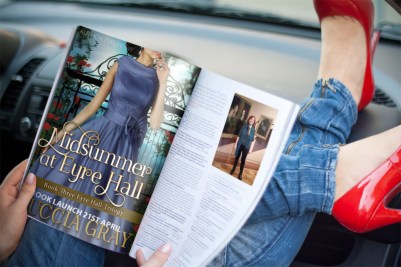
Book 3, Midsummer at Eyre Hall, which is available for pre-order and will be launched on 21st June, Midsummer’s Day, is the final part of the trilogy.

The first part of Midsummer at Eyre Hall is very dramatic and action-packed. Jane will find herself in completely unexpected and dreadful circumstances, which neither she, nor the reader would ever imagine, so I can’t say much more!

The second part begins to show some improvement in her situation and contains more surprises, including two new characters, who will drastically change Jane’s life forever.

In this final installment, Jane will undertake perilous physical and emotional journeys across England, from Yorkshire, to magical Cornwall, and Victorian London. She will discover who her friends and enemies are, and she will have to make challenging and drastic decisions, which will affect everyone on the Rochester Estate.

I hope the reader will find the end is satisfactory, although the final outcome is happier for some characters than for others…

Magazine Midsummer at Eyre Hall

Check out the Eyre Hall Trilogy on Amazon US and Amazon UK

For those living in Spain you can also purchase paperback versions at http://www.libroseningles.com/

*****

For those of you who have read books 1 and 2, would like an ARC of Midsummer at Eyre Hall, it will be available at the beginning of June.

Please let me know if you’d like to be the first to read it 🙂

Letter Q #AtoZChallenge #JaneEyre Quotes

This post is part of this year’s April Challenge to write a post a day. I’ve chosen to write about my greatest literary passion: Jane Eyre. I’m going to show you some famous and significant quotes from Jane Eyre.

Q

I love these quotes because they show us how powerful Jane’s character was.

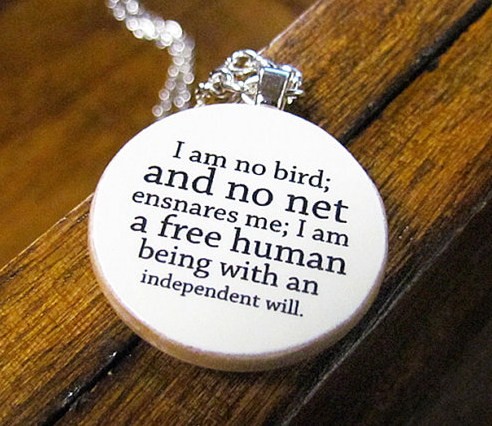
She wanted to be Mr. Rochester’s equal. She insists on being independent, having free will, and being the same.

She refuses to allow him to trample on her, in spite of being much richer than her, much older than her, and part of the patriarchal ruling classes.

Finally, I love the way she’s more concerned with happiness than doing what’s expected. That’s why at the end of the novel, when she discovers his first wife has died, she returns to him, in spite of the indignity of returning to the man who lied to her.

She’s prepared to give him another chance, but on equal terms.

She marries him in the end, but she warns him that she is no longer a poor dependent:

‘If you won’t let me live with you, I can build a house of my own close up to your door, and you may come and sit in my parlour when you want company of an evening.’

She asserts her independence by threatening to choose to build a house of her own next to his.

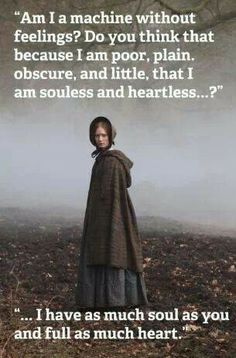
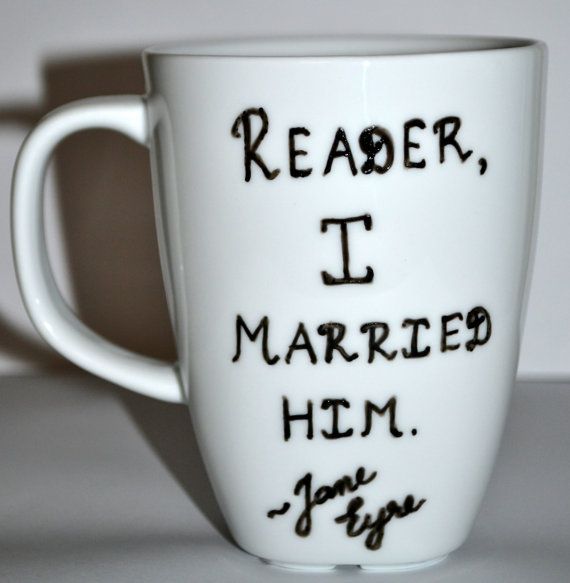
Quotes Jane Eyre 3 Quotes Jane Eyre 4 Quotes Jane Eyre 5 Quotes Jane Eyre 6 Quotes jane Eyre 7

I’m so sure she’d eventually be the ruler of the roost! Aren’t you?

Letter P #AtoZChallenge #JaneEyre the Prequel

This post is part of this year’s April Challenge to write a post a day. I’ve chosen to write about my greatest literary passion: Jane Eyre. I’m going to tell you about the Prequel to Jane Eyre written almost a century after Jane Eyre was published.

P

Wide Sargasso Sea, the Prequel to Jane Eyre

Although my main inspiration in writing The Eyre Hall Trilogy was Jane Eyre, its prequel, Wide Sargasso Sea, written over a hundred years later by Jean Rhys, has been almost equally responsible. Both novels are complimentary and it is their combined stories, which have led to my sequel, The Eyre Hall Trilogy.

I read Wide Sargasso Sea, about thirty years after reading Jane Eyre. This short, but intense novel, which was written in the 1960s, tells the story of Bertha Mason in three parts: her childhood, before she met Mr. Rochester, their first meeting and arranged marriage and first four years of matrimony, and finally her death at Thornfield Hall.

After reading Wide Sargasso Sea, it’s impossible not to reread Jane Eyre with new insight and perspective.

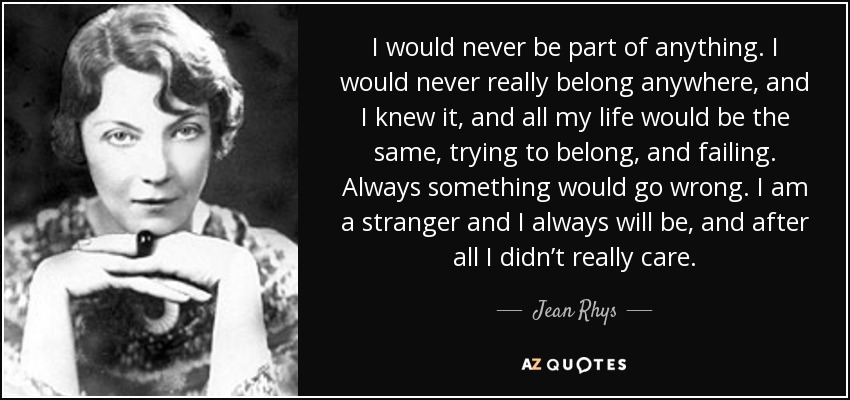
Jean Rhys was born in Dominica, an island of the British West Indies to a Welsh doctor and a third-generation Creole of Scots ancestry. She must have understood Bertha Mason’s feeling of alienation in England herself, as she says in this eloquent quote:

Rhys quote

Rhys’ novel tells the formerly untold story of Bertha Antoinette Mason from her birth in Jamaica to her death at Thornfield Hall.

Antoinette who was silenced, imprisoned, and abused in Jane Eyre, is given a voice and a life, a real life, in Wide Sargasso Sea; a life Charlotte Bronte insinuated but never told. In Wide Sargasso Sea Antoinette tells Rochester; “there is always the other side, always”, and that is the story Rhys weaves in Part One which Antoinette narrates.

Edward Rochester narrates Part Two and is shown up as the shady, unscrupulous character he became in Jane Eyre. His elder brother was to inherit the Rochester Estate, so his father arranged a marriage to a rich Jamaican heiress for Edward, his second son, or the ‘spare’. Rochester disliked Jamaica and although his wife was beautiful, he was not aware that she was Creole, and it displeased him, especially after marrying her and disposing of her generous dowry.

When he inherited the Rochester Estate due to both his brother and father’s sudden deaths, he decided it was time to return to England. That was when he locked Bertha away in a windowless, cold and damp attic, claimed he was unmarried and went gallivanting to France, as he himself admits to Jane.

The Third and Final Part is told once more by Antoinette, who not surprisingly, after ten years in an attic, has become the ‘madwoman in the attic’. She supposedly burns Thornfield Hall, endangering the lives of the rest of the occupants, and commits suicide.

Gilbert and Gubar’s seminal study on feminist literary criticism, Madwoman in the Attic, was written in honour of Bertha Mason. I’ve written several posts on this topic in previous posts on this blog:

My fascination with these two novels escalated when I taught Postcolonial Literature to undergraduates at the University of Córdoba. One of the topics on the syllabus was a comparison of Jane Eyre and Wide Sargasso Sea, and that really sparked classroom discussion and my imagination. The idea of reinstating the first Mrs. Rochester, Bertha Mason, had been nagging at me for a long time, until I decided to reinstate Bertha Mason by bringing her daughter to life and back to the Rochester Estate in my Sequel to Jane Eyre, The Eyre Hall Trilogy.


Letter O #AtoZChallenge #JaneEyre the Orphan

This post is part of this year’s April Challenge to write a post a day. I’ve chosen to write about my greatest literary passion: Jane Eyre. Today Jane’s going to tell you about her origins and her orphaned childhood.

O

My name’s Jane Eyre and I’m an orphan.

My parents died when I was but an infant. My mother’s brother, Uncle Reed, kindly took me in, although he too died when I was a baby. His wife, my Aunt Reed, had promised to look after me, but she disliked me so much that my birthday was never celebrated, and I never dared to ask when it was.

When I asked my aunt about my father’s family, she said she had no news of them. Miss Abbot, who had been her maid for many years told Bessie, the younger maid that my father had been a poor clergyman whom my mother had married against the my grandfather Reed’s wishes, because he was beneath her, so he cut her off without a shilling. My parents died within a month of each other of typhus, a year after they married.

janeeyre1

If my mother’s brother, Mr. Reed had been alive instead of buried in his vault at Gateshead Church, he would have treated me kindly, but his widow enjoyed humiliating me and telling me I was wicked, so I was an unhappy and unloved child. I was habitually abused, consequently, I was full of self-doubt and often depressed. My aunt said I was wicked, which meant I was often punished. Sometimes I was made to sit on my own, which I didn’t mind, because I disliked them all, but other times I was locked in a room, which I hated.

Fortunately, my aunt sent me away to Lowood Institution, with the assurance that she would never see me again. It was still too soon as far as I was concerned.

Nine years later, while I was working at Thornfield Hall, my aunt she sent for me on her death-bed and gave me the following letter, which she had received from my uncle, Mr. John Eyre, my father’s brother three years earlier.

‘Madam,—Will you have the goodness to send me the address of my niece, Jane Eyre, and to tell me how she is? It is my intention to write shortly and desire her to come to me at Madeira. Providence has blessed my endeavours to secure a competency; and as I am unmarried and childless, I wish to adopt her during my life, and bequeath her at my death whatever I may have to leave.—I am, Madam, &c., &c., ‘JOHN EYRE, Madeira.’

When I asked her why I hadn’t been informed, she replied, “‘Because I disliked you too fixedly and thoroughly ever to lend a hand in lifting you to prosperity.”

She told my uncle that I had died of typhus. She said it was her way of taking revenge, on a poor orphan. I forgave her, but it wasn’t enough. I knew she still had to make peace with God, which would only happen if she were truly sorry, which I doubted.

I discovered my uncle had died while I was working as a teacher at Morton, after leaving Thornfield Hall. His lawyer, Mr. Briggs, was looking for me because my uncle had died and left me all his property, which was twenty thousand pounds. So thanks to him, I was rich. I was sorry he had never found me, so I had never met him, but if I had lived with him in Madeira, as he had wished, I would never have met Edward.


Jane_Eyre_family-tree

My mother, Jane Reed, had a brother, John Reed, who was married to my Aunt Reed.

My father had a brother called John Eyre, a wine merchant who lived in Madeira, and was my benefactor. He also had a sister, who married Reverend Rivers, that was how I was related to my cousins St. John, Mary and Diana.

When I married Edward, I had no parents, uncles or aunts, but I had five cousins. I was sure I would have no type of relationship with Eliza or Georgina, and St John would travel to India, but I had two wonderful cousins, Diana and Mary, who were like two sisters to me.

I have always refused to indulge in self-pity. Life is too precious to waste time feeling sorry for oneself or thinking about what might have been. My present and my future is in my hands, and I aim to make the most of it.

I’m sorry I lost my parents, and I feel sympathy for the little orphan who was humiliated and abused for the first ten years of her life, but everything that happened after leaving Gateshead has brought me closer to finding happiness, so I’m grateful for every minute, which helped my character grow.

Perhaps I’ll write a sequel to my autobiography, and tell everyone about the house I built a house with my uncle’s inheritance, which I called Eyre Hall in his honour.

Letter N #AtoZChallenge Necks and Necklaces in #JaneEyre

This post is part of this year’s April Challenge to write a post a day. I’ve chosen to write about my greatest literary passion: Jane Eyre. Today I’m going to tell you about the symbolism regarding necks and necklaces in Jane Eyre. 

N

Necks and Necklaces in Jane Eyre

Necks are important in Jane Eyre, they symbolize pain, love, and worldly riches and grandeur.

Pain

  • Her cousin John enjoys breaking birds’ necks

“John no one thwarted, much less punished; though he twisted the necks of the pigeons, killed the little pea-chicks, set the dogs at the sheep…”

  • Blood trickles down Jane’s neck when her cousin John hits her:

“I felt a drop or two of blood from my head trickle down my neck, and was sensible of somewhat pungent suffering: these sensations for the time predominated over fear, and I received him in frantic sort.”

  • Miss Scatcherd, a teacher at Lowood, punishes Helen Burns by hitting her mercilessly on the back of her neck

“…returned in half a minute, carrying in her hand a bundle of twigs tied together at one end. This ominous tool she presented to Miss Scatcherd with a respectful curtesy; then she quietly, and without being told, unloosed her pinafore, and the teacher instantly and sharply inflicted on her neck a dozen strokes with the bunch of twigs. Not a tear rose to Burns’ eye…”

Love

  • When Jane left Gateshead to be an intern at Lowood she held on to the only person who had been kind to her in her aunt’s house, Bessie.

“ I was taken from Bessie’s neck, to which I clung with kisses.”

  • Jane died with her arms around Helen Burns’ neck:

“I learned that Miss Temple, on returning to her own room at dawn, had found me laid in the little crib; my face against Helen Burns’s shoulder, my arms round her neck. I was asleep, and Helen was—dead.”

  • Adele puts her arms around Jane’s neck affectionately:

“I remember Adele clung to me as I left her: I remember I kissed her as I loosened her little hands from my neck.”

  • Finally, when Jane finds Mr. Rochester at Ferndean, he says he found the pearl necklace she had left behind at Thornfield Hall. He says:

“…and, after examining your apartment, ascertained that you had taken no money, nor anything which could serve as an equivalent! A pearl necklace I had given you lay untouched in its little casket; your trunks were left corded and locked as they had been prepared for the bridal tour.”

Jane wearing pearls at her first ill-fated wedding

Mr. Rochester wore it himself around his neck (under his cravat) as a reminder of Jane’s love:

“Do you know, Jane, I have your little pearl necklace at this moment fastened round my bronze scrag (neck) under my cravat? I have worn it since the day I lost my only treasure, as a memento of her.”

  • Diana and Mary show affection by hugging their brother’s neck:

“They both threw their arms round his neck at once. He gave each one quiet kiss, said in a low tone a few words of welcome”

  • When blind Mr. Rochester discovers his beloved Jane has returned to him:

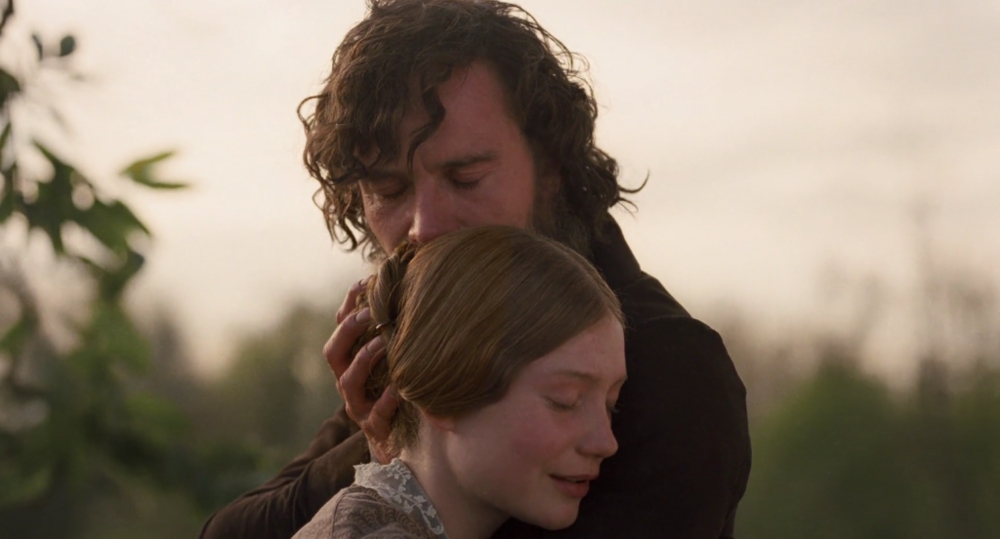
“The muscular hand broke from my custody; my arm was seized, my shoulder—neck—waist—I was entwined and gathered to him.”

Riches and Status:

  1. The portraits of Mr. Rochester’s ancestors on the staircase wall, which she saw on her first day at Thornfield Hall.

“Traversing the long and matted gallery, I descended the slippery steps of oak; then I gained the hall: I halted there a minute; I looked at some pictures on the walls (one, I remember, represented a grim man in a cuirass, and one a lady with powdered hair and a pearl necklace), at a bronze lamp pendent from the ceiling, at a great clock whose case was of oak curiously carved, and ebon black with time and rubbing.”

  • Blanche Ingram’s description by Mrs. Fairfax:

“Tall, fine bust, sloping shoulders; long, graceful neck: olive complexion, dark and clear; noble features; eyes rather like Mr. Rochester’s: large and black, and as brilliant as her jewels.”

  • After proposing he says to her Mr. Rochester offers her his riches:

‘I will myself put the diamond chain round your neck, and the circlet on your forehead,—which it will become: for nature, at least, has stamped her patent of nobility on this brow, Jane; and I will clasp the bracelets on these fine wrists, and load these fairy- like fingers with rings.’


  • When Jane leaves Thornfield Hall, she also leaves a pearl necklace, which could have been and heirloom, the one on the painting. This symbolizes Jane’s relinquishment of the riches Mr. Rochester offered her.

“I encountered the beads of a pearl necklace Mr. Rochester had forced me to accept a few days ago. I left that; it was not mine: it was the visionary bride’s who had melted in air. The other articles I made up in a parcel; my purse, containing twenty shillings (it was all I had), I put in my pocket: I tied on my straw bonnet, pinned my shawl, took the parcel and my slippers, which I would not put on yet, and stole from my room.”

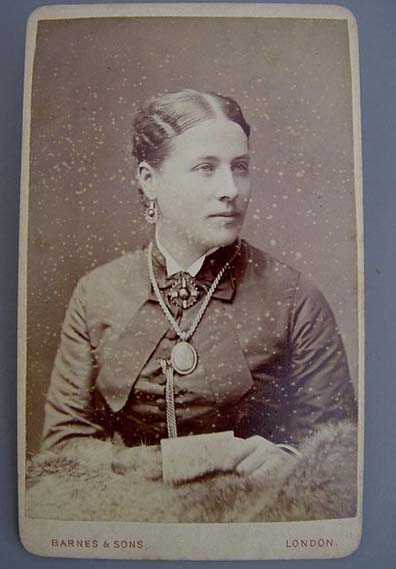
Woman with gold necklace.2

  • Finally, at the end of the novel, when Mr. Rochester has recovered his eyesight, he says:

“Jane, have you a glittering ornament round your neck?”

I had a gold watch-chain: I answered ‘Yes.’

In this case, we can assume that Jane has bought and chosen her necklace, because it was the first time he had seen it.

Jane told us that Miss Temple’s gold watch hung from her girdle, probably with a string or cord, yet Jane’s hands from a gold chain around her neck. Jane has reached and surpassed her childhood idol, Miss Temple.

The gold chain lets her Dear Reader know that Jane has finally acquired the social status she dreamed of by her own means, and on her own terms. She is not wearing an heirloom, but a  jewel she has chosen and bought herself, in this case a gold necklace.