Book Review: How to Climb the Eiffel Tower by Elizabeth Hein

How to Climb the Eiffel Tower is the type of novel that makes you feel alternately sad and optimistic, as well as angry and hopeful. Overall it’s a celebration of life, of courage, and of second chances.


Eiffel Tower


At the beginning of the novel, Lara Blaine is an unlikeable loner. We soon learn that she is desperately trying to forget her traumatic childhood by hiding behind her perfectly organised and monotonous life, in which there is no room for close contact with anyone.

Lara is emotionally scarred, and seems to dislike or distrust everyone she interacts with. She has built an emotional wall which makes her appear to be the unfriendly, sneering colleague nobody likes to have.

As the novel progresses, her emotional scars start to heal as her physical illness gradually gives her a new perspective on life. The emotional bond she creates with Jane and her family is believably developed and truly touching.

It’s a character driven novel, in which we experience Lara’s personal conflicts and the relationships she has with other characters.

On the other hand, it is not a one-dimensional story about Lara. There is also a carefully spun plot which advances throughout the novel and revolves around her workplace, her routines, her illness, and the people she meets as a result of her treatment.

For me, How to Climb the Eiffel Tower is about empowerment. Lara needs to consciously own her own life, and open her eyes and her heart to the world. In her case, it happened through her experience as a cancer patient.

As a result, she’s finally able to face life with renewed confidence. It’s a new beginning for Lara because she’s on her way to finding inner peace, friendship, love, and professional satisfaction, too.

It’s also very well written, with a smooth prose which makes it a pleasure to read. Well worth Reading.

Five out if five stars.

Get it on Amazon.co.uk

Get in on Amazon.com

Elizabeth Hein

I met Elizabeth Hein a year ago on Goodreads, just after starting my own (belated) career as an author. She had already written and published her first novel, Overlook, so she was able to give me invaluable help and advice on my own writing. See my review of Overlook.

When she wrote her second novel, she was kind enough to send me an ARC to read and review. I must admit I’ve taken a long time to get around to reading it, although as soon as I started reading, it was so good that I finished it in a matter of days!

I’ll admit it. At first, I was afraid to read How to Climb the Eiffel Tower. I put it off because I was a coward for two reasons.

Firstly, I shamelessly admit that 80% of my reading is purely for pleasure. I love being transported to fictional worlds, where I’m absorbed by events taking place in other people’s lives. I don’t mind a bit of tension, but I’m not too keen on suffering while I read. I occasionally like to be shocked or shaken out of my complacency, but not too often. I know Elizabeth is a cancer survivor, and I knew this novel was about cancer patients, and I’m ashamed to admit that I was reluctant to face the pain of cancer. Also, I thought it might be a ‘tear jerker’. As I’ve explained in my review, I’m pleased to say I was completely wrong.

Secondly, I consider Elizabeth as a virtual/cyber friend, and as with any of my friends, I wouldn’t like to hurt her feelings by not liking her novel. Again, I was an idiot. I already knew she was a good writer, I should have trusted her. I should have known it would be a good novel. Well, it surpassed my expectations: It’s an amazing novel.

Read it!
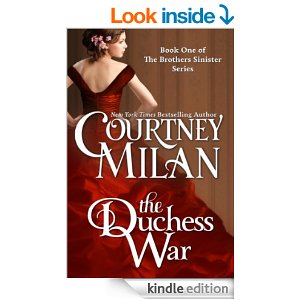
 

Book Review: The Duchess War by Courtney Milan

A Well-Researched, Character-Driven, Victorian Romance

I loved this novel for two reasons: the main characters are original and believable and the plot is well-researched and engrossing.

Duchess War

Minnie is adorable, and there is so much more to her than first meets the eye. She is very intelligent, cognitively as well as emotionally. She is beautiful, but scarred, physically and psychologically, although she gradually overcomes most of her insecurities as the novel progresses.

The same is true for the male lead, Robert, The wealthy and influential Duke of Clermont. A complex and wounded character, who is burdened with someone else’s guilt.

It is not a love story dominated by two characters. There are many more, believably portrayed, and we really get to know what makes them all tick.

Minnie and Robert’s love story has plenty of dramatic and unexpected ups and downs as they are constantly up against seemingly impossible situations, which they are eventually able to overcome through understanding and forgiveness.

There’s also a very realistic and unusual plot, dealing with social and political issues, as well as scientific advances, all in keeping with real events taking place in the Victorian era.

I love well-researched and well-written, historical romances. It is a lot more than just a love story, and there’s a great deal of work involved in writing historical novels, as well as the author’s creativity.

I know because I also write Victorian fiction, and although I find it liberating to write in another time-frame, I also find it requires a great deal of hard work to immerse the reader in another distant, world.

You can be sure that this novel will transport you smoothly on an unforgettable journey to another time and place: early Victorian England.

I was lucky enough to download a free copy, so I’d also like to thank the author, Courtney Milan for her generosity, and although it’s definitely worth paying for, it’s free at the moment, so what are you waiting for to download it?

US link

UK link 


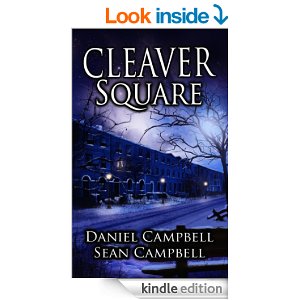
Book Review. Cleaver Square: A Plot-driven Detective Novel

Review of Cleaver Square by Sean and Daniel Campbell for Rosie’s Book Review Team.

rosie3


Cleaver Square is a well-plotted detective novel. I enjoyed travelling around London with Detective Morton, I also liked the detailed police procedural and scientific information, including autopsy reports and legal issues. At times it was like watching an entertaining crime film, with all the intricacies of a complex investigation.

The plot was cleverly designed and well-developed by Sean and Daniel Campbell until the final surprising twist is revealed. It’s narrated in third person, although the narrator is sometimes omniscient and sometimes, takes the point of view of one of the characters, such as Morton or Charlie Mathews, a young boy in a foster family, who is an essential component of the plot which will gradually develop throughout the novel (I don’t want to add any spoilers). The prose was mostly easy and pleasant to read.

It’s definitely a plot-driven novel, because the emphasis is clearly on an external conflict, in this case a murder, and its solution through a specific sequence of events, in this case tracking down the criminal. There is a great deal of action involved, and both the dialogue and the action are mainly concerned with unveiling the plot and solving the issue at hand. In this aspect there is no objection, the plot was correctly and smoothly conveyed.

Cleaver Square portada

On the other hand, there is an aspect which made it hard for me to enjoy the novel as much as I would have liked. I felt it lacked character development. I personally prefer character-driven novels where the emphasis is on personal conflict and the relationships between the characters.

Character driven novels do not have a tangible or specific outcome. They are more concerned with how the characters cope with conflict, how they make decisions, and how these decisions affect their relationships with each other and their lives in general. The outcome is often a change of attitude, or a new situation in the characters’ lives. There is often no specific or definite solution or conclusion. I like to meet people when I read a novel, and I enjoy it when the characters to stay with me after I finish reading.

Most novels combine engaging characters and a compelling plot to varying degrees, but in this case, I felt that the lack of character development made it difficult for me, at times, to connect with the story itself, because I wasn’t interested in the characters themselves and what happened to them. As a result, I almost lost interest in the solution of the crime. I would have liked to feel more involved with the people in the novel.

Overall I’d say that if you enjoy a well-plotted detective novel, set in London, with an unexpected final twist, you’ll enjoy Cleaver Square.

Amazon US link.
Amazon UK link.


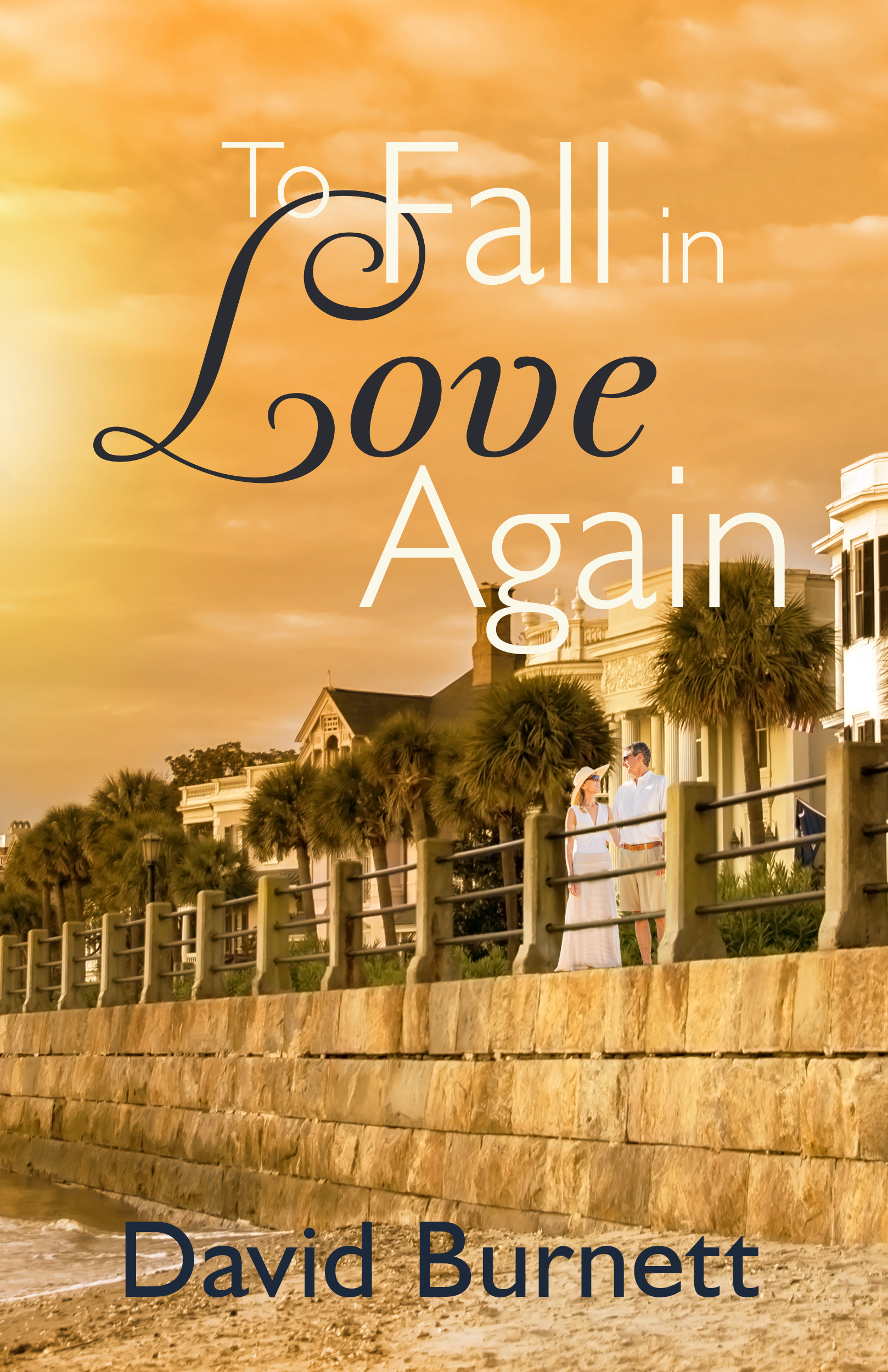
Book Tour: To Fall in Love Again by David Burnett

It’s a real pleasure to take part in this Book Tour organised by Brook Cottage Books and introduce you to author David Burnett and his third novel To Fall in Love Again.

BCB-Host Button-200
My most treasured moments are the hours I’m able to spend in a comfortable chair with my Tablet and Kindle App engrossed in an absorbing story. Although I enjoy all types of novels, especially mystery, thrillers, historical, women’s and literary fiction, I have a weakness for romance and character driven novels. I’m interested in reading about people and how they feel, make decisions, cope with life’s conflicts, grow emotionally, and develop lasting relationships.

To Fall in Love Again is one such novel. It’s a novel about how people meet and fall in love, and the conflicts which inevitably arise as relationships progress. No couple is an island, and Drew and Amy have a background, a family, friends, and neighbours which influence how they relate to each other.

To Fall in Love Again Banner

Most love stories portray beautiful and forceful, young protagonists, who are usually struggling to make their way in life professionally, often with a view to eventually having children, and setting up a family. To Fall in Love Again is different. It’s about two middle-aged characters who have had a family, and lived through a first courting, marriage and children. In fact, they are two widowed young grandparents, in their fifties, who meet quite by chance and fall in love.

They have no time to lose, but they are also level-headed, mature adults, who seem to know what they want, and are in control of their lives. However their idyllic first encounters are soon disturbed by conflict deriving from the rest of the characters they are involved with, such as children, friends, and colleagues, who have very diverse backgrounds and expectations, and are often annoyingly interfering.

The novel is about how Drew and Amy meet, fall in love, and overcome the challenges their relationship faces. It’s also about relationships between various generations; adult children and their parents, as well as grandparents and grandchildren. It’s about trust, deceit, misunderstandings, meddling gossips, social prejudice, and how these aspects invade their lives and almost ruin their chance of happiness. It’s also about second chances, forgiveness, and the value of love, friendship and trust, as paths to happiness and fulfilment.

To_Fall_in_Love_Again_-_Amazon

It’s a novel which takes you up and down with the characters’ emotions, but finally, you feel optimistic and happy when you finish reading, because although it wasn’t easy, Drew and Amy made it. This isn’t a spoiler, because readers know this is a HEA, romantic novel. Readers will not be concerned with the outcome itself, but with how the expected outcome finally occurs.

I enjoyed the setting, too. I felt as if I was walking along the streets of Charleston with Drew and Amy, and learnt about some of the social and cultural aspects of this beautiful city, which I have not yet visited.

To Fall in Love Again is a love story about authentic characters who are offered a second chance of happiness. It  is very well written, and is easy, pleasant, and satisfying to read on a cosy winter evening.

I’d like to thank the author and Brook Cottage Books for giving me the chance to read and review this novel and take part in this Book Tour.

DAVID BURNETT
David Burnett lives in Columbia South Carolina, with his wife and blue-eyed cat, Bonnie. He has two daughters and three grandchildren, and enjoys traveling, photography, baking bread, and the Carolina beaches. He has a degree in psychology and education, and was formerly director of research for his state education department.

More information about the author:
http://davidburnett.yolasite.com
http://davidburnettsbooks.blogspot.com/
http://www.facebook.com/pages/David-Burnett-Author/447290468681693?ref=hl

Amazon US link.

Amazon UK link.

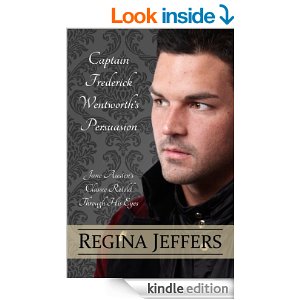
Book Review: Captain Frederick Wentworth’s Persuasion by Regina Jeffers.

You Pierce My Soul, Captain Wentworth

Persuasion, Jane Eyre, and Rebecca have been my favourite novels since I first read them as a teenager. I have reread them dozens of times since then, and although there are many others I reread regularly, too many to mention now, none are as dear to my heart and my mind as the former three.

320px-NorthangerPersuasionTitlePage
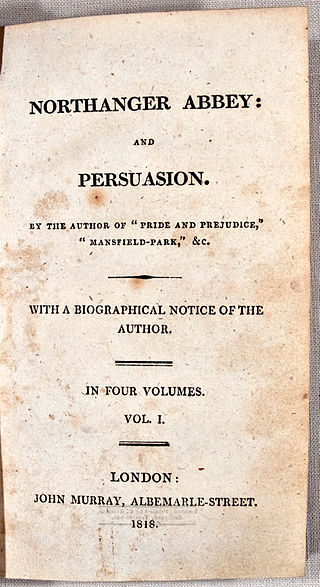
Title page of the original 1818 edition

I already confessed in an earlier post that My Ideal Fictional Hero is undoubtedly Captain Wentworth. To quote myself:

The most faithful and dashing fictional hero has to be Jane Austen’s Captain Wentworth, in Persuasion, he proposed to Anne Elliot, but he was rejected because her family thought he wasn’t good enough. Wentworth returned to Bath, nine years later, supposedly in search of a wife, but really he was out to impress Anne again, and impress her he did with his letter, because he’s also the greatest writer of love letters in English literature, saying things like, ‘you pierce my soul. I am half agony, half hope.’ and ‘Tell me not that I am too late, that such precious feelings are gone for ever.’ 

MTE1ODA0OTcxNTQ2ODcxMzA5

I love rereading, because every time I reread a book is a new experience. I always discover something new between the lines, or feel differently about characters or events. However, the last time I reread Persuasion, a few months ago, I was disappointed. I found the first half of the book had far too much ‘telling’ instead of ‘showing’. I also found parts of the dialogue ‘stiff’ with long drawn out ‘speeches’ instead of a more natural interaction between the characters. Finally, what displeased me most was the lack of introspection of the characters, especially the men, and specifically Wentworth.

We all imagine what he’s thinking, but we are never able to glimpse inside his mind, except for a few brief but powerful minutes when we read Frederick’s letter, in which he literally pours out his heart and his mind to Anne. From those brief words, I recreated his inner turmoil, integrity, loyalty, and passion, but alas, Jane Austen gave us very little information.

When I came across Captain Wentworth’s Persuasion by Regina Jeffers, just a few days ago, on twitter, I couldn’t resist reading. I was curious when I read the title and then the blurb: The love affair behind Jane Austen’s classic, Persuasion, rests at the heart of this retelling from Captain Frederick Wentworth’s point of view.

Could the author have captured the essence of my hero and retold the story from his point of view successfully? Could she have clarified what Jane Austen did not fully describe?

The answer is, yes, she did. I loved every minute I spent reading this novel, and I felt very upset when I finished, although it has become one of my personal classics, so I’m sure I’ll be rereading it, too.

517vBABpW6L._BO2,204,203,200_PIsitb-sticker-v3-big,TopRight,0,-55_SX278_SY278_PIkin4,BottomRight,1,22_AA300_SH20_OU01_

Ms. Jeffers explains many things which Ms Austen didn’t. She uncovers the fears, prejudice, and immaturity which led to Anne and Frederick’s first separation. Anne was only 19, the same age Jane Eyre was when she married Rochester, practically a teenager by contemporary standards. Her father and godmother advised her against the marriage, so she might have been afraid to leave everything and everyone she knew behind, and travel in a war ship with her husband.

Captain Wentworth’s Persuasion starts at sea. Anne and Frederick are married and both living on a frigate during the Napoleonic Wars. When Wentworth is gravely wounded, during his delirious recovery, he recalls his first meeting with Anne, their brief courtship, and her family’s disapproval. He then remembers what happened nine years after Anne turned down his proposal. Wentworth returned to Bath as a wealthy war hero, while Anne’s family’s fortune had diminished, although her father retained his baronetcy and his pompous airs.

At first Frederick feigned indifference towards Anne, and pretended to flirt with Louisa Musgrove. We understand his misery, as he gradually realises it is Anne Elliot whom he still loves.

There is plenty of conversation and telling instead of showing, as the tension builds and their relationship slowly unfolds. The rest of the diverse characters also come to life. Members of Wentworth’s crew, Wentworth’s brother and sister and their loving family, are portrayed in stark contrast to Anne’s arrogant and conceited sisters and their families.

But the best is yet to come. Once Ms. Jeffers has arrived at the final point of Ms Austen’s novel, she moves the story on, and towards the end of the novel, a surprisingly complex political plot unfolds including the intervention of the Prince Regent.

I was devastated when the novel ended. I needed more!

Fortunately, Ms Jeffers has informed me that in her next novel, The Prosecution of Mr. Darcy’s Cousin, we will encounter Rear Admiral Wentworth once again. Personally, I can’t wait.

If you loved Persuasion, read it, you will love it. If you haven’t read Persuasion, read it, too, you will discover Anne and Frederick’s love story from a contemporary perspective, and then, if you like, read Persuasion! In any case, if you enjoy reading well-written historical romance, with a good plot, and wonderful characters, you’ll enjoy Captain Wentworth’s Persuasion.

Check it out on Amazon UK

Check it out on Amazon US

Rosie’s Book Review Team #RBRT Helen reviews All Hallows At Eyre Hall by Luccia Gray

Thank you for reading and reviewing, Helen! Rosie, thank you for organising your book review team! Readers everywhere please take the time to write a review of the books you read. Have a great day!💖

6th January: The Epiphany and the end of Christmastide.

Advent: The beginning of Christmastide.

Yesterday was Twelfth Night and today is The Day of the Magi or the Epiphany in Christian religion and culture. 6th January marks the end of Christmastide, which began with Advent, on the fourth Sunday before Christmas Day, November 30th. Advent, which ended on December 21st, marks a time of preparation for Christmas, and ‘the coming’ of the baby Jesus.

640px-Adventskranz-1_Advent
The abundant presence of candles, as we can see in this Advent wreath, symbolizes the quest for knowledge and truth.

During Advent, common practices include keeping an Advent calendar, lighting an Advent wreath, and setting up the Christmas decorations.

The Twelve Days of Christmas

The Twelve Days of Christmas began after Advent, on the 25th December, and finished yesterday, 5th January, on Twelfth Night.

Twelfth Night has often included feasting along with the removal of Christmas decorations. Many European celebrations of Twelfth Night and The Epiphany include baking and eating  a special cake to celebrate the visit of the Three Wise Men or Magi.

In Spain it’s the most important holiday of the year especially for children, because they open their presents brought by the Magi on this day. It’s also the day all the Christmas decoration should be removed and packed for next year.

wpid-img-20150105-wa0007-1.jpg
Roscón de Reyes (Kings’ Round Cake) It was delicious!


For more information on the Twelve Days of Christmas, including the carol of the same name see this post.

Pagan origins of Christmas        

Many of the pagan festivals were Christianised by the Emperor Constantin, in the fourth century AD, as I mentioned in a previous post on Halloween, and Christmas is no exception.

Saturnalia was an ancient Roman festival in honor of the God Saturn, held on the 17th of December, although the festivities continued through to the 23rd of December. The holiday was celebrated with a sacrifice at the Temple of Saturn, and a public banquet, followed by private gift-giving, continual partying, and a festive atmosphere leading up to the winter solstice.

Arch_of_SeptimiusSeverus
Ruins of The Temple of Saturn in Rome

Shortly after Saturnalia, the Romans celebrated the renewal of light and the coming of the New Year, called Dies Natalis Sol Invictus, or the birthday of the Unconquerable Sun, on December 25. It is believed that this is the reason why Christmas is celebrated on this day.

Merrymaking and Role-reversals were popular activities carried out at the time. Slaves were treated to a banquet of the kind usually enjoyed by their masters.

For more information on the pagan origins of Christmas see The Golden Bough, A Study in Magic and Religion by Sir James George Frazer

The Lord of Misrule

During the Tudor period, the Lord of Misrule, also called Abbot Of Misrule, or King Of Misrule, was a person who was specially appointed to manage the Christmas festivities held at court, in the houses of great noblemen, in the law schools of the Inns of Court, and in many of the colleges at the universities of Cambridge and Oxford. During his reign, which lasted anywhere from 12 days to 3 months, the Lord of Misrule was responsible for arranging Christmas entertainment which included masques, processions, plays, and feasts.

Although this was a British custom, the appointment of a Lord of Misrule comes from antiquity. In ancient Rome, from the 17th to the 23rd of December, a Lord of Misrule was appointed for the feast of Saturnalia.  The Lord of Misrule presided over the festivities having the power to command anyone to do anything during the holiday period.

640px-FirstFolioTwelfthNight
Title page from the First Folio edition


Shakespeare’s Twelfth Night

Twelfth Night is the ultimate celebration of Christmas merrymaking and revelry. It is a romantic comedy which, unlike other plays, includes various musical interludes. The irrational world of the inhabitants of Illyria, including role reversals, mistaken identities, deception, disguises, madness, illusions, and the folly love causes, are the themes of the play.

The first performance may have been at Whitehall Palace, the main residence of the English Monarchs from 1530 until 1698, on 6th January, 1601 for Queen Elizabeth I.

There is a wonderful version on YouTube directed by Kenneth Branagh.

There is a great article called Twelfth Night: a day for literary epiphanies in today’s Guardian written by Moira Redmond, with more information on literary mentions of this timeless festivity.

wpid-20141224_212946-1.jpg

The idea that we have been celebrating Christmas for millennia, albeit with different traditions, beliefs, and names, is a comforting thought. The idea that we live in a mythical timeless universe in which ‘sacred time’ is always ‘present’, to loosely paraphrase Mircea Eliade, makes me feel part of this ‘sacred eternity’.

On the other hand, I always feel melancholic after the Christmas season. Now that all the decorations have been taken down, and the eating, drinking and merrymaking is over, life seems to return to its previous routine, except nothing is the same. At least there is an illusion that we have moved forward with New Year’s Resolutions, hopes, fears, and challenges which await us.

wpid-img_20141230_213349.jpg

My main challenge for the coming months, is publishing the POD version of  All Hallows at Eyre Hall, and the completion of the sequel called Twelfth Night at Eyre Hall, which naturally includes many of the themes discussed in this post, as much of the action takes place during these festivities. There will be plenty of deception, some disguise, role reversal, merrymaking, and of course, love will lead to folly, once more…

I hope you all have the strength and enthusiasm to make your dreams come true in this coming year!

wpid-2014-12-31-22.07.12.jpg.jpeg

Mainstream vs. Self-Publishing 2014 – The numbers are looking very interesting.

Fantastic overview of the year in publishing with opinions and statistics to back up facts. Also, a thoughtful look at the advantages and disadvantages of Mainstream Publishing vs. Self-Publishing. A real gem of a post. Thank you for writing and sharing!

Book Launch! Echoes of Narcissus by Jo Robinson

I am delighted to introduce you to South African author, Jo Robinson’s new novel, Echoes of Narcissus.

Marco had never raised his hands to her, but he knew just how to inflict maximum pain in other ways. And he had done so consistently for three decades.


Echoes Jo Robinson


Donna thought there was something wrong with her. That she was suffering from a mental illness that has caused her husband to despise her, distance himself from her, and cheat on her. She blames herself for the desolate, miserable thing that is her marriage and her life. Then she comes across a book that will change everything for her, and reading it, she discovers that there’s nothing wrong with her mind at all, but that there is something very wrong with her husband instead. Marco, she realises, is a malignant narcissist. A text book case.   He has a real and documented mental disorder, and that he’s been controlling, manipulating, and abusing her for decades. The sudden full knowledge of all that he’s purposely done to her enrages her. Not sure how to leave after thirty years of what she finally knows has been intentional mental and emotional abuse from him, and believing that she has nowhere to turn, being so physically isolated, she bides her time.

Then she meets and befriends a group of unusual people who share her passion for gardening, and so begins her journey to escape. She joins her new friends in their project to assist elderly people in old age homes care for their small gardens, as well as secretly supplying those suffering from painful and terminal illnesses with medicinal herb and plant remedies, including illegal plants such as cannabis. As weeks go by, she delves into her memories, relearns what it is to be respected, liked, and loved again, and slowly she formulates a plan to safely leave her dangerous husband. But unbeknownst to Donna, Marco is in serious trouble, and has desperate plans of his own, and absolutely no regard for her safety.

Echoes of Narcissus is a work of fiction, but malignant narcissists really do exist, and it is a recognised mental illness. Unfortunately, many people never realise that they are involved with a narcissist, because their actions are so demonically bad as to be unimaginable and unbelievable, and so they spend their lives in misery, depression, fear, and isolation. If only by the accidental reading of a fictional story, Jo hopes that this book will help even one person, unknowingly suffering narcissistic abuse, to realise that they don’t have to, and that it’s never too late to start over, be happy, be fulfilled, to love and care for yourself, and be truly loved and respected by others.

Jo Robinson


Jo Robinson very recently returned to her homeland, South Africa, after having lived in rural Zimbabwe for eighteen years. Her obsessive affection for the African continent, most humans, and all creatures feathered and furred are what inspire her writing. She is the author of African Me & Satellite TV, the science-fiction/fantasy series Shadow People, and a couple of short stories.

To win eBook copies of Shadow People and African Me & Satellite TV, visit her webpage 

Happy reading!

Book Review: On Christmas Hill by Faith Mortimer

Who doesn’t want to believe in the magic of Christmas?

We all long to hear good news, encouraging stories of goodwill, unexpected reunions, miraculous changes of fortune, and happy endings, especially at Christmas time.

I love the way seasonal literature and films enhance our experience of this ancestral need to believe that good can and will conquer evil due to the symbolism we associate with a child who was born at this time.

800px-Gerard_van_Honthorst_001
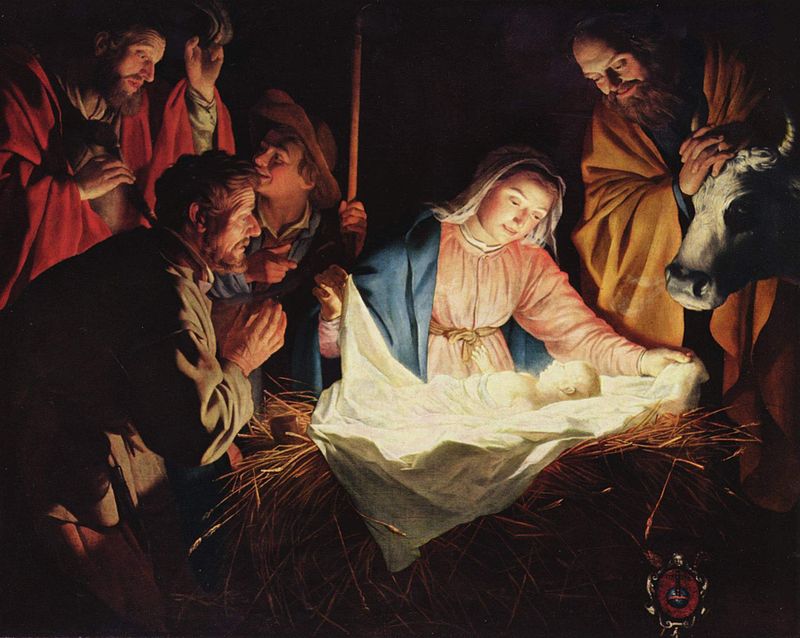
Adoration of the Shepherds by Gerard van Honthorst depicts the nativity of Jesus 1622.

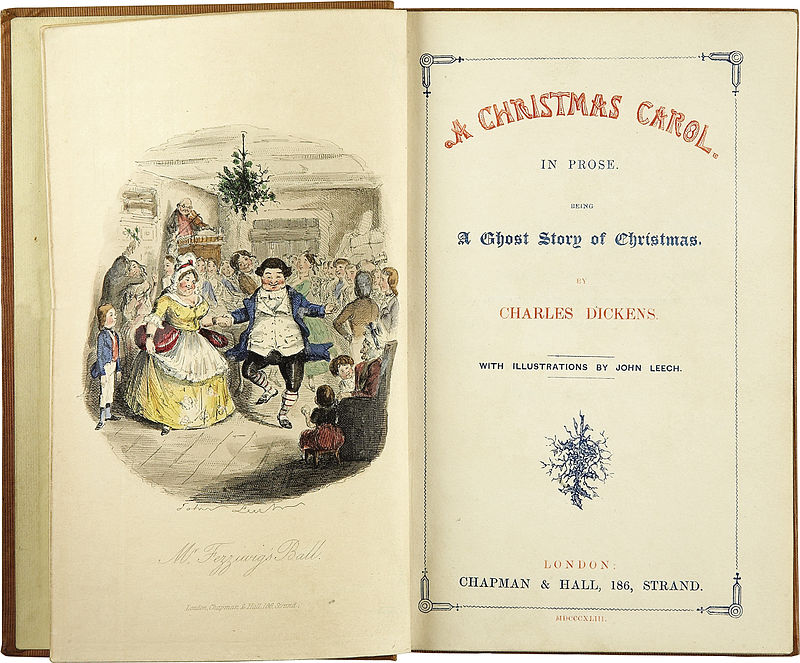
Those who follow my blog know how I love to reread the classics. Every winter, I read Andersen’s The Little Match Girl Dickens’ Christmas Carol and O. Henry’s  The Gift of the Maggi.

800px-Charles_Dickens-A_Christmas_Carol-Title_page-First_edition_1843

I also make sure I watch While you were sleeping, You’ve got mailHome Alone, and The Bishop’s Wife, which all include direct references to the Christmas season.  My all-time favourite has to be Miracle on 34th Street.

Miracle_on_34th_Street

I can’t help it. I’m an incurable romantic.

I believe good people attract good luck, so good things happen to good people, eventually, in spite of the difficulties they encounter. Sometimes, reality proves me wrong, and wonderful people have to go through terrible moments, and the good moments never seem to come, but there is so much that we don’t know, can’t see, and will never understand…

A few days ago, while in the mood for a new ‘Christmas read’, quite by chance, I picked up On Christmas Hill by Faith Mortimer.

It’s a novel that is so easy to love, so delightful to read, and so hard to forget, that I’m sure I’ll be rereading it next Christmas.

On Christmas Hill

It has all the Ingredients for a great romantic read: a lost love letter delivered much later, but not too late; an unfaithful husband; a cruel jealous girlfriend; a cheating boss who sacks ex-mistress; a negligent and miserly landlord; parents who abandon their child in need; a wealthy alpha male (aka Byronic hero), a single mum with many worries (aka damsel in distress), and a fatherless child who writes a letter to Father Christmas asking for a father for Christmas.

The good are very good, generous, honest and gullible, while the bad are very bad, selfish, scheming, and cruelly intolerant.

The plot is gradually unveiled as the characters grow in depth and events twist and turn until we reach an ending Father Christmas would approve of.

I’m sorry I finished it so quickly, but luckily you still have this wonderful experience ahead of you. Read it and you will believe in Father Christmas, at least for a few wonderful hours.