Christmas in Jane Eyre

I’d like to wish you all a very Merry Christmas and hope you can spend some time with people you love.

Thank you for reading my posts, commenting, and liking. You are my greatest incentive.

Today, I’ve prepared a special post about Christmas celebrations and symbolism in Jane Eyre.

wpid-2014-12-25-17.06.42.jpg.jpeg

Some of Jane Eyre’s happiest and saddest moments occur at Christmas.

Firstly, at Gateshead, her Aunt Reed’s prosperous household, Christmas was celebrated with elaborate dinners, parties, and presents:

‘Christmas and the New Year had been celebrated at Gateshead with the usual festive cheer; presents had been interchanged, dinners and evening parties given.’

However, Jane Eyre, was treated as an unwanted and unloved intruder by her aunt and cousins. She tells us:

‘From every enjoyment I was, of course, excluded: my share of the gaiety consisted in witnessing the daily apparelling of Eliza and Georgiana, and seeing them descend to the drawing-room, dressed out in thin muslin frocks and scarlet sashes, with hair elaborately ringletted; and afterwards, in listening to the sound of the piano or the harp played below, to the passing to and fro of the butler and footman, to the jingling of glass and china as refreshments were handed, to the broken hum of conversation as the drawing-room door opened and closed. When tired of this occupation, I would retire from the stairhead to the solitary and silent nursery.’

Christmas at Gateshead simply exaggerated her isolation and loveless existence.

No mention is made of Christmas during her miserable years at Lowood School. We can imagine that there are no pleasant or noteworthy memories attached to this time of year for the young Jane Eyre.

We next read about Christmas while Jane is at Thornfield Hall. When Rochester received guests, Mrs. Fairfax informed Jane that Lord Ingram’s daughters, Blanche and Mary, had attended seven years previously.

‘She (Blanche Ingram) came here to a Christmas ball and party Mr. Rochester gave. You should have seen the dining-room that day—how richly it was decorated, how brilliantly lit up!’

Blanche’s merry Christmas contrasts with dreary Lowood where Jane was living at that time.

The next mention of Christmas is a metaphorical allusion by Jane after her marriage was interrupted and she discovered Rochester was already married. She retired to her room once more, her world had crumbled, and her expectant summer wedding turned into a desolate wintry night:

A Christmas frost had come at midsummer; a white December storm had whirled over June; ice glazed the ripe apples, drifts crushed the blowing roses; on hayfield and cornfield lay a frozen shroud: lanes which last night blushed full of flowers, today were pathless with untrodden snow; and the woods…’

Frost, ice, and storm have taken over her hopes for happiness. She no longer has a future as the road ahead is pathless with untrodden snow. Jane is a destitute and lonely orphan once again.

Finally, it was just before the following Christmas when Jane discovered that the family who had taken her in and looked after her after she left Thornfield Hall, Mary, Diana, and St. John Rivers were in fact her cousins, and that she had inherited 20,000 pounds from her uncle, John Eyre, who had died unmarried and childless in Madeira.

‘My uncle John was your uncle John? You, Diana, and
Mary are his sister’s children, as I am his brother’s child?’
‘Undeniably.’
‘You three, then, are my cousins; half our blood on
each side flows from the same source?’
‘We are cousins; yes.’

Consequently, Jane decided she would leave her humble abode at the Parish school and live at Moor House with her cousins Mary and Diana, with whom she planned to share her inheritance.

Jane also tells St. John that she will leave her full-time employment at the Parish school after Christmas, although she promised her pupils she would visit them once a week to teach them for an hour.

Meanwhile, she is determined to spend a merry and splendid Christmas, for the first time in her life. She plans to: ‘clean down Moor House from chamber to cellar…till it glitters again,..’ She also plans to make sure the house is warm, ‘… afterwards I shall go near to ruin you in coals and peat to keep up good fires in every room;’ Finally she will make sure they have the best food to eat, ‘… and lastly, the two days preceding that on which your sisters are expected will be devoted by Hannah and me to such a beating of eggs, sorting of currants, grating of spices, compounding of Christmas cakes, chopping up of materials for mince-pies, and solemnising of other culinary rites…’ 

She also refurnished the house to its previous grandeur with ‘Dark handsome new carpets and curtains, an arrangement of some carefully selected antique ornaments in porcelain and bronze, new coverings, and mirrors, and dressing-cases, for the toilet tables, answered the end: they looked fresh without being glaring. A spare parlour and bedroom I refurnished entirely, with old mahogany and crimson upholstery.’

Jane’s first Merry Christmas was spent at glittering Moor House with her cousins, Mary and Diana. Jane tells us:

‘It was Christmas week: we took to no settled employment, but spent it in a sort of merry domestic dissipation. The air of the moors, the freedom of home, the dawn of prosperity, acted on Diana and Mary’s spirits like some life-giving elixir: they were gay from morning till noon, and from noon till night.’

Jane is still missing Rochester, and although it is ‘they’ who were ‘happy from morning till night’, she was also content because she had found a home, a family, and financial stability at last. Jane was warm and comfortable, had plenty of food, and enjoyed the company of her loving cousins. A sharp contrast to her hapless situation at the beginning of the novel.

This Christmas with her newfound family is undoubtedly Jane’s most peaceful and joyous moment in the novel.

Even if you are missing someone, as most of us are, I hope you all have a joyous and peaceful Christmas. The best is still to come.

wpid-2014-12-25-16.58.13.jpg.jpeg

Flash! Friday (Micro Fiction) Contest

Eternal Love

The evening sun was waning and I needed her consent before conversion.
‘I offer you eternal love, Mina,’ I promised.
She looked into the glass of wine, lips pursed, and shook her head.
‘I prefer mortality.’
Seconds later I rushed out to the sound of the opening door. Lucy had arrived unexpectedly.
‘I couldn’t wait!’ She cried as she pushed past me into the hotel suite.
She kicked the door shut, grabbed my hand, and pulled me into the bedroom.
I heard the gust of wind waft into the adjacent room as the sliding balcony doors were pushed apart.
‘Did you miss me?’ she asked.
‘We need to talk.’ I answered.
‘Later…’ she whispered.
I heard the click of the door.
‘Let’s have some wine first,’ I said as I pulled her out to the balcony.
‘Sure. Whatever you were having,’ she said picking up the glass on the railing.
The sun set.
No time to explain.


I’ve never written a vampire story before and I’m not a fan of vampire novels or vampire films!

However, I must admit I do love the gothic aspect of vampire literature, and I did love Bram Stoker’s Dracula. I’ll never forget Christopher Lee in the film role, perhaps because I was young and impressionable when I first saw it…

I can’t imagine what I saw in the photograph and glass of wine to concoct this crazy story!

Now I need to go back to re-re-re proofreading All Hallows at Eyre Hall for print…

By the way, Do you want to take part in Flash! Friday?

There’s still time today! or you can do so any Friday.

Rules:

* Word count: Write a 150-word story (10-word leeway on either side) based on the photo prompt.

How: Post your story here in the comments. Include your word count (140 – 160 words, excluding title) and Twitter handle if you’ve got one. If you’re new, don’t forget to check the contest guidelines.

Deadline11:59pm ET tonight (check the world clock if you need to; Flash! Friday is on Washington, DC time)

Winners: will post Monday

Prize: The Flash! Friday e-dragon e-badge for your blog/wall, your own winner’s page here at FF, a 60-second interview next Wednesday, and your name flame-written on the Dragon Wall of Fame for posterity.

Whatever you do, make sure you have a great weekend!

Five Secrets I’d like to Share

I was tagged by fellow-blogger and author Roberta Pearce several days ago to post five things about myself that people might not know.

Well, if you don’t know it means it’s a secret, and if it’s a secret, I shouldn’t really be telling you, but since I can’t resist Roberta’s persuasive talents, I’ll have to comply…

1- My feet have given me many tough moments in life. When I was a child, I was taller than the rest, and had bigger feet then the rest of the girls my age, so I had a really hard time finding suitable shoes my size, children’s size. Everyone told me it would be alright when I got older, but it wasn’t, my feet kept growing, and growing, and by age thirteen, I was size 41. A couple of years later, it happened. My foot grew again. I am size 42 (I think that’s 11 US and 8 UK). Fortunately, they stopped growing. It was agony finding shoes. imagine a teenager looking for something cool in the outsize shoe department. I hated buying shoes. It caused me such trauma 😦 Of course it’s easier now, as there seem to be more people with my ‘problem’, and online shopping has made it much easier! Now I actually enjoy buying shoes:)

wpid-20141009_101624-1.jpg
The last pair of shoes I bought. Online. By Pitillos. Spanish leather shoes. Price: under 60 Euros. Value: Priceless. Size 42.

2- I’ve been using henna to colour my hair since 1992. I say this because many people think I’m a real red-head. Well, I’m not. I have to remind myself sometimes. I had curly blond hair as a child, which soon turned chestnut. The trouble with henna is it’s a bit messy and time consuming. I have to make a creamy mixture with the powder, some olive oil, and hot water, which I then apply to my hair with gloves, and leave it on for over an hour.

It’s an ancient ritual, which I love taking part in. Henna is a small tree which grows in northern Africa and has been used as a cosmetic die for 6,000 years.

Red or hennad became popular with the Pre-Raphaelite artists of England in the 1800s. The painting on my header, Lilith, by Dante Gabriel Rossetti  is just one example. The French Impressionists further popularized the association of henna-dyed hair and young bohemian women.

The trouble with henna is it’s a bit messy and time-consuming. I have to make a creamy mixture with the powder, some olive oil, and hot water, which I then apply to my hair with gloves, and leave it on for over an hour. However, I think it’s worth it, because I’ve never used chemical dyes on my hair.


20140529_140541-001
Red hair 55th birthday!
20130915_181500_1-001
Chestnut hair, 21st birthday!

3- I never drink red wine or spirits. I only drink beer or white wine occasionally. I’m not too fussy, I like local white Spanish wines, My favourite white wine is Rueda, which is made with ‘verdejo’ grapes, grown in Castille (north-west of Spain), near the cities of Valladolid, Segovia and Ávila. Marqués de Riscal is my favourite. I also like French Chardonnay or Sauvignon, and I have tried California white wine, when  was in the US, and thought it was quite nice, too. I’ve also tried white wines from Chile, South Africa, and Australia, although I haven’t been there yet.

27-vinedo Rueda_web
Marqués de Riscal grapes


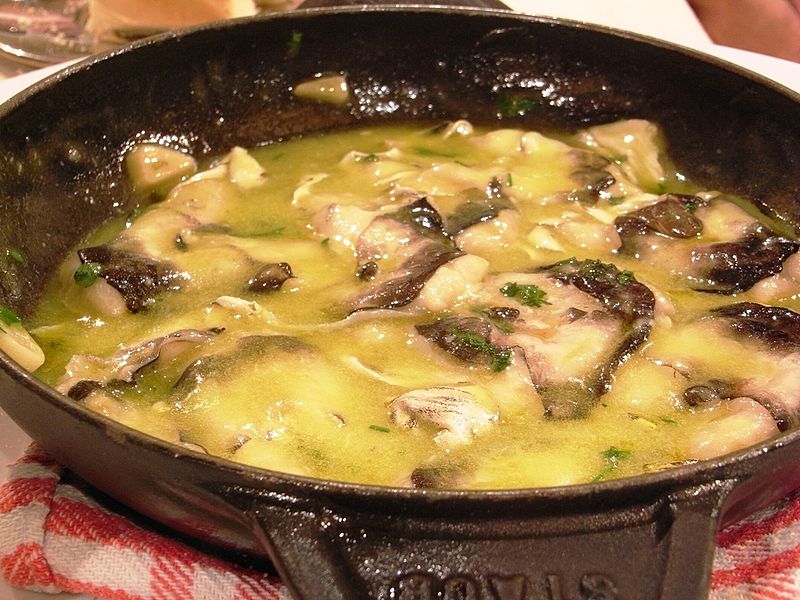
4-  My favourite food is ‘cocochas’ or cod cheeks cooked in an earthenware casserole, made with olive oil, fried garlic, parsley, and making sure it is well-stirred, and slowly cooked. It also goes very well with white wine.

800px-Cocochas


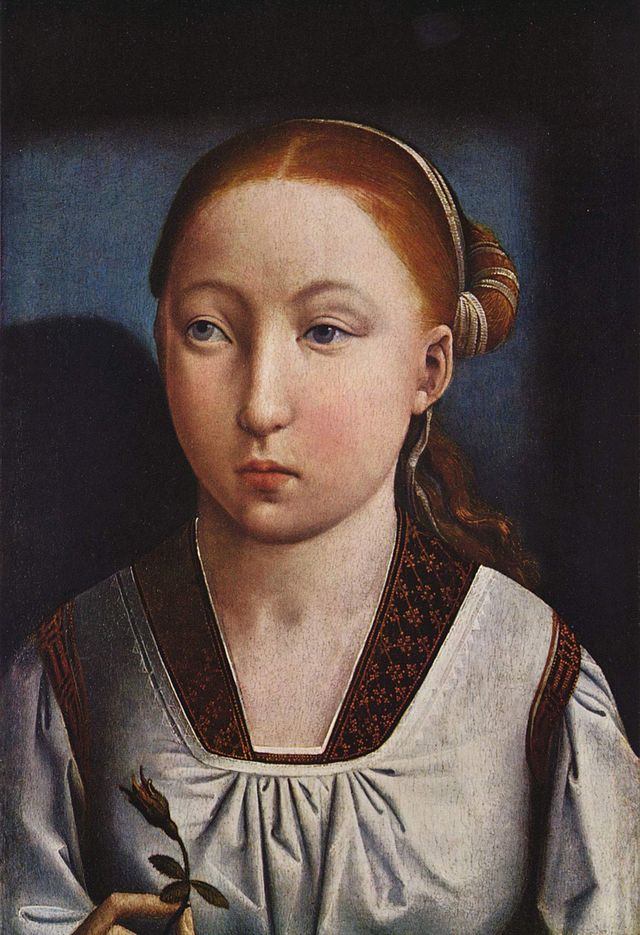
5- I’ve always wanted to write the ‘autobiography’ of Catherine of Aragon, wife of Henry VIII, and the daughter of the Spanish Queen, Isabel of Castille and Ferdinand of Aragon. I’m fascinated by this little girl who grew up in the splendour of her parents’ court in sunny Granada, and at the age of 15, she was sent to ‘cold and wet’ Wales to marry a sick child, Prince Arthur, who died shortly after her arrival, and then she was a virtual prisoner of Henry VII until his death, when she was finally allowed to marry Arthur’s brother, Henry VIII. Unable to bear a healthy male heir, she was eventually rejected, divorced, and imprisoned, in favour of Anne Boleyn, much like the madwoman in the attic… I will write it one day… By the way, she is said to have been a redhead!

640px-Juan_de_Flandes_002 11 años
Catherine of Aragon at 11 by John of Flanders.
wpid-img_20141201_225643.jpg
Catherine’s mother. Isabel of Castille.


I feel relieved after telling you my five secrets, but don’t worry, I’m still a mystery, there are still plenty more secrets I’m saving for the future…

Who’d lke to tell me 5 secrets? It’s up to you! Let me know in the comments so I don’t miss out!

Nov 26 | Hello again, Jane!

I have just received another wonderful review for All Hallows at Eyre Hall by Meike Hubert, which she has published on her original and varied blog, Hubilitious. Please make sure you check it out 🙂
I feel encouraged, satisfied, and fortunate when readers enjoy my novel, and let me know about it! Thank you Meike for reading, and taking the time to review and share your opinion.
I’m sure you’ll all enjoy reading her fresh and enthusiastic reviewing style, which is a delight to read.

hubilicious's avatarhubilicious

Welcome again to Bookworm Wednesdays! This time, a fellow blogger kindly (Luccia from Rereading Jane Eyre) asked me whether I were inclined to read her novel, and maybe also to review it after reading. And indeed, I was.

(secretly totally freaking out – how exciting – being asked to write a review – WOW!!!)

It took me some time from finishing the book to finishing this review, but here we finally are…

In this Victorian Gothic Romance, the reader is reunited with a well-known heroine from literature, Jane Eyre. You sure remember her, from the famous novel written by Charlotte Brontë? If not, it’s about time you get acquainted. Seriously, it’s a classic you shouldn’t miss out on (also, if you haven’t tackled Jane Austen yet either, get going!). And the sequel is just as good!

In “All Hallows at Eyre Hall”, we meet Jane again about 20+ years after…

View original post 665 more words

The Real First Thanksgiving

As promised, the second instalment of Noelle Granger’s informative and entertaining posts about Thanksgiving. This time she’s she’s sharing her knowledge about the Pilgrims ‘ arrival and their First Thanksgiving.

noelleg44's avatarSaylingAway

Much has been written about the first Thanksgiving which took place at Plimoth Colony. Here is some information that is probably closer to the truth. As usual, click on the pictures.

First Thanksgiving I                 The First Thanksgiving 1621, oil on canvas by Jean Leon Gerome Ferris (1899)

The voyage from Plymouth, England, had taken 65 days. Once the decision to settle on the shores of the harbor of what is now Plymouth, MA, the Pilgrims faced a daunting future:they had no houses, no stored goods, no knowledge of the country they faced, nor any knowledge of its inhabitants besides wild stories of cannibals. And the season was winter, harsh and cruel. A common house that had been built to house some of the Pilgrims burned on January 14, 1621, and those who had lived there had to return to the Mayflower for shelter.

Pilgrims going to church                  Pilgrims going to church (1867) by George Henry…

View original post 1,049 more words

Growing Up Pilgrim

A riveting post on Plymouth, US, where blogging sister Noelle grew up. Just right for this time of year!

noelleg44's avatarSaylingAway

I love my home town and decided to take the opportunity of the upcoming holiday to tell you a little about it and also disenchant you of some of the first Thanksgiving myths. I grew up in Plymouth, Massachusetts, and was lucky enough to be indoctrinated into Pilgrim ways from a young age.
Don’t forget to click on the pictures to enlarge them!

Dressed as a Pilgrim girl, I walked in the Pilgrim Progress. These are held on the first four Fridays in August, and local citizens dress as Pilgrims re-creating their procession to church. The number of persons, and their sexes and ages have been matched to the small group of Pilgrims who survived the first winter in the New World. We marched up Leyden Street, to the clicks of tourists’ cameras.

Pilgrim Progress

Leyden Street was originally called First Street, and the Pilgrims began laying out the street before Christmas…

View original post 946 more words

There was no possibility of taking a walk that (November) day.

November is a dark and ominous month in Jane Eyre’s life.

Firstly, she is locked in the red room, as a child, at Gateshead. Secondly, she is lonely at Thornfield Hall, before Rochester’s arrival. Finally she is leading a solitary life in Morton, while her cousin, whom she doesn’t love, proposes to her.

Gateshead 

The first lines of Jane Eyre presents the reader with a gloomy November day:

There was no possibility of taking a walk that day…. the cold winter wind had brought with it clouds so sombre, and a rain so penetrating, that further out-door exercise was now out of the question.

The young girl, under ten years old, was confined to the house she detested. She had been taken in by a family who relegated her to the position of a homeless poor relative they despised. In the breakfast room, where she was expelled, away from the rest of the family, who were comfortably seated in the drawing-room, Jane observed:

…to the left were the clear panes of glass, protecting, but not separating me from the drear November day. At intervals, while turning over the leaves of my book, I studied the aspect of that winter afternoon. Afar, it offered a pale blank of mist and cloud; near a scene of wet lawn and storm-beat shrub, with ceaseless rain sweeping away wildly before a long and lamentable blast.’

Later that day, she was confined to the ghostly Red Room, after refusing to be bullied and beaten by her cousin John Reed.

Thornfield

Jane arrived at sombre Thornfield Hall  in October, but chilly November arrived fast, and Mrs, Fairfax informed Jane of what to expect from then on:

I’m sure last winter (it was a very severe one, if you recollect, and when it did not snow, it rained and blew), not a creature but the butcher and postman came to the house, from November till February; and I really got quite melancholy with sitting night after night alone.

Thornfield Hall was a vault-like, dreary place between November and February. On this occasion, Mr. Rochester returned in January, when he met Jane on the icy causeway, on her way to Hay.

Morton.

Shortly after moving to Morton, and recovering her health, in November, Jane set up a school, where she lived. She found both a job and lodgings. She describes the rudimentary building:

I had closed my shutter, laid a mat to the door to prevent the snow from blowing in under it, trimmed my fire, and after sitting nearly an hour on the hearth listening to the muffled fury of the tempest, I lit a candle, out of the frozen hurricane—the howling darkness.

Shortly after, still in November, she learnt of her uncle’s death and the fortune she had inherited. Months later, she returned to Thornfield Hall in search of Rochester.

November in Jane Eyre

November is the month of transition between the warmer and colder part of the year. It heralds a time of introversion and hard work in order to lay the foundations for the spring.

During those chilly autumn days at Thornfield, Jane more than teaches, she transforms Adele into a more docile pupil, and ears the respect of the rest of the staff who thought she was too frail for the job. By the time Rochester arrives she’s literally become the ruler of the roost. She sleeps upstairs with Mrs. Fairfax, very near the master’s room, she has got to know the house and the area, she has gained the respect of everyone, and she loves it at Thornfield. There is no-one to boss her around, until he arrives.

In Morton, she occupied her time drawing and reading, teaching, and gaining the respect of the locals as she worked as their teacher at the newly founded school, until she learnt of her new and improved situation.

The positive events in Jane Eyre occur in spring and summer, while winter is a time for introspection, loneliness, and hardship. Fortunately, spring and summer bring renewed hope and love to her life, as we have seen in other posts on this blog.

Emily Dickinson, on the other side of the Atlantic Ocean, also had a sad, cold,  and difficult view of November.

Charlotte Bronte would have loved this poem, which she probably never read.

How happy I was if I could forget
To remember how sad I am
Would be an easy adversity
But the recollecting of Bloom

Keeps making November difficult
Till I who was almost bold
Lose my way like a little Child
And perish of the cold.


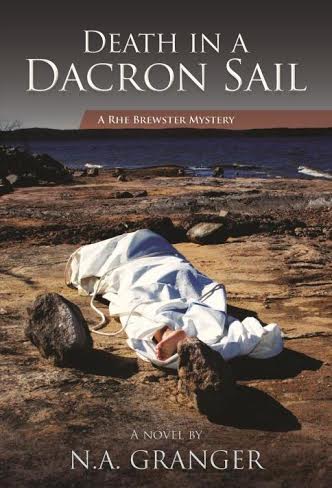
Cover Reveal! Death in a Dacron Sail by N. A. Granger


Dacron


On an icy February morning, Rhe Brewster, an emergency room nurse with a nose for investigation, is called to a dock in the harbor of the small coastal town of Pequod, Maine.

A consultant to the Pequod Police Department, Rhe is responding to a discovery by one of the local lobstermen: a finger caught in one of his traps.

The subsequent finding of the body of a young girl, wrapped in a sail and without a finger, sends the investigation into high gear and reveals the existence of three other missing girls of the same age, plus a childhood friend of Rhe’s.

Battered by increasingly vitriolic objections from her husband, the pregnant Rhe continues her search, dealing with unexpected obstacles and ultimately facing the challenge of crossing an enormous frozen bog to save herself.

Will she survive?

Is the kidnapper someone she knows?

In Death in a Dacron Sail, the second book in the Rhe Brewster Mystery Series, Rhe’s nerves and endurance are put to the test as the kidnapper’s action hits closer to home.

Noelle Granger
Noelle Granger

Death in a Dacron Sail is N. A. Granger’s second novel. It features the same main character as her first book, Death in a Red Canvas Chair, Rhe Brewster.

I asked  Ms. Granger to tell us a little more about Rhe.

My main character, Rhe Brewster, is an Emergency Room nurse, which allows me to bring in medical knowledge, along with a healthy dose of anatomy from her friend, Marsh Adams, the assistant Maine State ME. Rhe is smart, daring, and has what I have called a yen for adrenaline, a not always good mix when she’s in the middle of an investigation.  She tends to leap before looking, which is why she gets herself into challenging situations.  However, she’s intelligent enough to get herself out!  I also wanted to give her a family life, one that many women could relate to: an occasionally prickly relationship with her husband Will (a lot more of that in Death in a Dacron Sail) and a loving relationship with Jack, her son, who is ADHD. MY son is ADHD, and more of that will figure into later books.

I also asked her why she writes crime fiction.

I like to write crime fiction because the scientific nature of it fascinates me – brings my background in anatomy and medicine and research together in one package. I also love doing the research for my books. I meet all sorts of people, all of whom have been very open to helping me understand their areas of expertise. I am an extrovert by nature, so this is great for my psyche.

Watch out for N. A. Granger’s  great Blog SaylingAway, where you will be able to read an excerpt from Death in a Dacron Sail very soon, in December, before it’s published in January.

N. A. Granger writes great crime fiction. Read my review of Death in a Red Canvas Chair.

Why not read it now, before Death in a Dacron Sail comes out in January?

Bite Size Memoir – It Made My Day!


Over the years, I’ve accompanied students on many eventful trips all over the world; some got lost, one travelled sans passport, another landed in the pilot’s cabin, lots got drunk, others saw ghosts… Honestly, I could write a book!

The most memorable trip was to Italy with eighty mischievous adolescents who had made a pledge not to sleep while away from home. Our final stop was Venice. We arrived late at night to El Lido, and planned to take the ‘vaporetto’ and visit Venice that very night. Swollen legged, sick, fed up, and furious, I demanded my sleep, but they refused to leave me behind. 

Suddenly, it happened. As we were approaching the pier, I saw Venice for the first time, and as if I’d been abducted by a Venetian spirit, I sighed and thought, ‘I’ve seen it. This is the most beautiful place in the world.’


This Photo was taken by Wolfgang Moroder.


If you’d like to join in or read the other memoirs, they’re here!


Book Review: All Hallows at Eyre Hall by Luccia Gray

Now, The Value of Positive Reviews!
It’s a real honour to receive such an insightful and encouraging review, especially if it has been written by another author, whose experienced and knowledgeable point of view I highly value.

S.K. Nicholls's avatarS.K. Nicholls

Coming of age at the Ethel Harpst Home, an orphanage in the North Georgia Mountains, when I first read Jane Eyre at fourteen, my primary focus on that book by Charlotte Bronte was Jane Eyre’s life. Her trials and tribulations facing loss and the strengths she relied on to see her through.

In April of this year, at age fifty-three, I chanced to read it again. I was visiting the cabin in North Carolina. It was raining all week, damp and cold in the mountains. I kept a big fire in the huge stone fireplace in the central room of the cabin and I planted myself in front of the hearth all week and read the book again.

My second reading of Jane Eyre was much different than my first. I saw the relationships between the characters having been through so many life changes myself. The rich and lofty descriptions…

View original post 529 more words