Flash! Friday – Vol 2 – 37

Todays’s photo prompt:


Marooned, by Howard Pyle, 1909. Public Domain.

Today’s Dragon’s bidding. Include the following aspect:


Word limit: 150 word story (10-word leeway) based on the photo prompt. Add your Twitter handle.

 
I’ve written a ghostly Flash Fiction today, inspired by the story of a marooned pirate, towards the end of the 18th century, on an Island off the coast of New Zealand, which is an exclusive tourist resort nowadays. Hope you like it!


A Good Place To Die. (160 words)

The pirate wasn’t alone. He had bread, water, and a loaded gun. He wasn’t on an island. He was on a large sand bar at low tide. He wasn’t dead. He arrogantly promised his executioners he’d never leave.

Three hundred years later, Tom accompanied the tourists to one of the most remote and unspoilt places on the planet, with golden beaches and clear, turquoise waters, exploring swimming holes, waterfalls, and following forest trails.

He told them the story of the marooned pirate who haunted the island. His gunshot is heard once a year, when the sea swallows up the island, on full blue moon tides.

Everyone shuddered when they heard the shot as they were returning to the hotel, missing one member of the group. In his vacant room, he had left a message: ‘This is s a good place to die.’

While under the submerged island, in the center of the Earth, the living dead planned their revenge.

 
There’s still time to post your story in comments or read the other entries.

How to write a useful #book #review

Anyone who reads a book can and should write a review, no guidelines are necessary. However, the following suggestions are meant for readers and writers who wish to review more professionally by offering a more reflective and critical response to their reading to other potential readers.

The suggestions in this post should be read alongside a previous article posted last week: What do readers need to know? 10-Point Guidelines for Reviewers’

  • Choose a book.

Sounds simple, but it isn’t. Although we should all read outside our comfort zone and explore all types of books, if you are planning to write a thorough review, it’s advisable to choose a book you’re comfortable with carrying out an in-depth reading. Don’t torture yourself!

Three simple things will help you decide:

  1. Check the blurb.
  2. Read the first pages.
  3. Read other reviews.
  • Read the book.

Sounds simple, too, but again it isn’t. Remember you’re reading in order to write a review, not only for pleasure. You will need to concentrate more, and look out for salient and specific features.

Read the guidelines I posted last week first.

If you make notes as you go (highlight the text, or write brief notes) it will save you time later. Include superficial aspects such as names and events, and more complex aspects such as your feelings and reactions to what you are reading.

It’s advisable to finish reading as soon as possible, preferably within days, although you may need to read the whole book, or parts, again.

  • Write the review.

This is the most complex part of the process, but if you have taken enough notes as you read, and write it soon after reading, it will not take too long.

Use your notes to write up your review.

Check the guidelines to make sure you have all the aspects covered.

You may now realize that there is important information you have not checked, go back and do so.

You may discover that there are other aspects not mentioned in the guidelines which you’d like to incorporate, do so.

Be honest, respectful and constructive. There may be aspects you did not like, or considered inappropriate, by all means say so, and even offer suggestions, but there is no need to be offensive.

Write the review as soon as possible after reading, and let it rest at least a few hours, if possible a day or two.

Go back and edit, rethink, recheck notes, and prepare the final version.

All reviews are useful, but if they are too short, their usefulness is limited, on the other hand, if they are too long, many potential readers will only read the first lines, or skip them altogether. Between about 50 and 250 words would be sufficient information for a potential reader.

Reviews should be as clear and concise as possible to help the reader make their choice as to whether it’s a book they will enjoy, or not.

  • Publish the review.

Publish your review in as many places as possible including the online platform where it is sold, such as Amazon, other social networks for readers and reviewers, such as Goodreads, on your blog, inform other bloggers, link or post your review to Twitter, Facebook, and any other social media you use.

The more places it is published the more useful it will be to a greater number of readers.

Inform the author.

Never before have readers been able to contact writers directly. Take advantage of this unique opportunity to tell them what you think about their work. Most authors love to know what my readers think.

I hope this post. together with last weeks’ Guidelines, help you plan and carry out your own reviews. It has helped me sort out my own thoughts on this matter, but I’d love to read your opinions on the subject.

I’ll be sharing this tomorrow on #MondayBlogs, on Twitter. Post from your blog and retweet others!

PS. There’s a brand new hashtag all about books and book reviews: #TuesdayBookBlog join in and share your reviews and views on reviewing!

Sleepless Moonlit Night

I can’t sleep tonight, but I don’t mind, at all.

I’m sitting in my terrace overlooking the beach, sipping a glass of wine, and listening to the sea swishing against the pebbled shore, while the moon playfully tickles the slippery surface with her cheeky, silvery smile.

I don’t want to sleep, because I don’t want this peaceful moonlit night to end.

I want to remember this waning summer moon, all through the cloudy winter months…


Moon 2


I wistfully remember Walter de la Mare’s poem, Silver, and irreverently decide to rewrite it with my sleepless inspiration…


Slowly, silently, now the moon
Walks the night in her silver shoon;
This way, and that, she peers, and sees
Silver jewels upon silver seas;
One by one the drops reflect
Her beams beneath their slippery waves;
Perched on a palm tree, like a date,
With claws of silver sleeps the gull;
From the shadowy sky, a bright light bleeps
Tail lights of a silent plane which sleeps.
A fishing boat floats smoothly by,
With silver lights, and silver eye;
And moveless fish in the water gleam,
By silver waves in a silver sea.

I may need a siesta tomorrow… but who cares about that on such a perfect night alone, with you…

Flash! Friday–Vol 2 – 36

This weeks’ photo prompt and Dragon’s bidding:

Cave Monastery. Vardezia, Georgia. CC photo by Ben van der Ploeg.

Three Lessons (160 words)

I looked up to the towering mountain, as water and rocks gushed out of its ruined caves.

‘Why have you brought me here, father, in this thunderstorm?’

‘Tamar, first Queen of Georgia, built this cave monastery over 900 years ago, to preserve our religion from the invading Mongols. There was a secret tunnel starting here, at the river, and leading up to our sacred place.’

‘What happened?’

‘There was an earthquake and most of it collapsed, although monks have been living there up to this day. Why did God allow the earthquake to destroy his monastery?’

‘Perhaps God didn’t like the way they worshipped, and he wanted to punish them for building this stronghold?’

‘No, my son. God wants to teach us three lessons: firstly, that the forces of nature are stronger than man; secondly, that nothing on Earth is permanent; and thirdly, that we can and must always be prepared to start again from scratch and rebuild our dreams.’

****

Have a look at today’s other entries


Meet the Main Character Blog Hop!

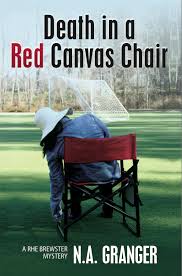
Blogger and writer Noelle Granger, has kindly invited me to participate in a Meet the Main Character blog hop. Noelle writes crime fiction with a wonderful main character called Rhe Brewster, a nurse who works as consultant with the Police Department on special cases. Check out her novel Death on a Red Canvas Chair.  I love the adventures of this modern-day, younger version of Miss Marple! Read my 5 star review.

Thank you so much for tagging me on Noelle, I’m overjoyed because I’ve been wanting to take part in this blog hop for ages, and I’ve finally been tagged!

Here are the answers to my main character in my debut novel, All Hallows at Eyre Hall,  which is Volume One of the Eyre Hall Trilogy.

1.  What is the name of your character? Is he/she fictional or historical?

My main character is Jane Eyre Rochester. She has been fictional for nearly two hundred years, so she’s almost a historical person, too!

2. When and where is the story set?

The story is set in 1865, in Eyre Hall, a country estate in Yorkshire, where Thornfield Hall once stood.

3. What should we know about her?

Jane was an orphan, a governess, and a teacher up to the age of twenty, when she married the older, wealthy and egocentric landowner, Edward Rochester. At the time of the novel, she is 42, and has become part of the Victorian landed gentry in Yorkshire, but she is still a passionate, caring, and socially conscious person. She will soon be running a large and profitable Estate, because her husband is on his deathbed.

Her twenty-two years as Mrs. Rochester have not been easy. I can’t say much more without introducing spoilers, and she’s about to find out many more scandalous and shocking secrets, which make the ‘madwoman in the attic’ seem like a storm in a teacup.

Jane is at an unexpected and turbulent turning-point in her life, and the decisions she is forced to make will have unpredictable consequences.

4.What makes her interesting?

At the HEA end of Jane Eyre, Jane was living an idyllic honeymoon life, which many readers guessed, was either a condescending lie, or a temporary truth.

Jane Eyre is no longer a naïve and poor, young orphan. The way in which Jane has developed over the last twenty-two years was a challenge to write, and I hope interesting to discover.

5. What is the personal goal of the character?

Jane’s main concern is her son’s well-being and future. She is prepared to use all her energy, time, resources, and influence, to protect him from knowledge of his father’s wrong-doings, and to further his political career, too. To a lesser degree, she is also concerned about her husband’s other wards, Adele and Annette. She has forgotten, for the moment, about her own needs and objectives.

6. Is there a working title for this novel, and can we read more about it?

7. When can we expect the book to be published?

All Hallows at Eyre Hall is volume one of the Eyre Hall Trilogy, and is available on Amazon. Volume two, Twelfth Night at Eyre Hall, will be available in December, 2014. The final volume, Midsummer at Eyre Hall is due in summer, 2015.

8. Tap several more authors to highlight their books.

It’s my pleasure to introduce you to the following bloggers and writers:

Linda Townsdin author of the Spirit Lake Mysteries

Cyril Bussiere author of The WorldMight

Jo Robinson author of the Shadow People

Roberta Pearce author of A bird Without Wings

I’m looking forward to reading about their main characters, too!

One Lovely Blog Award

I love my blog, and try to make it look as lovely as possible for my readers, so thank you Ronovan for nominating me for the Lovely Blog Award. I feel proud and honoured to receive it.


Bloggers have to make an effort to be lovely and care about our blog entries and our readers, and that’s what Ronovan does. He spoils us all with poems, tips, and insightful reflections, which he generously offers us almost every day, please take the time to look up his blog, Ronovan Writes. You will not be disappointed.


These are the guidelines that come with accepting this award.

1. Thank the person who nominated you for the award. (Yes)

2. Display the One Lovely Blog Award on your Blog. (Yes)

3. Share seven things about yourself. (Yes)

4. Nominate fifteen Bloggers you admire. (Yes) Inform them by commenting on their Blog (in the process…).


Seven Things About Me

  1. Luccia Gray is my pen name. I chose it to reinvent myself as a writer. It is an anagram of my ‘real’ name, Lucy Garcia, which isn’t my real name either, because it’s my nickname and my first surname only, and I have a middle name and two surnames of my own, because I have never used my husband’s surname, which would be my third surname. But what’s in a name anyway? As Juliet so rightly asked Romeo.
  2. I am writing a neo-Victorian trilogy called, The Eyre Hall Trilogy. I have already published the first volume, All Hallows at Eyre Hall, and I am writing the second volume, Twelfth Night at Eyre Hall.
  3. I was born and brought up in London, but I live in the south of Spain.
  4. I have three wonderful children and three fantastic grandchildren.
  5. I love reading. I combine reading and rereading the classics, especially 19th and 20th century literature, with contemporary fiction by established novelists and new or independent authors.
  6. I love writing. It is what keeps (and has kept) me sane. I would have given up on myself (and everyone else) if I didn’t write.
  7. My three favourite novels are Persuasion, Jane Eyre, and Rebecca. I reread them regularly, and every time I do so, I feel differently about them.

I am nominating the following blogs because I think they’re lovely.

I’m not sure whether they are willing to accept or have time to accept, but in any case, they are lovely blogs, so please check them out!

Noelle

Drew

 Irene

Dipnwita

Lisa

Mihran

 Paul

Geoff

Anne

Tena

Cielo

Rosie Susan

Eloise

Angela,

Thank you for being part of this wonderful blogging universe, and I’m looking forward to reading your posts!


Review of ‘Death on a Red Canvas Chair’ by Noelle Granger


Noelle Granger is one of the wonderful people I’ve met in the last few months in my parallel, virtual blogging universe, and as most important things which happen in life, it was quite by chance.

I had already met a talented writer (again by chance) on Goodreads, Elizabeth Hein, who generously volunteered to beta read my first novel, and whose help was invaluable in the final version, because her wise words convinced me to alter some vital scenes. Elizabeth tagged me onto a blog hop which she in turn had been tagged on by Noelle, so I checked out Noelle’s blog, and was instantly captivated. This was in April, 2014. I remember because they were both taking part in the Blogging from A-Z Challenge, 2014.

One of the irreplaceable things ‘blogging sisters’ (as Noelle calls us) do, is read each others’ work with constructive criticism, and another important activity we take part in is to encourage and support each other on our journey into authorship, which is ultimately a journey of self-expansion and discovery. Elizabeth and Noelle both taught me all about these aspects, implicitly, by their example. They are truly wonderful blogging sisters and inspiring writers, and people.

It is no exaggeration to say that they have changed my life in the last four months, because they have disinterestedly supported me, and drawn me into the wonderful world of blogging and writing, and being supportive with others, because this is a very serious game which must be played forward, too!

After all I have said, you may be inclined to suppose that my review of her novel is biased, well, it isn’t, because I’m making a huge and conscious effort to be impartial, and give an authentic review. I’ve already said I wouldn’t review books I don’t personally enjoy reading, because there may be nothing ‘wrong’ with the book, we all have our tastes in literature, and some stories will not draw me in, which doesn’t mean other readers won’t enjoy reading them. However, if asked, I will tell the author what I think, and why, personally, not publicly.

In order not to be biased, and to make sure I cover all the aspects of the novel I should be dealing with, and to make sure I’m doing it professionally I have written a post called, What do readers need to know: 10-Point Guidelines for Reviewers’. I’m hoping these guidelines will help me, and other reviewers or writers, to cover all aspects of the novel to be reviewed, as impartially as possible.

****

DEATH IN

Review of Death on a Red Canvas Chair by Noelle Granger.  5 Stars!

Death on a Red Canvas Chair is an enjoyable murder mystery, including elements of suspense, and featuring the work of forensic experts. I was drawn into the novel immediately, from the startling first scene. It was a pleasure to read, due to the well-written and vivid, flowing language, fast-paced plot, and absorbing characters.

Rhe is an unlikely and loveable heroine. She’s a hard-working nurse, police consultant, loving mother, supportive wife, and good friend. She’s the best friend or neighbor we’d all love to have. Sounds like a boring heroine, well, like the adorable Miss Marple, Rhe is anything but boring! Although she is highly regarded professionally, on a personal level, she struggles with important issues, and there are plenty of exciting moments to keep you on the edge of your seat, in a plot which is carefully woven with plenty of twists and turns!

Our heroine has first-hand knowledge of medical terms, so at times, reading is like watching an episode of CSI, but she’s also prepared to work outside the lab, and put her life at risk confronting the bad guys, in action-packed scenes.

Although the crime is finally solved, we have become so involved with Rhe and her world, that we are anxious to discover what happens to other aspects of her personal life, and are thus drawn into impatient expectation for the following book in which she will (hopefully) unravel another mystery.

****

Extra-short, eye-catching review!

If you love well-written and well-woven crime mysteries, with action, drama, and engaging and unexpected leading characters, you’ll enjoy reading Death on a Red Canvas Chair! It’s a great summer read, written by an author who knows her craft.

****

Seriously, read the first pages, and you’ll be hooked!

PPS. I forgot to tell you that I love well-plotted, murder mysteries. They are such a satisfying and exciting way to spend precious reading time… I’ll be expanding on my reasons in another post!

What do readers need to know? 10-Point Guidelines for Reviewers

  • Who should review?

Anyone who reads can and should review a novel.

It’s relatively easy to say if you liked or didn’t like a book and why you did so, and that’s helpful for potential readers. Short and simple reviews such as, ‘a page turner, I really enjoyed it’, or ‘Don’t waste your time and money on this book’, could be helpful, taken with other reviews, but on their own they are insufficient, because they give scarce and subjective information, which lacks any objective support or argumentation.

On the other hand, some readers, especially those of us who also write, or want to review professionally, need to think about how we go about writing our reviews more efficiently.

I’m hoping the following guidelines will help me, and other readers, reviewers, or writers to cover all aspects of the novel to be reviewed, as impartially as possible, in order to produce a both a descriptive and critical review.

  • Who is the review for?

The type of review I propose is aimed at potential readers, that is, people who are looking at the reviews in order to decide if it’s their type of book or not, on sites such as Goodreads, or Amazon, etc.

But, who are these ‘potential readers’? When we write our review, we will never know who they are or what they want to read, but we can discuss the reasons why people read.

  • Why do people read fiction?

Basically, there are two reasons for reading novels:

  1. To escape, relax and enjoy ourselves, or
  2. To be jolted, shaken, and surprised. In other words, as Kafka put it, to be stabbed!

According to Kafka, In a letter written to a friend, he said, “I think we ought to read only the kind of books that wound and stab us… we need the books that affect us like a disaster, that grieve us deeply, like the death of someone we loved more than ourselves, like being banished into forests far from everyone, like a suicide. A book must be the axe for the frozen sea inside us. That is my belief.

Novelist, Grahame Greene, one of the most insightful 20th century authors, originally divided his fiction into two genres: thrillers such as, Our Man in Havana, which he described as ‘entertainments’, and literary works, such as The Power and the Glory, which he described as ‘novels’. Greene, eventually dropped the ‘entertainments’, and referred to them all as ‘novels’. In fact, in his autobiography, Ways of Escape, he referred to Brighton Rock, originally labeled as an entertainment, as “perhaps one of the best [books] I ever wrote.”

Am I proposing there are two types of readers who are completely different? Those who read for pleasure or those who are in search of intellectual stimulation? Definitely not.

Although there are ‘straight entertainment novels’ and ‘straight literary novels’ most books have a mixture, and most readers also read both types of books at distinct moments in their lives, or even days. I myself alternate historical and contemporary romantic novels, with books which challenge and shake me out of my comfort zone.

  • Point 1

It would be very useful to inform the reader, which of the two aims the book reviewed fulfills, and to what degree. Is it purely for enjoyment, purely literary in nature, or for both pleasure and intellectual stimulation?

  • Point 2

It would also be helpful to inform the reader of the genre, which is another tricky question. Identifying genres can be stifling and restrictive, and as with all classifications there are different taxonomies, and sub-genres, and, of course, most novels cannot be cast in only one mould. The Guardian has a comprehensive a-z list here, there is also another useful list on Writer’s Digest , which will help us identify genres and sub-genres.

  • Point 3
  • What makes a good book?

If we are going to judge whether a book is worth reading or not, we should decide which characteristics makes a book fall into these groups.

There is no easy answer, but an answer must be attempted, or else we can’t continue with our review.

According to Ava Jae, the writer’s job is to entertain and draw an emotional response from the reader, which will make them turn each page impatiently.

But how do writers achieve these aims?

I suggest, we do so by means of the following crucial elements:

  • Point 4.

Language. Whatever the novel conveys, it is done through language, which is both a cognitive and aesthetic endeavour. The reader should be told whether the language is used grammatically, and if the style is appealing. This is obvious, but unfortunately, many books with potential, are ruined by linguistic errors, or by a stiff, wordy, or inappropriate use of the English language.

  • Point 5.

Characterization. Readers should be told whether the characters come alive, because if they don’t care about the characters and what happens to them, they will not be motivated to read their story.

  • Point 6

Plot: Readers need to know if there is a solid plot which moves the story forward, with loops, twists and turns, inspiring them to keep reading.

  • Point 7.

Action: Readers want to know about the action in the novel. Action is related to character and plot. Kurt Vonnegut once said that every character should want something, even if it’s just a glass of water. The characters’ goals will move the action forward.

  • Point 8.

Creativity. We should tell readers if they will be drawn into the story by its originality, or by an innovative aspect or approach, which may even modify the way they consider certain aspects.

  • Point 9.

Entertainment. Readers should know how they will be entertained by the narrative. Will they be challenged, or amused, or shocked?

  • Point 10

Finally, bearing the previous aspects in mind, the review should be as clear and concise as possible, to help the reader make their choice, as to whether it’s a book they will enjoy, or not.

****

Hope this helps you. It has helped me to sort out my own thoughts on this matter, but I’d love to read your comments on the subject.

There will be a follow-up post on, ‘How to Write a Useful Review’, next Monday.

I’m also going to post this on my twitter on #MondayBlogs for the first time. Check it out!
 

Flash! Friday–Vol 2 – 34. Remembering the First of August

This weeks’ photo prompt:

Today’s Dragon’s Bidding:


Rules: Word limit150 word story (10-word leeway) based on the photo prompt and dragon’s bidding.


This is my entry for this week’s contest (160 words).


THE GATE TO FREEDOM

‘My father’s grandfather died in 1830. He was born in Africa, made captive, sold as a slave by his own countrymen, and brought to Surinam to work in the sugar plantations. After escaping to the rain forest, he was caught, and both his feet were cut off, so that he could not escape again. It was a slow, painful death.

Don’t ever forget you owe your freedom to that man, and make sure you bring your sons and daughters here, on the 1st of August, at least once in your life.’

‘But father, I don’t understand. You were born in London, and I was adopted in China.’

‘Son, this proud, crumbling door is all that remains of a water-mill, which belonged to a sugar refinery dating back to 1830, before the emancipation of slaves. That gate, which nature has tried unsuccessfully to bury, holds the memory of something none of us can remember, and yet we must never forget.’

 *****


Have a look at some of the other entries here.


Basic background information to the Abolition of Slavery in the British Empire.

On August 29th, 1833, a new law for the gradual abolition of slavery was passed in the British Parliament, in London.

The freedom of slaves came in two stages. The first was on the first of August 1834, which marked the emancipation of all slaves in the British Colonies.

On that day, it is said that many slaves walked up hills and climbed trees to witness the dawning of the first day of their freedom. Thousands attended ‘Divine Services’ to give thanks and praise on the Caribbean islands.

It was, however, a case of gradual freedom with conditions. The only slaves freed were those who were not yet born and those under six years of age.

All other slaves were to enter a six-year apprenticeship during which they were to continue working on the plantations, without pay, for their former masters, for 40 hours a week, in exchange for food, clothing, medical care, and provision grounds on which they could grow their own food. They could also hire themselves out to other plantations and earn more wages and buy their freedom. This apprenticeship ended in four, instead of six years, on the first of August, 1838, when the second stage of freedom started.

On this occasion, a hearse containing shackles and chains which had been used to reduce rebellious slaves was driven through the streets of Spanish Town, Jamaica, and burned.

Sugar plantations have played an important role in Surinam’s history. Today tourists can still see water mills which belonged to sugar refineries, although they are now abandoned and covered with vegetation.

We cannot change the past, but we can remind ourselves of our collective past, honour the people who struggled for a better world, and work hard to ensure that the things we are not proud of, should not happen again.


Which books should writers read?

Writers need to read beyond our comfort zone, and branch out to embrace genres and styles we don’t normally approach, because otherwise we run the risk of becoming self-absorbed.

Reading works we wouldn’t normally consider widens our perspective, improves our style, and opens windows to other ways of telling different kinds of stories.

We need to reach out synchronically, to contemporary works, and diachronically, to works of other literary periods, in order to know what’s happening now, and what has been happening for centuries, in the literary world.

Last week I read three wonderful books, and I’m more than half way through a fourth, and although I’ll be reviewing each one separately, I’d like to share my general reflections with you, first, and explain how each book has helped me grow as a writer.

I started off by rereading a classic, which I make a point of doing regularly. They offer us so much intellectually and emotionally that we cannot ignore them.

Classics hold the origin and the substance of our language and thought, reading and rereading them is mandatory for all readers, writers and reviewers.

We are part of a literary heritage which we should honour and add to, by producing works which contribute to the quality and continuity of literature as a means of both describing and reinterpreting our world.

Persuasion, by Jane Austen, has always been one of my favourites, although sadly, this rereading (which will not be the last) has revealed some flaws, it still holds a special place in my literary heart.


When I finished Persuasion, I chanced to find a debut novel by Ellen Quinn, on Twitter. I looked at the blurb, a Regency Romance, so I thought it would be an ideal complement to Persuasion. I skimmed over the first pages on Amazon, and was convinced to give it a go. When I started reading, in depth, I couldn’t put it down!

Reading both novels consecutively has given me plenty of food for thought about what constitutes a good novel, by 21st century standards, and how this conception has progressed over the last two centuries.

I enjoyed the challenge of reflecting on the similarities and differences between both these novels, and how these differences reveal who we are, and how we read and write, today, and how we did so two centuries ago.

I myself am writing a neo Victorian trilogy, so it also helped me reflect upon the similarities and differences between these successive historical periods, Regency and Victorian. The stiff Victorian clothing, aimed at covering every inch of the female body, contrasted starkly with Regency clothing which revealed a major portion of ladies breasts, as Ms. Quinn reminds us:

‘He wanted to groan as he took in the gown’s low neckline that barely encased her ample breasts.’

This would never happen in Victorian social events, because ladies breasts would be well-preserved from male eyes with plenty of silk, gauze, lacing, or other material.

I was able to ponder on this through Ms Quinn’s novel. Jane Austen, of course, had no idea how fashions were going to change, and wasn’t prone to describing clothes in detail, why should she? Her readers knew what they were wearing!

The new Victorian fashions were aimed at curbing sexual desire, promiscuity, and the liberal ideas represented in women’s attire, as well as promoting a renewed religious fervor.

I also thought long and hard on why The Seduction of Lady Phoebe  was such a great read, and Persuasion, this time, proved to be more of a struggle.

This led me to analyze what makes a good novel, for contemporary readers, but that will be the subject of another post.

The third novel I read is another debut novel, Death on a Red Canvas Chair by one of my new virtual writer friends and blogging sisters, Noelle Granger . Noelle has taught me how important it is to have a thorough plot with plenty of twists and turns, and how including the author’s valuable knowledge and expertise increases authenticity and interest.

The novel I am reading at the moment is the disturbing, yet beautiful, The Death of Bees,  another brilliant debut novel, by Lisa O’Donnell,  which was recommended and gifted to me by my best friend, Anna, a few months ago. I was not disappointed by Ms O’Donnell’s multiple narrators and tight hold on the surprising narrative.

The last two novels are set in contemporary New England, and Scotland, respectively. They are in no way related to anything I write, yet they have valuable lessons for me as a writer. Noelle has reminded me to tighten my plots, and keep the reader on her toes, while Lisa has taught me that traumatic events can be told with humour and feeling.

The four books have decisive, determined, and brave heroines, who easily bond with the reader. The first three heroines are good at what they do and lead relatively successful lives, and The Death of Bees, well, all the characters are flawed, perhaps too flawed to be likeable.

Reading these books has helped me realize I am attracted to imperfect characters who struggle with their weaknesses. Happy endings are satisfactory, but deep down, they make me feel there’s something missing or unfinished in the narrative.

Reading widely and critically helps me understand why I write the way I do, and it helps me identify what I want to achieve through my stories and characters.

How do I want my readers to feel? Satisfied? Happy? Challenged? Upset?

What do I want my readers to think about? Love? Happiness? The meaning of life, or lack of it?

I’m still exploring what kind of a writer I am, but reading other works helps me understand my own writing style, what I want to accomplish, and how I can get there.

What kind of novels help you grow as a writer?


P.S.

A special mention to Irene Waters, who contributed to the motivation to write this post, as a result of our exchange of comments on this subject recently. Check out her inspiring blog Reflections and Nightmares.