Bite Size Memoir No.7 Childhood Illness

How do you eat an elephant? One bite at a time…

Bite Size Memoir” is an invitation by Lisa Reiter for anyone to spend 5 minutes here or there (perhaps with a gorgeous little notebook), recording some snippets about their life. Each week, she provides a prompt for inspiration, so you don’t have to think where to begin. The challenge here is to keep it short with either 150 words of prose or poetry, OR 10 x “I remember ..” statements.

Here’s my contribution to this week’s challenge.

Childhood Illness

My childhood illnesses were not serious, and they were mainly related to winter. I was a stoic and recurrent sufferer of colds, flues, tonsillitis, and chilblains, which were not severe, but they were very unpleasant!

I’ve decided to use the ten-sentence format, this time. I’ve stretched my imagination and linguistic skills (!?) to come up with this almost nonsensical, and slightly silly acrostic poem:

Winter Ills

Woolen gloves tied to my coat sleeves with rubber bands,

Itchy swollen fingers trying to play the piano with two hands.

Never-ending runny noses in class,

Thermometers ancient, mercury, and glass.

Ear aches galore in spite of beanie hats,

Running out of hankies and sniffing like bobcats.

Inventing fake tummy aches to stay home from school,

Lowering voices, mother’s migraine rules.

Lozengers for sore throats and pains,

Sneezing and coughing through the night, once again…


If you’d like to take part in Lisa Reiter’s Bite-Size Memoir, have a look here

If you’d like to see other posts on this subject, have a look here


“Very Inspiring Blogger Award” and Nominations!

Fellow blogger Angela at Angela’s Accurate Administrative Services’ Blog  has nominated me for the Very Inspiring Blogger Award! Thank you for reading my blog and finding me inspiring. What a responsibility! I’ll have to live up to that from now on. Check Angela out! She really is inspiring!

blogging-award3

These are some ‘rules’ that go along with being a nominee. I will share them now and then follow suit immediately after:

1. Thank and link the amazing person(s) who nominated you. (DONE)
2. List the rules and display the award. (DONE)
3. Share seven facts about yourself. (BELOW)
4. Nominate 15 other amazing blogs (DONE) and comment on their posts to let them know they have been nominated. (DONE)
5. Optional: Proudly display the award logo on your blog and follow the blogger who nominated you. (DONE)

Seven Facts About Me:

1. Duality. I am Gemini. Since the day I was born, everything I do is mirrored or comes in pairs, at least. It took me some time to figure this out, but once I got used to myselves, everything else fell into place.

2. I am a hybrid. I am partly real and partly virtual. That means I have a ‘traditional’ life during which I physically interact with others, and another life in which I interact with people who are not part of my ‘real’ life.

3. I am bicultural and bilingual.  I was brought up in two cultures and languages: Spanish and English. I also speak French and Italian, and I understand some Latin, Old English and German…

4. Virtual Luccia has two occupations, she’s a writer and a blogger. She writes neo-Victorian fiction, and blogs about Jane Eyre, Victorian Literature, life, and anything that inspires her. She also takes part in Blog Hops and Challenges, because she loves meeting other bloggers.

5. Real Lucy also has two occupations, school teacher and college professor. She teaches English Language at an Adult Education Centre and English Literature to undergraduates, at college. She’s been doing so for so long that she is currently looking forward to early retirement, in the next few years…

6. Lucy is older, so she lives in the past, while Luccia is younger, so she lives in the atemporal www. Lucy’s future slips into the present which dissolves into the past, so the past is her only reality, the rest is a projected past. Luccia is ageless and timeless. Her time depends on the location of the speaker, the time the post was written, or read, or replied, or liked, or thought about, or the way she feels, which has nothing to do with age or time…

7. Lucy loves walking by the beachfront, an occasional glass of Chardonnay, shopping, and going out for meals and trips with her family and friends, while Luccia loves writing, surfing the web, meeting new people, and discovering the beauty of planet Earth through other people’s eyes…

8. Finally, and I’m breaking all the rules here with number 8, there’s something we both enjoy doing. I think it’s what keeps us together, in harmony. We both love reading paper and ebooks, of all genres, styles and eras. We love poetry, prose and theatre, from Anglo-Saxon to Spanglish… If given the choice, we prefer Victorian, 20th Century, romance, suspense, mystery, detective… almost everything, preferably character driven, with a solid, albeit twisting plot.

I’ve been fortunate enough to meet some wonderful bloggers over the last few months, and I’m proud to introduce you to 15 bloggers who have inspired me in some way. I’m nominating these ‘Inspirational Blogs’ in no particular order, and each for a very special reason. I would have liked to include more, but fifteen’s the limit, and I’ve already ‘cheated’ by adding nineteen! (I’m a bit of a rule-bender I’m afraid!)

1. Noelle because I love reading her inspirational childhood memories.
2. Katerina because her photos and comments on Facebook inspire me (and I love her books, too!)
3. Fran Clark because I love her inspirational Thursday stories.
4. Roberta because her meticulous and economic writing is inspirational (as is her advice).
5. Elizabeth because she inspires by writing sensibly and advising wisely.
6. Deb Stanton for inspiring me in my short fiction twice every week!
7. Irene Waters because she takes inspirational photos of the sky (and her inspiring words…)
8. Mishka Jenkins, Harliqueen, because her youth and enthusiasm inspires me.
9. Kev because he introduces us to new inspiring authors.
10. Lisa because she inspires me to remember every week .
11. Love and happy notes because her beautiful pictures inspire her words and mine.
12. Amie for her inspiring comments on Writing 101. http://amiewrites74.wordpress.com/

13. TanGental for his inspirational reminder of the ‘War Poets’, and for being inspired by me for a ‘Test Writing’!
14. Helen because her comment inspired me to improve my post.
15. Urbandementria for her enthusiasm and beautiful writing.
16. Ramblingconotations for inspiring us to visit a spicy oriental culture.
17. Bluchikenninja for her inspiring 52 books a year (and she still has time to read Writing 101!)
18. Ronovan, beause his words and writing inspires me to write, too.
19. Lovehappynotes for inspiring pictures and writing.

I hope that you have time to check out this list of inspiring bloggers.They all have wonderful stories to tell.

I’m looking forward to the answers to your questions and your lists of inspiring bloggers!


“Writing: often it is the only thing between you and impossibility.”

nothing can save you except writing.
it keeps the walls from failing.
the hordes from closing in.
it blasts the darkness.

This is exactly how I feel about writing.
Thanks for sharing this wonderful poem Michelle….

Writing 101, Day Ten: Happy Geraldine!

Today’s prompt: Today, be inspired by a favorite childhood meal. For the twist, focus on infusing the post with your unique voice.

One-and-a-half Penny Bags!

We rushed down the stairs to the cloakroom, slipped off our plimsolls, pulled on our boots, grabbed our coats, and burst out of the warm school building into the freezing, foggy evening. Satchels in one hand, and our free hands clasped together, as we both shouted the magic words in unison, ‘One-and-a-half penny bag!’

Geraldine played in the netball team. She was taller and stronger than me, so I struggled to keep up with her long, powerful strides. Minutes later, two breathless, hungry girls pushed open the heavy glass door, and tripped into the warm, sweet-smelling bakery.

We were greeted with a cheerful, ‘Just on time girls! I was about to wrap up,’ while our eyes greedily scanned the scanty leftovers on the trays.

‘How many bags is it going to be today, my darlings?’ She smiled.

We looked at each other expectantly. I pursed my lips and cocked my head. ‘Just one, today!” Geraldine screamed as she pressed the two bronze coins on the counter. The shop-assistant shoved bits and pieces of broken cakes into a small paper bag and dropped it into her eager hands.

We screamed, ‘Thank you!’ just before rushing back out into the chilly street.

We sat on a bench in the nearby park, by the bus stop, and stuffed ourselves with morsels of jam doughnut, fruit cake, bits of chocolate éclairs, and lemon meringue pie, which seemed to us to be the most delicious meal we had ever tasted.

Our hands plunged into the bag squeezing the exquisite mixture between our fingers and into our ravenous mouths. We made sure all the crumbs were scratched out of the crumpled bag, and licked off our grateful fingers.

End of today’s post

I shortened this post following a suggestion made by helenyoungmidwife, why don’t you check out her entry?

Click here if you’d like to read some of the other entries.

Sometimes we had one bag, other times two, but we could never get enough! Those unforgettable events occurred on many Fridays, after school, forty-four years ago, and to this day I have still to taste a more delicious meal, or share it with a more boisterous and loveable friend.

I lost touch with Geraldine a year later, when she moved to Ireland with her family. I have shared many, more expensive, and more lavish meals since then, but none as memorable. I still miss her…


Writing 101, Day Nine: Changing Moccasins — Point of View.

Today’s prompt: For today’s assignment, write a scene at the park. Up for a twist? Write the scene from three different points of view. A man and a woman walk through the park together, holding hands. They pass an old woman sitting on a bench. The old woman is knitting a small, red sweater. The man begins to cry. Write this scene.

Tom’s Sweater

Who are these two people and why on Earth are they sitting here beside me? Why are they looking at me, rudely, as if they knew me, and why is he whimpering? I’m going to ignore them, that’s what I’ll do. Ignore them so they’ll go away.

It’s not working. They are still there, still staring. At least he’s stopped crying, but now he’s smiling. What does he want? Does he want to sell me something?

‘I’d like to show you something.’ He says awkwardly. I don’t like him.

‘It’s a picture, a photograph of…’ I cut the idiot off, ‘I’m not buying anything, thank you.’ I tell him gruffly, hoping to scare him off.

He smiles back and says that’s all right. What does he mean it’s all right? Perhaps he’s a thief. I grab my handbag firmly and squeeze it tightly under my arm. It’s uncomfortable to knit like this, but I’ll manage. I can’t stop knitting now, the time is running out.

***

I need to say something to break the ice. She’s just sitting there ignoring us, and it’s breaking Tom’s heart.

‘That’s a lovely sweater you’re knitting.’

She nods, and continues busily. Well, at least she hasn’t ignored the comment, so I go on, ‘Who’s it for?’

She knits on, as if she hadn’t heard me.

‘Is it for a little boy?’

She huffs and pulls an impatient face. Silence.

We sit there for a few more minutes. I fix my eyes on my watch, hoping for the time to pass. We need to take her back home for dinner. It’s getting chilly in the park.

***

I hate coming here. I hate the way she looks at me. I hate the things she does, and the things she says. I hate the person she is now. I hate what’s happened to her. Why doesn’t she look at the photos? She might remember if she looked, but she won’t. She doesn’t want to remember! She never loved me, she always preferred Jim, but he’s dead, and now I have to look after her, and she doesn’t even know my name. I’m in tears again. I can’t take more of this. We’ll have to find a home for her.

Suddenly she stops knitting and smiles at me.

‘You know who it’s for, it’s for Tom. He likes red. Do you know my son, Tom?’

***

End of Post. Check out other entries.

This is really part two of Day Four, which was a three part prompt we haven’t done yet. In Day Four, I narrated personal experiences of Alzheimer’s. Today on Day Nine, I’ve dramatized the loss of oneself that this illness represents, and I’ve also aimed to show how difficult it is to understand and cope with, by relatives and carers, who suffer greatly.

Were the three narrators’ voices distinct enough in such a short narrative?

Did you like the way they were separated by *** ? My novel has multiple narrators, too, and that’s how I indicated a change.

Do you have any other suggestions for signposting a change of narrator?

Thanks for dropping by!


Reading Fiction, Brain Function, Cognitive Growth, and Jane Eyre

Do you think reading has any positive effects, apart from being a pleasurable experience?

Do you think reading a novel or poetry can improve your minds?

Whether you do or not, do you have any proof?

Many of us believe that reading for pleasure is beneficial to adults and children, but what evidence do we have that this is true?

This article will offer some objective evidence to support the value and importance of reading fiction.

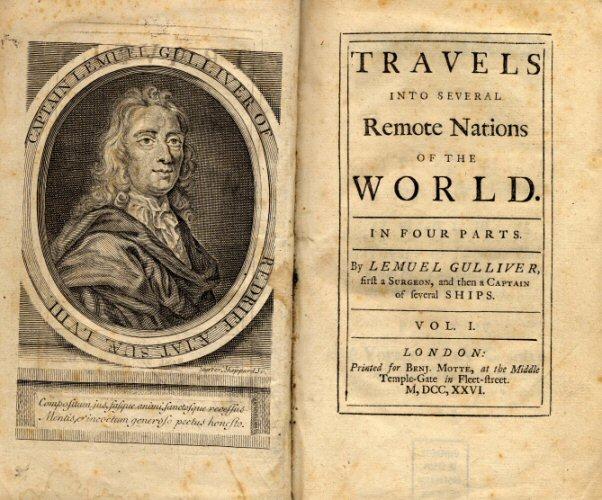
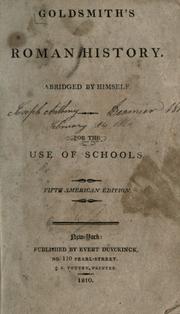
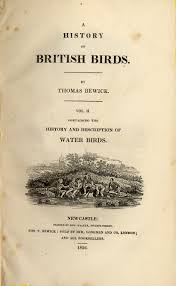
First of all, let’s imagine a ten-year-old girl who has read the following three books: Bewick’s History of British Birds,Goldsmith’s History of Rome, and Gulliver’s Travels, as well as her Bible, at least, would you say she had a bright future?

My last post, The Books Jane Eyre Read. Part One: At Gateshead Hall.  is about the books young Jane had read by such an early age, and how they affected her personality, and related to her life experiences.

If she continued reading, which she did, could we conclude she’d grow up to be a very clever woman? Yes?

Gullivers_travelsroman historyBeitish birds

Read on for proof.

A study by neuroscientists published in December 2013 in the Scientific Journal, Brain Connectivity, has concluded that reading a novel can improve brain function on a variety of levels.

Interviewed in Psychology Today, Dr. Berns, one of the researchers, considers, “Stories shape our lives and in some cases help define a person.” So his motivation was to carry out his theory and “understand how stories get into your brain, and what they do to it.”

Professor Berns, and some colleagues at Emory University, Atlanta, Georgia, used brain scanning to investigate how reading a book affects our brains, and found that becoming engrossed in a novel enhances connectivity in the brain, and improves brain function.

The 19 volunteers’ brains were scanned each morning following the nightly reading assignment, and then again daily for five days after they had finished the book. Each morning before their scan, the participants completed a quiz about the chapter and their feelings. The final five days the volunteers had daily scans again without any quizzes or reading, in order to assess lasting effects.

Reading fiction increases empathy, enabling the reader to put themselves in another person’s shoes, and understand their behavior. It also increases language function. These effects were seen to last at least five days after reading Pompeii by Robert Harris over nine nights. (Imagine what it could do for those of us who read more than a book a week!).

Small Bookshelf
Some of my current and all-time favourites

Last year, A UK Institute of Education  published the results of a longitudinal study, started in 1970, which found that children who read for pleasure made more progress in maths, vocabulary, and spelling, between the ages of 10 and 16, than those who rarely read.

The study also showed that Children who were read to regularly by their parents at age 5 performed better in all three tests at age 16 than those who were not helped in this way.

Another longitudinal study published by researchers at the University of Berkley, California, and the University of Ontario, ‘What reading does for the mind’, concludes that lifelong reading habits are strong predictors of a wide range of cognitive abilities, which are accumulated over time —spiraling either upward or downward, depending on whether they read or not.

We now have solid evidence to support the cognitive benefits of reading, for our young Jane Eyre, and anyone else who loves reading.

Read on…


The Books Jane Eyre Read. Part One: At Gateshead Hall.

The orphaned Jane Eyre, was taken in by her uncle’s widowed wife, Mrs. Reed, and her spiteful cousins, John, Eliza, and Georgina. She suffered greatly at their home, saying of John, who was 14 and four years older than her,

‘He bullied and punished me; not two or three times in the week, nor once or twice in the day, but continually: every nerve I had feared him, and every morsel of flesh in my bones shrank when he came near.’

In the first two chapters, which take place in her aunt’s house, Gateshead Hall, Jane Eyre mentions three books she had read in her childhood, before the age of ten, which tell us a great deal about her remarkable character.

Beitish birds

The first one is Bewick’s History of British Birds, which she was reading when her cruel cousin bullied her for the umpteenth, but final time. This drastic event occurs right at the beginning of the novel, she was reading when her cousin reprimanded her:

‘“You have no business to take our books; you are a dependent, mama says; you have no money; your father left you none; you ought to beg.’

He then flung the book at her, hitting her head against the door, and cutting it:

‘The cut bled, the pain was sharp: my terror had passed its climax; other feelings succeeded.’

roman history

Jane retaliated by accusing him of being a wicked and cruel murderer, slave-driver, and Roman emperor, because she ‘had read Goldsmith’s History of Rome, and had formed my opinion of Nero, Caligula, &c. really saw in him a tyrant, a murderer.’ It must indeed have been a vicious attack because she ‘felt a drop or two of blood from my head trickle down my neck, and was sensible of somewhat pungent suffering:’ and she hit him I self-defense.

As a result, Jane was locked in the red-room, where her uncle had died, and had a fainting-fit, imagining she saw him.

The following day, she was pampered and looked after by Bessie, her aunt’s maid. However, Jane refused to eat, instead she begged her to fetch Gulliver’s Travels from the library.

Gullivers_travels

Regarding Berwick’s book, first printed in 1797, she was only concerned with the pictures and the travelling aspect:

‘I returned to my book–Bewick’s History of British Birds: the letterpress thereof I cared little for, generally speaking; and yet there were certain introductory pages that, child as I was, I could not pass quite as a blank….Nor could I pass unnoticed the suggestion of the bleak shores of Lapland, Siberia, Spitzbergen, Nova Zembla, Iceland, Greenland, with “the vast sweep of the Arctic Zone.”

Jane is telling us she is interested in wildlife, travel, and the beauty of nature.

The second book she mentions is Goldsmith’s History of Rome. I suppose she is referring to Goldsmith’s Roman History Abridged for use in Schools, first printed in 1772, which was widely used in schools at the beginning of the 19th century. In this case we are implicitly being informed that Jane is a well read and intelligent child, who is able to understand ancient history, and project what she has read to her present reality.

Gulliver’s Travels, is by fat the most interesting of the three, It is a satirical novel by Irish writer and clergyman, Jonathan Swift, first published in 1726. Lemuel Gulliver’s an unfulfilled surgeon who sets out on his remarkable travels between 1699 and end in 1715. He is a gullible, honest man who is shipwrecked, abandoned, and attacked, throughout his travels. He constantly faces opposing forces he must deal with: big versus small, wise versus ignorant, good versus bad, etc.  When he finally returns to his home in England, he becomes a recluse who spends several hours a day speaking with the horses in his stables, and loosing his sanity, sadly the same fate which awaited Swift himself.

Gulliver is both a giant and a dwarf. He travels to distant lands where he is surrounded by tiny little people, and to a land where he is tiny compared to the giant-like people who live there. Gulliver is never with his own kind, and always feels out-of-place. When he finally does find a place he likes and is at home with the inhabitants, they reject him because they find him to be too much like the creatures that act as their servants.

Jane says it was a book she ‘had again and again perused with delight.’ She cherished the book and marveled at its pictures, because she had considered Lilliput as a real, solid place, instead of a mere fairy tale. She had imagined one day seeing, ‘the little fields, houses, and trees, the diminutive people, the tiny cows, sheep, and birds of the one realm; and the corn-fields forest-high, the mighty mastiffs, the monster cats, the tower-like men and women.’

However, when Bessie handed her the book and she turned the leaves, she failed to find the charm she had once succumbed to. Instead, Lilliput had become dreary, and the characters malevolent and fearful creatures. She now identified with a desolate Gulliver, who was wandering in dangerous regions. She then closed the book, fearfully, and left it on the table with a piece of ‘untasted’ tart, which reinforces the idea of loss of childhood, and innocence.

This identification with Gulliver’s plight casts the young child in the sad role of outsider. Jane is alienated at Gateshead, surrounded by people who do not accept her, or help her in any way. She is displaced and misplaced. She is not with her own kind. Her family considers her a subordinate, and on the other had she is lost having nowhere to go, belonging nowhere. Jane is like Gulliver, searching for companionship and acceptance.

The books Jane read tell us that she was a well-read, intelligent, and talented child, who was longing for love, affection, and acceptance. She knew about, and was interested in; history, nature, art, geography, and interpersonal relations, and struggles. She was aware that human injustice and evil were a reality, not a ploy in a children’s book.

The punishment in the Red Room marked the end of her childhood, and the end of her stay at Gateshead, because she was soon to move on to the next adolescent stage in her life, and her new abode, Lowood Institution.
 

Writing 101, Day Eight: Death to Adverbs

Today’s prompt: Go to a public location and make a detailed report of what you see. The twist of the day? Write the post without adverbs.

The Corpse

I strolled to the beach front to have breakfast. The coffee shop I had planned to go to was closed, so I walked on to the next one. I stepped along the floorboards wobbling on the sand, and sat at a table facing the sea. I drank my coffee and ate my toast, while listening to the breaking waves. I checked the customers, looking around for information to complete my assignment, and decided they looked northern European, no doubt searching for a respite to their protracted winter. It was then I saw a swimming trunk, floating by the shore. I fixed my gaze on it for some seconds because it seemed odd, and I had been trained to check things which looked out of place. I noticed there was something attached to it — a body!

‘Call an ambulance! There’s someone floating in the water!” I shouted.

The other guests screamed, discarded their food, and followed me to the spot where I had seen the corpse. My walk had ended. It was back to work for me, I sighed, as I called my colleagues at the Police Department.

End of todays’s assignment.

Have a look at some of the other posts!


I think adjectives and adverbs should be carefully chosen, but I am sure as a linguist, an English teacher, a reader, and a writer, that they definitely have their place, in all types of written discourse.

However, for the sake of following today’s assignment, the previous version was ‘adverbless’ and almost without adjectives, too. If you want some more, the following is another version with many more adjectives and adverbs.

Which do you prefer? and Why?

The Corpse

I strolled to the beach front to have a long, lazy breakfast, on my first free Sunday morning for weeks. The coffee shop I had planned to go to was closed, so I walked on to the next available one with a free table. I stepped along the wooden floorboards wobbling on the uneven sand and sat at a sunny table facing the sea. I drank my coffee and ate my toast while listening to the soothing swish of the breaking waves. I checked the other early risers on the neighbouring tables distractedly, looking around for information to complete my assignment, and decided they looked mostly northern European, no doubt searching for a warm respite to their chilly spring.

I looked back to the sea. It was then I saw an inflated swimming trunk floating aimlessly by the shore. I fixed my gaze on it for some seconds because it seemed odd, there, and I had been trained to check things which looked out of place. Seconds later I noticed there was something attached to it… a body!

‘Call an ambulance. Now! There’s someone floating in the water!” I shouted franticly.

The other guests screamed, discarded their food, and followed me to the spot where I had seen the corpse. So much for my quiet, peaceful morning walk. It was back to work for me, I sighed, as I called my unsuspecting colleagues at the local Police Department.

Writing 101, Day Seven: Give and Take

Today’s prompt: Focus today’s post on the contrast between two things. The twist? Write the post in the form of a dialogue.

Real Versus Virtual World.

I have two lives, a real life and a virtual one. The virtual life (VL) is very easy-going, she never moans or complains, and is mostly polite, friendly, and supportive. The real life (RL) is far more demanding, complex, and exhausting. I want my two lives to understand each other and get on, because it would make my whole life easier for me. This was the discussion they had…

RL. I’m a life. I’m her life. I’m her real life. I’m full of people she can see, touch, hear, and smell.

VL. I’m a life, too. I’m her life. I’m her virtual life. I’m full of people from all over the planet she’ll be able to meet and interact with.

RL. But she can’t see the expression on their faces or hear the sound of their voices, or smell their perfume, or shake their hands, or have a coffee with them…

VL. But she can read about their opinions, know what they think, and travel around the world. She’ll see photographs of places she’ll never visit. She’ll read about experiences she’s never had, and learn about anything and everything she’s interested in.

RL. You aren’t leading her anywhere… you’re dead-end. She doesn’t need you. She needs me. She need to go shopping, speak to her neighbours, go to work…

VL. Excuse me, but she’s in touch with all her ‘real’ family and friends on Facebook, skype, twitter, line, and whatsapp. She’s more in touch with ‘real’ people through her virtual life and she gets to meet many other people, who happen to be ‘real’, too, as far as I know…

RL. You take up too much of her life…

VL. I’d say it’s you who takes up too much of her life. She has to spend at least fourteen or fifteen of the seventeen hours she’s awake, dealing with all the problems you cause, while she only has two or three hours to see to her virtual life, which is much less stressful…

RL. She needs me…

VL. She needs me, too…

They’ll never agree, so at least they’ll agree to disagree.

Meanwhile, I’ll keep them both, because they’re both part of who I am and how I live, although my real life is going to have to be more generous and give up some of her time in favour of my virtual life…

 Check out some of the other posts!


Writer Wednesday Blog Hop. The Wedding Invitation.

Here is the prompt for this week:

bloghopphoto2

Mandatory words: party, locust, evil, altar, guilt.

Here’s my entry for this week: The Wedding Invitation

‘Come with me to my sister’s wedding next week.’
‘I don’t think so.’
‘I need the favour. It will only last a few hours. You owe me.’
‘If I go, it’ll be just for the ceremony. I’m not staying for the party afterwards.’
‘Why not? You’ll have fun. You’ll be able to meet film producers and directors, who knows…?’
‘You make it sound like a scene from ‘The day of the Locusts’. I’m a screen writer, not an aspiring actress.’
‘I’ll introduce you to people who will value your talent.’
‘I don’t want to see your sister at the altar with my brother.’
‘Yes, I was surprised, too, when they announced their engagement.’
‘Surprised! Why the hell are they getting married, anyway?’
‘You know why. Don’t bring out your dark, evil streak, again.’
‘I’m not dark or evil. I just can’t see why people get married this day and age, just because they’re having a child.’
‘They’re romantic, in love, traditional, full of hope… who knows?’
‘Why did we get married?’
‘Life’s like that, isn’t it. It’s like a game of cards, you have to make do with the ones you’re dealt. We were in the same hand, Jack of diamonds and Queen of diamonds, look, here on the left.’
I looked at his hand, ‘What about that Queen of Clubs?’
‘She was a mistake. How often must I tell you that?’
‘Anyway, the rest of the hand is pretty weak, too.’
‘We could try again with another hand.’
I would probably go to the wedding because I refuse to feel guilt, but I’m not planning on making the same mistake again.
‘Call me on Saturday.’
‘OK. Let’s fold our cards, this wasn’t a good hand. Maybe, next time.’

(289 words)

Here is how the blog hop works if you’d like to participate:
• There is either one picture with five random words or two pictures revealed, which are to be used in the story.
• The word count must be 500 words or less.
• The deadline to link up is Tuesday of the following week.
• Link up at the bottom of this post with your entry for the week.
• Most importantly, have fun!

https://leannesype.wordpress.com/2014/06/04/blog-hop-photo-reveal-61/ Have a look at some of the other entries!