#AtoZChallenge ‘S’ #NationalPoetryMonth ‘Lament’ by Edna St. Vincent Millay #amwriting #poem

This year to celebrate National Poetry Month and to take part in the April A-Z Blogging Challenge, I’ll be posting two poems a day, one written by me and another poem written by one of my favourite poets. The title or first word of both poems will begin with the corresponding letter in the Blogging Challenge.


Today I offer you two poems on grieving, Lament by Edna St. Vincent Millay and Lament by Luccia Gray.

****

Lament,  by Edna St. Vincent Millay 1892 – 1950

Listen, children:

Your father is dead.

From his old coats

I’ll make you little jackets;

I’ll make you little trousers

From his old pants.

There’ll be in his pockets

Things he used to put there,

Keys and pennies

Covered with tobacco;

Dan shall have the pennies

To save in his bank;

Anne shall have the keys

To make a pretty noise with.

Life must go on,

And the dead be forgotten;

Life must go on,

Though good men die;

Anne, eat your breakfast;

Dan, take your medicine;

Life must go on;

I forget just why.

****

Lament was originally published in St. Vincent Millay’s book Second April, in 1921.

A lament is an expression of grief. Some scholars have said that there is no grief in this poem. I disagree. It is true that it is not a typical mourning poem, but the mourning is evident. They accuse the widow of being a cold person who does not cry for her husband’s death. They are judgemental and have totally missed the meaning of the poem. People deal with grief, or rather need to deal with grief, in different ways.

I believe this woman is a devastated person who has lost her husband, but she still has two children to think of. The poem was published in 1921, the widow would not have a government pension, and they are obviously poor, so she’s trying to be practical and positive, and reassure her children and herself that they’ll be able to cope.

She doesn’t break down and cry, because if she does, what will happen to her children? She can’t mope around and write sentimental sonnets, because she has two mouths to feed and look after. Dan is ill, and Anne needs to eat, important practical matters. I think she’s a brave and resourceful woman who is trying her best to survive alone in a cruel and hostile world.

She speaks kindly of her husband, he was a good man, but she must forget him and think of her children, if they are to survive. The last line is devastating, she’s forgotten why life must go on, life has lost its meaning for her, and yet she needs to survive. It’s heart wrenching because her situation doesn’t even allow her to break down and cry because she is too overwhelmed by practical considerations.

Anyone who reads this poem and accuses her of being heartless, really needs to read it again with some more empathy.

****

Edna St. Vincent Millay in Mamaroneck,[8] NY, 1914, by Arnold Genthe (Public Domain).
EDNA ST. VINCENT MILLAY, who was famous for coining the phrase, ‘my candle burns at both ends.’ was an American poet who received the Pulitzer Prize for Poetry in 1923. She was one of the most respected American poets of the 20th century and was known for her poetry readings and feminist views. 

****

My poem, also called Lament, is the widow’s reply to those who accuse her of being heartless.

****

Lament (After EDNA ST. VINCENT MILLAY) by Luccia Gray.

They said I was heartless

For sewing jackets from the coats he’d used,

And stitching trousers from the pants he’d worn.

They said I was pitiless

For making toys for Anne with his keys,

And filling Dan’s bank with his pennies.

*

They said I was merciless,

To dare to forget I was alone,

And would probably lose my home.

They said I was ruthless,

A widow who refused to weep,

A severe punishment should reap.

*

They didn’t mind

That a good man had died,

That my daughter was starving,

Or that my son was ailing.

They just wanted to see me crying.

*

I should have told them

I had cried so much

When nobody watched

That my eyes were cracked

 And my heart was parched.

****
Follow Luccia Gray on Social Media:

Twitter

Facebook

Goodreads

Check out Luccia Gray’s Books on Amazon 

#AtoZChallenge ‘R’ #NationalPoetryMonth ‘Remember’ by Christina Rossetti #amwriting #poem

This year to celebrate National Poetry Month and to take part in the April A-Z Blogging Challenge, I’ll be posting two poems a day, one written by me and another poem written by one of my favourite poets. The title or first word of both poems will begin with the corresponding letter in the Blogging Challenge.


Today I offer you two poems about remembrance and death, Remember by the Victorian poet, Christina Rossetti, and Remember Me by Luccia Gray.

****

Remember

Remember me when I am gone away,

Gone far away into the silent land;

When you can no more hold me by the hand,

Nor I half turn to go yet turning stay.

Remember me when no more day by day

You tell me of our future that you planned.

Only remember me; you understand

It will be late to counsel then or pray.

Yet if you should forget me for a while

And afterwards remember, do not grieve.

****

Christina Rossetti (1830-1894) wrote Remember, a sonnet in the style of Petrarch, when she was still a teenager. It’s a classic Victorian poem about mourning and remembrance. She tells her lover to remember her at the beginning of the poem, yet at the end, she seems to change her mind and tells him not to grieve if he forgets her for a while. 

****

I haven’t written a sonnet this time, but I have taken her theme of remembrance and death, with a more optimistic note.

****

Remember Me

Remember me when I am gone,

With smiles not tears, with love, not fear,

Smile at photos, laugh at memories,

Read my letters, write me poems,

Remember me when you are sad,

I’ll be waiting, for our meeting,

I’ll blow kisses with the warm breeze,

I’ll send music with the sunflowers,

Remember me, I’ll be right there.

****

Follow Luccia Gray on Social Media:

Twitter

Facebook

Goodreads

Check out Luccia Gray’s Books on Amazon 

#FridayFictioneers ‘Dancing Shoes’ #FlashFiction

It’s Friday, time for another Friday Fictioneers Flash Fiction story with adorable and creative Alice and her incredulous and conventional parents, Marsha and Kevin. Today they’ll be visiting her grandmother’s house, on a sad occasion, or is it?

Thanks to Rochelle Wisoff-Fields for hosting the challenge, and Magaly Guerrero for today’s photo prompt, which led me directly to this weeks’ 100-word story.

PHOTO PROMPT © Magaly Guerrero

****

Dancing Shoes

Alice rushed down the stairs and flew into the library.

‘Can we move here tomorrow?’ she asked her parents as she slipped on her grandmother’s black, laced shoes and danced around the room.

Kevin’s jaw dropped. ‘Marsha, what’s happening to our Alice?’ he asked his wife. ‘Your mother’s still at the funeral parlour. We haven’t even buried her yet!’

‘Granny wants us to move in at once. I have to look after all her books and manuscripts.’

‘When did she tell you that?’ asked Marsha.

‘Just now. She’s not ill any more. She’s better, that’s why she’s come back home.’

Or

‘Just now. She’s not ill any more. She says she’s sorry, but she had to go.’

****

Which ending do you think is best?

I like them both, but I find the first a little disturbing, as if she’s going to remain as a ghost, albeit a ‘friendly’ ghost, while the second is more optimistic. she’s gone to a better place…

All my ‘Alice’ flash fiction written for the Friday Fictioneers Challenge can be read as standalones, but if you’re interested in reading previous stories of Alice’s adventures, here  they are!

 If you’d like to join in Friday Fictioneers or read other posts check Rochelle’s Blog for rules and prompts. 

Follow Luccia Gray on Social Media:

Twitter

Facebook

Goodreads

Check out Luccia Gray’s Books on Amazon 


#ThursdayDoors The Louvre Museum in #Paris

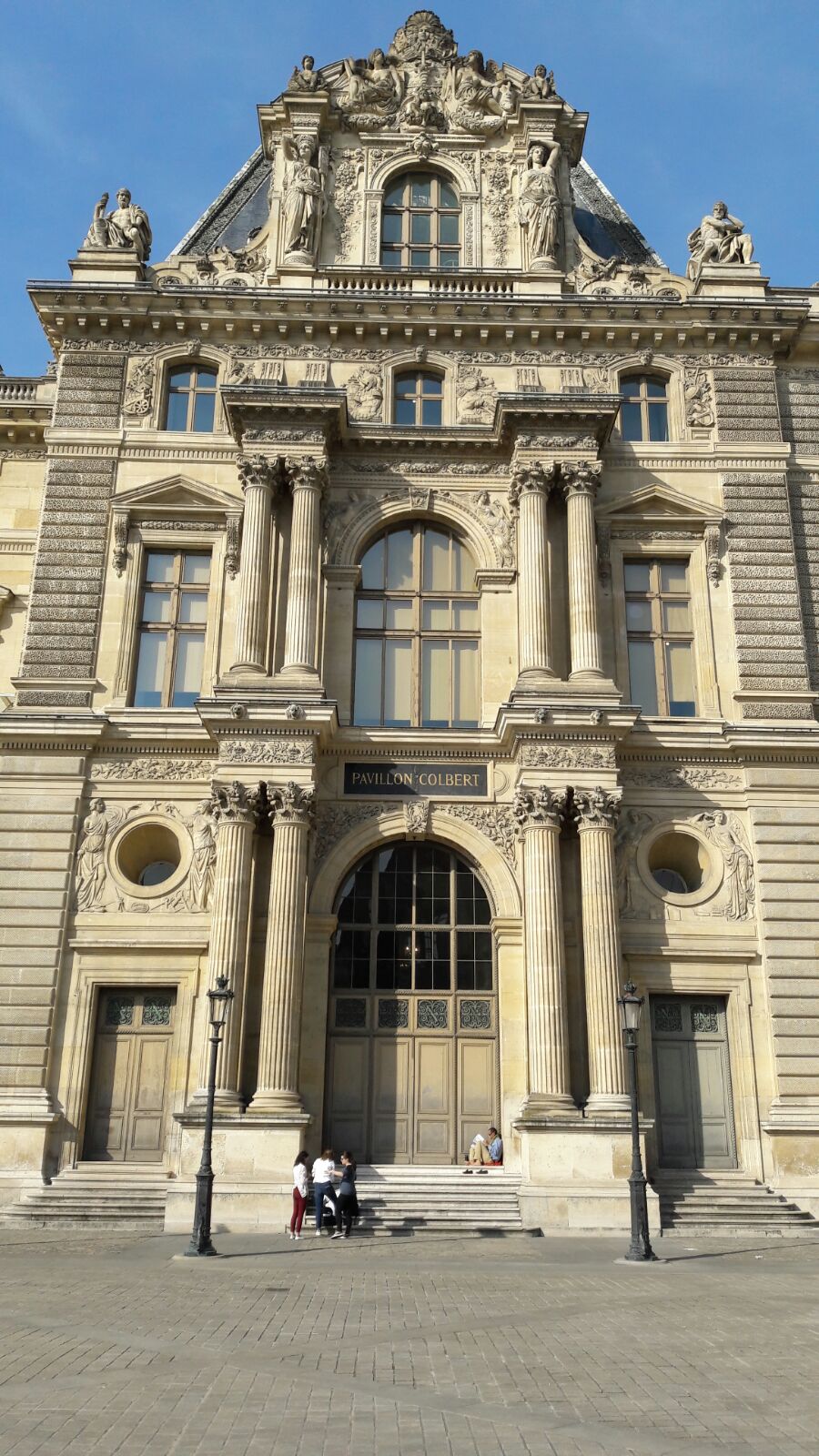
I haven’t been to Paris for a long time, but my daughter was there over Easter, and I asked her to send me some nice doors, so she sent me these beautiful doors in and around The Louvre Museum, in Paris. I hope you like them!

I love this mixture of traditional and new we can see here, the solid and massive archway contrasting with the glass pyramid inside the courtyard.

And finally, she was lucky enough to be in Paris on a full moon night, and she also sent me this picture, which I’d like to share with you.

****

Follow Luccia Gray on Social Media:

Twitter

Facebook

Goodreads

Check out Luccia Gray’s Books on Amazon 

#AtoZChallenge ‘Q’ #NationalPoetryMonth ‘The Queen of Hearts’ #amwriting #poem #Nonsense Nursery Rhymes

This year to celebrate National Poetry Month and to take part in the April A-Z Blogging Challenge, I’ll be posting two poems a day, one written by me and another poem written by one of my favourite poets. The title or first word of both poems will begin with the corresponding letter in the Blogging Challenge.

Today a lighthearted post, which is a relief after the last few intense days. I offer you The Queen of Hearts, an anonymous rhyme, whose main character was made famous by Lewis Carroll in Alice’s adventures in Wonderland.

****

The Queen of Hearts

The Queen of Hearts

She made some tarts,

    All on a summer’s day;

The Knave of Hearts

He stole those tarts,

    And took them clean away.

The King of Hearts

Called for the tarts,

    And beat the knave full sore;

The Knave of Hearts

Brought back the tarts,

    And vowed he’d steal no more.

****

The Queen of Hearts is an English poem and nursery rhyme based on a character in playing cards. The Queen of hearts is also part of the plot of Lewis Carroll’s Alice’s Adventures in Wonderland.

The Queens of Hearts is a type of light verse, mainly for children, including imaginative characters in funny or fantastic situations. It’s also called nonsense verse , because it includes absurd or meaningless situations and even made-up words. It originated in the nineteenth century. The roots of these rhymes are attributed to Edward Lear and Lewis Carroll. Although the poems defy common sense and seem illogical and simplistic, they are inherently complex and often contain more meaning that is apparent, however, I wouldn’t dare to guess at the hidden meaning of the Queen of Hearts, would you?

“The Queen of Hearts” from a 1901 edition of Mother Goose.

Here’s my nonsense rhyme.

****

The Queen of Hearts

The fairy grandmother said,

‘One more tale and then off to bed.’

The children clapped with glee,

While granny sipped her tea

And started.

According to the Queen of Hearts

In a lighthouse we must start.

A lighthouse in the daylight,

Is useful in its own right,’

Said Rapunzel

As she cast her hair,

For her prince so fair.

But Jack climbed up to talk,

Looking for his beanstalk.

What about the little pigs?

The wolf, he can go eat some figs.

Cinderella found a fella,

Saving damsels with an umbrella.

The lighthouse was so overcrowded,

The ugly sisters were dumbfounded.

They called a witch to cast a spell,

She sent them all down the well,

Where they learnt to row their boat,

Round and round the castle moat.

Then said the King of the castle,

‘Go away you dirty rascals!’

‘What happened next?’ asked Matilda,

Right after the fire killed her.

‘I’m afraid I’m now a ghost.’

Alice said, ‘to that I’ll toast!’

She found a lamp, the Queen of hearts,

While Aladdin tried to eat her tarts.

Thinking it was a clock, the blind mouse

Carried the Queen up to the lighthouse,

And so my little friends, 

This is where this story ends.

And now you better go to bed,

And forget everything I said. 

****

That was fun!

Follow Luccia Gray on Social Media:

Twitter

Facebook

Goodreads

Check out Luccia Gray’s Books on Amazon 



#WordlessWednesday #SixWordStories ‘The search for peace starts within.’

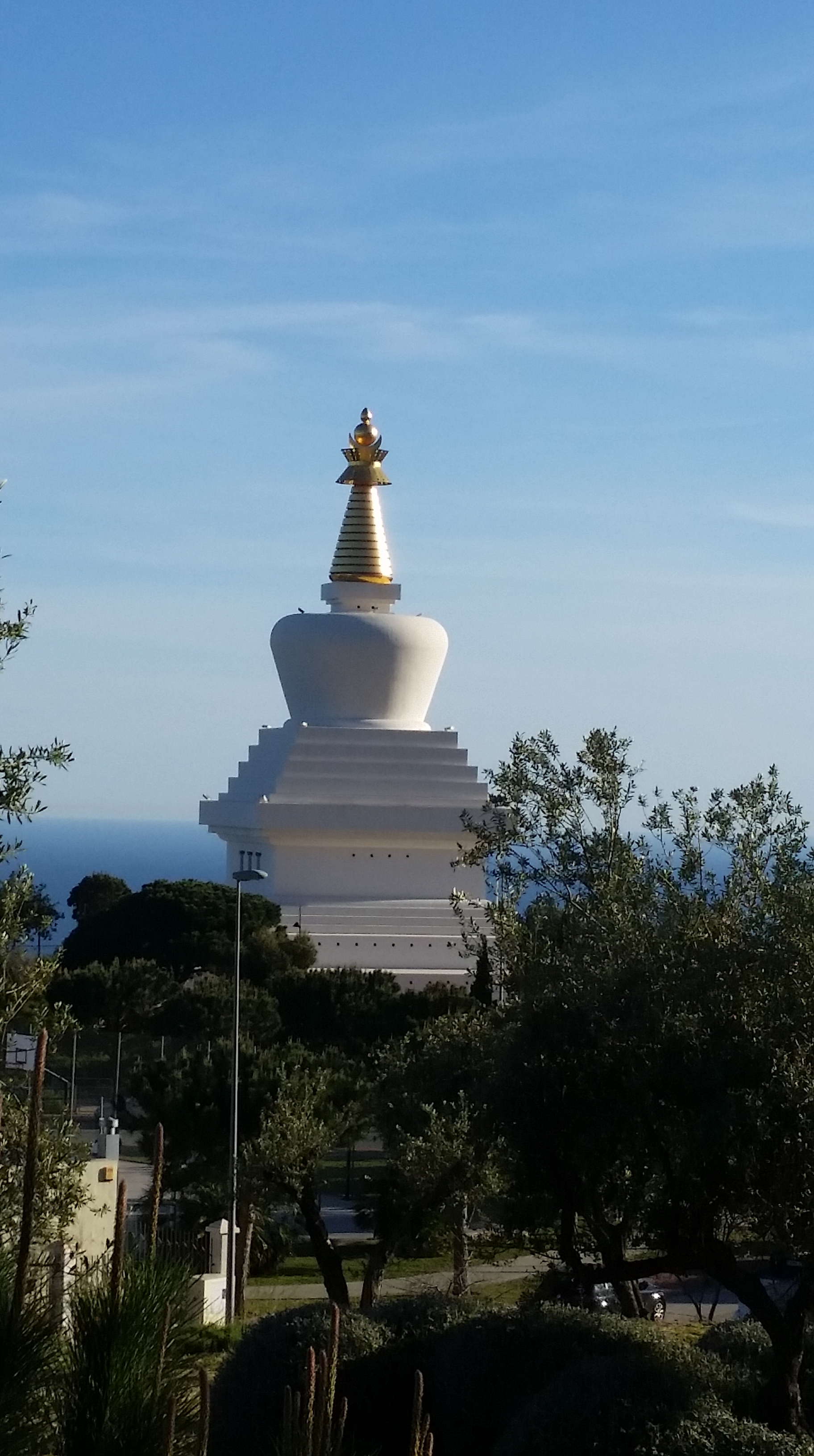
Stupa in Benalmadena, Spain.


This photograph doesn’t really do justice to the beauty I saw when I took the picture.

The stupa is beautiful, as is the Mediterranean Sea and sky in the background, as well as the tropical vegetation, yet however much beautiful stimulation my mind receives, in the end, it’s when I close my eyes, breathe  and look inside that I can find peace, within myself.

****

White and gold on blue

Now close your eyes and breathe

What is it you see?

****

Follow Luccia Gray on Social Media:

Twitter

Facebook

Goodreads

Check out Luccia Gray’s Books on Amazon 


#AtoZChallenge ‘P’ #NationalPoetryMonth ‘Mirror’ by Sylvia Plath #amwriting #poetry #poem

This year to celebrate National Poetry Month and to take part in the April A-Z Blogging Challenge, I’ll be posting two poems a day, one written by me and another poem written by one of my favourite poets. The title or first word of both poems will begin with the corresponding letter in the Blogging Challenge.

Today I offer you Mirror by Sylvia Plath and Mirror, Mirror by Luccia Gray

****

Mirror by Sylvia Plath

I am silver and exact. I have no preconceptions.

Whatever I see I swallow immediately

Just as it is, unmisted by love or dislike.

I am not cruel, only truthful ‚

The eye of a little god, four-cornered.

Most of the time I meditate on the opposite wall.

It is pink, with speckles. I have looked at it so long

I think it is part of my heart. But it flickers.

Faces and darkness separate us over and over.

*

Now I am a lake. A woman bends over me,

Searching my reaches for what she really is.

Then she turns to those liars, the candles or the moon.

I see her back, and reflect it faithfully.

She rewards me with tears and an agitation of hands.

I am important to her. She comes and goes.

Each morning it is her face that replaces the darkness.

In me she has drowned a young girl, and in me an old woman

Rises toward her day after day, like a terrible fish.

 More about Sylvia Plath (1932-1963) 

****

Sylvia Plath in 1963

****

Sylvia Plath was another great yet troubled postwar poet of the 20th century. Her verse exposed despair, violent emotion, and an obsession with death and suicide. Her poems were intensely autobiographical exploring her own mental anguish. She suffered symptoms of severe depression and bipolar disorder from an early age. Her first suicide attempt occurred at the age of 19, as a result of which she received electro-shock therapy. After recovering, Plath took a degree in the US and earned a Fulbright grant to study at Cambridge University in England, and it was there that she met and later married the poet Ted Hughes.

In this poem, the mirror is the narrator. It is observing and judging the woman who looks inside with fear and agitation. The mirror is honest and cruel. It watches the passing of time and how the young woman who looks at herself gradually becomes old. But the mirror which watches the woman also needs this woman, because when she’s not there looking at herself, there is nothing, the mirror is immersed in darkness. The woman and the mirror need each other, they are two sides of the same coin. They do not exist without each other, yet they cannot help each other when they are together, because they are never really together, it is only an illusion. They can never meet, like parallel lines. I venture to guess it’s something like being bipolar.

****

My mirror poem, also portrays a woman who is talking to her mirror which holds her other half, trying to become whole, which can only happen when the mirror invades her body with its shards. It is a dramatic poem, and although I am not now feeling any of the desperation that Sylvia Plath felt, I can fully understand, and may have glimpsed at the abyss myself, and watched people who were close to me overtaken by similar sensations of darkness and desperation.

****

Mirror, Mirror by Luccia Gray.

Mirror, mirror on the wall, tell me what you see.

Can you help me to recall, the reason I must flee?

Mirror, mirror on the wall, can you see my soul?

Tell me once and for all, why I’m no longer whole.

Mirror, mirror on the wall, why’ve I lost my precious throne?

Where has my life gone? Where have my hopes flown?

Mirror, mirror on the wall, let me in, I’m lonely.

Slip off your shawl and open your arms to me only.

Mirror , mirror on the wall, tell me what I need to do,

Who can I call, if I you won’t let me stay with you?

Mirror, mirror on the wall, why are you so cruel?

You drown me in your waterfall, You challenge me to a duel.

Mirror, mirror on the wall, I don’t trust you any more.

You drew me in and let me fall, you make me sick to my very core.

Mirror, mirror on the wall, it’s over. I win, you lose.

Your shards pierce me as I fall, I’m covered in your tattoos.

Mirror, mirror now you’re in my heart,

So we shall never part.

****

Follow Luccia Gray on Social Media:

Twitter

Facebook

Goodreads

Check out Luccia Gray’s Books on Amazon 


#AtoZChallenge ‘O’ #NationalPoetryMonth ‘One Perfect Rose’ by Dorothy Parker #NPM17 #CarrotRanch

This year to celebrate National Poetry Month and to take part in the April A-Z Blogging Challenge, I’ll be posting two poems a day, one written by me and another poem written by one of my favourite poets. The title or first word of both poems will begin with the corresponding letter in the Blogging Challenge.

Today I offer you One Perfect Rose by Dorothy Parker and One Perfect Rose by Luccia Gray.

****

One Perfect Rose

A single flow’r he sent me, since we met.
All tenderly his messenger he chose;
Deep-hearted, pure, with scented dew still wet –
One perfect rose.

I knew the language of the floweret;
‘My fragile leaves,’ it said, ‘his heart enclose.’
Love long has taken for his amulet
One perfect rose.

Why is it no one ever sent me yet
One perfect limousine, do you suppose?
Ah no, it’s always just my luck to get
One perfect rose. 

Dorothy Parker (1893-1967)

This poem is taken from her first book of poetry, Enough Rope (1926).

Although this poem is on a much lighter note than Anne Sexton’s, Dorothy Parker, who was known for her sharp, scathing wit, was also plagued by depression and suicide attempts.  

One Perfect Rose is both humorous and sad. Perhaps the narrator is a materialistic woman, or perhaps she just expects more. What’s wrong with a rose? There’s nothing wrong with a rose, unless you’re expecting something else, which is what is more clearly stated in my poem below. Perhaps the narrator would like more commitment from her boyfriend, or a less of a traditional approach perhaps to their relationship.

In my poem, what the girl would like is a ring, not because it’s more expensive or fancy, although that too, but because it shows there’s a commitment. A rose is ephemeral. It’s pretty but it dies in a few days, and there’ll be nothing left. It’s not a symbol of permanence or stability like a ring, for example.

****

Today I’ve also added a third challenge, Charli Mills at Carrot Ranch, weekly Flash Fiction Challenge based on a 99 word prompt. This weeks’ prompt is write about ‘a ring’, which is the subject of my poem today, although it’s called ‘One Perfect Rose’

****

One Perfect Rose (After Dorothy Parker) by Luccia Gray

‘I found a perfect gift,’ he said.

He gave me a pretty card, which read,

‘This gift is almost as lovely as you.’

I still didn’t have a clue.

I wondered what he had in mind,

Although I knew my love was blind,

I was hoping for a ring at last,

My happiness, it was so vast!

I’d wear it on my finger proudly.

I extended my hand slowly,

And he showed me one perfect rose.

I sighed and looked down to my toes.

‘Don’t you like the rose?’ he asked.

‘It’s not what I had in mind,’ I barked.

****

Follow Luccia Gray on Social Media:

Twitter

Facebook

Goodreads

Check out Luccia Gray’s Books on Amazon 

#TuesdayBookBlog ‘The Girl from the Sea’ by @ShaliniBoland  #Amreading #Amreviewing #thriller

Today I’m posting my 5-Star review of The Girl from the Sea, by Shalini Boland, a suspenseful and gripping, psychological thriller.


The Girl from the Sea is a gripping, psychological thriller, which has the reader guessing how the tale will end until the very last line.

Mia is found on the beach, disoriented and not knowing who she is or why she’s on the beach. It’s classified as an accident by the police.  She’s finally dismissed from hospital and allowed to go home when her boyfriend recognises her.

But, who is Mia? She doesn’t even recognise her reflection in the mirror. Although there are some disjointed flashbacks, her memory doesn’t improve until the last few chapters, so for most of the novel, Mia is forced to gradually decipher her life with the help of her boyfriend, Jack, from the rowing club she belonged to, neighbours, and her mother and half sister.

Mia soon realises that everyone is lying to her, or using her, for different reasons. And as she tries to piece her life back together, another woman’s body is found, this time in the river, and the police start to link both events. As a result, the action escalates and Mia realises that she’s in danger. 

The novel is narrated in the first person, by Mia. I listened to the audio version on audible, and as most of it is written in the present tense, it was like watching a film, because all the actions were vividly portrayed. This gave immediacy and urgency to the narration. The first part is slower than the second part, but the pace is quite steady.

Even after the events are explained and Mia’s memory returns, there are stills twists, the last one is quite shocking. Although the end is distressing, and there are plenty of unlikeable characters, and one quite evil person, it was an enjoyable read.

UK Buy link

US Buy link

****

Shalini Boland lives in Dorset, England with her husband and two noisy boys. Before kids, she was signed to Universal Music Publishing as a singer/songwriter, but now she spends her days writing suspense thrillers and dark adventures (in between doing the school run and hanging out endless baskets of laundry).

****

I look forward to reading her new novel, coming 27th April 2017: The Millionaire’s Wife – another compelling psychological thriller.

****

Follow Luccia Gray on Social Media:

Twitter

Facebook

Goodreads

Check out Luccia Gray’s Books on Amazon 

#CosPhoChal K’lee and Dale’s Cosmic Photo Challenge: Toys

I have four grandchildren. so I know a lot about toys, and I have plenty of pictures of toys, especially toys in use. Here are a few for you!

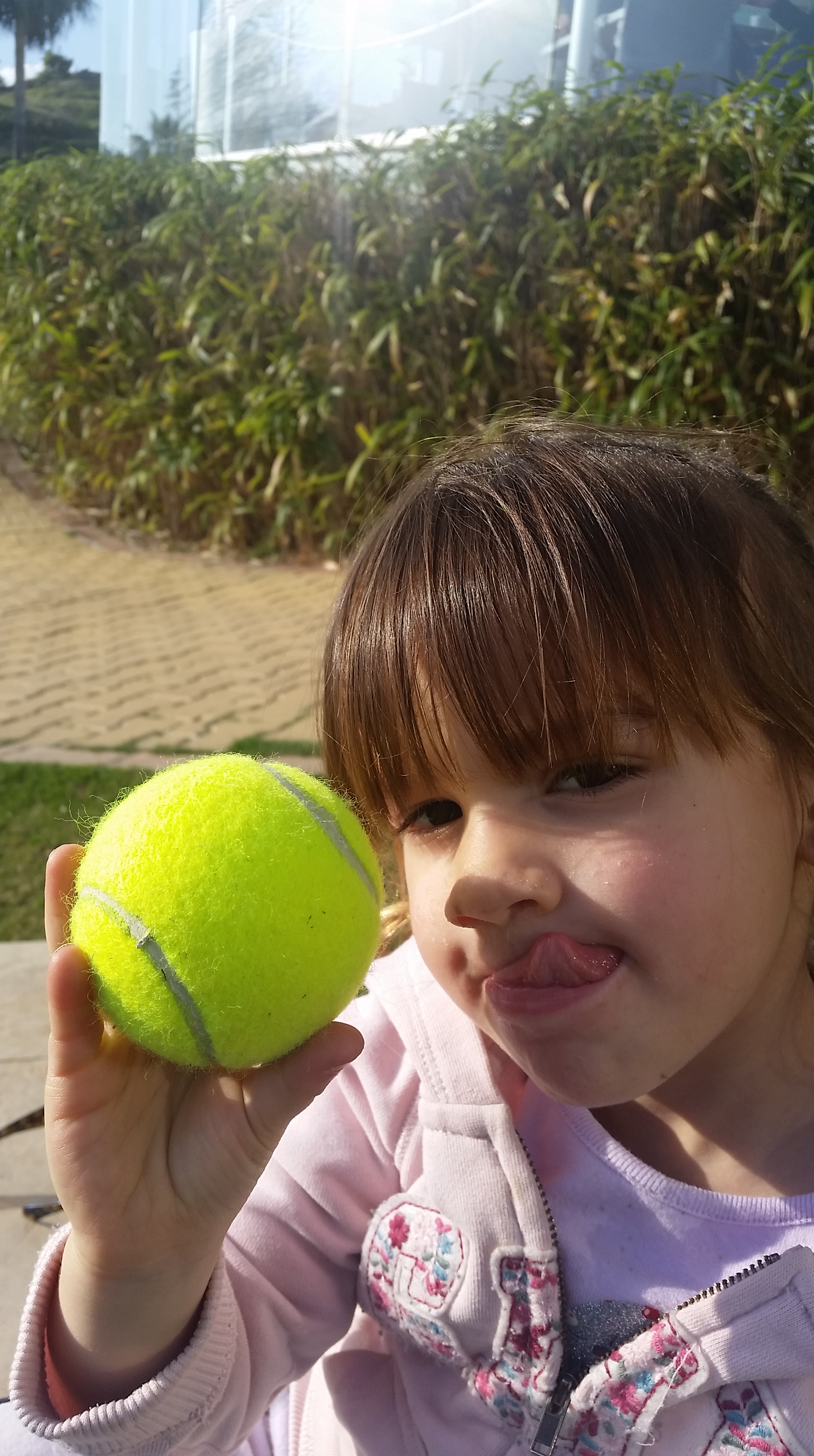
A ball is an ideal toy. You can get it in various sizes and colours. It’s usually cheap and there are plenty og games to play, ask Elsa!
Boys will be boys and they love trucks and diggers, and they’re great for transporting sand at the beach! Ask Mike!
A bucket and spade, very useful for building sandcastles…


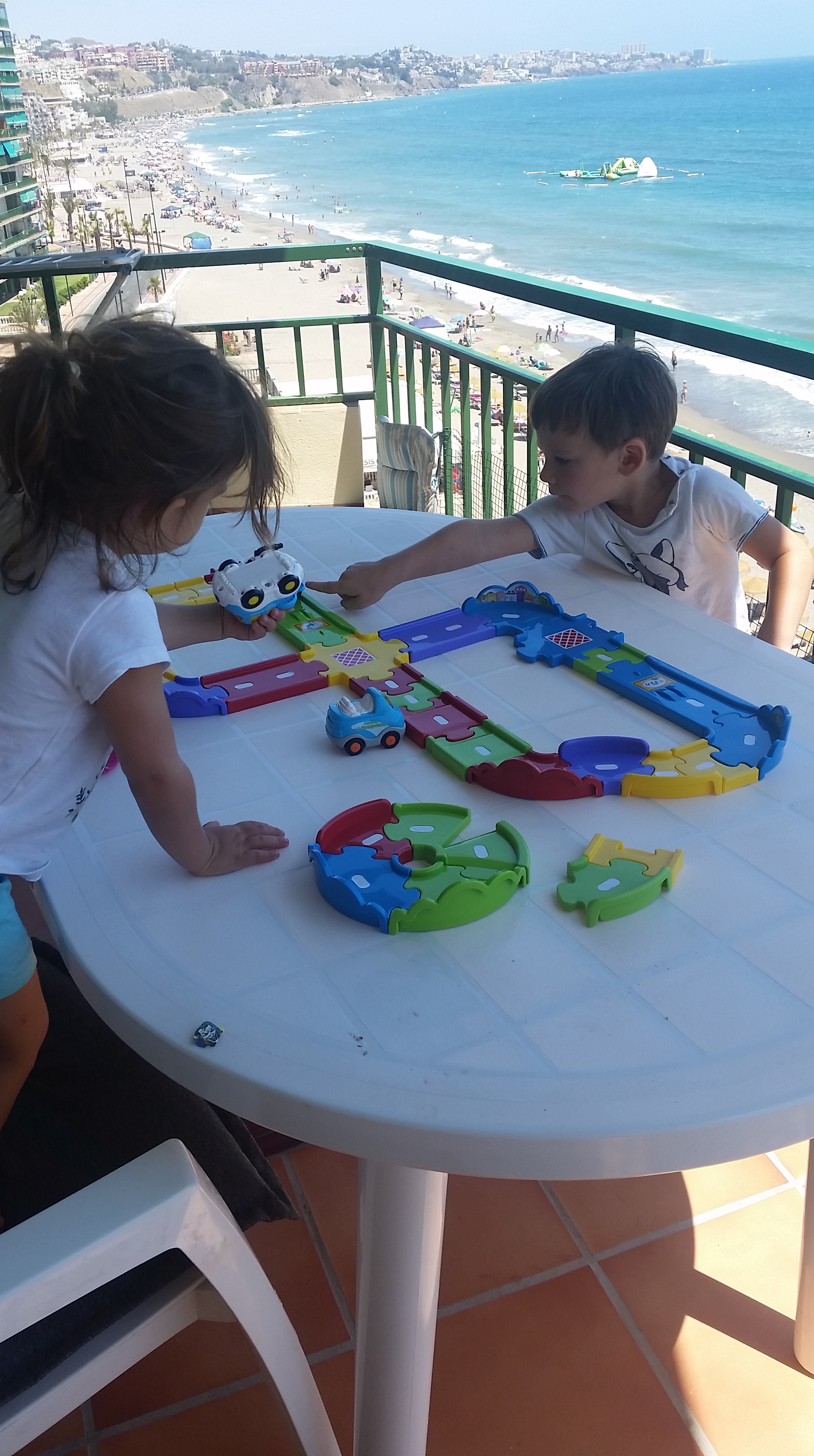
After transporting sand, it’s time to get busy in the terrace preparing tracks for racing cars…
Who wants to watch TV when you can play with a cardboard house!
Hey! This slide won’t fit in the sitting room, so let’s play at the park!
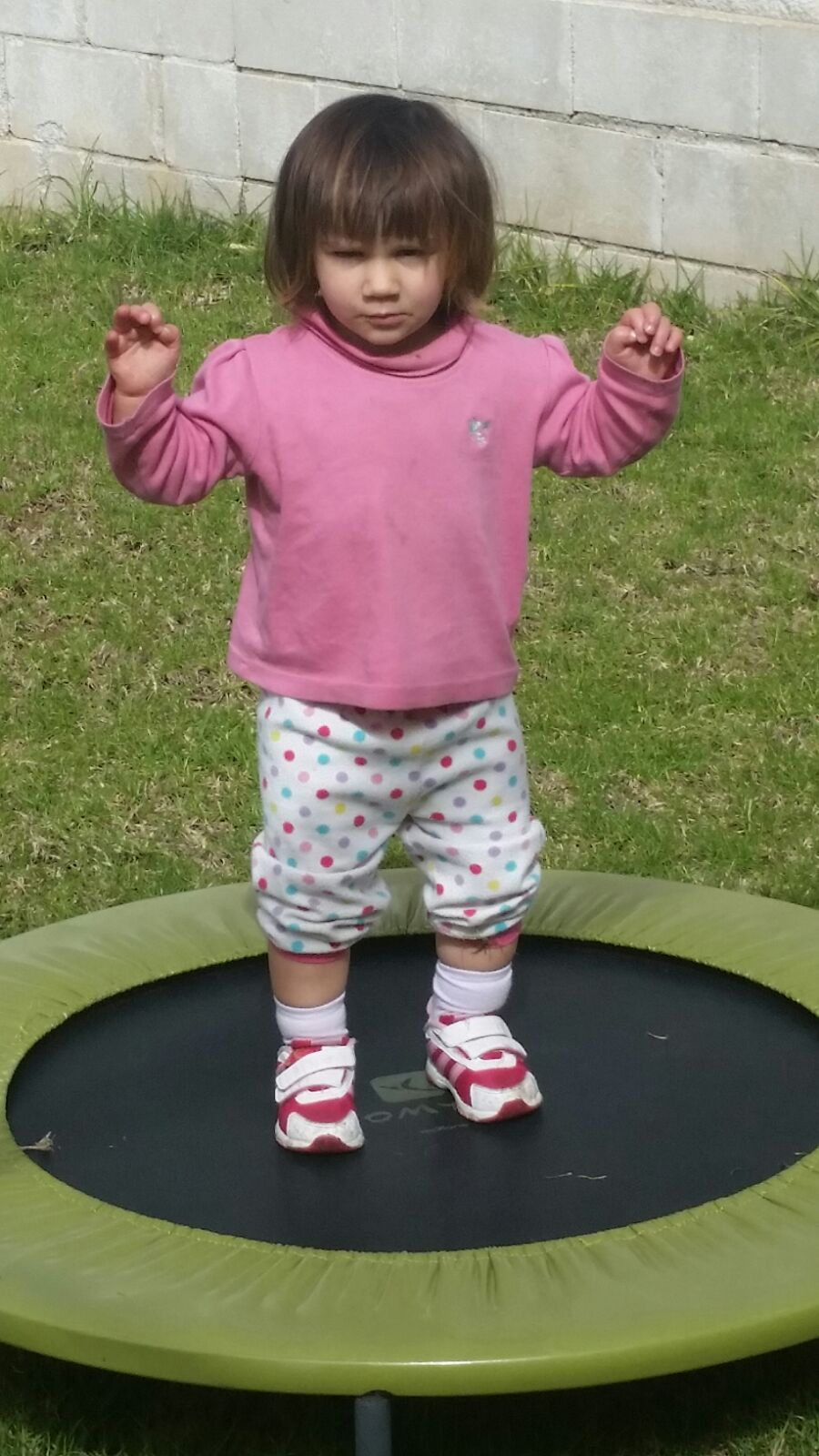
A small trampoline to jump is the best way to warm up and let off some steam!
We’re exhausted after so many toys and games. Let’s read for a while in our play pen…


Granny and Mummy are teachers, so we make sure they have plenty of educational games…

****

Now it’s your turn!

To get involved with the challenge, post a photo to your blog on Monday, add a pingback to Dale’s Blog and don’t forget to tag your post #CosPhoChal.

Follow Luccia Gray on Social Media:

Twitter

Facebook

Goodreads

Check out Luccia Gray’s Books on Amazon