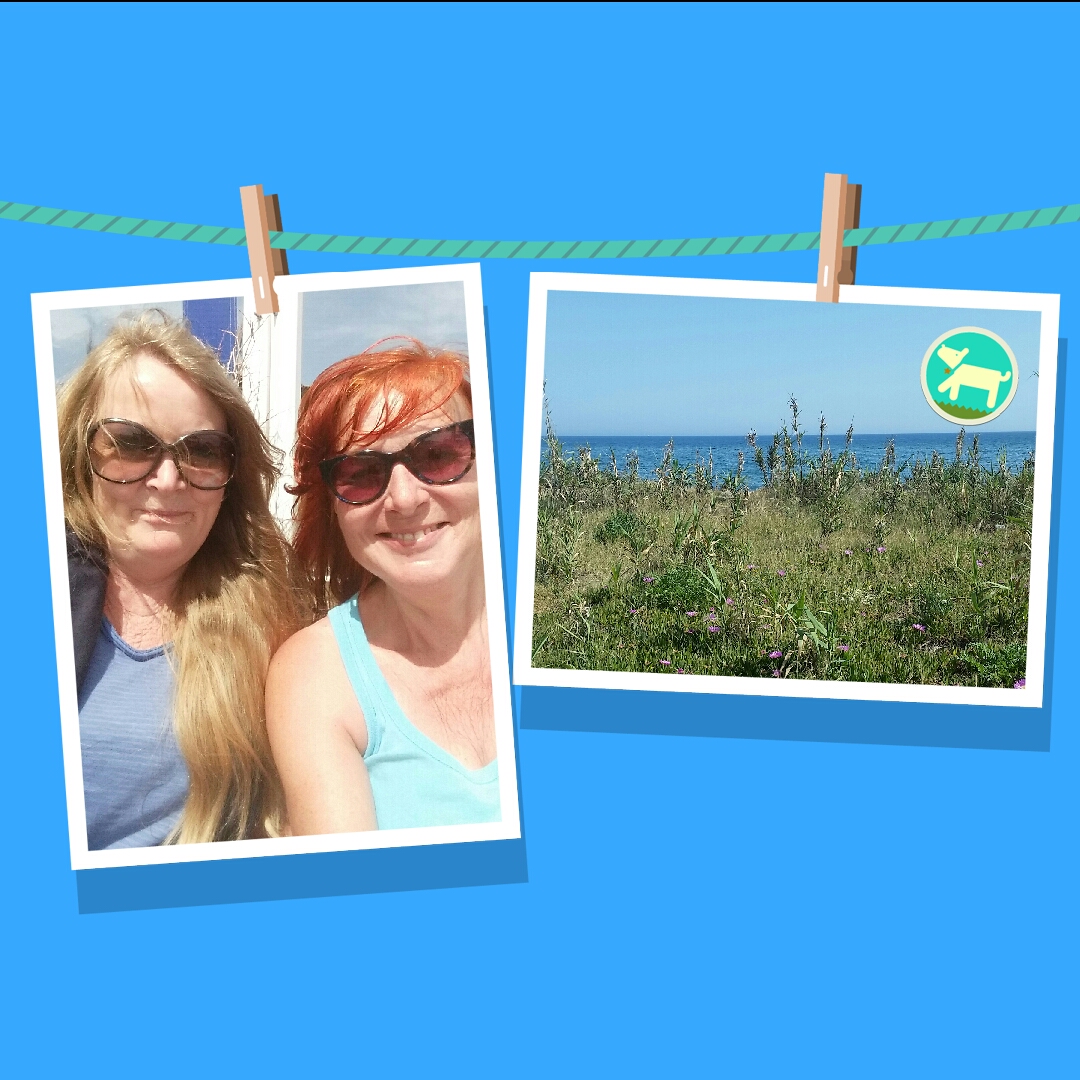
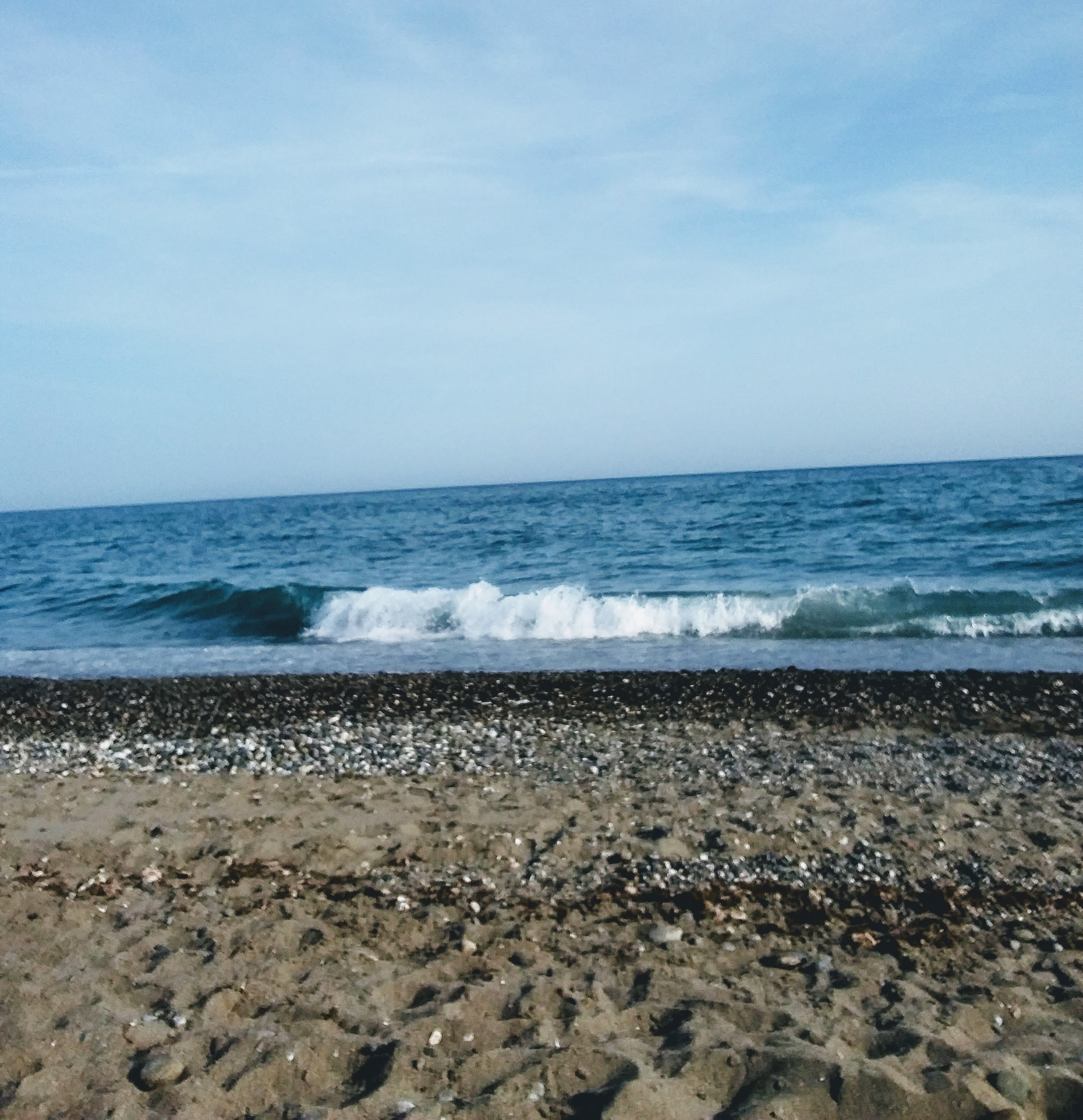
Today I offer you a poem I’ve written for one of my best friends, artist Anna Overbury Sujar. We were recently sitting by the beach, chatting about inspiration and the process of creating a picture or a poem.
When I returned home, I wrote this poem for her, for me, for you, for everyone who creates art.
I hope you enjoy it!
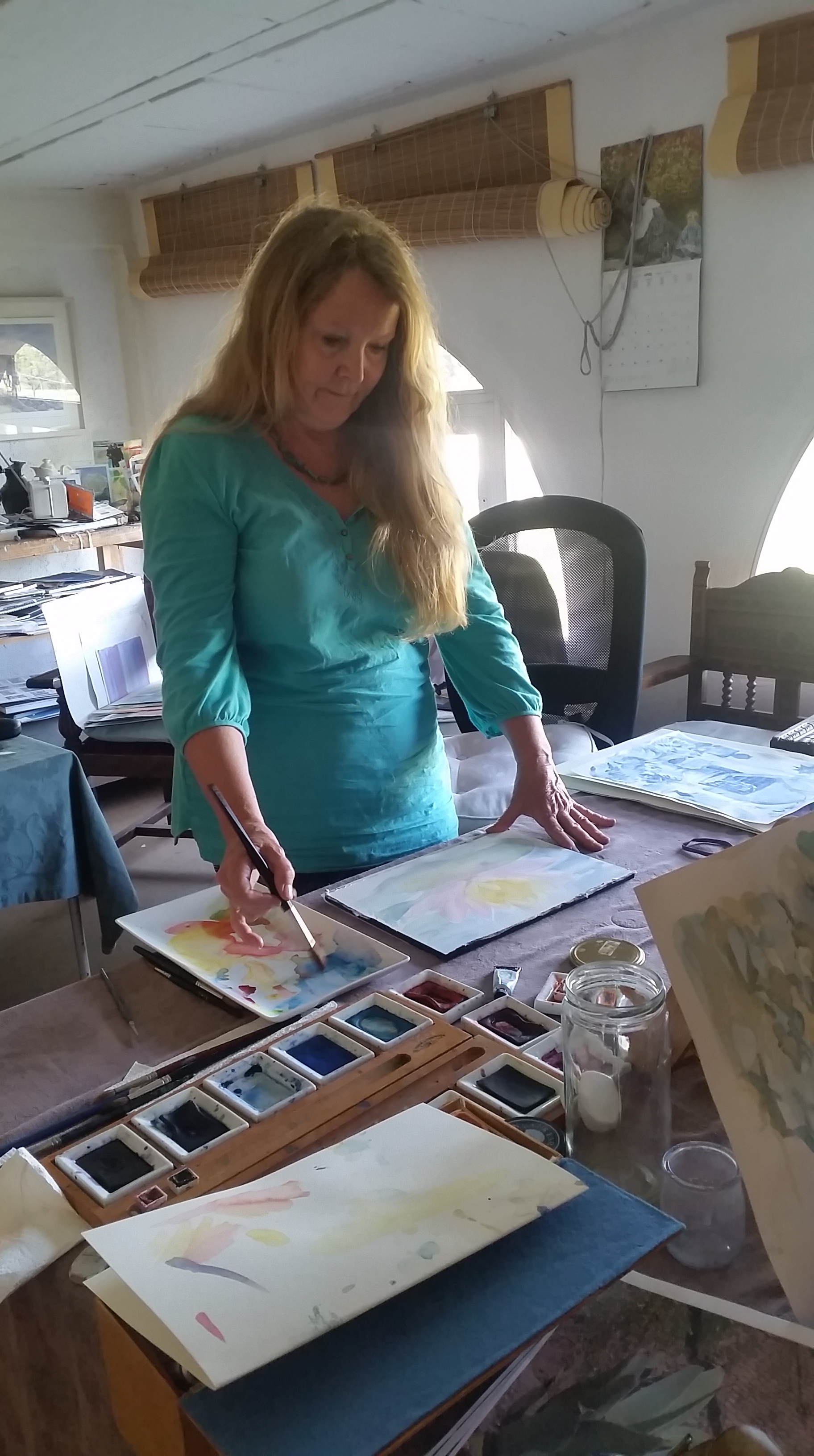
Anna Overbury Sujar, in her studio.
****
Let it Flow by Luccia Gray.
Push away your fear,
Ignore your doubts,
Let it flow.
Loosen your arms,
Relax your hand,
Let it flow.
Capture the moment
You saw the light,
Let it flow.
Feel the grandeur,
Bathed in gratitude,
Let it flow.
Channel your magic,
Connect with the awe,
Let it flow.
Pick up your brush,
Awaken the fairy,
Let it flow.
Let the brush slide,
Over your canvas,
Let it flow.
Blend the colours into sound,
Melt the music into movement,
Let it flow.
For Anna Overbury Sujar.
****
Anna Overbury Sujar at home with one of her beautiful mosaics.
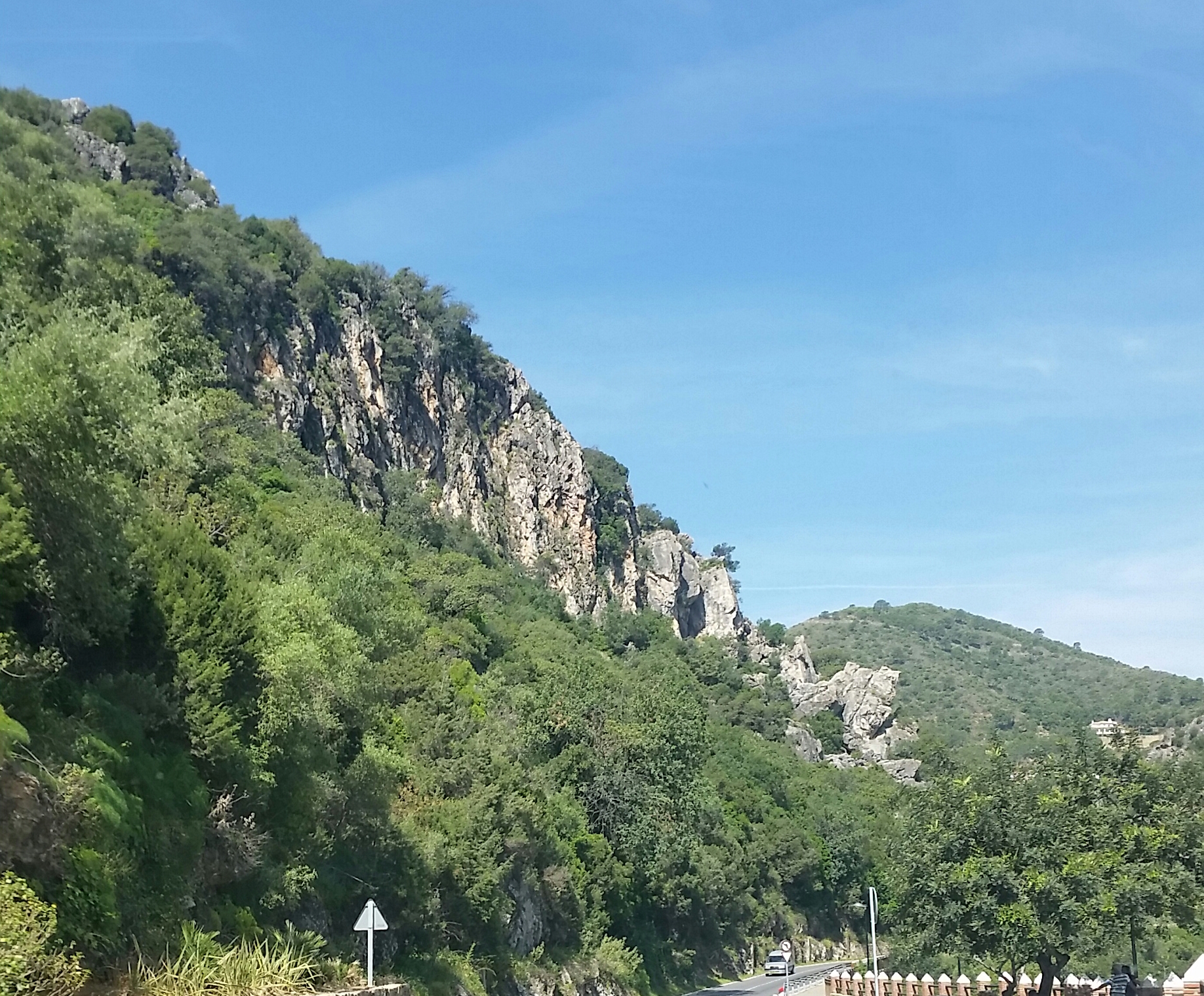
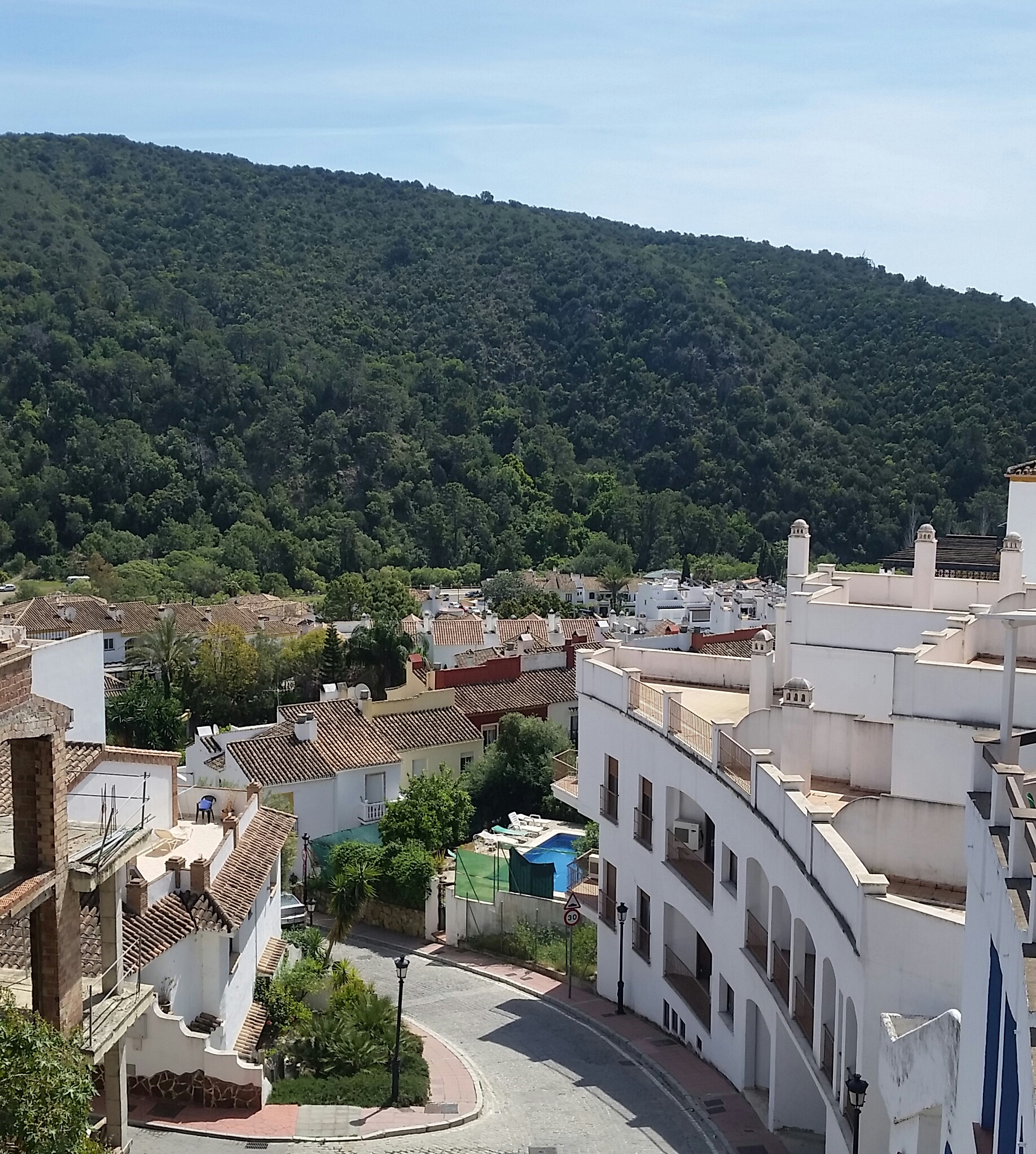
Taken in the car, on the way to Benahavis.Some more winding, country roads.Nearly there….Roundabout with a stone tower to greet new arrivals…A view from the top.
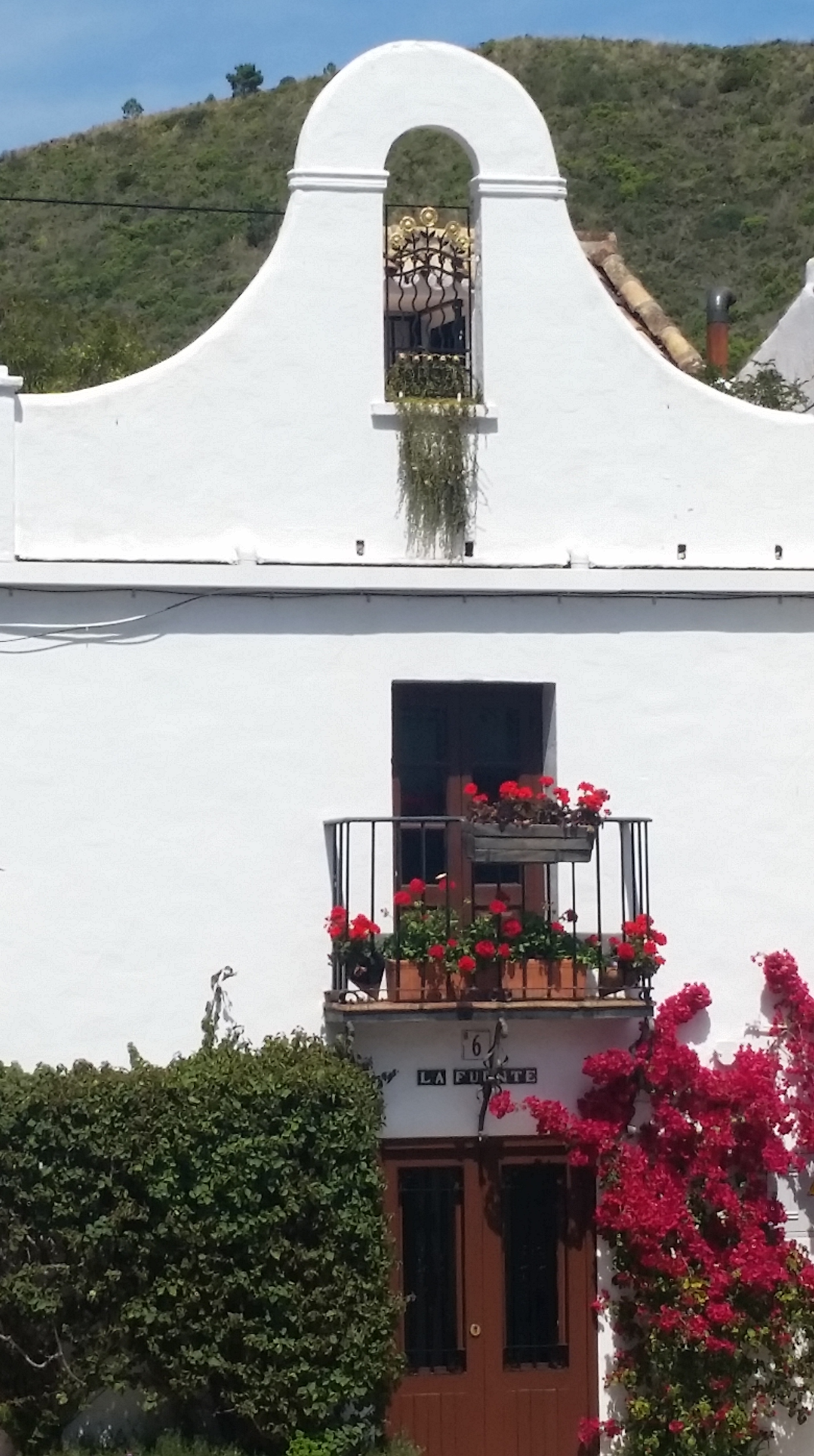
A view from the bottom :)Street view.I loved the beautiful palm trees.This tiled stairway and colourful wall were begging a photo!Typical whitewashed house with pretty balcony in Benahavis.Bye for today, Benahavis…Hope you enjoyed your visit to Benahavis :)
It’s my first time taking part in #SixWordSaturday. Thank you Debbie at Travel with Intent for hosting and I hope to gradually meet the other participants.
Six Word Saturday seems to be a good and concise way of summing up the week with six words in the title of the post, and a post with a round up of the week that’s passed.
Now and again, I’ll be adding #SixWordStories to the mix, if I can manage a phrase, or story, with the six words.
In my case I’ll be adding a few, perhaps six, sentences, and a few, perhaps six, photos!
I’ll try to keep it short and pretty!
****
It’s a holiday week for me, so instead of teaching, I started off plotting my new novel, which was getting out of hand at 22,000 words and no plan!
Then we were able to get away to a fairly secluded beach, in Estepona, for a short break.
I planned the holiday, but I didn’t know exactly what would happen once I arrived. The first surprise was a quiet beach…
…and a lovely Beach Bar for breakfast and lunch!
I was lucky enough to have three of my favourite ladies for company; one of my best friends, Anna, her lovely daughter, Zara, and my daughter.
I was also able to watch two of my grandchildren splashing around the seaside!
The most beautiful moments in life are unplanned. Let them happen.
It’s been a wonderful week. Back to work on Monday, batteries recharged!
I’ll be back to the beach for a few days in May, fingers crossed!
This year to celebrateNational Poetry Monthand to take part in theApril A-Z Blogging Challenge, I’ll be posting two poems a day, one written by me and another poem written by one of my favourite poets. The title or first word of both poems will begin with the corresponding letter in the Blogging Challenge.
Today I offer you one of Shakespeare’s most irreverent sonnets, My Mistress’ Eyes are Nothing Like the Sun (Sonnet 130) and another irreverent sonnet by Luccia Gray, My Master’s Eyes Are Nothing Like the Sun.
I hope you enjoy!
My Mistress’ Eyes Are Nothing Like The Sun (Sonnet 130) by William Shakespeare (1564 – 1616).
My mistress’ eyes are nothing like the sun;
Coral is far more red than her lips’ red;
If snow be white, why then her breasts are dun;
If hairs be wires, black wires grow on her head.
I have seen roses damasked, red and white,
But no such roses see I in her cheeks;
And in some perfumes is there more delight
Than in the breath that from my mistress reeks.
I love to hear her speak, yet well I know
That music hath a far more pleasing sound;
I grant I never saw a goddess go;
My mistress when she walks treads on the ground.
And yet, by heaven, I think my love as rare
As any she belied with false compare.
****
I love this sonnet. It’s one of my favourites for two reasons. Firstly, I admire Shakespeare’s lack of conventionalism or snobbery, and his use of typical metaphors against themselves. In this case, he parodies conventional love sonnets made popular by Petrarch, and written by his contemporaries, such as Sidney, which idealised their love interest.
Secondly, I love the way he presents a flawed and imperfect woman as his mistress. He says, ‘you’re not perfect, you’re not a goddess, but who cares, I love you because you’re real and in spite of your imperfections.’ Well said!
****
My sonnet also presents an imperfect lover, although in this case he’s male.
It also has a light and mocking tone, poking fun at celebrities and those who imitate them.
****
My Master’s Eyes
My master’s eyes are nothing like the sun,
They’re black as coal, deep and often wary.
If hairs be messy, then he has almost none,
If skin be soft and smooth, his is hairy.
I’ve seen George Clooney dressed up in a tux,
Brad Pitt prefers Channel scents, it would seem,
But he smells like showers and a touch of musk,
And he looks his best in navy blue jeans.
I love to watch his lips while he’s talking,
Although his voice is gruff and sometimes raw.
I never saw David Beckham walking,
But my master, when he walks, treads on the floor,
It’s Friday, time for another Friday Fictioneers Flash Fiction story with adorable and creative Alice, her incredulous and conventional parents, Marsha and Kevin, and her best friend, Billy.
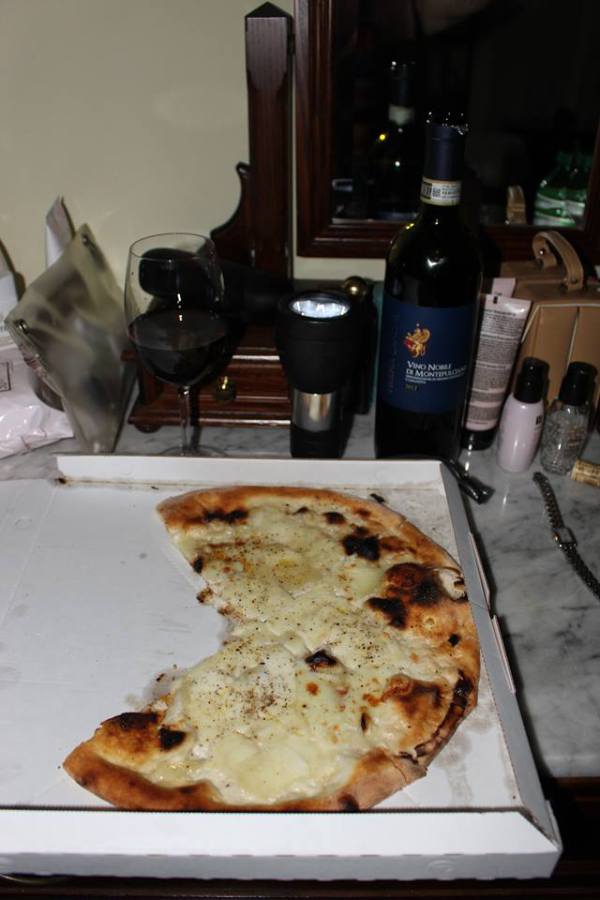
Today, Alice is at Billy’s house, where they were having some pizza just when her mother arrived to pick her up. Everyone likes pizza, right? Or do they? I hope you like this new episode!
Thanks to Rochelle Wisoff-Fields for hosting the challenge, and Dale Rogerson for today’s photo prompt, which led me directly to this weeks’ 100-word story.
Yonder by LeeAnne Hansen is a beautiful novel. It is set mainly in a small town in Mississippi, in the 1940s. Life and death in the south, at the time, is vividly and poetically portrayed. It was easy to get lost in the narrative and imagine I was right there.
It is a family drama, a mystery, suspense, and a romance with a touch of paranormal happenings, which could blend into the action as coincidence and intuition.
The novel starts with Isabel’s childhood, on her 10th birthday and her first crush, we gradually see some of her subsequent birthdays, leading up to her middle twenties. We witness her childhood hopes and dreams, her painful and sudden departure from her hometown and move to New York, her first adult romance, her first job, as well as heartbreak, devastation and her return home on her father’s death, leading up to the unravelling of the family secret and discovering true love.
Isabel is a loving, generous, yet naive, young girl, who gradually, and on occasions traumatically, finds out who she is and what she wants out of life. She also uncovers a shocking family secret, which came as a complete surprise to me.
All the characters come to life vividly, Isabel’s family, as well as her childhood friends and their families. There are a few unpleasant characters, and others who are simply immature. I have a favourite character, and that’s Ben, you’ll understand why when you read it. He’s solid, dependable and patient, but unfortunately, not everyone in the novel values these qualities.
The novel can be read as a standalone, because it has a clear and satisfactory ending, tying up all the loose ends, but there are other characters, too, with stories to be told, and I’m also interested in seeing some more of Isabel’s life, so I’m looking forward to reading the next book in the series.
I listened to the audio book, narrated by the author, which was an added treat.
****
LeeAnne Hansen was born in Paris, grew up in Oklahoma and now lives in sunny southern California with her husband and cats. She enjoys writing, acting and playing bass guitar. She can be seen gracing the stage in various theaters or even directing. She is a graduate of the American Musical and Dramatic Academy in New York City and has studied art and astronomy. She also thoroughly enjoys long walks on the beach.
This year to celebrate National Poetry Month and to take part in the April A-Z Blogging Challenge, I’ll be posting two poems a day, one written by me and another poem written by one of my favourite poets. The title or first word of both poems will begin with the corresponding letter in the Blogging Challenge.
Today I offer you two poems about poetic inspiration. The Lightest Touch by David Whyte, which has in turn inspired me to write a poem with the same name about the same subject, The Lightest Touch by Luccia Gray
****
THE LIGHTEST TOUCH by David Whyte
Good poetry begins with
the lightest touch,
a breeze arriving from nowhere,
a whispered healing arrival,
a word in your ear,
a settling into things,
then, like a hand in the dark,
it arrests the whole body,
steeling you for revelation.
*
In the silence that follows
a great line,
you can feel Lazarus,
deep inside
even the laziest, most deathly afraid
part of you,
lift up his hands and walk toward the light.
– from EVERYTHING IS WAITING FOR YOU and RIVER FLOW
David Whyte in 2009 by Eugene Kim
David Whyte, of Anglo-Irish origins, was born and brought up in the UK. He was a marine zoologist, before he started writing poetry.
The lightest Touch is a beautiful poem which aims to identify the fleeting and magical moment of inspiration or revelation, before a poem is written.
I thought ‘d join in this week with some pictures of doors seen in Estepona, on the Mediterranean coast, in the south of Spain, where I’m spending a few days with my family and friends.
This is the door to the beachside apartment where we’re staying.
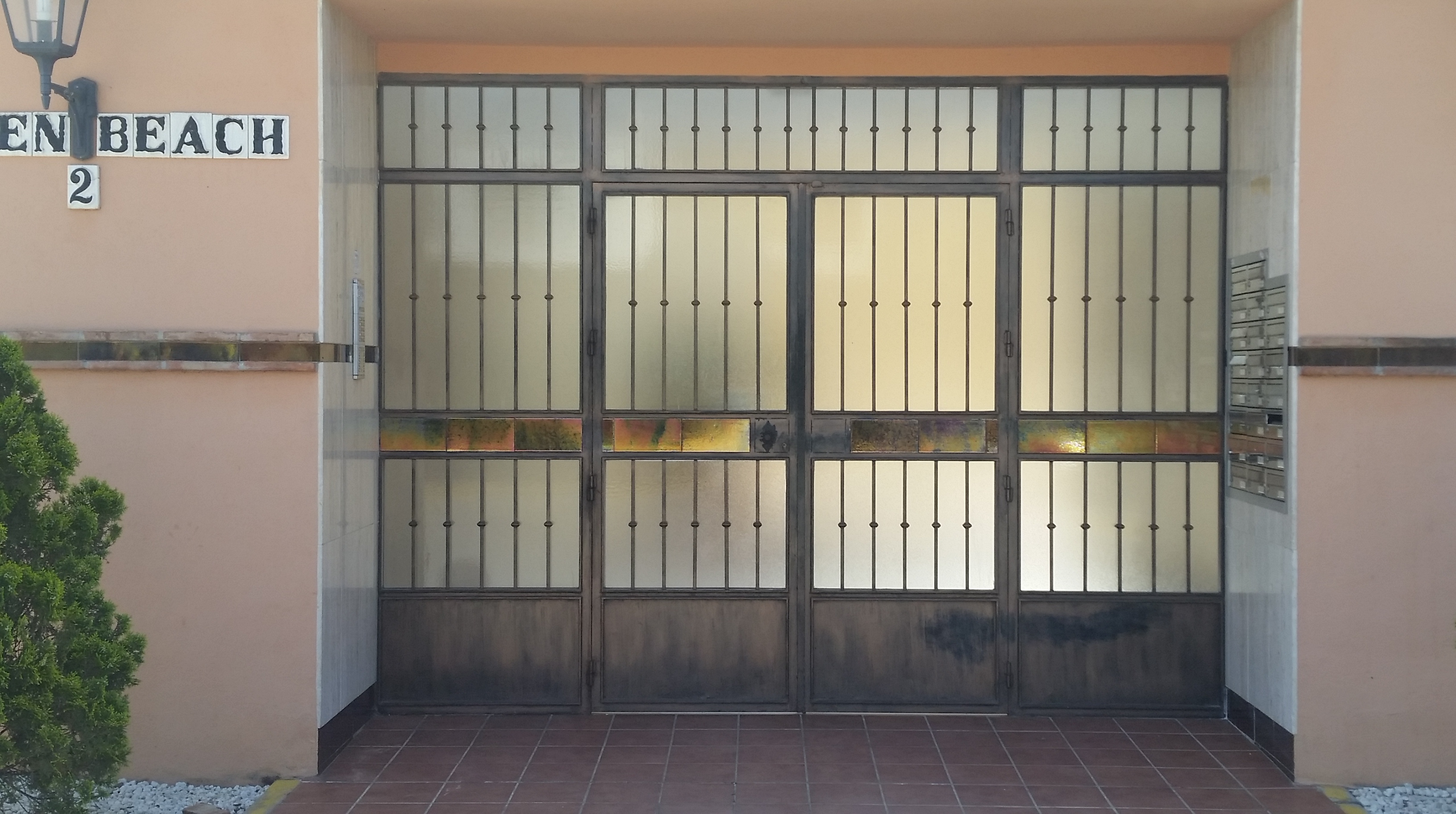
This is the gate that lets us into the small housing complex.
Another door I saw during my morning walk. The salt air has wreaked havoc on the wooden door!
That’s probably why most doors ar iron gates.
Another nearby door.
Very near my flat, a few meters from the beach is La Torre Saladillo, a lookout tower built between 1575 and 1595, to scan the coast from north African invaders. The Moors had left th south of Spain in 1492, but there were still some invasion attempts after that. It may also have been used to catch smugglers. Amazingly, it has no door! Only two window at the top. It’s a tourist attraction right now, so I suppose they covered the walls to avoid people going inside, but who knows?
Well, I’m off to the beach for a paella, see you next week!
Look out for my AtoZ entries, lots of lovely poems for you to read.
This year to celebrate National Poetry Month and to take part in the April A-Z Blogging Challenge, I’ll be posting two poems a day, one written by me and another poem written by one of my favourite poets. The title or first word of both poems will begin with the corresponding letter in the Blogging Challenge.
Today I offer you a brutal war poem by Siegfried Sassoon, The Kiss, and a sensual love poem by Luccia Gray, Kiss Me.
(c) The Fitzwilliam Museum; Supplied by The Public Catalogue Foundation. Siegfried Sassoon by Glyn Warren Philpot 1917
Sassoon said this poem was inspired by a lecture on the use of the bayonet in which the lecturer, compared the bullet and bayonet to a brother and sister. The sister/bayonet’s penetration is disturbingly compared to a fatal kiss.
Siegfried Sassoon (1886 – 1967) was an English poet, writer, and soldier. Decorated for bravery on the Western Front, he became one of the leading poets of the First World War, describing the horrors of the trenches.
****
From a devastating war poem, to a sensual poem by Luccia Gray, Kiss me.
This year to celebrate National Poetry Month and to take part in the April A-Z Blogging Challenge, I’ll be posting two poems a day, one written by me and another poem written by one of my favourite poets. The title or first word of both poems will begin with the corresponding letter in the Blogging Challenge.
Today I offer you two poems, On the Death of Anne Brontë BY CHARLOTTE BRONTË, ‘There’s little joy in life for me’, and ‘There’s Still Joy’ by Luccia Gray-
This poem was written in response the death of Charlotte Bronte’s sister Anne Brontë, in 1849. Anne’s death was sudden and although all the Brone siblings had ill health, Anne’s death was unexpected and Charlotte was clearly devastated. Charlotte was the eldest of the four surviving Bronte siblings. In 1848 her brother Branwell Bonte died, shortly after, Emily became seriously ill and died of tuberculosis, in December 1848, and Anne died of the same disease in May 1849. I can only imagine how Charlotte must have felt, after her mother and all her siblings had died. In her poem, we can feel her desolation and loneliness.
****
I also know what it means to lose your only surviving sister. I’ve written other poems to my sister, this one is inspired by Charlotte Bronte’s poem to Anne Bronte.