#AtoZChallenge ‘D’ #NationalPoetryMonth ‘Dog’s Death’ #NPM17 #amwriting #poem

This year to celebrate National Poetry Month and to take part in the April A-Z Blogging Challenge, I’ll be posting two poems a day, one written by me and another poem written by one of my favourite poets. The title or first word of both poems will begin with the corresponding letter in the Blogging Challenge.

Everyone who’s had a dog knows the intensity of the relationship which develops. We speak to them and even argue with them, hug them, kiss them, feed them, walk with them, cry with them, play and laugh with them, and miss them when they leave us.

Today, I present two poems, which will break your heart, about dogs who have died.

My poem, Farewell, Jacky, is dedicated to my pet dog, Jacky, who disappeared just over a year ago, at the grand old age of sixteen, in the hilly and woody countryside very near my house, and was never seen again. We were all heartbroken for a long time, and I almost shed a tear as I wrote her this poem, which is long overdue.

Farewell, Jacky

If she’d known we were parting,

She’d have said her farewell

With a hop, a lick and a bark,

But she didn’t look back,

Ran straight ahead. She fled

Alone, into the forest. 

****

I chased torch in hand,

Yet couldn’t keep up.

The night swallowed white curls

My fingers had stroked

Sixteen years. She disappeared

Alone, into the blackness. 

****

If I’d known we were parting,

I’d have wished her farewell

With a cookie, a hug and a kiss,

But she didn’t look back

When she left me. She departed

Alone, into the darkness.


Jacky’s last Christmas, on the left, and Harpo, my daughter’s dog, by my side.

****

The second poem, Dog’s Death is by John Updike (1932.2009), American poet, essayist, short-story writer, critic, and novelist. The poem  made me cry the first time I read it almost forty years ago. It has the same effect every time I read it. Updike’s dog is a puppy who is intent on pleasing her owners, even though she’s dying.

Updike wrote about ‘ordinary lives’, routine experiences, which he tried to transform into interesting and thought-provoking events. This poem introduces us to a typical American family with children and a puppy, going about their daily chores while coping with their pet’s sickness and death. Heartbreaking.

Dog’s Death

She must have been kicked unseen or brushed by a car.
Too young to know much, she was beginning to learn
To use the newspapers spread on the kitchen floor
And to win, wetting there, the words, “Good dog! Good dog!”

We thought her shy malaise was a shot reaction.
The autopsy disclosed a rupture in her liver.
As we teased her with play, blood was filling her skin
And her heart was learning to lie down forever.

Monday morning, as the children were noisily fed
And sent to school, she crawled beneath the youngest’s bed.
We found her twisted and limp but still alive.
In the car to the vet’s, on my lap, she tried

To bite my hand and died. I stroked her warm fur
And my wife called in a voice imperious with tears.
Though surrounded by love that would have upheld her,
Nevertheless she sank and, stiffening, disappeared.

Back home, we found that in the night her frame,
Drawing near to dissolution, had endured the shame
Of diarrhoea and had dragged across the floor
To a newspaper carelessly left there.  Good dog.

****
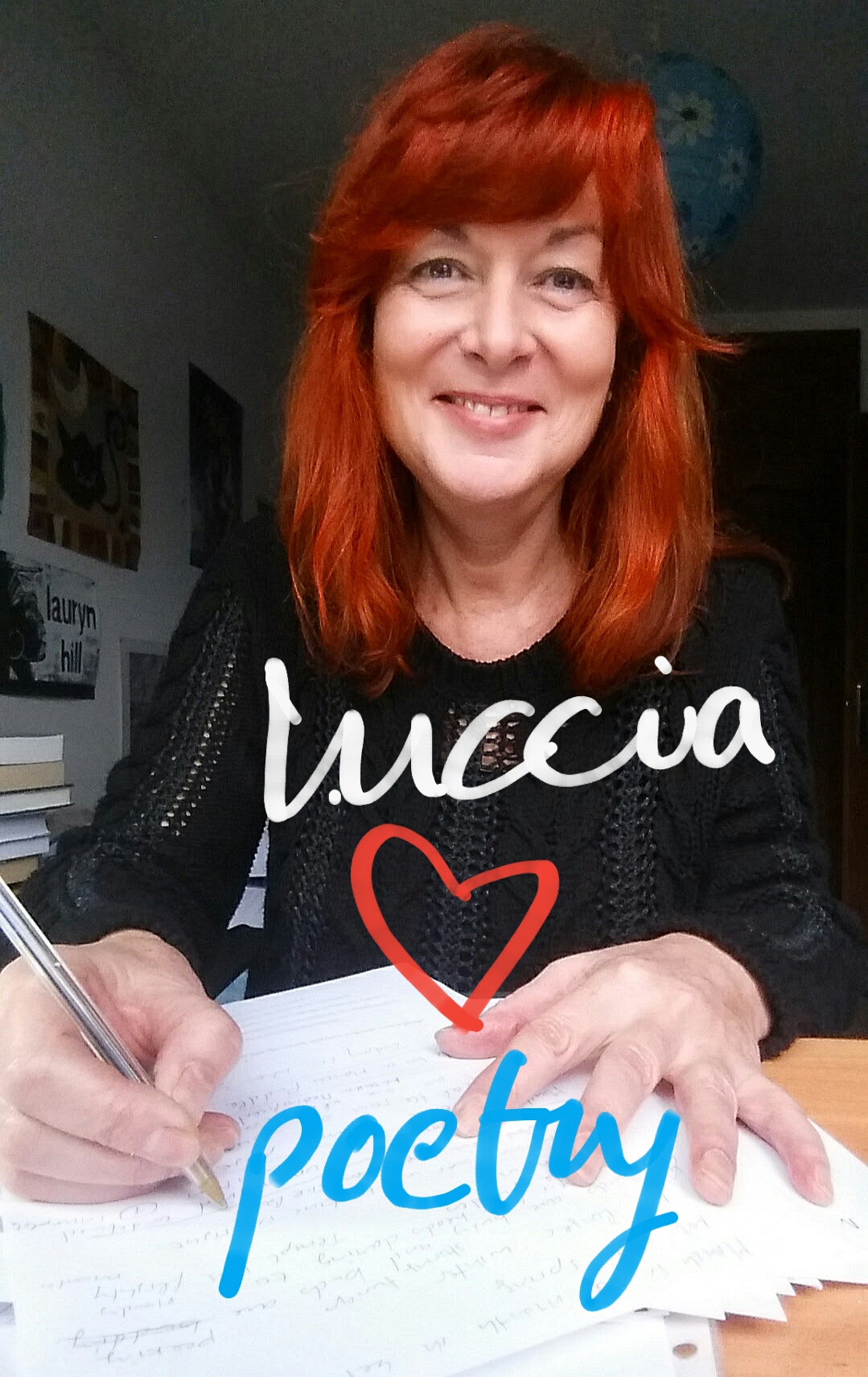
Follow Luccia Gray on Social Media:

Twitter

Facebook

Goodreads

Check out Luccia Gray’s Books on Amazon 
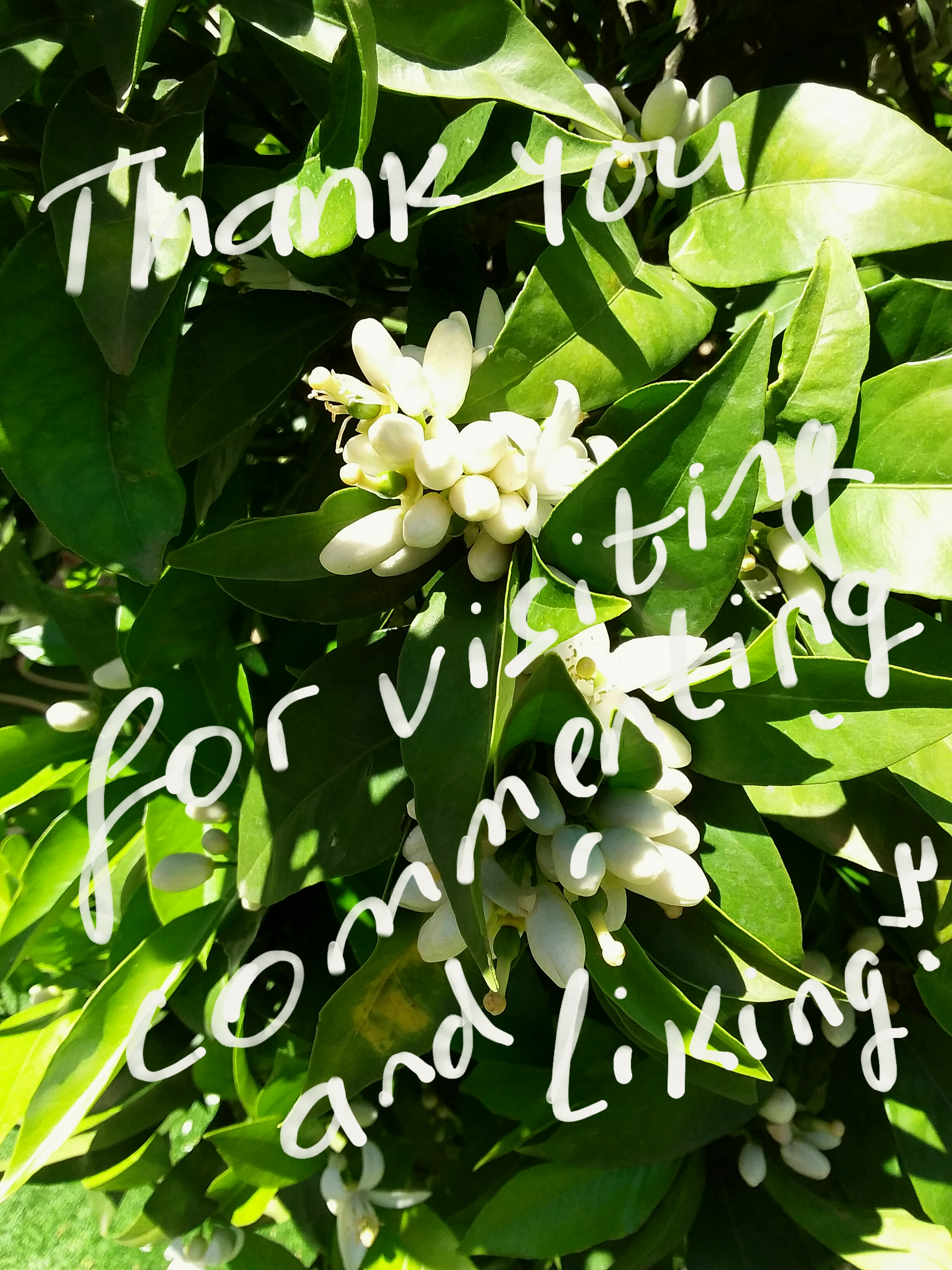
 

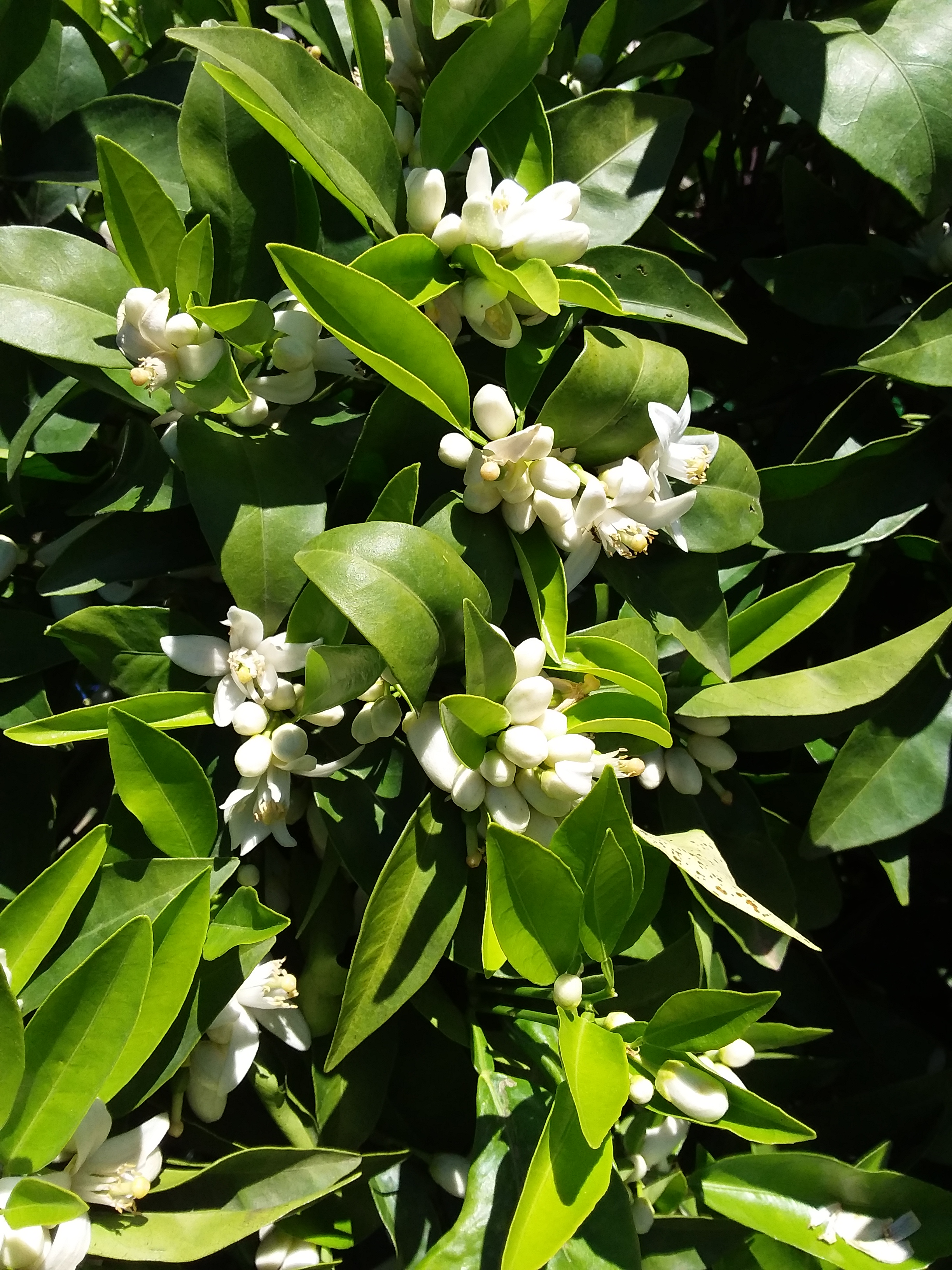
#WordlessWednesday #1linerweds ‘I wish you could smell the orange blossom in my photos’

Follow Luccia Gray on Social Media:

Twitter

Facebook

Goodreads

Check out Luccia Gray’s Books on Amazon 
Behind Her Eyes by Sarah Pinborough, #BookReview #TuesdayBookBlog @SarahPinborough

Today I’m posting my review of Behind Her Eyes, by Sarah Pinborough, a suspenseful and chilling, psychological thriller.

I read many good novels and some great novels, but sometimes I’m lucky enough to find a novel that draws me in with its intensity and shocks me with its plot. Behind Her Eyes It will never be my favourite novel, because I’m an incurable romantic at heart, but it will certainly be an unforgettable novel I highly recommend.

This novel is referred to as a ‘suspenseful and psychological thriller’, but it’s much more than that. There’s family drama, romance, paranormal events, horror, and crime.

A very intense family drama is at the centre of the plot, and consequently there are times when the microuniverse created is too claustrophobic, but I think it’s the atmosphere the writer wanted to create, and in that sense it’s superbly achieved.

There are four main, all absorbing characters, and a few other minor ones, to support the plot and the main characters. At first, it appears to be a family drama including a love triangle, which is more of a quadrangle with three people in love with one person, whose inability to communicate does a great deal of damage to everyone involved.

One of the main characters is cruel, manipulative, larger than life, and a psychological enigma. The other characters were their own worst enemies, wrecked by their gullibility and lies. I kept wanting to shout at them, ‘just speak to each other and tell each other the truth!’

I witnessed a devastating fight between good and evil in this novel, and If there’s a message, it’s that lies can poison your life and your relationships, and corrupt your mind and your body.

One of my favourite films has exactly the same ending, albeit in a totally different setting and including distinct characters, but unfortunately for me, I was on track by the second half, which spoiled the shock, although I was still well and truly horrified.

The ending is especially chilling, and treads the fine line between the psychological and the paranormal, and there’s a strong dose of horror. I suggest readers be prepared to suspend belief, have an open mind and because they will be terrified to the very last line.

The plot is well woven and it’s very well written, drawing the reader into the minds of the characters by using alternating first person narrators. All the loose strands are finally, neatly tied up, but be prepared for a very unhappy and disquieting ending akin to the horror genre. I listened to the audible version which was superbly read by several different narrators.

In three words: intense, disquieting and unforgettable. I dare you to read it.

UK buy link

US buy link

Sarah Pinborough is a critically acclaimed adult and YA author based in London.

Sarah was the 2009 winner of the British Fantasy Award for Best Short Story and also the 2010 and 2014 winner of the British Fantasy Award for Best Novella, and she has four times been short-listed for Best Novel. She is also a screenwriter who has written for the BBC and has several original television projects in development.

Her next novel, Behind Her Eyes, coming for HarperFiction in the UK and Flatiron in the US (January 2017) has sold in over 20 territories worldwide and is a dark thriller about relationships with a kicker of a twist.

You can follow her on Twitter @sarahpinborough

****


Follow Luccia Gray on Social Media:

Twitter

Facebook

Goodreads

Check out Luccia Gray’s Books on Amazon 


#AtoZChallenge ‘C’ #NationalPoetryMonth ‘Half Caste’ #NPM17 #CarrotRanch

This year to celebrate National Poetry Month and to take part in the April A-Z Blogging Challenge, I’ll be posting two poems a day, one written by me and another poem written by one of my favourite poets. The title or first word of both poems will begin with the corresponding letter in the Blogging Challenge.

Today I’ve also added a third challenge, Charli Mills at Carrot Ranch, weekly Flash Fiction Challenge based on a 99 word prompt. This weeks’ prompt is write a ‘hello or a goodbye’

Today I offer you Half Caste by Luccia Gray, and Half Caste by Guyanese poet John Agard.

****

My poem is about a group of school children who meet a new girl. Here’s their ‘hello’ and her ‘goodbye’.

Half Caste by Luccia Gray

She was doing her homework.

They were playing around.

‘She’s not like us,’ they whispered.

‘She’s different,’ he complained.

‘Odd clothes, funny accent,’ she smirked.

‘Let’s say hi to the new girl.’

‘You’re not English,’ they said.

‘I was born here,’ she protested.

‘You’re only half English,’ they replied.

‘Right or left?’ she challenged.

‘You’re colouring’s wrong,’ they complained.

‘My tanned colouring’s fine,’ she replied.

‘You’re half caste,’ they said.

‘Look at me, I’m quite whole,’ she insisted.

‘You’re half caste,’ they chanted.

‘At least I’m not half stupid,’ she sighed,

Said goodbye and turned back to her books.

***

.

Half Caste by John Agard

Excuse me

Standing on one leg

I’m half-caste

Explain yuself

Wha yu mean

When yu say half-caste

Yu mean when picasso

Mix red an green

Is a half-caste canvas/

Explain yuself

Wha u mean

When yu say half-caste

Yu mean when light an shadow

Mix in de sky

Is a half-caste weather/

Well in dat case

England weather

Nearly always half-caste

In fact some o dem cloud

Half-caste till dem overcast

So spiteful dem dont want de sun pass

Ah rass/

Explain yuself

Wha yu mean

When yu say half-caste

Yu mean Tchaikovsky

Sit down at dah piano

An mix a black key

Wid a white key

Is a half-caste symphony/

Read the whole poem here http://www.intermix.org.uk/poetry/poetry_01_agard.asp

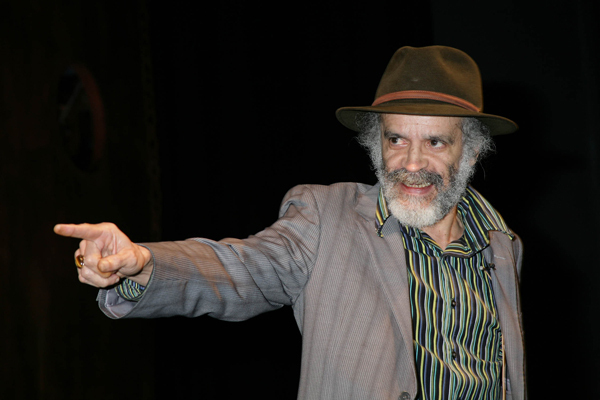
John Agard was born in Guyana in 1949. His mother was Portuguese, and his father was Caribbean. In 1977, he moved to Britain.

This poem was written in response to those who referred to him as ‘half-caste’. In spite of the humour, bitterness and anger also comes across in his words.

He uses the overused and often meaningless expression ‘Excuse me’ as he sarcastically apologizes for being half caste.

I love the rhythm of the poem and the way he compares his mixed racial and cultural origins to a Picasso painting or a symphony by Tchaikovsky.

Agard finally challenges the reader to explain himself and realise how inaccurate and offensive the expression is.

The girl in my poem on the other hand isn’t angry or embittered because she is assertive and clever enough to get on with her own life and ignore some narrow minded people one is always bound to bump into in life.

By the way, it’s a unique experience to hear Agard read the poem himself. Watch it here!

Follow Luccia Gray on Social Media:

Twitter

Facebook

Goodreads

Check out Luccia Gray’s Books on Amazon 


#CosPhoChal K’lee and Dale’s Cosmic Photo Challenge: Angles (at the beach)

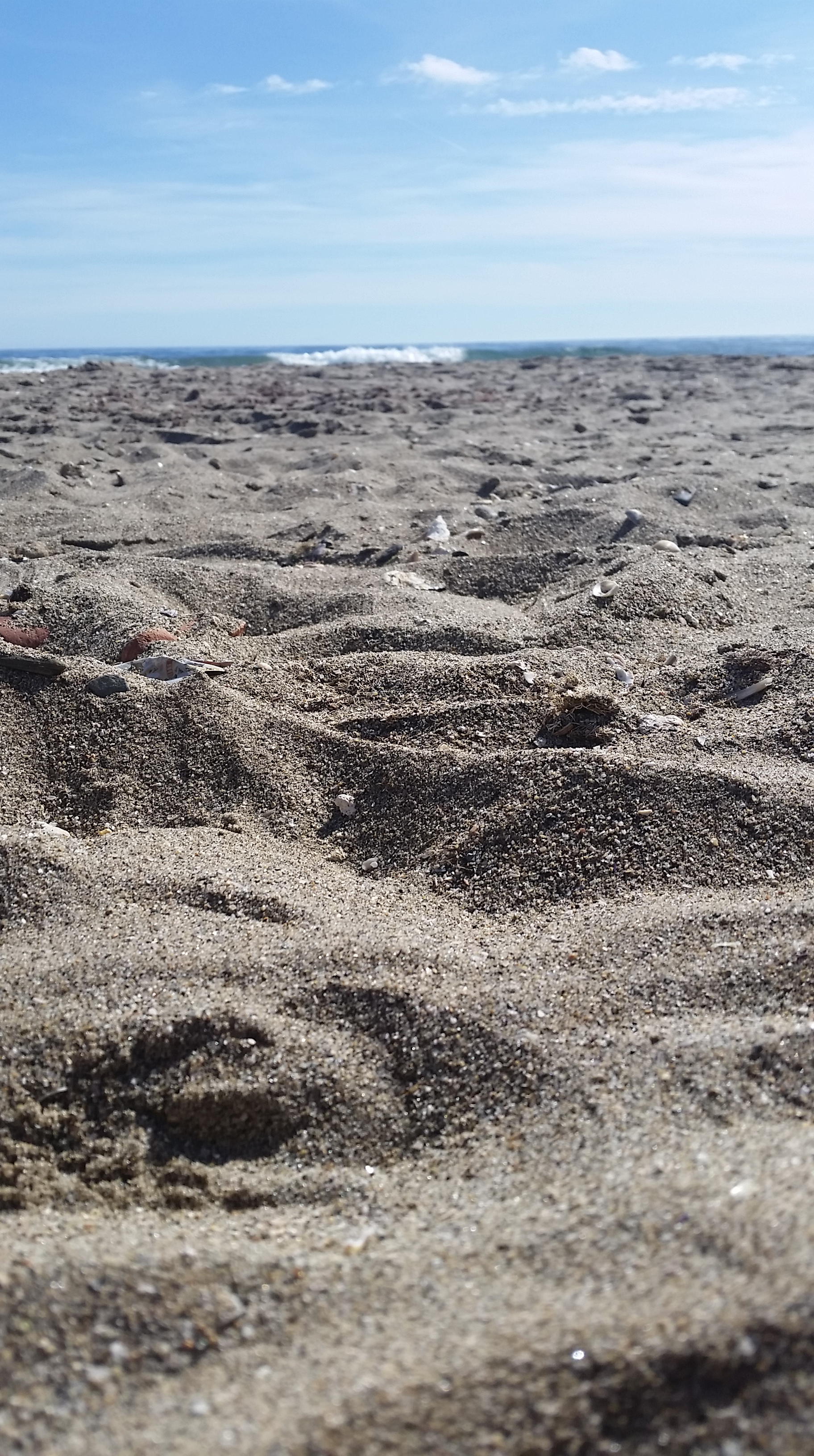
The fabulous thing about the beach is that whichever angle you look at it, it’s always breathtaking!

Now it’s your turn!

To get involved with the challenge, post a photo to your blog on Monday, add a pingback to Dale’s Blog and don’t forget to tag your post #CosPhoChal.

Follow Luccia Gray on Social Media:

Twitter

Facebook

Goodreads

Check out Luccia Gray’s Books on Amazon 
 

#AtoZChallenge ‘B’ #NationalPoetryMonth ‘She Walks in Beauty’ #NPM17

This year to celebrate National Poetry Month and to take part in the April A-Z Blogging Challenge, I’ll be posting two poems a day, one written by me and another poem written by one of my favourite poets. The title or first word of both poems will begin with the corresponding letter in the Blogging Challenge.


Today I offer you Treading on Stars by Luccia Gray, and She Walks in Beauty by Lord Byron.

Today I’m Treading on Stars because dreams can also be beautiful…

****

Treading On Stars

Treading on stars

On her way to the moon,

Swishing her dress

As she glides through the sky.

Catching her hair

As it flies in the wind,

Wrapping her eyes like a scarf.

Still she flies through the heavens,

Bursting with hope,

On her way to the moon,

But the warmth of the sun,

Unyielding and cruel,

Dissolves her last breath,

As she carries her beauty

Back into the dawn.

 ****

She Walks in Beauty by Lord Byron (1815)

She walks in beauty, like the night

Of cloudless climes and starry skies;

And all that’s best of dark and bright

Meet in her aspect and her eyes:

Thus mellow’d to that tender light

Which heaven to gaudy day denies.

One shade the more, one ray the less,

Had half impair’d the nameless grace

Which waves in every raven tress,

Or softly lightens o’er her face;

Where thoughts serenely sweet express

How pure, how dear their dwelling-place.

And on that cheek, and o’er that brow,

So soft, so calm, yet eloquent,

The smiles that win, the tints that glow,

But tell of days in goodness spent,

A mind at peace with all below,

A heart whose love is innocent!

****

Lord Byron is considered one of the most representative poets of the romantic movement in England, and this short and intense poem, “She Walks in Beauty” is one of his most powerful works. The emphasis of the Romantic poets was on the writer’s spontaneous response to sensual stimulation. Byron isn’t interested in describing the lady’s clothes or her features, instead he tells us the feelings seeing her evoke, and allows readers to reach their own conclusion.

The lady is dark, like the night, she has dark hair, ‘raven tresses’, and she’s probably also wearing black or dark clothes, yet she also has sparkling jewellery and eyes, which light up her appearance.  She’s angelic, graceful and unreachable, as if she were a perfect goddess in heaven, looking down at mortals. The last three lines have always led me to imagine that perhaps he’s describing a woman who has died, ‘a mind at peace with all below’. The main idea is that feminine beauty is not based on external riches or physical appearance, but on symmetry, inner charm, peace and goodness.

Follow Luccia Gray on Social Media:

Twitter

Facebook

Goodreads

Check out Luccia Gray’s Books on Amazon 
#NationalPoetryMonth ‘Sunday’ #NPM17 #SundayBlogShare

This year to celebrate National Poetry Month and to take part in the April A-Z Blogging Challenge, I’ll be posting two poems a day, one written by me and another poem written by one of my favourite poets. The title or first word of both poems will begin with the corresponding letter in the Blogging Challenge.

As there’s no AtoZ on Sundays, today’s theme for the National Poetry Month daily poem will be ‘Sunday’.

Today, two poems, one called Sunday Lunch by Luccia Gray and Sunday Afternoons, by Erica Jong.

Sunday Lunch

She spoke her mind,

Unencumbered by convention.

‘Naked words’, she humbly declared,

Despite the hate they hid. He dared to disagree.

Another Sunday lunch. My in-laws,

Yelling in the kitchen. 

****

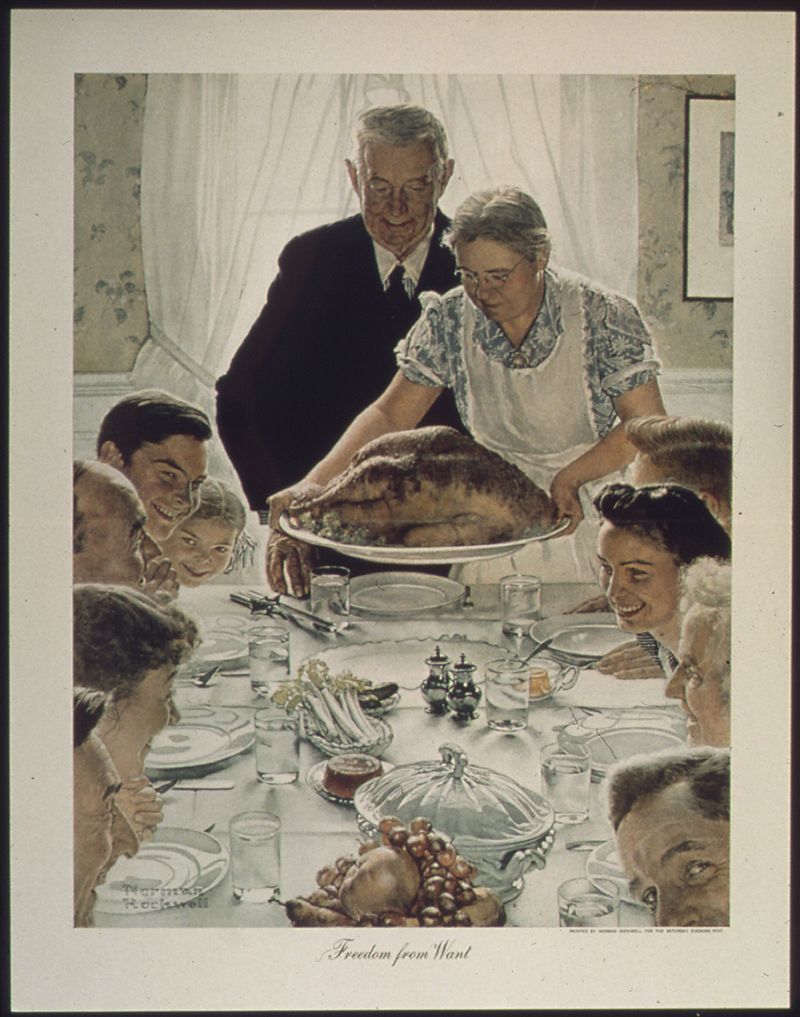
Norman Rockwell’s painting represents what Sunday lunches should be like, good food, happy families, laughter, peace and harmony, but unfortunately, it’s not always the case.


Sunday Afternoons by Erica Jong

I sit at home
at my desk alone
as I used to do
on many sunday afternoons
when you came back to me,
your arms ached for me,
and your arms would close me in
though they smelled of other women.

I think of you
on Sunday afternoons.

Your sweet head would bow,
like a child somehow,
down to me –
and your hair and your eyes were wild.

We would embrace on the floor-
You see my back´s still sore.
You knew how easily I bruised,
It´s a soreness I would never lose.

I think of you
on Sunday afternoons

Erica Jong By Rodrigo Fernández

This is a poignant poem about a disempowered woman who remembers and still longs for her lover’s visits on Sunday Afternoons when it suited him. Her memory is not of love, but of the bruising endured by their lovemaking. She is obviously also emotionally bruised and unable to accept the loss of what appeared to have been a toxic relationship.

There is a beautiful musical version of this poem in a song by Vanessa Daou 

Erica Jong (b. 1942) is an American novelist and poet, who is famous for her debut novel, published in 1973 novel Fear of Flying. The novel was famous for its controversial representation of female sexuality.

****

Follow Luccia Gray on Social Media:

Twitter

Facebook

Goodreads

Check out Luccia Gray’s Books on Amazon 

#AtoZChallenge ‘A’ #NationalPoetryMonth ‘April’ #NPM17

This year to celebrate National Poetry Month and to take part in the April A-Z Blogging Challenge, I’ll be posting two poems a day, one written by me and another poem written by one of my favourite poets. The title or first word of both poems will begin with the corresponding letter in the Blogging Challenge.

Today I offer you April Drops by Luccia Gray, and the first lines of The Waste Land by T. S. Elliott.


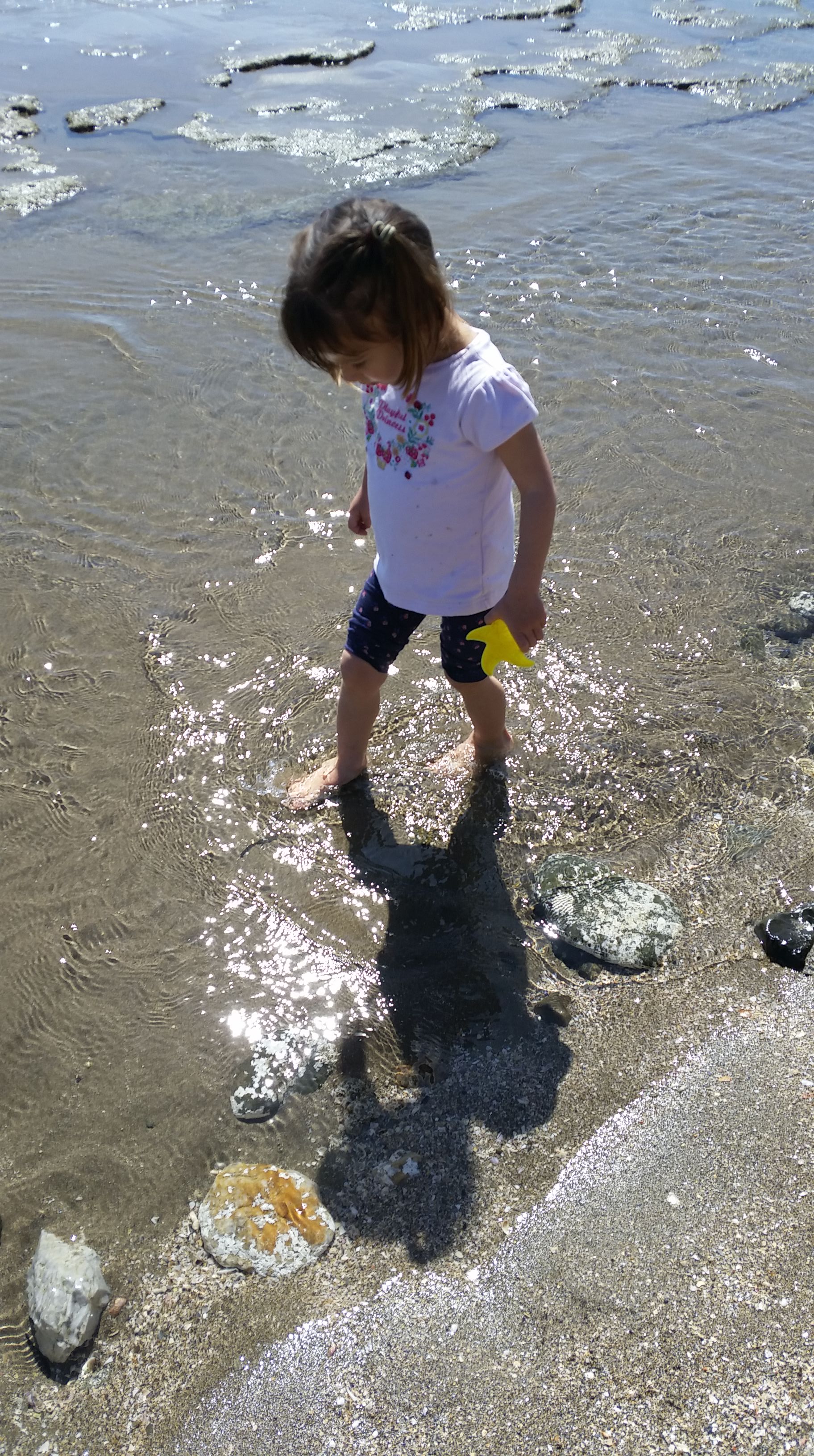
APRIL DROPS

Dip your feet 

In cool waters, and 

Tread softly

Along the shore, because

A drop of your soul

Gushed into my heart,

Flooding the sea with my love.

For Elsa, who treads softly.

****

The Waste Land by T. S. Eliot

APRIL is the cruellest month, breeding

Lilacs out of the dead land, mixing

Memory and desire, stirring

Dull roots with spring rain.


T. S. Eliot in 1923, by Lady Ottoline Morrell

These are the tragic and despairing opening lines of the first part of The Waste Land, The Burial of the Dead.

T. S. Eliot was suffering from a nervous disorder when he wrote this poem. However, it was not only the author who was emotionally devastated, so was Europe after the First World War had ended, just a few years before it was published in 1922, almost a century ago.

A generation of young men had been killed or shell-shocked, and civilians were horrified by the destruction caused to families, and the sight of the barren, shell-holed landscape. European culture and civilisation had had failed miserably.

And yet, life must go on. Spring will bring new life to the land where the dead have been buried. The horrific past has become a memory, because the new generations, like nature, are full of strength and desire to move on and recreate a new life and a new world.

It’s a tragic poem, because where there could be hope, there is none for Eliot. He represents a disenchanted and disillusioned generation who will never fully recover from the emotional and physical blows received.

****


Follow Luccia Gray on Social Media:

Twitter

Facebook

Goodreads

Check out Luccia Gray’s Books on Amazon 

Thursday Photo Prompt: ‘Too Bright’ #writephoto #amwriting #poetry

This post was written in response to this week’s Sue Vincent’s Writephoto prompt. Check out Sue’s wonderful blog for more information.

Too Bright

Sometimes the sky’s too bright.

The dazzling light melts our thoughts,

And blinds our minds.

Sometimes a moment of brilliance,

Becomes an instant of glittering madness,

An illusion of eternal clarity,

Spinning our mind into a flash

Of confusion.

Sometimes it’s easy to forget

The lies we heard

And the tears we shed.

They hold the intensity and the radiance,

Of the moment that outshines the pain,

Which never aches,

Because once,

The sky was too bright.

  ****

This poem is meant as a tribute to the great Welsh poet, Dylan Thomas, from whom I have borrowed the first line of his famous poem: ‘Sometimes the Sky’s Too Bright‘.

Follow Luccia Gray on Social Media:

Twitter

Facebook

Goodreads

Check out Luccia Gray’s Books on Amazon