Thursday photo prompt: In The Deep #writephoto #amwriting #poetry

This poem was written in response to Sue Vincent’s Thursday photo prompt

writephoto

Use the image below to create a post on your own blog… poetry, prose, humour… light or dark, whatever you choose, by noon (GMT)  Wednesday 22nd March and link back to Sue’s post with a pingback.

Here’s my take on this beautiful photo.

****

In The Deep

Come inside.

Lose yourself

in my tunnels.

Listen

Quietly

to my heart beat.

Watch

carefully

As my blood drips.

Touch

softly

my very core.

Feel

slowly

my pulse beating,

beneath you feet.

I am alive

in the deep.

*****

Follow Luccia Gray on Social Media:

Twitter

Facebook

Goodreads

Check out Luccia Gray’s Books on Amazon 

#FridayFictioneers The Flying Ferris Wheel #FlashFiction

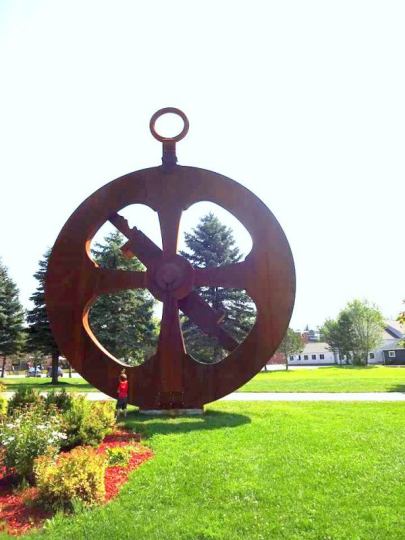
I’m having such fun looking forward to Fridays and responding to Friday Fictioneers with stories of adorable and creative Alice, and her incredulous and conventional parents, Marsha and Kevin. Today, you’ll be meeting a friend of hers, Billy (in the photo). I hope you like him!

Thanks to Rochelle Wisoff-Fields for hosting the challenge and Jennifer Pendergast for today’s photo prompt, which led me directly to this weeks’ 100-word story.

PHOTO PROMPT © Jennifer Pendergast

*****

The Flying Ferris Wheel

Alice sat cross-legged on the grass, her head buried in her knees, sulking.

She’d been told off yet again for telling stories. Would she ever find someone who understood her?

‘Alice, Come here!’ shouted Billy.

‘Where are you?’

‘Behind the big wheel.’

‘No!’ She had to save him.

‘Be careful, Billy! It’s not a wheel. It’s a time portal. They’ll take you away!’

‘Are you crazy? Come here! It’s a flying  Ferris wheel. If we jump on, the lights will shine and it’ll spin and take off. Hurry it’s time!’

‘Wait for me!’ she screamed running towards the wheel.

****

I think Alice has met her match 🙂 What will happen when her parents meet Billy? More next week…

All my ‘Alice’ flash fiction written for the Friday Fictioneers Challenge can be read as standalones, but if you’re interested in reading previous stories of Alice’s adventures, here  they are!

 If you’d like to join in Friday Fictioneers or read other posts check Rochelle’s Blog for rules and prompts. 

****

Follow Luccia Gray on Social Media:

Twitter

Facebook

Goodreads

Check out Luccia Gray’s Books on Amazon 

Feast on your life. Goodbye Derek Walcott

I’ve just heard the news that the poet Derek Walcott has died. 

This is one of my favourite poems, and it was written by him.

It seems appropriate to feast on his poem which is about love and life and death.

Love After Love

Love After Love
The time will come
when, with elation
you will greet yourself arriving
at your own door, in your own mirror
and each will smile at the other’s welcome, and say, sit here. Eat.

You will love again the stranger who was your self.
Give wine. Give bread. Give back your heart
to itself, to the stranger who has loved you

all your life, whom you ignored
for another, who knows you by heart.
Take down the love letters from the bookshelf,

the photographs, the desperate notes,
peel your own image from the mirror.
Sit. Feast on your life.

*****

It’s such a powerful poem about looking at yourself as you really are, with all honesty. Past youth. Accepting the person who looks back at you from the mirror. What’s left of the person you were? Where can you find yourself? In your letters? Photographs? 

Only you know who you really are and you’ll have to face your own fears, shortcomings, and virtues.

Rejoice in the knowledge of your own identity. 

What does this poem say to you?

#FridayBookShare The Venetian by @Shani_Struthers #FridayReads

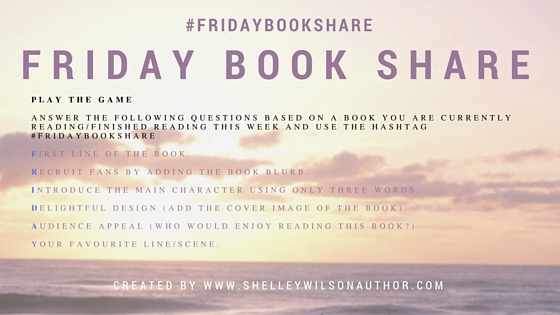
#FridayBookShare was created by Shelley Wilson for book lovers to share what they’re reading. The idea is to answer a few simple questions about the novel and post on Fridays.

Today, I’d like to share The Venetian, by Shani Struthers. It’s a paranormal mystery set in Venice.

First line of the book.

Touching down on Venetian soil, Louise grabbed her husband’s arm.

Recruit fans by adding the book blurb.

From the author of the bestselling Psychic Surveys series, comes a brand new series of STANDALONE books, set in and around the world’s most haunted places and blending fact with fiction. In Book One discover Venice, ‘the world’s most haunted city’ and Poveglia, in the Venetian Lagoon, ‘the world’s most haunted island’ – if you dare! Perfect for fans of Dennis Lehane’s Shutter Island, Susan Hill’s The Woman in Black and du Maurier’s Don’t Look Now.

‘Welcome to the asylum…’

2015
Their troubled past behind them, married couple, Rob and Louise, visit Venice for the first time together, looking forward to a relaxing weekend. Not just a romantic destination, it’s also the ‘most haunted city in the world’ and soon, Louise finds herself the focus of an entity she can’t quite get to grips with – a ‘veiled lady’ who stalks her.

1938
After marrying young Venetian doctor, Enrico Sanuto, Charlotte moves from England to Venice, full of hope for the future. Home though is not in the city; it’s on Poveglia, in the Venetian lagoon, where she is set to work in an asylum, tending to those that society shuns. As the true horror of her surroundings reveals itself, hope turns to dust.

From the labyrinthine alleys of Venice to the twisting, turning corridors of Poveglia, their fates intertwine. Vengeance only waits for so long…

Introduce the main character using only three words.

Louise is sensitive, insecure, and troubled.

Delightful design (add the cover image of the book).

Audience appeal (who would enjoy reading this book?)

Readers who have an open mind regarding paranormal happenings, and enjoy reading chilling mysteries including ghosts will love The Venetian. It’s also suitable for people who love Venice, and historical fiction, because part of the novel deals with events which happened on a Venetian island in the 19th century. 

Your favourite line/scene.

It all starts with a painting in the hotel where Louise and Rob are staying. There is something about it that haunts Louise… 

Buy link Amazon US

Buy link Amazon UK

Read my full review here

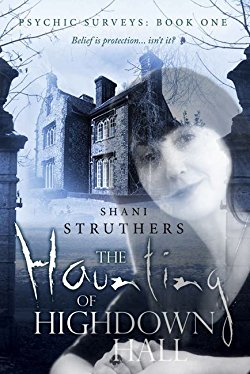
By the way, check out Shani’s other fabulous and haunting novels such as Psychic Surveys Book One, The Haunting of Highdown Hall:

****

Follow Luccia Gray on Social Media:

Twitter

Facebook

Goodreads

Check out Luccia Gray’s Books on Amazon 

#ThursdayDoors Cervantes’ Home in Madrid

Thursday Doors is a weekly feature, hosted by Norm 2.0 allowing door lovers to come together to admire and share their favorite door photos from around the world. Everyone is invited to join in on the fun by creating their own Thursday Doors post each week and then sharing it, between Thursday morning and Saturday noon (North American eastern time), by using the blue link-up button on Norm’s blog.

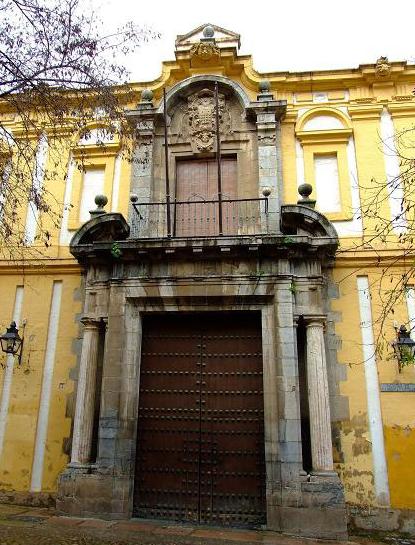
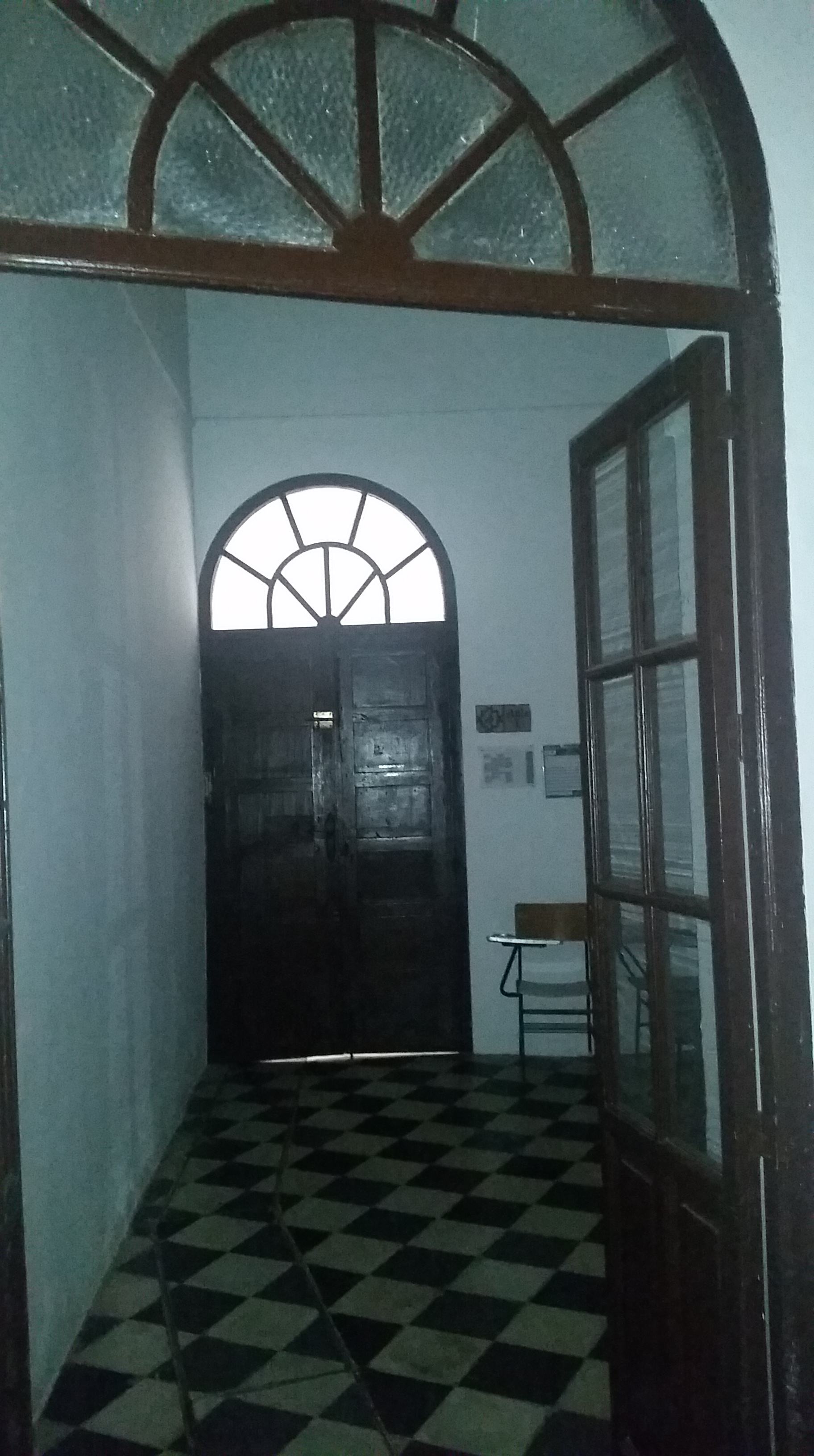
Today I’m going to show you another door or two which I walked through several times a week for five years, The Faculty Of Philosophy and Arts in Cordoba, Spain. 

This is the main door of the Faculty of Philosophy and Arts, in Cordoba, where I read my doctoral thesis on language learning strategies, over ten years ago. It’s also the place where I worked as Associate Professor of English for five years.

I taught English language and linguistics as well as Medieval, Renaissance, and Postcolonial English Literature to undergraduate students, and Teaching Methodology and Didactics on Postgraduate students preparing their Master’s dissertation.

I loved teaching here, because my students were enthusiastic and motivated, and because it’s a very special building, with a great deal of history embedded within its mysterious stone walls. It’s not surprising that many of the students and people who work here have sensed that they sometimes were not alone in empty classrooms or shadowy corridors.


Here’s the open main door and the patio straight ahead.

The building has two floors. The lower floor has two patios, the main one, which can be seen in the photograph I took a few days ago, is an enclosed patio, which is very typical of the stately homes of the old town.


There is another, smaller patio to the left, which leads to the chapel, and the old mortuary, which were curiously side by side. Did I say mortuary? A little bit of history before we continue our look at the doors in the building. 

It became part of the University of Córdoba in 1970, but let’s have a quick look at what happened between 1701 and 1970, which may explain why some think it’s haunted.

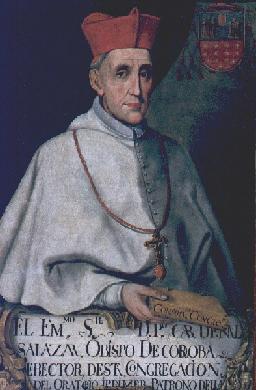
En 1701 Cardinal Pedro de Salazar, bought some land near the Cathedral in Cordoba, which was built inside a Mosque, but more about that next week.


His first intention was to build a school, probably a boarding school, for the cathedral choir boys, so the plans were made and construction was soon started.

In 1704, when the building had not yet been finished, there was a devastating epidemic in Cordoba and the Cardenal was convinced that it would be more beneficial for the town if a hospital was built instead of a school. That’s why this stately, baroque building looks more like a palace than a hospital. It became a hospital well afer the building plans had been made.
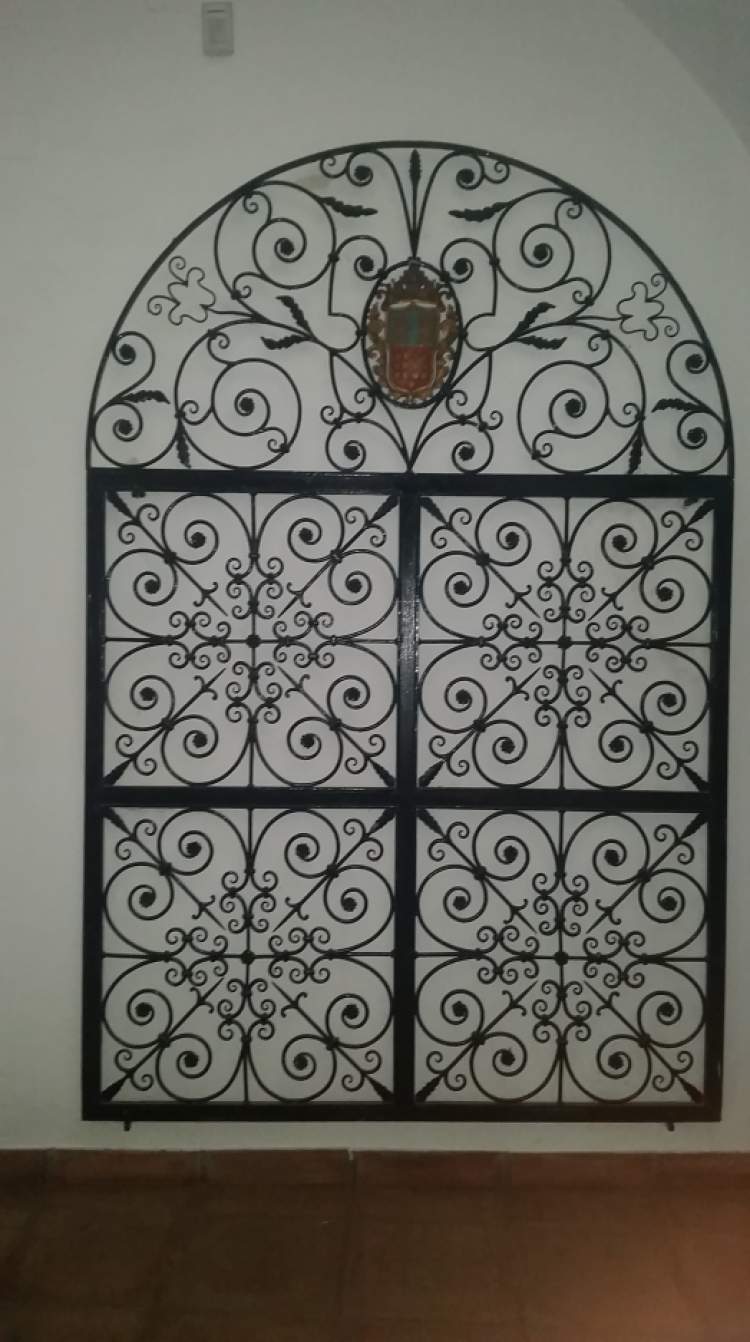
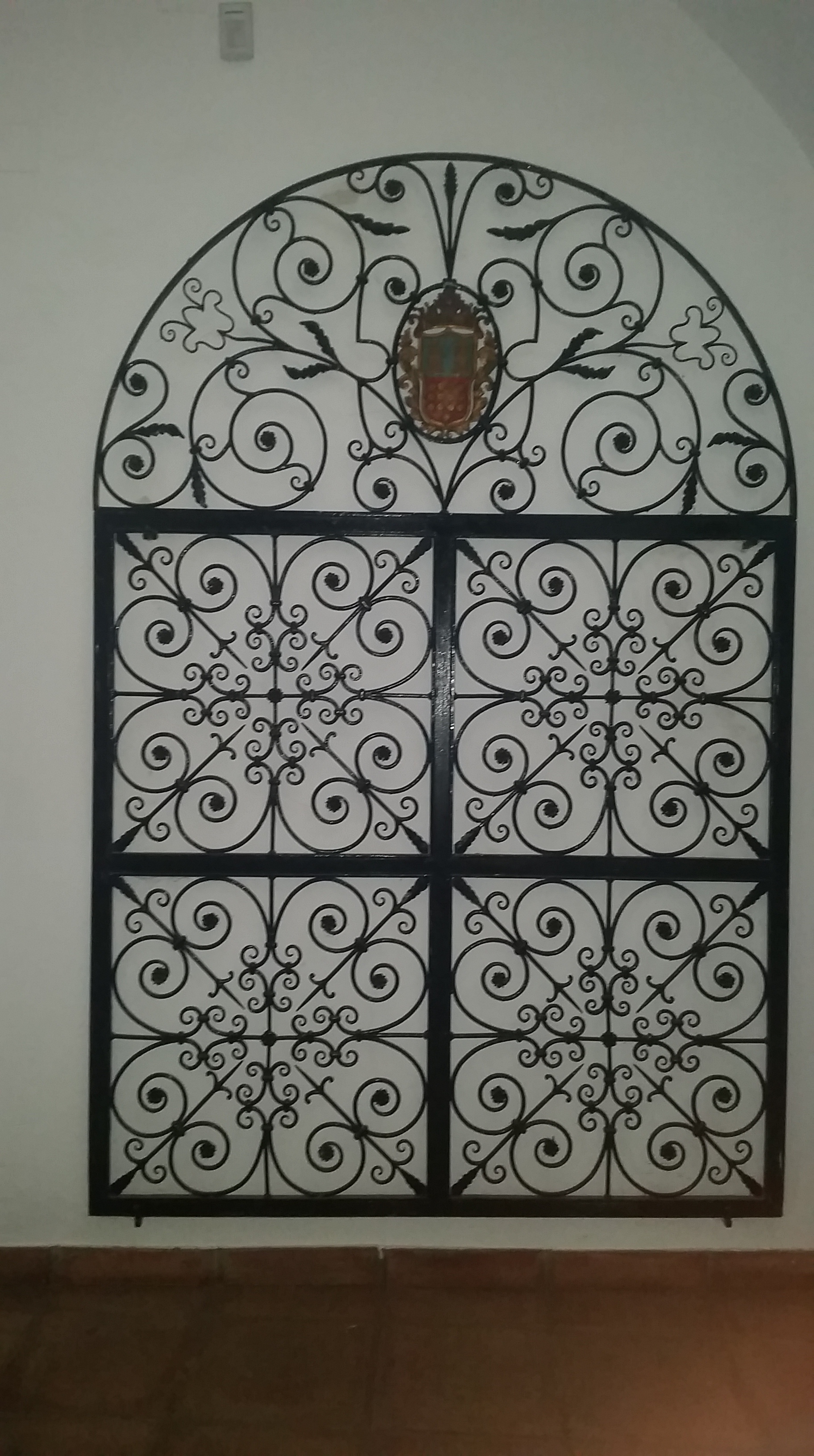
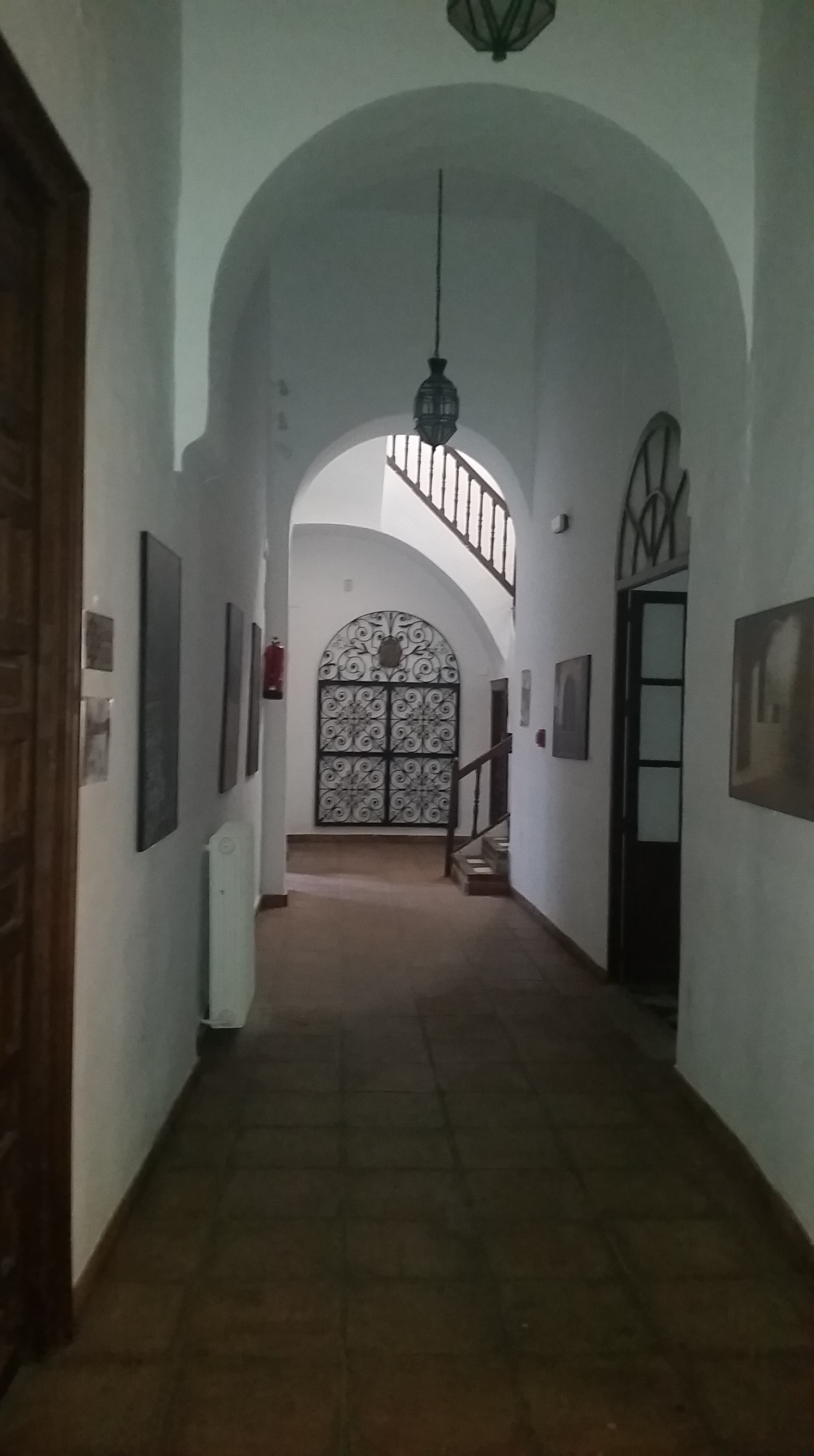
Above is the original iron gate which was part of the chapel. Below we can see it at the end of the corridor, and on the right is classroom 1, the spookiest because it used to be the mortuary, and to the right of the gate, just past a small winding staircase, is the chapel.

Below is the door to  classroom number 1 (the open door to the right in the picture above), the old mortuary. The rails on the floor were to wheel in the trolleys with the dead bodies. 

Many say it’s haunted. I never saw or heard anything specific, but I smelt sickening odours and saw unexplainable shadows on occasions, not to mention some spine chilling moments when I left the solitary building after nine in the evening.   

There is a wide staircase between the two patios leading to the to floor, where most of the patients’ wards and rooms were situated.

There’s a giant painting of Cardenal Salazar at the top of the first flight of stairs, on the first landing, which you can see in the picture below.


   So, did you like today’s haunted doors?

Are there any haunted buildings where you live?

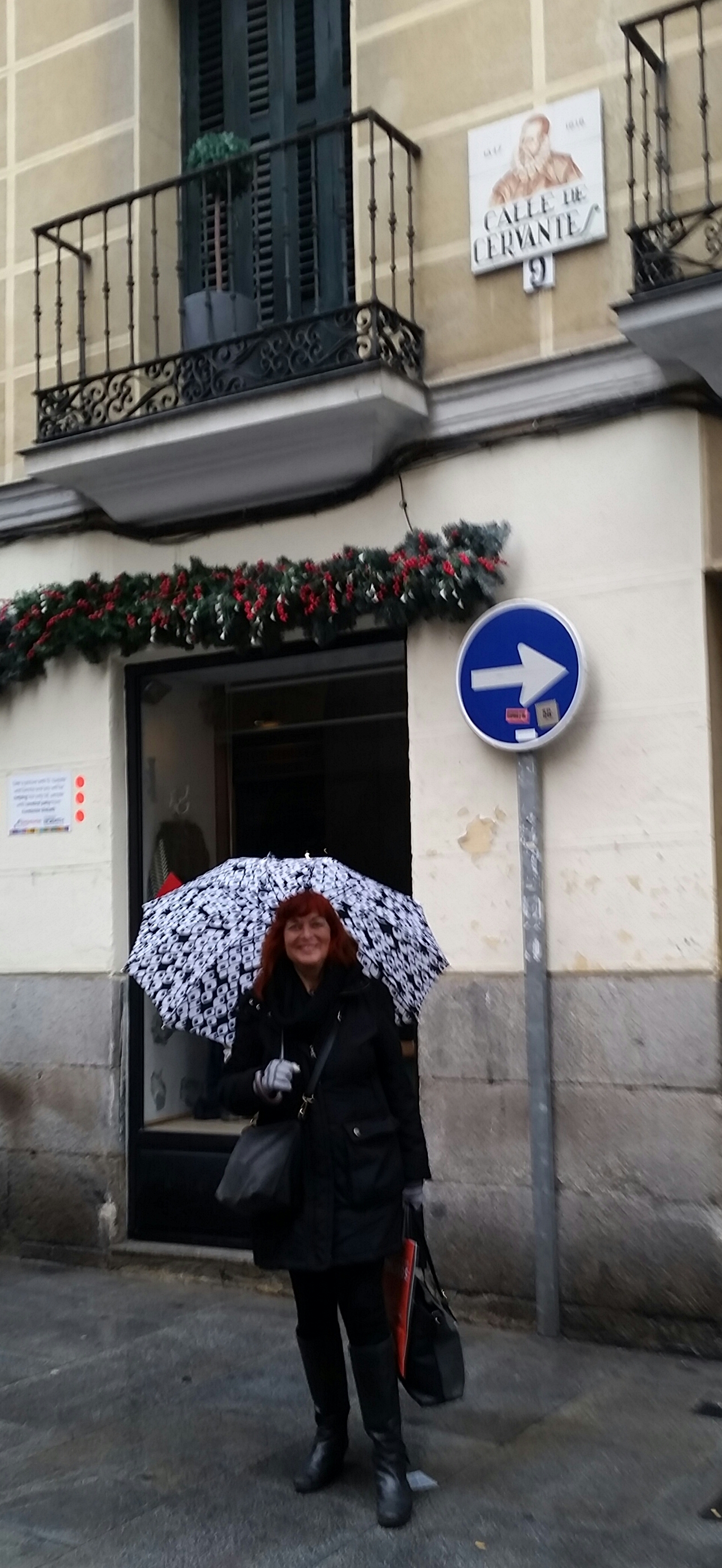
During a recent study visit to Madrid, with my adult ESL students, I was fortunate enough to stand beside a door through which Miguel de Cervantes entered daily. Well, that’s not strictly true, because the building itself, as most of the buildings in the area were refurbished or rebuilt in the early 19th century. The street is now called Calle de Cervantes and there is a bust, because this is the house where he is believed to have lived and died.

Here I am standing outside the door.

The house of the playwright Lope de Vega is in the same street, Calle Cervantes, which you can see at the top.  Here I am standing by Lope’s House. 

Here’s a close up of Cervantes’ bust, over the door.

Here’s a reconstruction of Lope’s study.
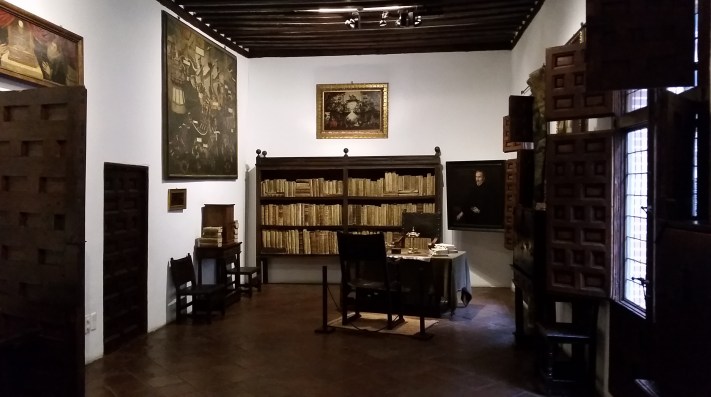
Here’s a close up of the door to the left of the study.

None of these doors or places are the ones the authors actually used, which is a pity, but almost four hunderd years on, we can’t expect to see and touch the original. I had to close my eyes and imagine Cervantes and Lope walking along these streets, thinking up new ideas for plays, novels and short stories. That was easy to do.

****

Miguel de Cervantes’ biography is almost as elusive as Shakespeare’s. There are many disputed facts about basic aspects of his life and activities.

It is believed he was born in Alcala de Henares, a small town very near the capital of Spain in the year on the 29th of September, 1547, although not everyone agrees on the exact date. The situation of the exact house where he was born is also disputed, although there is a museum in Alcalá de Henares, which is meant to be a replica of the original house.

A lot more is known about his time in Madrid as an adult. He rented various houses in the quarter known as ‘Barrio de las Letras’ or District of the Arts (also known as District of Letters, but I prefer the former name), because many writers and artists lived there, especially in the 16th and 17th centuries. The Spanish Renaissance has been named as the Golden Age of Spanish Literature and Art (El Siglo de Oro), during which time the arts in general, especially literature and fine art flourished, with painters such as, Velázquez, Zurbarán and Murillo, and writers such as Cervantes, Quevedo, Lope de Vega and Gongora.

It is believed that when he died, his body was buried around the corner at the Convent Trinitaras, which is marked by another plaque.

El Barrio de las Letras is a very lively and bohemian part of Madrid, with narrow and mostly pedestrian streets and famous squares such as La Plaza de Santa Anna with many shops, bars and restaurants. 

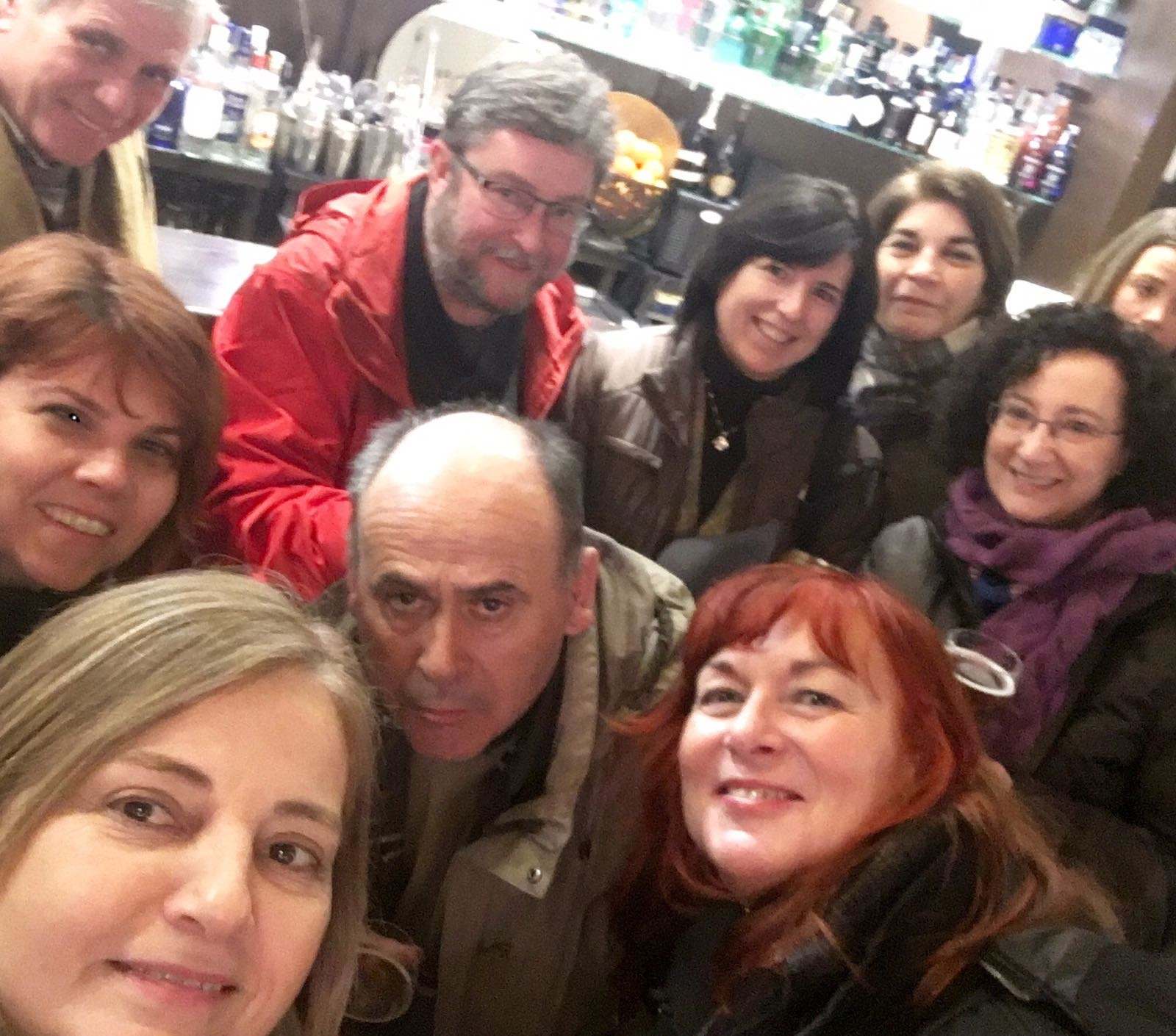
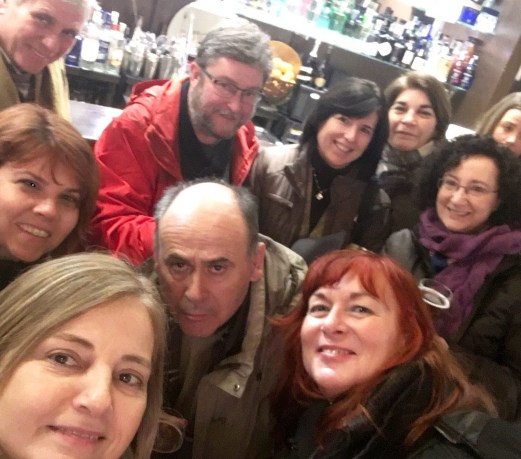
After the visit we stopped to have a drink and some tapas for lunch at a nearby bar, of course. It’s hard being a teacher on a school trip!
I hope you enjoyed these Madrid doors!
#MyFirstPostRevisited Rereading #JaneEyre #WWWBlogs

I met the fabulous short fiction writer and blogger, Sara Brentyn, some time ago, in the bloggisphere, although I’m not sure where exactly, but I have a feeling it might have been through Charli’s Carrot Ranch flash fiction challenge, in which we both take part regularly.

Sarah has started a new blog hop called My First Post Revisited, and passed on the baton to five other fabulous bloggers such as Geoff Le Pard, who also writes short fiction, novels, family history, and tons of interesting posts, and I really don’t know where he finds the time, but I’m glad he does!
I’m almost sure I met Geoff in my first wordpress blogging challenge in june 2014, but I meet so many people on different blog hops and weekly challenges, it’s hard to remember where exactly we met.

Anyway, Geoff was kind enough to pass the baton on to five other bloggers including me, so here I am, taking up the challenge to revisit that very first post, in my case The post is called ‘Always Rereading Jane Eyre’, it was posted on 11th December 2013  and doesn’t have a single like 😦

By the way, check out Geoff’s first post here.

Well, here’s my first post to the letter, as per the rules.

Always rereading Jane Eyre

I was an impressionable teenager the first time I read Jane Eyre and I have reread it countless times since then. Every time I have reread it I have uncovered another angle or aspect in this superb manuscript. My first impression was one of awe and admiration due to the sheer power of the characters and the story. Each rereading has produced a powerful effect shifting from wonder and respect to anger and disbelief. These pendular reactions probably mirrored my own personal development and life experiences.

I don’t think it’s necessary to go through these transitions, suffice it to say that this period of veneration lasted until I read Wide Sargasso Sea, from then on Jane Eyre suffered an irreversible upheaval. The characters and events have been constructed and deconstructed in my mind obsessively to such an extent that I had to write the sequel to both novels in order to get them out of my system, and that is exactly what I did.

Now that I have written my sequel I am going to reread Jane Eyre one more time, which I’m sure will not be the last time, but it will be a very different rereading. This time I’d like to reread it publicly on this blog, as if it were my diary. I don’t know the exact shape it will take, but my plan is to write about my reflections on the whole novel as I reread it from start to finish.

Why am I doing this? Because I need to read it again, and I need to publicly record my impressions and perhaps offer new insights to myself and anyone else interested in deciphering this unequalled work of art.

Related articles:

****

That’s it!

Well, I have been rereading and reinterpreting Jane Eyre all my life and publicly on this blog. Many of the posts I’ve written over the past three years are related to Jane Eyre and Victorian literature, so I’ve done what I said I would do. In fact my most viewed posts are related to Jane Eyre, so my blog’s name and my efforts to encourage readers to read, reread and reinterpret, Jane Eyre, have been constant, and relatively successful.

It was nice to revisit, because I don’t think I’ve lost my focus, although I’ve added lots of other topics to the blog, such as photos, short fiction, and the occasional rant!

Now I nominate

Noelle, who’s a wonderful blogger and writer I met on the A-Z in 2014, I think it was.

Olga who is a writer and translator and a very supportive blogger I met at least two years ago, although I’m not sure how or where.

Mae Clair is a fabulous writer who is also a regular blogger. I met her more recently when I read and reviewed her novel, Eclipse Lake for #RBRT.

Cathy at Between the lines blogs her wonderful book reviews and beautiful pictures, too. I also met her through #RBRT

Dale, The Internet nobody,  posts photos, poetry, random thoughts, music and lots more.  I regularly meet Dale on challenges such as #1linerwednesday, and #socs. He also has a fun weekly photo challenge I’ve recently taken part in, K’lee and Dale’s Weekly Cosmic Photo Challenge

And because I’m not very good at following rules, I’m adding a sixth blogger,

Beth, who didn’t have her glasses on, is a teacher, a grandmother and an optimist, like me, so I’m also nominating her, too!

Please feel free to take part or not, and if anyone else I haven’t nominated is keen to take part, that’s OK, too.

Oh dear, I think I just bent the rules, but we grandmothers are great rule breakers, ask our grandchildren’s parent all about it! By the way, the rules are here!

I think, according to the rules I’m entitled to a glass of wine, just like I was doing in this merry picture. It was taken a few months ago, but I’m having some similar wine today!

So, do you remember your first post?

Drop a link to your first post in the comments if you’d like me to have a look! 

The Sister, by Louise Jensen @Fab_Fiction #TuesdayBookBlog #Amreviewing

Today I’m posting my review of  The Sister, by Louise Jensen. 

The Sister is a gripping thriller. I read it in two sittings, because I had to work in between, otherwise it’s the type of novel I wouldn’t have put down until I’d finished it!

Grace, the narrator, and Charlie were inseparable friends until something happened and Charlie left their town suddenly and inexplicably. She returned and died in an unfortunate accident, five months before the novel begins.

As a result of her death, Grace has what appears to be an emotional breakdown. She misses her friend, and grief, guilt and her own insecurities are ruining her relationship with her boyfriend, Dan. At the same time, Charlie’s words: ‘I did something terrible, Grace’, haunt Grace, and compel her to find out more about her deceased friend.

Charlie’s unstable and secretive mother, Lexi, is of little help in Grace’s quest to find Charlie’s unknown father, although Grace gradually finds out why Charlie died, why she had left, and who her father is. Just as the mystery seems to be unveiled, more twists appear in the plot.
As the story progresses, another character bursts into Grace’s life, namely Charlie’s half-sister, Anne, thus the title of the novel.

Neither Charlie nor Anne had known knew they were related, and Grace embraces Anne as if she were her best friend, letting her stay at her cottage, even though this puts a strain on her already complex relationship with, her boyfriend, Dan.

Suspense is created by the way in which Grace narrated the story, alternating present day events called ‘Now’ and flashbacks ‘Then’, as the past is gradually unveiled.

Grace is a lovely person, most girls would love to have her as a friend, but she’s often too nice and too gullible, which made me want to shake and shout at my kindle! Then in comes Dan, the most unworthy of boyfriends any girl could have. Dan is weak and pathetic, which leads him to do some unforgivable things.

The Sister is well plotted with engaging and believable characters. It’s beautifully written with many poetic descriptions of the English countryside, where the action takes place.

It has a satisfactory ending, which isn’t a traditional happy ever after. Grace has finally moved on and become more assertive, which is a welcome relief. All the ends are tied up and there is hope for the future.

A satisfying and enthralling read. I’m looking forward to reading The Gift now!

 Louise Jensen is a USA Today Bestselling Author, and lives in Northamptonshire with her husband, children, madcap spaniel and a rather naughty cat.

Louise’s first two novels, The Sister and the Gift, were both No.1 Bestsellers, and have been sold for translation to ten countries. The Sister was nominated for The Goodreads Awards Debut of 2016. Louise is currently writing her third psychological thriller.

Louise loves to hear from readers and writers and can be found at http://www.louisejensen.co.uk, where she regularly blogs flash fiction.

Shortly after reading The Sister, quite by chance, I ‘met’ Louise through her blog, when I was taking part in Friday Fictioneers a weekly Flash Fiction Challenge she also often takes part in. Don’t forget to check out Louise’s blog.

****

Follow Luccia Gray on Social Media:

Twitter

Facebook

Goodreads

Check out Luccia Gray’s Books on Amazon 

#CarrotRanch #FlashFiction Challenge: Honeymoon Love Letter @Charli_Mills

This post was written in response to Charlie Mills’ Carrot Ranch Weekly Flash Fiction Prompt 

March 9, 2017 prompt: In 99 words (no more, no less) write a honeymoon story. It can be between a couple before, during or after the honeymoon. Or it can refer to a honeymoon period. Go where the prompt leads.

Respond by March 14, 2017 to be included in the compilation (published March 15). Rules are here. All writers are welcome!

Honeymoon Love Letter

He refused, yet again. Why wouldn’t they leave him alone? He would never share Charlotte’s love letter.    

Dearest husband, the word seems strange, yet marvellous, my husband, at last. You are dearer to me today than you have ever been, yet less than you shall be tomorrow. I shall never forget the wild nights spent in Bangor, or the gleams of sunshine which woke us every morning. I love you, Charlotte.

Arthur folded the letter he had read every day since his wife passed away, fifty years ago, and tucked it back under his shirt, close to his heart. 

****

This flash fiction is inspired by Charlotte Bronte’s honeymoon in Bangor, Wales, with her husband Arthur Bell Nicholls. They were only married for nine months, and very little is known about their relationship, however, the letters she wrote during her honeymoon and her obvious desire to marry him, in spite of her father’s opposition, as well as Arthur’s tenacity, leads me to believe that there was a love story between them.   

The letter I have included in my flash was inspired by words and sentences she wrote in ‘real’ letters about her husband and her honeymoon.

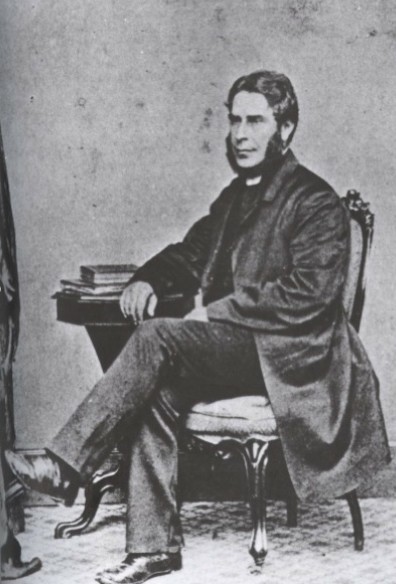
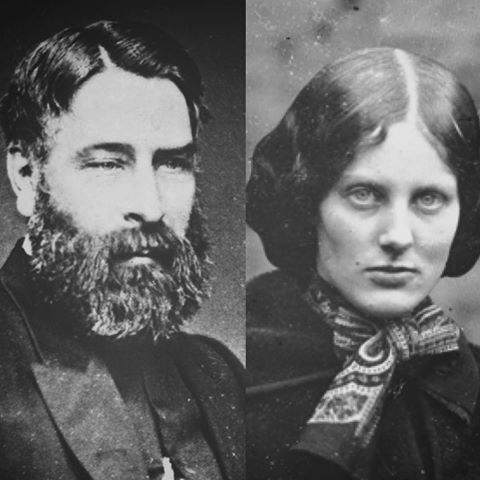
           Arthur Bell Nichols circa 1854

Arthur Bell Nichols met Charlotte Bronte in 1845 when he was appointed curate to her father, Reverend Patrick Bronte. The first time Arthur asked for Charlotte Bronte’s hand in marriage, in 1852, her father, the Reverend Patrick Bronte refused, probably because he considered his curate to be beneath his famous daughter. As a result, Arthur applied to work in Australia, although he also persisted in is pursuit of the elusive Charlotte, in spite of her overprotective father.

Charlotte and Arthur eventually married in June 1854, nevertheless, Charlotte’s father refused to lead his daughter her up to the altar, or attend the wedding ceremony.

The newlyweds spent a protracted honeymoon in Wales and Ireland, and there is no indication that it was not a happy, albeit short, marriage. Charlotte wrote several letters during her honeymoon, describing her journey as pleasant and enjoyable.

Unfortunately, Charlotte died nine months later, probably due to complications with her pregnancy, as she suffered severe morning sickness and general ill health. Charlotte and her unborn child died on 31 March 1855. She was 38-years-old.

These may or may not be photographs of Arthur and Charlotte (Both are disputed).

Nicholls became the copyright holder of his wife’s works. As interest in Charlotte Bronte grew in the months and years after her death, Patrick Brontë asked Charlotte’s friend, the novelist Elizabeth Gaskell, to write her daughter’s biography. Arthur Nicholls was reluctant to allow Mrs. Gaskell access to Charlotte’s letters and was not pleased with Mrs. Gaskesll’s account. In any case, neither Mrs. Gaskell nor Patrick Bronte were Arthur’s fans. The biography was controversial, incomplete, due to its omissions, and was withdrawn and rewritten twice due to accusations of slander. It was finally published in 1857.

Arthur remained at Haworth, looking after Reverend Patrick Bronte until his death in 1861. He put the contents of Haworth Parsonage up for auction in October 1861, retained the family’s manuscripts and private effects, and returned to Ireland, his homeland.

Nine years after Charlotte’s death, Arthur married his cousin. He died in 1906, and it is said his last words were ‘Charlotte, Charlotte.’

****

Follow Luccia Gray on Social Media:

Twitter

Facebook

Goodreads

Check out Luccia Gray’s Books on Amazon 

#CosPhoChal K’lee and Dale’s Cosmic Photo Challenge: Look to the Skies

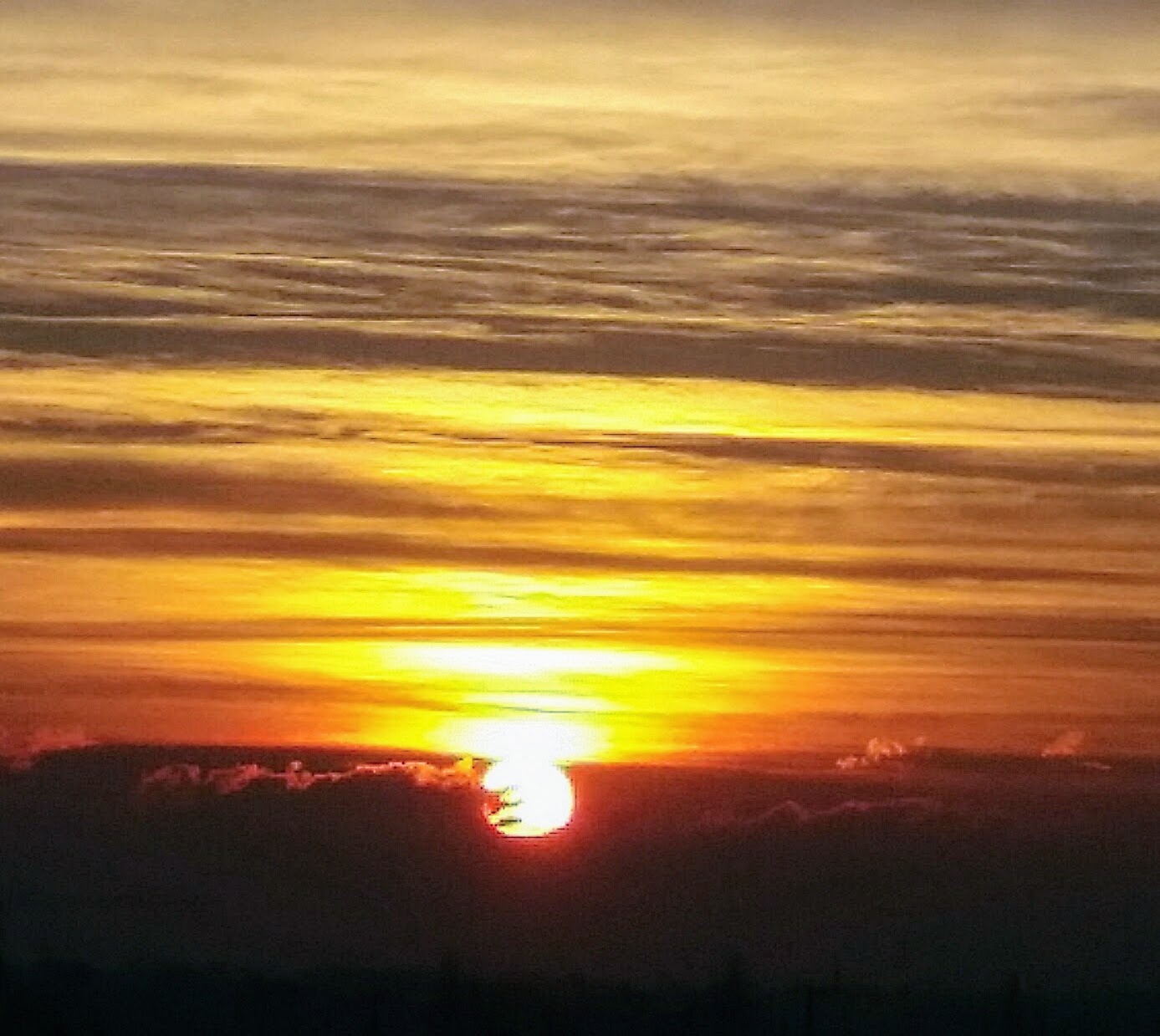
This is one of my favourite photos, taken last summer, at the beach in Fuengirola, Malaga, at sunset.

This is another favourite, taken recently from the window of my study, also at sunset last september.

Also taken from the window of my study at sunset, last January.

From my study, once again, last Christmas, at sunset.

Now it’s your turn!

To get involved with the challenge, post a photo to your blog on Monday, add a pingback to Dale’s Blog and don’t forget to tag your post #CosPhoChal.

Follow Luccia Gray on Social Media:

Twitter

Facebook

Goodreads

Check out Luccia Gray’s Books on Amazon 

WRITESPIRATION @sacha_black #106 52 WEEKS IN 52 WORDS WEEK10 ‘The Big Birthday’ #FlashFiction

This post was written in response to Sacha Black’s weekly prompt for 2017 (52 weeks in 52 words).

Sacha will post one prompt a week for 52 weeks, and the challenge is to write a story in just 52  words exactly. The value of conciseness for a writer is invaluable, as Sacha herself reminds us: ‘The art of being concise is nothing if not a muscle flexing ‘write’ bicep curling device’. This weeks’ prompt ‘The distance between,,,’ 

52-words

This week is a rather significant week for Sacha because it’s her birthday, so the theme for this week, the prompt is: 

The Big Birthday

Thirty-five years of drama, stress, gratitude and joy. I stand by my students, the ones I’ll miss forever, staring at a huge cake, covered in white icing and topped with sixty tiny candles.

They clapped and I cried.

Make a wish, they said and I did, on my last day at work.

****

I love birthdays, even my own!

They represents a new beginning, another chance to move on and start innovative projects, much like the 1st of January.

On the other hand, there’s always something sad about a year ending. We remember the people and events we’ve left behind, and may never recover, although we carry them in our hearts.

And yet, we can’t even begin to imagine all the people we’ll be meeting and the marvellous things we’ll be learning…

Happy birthday Sacha. Make a wish and watch it come true next year!