I think this shirt story is so fabulous that I’ve retweeted it so many times and now I’m going to reblog it! Read it!
Source: Last Train To Aldwych
I think this shirt story is so fabulous that I’ve retweeted it so many times and now I’m going to reblog it! Read it!
Source: Last Train To Aldwych
Poor Monday, nobody seems to like you, and apparently today is the worst Monday of the year, the third Monday of January.
Don’t despair. I have three great reads to liven your Monday:
1- I found this article on Twitter this morning thanks to @Taragreaves who posted this fabulous article called Stop Chasing and Start Living, by Lindsey Miles @treadmyownpath These lines are especially enlightening:
‘Research shows the three main things that make people happy are close relationships, a pastime they love and helping others.’
I couldn’t agree more. They should be our mantra for every single day of our lives.
2- Just in case you are feeling blue today, here’s an article in today’s press to liven your day. You’ll find out all about ‘Blue Monday’ and how to get to ‘Thank God it’s Tuesday!’
3- Number three is my favourite.
Monday might be the least liked day of the year, but did you know it was the day Mr. Rochester called Jane across the Moors, and she actually heard him and returned to the Rochester Estate to find him!
She discovered Thornfield had been burnt down, and Mr. Rochester a sick and brooding widow at his Manor House, Ferndean.
It’s definitely one of the romantic highlights of the novel. Here it is for your pleasure, Mr. Rochester is speaking to Jane who has just arrived unexpectedly on his doorstep:
‘Some days since: nay, I can number them—four; it was last Monday night, a singular mood came over me: one in which grief replaced frenzy—sorrow, sullenness. I had long had the impression that since I could nowhere find you, you must be dead. Late that night— perhaps it might be between eleven and twelve o’clock—ere I retired to my dreary rest, I supplicated God, that, if it seemed good to Him, I might soon be taken from this life, and admitted to that world to come, where there was still hope of rejoining Jane.
‘I was in my own room, and sitting by the window, which was open: it soothed me to feel the balmy night-air; though I could see no stars and only by a vague, luminous haze, knew the presence of a moon. I longed for thee, Janet! Oh, I longed for thee both with soul and flesh! I asked of God, at once in anguish and humility, if I had not been long enough desolate, afflicted, tormented; and might not soon taste bliss and peace once more. That I merited all I endured, I acknowledged—that I could scarcely endure more, I pleaded; and the alpha and omega of my heart’s wishes broke involuntarily from my lips in the words—’Jane! Jane! Jane!’’
‘Did you speak these words aloud?’
‘I did, Jane. If any listener had heard me, he would have thought me mad: I pronounced them with such frantic energy.’
‘And it was last Monday night, somewhere near midnight?’
‘Yes; but the time is of no consequence: what followed is the strange point. You will think me superstitious,— some superstition I have in my blood, and always had: nevertheless, this is true— true at least it is that I heard what I now relate.
‘As I exclaimed ‘Jane! Jane! Jane!’ a voice—I cannot tell whence the voice came, but I know whose voice it was— replied, ‘I am coming: wait for me;’ and a moment after, went whispering on the wind the words—’Where are you?’
‘I’ll tell you, if I can, the idea, the picture these words opened to my mind: yet it is difficult to express what I want to express. Ferndean is buried, as you see, in a heavy wood, where sound falls dull, and dies unreverberating.
‘Where are you?’ seemed spoken amongst mountains; for I heard a hill-sent echo repeat the words. Cooler and fresher at the moment the gale seemed to visit my brow: I could have deemed that in some wild, lone scene, I and Jane were meeting. In spirit, I believe we must have met. You no doubt were, at that hour, in unconscious sleep, Jane: perhaps your soul wandered from its cell to comfort mine; for those were your accentsas certain as I live—they were yours!’
Reader, it was on Monday night—near midnight—that I too had received the mysterious summons: those were the very words by which I replied to it. I listened to Mr. Rochester’s narrative, but made no disclosure in return. The coincidence struck me as too awful and inexplicable to be communicated or discussed. If I told anything, my tale would be such as must necessarily make a profound impression on the mind of my hearer: and that mind, yet from its sufferings too prone to gloom, needed not the deeper shade of the supernatural. I kept these things then, and pondered them in my heart.
Here’s a dramatic rendering of the events:
Have a Happy Monday!
The Second Fabulous Annual bloggers’ get together, famously known as Annual Bloggers’ Bash is being organised by the fantastic bloggers: Sacha Black, Hugh Roberts, Geoff Le Pard, and Ali Isaac. If you could make it to London on 11th June follow this link to find out more!
This post was written in response to Linda G. Hill’s Friday prompt for Stream of Consciousness Saturday
Today the mandate is: “what.” Start your post with the word “What.” Bonus points if the final word of your post starts with a “w.” Have fun!

What’s in a kiss? #SoCS
‘What’, led me to a song by Gilbert O’Sullivan, which only those born before 1980s will have even heard, called, What’s in a Kiss? (I’m leaving the link to the end of this post because I don’t want you going off and listening instead of reading my post!) The first lines go something like this:
What’s in a kiss?
Have you ever wondered just what it is?
More than just a moment of bliss,
Tell me, what’s in a kiss?
It makes me think of the importance of a kiss in real life and in a novel, and how difficult it is to describe a romantic, or passionate, kiss without using clichés, or being too specific or physiological.
We don’t touch each other very often, in public, and on the rare occasions we do touch other people, we usually make contact with their clothes. The only bodily parts which we touch, skin to skin are our hands, or occasionally our cheeks, usually in friendly kisses, devoid of sexual passion.
A passionate kiss, on the other hand, creates an intimate and private connection. Bodily fluids are shared, and parts of our body, which we normally don’t use to touch others, come into direct contact with another person.
The first kiss is an important moment in a literary relationship, where symbolism takes on extra meaning. The kiss may lead to more intimacy or desire, which also needs description.
The reader needs to know how the kissers feel before, during, and after the kiss, and what may happen next in their relationship, that doesn’t mean they have to be given a full physiological and psychological description; readers have plenty of imagination. As I learnt writing Flash Fiction, less is often more.
I am writing a historical family saga, which includes, sexual initiation, infidelity, prostitution, and even rape and sexual abuse, but the events are not explicitly described, because I didn’t think the reader needed detailed descriptions to realize the implications of the actions.
Nevertheless, as a reader, I don’t mind reading explicit descriptions, because in some cases, they add important information about the characters’ motivations and personality, but even so, I often think they are excessive and could easily have been reduced, without damaging the story.
As a reader or as a writer, how do you prefer your kissing?
Which is the best way?
I started with ‘what’ and finished with a word beginning with ‘w’!
Anyone can join, rules here: http://lindaghill.com/2016/01/15/the-friday-reminder-and-prompt-for-socs-jan-1616/
By the way here’s the song! You tube:
I recently reviewed Full Circle – A Duke Lost as part of Rosie’s Book Review Team (#RBRT)

My Review
This is a historical romance, set in Regency England. It has three main characters and four distinct parts.
The first part is a poetic and unhurried. It takes us through an intense and beautiful love story between a Duke and a young deaf girl. Bram is the honourable Duke of Bramford, who has fought for his country and is very loyal to the crown. The wedding had been arranged by his mother since the bride was two years old! Anna is an orphan who has been living practically on her own all this time, in an isolated castle in Scotland, waiting for her betrothed. When they meet, in her 18th year, they are both surprised to fall in love. I thought I was going to read a sweet, traditional romance, because their love story was drawn out in great detail. I didn’t mind, because I love historical romances, but I did wonder where the story would be going.
The second part of the plot moves on with the only obstacle to their happy marriage, namely Bram’s best friend, Michael, Earl of Milford, who thinks Bram should marry a richer and more worldly society lady. Surprisingly, Michael also falls in love with Anna, and although their friendship is threatened, Michael finally remains both their friends.
The plot then takes a third surprising twist (I can’t go into any detail without including a spoiler), and Anna will learn that her husband is not the man she thought he was, and that he has other priorities and duties in life, which exclude Anna and their children. Anne must turn to Michael for support, with Bram’s approval.
Finally, the title refers to the end of the story in which harmony is restored, at great emotional cost to all involved. It’s not a sad ending, although it’s not a perfect HEA either. I think it’s the best possible ending, although I can’t help feeling sorry for the way in which one of the characters is excluded from ‘the circle’.
The three main characters were engaging, and the plot, which was slow at first, moved on well in the second part. Especially for lovers of historical romance.
****
I asked Nicci if she would like to take part in an interview so we could know more about her and her, her novel, and writing process.

This is your first published novel, and it’s set in Regency England. What is it about the Regency era that most interests you?
I’m going to tell you a little story about a dream I had many times before even having set foot in England:
Surrounded by village shops and treading a cobblestone street, I smile to myself. A feeling of absolute pleasure comes over me. I love everything about the quintessential English style. The higgledy-piggeldy street starts to incline and I look up towards an emerald green hill. A winding path leads up to a church of magnificent proportions. A proud steeple signals a hearty welcome. I approach with eagerness. But with every desperate step I take, the church seems further and further out of my reach…
I came to England having stored this in a remote part of my subconscious. When I visited Chesterfield, the dream came rushing back to me. If you have not been there before, the town has an ordinary church with the most extraordinary twisted spire, both of human and natural creation. At that very moment, I realised I had truly found my home. England.
And if you know anything about English people or culture, you know that that spire is more than just a bizarre piece of architecture. It is wholly unique and yet considered. Inconsequential and yet determined. Beautiful. Like it’s people.
It has a history that can be felt in the rhythm of it’s pulse.
Is your plot based on any real historical event or people?
I have worked for twenty years in social care and, for much of that time, I have had the privilege of knowing people who have overcome adversity and have challenged the cruel hand that life has dealt them. I admire these people for their fight and optimism. But it wasn’t until I watched a movie made by deaf children to help people who can hear understand what life is like for them that I realised deaf people are inspirational and truly lovely and positive people.
I then reached out to deaf people using social media and read some of their stories. I was especially touched by a piece written by Christina Hartmann. She describes a world of deafness that has shaped her life into something quite beautiful and personal. Her world is clearly hers and hers alone to cherish and enjoy. She wrote:
“Make no mistake: my deafness was no curse. It shaped my perspective of the world, and I’m glad for it. For me, deafness opened up new worlds, rather than the other way around”.
I encourage you to find Christina’s personal account called ‘What it is like to be deaf from birth’.
What are the challenges facing authors of historical novels?
First and foremost, Anachronisms. If you have never heard of this very wicked word, the best way to explain it is by giving you an example of my own close call- in Full Circle- A Duke Lost, the Duke’s best friend, Michael, is having a full-on rant about the major mistake the Duke will be making if he marries Anna. Michael goes on to say:
“Don’t do it man. Every eligible beauty between here and London is ready to be set before you to be savoured and selected, each and every one resplendent in this season’s finery and primed to please. The one you are hell bent on has baggage, a heaping pile of baggage the size of the Matterhorn.”
Originally, this read “a heaping pile of baggage the size of the Kilimanjaro.”
Fortunately, my editor, Jacqui, is not only a linguist extraordinaire, but an English history enthusiast and she knew that Mount Kilimanjaro would not have been well-known during the period Full Circle is set in. She also uses Census information to research the names I use for characters to ensure they are ‘period appropriate’. Perhaps the moral of the story is that behind every good author is a ‘Jacqui’.
This leads onto the next set of challenges:
Historical accuracy vs. the use of creative license (where would a romance novel be without creative license… snooze fest!).
Too many descriptive paragraphs vs. too few (how much is too much, how little is too few?) and then, my arch-nemesis,
To use the Queen’s English or something a little more universal (I vote for “ma’am” as in “farm”, and not “ma’am” as in “jam”, but this is apparently not everyone’s cup of tea!)
Which writers have inspired you as an author?
I first read Pride and Prejudice as a teen. Now, you may not be surprised by this, after all, Jane Austen is probably many, many people’s first waltz with period romance. But South African teen’s are no ordinary teens, not those born in the ‘70’s anyway. I had a very sheltered life. My idea of a good man was one who worked hard, mowed the lawn on a weekend, knew how to ‘braai’ (barbecue) and at some point in his life had played rugby. Needless to say Mr. Darcy, made my pulse race.
After that I couldn’t get enough of period books. Although Pride and Prejudice will always have a special place in my heart, Forest Lovers by Maurice Hewlett is my absolute favourite. Set in the medieval times in a dream world, Maurice Hewlett describes an awe-inspiring love.
What are you working on now?
‘Hedgerows & the Imperious Duke’ is a period novel that tells the story of two unique people: Shael Nathan Averay, 11th Duke of Stanthorpe, born to wealth and expectation. However, he is no ordinary member of the aristocracy and is prone to extreme peculiarities which are not tolerated amongst the ton. He doesn’t blame anyone for detesting his company; he feels the same way about himself. Although alone and absolute, self-pity is just not part of his vocabulary. In fact, he feels little for anyone. He knows he is a monster.
The Duke resigns himself to the life of a recluse. But he does not take into account the fifth and youngest of the girls he has earmarked to be the future wives of his brothers- Nelle- an untamed, playful and nature-loving sprite who makes it her personal mission to show the Duke a life previously unknown to him. Unexpectedly, Nelle’s life is not what it appears to be on the surface and the Duke’s poor social skills, joined with his insular nature, means that he fails to recognise a kindred, suffering soul. Will he be in time to save her?
Well, you will have to read the book! But, I can tell you this, these star-crossed lovers make my tummy turn and their cruel circumstance made my editor extraordinaire cry…
What would you like readers to know about you?
I suppose I could tell you that which you could read on any of my networking site (trained social worker, studied psychology, love my family, love my dogs, love England), but instead, I will tell you a few select things that will help you understand why I can write about adversity:
~ I am convinced I can feel my eyebrows growing, like aliens on my face. I have Googled this phenomenon and can’t find anyone like me. It doesn’t feel good to be different.
~ I am obsessive about clean and clear surfaces. Order and control are biggies for me. I understand that feeling vulnerable can make you feel a little doolally.
~ I had very bad early childhood experiences. I know what it is like to feel ‘little’ in a very big world.
~ I believe Lattes are a key source of essential nutrients.
Where can readers find out more or contact you?
Facebook: https://www.facebook.com/NicciMayne.givelifeago/?ref=hl
Twitter: https://twitter.com/NicciMayne
BingBing: http://www.thebingbing.com/niccimayne
Email: niccimayne.givelifeago@gmail.com
Where can readers buy your book?
Amazon UK: http://www.amazon.co.uk/Full-Circle-Duke-Nicci-Mayne-x/dp/1515271269/ref=sr_1_1?ie=UTF8&qid=1452808804&sr=8-1&keywords=nicci+mayne
Amazon US: http://www.amazon.com/gp/product/B011Z3UZF0?*Version*=1&*entries*=0
Smashwords: https://www.smashwords.com/books/view/593044
****
Thank you for stopping by, Nicci. It was a pleasure getting to know you better.
In a recent interview for Brook Cottage Books as part of a Book Tour, I was asked,
‘If the movie rights to your novels are purchased, who would you like to play your main characters?’
I replied Alan Rickman in the first place, but I wasn’t completely convinced, so I added Jeremy Irons as my second choice. I also added that they were both far too good-looking for such a nasty character as the sick and evil Mr. Rochester!
The interview was published today in Glynis Smy’s blog.
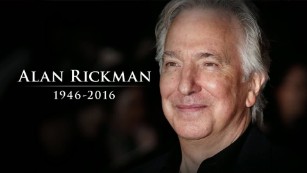
When I wrote the answer to that question, I knew there was an extremely slim chance of Alan Rickman playing Mr. Rochester in my novel, because for that to happen, my novel would need to be ‘discovered’ by the literary mainstream world, and later by the film world, and that will probably not happen in the near future, although I can dream…
Now, the slight possibility has become an impossibility, Alan Rickman passed away yesterday.
When I claimed that Alan Rickman would be my ideal Mr. Rochester, it was a quick, unconscious reply, I didn’t reflect on my reasons, so I’d like to do so now.
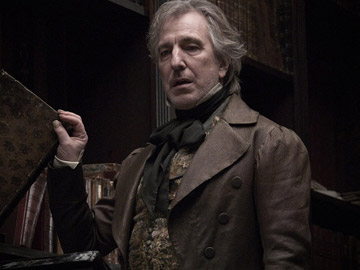
Mr. Rickman has played many villains. One of his first villainous roles was as criminal mastermind Hans Gruber in Die Hard. He also played other nasty characters, such as the evil Sheriff of Nottingham in Robin Hood: Prince of Thieves, the corrupt and lascivious Judge Turpin in Sweeny Todd, and an unfaithful husband in Love Actually.
However, his most famous villainous character was undoubtedly Severus Snape in the Harry Potter films. Snape was malicious, complex, and ambiguous, right to the end of the Harry Potter series.
Snape was the reason I chose Mr. Rickman, yet at the same time, Snape is probably the reason why I wasn’t completely sure if I would cast Alan Rickman as Mr. Rochester.
I consider Snape as a very romantic type of villain, because his character develops in such a way that he becomes a hero, thereby encouraging the reader to believe in the ultimate power of good over evil.

Converting my villain, Mr. Rochester, was never my intention. Although Mr. Rochester has redeeming qualities, he is, foremost and right to the bitter end, a selfish and evil character.
What makes a villain in literature and on screen?
Readers and audiences need to hate villains, although they are intrigued by them, because evil both frightens and fascinates us.
Villains often torture virtuous characters, or they are used as opposites to bring out and contrast the good characters. They embody evil in the struggle for good and evil within ourselves, and in the world.
They are evildoers, sometimes in the extreme. They are selfish and lack empathy, so they will go to any extremes to reach their goals. They do not shy away from the use of violence and destruction, ignoring the pain they cause others. They have no conscience and no limits. They are prepared to lie, cheat, blackmail, or use force to get what they want.
They are often ugly, rich, and often physically and psychologically sick.
On the other hand, it’s always useful if they’re not a hundred per cent evil, as even the smallest hint of goodness will be their downfall, because they will be vulnerable and suffer.

Mr. Rochester was passionate, witty, and clever. I’m convinced he loved Jane Eyre, in his own way, with a unique passion with which he never loved anyone else. He was also a liar and a selfish and spoilt, rich landowner, who never thought about is tenants, or did a single day’s work in his life.
He was a taker, not a giver. He wanted Jane Eyre and was willing to go through anything to have her. He blatantly went against the law of man and his religion, to achieve his goals.
I wouldn’t put anything past him, which is why my novel (in which I have used the spaces Charlotte Bronte left in the original text) paints a picture of a selfish, obsessive, impulsive and unscrupulous lover.
He was capable of committing bigamy, ordering a murder (he would never dirty his own hands), and covering up his deeds by bribing whoever could help him out.
He was more than immoral, he was amoral, because he was convinced that his actions were beneficial to others as well as himself. Incapable of any type of empathy or compassion.

Mr. Rickman was a great actor and a perfect Snape, the villain who Harry Potter named his son after and described as, ‘… the bravest man I ever knew.’ The ambiguous villain, whose ulterior motives are not as dark as they seem. However, I’m no longer convinced he would have been as convincingly and totally evil as Jeremy Irons.
Jeremy Irons transmitted, the perfect, cold-blooded villain in Reversal of Fortune, and you can’t get more wicked than Scar, can you? I think he’ll nail Mr. Rochester, one day…
****
Meanwhile I’ll leave you with an excerpt of Chapter XIII, of All Hallows at Eyre Hall, depicting Mr. Rochester’s weak point. The only possibility of making him suffer, by tasting his own medicine, is his love for Jane, which eventually leads to his confession on his death-bed. He finally tries to make amends by telling her the truth about her stillborn daughter, but it’s too late.
****
“Jane, I must confess and only your absolution can save me. You must promise to forgive me for what I am about to tell you.”
“I cannot absolve you or anyone else. If you like, I can call Mr. Wood, or Bishop Templar, if you prefer.”
“Yes, Mr. Wood, he will absolve all of my sins, but what good is that to me now? Bishop Templar, what is he to me? No, Jane, it is you who must forgive me.”
“Edward, I have told you a hundred times, I forgive you for everything, for your short temper, your relationship with Blanche, your flirts in London, your illegitimate children and your dark past before we met. Is there anything else to forgive?”
“There is something else, Jane. I have done you wrong. I have done you a terrible wrong, but you must understand me and find it in your heart to forgive me.”
“I am tired of being your conscience. If there is no solution and it is a further unknown treachery, you must face the consequences of your actions on your own. I would prefer to remain ignorant of any further wrongdoings.”
“Perhaps that would be best, but I cannot sleep, I cannot live, and neither can I die, if I do not confess and receive your forgiveness. Jane, you must help me carry my burden once more, but I guarantee that this time there will be some benefit in it for you. You will suffer greatly at first, but when I am gone, believe me, it will fill your life with reward, hope and purpose.”
“You have intrigued me. Proceed.”
“So precise, so Jane-like. Please don’t hate me, Jane.”
I remembered Michael’s words. “I do not wish to carry the burden of hate.”
“Forgive me, my dearest Jane. You are the love of my life. I once asked for your forgiveness, and you gave it to me. Can you forgive me a second and a third time? You were a passionate, righteous woman. I had expected you to shed tears, reproach me my misdeeds and accuse me angrily. Why didn’t you forcefully make me behave? You became passive once more, and you let me go. Why? Did you stop loving me? Did you lose patience? Interest? You stopped conversing with me. You left me while you were at my side! I had to find consolation elsewhere, because you refused my kisses! You shrank from me in disgust! I am a passionate man, and you were ice and rock to me once more. I failed you and I am sorry. If you find it in your heart to forgive me, you will allow me to die in peace.”
“I cannot forgive you before you speak. What must you tell me?”
“You are cruel, but I will be brave…”
****
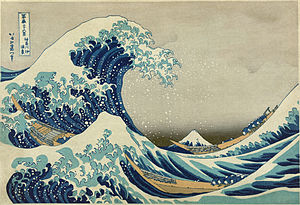
The Great Wave
This morning I’m feeling deliriously happy, because avid reader and proficient reviewer, Linda Hill, has published an spectacular review of my second novel Twelfth Night at Eyre Hall.
For the next two weeks, Twelfth Night at Eyre Hall will be touring with Brook Cottage Books, stopping at some fantastic book blogs on the way!
This brilliant first stop couldn’t be any better. I feel lucky to have met Linda, quite by chance, on Twitter and later on the Brook Cottage Books team, and fortunate that she was able to read my novels.
Linda has a fantastic blog, where she reviews books by traditionally published authors as well as independent authors like myself, please check out her splendid blog and her fabulous review of Twelfth Night at Eyre Hall in the link below.
It’s reassuring to receive such an encouraging review, especially as I recently said I feel like a solitary drop in a vast ocean of mostly traditionally published authors, competing for a tiny bit of attention. Well, today I feel like The Great Wave off Kanagawa!
When I started writing professionally, three years ago, I thought I wrote for myself, as a creative outlet and personal challenge, but now I’ve realised I write for my readers. I need my readers to tell me they want to read my next book. That’s my greatest incentive.
Thank you, Linda Hill for your marvellous review and encouraging words.
P.S. I know there are too many adjectives in this short post, and my patient editor, Alison Williams, must be cringing, but today’s such a special day that I’m breaking all the writing rules, just this once!
Source: Twelfth Night at Eyre Hall by Luccia Gray
This post was written in response to The Insecure Writers Support Group, which posts on the first Wednesday of every month.

In 2013, when I started writing my first novel, my greatest insecurity was that I didn’t know if I would be able to complete it successfully. Could I actually write a novel? Could I publish it independently?
I finished writing my first draft in November 2013, but it wasn’t published until 1st May 2014. In those five months, it was read by beta readers, friends and family, revised and re-edited by me, formatted, and finally edited and proof read by two professional editors, until I was finally satisfied that it was good enough to be published on kindle.
Now, in January 2016, 20 months after All Hallows at Eyre Hall was first published, it’s also available in paperback, and I have 41 reviews on amazon US and 13 on amazon UK, 54 in all, of which only 3 are 1 or 2 star. It’s been in the top 100 bestsellers for Victorian, Historical, Romance, Mystery and Thriller on various occasions. It may not be the best book on the market, but I’m satisfied that I have written a good book. I’ve also written a second book, which was published in August 2015 and is gradually doing well, too, and I’m currently writing book three of The Eyre Hall Trilogy. I have a number of fans and followers. I sell a moderate number of books a month, and lots of pages are being read every day on Kindle Unlimited.

Luccia Gray is a moderately successful, published author, there’s no doubt about it.

So what?
Now I have another discouraging insecurity, and I can’t do much about it. Namely, how can I convince people to read my book?
Let’s face it. The book market is saturated. There are too many good books published compared to the limited demand. There just aren’t enough people to read all the books available.
According to a survey carried out in 2013 by the Huffington Post in 2013, 25% of people read between one and five books a year, 15% read between six and ten books, 20% read between 11 and 50, and only 8% read more than 50 books a year, and the rest, 28% didn’t read a single book all year!
Another study carried out by the The Pew Research Center, states that the average American adult read or listened to 12 books in 2013, which, according to their statistics, means that half of adults read no more than 5 books a year. This trend is similar to previous years.

Getting your book noticed and persuading readers, who read between 5-12 books a year, to read your book out of the literally millions of books available is a daunting task. I’m overwhelmed by the enormity of the challenge.
My own TBR list is ridiculously long. I read over 50 books a year, but it’s still not enough to read all the books I’d like to read and deserve to be read.
So, what can independent authors do to reach these precious readers?
This is what we all do to a greater or lesser degree:
1- Be active on social media regularly.
2- Advertise our books on specialized book advertising sites, such as Books Sends, Ereader News Today, Book Gorilla, etc… or on Amazon, or Goodreads, the list is endless.
3- Give away books, take part in blog tours, NetGalley, Story Cartel, etc. to try to get more reviews.
4- Keep writing more books and promoting.
Why do I have the feeling it will never be enough?
I’m a drop in the ocean, floating with lots of other identical drops.

For now, I’ll get down to finishing book three, Midsummer at Eyre Hall, which is due in April, 2016, and cross my fingers for books one and two.
Does anybody else feel like this? What can we do about it?
Today is Twelfth Night. It is the last day of the Twelve Days of Christmas, which began on the 25th of December.
It is literally the twelfth night after December 25, so it is celebrated on the night of January 5th, the night before the Epiphany, or the coming of the Three Kings, Wise Men or Maggi to visit the new born baby Jesus on January 6.

Traditionally, it was, and still is, on this night that the Christmas tree and decorations are taken down, supposedly to avoid bad luck during the year ahead.
In Victorian England, Twelfth Night was celebrated with parties and festivities. Charles Dickens’ Christmas Carol did much to reinforce popular Christmas traditions, as did Queen Victoria, and her husband Prince Albert, who brought many customs from his native Germany.
As early as 1849 (six years after A Christmas Carol was published) it was reported that Queen Victoria and the royal family celebrated Twelfth Night with an evening at the theatre and a famous twelfth cake made especially for the occasion. Yet in the 1870s, Queen Victoria banned Twelfth-Night festivities because they were becoming too rowdy.
More about the Victorian Twelfth Night Cake here:

There’s more information about the origin of Christmastide celebrations and the Epiphany in another blog post I wrote last year.
As you know, My second novel is called Twelfth Night at Eyre Hall, because the action revolves on and around that date. There’s a very important event that occurs on that day at Eyre Hall, but I’m afraid I can’t include a full extract because it contains a huge spoiler, but I can offer a few paragraphs for your entertainment.

****
Chapter XVI
Twelfth Night at Eyre Hall
The morning after Twelfth Night, Eyre Hall woke up to an alarming blizzard. I had risen and was looking out to the vast whiteness where no shape, human, animal or natural, could be discerned due to the snowy curtain pouring down. I pitied anyone who would have to leave the house in such weather.
I turned my thoughts to Michael, in London. No doubt, the weather as always, was kinder there. I wondered if he had found Helen, and how soon he would return. He had said by Twelfth Night, so I was looking forward to his arrival shortly. The snow might slow down his journey, but it was a small impediment for such a tenacious person. I wondered wistfully as Nell helped me dress, if we could ever be together as any couple who are in love, but we were not any couple. There were so many obstacles in our way, although now, more than ever, I was sure our future was entwined, and we would find a way to overcome all the complications.
I was shaken by cries coming from Mr. Mason’s room. Seconds later Annette rushed in ….
****

So, tomorrow Christmas is over, the decorations are taken down, the Christmas lights are turned off, and the New Year begins in earnest. Short, chilly days and long cold nights await us.
Plenty of hard work to make our New Years’ resolutions become a reality await us…
I wish you all good luck, good health, happiness, and success in your projects for the year ahead!

Today I feel very fortunate and immensely grateful.
Reviews are valued possessions by all authors, especially independent authors like me, who are struggling to be seen in an immense ocean of books! Every review is precious, and even more so if it’s well-written, thorough, encouraging, and mostly positive.
This morning I woke up to another great review of All Hallows at Eyre Hall by book reviewer Stacey Kym, which I’d like to share with you.
I’d like to thank Stacey for her time, enthusiasm, honesty and generosity in reading, reviewing and sharing her assessment of my novel. I’d also like to thank her for her perceptive comments, which are invaluable in my writing career.
Source: Review: All Hallows at Eyre Hall (The Eyre Hall Trilogy, #1) by Luccia Gray
 Rereading Jane Eyre