Carrot Ranch Flash Fiction Challenge: Ways to Unplug a Bully’s Power

There’s often no easy way of stopping bullies, unless they decide to stop themselves.

Bullies have the advantage over those who are bullied. They usually exert their tyranny because they are in a situation of power over others, or they inspire fear in those around them.

We’ve all come across some of them at some point in our lives, usually at school, or at work. In fact bullies themselves have often come across other bullies who taught them how to play the macabre game.

There is no trouble-free solution, so sometimes action is needed. I’m not suggesting this action has to be violent, but sometimes we need to stand up to the bullies and say, ‘No’, or teach them a quiet, but clear lesson with actions they may not like.

Although I never recommend provoking bullies, sometimes standing up for ourselves is a feasible alternative, as the following extract from The Help illustrates.

51MfwmdZzlL._BO2,204,203,200_PIsitb-sticker-v3-big,TopRight,0,-55_SX278_SY278_PIkin4,BottomRight,1,22_AA300_SH20_OU01_
I read The Help by Kathryn Stockett, some years ago, but it is a book that is not easily forgotten.

It is the moving story of three women speaking out against racial discrimination in the Us in the 1960s.

Aibileen is a dutiful albeit bitter black maid. Her friend Minny is her outspoken friend. Skeeter is a well off white girl who is socially conscious and has just graduated college. The three of them write a book about what it was like to be a black maid in a small town in the South, at that time. It is alternately sad, and funny, and shocking, and cruel, and full of hope, too.

There is an unforgettable extract in which Minny tells Miss Celia, her current employer, about the secret ingredient in the chocolate cake she used to cook for her previous employer, Miss Walter’s daughter, the cruel and spiteful, Miss Hilly.

“And that’s how come I did it.”
Miss Celia blinks at me. “What, Minny?”
“I tell her to eat my shit.”
Miss Celia sits there, still looking dazed.
“Then I go home. I mix up that chocolate custard pie. I puts sugar in it and Baker’s chocolate and the real vanilla my cousin bring me from Mexico.
“I tote it over to Miss Walters’s house, where I know Miss Hilly be setting round, waiting for the home to come and get her mama, so she can sell that house. Go through her silver. Collect her due.
“Soon as I put that pie down on the countertop, Miss Hilly smiles, thinking it’s a peace-offering, like that’s my way a showing her I’m real sorry bout what I said. And then I watch her. I watch her eat it myself. Two big pieces. She stuff it in her mouth like she ain’t ever eaten nothing so good. Then she say, ‘I knew you’d change your mind, Minny. I knew I’d get my way in the end.’ And she laugh, kind a prissy, like it was all real funny to her.
“That’s when Miss Walters, she say she getting a mite hungry too and ask for a piece a that pie. I tell her, ‘No ma’am. That one’s special for Miss Hilly.’
“Miss Hilly say, ‘Mama can have some if she wants. Just a little piece, though. What do you put in here, Minny, that makes it taste so good?’
“I say ‘That good vanilla from Mexico’ and then I go head. I tell her what else I put in that pie for her.”
Miss Celia’s still as a stone staring at me, but I can’t meet her eyes now.
“Miss Walters, her mouth fall open. Nobody in that kitchen said anything for so long, I could a made it out the door fore they knew I’s gone. But then Miss Walters start laughing. Laugh so hard she almost fall out the chair. Say, ‘Well, Hilly, that’s what you get, I guess. And I wouldn’t go tattling on Minny either or you’ll be known all over town as the lady who ate two slices of Minny’s shit.’ ”

*****

Here’s my take on stopping bullies in their tracks which I wrote for Carrot Ranch Flash Fiction Challenge!

“What’s this?”
“It’s apple pie. Don’t you like it?”
“I like the chocolate cake your mum makes,” she shouted gobbling it up. “Bring some tomorrow, or I’ll kick you again till your legs turn purple.”
“She’s working double shifts this week, so she hasn’t got any time to cook.”
“Make it yourself.”
“I’m not allowed to cook when mum’s not at home.”
“Find a way if you know what’s good for you,” she warned.
The following day, I watched her swallow greedily and whispered, “I won’t tell anyone whose shit you just ate if you stop bullying me. Deal?”

I do apologise if I’ve offended anyone, but I couldn’t resist writing this 99-word flash, shamelessly inspired by the previous scene in The Help.

 

561325_432975300046807_318137308197274_1627426_70232911_n_large


If you’d like to read some of the other entries for this week’s carrot ranch stories on showing the bully mentality countered with a different, unexpected or kind action. We’ve all thought of ways to unplug a bully’s power, and show characters with strength and dignity and even humor, here are our stories.

If you’d like to take part in the next upcoming #1000Speak for compassion blog events — “Building from Bullies.” After a successful launch of compassionate blogging on February 20, bloggers are asked to write about the anti-bullying theme on March 20.
befunky_ljizlzhgq7wpsh5kvtcb_typewriter

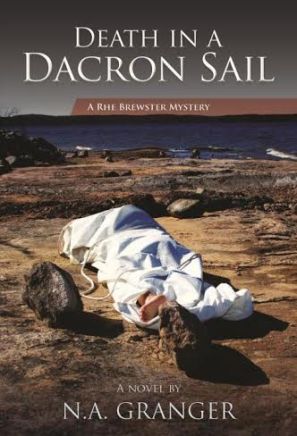
Book Review: Death on a Dacron Sail by Noelle Granger

Death in a Dacron Sail (Rhe Brewster Mysteries Book 2)

Death in a Dacron sail is the type of book I love to read. It’s the second installment of the Rhe Brewster series. Read my review of Death in a Red Canvas Chair, the first in the series, posted a few months ago.

The plot of Death in a Dacron Sail is again tightly woven with plenty of forensic information given by our nurse and amateur sleuth narrator. This time Rhe is helping with an unpleasant crime involving a missing child. There is plenty of fast-paced action and suspense, in spite of the idyllic small town location, and there are many surprises and twists, making it a gripping page turner.

It’s also very well written. The prose flows so smoothly that it is a pleasure to read.

Dacron

However, the very best part of this novel is the characterization. Readers won’t be interested in a good plot and wonderful writing if they can’t engage with the characters. Detective, crime thrillers, and mysteries often run the risk of being plot driven in detriment of character development, but that’s not the case here. On the contrary, the reader will love Rhe, because she is clever, and generous, and caring, but she’s also naïve, sometimes insecure, and others too patient with people who just don’t deserve it! I’ve wanted to tell her to be careful with someone who’s close to her since book one (no name so no spoilers!), and to stand up to her bullying boss! The other characters, both good and bad, are also so real they almost jump out of the page to watch you reading!

I know that now that she’s solved the present mystery, she’ll be involved with another riveting case shortly, but I’m just as interested in finding out how she sorts out her personal predicament, and the direction her personal life will take in book three.

By the way, just in case you were wondering, it can be read as a stand-alone novel, because the cases are independent, and although the main characters are the same, there is enough background information for readers to feel comfortable reading book two alone or first.

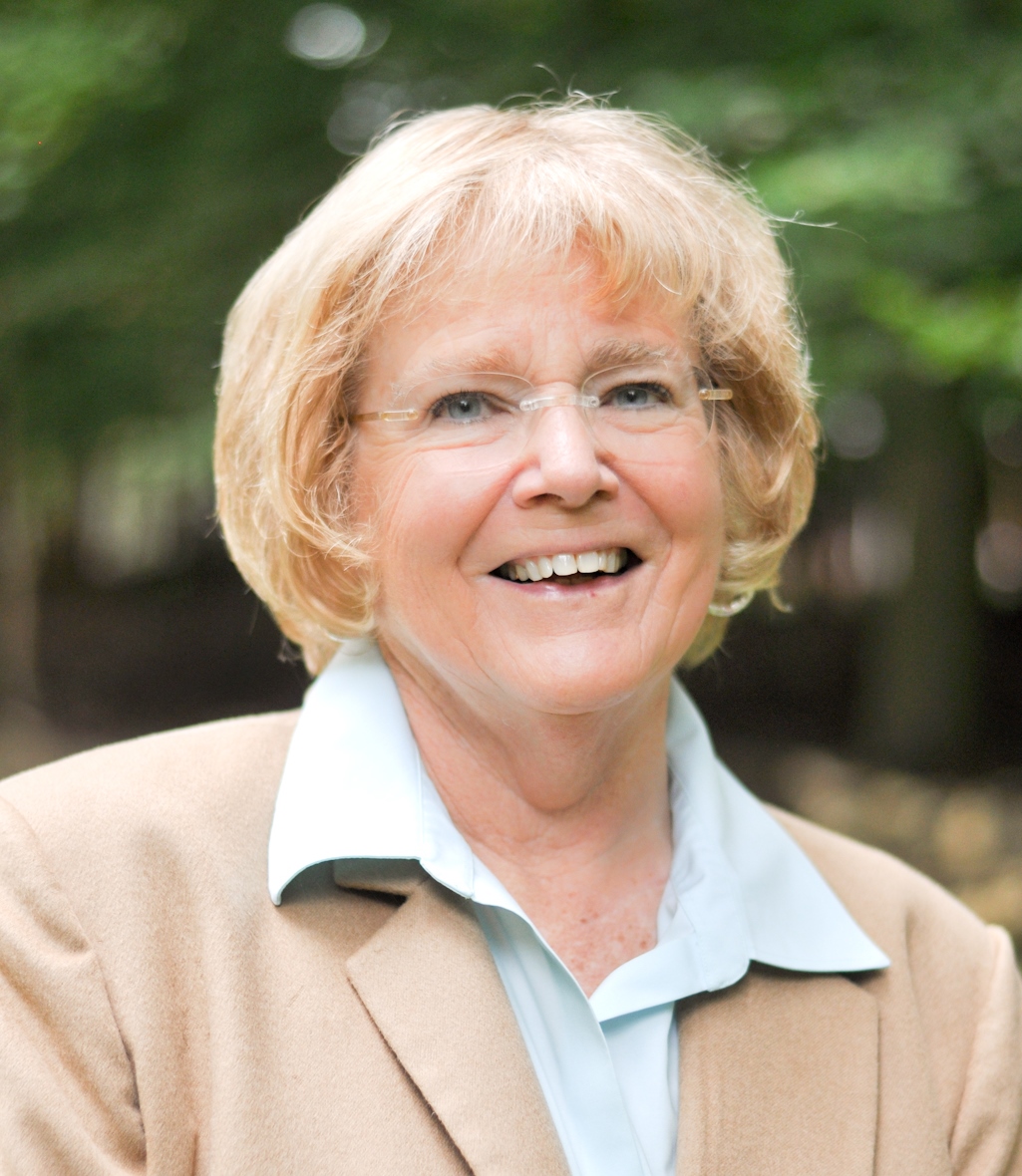
Noelle Granger
Noelle Granger


Death in a Dacron Sail is N. A. Granger’s second novel.

I asked  Ms. Granger to tell us a little more about Rhe, my favourite police consultant.

My main character, Rhe Brewster, is an Emergency Room nurse, which allows me to bring in medical knowledge, along with a healthy dose of anatomy from her friend, Marsh Adams, the assistant Maine State ME. Rhe is smart, daring, and has what I have called a yen for adrenaline, a not always good mix when she’s in the middle of an investigation.  She tends to leap before looking, which is why she gets herself into challenging situations.  However, she’s intelligent enough to get herself out!  I also wanted to give her a family life, one that many women could relate to: an occasionally prickly relationship with her husband Will (a lot more of that in Death in a Dacron Sail) and a loving relationship with Jack, her son, who is ADHD. MY son is ADHD, and more of that will figure into later books.

I also asked her why she writes crime fiction, and this is what she told me.

I like to write crime fiction because the scientific nature of it fascinates me – brings my background in anatomy and medicine and research together in one package. I also love doing the research for my books. I meet all sorts of people, all of whom have been very open to helping me understand their areas of expertise. I am an extrovert by nature, so this is great for my psyche.

Watch out for N. A. Granger’s  great Blog SaylingAway. 

Check it out on Amazon US or Amazon UK

Three Line Thursday Challenge

Entwined

Leaves trembling witnessed our promises.
Reverent stems watched over
your flesh and mine entwined.

@LucciaGray

Three Line Thursday: Three lines, maximum thirty words, in response to a weekly photo prompt.

Have a look at the rules, admire the photo prompt, read the other entries, and why not take part?


************

The end of the winter and coming of spring reminds us of nature’s new cycle of rebirth, hope, and love.

There’s another chance; we can begin again, as we move forward.

This reminds me of Jane and Rochester’s passionate reunion after their traumatic separation. It is found in the last pages of Jane Eyre.


I arrested his wandering hand, and prisoned it in both mine.
‘Her very fingers!’ he cried; ‘her small, slight fingers! If so there must be more of her.’
The muscular hand broke from my custody; my arm was seized, my shoulder—neck—waist—I was entwined and gathered to him.
‘Is it Jane? WHAT is it? This is her shape—this is her size—‘
‘And this her voice,’ I added. ‘She is all here: her heart, too. God bless you, sir! I am glad to be so near you again.’
‘Jane Eyre!—Jane Eyre,’ was all he said.
‘My dear master,’ I answered, ‘I am Jane Eyre: I have found you out—I am come back to you.’


Although my portrayal of Edward Rochester is not favourable in All Hallows at Eyre Hall, there is no doubt in my mind of the sincerity of their love and passion in Jane Eyre.

However, Rochester’s obsession with Jane, as well as her excessive admiration of and submission to such an egocentric and ruthless character stand in the way of any chance of a positive development in their relationship in the long-term.

Love, like nature, must move on: eppure si muove.

The direction of the movement belongs to the seed of creativity.

Carrot Ranch Flash Fiction: Turquoise

This week’s Carrot Ranch 99-word flash fiction is on the topic of turquoise. 

Some years ago, I visited a Ute Reservation, and I bought a turquoise stone necklace as a present for a friend. She has beautiful blue-turquoise-blue eyes, and the minute I saw the gem, I thought of her. I know her well, so I was sure she’d like it, unlike the person in my flash!

Presents are wonderful tokens which bring us close to the people we love and appreciate. Giving is as rewarding as receiving, and thoughtfulness is more important than any other consideration, such as price. The better you know the person, the easier it is to find just the right present, but it doesn’t always work out. Read on…


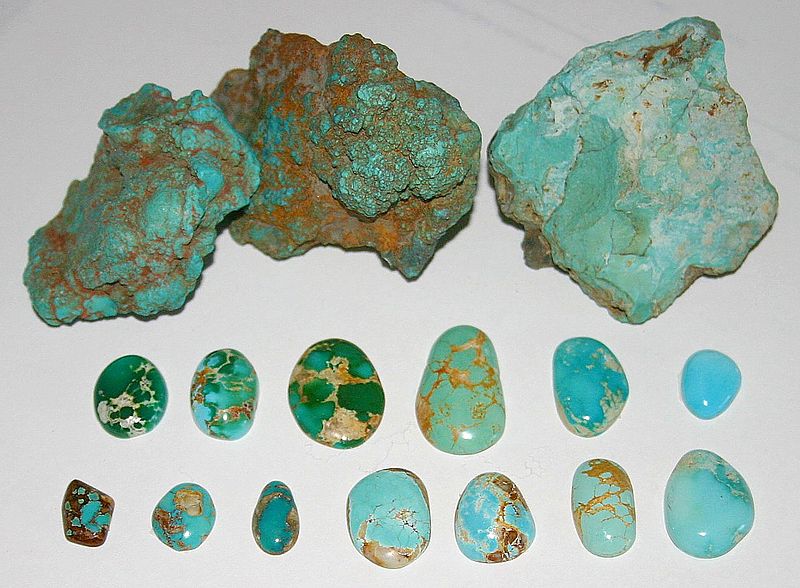
800px-Turq_mcGuin_bunker

Turquoise

“What’s your mother’s favorite color, Chelsea?”
He smiled. I rolled my eyes and supposed Tom was trying to bond with that gross question.
He’s been dating my mother for months, and he still doesn’t know her favorite color? Don’t they ever talk?
“Turquoise. Get her a necklace, with matching bracelet and earrings.” 

*****

So I bought Alice the necklace, bracelet, earrings and a pair of turquoise sandals, too, hoping to gain Chelsea’s approval.
I realized something was terribly wrong when Alice opened the presents, gasped and giggled.
“We need to talk about Chelsea,” she sighed and patted my hand lovingly.


Tutmask


Turquoise is one of the oldest gems known to man. It has adorned the rulers of Ancient Egypt, Aztecs, Persians, Mesopotamia, and China. It was not introduced to Europe until the 14th century, probably through the Silk Road through Turkey.

One of the most famous turquoise adornments Is Tutankhamun’s burial mask which was adorned with rings and necklaces which were set in gold, with inlaid turquoise stones.

One question about my flash:

You probably noticed there were two first person narrators. Does this work with such a short piece of fiction?


Flash! Fiction: Getting Through The Night

International Women’s Day, 8th March, 2015.

Dedicated to al the women who are forced to endanger their lives every day.

Act I
Jed nodded from across the street, so I jumped into the sports car with the stranger.
“What’s your objective tonight?” He asked me eyes locked on the windscreen.
I looked at my watch and sighed, “To get through the night. You in a hurry?”
“Yes,” he replied.
I took a swig of the flask he drew out of his inside blazer pocket.
“Call me Frank,” he added.
“Pity,” I moaned. I’d have to come back for another customer, and Frank looked clean and rich in his smart suit.
Act II
Minutes later, ‘baby take off your dress, yes, yes, yes,’ rang loudly in our ears, and whiskey flowed warmly through our veins.
“Lay back and put your head on the table.”
My legs dangled uncomfortably.
“Wear this eye mask.” He noticed my hesitation and added, “Trust me.”
Damn! It was going to be one of those nights.
Act III
“Jed’ll kill you if you scar me!” I warned pulling at the handcuffs and wriggling my roped feet.
A hard fist squashed my face down against the laminated surface.
“He’ll have to find you first,” Frank whispered as he lowered the axe he had whetted hours earlier. “All of you,” he smirked. “Every little bit of you.”

This is a piece of short fiction I wrote last Friday, 6th March, as a response to the Flash! Friday Fiction Challenge.

However, as all fiction, it also contains truth. According to  Women’sLaw.org, Women in prostitution have a death rate that is 40 times higher than women who are not involved in prostitution.

Also, sixty-eight percent of prostituted women meet the criteria for post-traumatic stress disorder (PTSD) in the same range as combat veterans and victims of torture.

According to Wikipedia, In 2004 the homicide rate for female sex workers in the United States was estimated to be 204 per 100,000.

These are facts and figures, but behind the numbers, there are plenty of women who are living very dangerous and horrific lives.

Last Friday, as part of International Women’s Day activities at the Adult Education Centre where I work, a social worker and member of a local association, whose aim it is to combat human trafficking by helping prostitutes off the streets, told us about the women she works with every day.

She started her talk by debunking two widely held myths:

1- Prostitution is not the oldest profession in the world. The oldest profession is the exploitation of women.

2- Street prostitutes are not ‘merry women’, ‘women of accommodating morals’, ‘ladies of the night’, or ‘night flowers’ who have an ‘easy life’. They are socially excluded women in very dire straits, who have a very dangerous profession.

She reminded us that many of them are invisible to the law and society in general, because they are illegal immigrants, some suffer drug addiction, as well as physical and psychological abuse, while others are simply struggling to make ends meet.

She told us she deals with women from the ages of eighteen to seventy; students, housewives, drug addicts, single mothers, pregnant women, and grandmothers.

I was shocked to hear that she was acquainted with a seventy-year-old grandmother who had to feed her grandchildren whose parents were in jail.

I’m not an expert on the topic, so I’m not going to give any more facts or theories. I just hope you’re as shocked as I am.

If you’re interested in helping, I’m sure there are plenty of associations in your town in which you can volunteer, and if you want to find out more there are numerous articles on the Internet.

Success


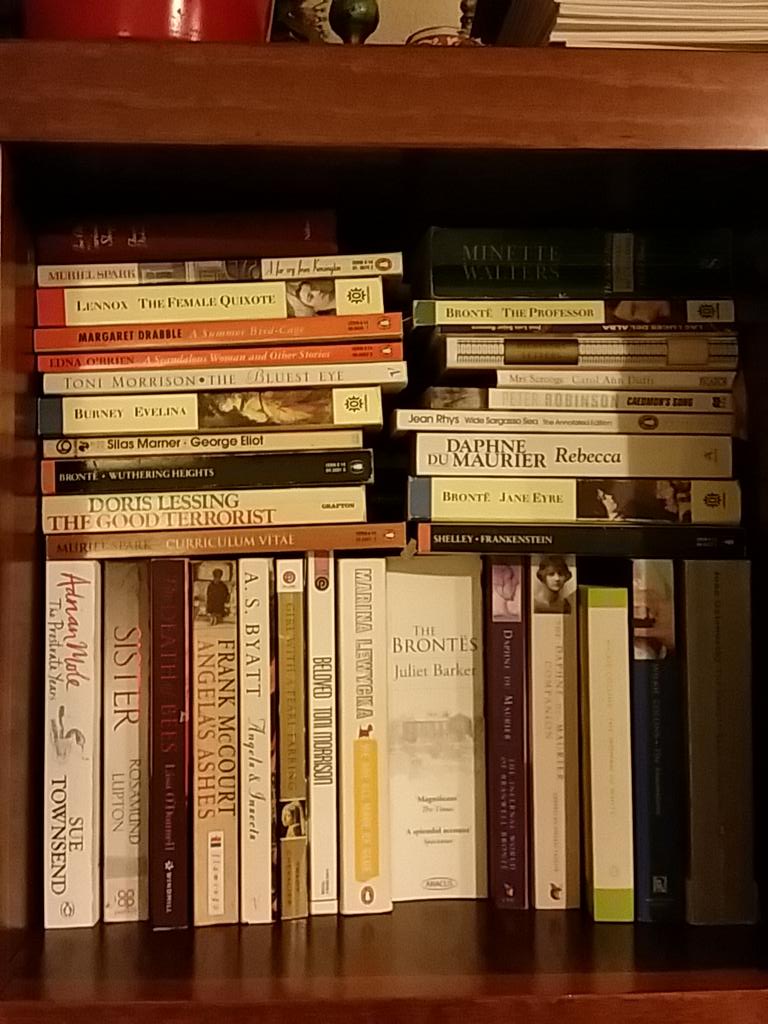
My Favourite Shelfie for World Book Day 2015

Before being an avid Kindle reader, I was an insatiable paperback reader.

There are plenty of bookshelves in my home, but this is my favourite shelf, and I’d like to share it with you on World Book Day.


Shelfie 2015

Unfortunately, not all of my favourite books are here, but all the books here are very special for me.

As you can see, there are many Victorian novels. Where to begin? The Bronte’s, of course. Jane Eyre and Wuthering Heights will always be closest to my literary heart, and their literary daughter, Daphne du Maurier’s Rebecca is another favourite.

The Bronte family biography by Juliet Barker, the companion to Daphne du Maurier, and du Maurier’s biography of Branwell Bronte, have all helped me understand my favourite novels.

Fanny Burney’s Evelina, Charlotte Lennox’s Female Quixote,  Mary Shelley’s Frankenstein, and George Eliot’s Silas Marner also fuelled my imagination.

Moving on to the twentieth century, I could not be the writer I am without Jean Rhys’s Wide Sargasso Sea, Muriel Spark’s A Far Cry From Kensington, Doris Lessing’s The Good Terrorist.

The end of the 20th century brought some inspiring and original novels such as Edna O’Brian’s A Scandalous Woman, Margaret Drabble’s A Summer Birdcage, Toni Morrison’s Beloved, and Sue Townsend’s Adrian Mole.

Contemporary novels such as Lisa O’Donnel’s Death of Bees, Marina Lewinka’s We are All Made of Glue, Rosemund Lupton’s Sister, and Minette Walter’s The Ice House, have all captivated my literary imagination.

You may conclude that my tastes are heterogeneous, and they are.

You can also appreciate that I prefer women writers, and I do.

What can I say? Most of my favourite novels were written by women. I’m not going to apologise for my literary tastes,  but I’d like to remind you that there are some inspiring male authors on my bookshelf, too.

Charles Dickens’ Old Curiosity Shop, Wilkie Collins The Moonstone, Galsworthy’s Forsythe Saga, Frank McCourt’s Angela’s Ashes, and Peter Robinson’s Caedmon’s Hymn, are novels which have left a lasting impression.

Rereading Jane Eyre, as well as all my favourite novels is something I regularly indulge in. They never cease to amaze and teach me to be a better person, and a more thoughtful writer.

I’m grateful that I was able acknowledge and pay tribute to some of my favourite authors on this World Book Day, 2015. They have given me many hours of pleasure and creative stimulation.

Thanks to all of them, I will always prefer reading to writing.

World Book Day


What happens when a writer prefers reading to writing?

It’s the first Wednesday of March!

Time to blog hop with The Insecure Writer’s Support Group


InsecureWritersSupportGroup2

What happens when a writer prefers reading to writing?

I’m a writer, but before being a writer, I was a reader.

I’m still a reader. In fact, I think I’ll always prefer reading to writing.

I blame my kindle app, which I have downloaded onto my three devices. I always carry all my books with me. I’ve even read entire books on my smart phone, if no other device was available to me at the time.

I prefer the app to the Kindle device because I don’t like the pixellated page turns. The app on my devices is great, the page turns smoothly, and I can choose font size, brightness, and background colour. I love sepia, it’s so kind to my eyes. I can go backwards or forwards easily, look up or highlight words, and even make comments, quickly and easily.

It is undoubtedly my most valuable possession, although the app itself is free, and the books are very cheap and plentiful. I have always loved reading, and now it’s just so easy, quick, and cheap. I can buy any book with a click and start reading comfortably wherever I am immediately. It’s heaven!

When people tell me they haven’t got a Kindle, the app, or that they don’t read ebooks, I feel so sorry for them. They’re missing out on so much pleasure! Most of the self-published or Indie books I’ve read have been just as good as books published by publishing houses. I have come across a few I didn’t enjoy, or were in need of serious editing, but they are a very small percentage.

There are few surprises. I read the burb, some comments, and then ‘Look Inside’ and that’s enough for me to know whether I’ll like it or not. I’ve been misled only very rarely. Basically, I know what I’m buying. It’s what I like to read, and want to read, and it usually costs between nothing and the price of a tall latte, for hours of pleasure!

I travel in time and space, see places, meet people, and experience emotions beyond my real life, almost every day.

Just in case you were wondering, I also read and carry paperbacks, too, especially if I’m going away for the weekend for example, just in case I might need the feel of paper… but I read 90% on my kindle, and that’s not going to change soon.

My only complaint is that there aren’t enough minutes in the day to read all the books I have on my kindle! I’m convinced reading helps me be a better writer and a happier person, but all that glitters is not gold…

To answer my initial question: What happens when a writer prefers reading to writing?

  1. Reading distracts me from my writing. Sounds like a bad thing, but sometimes I need to set my writing aside, breathe, and read something different. I’m also convinced every book I read teaches me something about the craft.
  2. Reading also humbles me. There are so many great books out there to read, why would anyone want to read mine? I’m just a drop in the ocean.

Oh dear 😦 I’ve just finished a great book. I’m happy :), but now I feel so insecure:(  

Check out what other writers have to say today!

How Flash Fiction Has Improved My Writing

I started writing Flash Fiction for fun, and because it was a challenge.

I read and write mostly Victorian novels, so I tend to get verbose at times!

I’m trying to write more concise prose, and I find that the linguistic and mental exercise of having to cut out all the unnecessary words has been enlightening.

How did this awareness of the need for concise prose happen? Basically following the strict word limits imposed by the challenges, reading other writers’ flash fiction, and realizing that there are many superfluous words, so less can be more.

These are some challenges I’ve been taking part in: 99-word Carrot Ranch  and Bite-Size memoir , Writer Wednesday Blog Hop, and Flash! Friday challenge which used to ne 150 and is now 200 words.

How do I go about my ‘flash’ writing process?

The same as my normal writing process. I think about the situation, idea, or prompt I’m going to write about, until I ‘see’ something in my mind’s eye, and I write.

I let the ideas flow uncurbed and I don’t count the words. When I’ve finished the first draft, I stop to reread and count.

I used to be disastrous at this, writing 250, instead of 150, for example. It used to upset me because cutting back was so traumatic. I love all my words. I believe I put them there for a purpose. They’re all essential, I thought, until I started consciously cutting them down and realized that there were far too many.

When you write Flash Fiction, you have to think about every single word. These are some of the questions I ask myself which help me decide which words stay, and which are crossed out.

  • Does the word move the story on?
  • Does the word tell the reader something essential?
  • If I read the text without the word does the sentence still convey my intended meaning?
  • Can I include the idea behind the word in another shorter way, for example with another expression or a different verb?
  • Finally I have to prioritize. I may need all the words, but I must decide which words, or groups of words, even whole lines, are more essential than others to convey my meaning?

Awareness gradually grew, and after about six months of writing flash fiction, I’m usually able to congratulate my subconscious counter (censor?) because much like our biological timer, I am not usually too far over the mark.

Unfortunately, as a result of writing Flash Fiction, I’ve come to dislike certain words, so that whenever I see them, I cringe.

I never thought I could dislike a word, a harmless, nice little word. I love words. But the more I read and edit my own work, the more I have come to hate not only one, but various words, because they’re often useless, and become a bad habit.

I am convinced I’ve become a far more conscious, critical and demanding reader of my own work, and the work of others, as a result of reading and writing flash fiction, and there’s no going back.

I feel annoyed when a novel has a good plot and compelling characters, yet the writing is careless. I sometimes finish and actually enjoy parts of such novels, although it’s like eating a delicious meal on a dirty tablecloth. The meal itself is satisfying, and although I feel like praising the cook, the crumbs and stains around my plate are distracting and off-putting. I’d certainly give the book less stars for this reason.

There’s no excuse for careless writing. Every writer must have an editor and/or proof reader. I had two for my first novel, and I’m convinced it’s the best thing I did, after writing the novel!

Unfortunately, it often seems that some writers either don’t bother to hire an editor, or perhaps there are some unprofessional editors out there.

However, before your manuscript reaches your beta readers, and later your editor, writers should ensure they do so in the best possible conditions.

Everyone who has published a novel knows that a first draft will undergo many changes before the final version is produced.

However, this first draft needs to be polished, and left to rest, and edited again, perhaps even more than once depending on how much you edit as you write, or how attune to detail you happen to be.

I carefully read over every single word when I’m out to ‘unclutter’ my writing, however, the following are the most irritating words for me. I always run a word check on my own work to see if I have too many of them, because they’re a nasty habit.

Very, Really, A bit, Really, Rather, There is and there are, start to, begin, thing, this type of, so, well. Prepositions where they’re not needed like ‘near to’.

As we’re on the subject of cleaning our prose, there are a couple of other things which irritate me.

I have a big issue with ‘gotten’ and ‘get to’’, and sometimes even with ‘get’ itself when it becomes repetitive.
Why say, ‘I didn’t get to go,’ instead of ‘I didn’t go’?

Why say, ‘it’s gotten late,’ or ‘It got late’, instead of ‘it’s late’? I realize there’s a slight difference in meaning, but is the ‘process of getting late’ going to move the story on or tell the reader something he/she doesn’t already know?

Does every adjective and adverb have to be there? Do two adjectives together add essential and diverse meaning?

Try to avoid well-known expressions and clichés, and if you do use them, don’t repeat them throughout the novel. When a character’s heart is continuously ‘racing’ or ‘thumping’, the reader will start to worry that he/she needs a heart valve!

Here are some more interesting articles on self-editing: ‘Tightening your Copy‘ , 200 Common Redundancies, Ten Top Tips to Instantly Improve Your Writing

What’s your experience of writing flash fiction? Has it helped you improve your writing, too?

Flash! Friday Vol 3 – 11: The Stalker

Slowly, silently, now the moon
Walks the night in her silver shoon;
This way, and that, she peers, and sees
Silver fruit upon silver trees;

Walter de la Mare (1873 – 1958 England)

640px-Cara-oculta-luna
Dark Side of the Moon, by NASA, Apollo 16. Licensed under Public Domain via Wikimedia Commons

The moon has fascinated both poets and scientists since the first human spotted it in the sky.We do not know for sure how the earth and the moon came into being, but there are two main theories proposed by the scientific community.


The first theory, called the ‘giant impact hypothesis’, which was developed by the Planetary Science Institute in the 1970s, claims that the Earth’s moon formed as the result of a colossal impact of a hypothetical planetary embryo, named Theia, with Earth, early in our Solar System’s history. More information on this theory.


The most recent theory, funded by the NASA Lunar Science Institute (NLSI), and published in 2012, proposes that the Earth and moon were both created together in a giant collision of two similar-sized bodies, which collided a second time forming an early Earth surrounded by a disk of material that combined to form the moon. More information on this theory.

381356main_image_1454_946-710
An artist’s concept shows a celestial body about the size of our moon slamming at great speed into a body the size of Mercury.

Image Credit: NASA/JPL-Caltech

In any case, both poets and scientists have acknowledge the intimate relationship between the Earth and our Moon, and are searching for ways of either explaining our fascination, or providing proof of our common origin and mutual dependency.


For last Friday’s Flash! Fiction contest, our prompts were the word moon and the following sculpture.

liverpool-a-case-history
Liverpool — Hope Street. CC photo by Harshil Shah. Sculpture “A Case History” by John King.

The idea instantly came to my mind to combine the poetic symbolism of the moon and the scientific notion that both planets had a common origin.

In my flash fiction, the moon has become the lover who has been traumatically separated from his beloved. He cannot come close to her, but he can stalk her from a distance, because he still loves her and misses her, while he is patiently waiting for a longed for reunion.


The stalker


Let me watch over you.
I see you searching for my torch in the night, in wonder, in awe, perhaps even in fear.
Please don’t fear me. I’d never harm you.
You know I’ll always be there, faithful to you alone.
I can’t live with you, but neither can I live without you, so I have to stalk you.
You have understood and forgiven me.
I look forward to seeing your flashing eyes and hearing the murmur of your breathing.
Your beauty is stunning. I admire your patchwork dress and your flowing waves.
I love you.
I miss you.
I wish I were still with you, still part of you, as I used to be, as I was meant to be.
I cannot come to you yet, although you have visited me, on occasions.
You think little of me, because you consider me ugly and barren, and I am, compared to you.
But remember this; we were together once and you loved me, until we were torn apart.
I long for the day you will take up your suitcases, renew your hope in me, and bring life to my lonely planet.
You will come and I will be waiting, Earthlings.

@LucciaGray
200 words.
Would you like to read some of the other stories in this weeks’ Flash! Friday challenge?

Compassion in Jane Eyre

Jane Eyre was an orphan, who was brought up first by an unloving aunt, Mrs. Reed, and later at an institution for poor orphans, Lowood, before being employed as governess at Thornfield Hall.

Although Jane suffered hardships and humiliations, and found very little compassion at that time, her life was not in danger due to unbearable social circumstances until she made the decision to leave Thornfield Hall and venture into the world practically penniless, without any friends or family to turn to.

At that point in the novel, Jane Eyre’s life was in serious danger. Her life was saved thanks to the compassion and generosity of the Rivers family.

When Jane Eyre left Thornfield Hall at dawn, after discovering that Mr. Rochester was already married to Bertha Mason, she took only some bread and twenty shillings, which she spent on travelling as far away from Mr. Rochester as she could.

Jane’s life was seriously in danger, with no possibility of claiming the social benefits we are accustomed to today. In my previous post, I have already discussed some of the social injustices which were commonplace in the 19th century.


640px-P323b
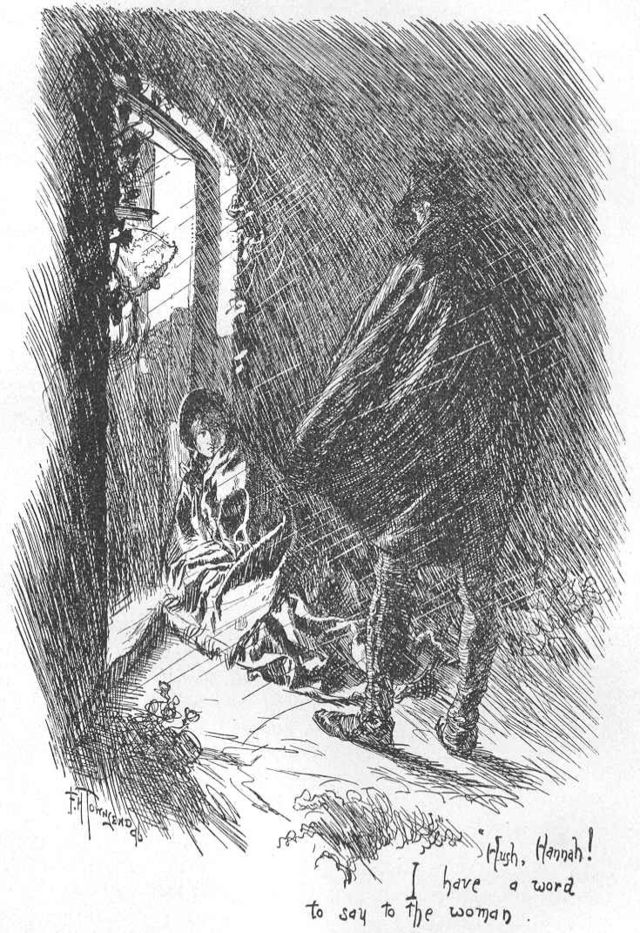
St. John Rivers admits Jane to Moor House, by F. H. Townsend, 1868-1920.


Jane tried in vain to find employment as a servant in the villages she passed. Days later, starving, cold, exhausted, and desperate she says:

‘My strength is quite failing me,’ I said in a soliloquy. ‘I feel I cannot go much farther. Shall I be an outcast again this night? While the rain descends so, must I lay my head on the cold, drenched ground? I fear I cannot do otherwise: for who will receive me? But it will be very dreadful, with this feeling of hunger, faintness, chill, and this sense of desolation—this total prostration of hope. In all likelihood, though, I should die before morning.

She finally arrived at the door of the three Rivers siblings: St. John, a clergyman and his two sisters, Diana and Mary, who fortunately took her in out of compassion. It was in their house that Jane was finally allowed to rest in a warm bed:

I contrived to mount a staircase; my dripping clothes were removed; soon a warm, dry bed received me. I thanked God—experienced amidst unutterable exhaustion a glow of grateful joy—and slept.

The following morning, by Jane’s bedside, Mary and Diana discuss her condition, and her desperate situation is confirmed:

‘It is very well we took her in.’
‘Yes; she would certainly have been found dead at the door in the morning had she been left out all night. I wonder what she has gone through?’
‘Strange hardships, I imagine—poor, emaciated, pallid wanderer?’

Jane admits that if it had not been for them, she would have probably died.

I owe to their (Mary and Diana) spontaneous, genuine, genial compassion as large a debt as to your (St. John) evangelical charity.’

However, the Rivers had problems of their own. Shortly after this event, the three Rivers are forced to shut up and abandon Moor House, where they had lived all their lives, because their financial situation after their father’s death was precarious. St. John took over the parsonage, and Mary and Diana had to leave their home and their town in order to find jobs far away as governesses.

Jane is procured a job at the local Parish School. Months later, when Jane is informed, through Mr. Briggs, the solicitor who interrupted the bigamous wedding farce, that she has inherited twenty thousand pounds from her deceased uncle, John Eyre, she shared it in equal parts with the Rivers. She also recovered and renovated Moor House, where the Rivers, who were her discovered to be her cousins, returned to live with her.

She received compassion and returned their compassion by sharing her inheritance with them.

In the sequel I’ve written, All Hallows at Eyre Hall, Jane has grown into a socially conscious manager of the Rochester Estate, who spends a great deal of her time and money on the education and employment of poor children and orphans. I am convinced that she would have used her privileged financial and social position to help others, especially having experience much hardship herself.

Compassion cannot be taught, but it can be learnt from experience, or developed by building awareness.